
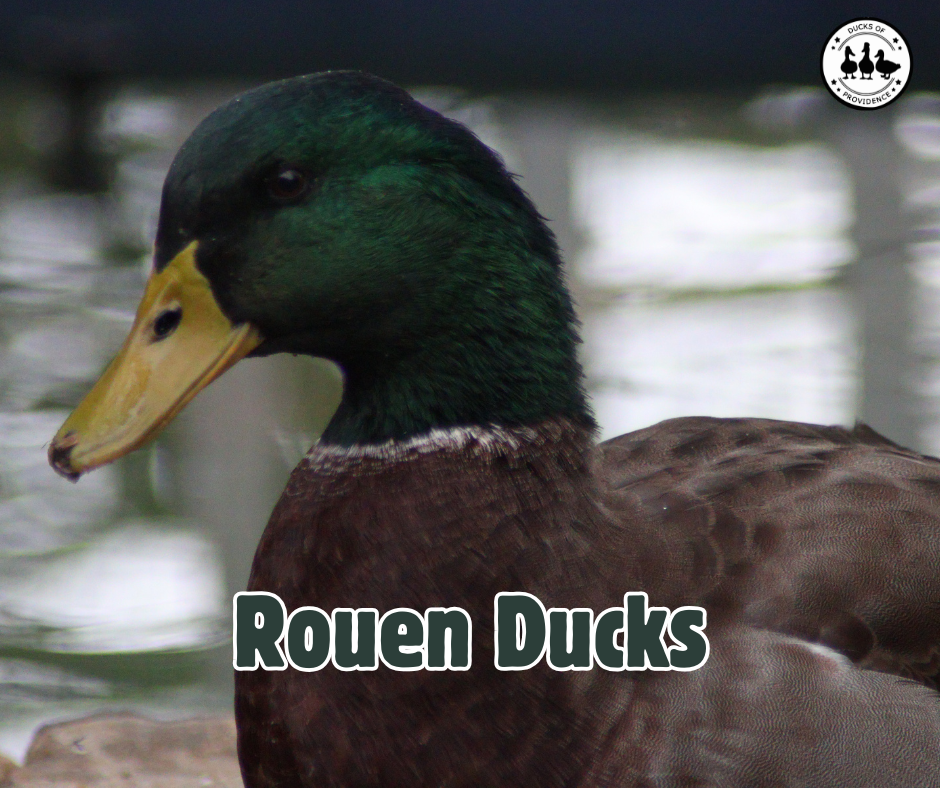
Rouen Ducks: The Beautiful Mallard Lookalikes With a Big Personality

To keep our research-backed guides free, this site uses ads and affiliate links (earning a small commission at no cost to you). Everything here is created by a duck mom and PhD scientist, combining academic rigor with hands-on experience to provide practical, trustworthy advice for duck keepers everywhere. 🦆 Learn more
At first glance, you might mistake a Rouen duck for a Mallard. With their beautiful green heads, rich chestnut breasts, and intricate brown feather patterns, these ducks look remarkably similar to their wild relatives. But take a closer look, and you will discover that Rouen ducks are much larger, heavier, and have a personality all their own.
Rouens are a traditional domestic duck breed known for their striking appearance, generally calm temperament, and impressive size. While they were originally developed primarily for meat production, they have also become popular among backyard duck keepers who appreciate their beauty and gentle nature. But are Rouen ducks good pets? How much space do they need? And how can you tell a male Rouen from a female, especially when they are still young?
These questions have become particularly interesting to me since two rescued Rouen ducks, Tina and Thomas, recently joined our Ducks of Providence flock. Watching Thomas transform from a young duck into a handsome drake with his stunning adult plumage has been especially fascinating. But more about their story later!
In this complete Rouen duck breed guide, I will explore everything you need to know about these beautiful birds, including their appearance, temperament, egg production, and care requirements. We will also look at how to tell male and female Rouen ducks apart, when their physical differences become noticeable, and how to distinguish a Rouen from a Mallard.
Whether you are considering adding Rouens to your backyard flock, already share your life with these feathered beauties, or simply spotted a suspiciously large “Mallard” waddling around, this guide will help you get to know this fascinating breed a little better.
Part of the Beginner’s Handbook, Essential foundational data for new duck parents.
Quick Navigation: Jump to a Section
- Rouen Duck Breed at a Glance
- History and Origin of Rouen Ducks
- Rouen Duck Appearance: Male vs. Female Differences
- Rouen Ducks vs. Mallards: How to Tell the Difference
- Rouen Duck Temperament and Behavior: Are They Friendly?
- Rouen Duck Egg Production and Broodiness
- Rouen Duck Housing, Feeding, and Daily Care
- Are Rouen Ducks Right for Your Flock?
- From Our Flock: Meet Tina and Thomas
- Final Thoughts: Are Rouen Ducks the Right Breed for You?
- Further Reading & Resources
Rouen Duck Breed at a Glance
Before we dive into the details, here is a quick overview of the Rouen duck breed and its most important characteristics.
| Characteristic | Rouen Duck |
|---|---|
| Origin | France, later refined in England |
| Breed Type | Heavyweight domestic duck |
| Primary Purpose | Originally meat production, now also exhibition and ornamental keeping |
| Male Weight (Drake) | 4,500 to 5,400 g (10 to 12 lbs) |
| Female Weight (Hen) | 4,100 to 4,500 g (9 to 10 lbs) |
| Lifespan | Approximately 8 to 12 years with proper care |
| Egg Production | Approximately 35 to 125 eggs per year |
| Egg Color | White to pale green or blue tinted |
| Egg Size | Large |
| Temperament | Generally calm, docile, and sociable |
| Noise Level | Moderate; females are typically louder than males |
| Flight Ability | Very limited; Standard Rouens are generally unable to fly |
| Broodiness | Variable; some females become broody |
| Climate Tolerance | Generally cold hardy; heat requires additional precautions |
| Conservation Status | Watch category (The Livestock Conservancy) |
Note: The weights listed represent the larger Standard Rouen. Production Rouens are typically smaller, often weighing approximately 2,700 to 3,600 g (6 to 8 lbs), and may have better egg production. Actual weights vary with breeding lines, age, and body condition.
History and Origin of Rouen Ducks
Despite their striking resemblance to wild Mallards, Rouen ducks are a domesticated breed with a history dating back several centuries. Their story begins in France, where farmers developed large, heavy ducks that retained the beautiful coloration of their wild ancestors.
From French Farms to English Show Birds
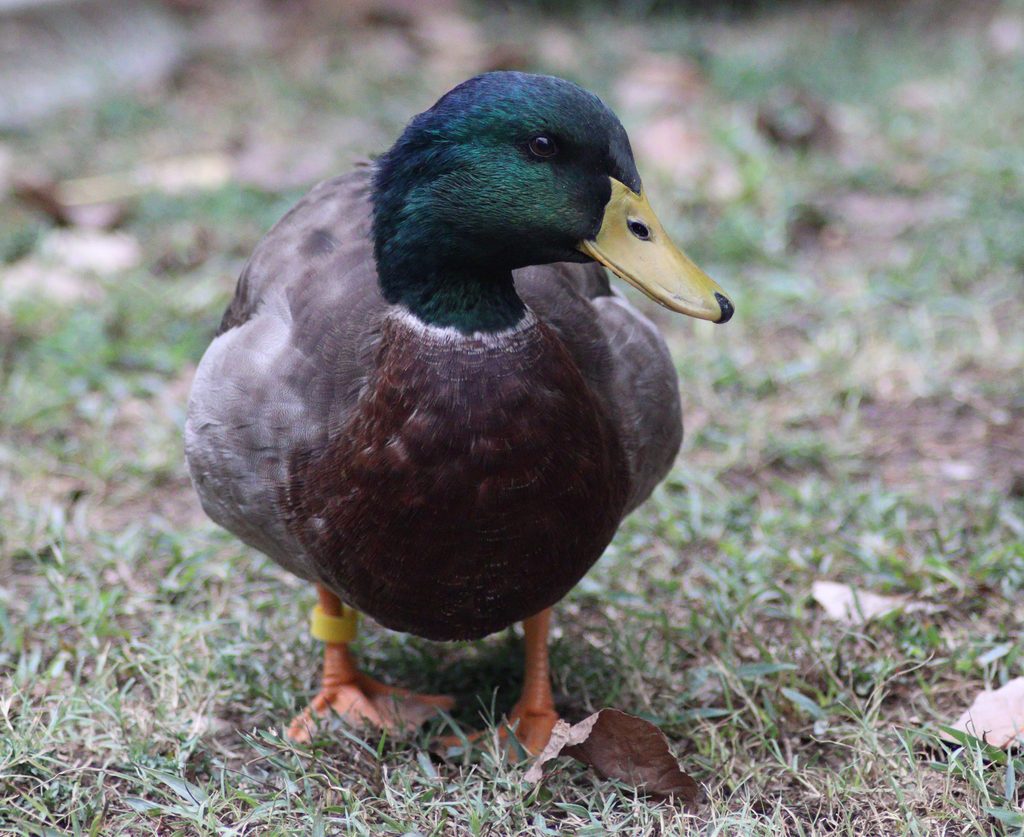
Rouen ducks originated in France, particularly in the Normandy region around the city of Rouen, from which the breed takes its name. Like other domestic ducks descended from the wild Mallard (Anas platyrhynchos), Rouens were selectively bred for characteristics that made them useful on farms, especially their larger body size and meat production.
During the 19th century, Rouen ducks made their way to England, where breeders began refining their appearance. While French Rouens were primarily practical farm ducks, English breeders favored birds with larger bodies, deeper chests, and more pronounced horizontal postures. Over time, this selective breeding produced the impressive, heavyweight Rouens commonly associated with poultry exhibitions today.
This breeding history also explains why not all Rouen ducks look exactly alike. Some retain a more practical, moderately sized body shape, while others have the exceptionally heavy build characteristic of exhibition birds.
Rouen Ducks Arrive in America
Rouen ducks were introduced to the United States during the 19th century and were officially recognized by the American Poultry Association in 1874.
Initially, they were valued primarily for meat production. However, their relatively slow growth and heavy body structure eventually made them less competitive with faster growing commercial breeds, particularly Pekin ducks.
Today, Rouens are primarily kept by small farms, exhibition breeders, and backyard duck enthusiasts who appreciate their beautiful plumage, calm personalities, and traditional heritage.
Standard Rouens vs. Production Rouens
One interesting result of the breed’s history is the distinction between Standard Rouens and Production Rouens.
| Characteristic | Standard Rouen | Production Rouen |
|---|---|---|
| Body size | Very large and heavy | Smaller and lighter |
| Body shape | Deep chest, broad body, pronounced horizontal posture | More streamlined and active |
| Growth | Generally slower to reach full size | Typically faster maturing |
| Egg production | Generally lower | Often higher |
| Primary purpose | Exhibition and ornamental keeping | Farm production and backyard keeping |
| Flight ability | Generally flightless | Usually limited, although lighter individuals may manage short flights |
Both types share the beautiful Mallard coloration that makes Rouens so recognizable. However, Production Rouen is a commonly used hatchery and breeding designation rather than a separately recognized APA breed. Individual birds may fall somewhere between the two types.
Understanding this distinction is particularly important when comparing Rouen ducks with Mallards or evaluating their weight, growth, and egg production.
Although Rouens are no longer a major commercial duck breed, they remain an important part of domestic duck heritage. Preserving these traditional breeds helps maintain the genetic diversity, unique characteristics, and history of domestic waterfowl.
Rouen Duck Appearance: Male vs. Female Differences
One of the most striking features of Rouen ducks is their beautiful plumage. With their rich colors, intricate feather patterns, and unmistakable Mallard appearance, they are among the most recognizable domestic duck breeds.
However, male and female Rouen ducks look remarkably different once they reach adulthood. This difference between the sexes is called sexual dimorphism, and it is particularly pronounced in ducks with wild type Mallard coloration.
Interestingly, these differences are not obvious when Rouens are young. Both sexes initially look quite similar, and it takes time for their distinctive adult plumage to develop.
What Does a Male Rouen Duck Look Like?
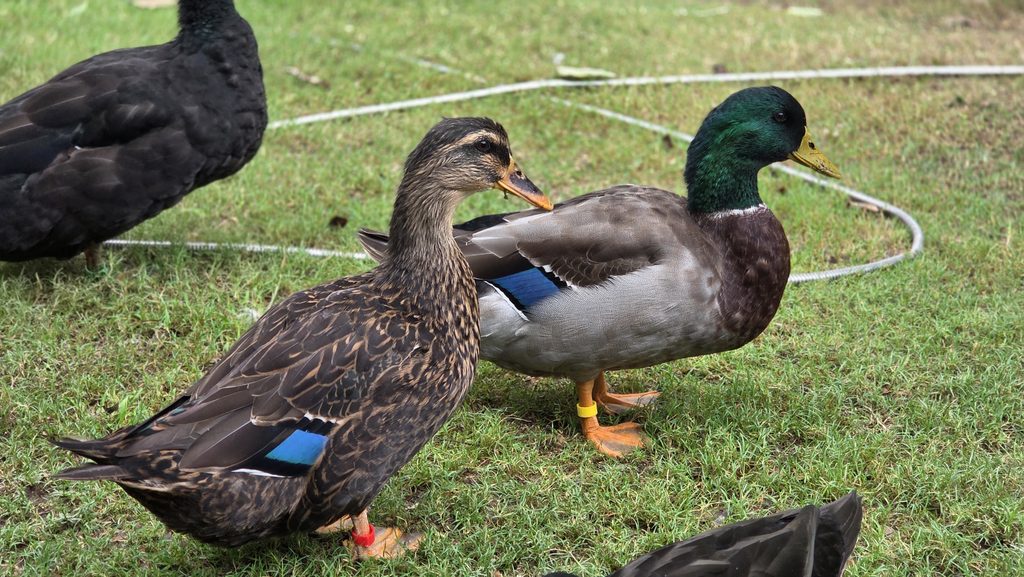
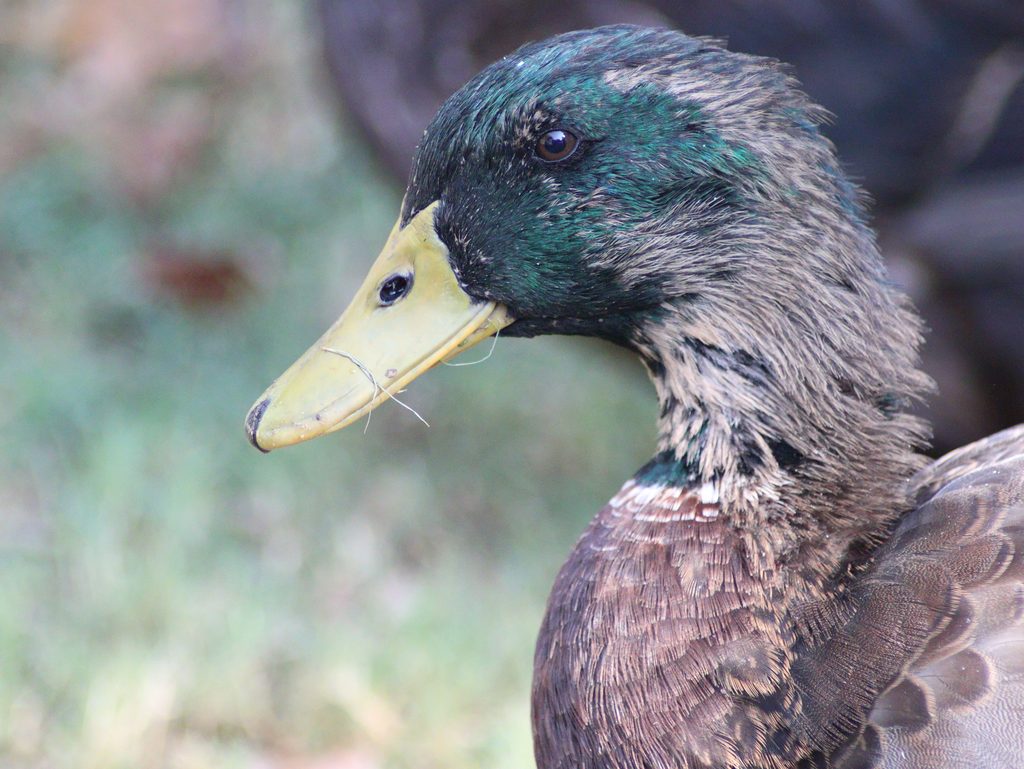
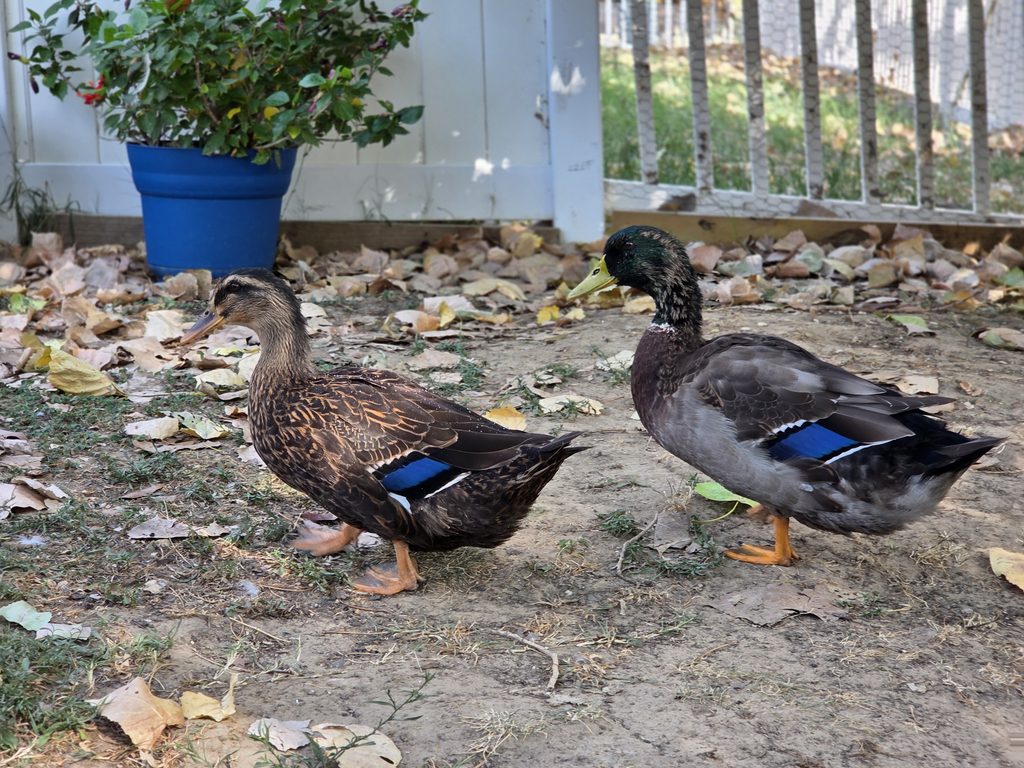
Adult male Rouens, also called drakes, are particularly colorful. Their appearance closely resembles that of a wild male Mallard, although their bodies are considerably larger and heavier.
The most recognizable features of a mature Rouen drake include:
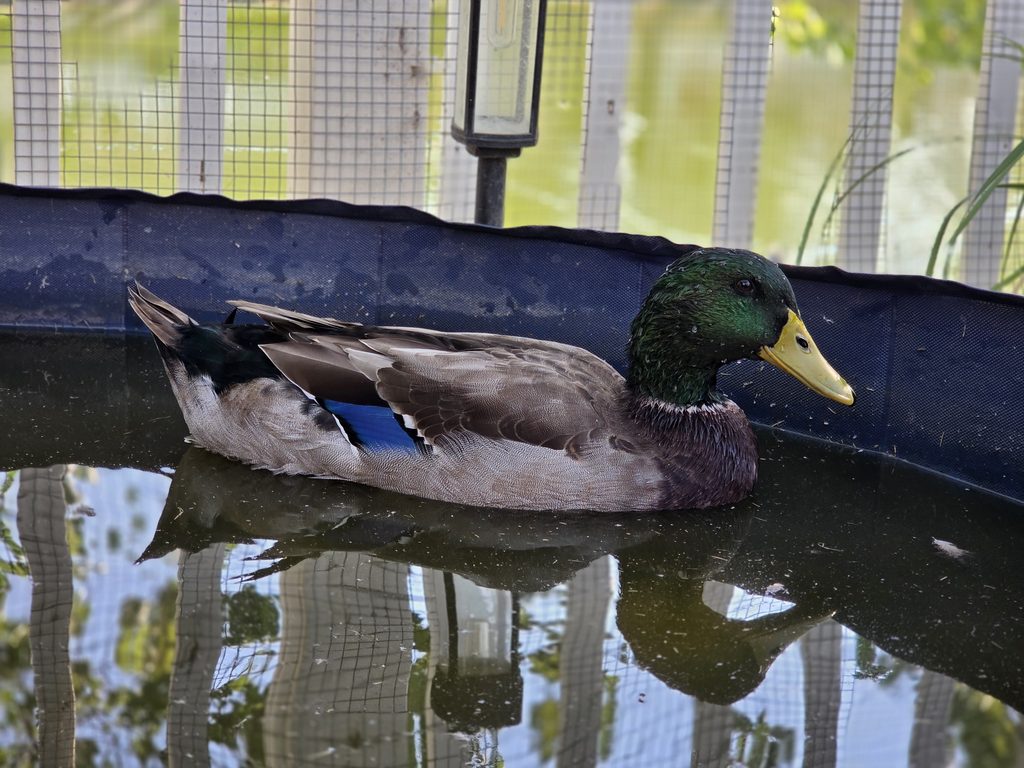
- Head: A brilliant, iridescent green head that can appear almost black under certain lighting conditions.
- Neck: A narrow white ring separating the green head from the chestnut colored breast.
- Breast: A rich reddish brown or chestnut color.
- Body: Primarily gray feathers with fine, intricate patterns and a lighter underside.
- Wings: An iridescent blue to purple patch, called the speculum, bordered by white feathers.
- Bill: Typically yellow to greenish yellow.
- Feet and legs: Orange.
- Tail: Dark tail feathers, often accompanied by one or more curled feathers characteristic of mature drakes.
Their broad bodies, deep chests, and relatively horizontal posture give Rouen drakes an impressive appearance. Standard Rouens are particularly massive compared with their wild Mallard relatives.
What Does a Female Rouen Duck Look Like?
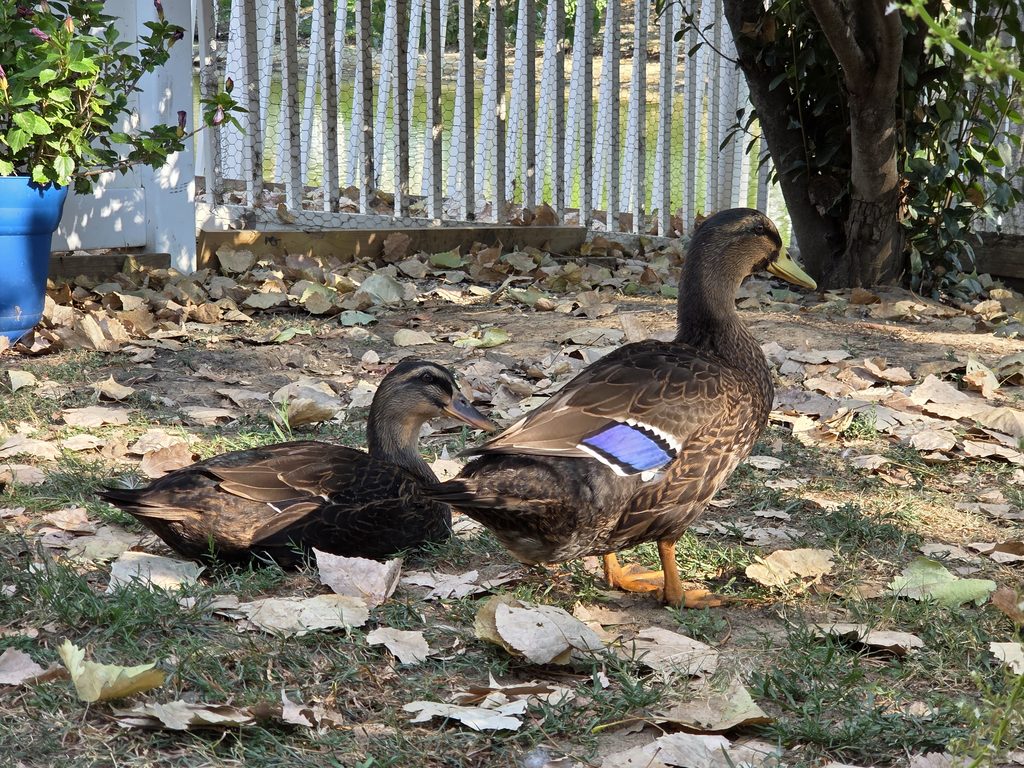
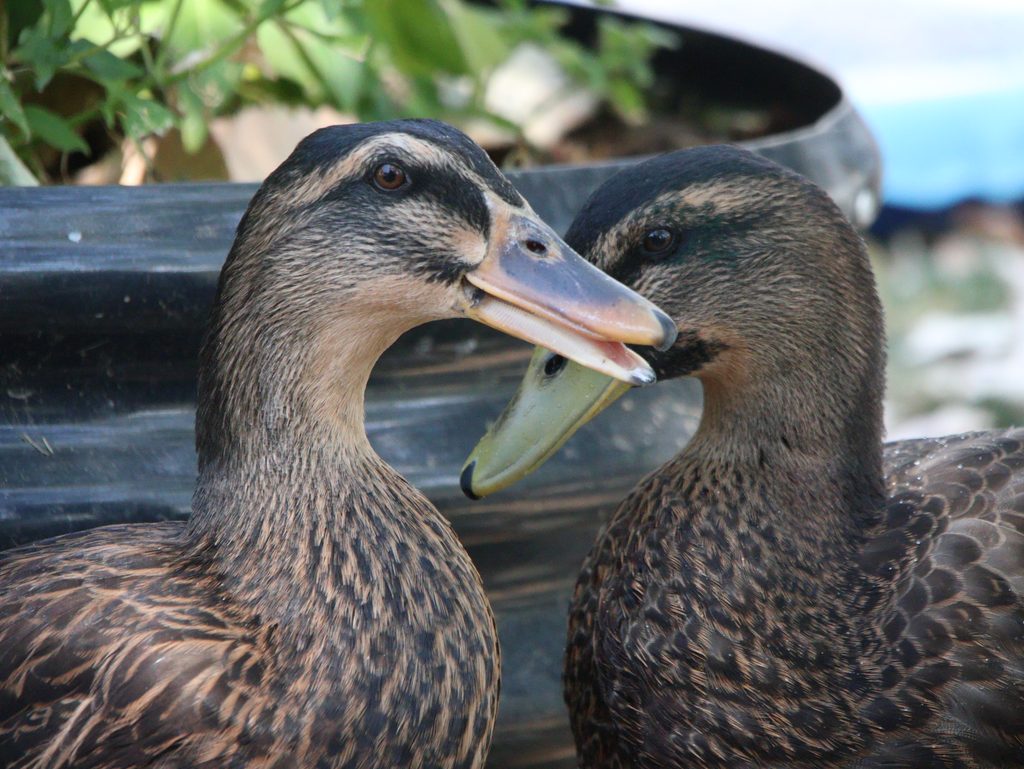
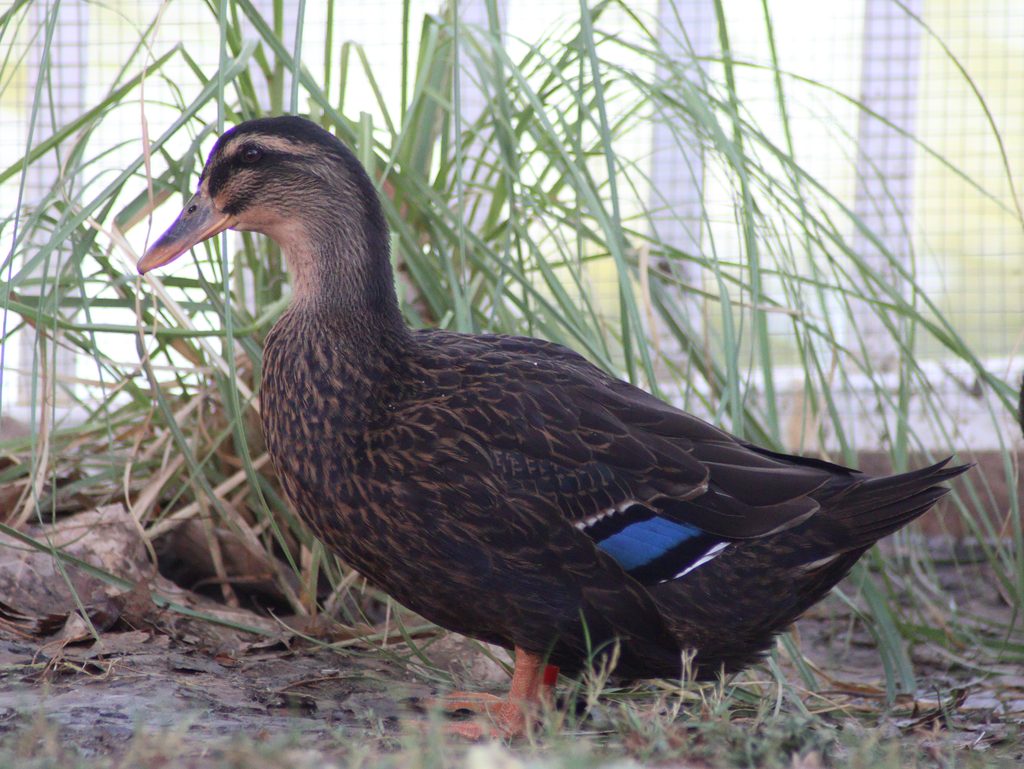
Female Rouens, or hens, have a much more subtle appearance. Instead of the drake’s bright green head and chestnut breast, they display beautiful shades of brown, tan, and black.
Their plumage provides excellent camouflage, an inherited characteristic from their wild Mallard ancestors.
Typical features of a female Rouen include:
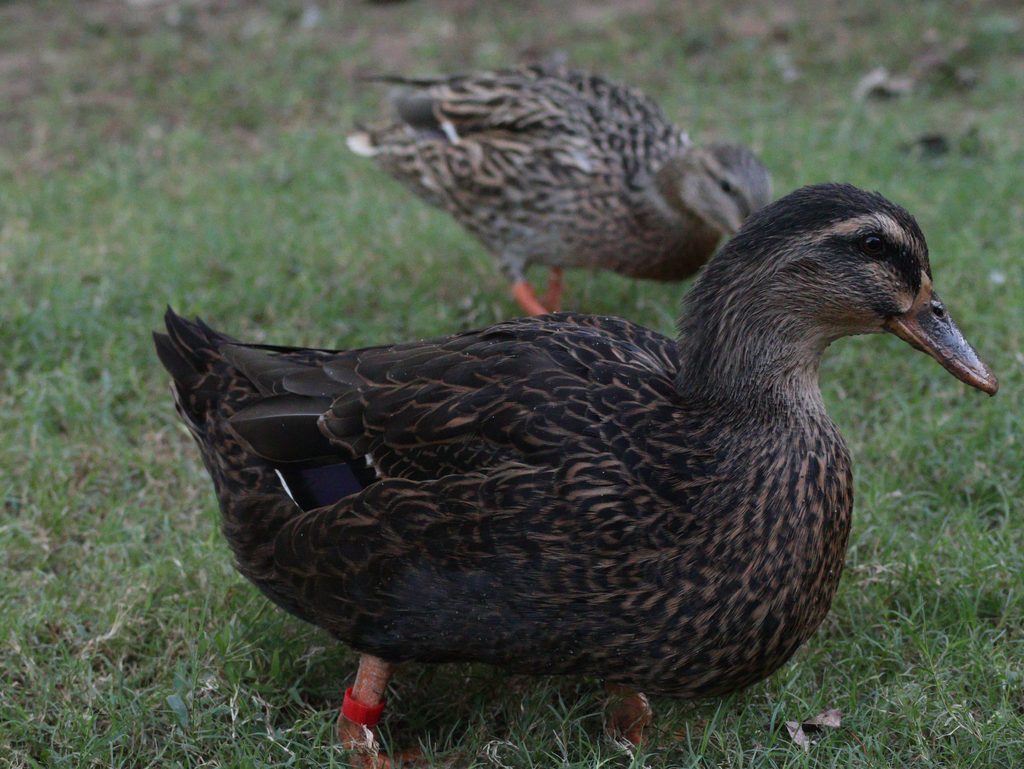
- Head: Brown with darker markings around the eyes and a distinctive dark eye stripe.
- Neck and breast: Mottled brown feathers with darker markings.
- Body: A mixture of brown, tan, and black feathers, often with beautifully detailed patterns.
- Wings: An iridescent blue to purple speculum, similar to that of males.
- Bill: Usually orange to brownish orange with darker patches or markings.
- Feet and legs: Orange.
- Tail: Straight tail feathers without the characteristic drake curl.
Although female Rouens may appear less colorful at first glance, their detailed feather patterns are incredibly beautiful up close.
Male vs. Female Rouen Ducks: Quick Comparison
| Feature | Male Rouen (Drake) | Female Rouen (Hen) |
|---|---|---|
| Head color | Iridescent green in breeding plumage | Mottled brown |
| Neck ring | Distinct white ring | Absent |
| Breast | Rich chestnut brown | Mottled brown |
| Body plumage | Gray with fine patterns | Brown with dark markings |
| Bill color | Usually yellowish | Orange to brown with dark markings |
| Wing speculum | Blue to purple | Blue to purple |
| Tail curl | Often present in mature males | Absent |
| Voice | Softer, raspy calls | Loud, distinct quacking |
| Body size | Generally larger | Generally smaller |
Important: Plumage coloration is not always a reliable indicator of sex throughout the year. Male Rouens undergo seasonal molts and may temporarily lose their distinctive green heads, taking on a more female like appearance. This is known as eclipse plumage.
When Can You Tell Male and Female Rouen Ducks Apart?
If you are raising Rouen ducklings, you might be wondering when you can finally tell which ones are boys and which are girls.
Unlike some domestic duck breeds where males and females look nearly identical throughout their lives, Rouens eventually develop very distinct appearances. However, voice differences typically become noticeable before the characteristic adult plumage develops.
| Age | What to Expect |
|---|---|
| 0 to 4 weeks | Male and female ducklings look very similar. Plumage is not a reliable indicator of sex. |
| 5 to 8 weeks | Voice differences often begin to emerge. Females develop louder quacks, while males produce softer, raspier sounds. |
| 8 to 12 weeks | Voice sexing becomes increasingly reliable. Subtle differences in bill coloration may also appear. |
| 3 to 5 months | Young drakes may begin developing their characteristic green head and chestnut breast as adult plumage emerges. |
| 4 to 6+ months | Male breeding plumage becomes more pronounced. Curled tail feathers may appear, although timing varies. |
These ages are approximate. Development depends on genetics, nutrition, season, and individual maturation. Some drakes take considerably longer to develop their full adult appearance, particularly if their first major plumage change coincides with a seasonal molt.
My recommendation: If you want to determine the sex of a young Rouen, pay attention to its voice rather than relying solely on feather coloration. Females typically develop a loud, recognizable quack, while males produce a quieter, breathier, almost raspy sound.
A drake curl is another useful clue once it appears, but its absence does not necessarily mean your duck is female.
What Do Rouen Ducklings Look Like?
Rouen ducklings look remarkably similar to wild Mallard ducklings. They typically have yellow and dark brown down, with darker markings along their backs and distinctive stripes around their eyes.
Both male and female ducklings share this appearance, making visual sex identification particularly difficult during the first few weeks.
As they grow, their fluffy down is gradually replaced by juvenile feathers. At this stage, young males and females may still look very similar, often displaying predominantly brown plumage.
Only later do the characteristic differences between adult drakes and hens become apparent.
Do Rouen Drakes Always Have Green Heads?
Not necessarily! Like wild Mallards, male Rouens can undergo a seasonal change in appearance.
Following the breeding season, drakes may molt into eclipse plumage, temporarily losing much of their colorful breeding plumage. During this period, their feathers become predominantly brown and may resemble those of females.
Eventually, they molt back into their characteristic breeding plumage, complete with the beautiful green head and chestnut breast.
This is a natural process and does not indicate that anything is wrong with your duck. However, the timing and extent of eclipse plumage can vary among domestic Rouens, and some individuals retain more of their breeding coloration than others.
If your previously colorful drake suddenly starts looking suspiciously like a hen, don’t panic. He may simply be changing his wardrobe!
Rouen Ducks vs. Mallards: How to Tell the Difference
If you have ever seen a Rouen duck standing next to a wild Mallard, you might have wondered whether they are actually the same breed. After all, the resemblance is remarkable! Both have the familiar green headed drakes, beautifully patterned brown females, and iridescent blue wing feathers.
And there is a good reason for that. Rouen ducks are domestic descendants of wild Mallards (Anas platyrhynchos). They share the same ancestry and much of the same coloration, but centuries of selective breeding have produced some important differences.
The biggest difference? Size and body shape. Rouens are generally much heavier, broader, and less athletic than their wild relatives.
Rouen vs. Mallard: Side by Side Comparison
| Feature | Rouen Duck | Wild Mallard |
|---|---|---|
| Origin | Domestic breed developed in France | Wild duck found across much of the Northern Hemisphere |
| Male weight | Approximately 2,700 to 5,400 g (6 to 12 lbs), depending on type | Approximately 900 to 1,600 g (2 to 3.5 lbs) |
| Female weight | Approximately 2,700 to 4,500 g (6 to 10 lbs), depending on type | Approximately 700 to 1,400 g (1.5 to 3 lbs) |
| Body shape | Broad, heavy body with a deep chest | Slimmer, more streamlined body |
| Posture | More horizontal, especially in Standard Rouens | More upright and athletic |
| Plumage | Classic Mallard coloration | Classic Mallard coloration |
| Flight ability | Very limited, especially in Standard Rouens | Strong, capable fliers |
| Movement | Heavier, slower waddle | More agile on land and in water |
| Egg production | Variable, depending on breeding line | Usually one seasonal clutch, sometimes more |
| Domestication | Fully domesticated | Wild species |
Note: These weight ranges are approximate. Production Rouens can be considerably smaller than exhibition birds, while Mallard body weights vary with sex, geographic population, and season.
1. Body Size Is the Biggest Clue
The easiest way to distinguish a Rouen from a Mallard is usually by looking at its overall size.
A mature Standard Rouen can weigh several times as much as a wild Mallard. Its body is broad, deep, and heavy, with a prominent chest and substantial abdomen. Exhibition Rouens may appear almost rectangular when viewed from the side.
Wild Mallards, on the other hand, have a much more streamlined appearance. Their bodies are compact and built for efficient flight, allowing them to travel considerable distances.
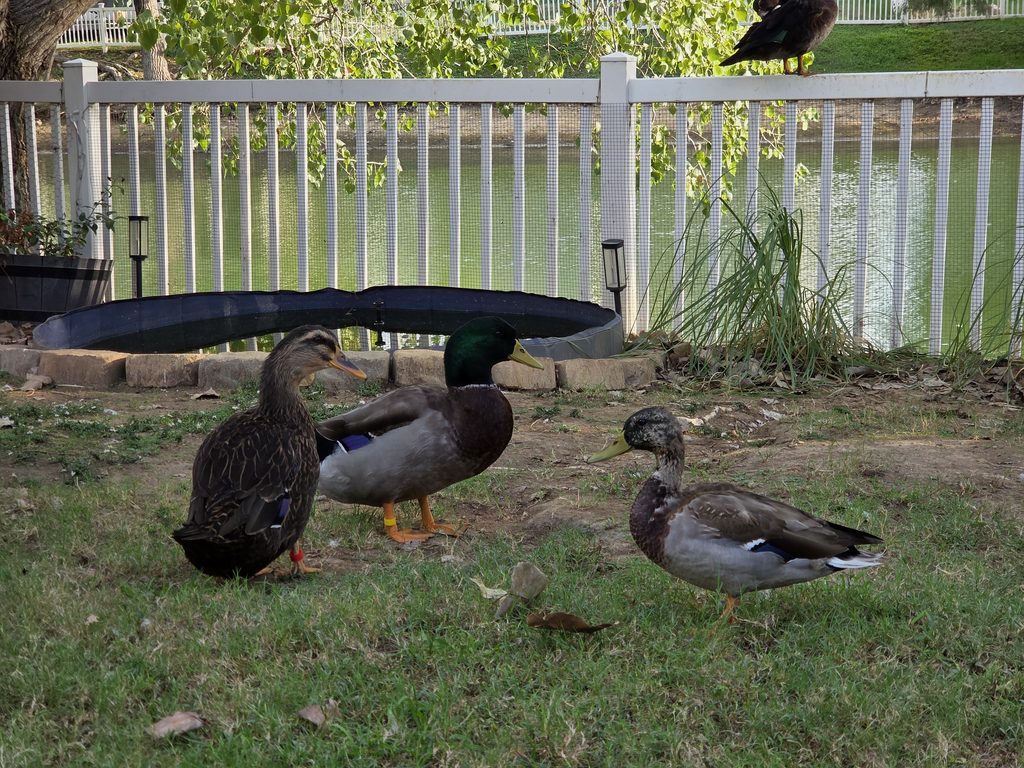
Production Rouens fall somewhere between these extremes. Although still generally larger and heavier than wild Mallards, their bodies are less exaggerated than those of exhibition Rouens.
Quick identification tip: If a duck looks exactly like a Mallard but seems unusually large, broad, and heavy, there is a good chance you are looking at a Rouen or another domestic Mallard derived duck.
2. Body Shape and Posture
Beyond size, the overall silhouette can provide useful clues.
Rouens typically have a long, broad body carried relatively low to the ground. Their deep chest and heavy build give them a distinctive horizontal appearance, particularly in exhibition birds.
Wild Mallards have a more compact, athletic body shape. Their wings are proportionally better developed for flight, and they generally appear lighter on their feet.
However, posture alone is not enough to identify a duck with certainty. Age, body condition, and individual variation can all influence how a duck carries itself.
3. Can Rouen Ducks Fly Like Mallards?
This is another important difference between the two.
Wild Mallards are excellent fliers. Their relatively light bodies and powerful wings allow them to take off from water, travel long distances, and migrate between breeding and wintering areas.
Rouens have retained their wings, but selective breeding for larger body size has significantly reduced their flight ability.
Most Standard Rouens are too heavy to achieve sustained flight. They may flap their wings enthusiastically or make small hops, but they generally remain firmly on the ground.
Lighter Production Rouens may occasionally manage short flights, particularly when startled, but they are not comparable to wild Mallards in their flying ability.
This limited flight ability also makes Rouens more vulnerable to predators. Unlike wild Mallards, they generally cannot escape danger by simply flying away.
4. Do Rouens and Mallards Have Different Feather Colors?
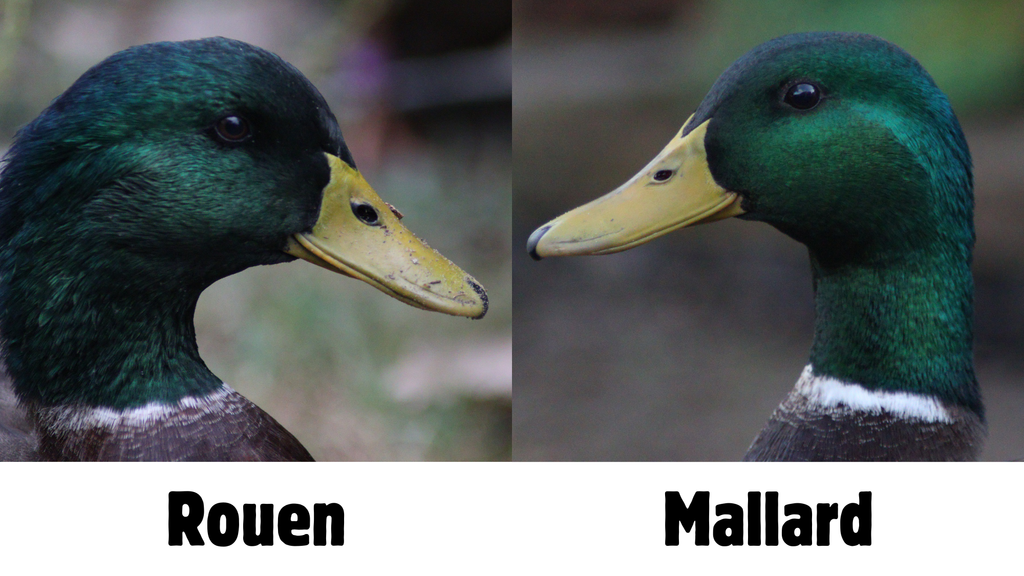
Surprisingly, feather coloration is one of the least reliable ways to distinguish a classic Rouen from a wild Mallard.
Both share the same basic plumage pattern:
- Males: Iridescent green heads, white neck rings, chestnut breasts, gray bodies, and curled tail feathers.
- Females: Mottled brown feathers, darker eye stripes, and orange brown bills with darker markings.
- Both sexes: Iridescent blue to purple wing speculums bordered by white.
Exhibition Rouens may have more carefully selected feather markings, particularly in females, but these details are not reliable enough for most casual observers to identify the breed.
This is why looking at the entire duck, rather than just its feather colors, is so important.
5. Behavior and Temperament
Wild Mallards are naturally cautious animals. Although they may become accustomed to people in parks and other urban environments, they generally retain strong instincts to avoid potential threats.
Rouens have been domesticated for generations and are often described as calm, docile ducks. Many become comfortable around their caretakers, particularly when raised with regular, positive human interaction.
However, being a domestic duck does not automatically mean being a friendly duck. Individual personality, early experiences, socialization, and previous treatment all influence behavior.
A rescued Rouen that has had frightening experiences with people may initially be just as wary as a wild Mallard. With patience, a predictable routine, and positive interactions, many gradually become more comfortable.
Quick Reference: Is It a Rouen or a Mallard?
If you encounter a duck that looks like a Mallard, use these clues to help narrow down its identity.
| What You Notice | What It Might Suggest |
|---|---|
| Very large, heavy body | Likely Rouen or another large domestic duck |
| Broad chest and pronounced horizontal posture | Typical of Standard Rouens |
| Smaller body with a streamlined silhouette | More consistent with a wild Mallard |
| Easily takes off and flies long distances | More consistent with a wild Mallard |
| Cannot fly despite having fully developed wings | May be a heavy domestic duck |
| Classic green head or mottled brown plumage | Could be either |
| Unusually tame or comfortable around people | Could be domestic, but not conclusive |
One important caution: Not every oversized Mallard-looking duck is necessarily a purebred Rouen. Domestic Mallards, mixed-breed ducks, and hybrids between domestic ducks and wild Mallards can share many of these characteristics. Without knowing a duck’s breeding history, visual identification is not always definitive.
Why This Difference Matters
Distinguishing between Rouens and wild Mallards is more than just a matter of curiosity.
Rouens are domestic ducks that depend on people for appropriate food, shelter, and protection. Their heavier bodies and reduced flight ability make them poorly equipped to survive independently in the wild.
Unfortunately, domestic ducks are sometimes abandoned at public ponds because their owners assume they can live alongside wild Mallards. But a domestic Rouen cannot simply become a wild duck because someone releases it into a pond.
If you encounter an unusually large, Mallard colored duck at a public pond, especially one that appears unable to fly, it is worth considering whether it might be a domestic duck that needs help.
For a closer look at their wild relatives, explore our Mallard Duck Breed Guide.
Rouen Duck Temperament and Behavior: Are They Friendly?
Rouen ducks are often described as calm, gentle, and easygoing, making them an appealing choice for backyard duck keepers. Compared with some smaller, more active duck breeds, their heavier build and generally relaxed nature can make them seem a little more laid back.
However, as with any duck breed, temperament varies considerably between individuals. While breed characteristics can give us a general idea of what to expect, a duck’s personality is also shaped by its upbringing, environment, social interactions, and previous experiences.
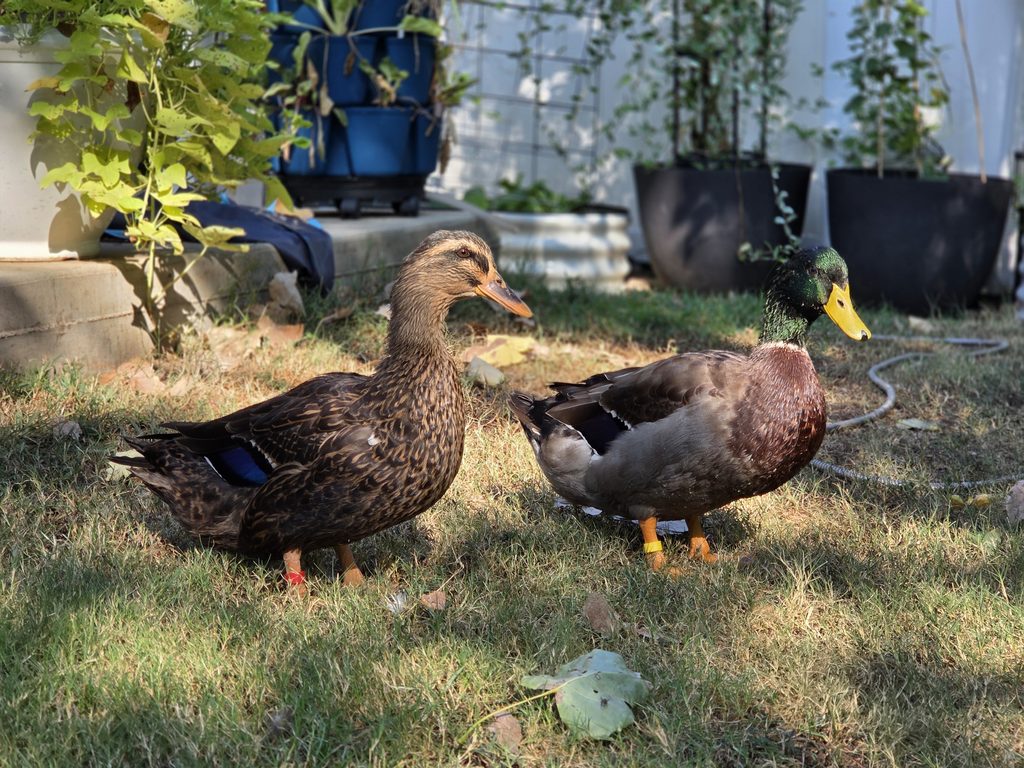
Are Rouen Ducks Friendly Toward Humans?
Rouens can become very friendly and comfortable around their caretakers, especially when they have been raised with gentle, consistent human interaction.
Many learn to recognize familiar people, associate them with food and treats, and develop predictable daily routines. Some may eagerly approach their owners, while others prefer to maintain a little personal space.
Friendly does not necessarily mean cuddly. Even a well socialized Rouen may dislike being picked up or restrained. Ducks are prey animals, and being held can trigger a natural fear response.
I always encourage duck owners to build trust through positive interactions rather than forcing physical contact. Sitting quietly near your ducks, offering their favorite treats, and allowing them to approach voluntarily can go a long way toward developing a trusting relationship.
It is also important to remember that rescued ducks may need considerably more time to become comfortable around humans. Their initial fearfulness does not necessarily reflect their breed’s typical temperament.
How Do Rouens Behave Around Other Ducks?
Rouens are social animals that generally do well in groups. Like other domestic ducks, they benefit from companionship, shared activities, and the security of living with other ducks.
They can often integrate successfully into mixed breed flocks, including those with Pekins, Saxonies, Cayugas, and other domestic ducks.
However, a calm breed does not guarantee a conflict free flock. Ducks establish social hierarchies, develop preferences for certain companions, and sometimes experience disagreements over food, resting areas, or mating opportunities.
Drakes can also become territorial or overly persistent during the breeding season, regardless of how gentle they behave during the rest of the year.
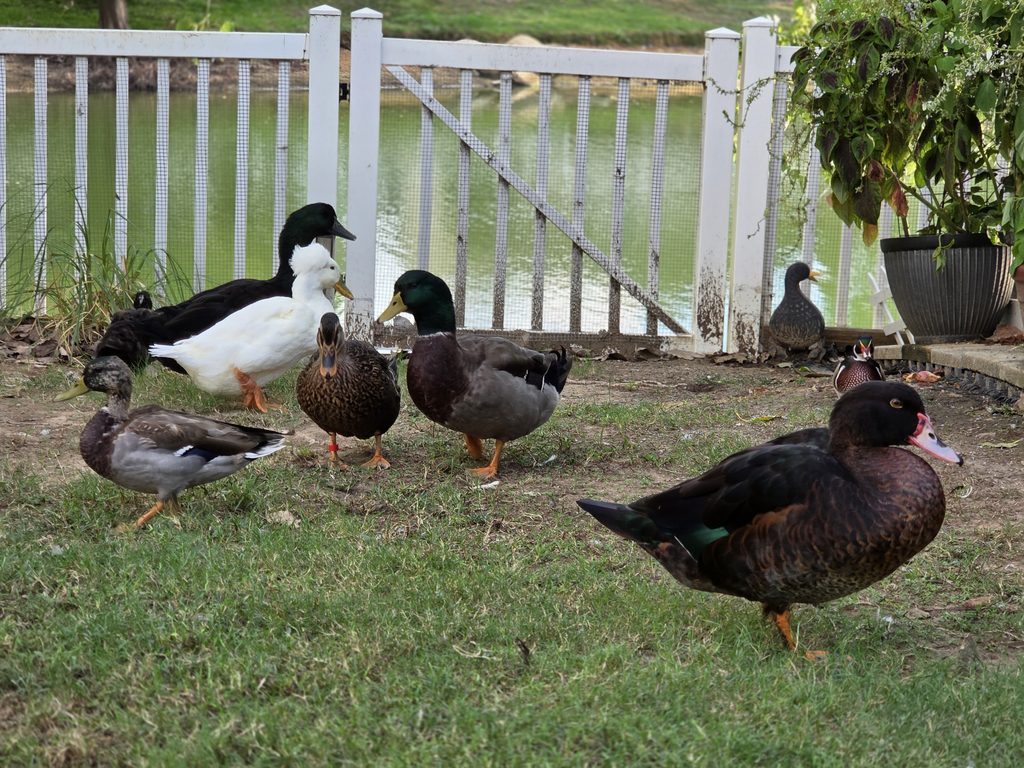
Because Rouens are relatively heavy ducks, special consideration should be given to size differences within a mixed flock. A large Rouen drake may accidentally injure a much smaller female during mating, even without displaying particularly aggressive behavior.
As with any mixed flock, I recommend monitoring interactions carefully, providing sufficient space and resources, and intervening when one duck is repeatedly being chased, excluded, or overmated.
For more guidance, read our articles on how ducks establish their pecking order and introducing new ducks to an existing flock.
Are Rouen Ducks Noisy?
Rouens are generally considered moderately vocal, although there is an important difference between males and females.
Female Rouens produce the familiar loud quack associated with domestic ducks. They may become particularly vocal when excited, calling to their flockmates, anticipating food, or expressing displeasure.
Male Rouens, on the other hand, produce softer, raspier calls that are considerably less noticeable.
This difference is useful not only for understanding flock behavior but also for identifying the sex of young Rouens before their adult plumage develops.
For backyard duck keepers with nearby neighbors, it is worth remembering that even a relatively calm breed can be surprisingly loud when something catches its attention. A Rouen hen certainly knows how to make herself heard!
Are Rouen Ducks Active and Good Foragers?
Although Rouens are heavier and generally less agile than wild Mallards, they still enjoy many of the same natural duck activities.
They love exploring their surroundings, dabbling in water, searching for insects, investigating vegetation, and foraging for edible plants and other small food items.
Production Rouens, with their lighter bodies, are often more active than the exceptionally heavy exhibition type. However, individual differences can be substantial.
Because of their size, Rouens may be less inclined to cover large distances than smaller, more athletic breeds. This makes it particularly important to provide opportunities for movement and environmental enrichment.
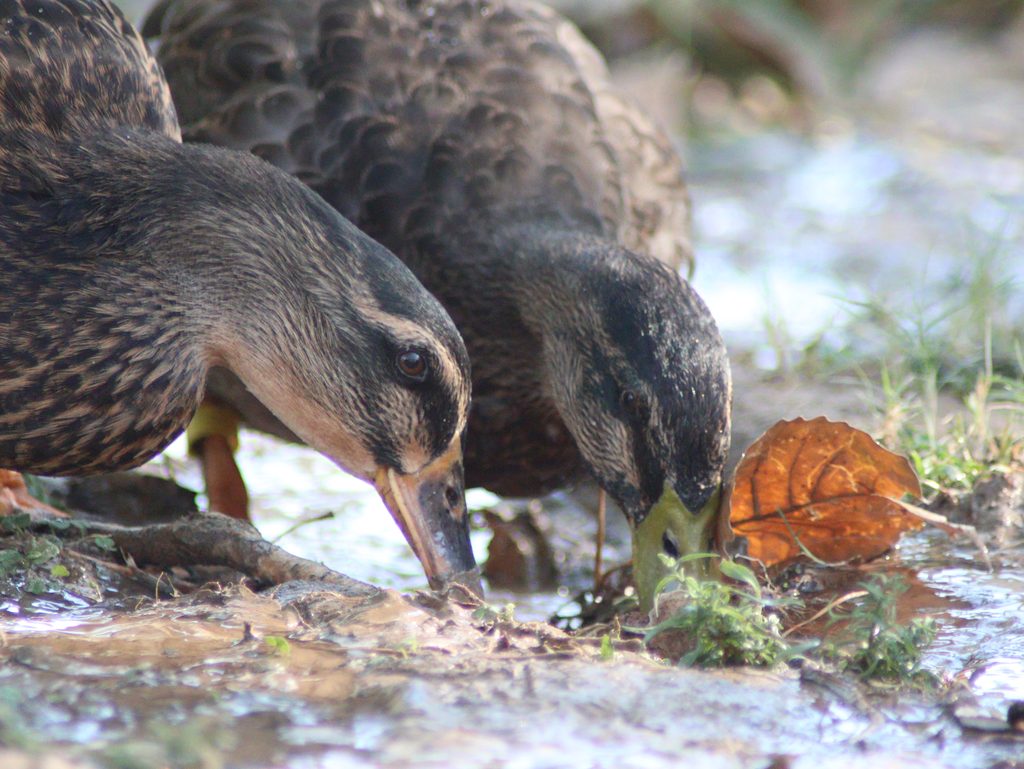
A calm duck should not be mistaken for a duck that does not need exercise. Rouens still benefit from plenty of space to walk, forage, swim, and engage in normal duck behaviors.
Providing multiple feeding locations, changing enrichment activities, and encouraging natural foraging can help keep them physically active and mentally stimulated.
Do Rouen Ducks Like Swimming?
Absolutely! Despite their substantial body size, Rouens retain the strong affinity for water characteristic of domestic ducks.
They enjoy swimming, bathing, dabbling, and preening. Access to clean water also allows them to maintain their feathers, rinse their eyes and nostrils, and perform important natural behaviors.
Their heavy bodies do not prevent them from swimming, but particularly large Standard Rouens may benefit from pools with gentle slopes or easily accessible entry and exit points.
A steep sided pool without a safe way to climb out can become a problem, especially for older ducks or individuals with mobility limitations.
As with all domestic ducks, Rouens should have constant access to drinking water deep enough to submerge their bills and nostrils, even when a swimming pool is temporarily unavailable.
Are Rouen Ducks Good Pets?
For many backyard duck enthusiasts, Rouens can make wonderful companions. Their attractive plumage, generally calm demeanor, and social personalities are certainly appealing.
However, they are not necessarily the ideal breed for every situation.
Their larger size means they require appropriate housing, sufficient space, and careful attention to body condition and foot health. They also cannot reliably escape predators by flying, making secure housing and supervised outdoor access particularly important.
Like all ducks, they are happiest when they can express their natural behaviors and live with compatible duck companions.
My perspective: I would never choose a duck breed based on temperament alone. A calm Rouen still needs the same commitment to proper nutrition, veterinary care, enrichment, companionship, and predator protection as any other duck. When those needs are met, Rouens can be a wonderful addition to a backyard flock.
Rouen Duck Egg Production and Broodiness
Rouen ducks may be best known for their beautiful plumage and impressive size, but what about their eggs? If you are considering adding Rouens to your backyard flock, you might wonder how many eggs they lay, when they start laying, and whether they make good mothers.
While Rouens are not considered high production egg layers, they can provide a modest supply of large, nutritious eggs, especially if you have Production Rouens rather than the heavier exhibition type.
How Many Eggs Do Rouen Ducks Lay?
Rouen ducks were originally developed primarily for meat production rather than egg laying. As a result, they generally produce fewer eggs than specialized laying breeds such as Khaki Campbells or Indian Runners.
Annual egg production varies considerably depending on the breeding line, age, nutrition, health, and environmental conditions.
| Rouen Type | Typical Egg Production | What to Expect |
|---|---|---|
| Standard Rouen | Often approximately 35 to 100 eggs per year | Generally lower production, especially in exhibition lines |
| Production Rouen | Often approximately 100 to 150 eggs per year | Selected for more practical farm characteristics and potentially higher production |
These numbers are approximate rather than guaranteed. Some Rouens may lay more or fewer eggs, and published estimates vary between sources.
One important consideration: Egg production is not evenly distributed throughout the year. Like many domestic ducks, Rouen hens often lay more consistently during spring and early summer, when increasing daylight stimulates reproductive activity.
Production may decline during molting, periods of environmental stress, or the shorter days of fall and winter.
When Do Rouen Ducks Start Laying Eggs?
Rouen hens generally begin laying at approximately 6 to 9 months of age, although some may start earlier or considerably later.
Their relatively slow maturation, particularly in Standard Rouens, can delay the onset of egg production compared with lighter laying breeds.
Several factors influence when a young Rouen hen lays her first egg, including genetics, nutrition, body condition, daylight exposure, and the season in which she reaches maturity.
For example, a young hen that reaches reproductive maturity during fall may not begin laying until the following spring.
It is important not to rush this process. A balanced diet, appropriate body condition, and sufficient calcium once laying begins are more important than encouraging the earliest possible egg production.
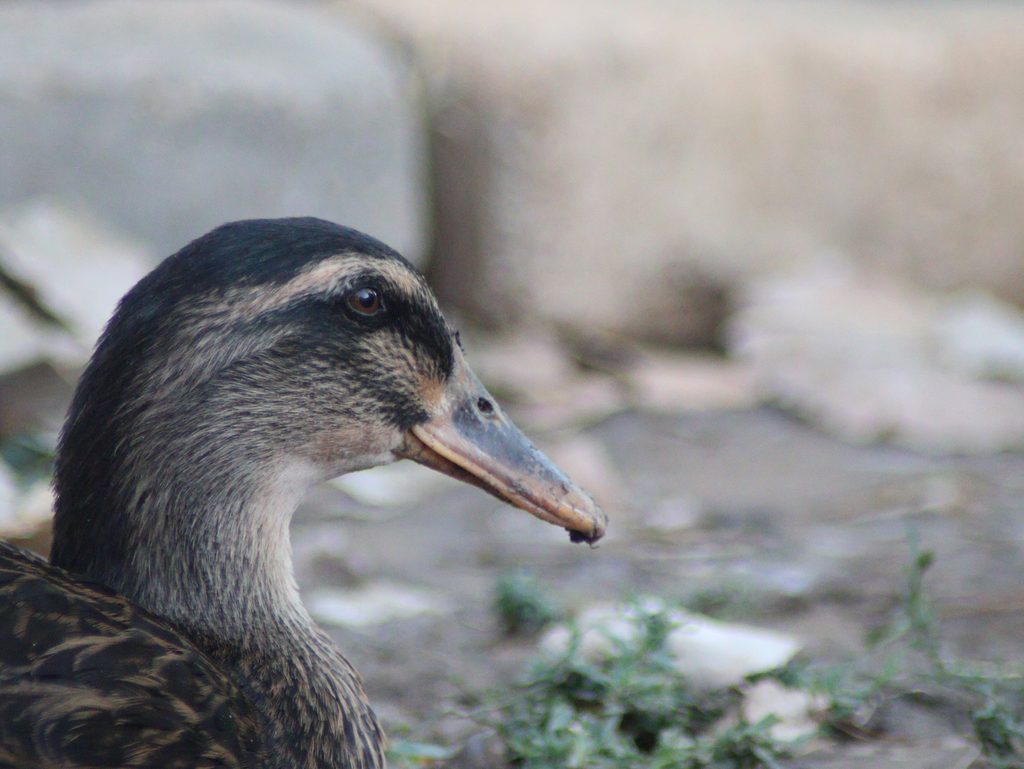
What Color and Size Are Rouen Duck Eggs?
Rouen ducks typically lay large eggs that are white, off white, or occasionally pale blue or green tinted, depending on the individual bird and breeding line.
Their eggs are generally larger than standard chicken eggs, although exact size varies with the hen’s age, genetics, and laying history.
Like other duck eggs, Rouen eggs have a relatively large yolk and are popular for baking because of their rich texture and useful culinary properties.
If you are interested in how duck eggs develop inside the female reproductive system, take a look at our guide on how ducks make eggs.
Are Rouen Ducks Broody?
Rouen hens can become broody, meaning they develop the hormonal drive to sit on a clutch of eggs and incubate them.
However, broodiness varies between individuals and breeding lines. Some Rouens may show strong maternal instincts, while others have little interest in sitting on eggs.
A broody Rouen may spend extended periods in her nest, become more protective of her eggs, and leave only briefly to eat, drink, bathe, and relieve herself.
Broodiness does not necessarily mean that a hen will successfully hatch and raise ducklings. Incubation success depends on egg fertility, consistent incubation conditions, the hen’s behavior, and her physical health.
Rouen ducks typically have an incubation period of approximately 28 days, similar to most other domestic Mallard-derived duck breeds. However, some ducklings may hatch a day or two earlier or later.
Because Standard Rouens are particularly heavy, their body size may create additional challenges when incubating eggs naturally. Some breeders therefore prefer artificial incubation, especially with valuable breeding stock.
Should You Choose Rouens for Egg Production?
If your primary goal is a steady supply of duck eggs, breeds such as Khaki Campbells, Welsh Harlequins, or Indian Runners are generally better choices.
However, if you are looking for beautiful, calm backyard companions and consider fresh eggs a welcome bonus, Rouens can be a lovely addition to your flock.
I always encourage duck owners to remember that egg production is only one aspect of a duck’s health and well-being. A hen that lays fewer eggs is not necessarily unhealthy or unproductive. Age, season, molting, broodiness, and individual biology all influence her reproductive cycle.
For more information, explore our guides on why ducks stop laying eggs and how egg production changes as ducks age.
Rouen Duck Housing, Feeding, and Daily Care
Rouen ducks have many of the same basic needs as other domestic duck breeds, including safe housing, balanced nutrition, clean water, companionship, and opportunities to express their natural behaviors. However, their large body size and relatively heavy build create a few additional considerations that duck owners should keep in mind.
Standard Rouens, in particular, may be less agile than smaller duck breeds. Providing an environment that supports their mobility, encourages exercise, and protects their feet can make a significant difference in their long-term health and comfort.
How Much Space Do Rouen Ducks Need?
Like all ducks, Rouens need enough room to move freely, stretch their wings, forage, and interact with their flockmates without constant competition for space.
Because Rouens are a heavyweight breed, I recommend planning toward the higher end of general duck housing recommendations.
| Housing Area | Suggested Space per Adult Rouen |
|---|---|
| Nighttime shelter | Approximately 4 to 6 sq ft (0.37 to 0.56 m²) |
| Secure outdoor run | At least 15 to 20 sq ft (1.4 to 1.9 m²), preferably more |
| Free-ranging area | As much safe, accessible space as possible |
| Swimming area | Large enough for comfortable bathing, swimming, and easy entry and exit |
These are practical starting points rather than universal requirements. The ideal amount of space depends on flock size, climate, ground conditions, time spent confined, and the availability of additional outdoor areas.
A duck that spends most of its day in a secure run needs considerably more usable space and enrichment than one that has access to a larger supervised foraging area.
Rouens also benefit from housing that is easy to navigate. Avoid steep ramps, high entrances, and obstacles that require excessive jumping or climbing.
Choosing the Right Flooring and Bedding
Foot health is particularly important for heavier duck breeds.
Because Rouens carry more body weight, their feet experience greater mechanical loading during standing and walking. Hard, abrasive, or consistently wet surfaces can contribute to irritation and increase the risk of foot problems, including bumblefoot.
I recommend providing clean, dry, and relatively forgiving resting surfaces, particularly inside the nighttime shelter.
Suitable bedding options include straw, appropriately sized wood shavings, and other absorbent materials that can be maintained in a clean, dry condition.
Outdoor areas should have good drainage and avoid persistent mud, sharp gravel, exposed wire, or rough surfaces.
Regularly inspect your ducks’ feet for redness, swelling, abnormal pressure areas, or changes in walking behavior. Early identification of problems can prevent minor irritation from developing into more serious injuries.
Swimming and Water Access
Rouens may be heavy ducks, but they still love water!
Swimming, bathing, and dabbling are important natural behaviors that contribute to feather maintenance, comfort, and overall well-being.
A pond is wonderful if you have the space and resources to maintain one, but it is not an absolute requirement. A sufficiently large, regularly cleaned duck pool can also provide valuable opportunities for bathing and swimming.
For particularly heavy Rouens, safe entry and exit are essential. A pool with steep, slippery sides can make it difficult for a large duck to climb out, especially if it is older or experiencing mobility problems.
I recommend using gradual ramps, stable steps, or appropriately designed pools with accessible edges.
Regardless of whether a swimming pool is available, ducks must always have access to clean drinking water deep enough to submerge their entire bills and rinse their nostrils.
Water should also be available whenever feed is accessible, including overnight if food is provided inside the shelter.
What Should You Feed Rouen Ducks?
Rouens do best on a balanced diet formulated for domestic ducks or appropriate waterfowl.
Their nutritional needs change with age, reproductive status, and activity level, so it is important to choose feed that matches their life stage.
Ducklings require a properly formulated starter diet with sufficient niacin to support normal growth and leg development. Growing juveniles should transition to an appropriate grower or maintenance feed, while actively laying hens need adequate calcium for eggshell production.
For adult Rouens, I recommend a complete, nutritionally balanced duck feed as the foundation of their diet, supplemented with appropriate vegetables, greens, and occasional treats.
Rouens also enjoy natural foraging, including insects, worms, and edible vegetation.
However, because they are relatively heavy ducks, maintaining a healthy body condition is especially important.
Preventing Obesity in Rouen Ducks
Rouens naturally have a broad, substantial body shape. That does not mean every large Rouen is overweight!
A healthy Standard Rouen should be noticeably heavier and broader than a Mallard or a lightweight domestic duck. However, excess body fat can still create health problems, particularly when combined with limited activity.
Obesity can place additional strain on the legs and feet, reduce mobility, and contribute to reproductive and metabolic health concerns.
I recommend monitoring body condition rather than relying on body weight alone.
Regular weighing is helpful, but the number on the scale should always be interpreted alongside the duck’s frame size, muscle condition, activity level, and changes over time.
Gently assessing the keel and surrounding breast muscles can provide additional information about body condition, although the substantial breast musculature of a Rouen may make interpretation more challenging.
Encourage regular movement by providing enough space, opportunities to forage, and environmental enrichment.
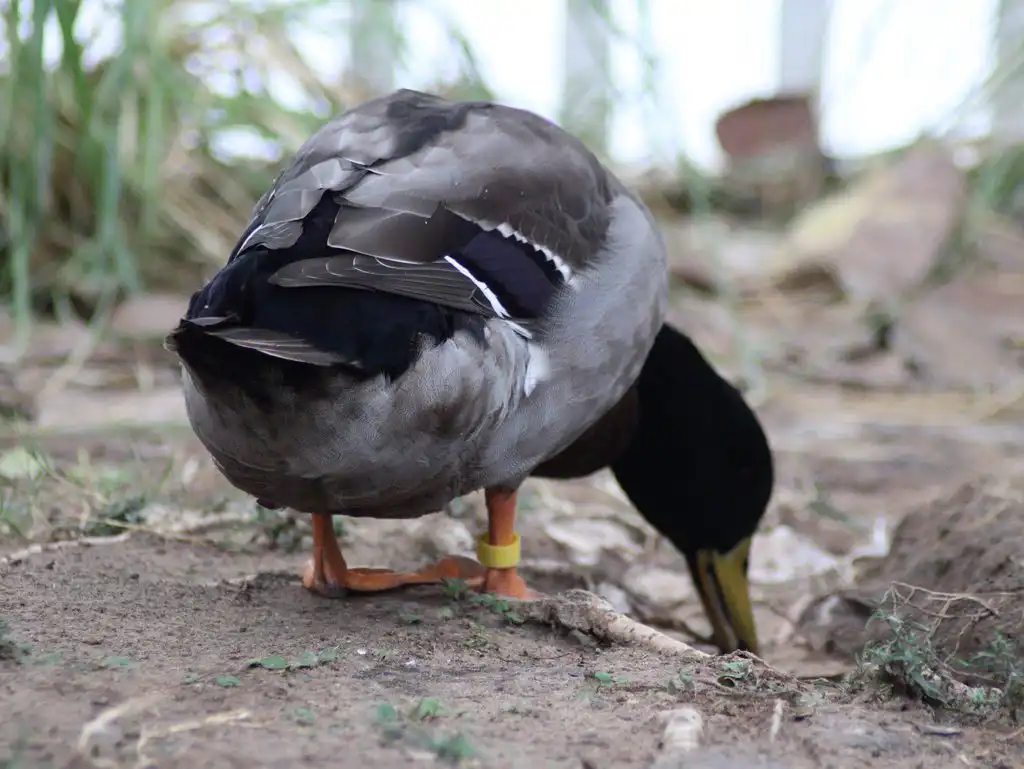
Even something as simple as placing feeding stations farther away from favorite resting spots can encourage ducks to walk more throughout the day.
Treats should remain a small part of the overall diet, especially energy dense foods such as corn, mealworms, and other concentrated snacks.
For a more detailed discussion, including how to recognize unhealthy weight gain, read our guide on obesity in ducks.
Protecting Rouens From Predators
Because Rouens generally cannot fly well, they are particularly vulnerable to predators.
A wild Mallard may escape danger by taking flight, but a heavy Rouen often has no such option.
This makes secure nighttime housing and a predator-resistant outdoor environment absolutely essential.
Rouens should be housed in a sturdy shelter with secure doors, predator-resistant ventilation openings, and protection against digging or climbing predators.
Outdoor runs should also be designed to prevent access by common predators, including raccoons, foxes, coyotes, dogs, and birds of prey.
I never recommend relying on a duck’s size as protection. Even a large Rouen can be seriously injured or killed by a predator.
Caring for Rouens During Hot and Cold Weather
Rouens are generally considered cold-hardy ducks, thanks to their dense plumage and substantial body size. However, they still require a dry, draft-protected shelter and access to unfrozen drinking water during winter.
Wet bedding, poor ventilation, and prolonged exposure to freezing conditions can create serious health risks.
Hot weather can be particularly challenging for heavyweight breeds, especially in climates like ours here in North Texas.
Their large body mass and insulating feathers can make it more difficult to dissipate excess heat, particularly when temperatures and humidity are high.
Fans, frozen treats, and carefully managed cooling systems can also help, although they should never replace access to shade and water.
Watch for signs of heat stress, including persistent open-bill breathing, pronounced wing spreading, weakness, or unusual lethargy.
A heavy duck that is struggling in the heat needs immediate attention. Move the bird to a cooler, well ventilated area, offer drinking water, and contact an avian veterinarian promptly if signs are significant or do not improve.
With appropriate housing, nutrition, exercise, and environmental management, Rouens can thrive as healthy, active members of a backyard flock.
Are Rouen Ducks Right for Your Flock?
With their beautiful plumage, generally calm temperament, and impressive size, Rouen ducks can be wonderful additions to a backyard flock. However, choosing the right duck breed involves more than simply falling in love with its appearance. It is important to consider your available space, climate, flock dynamics, and what you expect from your ducks.
Are Rouen Ducks Good for Beginners?
Rouens can be a good choice for first time duck owners, particularly those looking for relatively calm, sociable birds rather than highly active egg laying breeds.
Their generally easygoing nature can make daily interactions and flock management enjoyable. However, their larger body size also means they need suitable housing, accessible swimming areas, and careful attention to foot health and body condition.
For beginners, Production Rouens may be a more practical choice than exceptionally heavy exhibition Rouens because they tend to be lighter and more mobile.
That said, no duck breed is truly low maintenance. Rouens still need daily care, clean water, balanced nutrition, predator protection, and access to veterinary care when necessary.
Can Rouen Ducks Live With Other Duck Breeds?
Yes! Rouens can generally live successfully in mixed breed flocks, provided introductions are handled carefully and the ducks have enough space and resources.
Their calm temperament may make them compatible with breeds such as Pekins, Saxonies, Cayugas, and Khaki Campbells. However, individual personalities matter much more than breed labels.
Size differences deserve particular attention, especially when drakes are involved. A large Rouen drake may be too heavy for a small female, increasing the risk of injuries during mating.
I always recommend observing flock dynamics closely, particularly during the breeding season, and separating ducks when persistent aggression or overmating becomes a problem.
Are Rouens Suitable for Small Backyards?
Rouens can adapt well to backyard environments, but their size and housing needs should not be underestimated.
A small flock may do well in a suburban backyard with a secure shelter, spacious outdoor run, and appropriate bathing facilities. However, a tiny enclosure with limited opportunities for exercise is not suitable for these large ducks.
Female Rouens can also be quite vocal, which may be a consideration if you have close neighbors.
Before bringing Rouens home, check local regulations, consider the number of ducks your property can comfortably accommodate, and make sure you have a plan for predator protection and waste management.
Should You Choose Standard or Production Rouens?
Both types have their appeal, but they may suit different priorities.
Standard Rouens are particularly impressive birds, with their massive bodies and beautiful exhibition appearance. They may appeal to experienced keepers or those interested in preserving traditional breed characteristics.
Production Rouens tend to be smaller, more active, and potentially better egg layers, making them a practical choice for many backyard flocks.
Regardless of type, I would prioritize healthy birds from responsible breeders or consider adopting domestic ducks in need of a home.
Ultimately, the best Rouen is one whose needs you can meet throughout its entire life. Whether you choose a magnificent exhibition bird or a more modestly sized Production Rouen, these ducks deserve the same commitment to proper care, companionship, and protection as any other member of your flock.
From Our Flock: Meet Tina and Thomas
Sometimes, ducks find their way into your life when you least expect them. That is exactly what happened with Tina and Thomas, our two rescued Rouen ducks, who joined the Ducks of Providence family during the scorching North Texas summer of 2026.
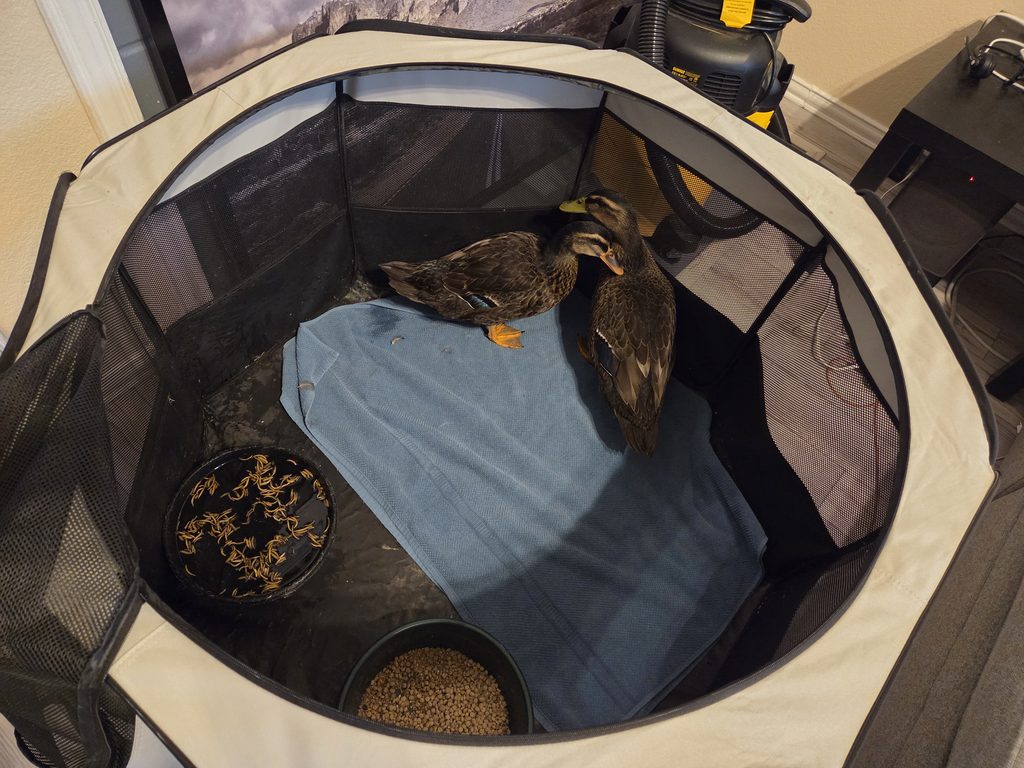
Their story started when we learned about two young ducks wandering through our neighborhood. They had apparently been abandoned and were roaming the streets, walking through front yards, and even spending their nights hiding underneath parked cars. With the Texas summer heat in full swing, this was an incredibly dangerous situation. Domestic ducks are simply not equipped to survive on their own, especially when they cannot reliably fly away from predators.
Catching them was quite an adventure! Both were absolutely terrified of people, and I can only imagine what they had experienced before we found them. But eventually, we managed to get them to safety.
They were hungry, dehydrated, and understandably frightened. For their first week, Tina and Thomas lived in a temporary enclosure in our living room, where we could monitor their health, provide proper food and water, and allow them to recover in a safe environment. Initially, we hoped to find them a suitable new home, but that turned out to be more difficult than expected. Finding homes for ducks, particularly when one is a drake, is unfortunately not always easy.
And so, our flock grew by two!
Watching Thomas Grow Into His Adult Plumage
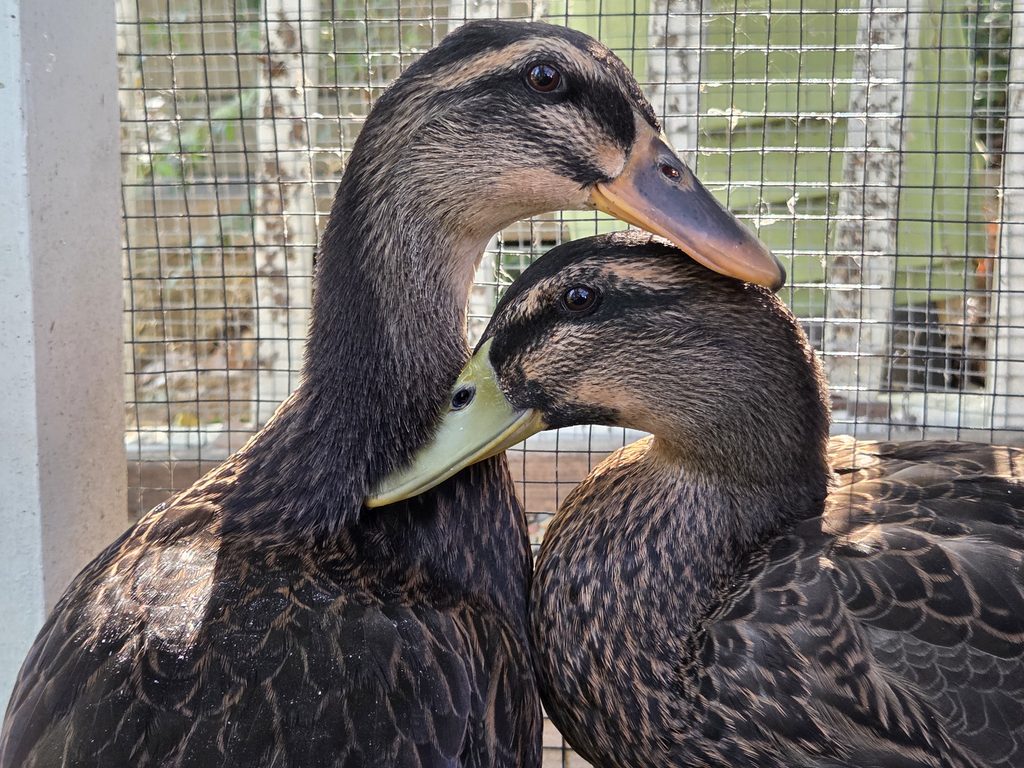
When we rescued Tina and Thomas, we estimated they were approximately 8 to 10 weeks old. Both were already fully feathered, but their appearance was still remarkably similar.
Their voices, however, told a different story. Tina had the characteristic loud female quack, while Thomas already produced the softer, raspier sounds typical of a young drake.
Over the following weeks, Thomas gradually transformed into a beautiful adult Rouen drake. His head developed that stunning iridescent green coloration, his chest became a rich chestnut brown, and his adult plumage made him look almost like an entirely different duck.
Watching this transformation firsthand has been fascinating, especially because it demonstrates how voice differences can help identify the sex of young Rouens long before their adult feather coloration becomes obvious.
Learning to Trust Again
Introducing Tina and Thomas to our existing flock took time and patience. We allowed them to become familiar with their new surroundings and gradually get to know the other ducks before integrating them.
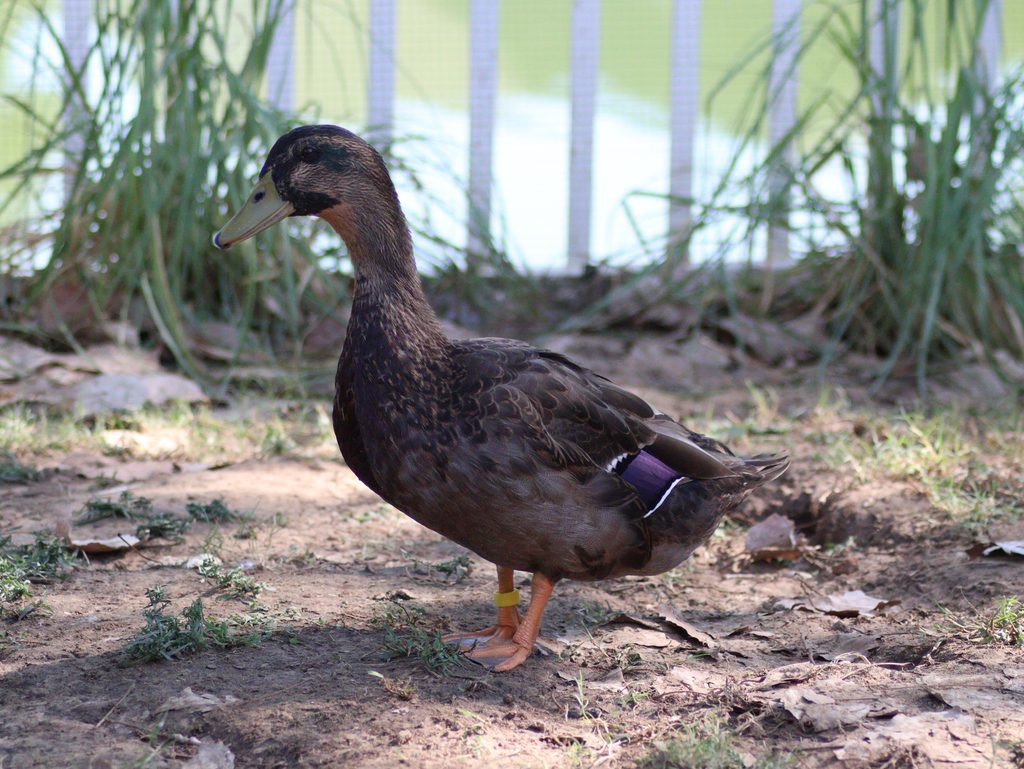
Today, they are well integrated into the flock and have settled into their new home. However, both are still rather skittish around people, which is understandable given their history.
But we are making progress!
Recently, Tina started accepting treats directly from my hand, something I consider a huge milestone. It might not sound particularly exciting to someone who has never worked with frightened rescue ducks, but gaining that little bit of trust means the world to me.
Thomas is still more cautious, but that is perfectly fine. Every duck adjusts at its own pace, and I have no intention of rushing either of them.
Two More Ducks, Two More Personalities
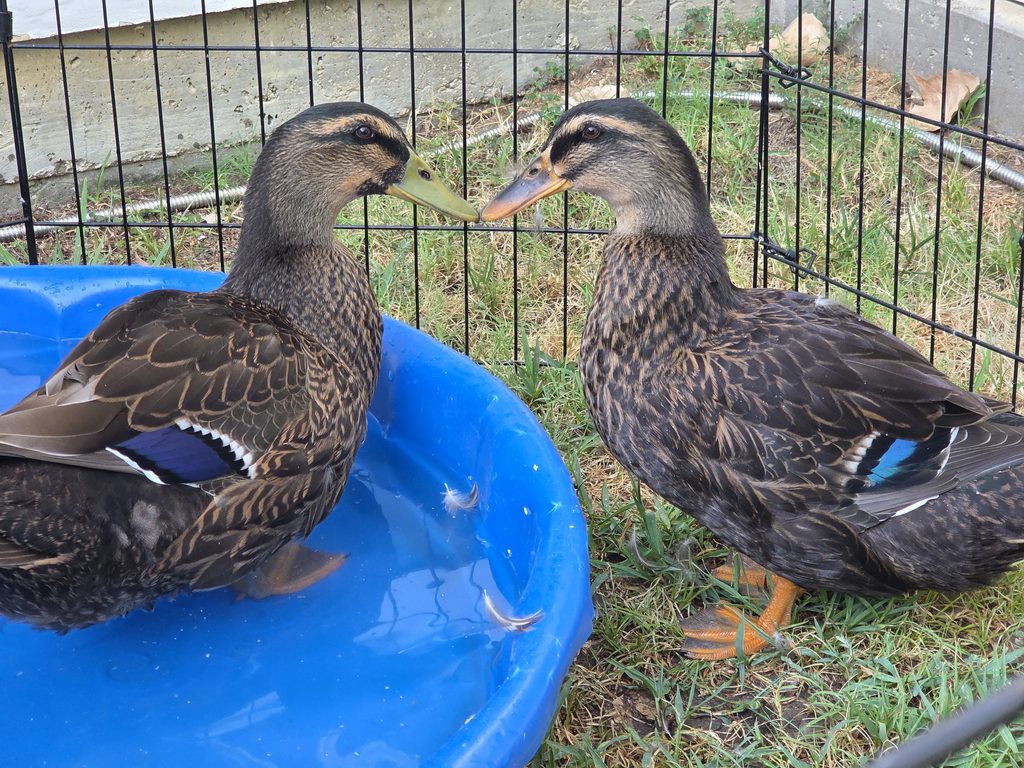
What I love most about welcoming new ducks into our flock is discovering their individual personalities. Even though Tina and Thomas are the same breed and arrived together, they are two very different individuals.
Their story is also an important reminder that domestic ducks depend on us for their safety and well being. Abandoning them at a pond, in a neighborhood, or anywhere else outdoors is not giving them freedom. It is putting their lives at risk.
I am grateful that Tina and Thomas found their way to us. They may not have been part of our original flock plans, but they are now part of our family.
And if Tina’s recent willingness to take treats from my hand is any indication, I have a feeling there are many more little milestones ahead of us!
Are Rouen ducks the same as Mallards?
No. Although Rouen ducks look remarkably similar to wild Mallards, they are a domesticated breed developed through selective breeding. Rouens are generally much larger, heavier, and less capable of flight than wild Mallards. Both share the same wild Mallard ancestry and characteristic plumage patterns, including the green heads of mature drakes and mottled brown feathers of females.
How can you tell a male Rouen duck from a female?
Adult male Rouens have iridescent green heads, white neck rings, chestnut breasts, and gray bodies. Females have mottled brown plumage and typically orange brown bills with darker markings. Voice is one of the most reliable ways to distinguish younger Rouens: females produce loud quacks, while males develop softer, raspier calls. Mature drakes may also develop curled tail feathers.
At what age do male Rouen ducks get their green heads?
Male Rouens typically begin developing their distinctive green head feathers at approximately 3 to 5 months of age, although some take longer. The timing depends on genetics, seasonal molting, and individual development. Young males may already be identifiable by their raspy voices at around 6 to 8 weeks, well before their adult breeding plumage appears.
Can Rouen ducks fly?
Most Standard Rouen ducks are too heavy to achieve sustained flight. Their large bodies and relatively limited flight ability distinguish them from wild Mallards, which are excellent fliers. Smaller Production Rouens may occasionally manage short flights, but Rouens should never be expected to escape predators by flying away. Secure housing and predator protection are essential.
Are Rouen ducks friendly and good pets?
Yes, Rouens can make wonderful backyard pets. They are generally known for their calm, gentle, and sociable temperament. However, individual personalities vary, and some ducks may be shy or cautious, especially if they have experienced stressful situations. With patient handling, positive interactions, appropriate housing, and duck companionship, Rouens can become comfortable and trusting around their caretakers.
How many eggs do Rouen ducks lay per year?
Rouen egg production varies by breeding line. Heavy Standard Rouens may lay approximately 35 to 100 eggs annually, while lighter Production Rouens may produce around 100 to 150 eggs per year. Individual results vary with age, nutrition, daylight, health, and seasonal conditions. Rouen eggs are generally large and white to off white, sometimes with a pale blue or green tint.
Final Thoughts: Are Rouen Ducks the Right Breed for You?
Rouen ducks are truly beautiful birds. With their striking Mallard like appearance, impressive size, and generally calm personalities, it is easy to understand why they have captured the hearts of so many backyard duck enthusiasts.
But there is much more to Rouens than their good looks. These gentle giants need plenty of space, opportunities to swim and forage, proper nutrition, and protection from predators. Their heavier build also makes maintaining a healthy body condition and good foot health particularly important.
For me, welcoming Tina and Thomas into our Ducks of Providence flock has been a wonderful reminder that every duck has its own story. Watching Thomas develop his magnificent adult plumage and seeing Tina slowly gain confidence around us has made getting to know this breed especially rewarding. They may have arrived under unfortunate circumstances, but I am grateful that we can give them the safe, loving home they deserve.
Would I recommend Rouen ducks as pets? Absolutely, provided you are prepared to meet their needs. Whether you choose a Standard Rouen or a smaller Production Rouen, these ducks can make wonderful companions for anyone who appreciates their unique personalities and is committed to responsible duck keeping.
And remember, whether your duck has a brilliant green head, beautiful brown feathers, or a rather impressive waddle, its individual personality is what will truly make you fall in love.
Do you have Rouen ducks in your flock? I would love to hear about their personalities, quirks, and experiences! Share your stories in the comments below.
If you are still exploring which duck breed might be the best fit for your backyard, be sure to check out our other duck breed guides and discover more wonderful members of the duck world.
Happy duck keeping! 🦆
Further Reading & Resources
- Ultimate Duck Breed Comparison Guide: Find the Right Duck for Your Flock
- Mallard Ducks: From Wild Ancestors to Backyard Companions
- From Wild Mallards to Backyard Pets: The Evolution of Domestic Ducks
- Keeping Ducks 101: A Beginner’s Guide to Duck Care
- American Poultry Association. The American Standard of Perfection. The APA’s breed standard recognizes the Rouen and records its admission in 1874.
- Livestock Conservancy. “Rouen Duck.” Breed profile and conservation information concerning the history, characteristics, and traditional status of Rouen ducks.
Master the basics of evidence-based care. Explore the full Beginner’s Handbook to build a strong foundation for your flock.