
When Do Ducks Stop Laying Eggs? Duck Henopause and Senior Duck Care

To keep our research-backed guides free, this site uses ads and affiliate links (earning a small commission at no cost to you). Everything here is created by a duck mom and PhD scientist, combining academic rigor with hands-on experience to provide practical, trustworthy advice for duck keepers everywhere. 🦆 Learn more
If your older duck has suddenly stopped laying, you may be wondering, when do ducks stop laying eggs? Is she simply entering henopause, or could the change signal a reproductive problem that needs veterinary care?
The short answer is that ducks do not stop laying at one predictable age. Most produce the greatest number of eggs during their first few years, followed by a gradual decline as they get older. Some senior ducks continue laying a handful of eggs each year, while others take increasingly long seasonal breaks or eventually stop altogether. Breed, genetics, daylight, molting, nutrition, stress, and health can all influence an older duck’s laying habits.
Although we often use the playful term duck henopause, it is not a veterinary diagnosis or a single biological event like human menopause. A healthy aging duck usually experiences a gradual change in reproductive activity. A sudden stop, especially when accompanied by a swollen abdomen, unusual posture, reduced appetite, weight loss, weakness, or breathing changes, should never be dismissed as “just old age.” Internal laying, egg yolk peritonitis, salpingitis, reproductive tumors, and other serious conditions can initially look like natural reproductive retirement.
In this guide, I will explain when ducks typically begin laying fewer eggs, how laying patterns differ among breeds, and how to recognize the difference between normal aging and a possible medical emergency. We will also explore practical senior duck care, including nutrition, calcium needs, joint support, and simple health checks that can help your beloved flock members remain comfortable long after their busiest laying years are behind them.
Part of the Duck Health & Anatomy Hub, Evidence-based medical resources and anatomical research.
Quick Navigation: Jump to a Section
- When Do Ducks Stop Laying Eggs? The Quick Answer
- At What Age Does Duck Egg Production Decline?
- What Is Duck Henopause?
- Is It Henopause or a Temporary Break from Laying?
- Natural Henopause or Reproductive Disease?
- Feeding a Senior Duck That No Longer Lays Eggs
- Supporting Joints, Feet, and Mobility in Senior Ducks
- Routine Health Checks for Senior Ducks
- From Our Flock: Aging Is Never Just a Number
- Frequently Asked Questions About Duck Henopause and Senior Duck Care
- Fewer Eggs, Just as Much to Love
- Further Reading & Resources
When Do Ducks Stop Laying Eggs? The Quick Answer
Most ducks lay their greatest number of eggs during their first two to three years. After that, egg production commonly begins to decline. However, this does not mean a duck will suddenly stop laying on her third birthday. Many healthy ducks continue producing smaller numbers of eggs for several more years, and some senior ducks may surprise their owners with an occasional egg even after a long break.
There is no universal age when ducks stop laying eggs. A duck may gradually lay fewer eggs each season, take longer breaks during winter or molting, or eventually stop producing eggs altogether. Her laying pattern will depend on several factors, including:
- Breed and genetics
- Age and reproductive history
- Daylight and season
- Molting
- Nutrition and body condition
- Stress and changes within the flock
- Illness or reproductive disease
High production breeds, such as Khaki Campbells and Indian Runners, may show a more noticeable decline after several demanding laying seasons. Heritage and heavier breeds often produce fewer eggs each year, but they may continue laying seasonally for many years.
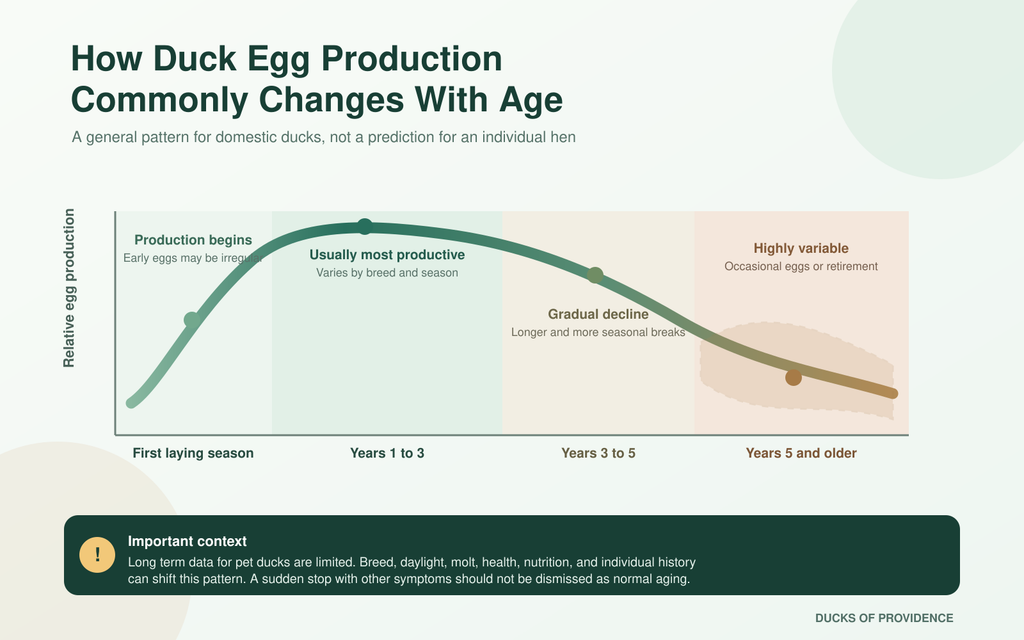
The key word is gradual. A slow reduction in egg production can be a normal part of aging. A sudden stop combined with changes in appetite, weight, posture, breathing, droppings, or behavior deserves closer attention and may require an avian veterinarian.
At What Age Does Duck Egg Production Decline?
Most female ducks begin laying between four and seven months of age, although larger breeds and ducks that mature during fall or winter may start later. Egg production is generally highest during the first two or three laying seasons. After that, many ducks begin producing fewer eggs, taking longer seasonal breaks, or laying less consistently.
However, there is no scientifically established retirement age for each duck breed. Breed influences how many eggs a duck is likely to produce, but it cannot tell us exactly when an individual duck will stop laying.
| Duck’s age | Common laying pattern |
|---|---|
| Less than 1 year | Laying begins once the duck reaches sexual maturity. Early eggs may be small, irregular, soft shelled, or unusually large. |
| 1 to 3 years | These are usually the most productive laying years, especially for breeds developed for egg production. |
| 3 to 5 years | Production often begins to decline. Seasonal pauses may become longer, and laying may become less predictable. |
| 5 years and older | Many ducks lay only seasonally or occasionally. Some stop completely, while others continue surprising their families with a few eggs each year. |
How Breed Influences Laying in Older Ducks
Ducks bred for high egg production often lay more frequently during their younger years. This includes breeds such as Khaki Campbells, Indian Runners, and Welsh Harlequins. Because they begin with such high production, the decline may be easier to notice as they age.
Heritage, dual purpose, and heavy breeds, such as Rouens, Buff Orpingtons, Swedish ducks, and Pekins, generally lay fewer eggs per year. Their production may be more seasonal from the beginning, making reproductive aging appear less dramatic.
| Duck type | Typical pattern with age |
|---|---|
| High production breeds | Usually lay heavily during their first few years, followed by a noticeable reduction in frequency |
| Dual purpose and heritage breeds | Often produce moderate numbers of eggs and may continue laying seasonally for many years |
| Heavy breeds | May mature later and commonly have more seasonal or widely spaced laying cycles |
| Mixed breed ducks | Laying patterns vary depending on their genetics, health, environment, and individual reproductive history |
These are general patterns rather than firm deadlines. Two ducks of the same breed and age can have very different laying histories. One may stop producing eggs at five years old, while her flock mate continues laying occasionally for several more years.
Duck Mom Tip: Keep a simple egg record for each duck whenever possible. Knowing what is normal for Emma, Krümel, Muffin, or another individual flock member is far more useful than comparing her with a general breed average. A gradual decline may reflect aging, but a sudden and unexplained change deserves a closer look.
What Is Duck Henopause?
Duck henopause is an informal term used to describe the gradual decline or eventual end of egg production as a female duck ages. It is a memorable way to explain reproductive aging, but it is not a formal veterinary diagnosis.
Henopause is also not exactly the same as menopause in humans. Human menopause is defined by the permanent end of menstrual cycles. Ducks do not menstruate, and they rarely reach one clear moment when egg production permanently ends. Instead, an aging duck’s reproductive activity usually becomes less frequent and less predictable over time.
The laying process is controlled by a complex interaction between the brain, hormones, ovaries, and reproductive tract. Daylight stimulates the release of reproductive hormones, which encourage ovarian follicles to mature and eventually become yolks. As a duck ages, this system may become less active or respond less consistently to seasonal signals. For a complete anatomical and biological breakdown of this fascinating process, read our guide, How Are Duck Eggs Made? A Journey Through the Duck Reproductive System
You may notice that an older duck:
- Starts laying later in the spring
- Produces fewer eggs each week
- Takes longer breaks between eggs
- Stops laying during hot or cold weather
- Has longer pauses during and after a molt
- Lays eggs that vary more in size, shape, or shell quality
- Skips an entire laying season
- Stops laying permanently
This change is not always a smooth progression. A senior duck may stop laying for several months and then unexpectedly produce another egg when daylight increases. That surprise egg does not necessarily mean anything is wrong, but it does show why henopause is better understood as a gradual reproductive transition rather than a specific event.
Henopause Versus Human Menopause
| Duck henopause | Human menopause |
|---|---|
| An informal term | A medically defined life stage |
| Usually a gradual decline in laying | Defined by the permanent end of menstrual cycles |
| May include long pauses followed by occasional eggs | Ovulation permanently ends |
| Strongly influenced by daylight, season, and molting | Not controlled by seasonal daylight |
| Occurs differently in every duck | Follows established clinical definitions |
A reduction in egg production can be completely normal in an older duck. However, age should never be used to explain away sudden illness. If a duck stops laying and also develops abdominal swelling, a penguin like stance, weakness, poor appetite, weight loss, unusual droppings, or breathing difficulty, she may be experiencing a reproductive disorder rather than natural henopause.
Is It Henopause or a Temporary Break from Laying?
An older duck who stops producing eggs has not necessarily reached the end of her laying years. Ducks naturally take breaks from egg production, and those pauses often become longer and less predictable with age.
Before assuming your duck has entered henopause, consider what else is happening in her body and environment.
| Possible reason | What you may notice | What usually happens |
|---|---|---|
| Shorter daylight hours | Laying slows or stops during fall and winter | Production may return as the days become longer |
| Molting | Feather loss, new pin feathers, and increased preening | The body redirects nutrients toward feather growth, so laying commonly pauses |
| Broodiness | Nest sitting, territorial behavior, flattened posture, or reluctance to leave the nest | Laying usually stops while the duck incubates or believes she is incubating eggs |
| Extreme temperatures | Reduced activity, changes in appetite, or heat related stress | Production may decline until conditions become more comfortable |
| Stress or flock changes | Recent move, predator scare, new flock members, bullying, or a change in routine | Laying may resume once the duck feels secure again |
| Poor body condition | Weight loss, weight gain, reduced muscle, or changes in appetite | Egg production may decrease because the body does not have the resources to support laying |
| Illness or pain | Lethargy, hiding, abnormal droppings, weakness, or other behavioral changes | Laying may stop until the underlying problem is identified and treated |
| Natural reproductive aging | A gradual decline without other concerning symptoms | Laying may become seasonal, occasional, or eventually stop |
hese are only some of the reasons egg production may pause. For a more complete breakdown of seasonal, nutritional, environmental, and health related causes, read Why Is My Duck Not Laying Eggs? Common Reasons Ducks Stop Laying
Look at the Whole Duck, Not Just the Nest Box
The absence of eggs is only one piece of information. A healthy duck taking a normal reproductive break should still behave like herself. She should remain interested in food, interact with her flock, move comfortably, maintain a stable weight, and breathe normally.
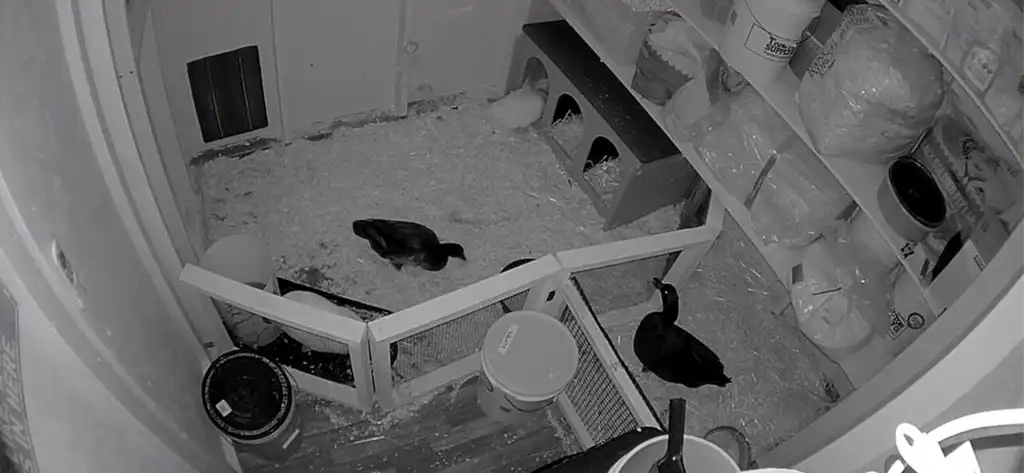
Keeping an individual egg record is especially helpful in a mixed flock. If several ducks share the same nesting area, it can be surprisingly difficult to know who is still laying. Egg color, size, shape, and laying time may offer clues, but they are not always reliable. A small security camera, like the Ring camera we use, near the nest can help solve the mystery without disturbing the flock.
If your duck remains bright, active, and comfortable, you can monitor her closely while considering seasonal and environmental causes. If the change is sudden or accompanied by other symptoms, however, it is time to look beyond henopause and consider a possible health problem.
Natural Henopause or Reproductive Disease?
A gradual decline in egg production can be a normal part of aging. However, stopping egg production is not enough to confirm henopause. Some reproductive disorders prevent a duck from laying a normal egg even though her ovaries remain active.
This distinction matters because reproductive disease can initially be subtle. An older duck may seem to be slowing down when she is actually experiencing pain, inflammation, infection, or pressure inside her abdomen. Ducks are remarkably skilled at hiding illness, so changes that appear small can be important.
Signs of Normal Reproductive Aging Versus Illness
| More consistent with natural aging | Possible warning sign |
|---|---|
| Egg production declines gradually over several seasons | Laying stops suddenly during an active laying period |
| The duck maintains her usual appetite | Appetite decreases or she refuses favorite treats |
| Body weight remains relatively stable | Unexplained weight loss or rapid weight gain |
| Abdomen feels and appears normal for that duck | Abdomen becomes enlarged, firm, uneven, or fluid filled |
| She walks and stands normally | She waddles differently, strains, limps, or adopts a penguin like stance |
| She remains engaged with her flock | She hides, isolates herself, or becomes unusually quiet |
| Breathing remains quiet and effortless | Breathing becomes labored, especially when resting |
| Droppings remain normal | Droppings become unusually small, watery, discolored, or infrequent |
| No discharge is present | Blood, yolk like material, or unusual discharge appears around the vent |
| She continues normal bathing and preening | She stops grooming or appears unable to get comfortable |
One sign by itself may not reveal the cause. What matters most is the overall pattern and whether it represents a change from your duck’s normal behavior.
Reproductive Problems That Can Resemble Henopause
Several reproductive conditions can cause egg production to decrease or stop.
| Condition | What it means |
|---|---|
| Internal laying | A yolk enters the abdominal cavity instead of traveling normally through the reproductive tract |
| Egg yolk coelomitis | Yolk material inside the body triggers inflammation and may contribute to a serious secondary infection |
| Salpingitis | The oviduct becomes inflamed or infected and may fill with abnormal material |
| Oviduct impaction | Eggs, shell material, or inflammatory debris obstructs the reproductive tract |
| Egg binding | An egg becomes stuck and cannot pass normally through the oviduct and vent |
| Reproductive cysts or tumors | Abnormal growths involving the ovary or oviduct may interfere with laying and place pressure on nearby organs |
These conditions cannot be reliably distinguished at home. An avian veterinarian may need to perform a physical examination, radiographs, ultrasound imaging, bloodwork, or analysis of abdominal fluid to determine what is happening.
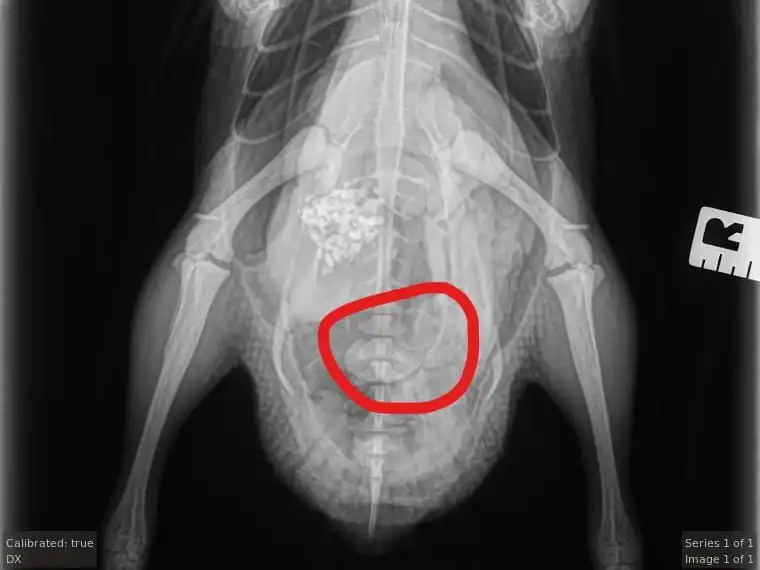
When Stopping Egg Production Is an Emergency
Contact an avian veterinarian promptly if your duck stops laying and develops:
- Repeated straining
- A penguin like stance
- A swollen or rapidly enlarging abdomen
- Labored breathing
- Weakness or difficulty standing
- Loss of appetite
- Severe lethargy
- Blood or unusual discharge from the vent
- Sudden changes in droppings
- Rapid weight loss or unexplained weight gain
A duck that is straining, struggling to breathe, unable to stand, or rapidly becoming weaker requires urgent veterinary care.
Duck Mom Tip: Never assume a reproductive problem will produce an obvious shell or a visibly stuck egg. Ducks can develop serious inflammation from yolk, soft shelled eggs, or other material that cannot be seen from the outside. When something feels wrong, trust that instinct and have your duck evaluated.
Feeding a Senior Duck That No Longer Lays Eggs
Egg production requires a tremendous amount of nutritional energy. Every egg contains protein rich yolk and egg white, while the shell requires a large supply of calcium. Once a duck lays less frequently or permanently retires from egg production, her nutritional needs may change as well.
However, adjusting a senior duck’s diet is not as simple as reducing protein and calcium. Older ducks still need complete nutrition to maintain their muscles, organs, feathers, immune system, and overall body condition. Some also resume laying after long seasonal pauses. The goal is to match the diet to what the duck’s body is currently doing.
How Protein Needs Change
Actively laying ducks need sufficient protein and essential amino acids to produce yolks and egg whites without depleting their own tissues. When egg production declines, this additional reproductive demand also decreases.
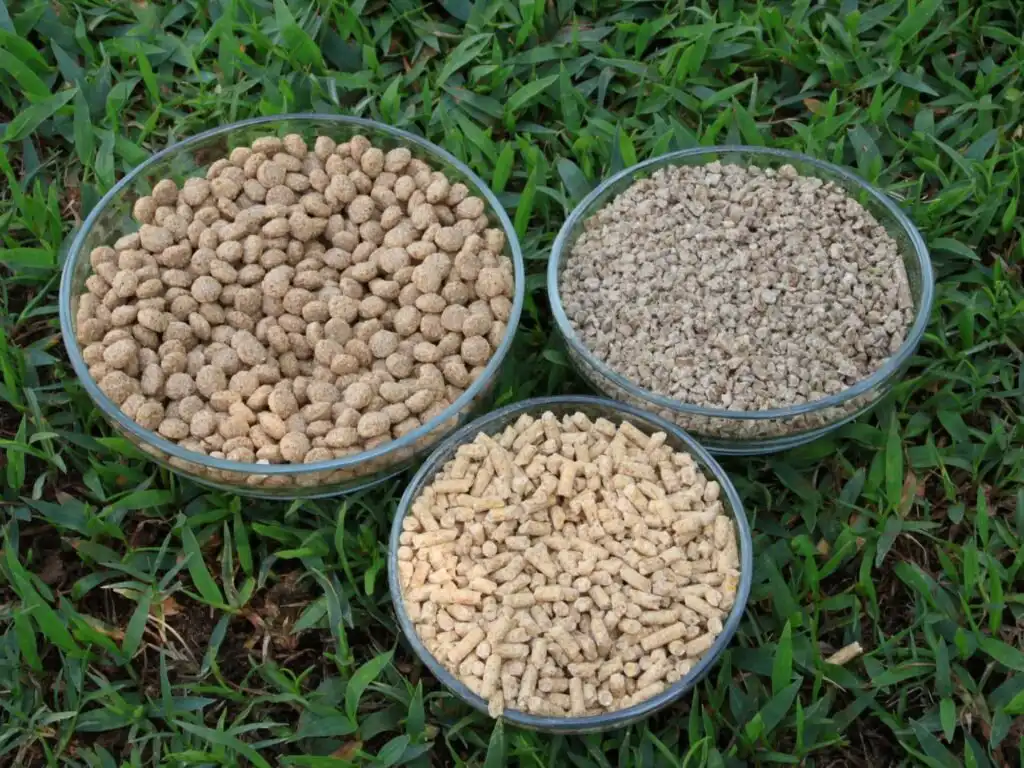
A retired duck may no longer need the nutrient density of a production ration, especially if she is inactive or gaining excess weight. However, senior ducks should not automatically be placed on a low protein diet. They still require high quality protein to preserve muscle mass, and their needs may temporarily increase during molting, illness recovery, wound healing, or periods of weight loss.
Protein percentage is only part of the picture. The balance of essential amino acids also matters. This is one reason I recommend a nutritionally complete adult waterfowl or all flock feed rather than attempting to create a homemade senior diet.
How Calcium Needs Change
Calcium is essential for building eggshells. A duck laying regularly needs considerably more calcium than a drake or a female that has permanently stopped producing eggs.
Layer feed is formulated to provide this increased calcium in every bite. Once a duck retires from laying, that amount may no longer be necessary. Consistently feeding excess calcium may be particularly concerning for birds with kidney disease or other conditions affecting mineral balance.
However, do not remove calcium simply because an older duck has skipped a few weeks or months of laying. She may be taking a seasonal break, molting, or preparing to resume production. Some senior ducks also continue developing eggs internally even when no normal egg appears in the nest.
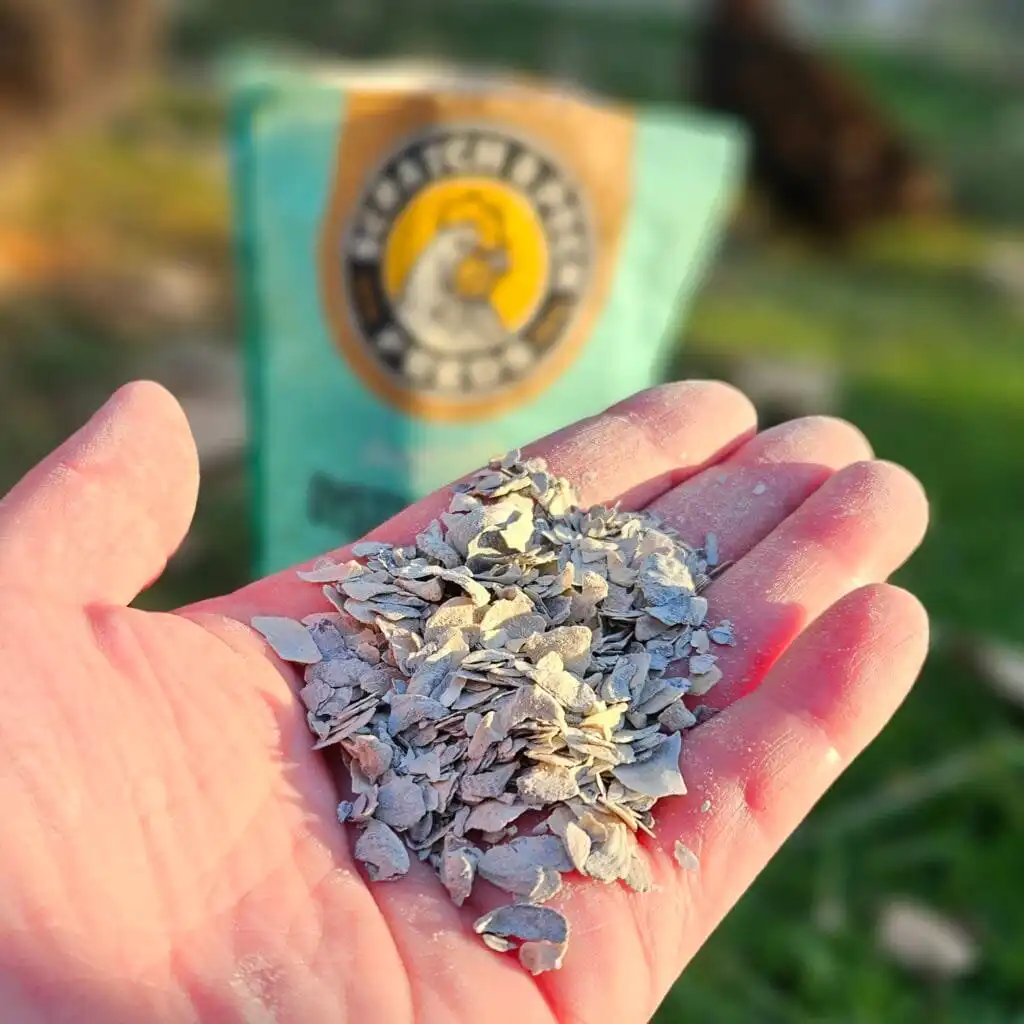
For many mixed flocks, a practical option is to feed a complete all flock or maintenance ration and provide oyster shell in a separate container. Ducks that require additional calcium can consume it according to need, while drakes and retired females are not forced to eat a high calcium ration at every meal.
Avoid mixing calcium supplements directly into the flock’s feed unless an avian veterinarian has recommended it for a specific reason.
Energy Needs and Body Condition
Aging does not affect every duck in the same way. Some senior ducks become less active and gain weight, while others lose weight and muscle because of arthritis, chronic illness, poor appetite, or competition at the feeder.
An overweight duck may place additional strain on aging feet and joints. An underweight duck may have difficulty maintaining body temperature, recovering from illness, or preserving the strength needed to walk and swim.
Rather than changing the diet based on age alone, monitor:
- Body weight
- Breast muscle condition
- Appetite
- Activity level
- Mobility
- Egg production
- Molting status
- Changes in droppings
Monthly weighing is one of the simplest ways to catch gradual changes that are difficult to see beneath all those feathers. An unexplained gain or loss of approximately ten percent of a duck’s normal body weight deserves closer attention.
Choosing the Right Feeding Approach
| Duck’s current situation | Nutritional consideration |
|---|---|
| Still laying regularly | Requires adequate protein, energy, amino acids, and calcium to support egg production |
| Laying occasionally or seasonally | May do well on an all flock feed with free choice oyster shell |
| Permanently retired from laying | May no longer need the higher protein, energy, and calcium levels of a production ration |
| Currently molting | Needs sufficient high quality protein and amino acids to produce new feathers |
| Overweight and less active | May benefit from controlled portions and fewer calorie dense treats |
| Losing weight or muscle | Needs veterinary evaluation before protein or calories are increased |
| Living with drakes | All flock feed with calcium offered separately is often the easiest arrangement |
| Living with kidney, liver, or reproductive disease | Needs an individualized feeding plan developed with an avian veterinarian |
Make Food and Water Easy to Reach
Nutrition only helps when a duck can comfortably access it. Arthritis, poor vision, weakness, or flock bullying may prevent a senior duck from eating enough even when she walks over to the feeder.
Provide stable food and water containers on a level, nonslip surface. Make sure water is deep enough for the duck to rinse her bill and nostrils while eating. In a mixed age flock, a second feeding station can give slower senior ducks more time to eat without being pushed aside.
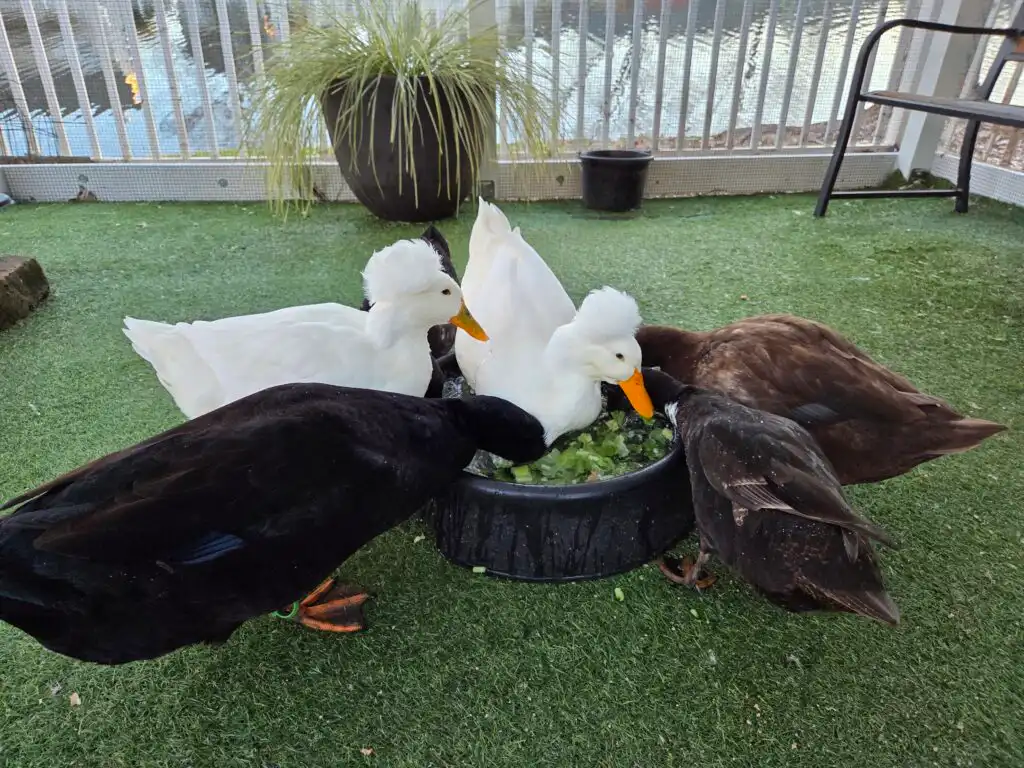
Treats should remain a small part of the diet. Senior ducks can be remarkably talented at convincing us that mealworms are a medically necessary food group, but too many treats can dilute the nutrients in a balanced feed and contribute to weight gain.
Duck Mom Tip: Watch each senior duck eat rather than simply checking whether she approaches the feeder. A duck may appear interested in food but take only a few bites before becoming tired, uncomfortable, or displaced by another flock member. Small changes during mealtime can reveal declining mobility, pain, or illness before more obvious symptoms appear.
Supporting Joints, Feet, and Mobility in Senior Ducks
As ducks age, changes in their joints, muscles, and feet may make everyday activities more difficult. A senior duck may walk more slowly, sit down more frequently, hesitate before stepping over obstacles, or need extra time to keep up with the flock.
Some slowing can occur with age, but persistent stiffness or reduced mobility should not automatically be considered normal. Arthritis, old injuries, bumblefoot, overgrown nails, infection, reproductive disease, and excess body weight can all make walking uncomfortable.
Signs Your Senior Duck May Be Struggling
| What you notice | What it may indicate |
|---|---|
| Sitting more often | Fatigue, joint pain, foot pain, weakness, or reproductive discomfort |
| Stiffness after resting | Arthritis or another joint problem |
| Limping or taking shorter steps | Foot injury, bumblefoot, arthritis, or leg pain |
| Hesitating at ramps or doorways | Pain, weakness, poor vision, or loss of confidence |
| Falling behind the flock | Reduced stamina, pain, illness, or muscle loss |
| Spending less time preening | Pain, poor balance, weakness, or difficulty reaching certain areas |
| Reluctance to enter the pool | Difficulty stepping in, fear of slipping, or pain during movement |
| Difficulty leaving the pool | Weakness or an entry point that is too steep |
| Splayed feet or worn feathers on the chest | Spending excessive time sitting or struggling to stand |
Because ducks naturally rest throughout the day, the most useful question is whether the behavior has changed. If a duck who once hurried across the yard for treats now stops every few steps, something deserves closer attention.
Make the Environment Easier to Navigate
Small housing changes can help a senior duck remain independent and engaged with her flock.
| Area | Senior friendly adjustment |
|---|---|
| Coop entrance | Replace high steps with a wide, gently sloped ramp |
| Walking surfaces | Add secure mats or textured surfaces where flooring becomes slippery |
| Resting areas | Provide clean, dry, cushioned bedding that protects feet and joints |
| Food and water | Place containers close to favorite resting areas and avoid tall barriers |
| Pool access | Use stable ramps or shallow steps both inside and outside the pool |
| Run layout | Remove unnecessary obstacles and create clear walking paths |
| Shade and shelter | Make comfortable resting spots available without requiring a long walk |
| Nighttime housing | Check that flock mates cannot corner or trample a slower duck |
Artificial turf, rubber mats, and other textured surfaces can improve traction, but they must be kept clean and dry. Wrinkles, lifted corners, and loose edges can create new tripping hazards.
Swimming as Gentle Movement
Swimming allows a duck to move her legs while the water supports much of her body weight. For some ducks with arthritis or old injuries, this can provide comfortable, low impact activity.
The pool must still be easy to enter and exit. A duck who can get into the water but cannot climb out safely is at risk of exhaustion, chilling, or drowning. Senior ducks with significant weakness, poor balance, or neurological problems should be supervised around deeper water.
Check Feet and Nails Regularly
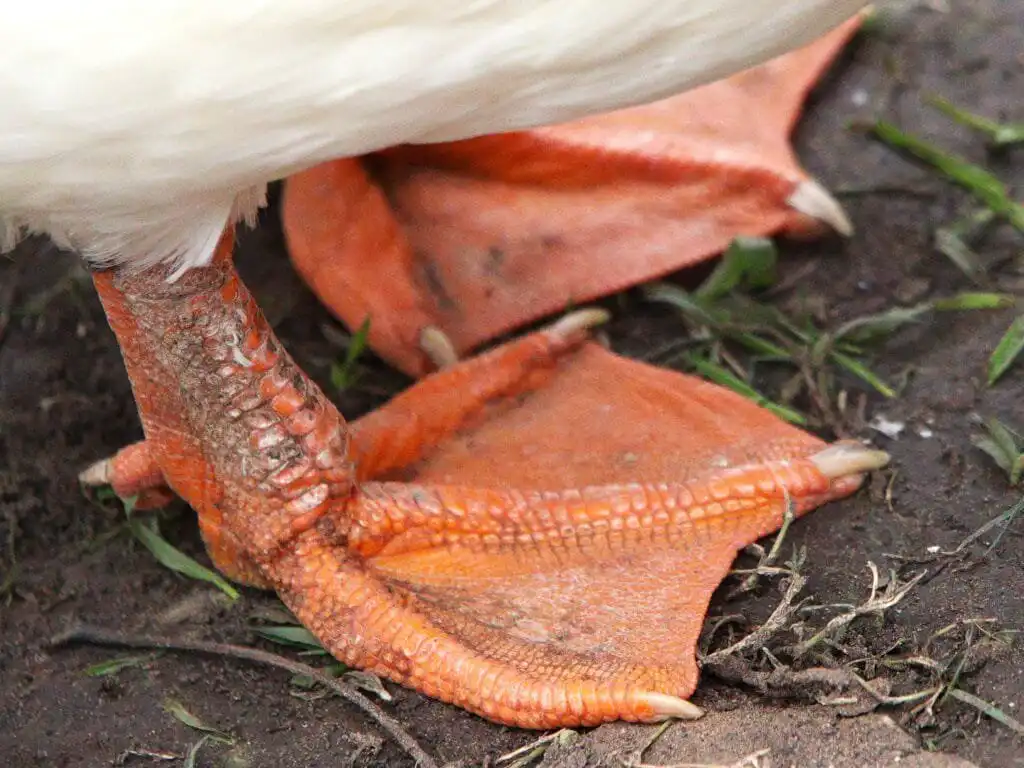
Senior ducks may spend more time sitting and may not wear their nails down as evenly as younger flock members. Check the bottoms of the feet for swelling, redness, heat, cuts, scabs, or pressure sores. Also look for overgrown or twisted nails that alter how the foot meets the ground.
When Your Duck May Need Pain Management
A duck with arthritis or another painful condition may benefit from veterinary prescribed medication. Signs of pain can include reduced activity, repeated shifting of weight, reluctance to stand, poor appetite, increased breathing effort, changes in posture, or withdrawal from the flock.
Never give ibuprofen, acetaminophen, aspirin, or another human pain medication unless an avian veterinarian has specifically prescribed it for your duck. The correct medication and dose depend on the duck’s weight, hydration, kidney and liver function, and underlying condition.
For a deeper look at recognizing discomfort and working with your veterinarian, visit our guide to pain management in ducks.
Duck Mom Tip: Do not wait until a senior duck can no longer walk before adapting her environment. Adding traction, softer bedding, gentle ramps, and easier pool access early can help her remain active while she still has the confidence and strength to use them.
Routine Health Checks for Senior Ducks
Regular health checks become increasingly important as ducks age. Senior ducks often develop changes slowly, and thick feathers can hide weight loss, swelling, wounds, and reduced muscle condition. By the time a problem becomes obvious from across the yard, it may have been developing for weeks.
The goal is not to examine every feather every day. Instead, establish what is normal for each duck and watch for meaningful changes.
A Simple Senior Duck Health Schedule
| How often | What to check |
|---|---|
| Daily | Appetite, activity, walking, breathing, droppings, flock interaction, and willingness to enter or leave the coop |
| Weekly | Feet, legs, nails, eyes, bill, feathers, vent area, and general body condition |
| Monthly | Body weight, breast muscle condition, abdominal appearance, laying history, and any gradual behavioral changes |
| At least annually | Veterinary wellness examination, with additional testing or more frequent visits based on age and medical history |
A duck with an existing reproductive disorder, arthritis, kidney disease, or another chronic condition may need more frequent monitoring.
What to Include in a Senior Duck Health Check
| Area | What to look for |
|---|---|
| Eyes and nostrils | Discharge, cloudiness, swelling, injury, or changes in vision |
| Bill and mouth | Cracks, sores, unusual odor, discoloration, or difficulty eating |
| Breathing | Tail bobbing, open mouth breathing, wheezing, or increased effort while resting |
| Breast and body condition | Loss of muscle, a more prominent breastbone, or increased fat deposits |
| Abdomen | Enlargement, uneven shape, firmness, or a new low hanging appearance |
| Vent | Discharge, dried droppings, swelling, blood, or prolapsed tissue |
| Feet and legs | Scabs, redness, heat, swelling, cuts, pressure sores, or overgrown nails |
| Feathers and skin | Poor feather quality, parasites, bald areas, wounds, or difficulty preening |
| Movement | Limping, stiffness, weakness, stumbling, sitting more often, or reluctance to use ramps |
| Droppings | Persistent changes in amount, color, consistency, odor, or frequency |
Handle the abdomen gently and never squeeze it in an attempt to locate an egg. A firm object, swelling, or fluid inside the body cannot be safely identified through forceful palpation at home.
Weigh Your Senior Duck Regularly
A baby scale is one of the most valuable tools in my duck first aid kit. We weigh our ducks regularly because feathers can make a duck look unchanged even when she has lost a significant amount of body mass.
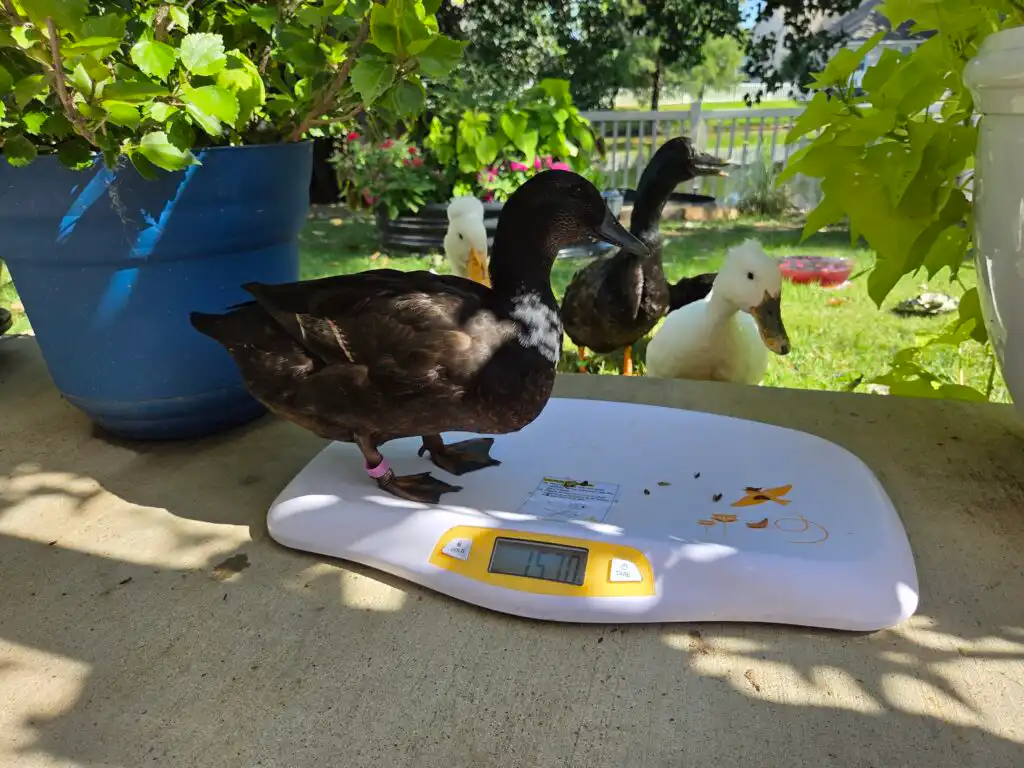
Record the weight rather than relying on memory. Small fluctuations can occur because of food, water, eggs, and droppings, so try to weigh your duck under similar conditions each time. The overall trend matters more than a single number.
An unexplained change of approximately ten percent from a duck’s usual weight is significant and should prompt a closer evaluation. Contact your veterinarian sooner if the weight change occurs alongside poor appetite, abdominal enlargement, weakness, abnormal droppings, or breathing changes.
Track Egg Production and Reproductive Changes
Even when a senior duck lays infrequently, continue recording any eggs you can identify. Note:
- The date the egg was laid
- Egg size and shape
- Shell thickness and texture
- Soft shelled or shell less eggs
- Blood, unusual material, or heavy soiling
- Nesting behavior without a normal egg
- Straining or changes in posture
A long, gradual decline may be consistent with reproductive aging. Sudden changes, repeated abnormal eggs, or laying behavior without egg production may indicate that something is wrong.
Schedule Senior Wellness Examinations
A wellness visit provides an opportunity to discuss weight trends, nutrition, mobility, reproductive history, and any subtle changes you have noticed. Depending on the duck’s age and medical history, an avian veterinarian may recommend bloodwork, radiographs, ultrasound imaging, fecal testing, or other screening.

These examinations are also a good time to discuss pain management and create a plan before an urgent problem develops. It is much easier to make thoughtful decisions when your duck is stable than during a frightening reproductive emergency.
Duck Mom Tip: Take short videos of your duck walking and breathing when she is healthy. These clips create a useful baseline and can help your veterinarian evaluate subtle changes that may not appear during an office visit.
From Our Flock: Aging Is Never Just a Number
Krümel has taught us more about reproductive health than I ever expected to learn when she first waddled into our lives. She has faced recurring reproductive challenges and has received hormonal implants to suppress egg production under veterinary supervision. When she stopped laying, we could not simply assume that she had entered henopause. Her medical history meant that changes in her appetite, weight, abdomen, droppings, posture, and behavior all needed to be considered together.
Her experience is an important reminder that not laying does not always mean the reproductive system is inactive. A duck can stop producing normal eggs while still experiencing ovarian activity or disease inside her body. This is why I continue monitoring Krümel even during long periods without an egg. Her usual weight, energy level, and behavior tell me far more than an empty nest does.
Penny taught us a different side of senior duck care. As her arthritis progressed, we watched for subtle changes in how she walked, stood, rested, and moved through her environment. Pain management with veterinarian prescribed meloxicam became part of supporting her comfort and quality of life. Easier access to food and water, soft places to rest, and an environment that did not require unnecessary climbing were just as important as medication.
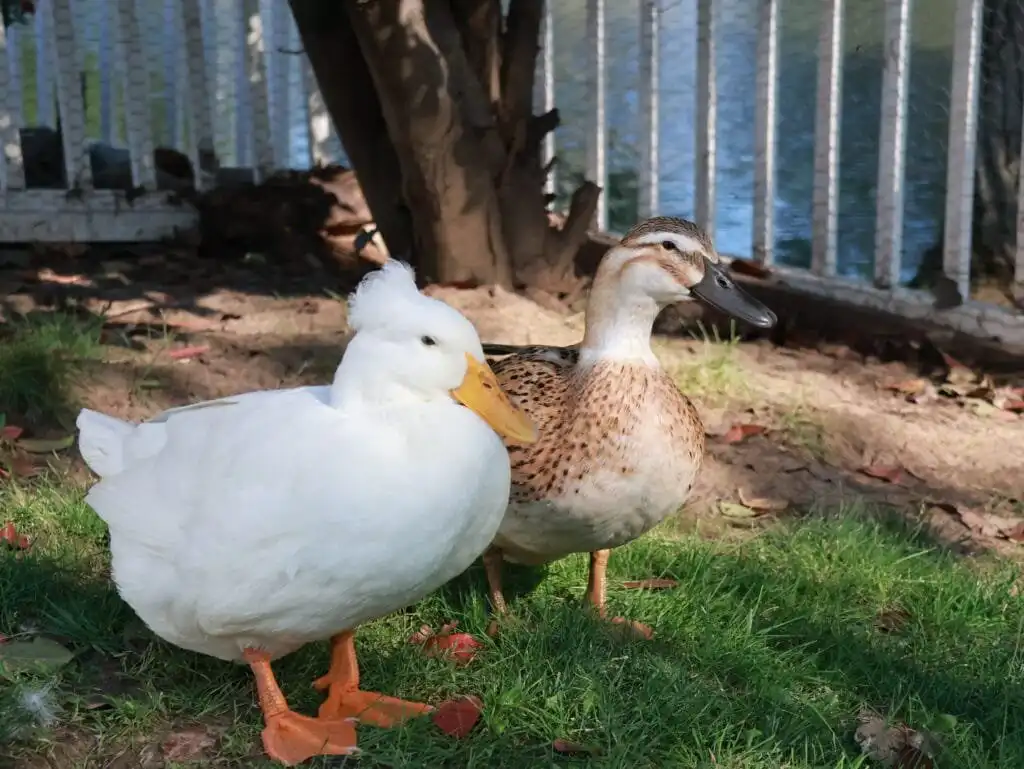
Caring for Krümel and Penny reinforced one of the most important lessons I can share: senior ducks need to be evaluated as individuals. A change may be related to normal aging, but it may also reflect pain, reproductive disease, muscle loss, or another medical problem. Knowing your duck’s normal habits gives you the best chance of recognizing the difference.
Our older ducks may lay fewer eggs, walk a little more slowly, and require more thoughtful care, but their value has never depended on productivity. If anything, the trust built through years of shared routines makes caring for them during their senior years even more meaningful.
Frequently Asked Questions About Duck Henopause and Senior Duck Care
At what age do ducks stop laying eggs?
There is no exact age when all ducks stop laying eggs. Most ducks are most productive during their first two to three years, after which laying usually declines gradually. Some ducks stop laying around five or six years of age, while others continue producing occasional eggs well into their senior years. Breed, genetics, daylight, health, nutrition, and reproductive history all influence how long a duck continues laying.
Do ducks go through menopause?
Ducks do not experience menopause in the same way humans do. The term duck henopause is an informal way to describe the gradual decline or eventual end of egg production in an aging female duck. Rather than reaching one clear biological cutoff, senior ducks may take increasingly long breaks, lay only seasonally, or produce an occasional egg after months without laying.
Can an older duck start laying again after a long break?
Yes. An older duck may resume laying after several weeks or months without producing an egg. Longer daylight hours, the end of a molt, improved body condition, reduced stress, or seasonal hormonal changes may restart egg production. Because senior ducks can resume laying unexpectedly, calcium should remain available separately unless your avian veterinarian recommends otherwise.
How can I tell whether my duck stopped laying because of age or illness?
A gradual decline in an otherwise active, comfortable duck is more consistent with normal reproductive aging. A sudden stop combined with abdominal swelling, straining, a penguin like stance, poor appetite, weight changes, abnormal droppings, weakness, or breathing difficulty may indicate reproductive disease. An avian veterinarian may need radiographs, ultrasound imaging, bloodwork, or other tests to determine the cause.
What should I feed a senior duck that no longer lays eggs?
A senior duck that has permanently stopped laying may no longer need the higher protein, energy, and calcium levels provided by a production ration. A complete adult waterfowl or all flock feed with free choice oyster shell is often a practical option, especially in a mixed flock. Diet changes should be based on body condition, activity, molting status, medical history, and whether the duck may still lay occasionally.
How long can a duck live after she stops laying eggs?
Stopping egg production does not mean a duck is nearing the end of her life. A well cared for duck may enjoy several happy years after laying becomes infrequent or stops completely. Lifespan varies with breed, genetics, previous reproductive demands, nutrition, housing, predator protection, and access to veterinary care. Retired ducks still contribute companionship, personality, and plenty of supervisory quacks to their flock.
Fewer Eggs, Just as Much to Love
So, when do ducks stop laying eggs? There is no single birthday when a duck officially retires. Most ducks produce their greatest number of eggs during their first few years, followed by a gradual decline. Some stop laying completely as they age, while others continue leaving the occasional surprise in the nest well into their senior years.
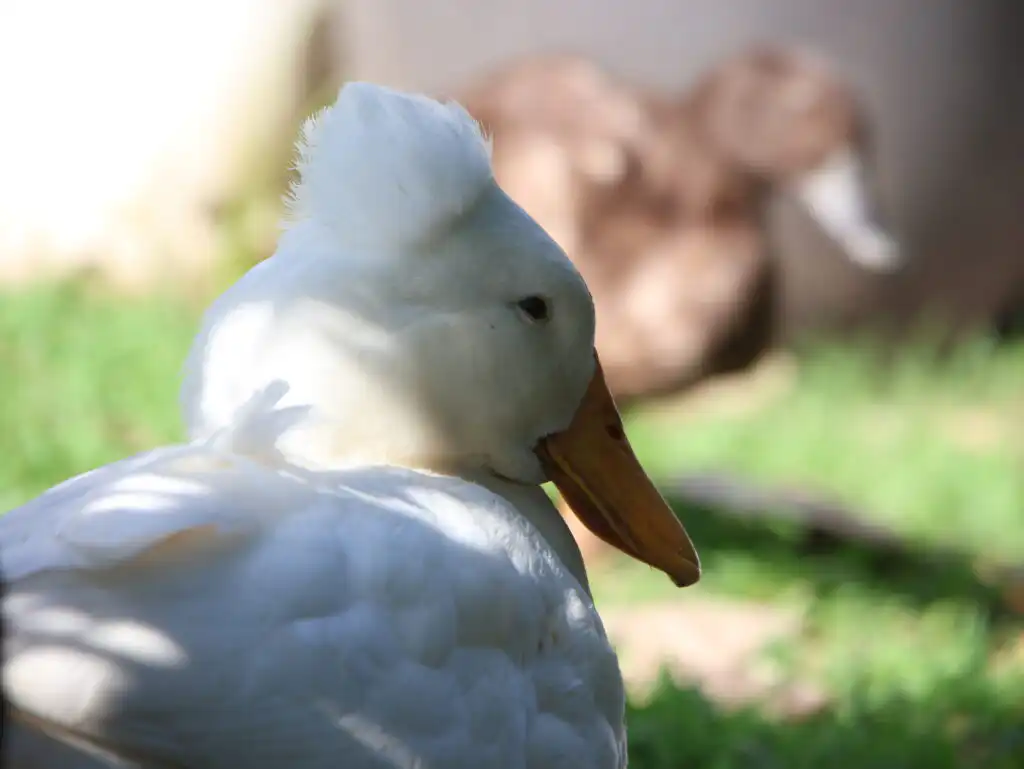
A slow reduction in egg production can be a normal part of aging. What should never be ignored is a sudden change accompanied by weight loss, abdominal swelling, unusual posture, poor appetite, weakness, abnormal droppings, or difficulty breathing. Ducks can develop serious reproductive problems even when they are no longer producing normal eggs. When in doubt, an examination by an avian veterinarian is always the safest next step.
Senior ducks may also need thoughtful changes to their nutrition, housing, and daily routine. Matching protein and calcium intake to their current needs, maintaining a healthy body condition, improving traction, providing soft resting areas, and making food, water, and pools easier to reach can help them remain comfortable and independent.
Most importantly, a duck’s value has never been measured by the number of eggs she produces. Older ducks still bring their personalities, friendships, routines, and wonderfully strong opinions to the flock. They may move a little more slowly, but they have certainly earned the right to enjoy their retirement at their own pace.
Your next step: Begin a simple senior duck health record today. Write down your duck’s current weight, laying pattern, appetite, mobility, and any ongoing health concerns. These few notes will give you a valuable baseline and make it easier to recognize meaningful changes before they become emergencies.
Further Reading & Resources
- How Old Is My Duck in Human Years? A Guide to Duck Life Stages
- Is My Duck Laying Eggs? Signs to Look For in Your Flock
- No Eggs from Your Ducks? Discover 7 Reasons Why
- How Often Do Ducks Lay Eggs? Breaking Down Duck Egg Production and More
- The Science Behind Duck Egg Laying Process: From Ovulation to Oviposition
- Reproductive Emergencies in Ducks: Egg Yolk Peritonitis and Internal Laying
- Tyrantfarms.com: All about henopause (poultry menopause)
Deepen your understanding of avian wellness. Explore the full Duck Health & Anatomy Library for more specialized care guides.