
Pain Management in Ducks: Signs of Pain, Treatment, and Supportive Care

To keep our research-backed guides free, this site uses ads and affiliate links (earning a small commission at no cost to you). Everything here is created by a duck mom and PhD scientist, combining academic rigor with hands-on experience to provide practical, trustworthy advice for duck keepers everywhere. 🦆 Learn more
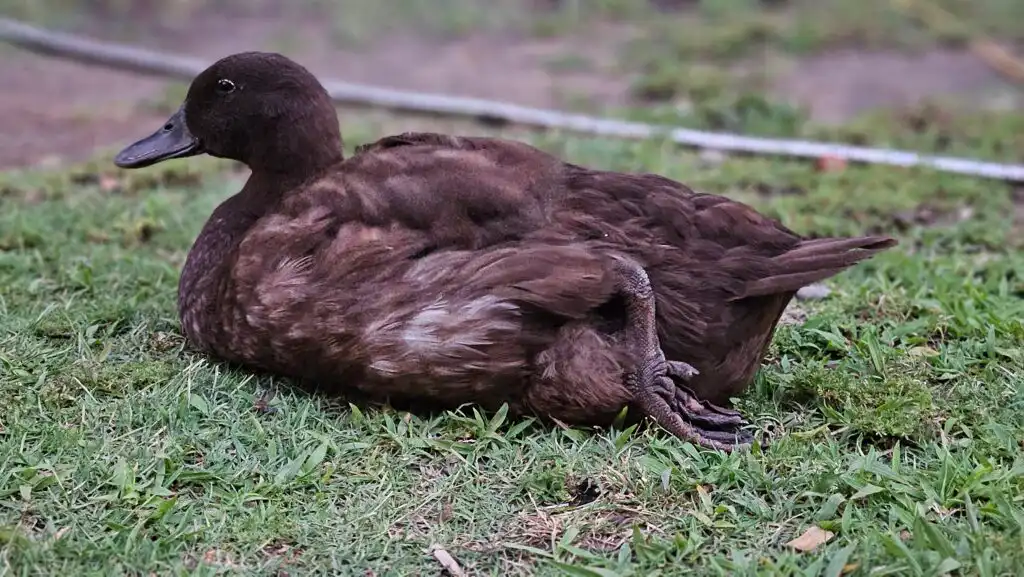
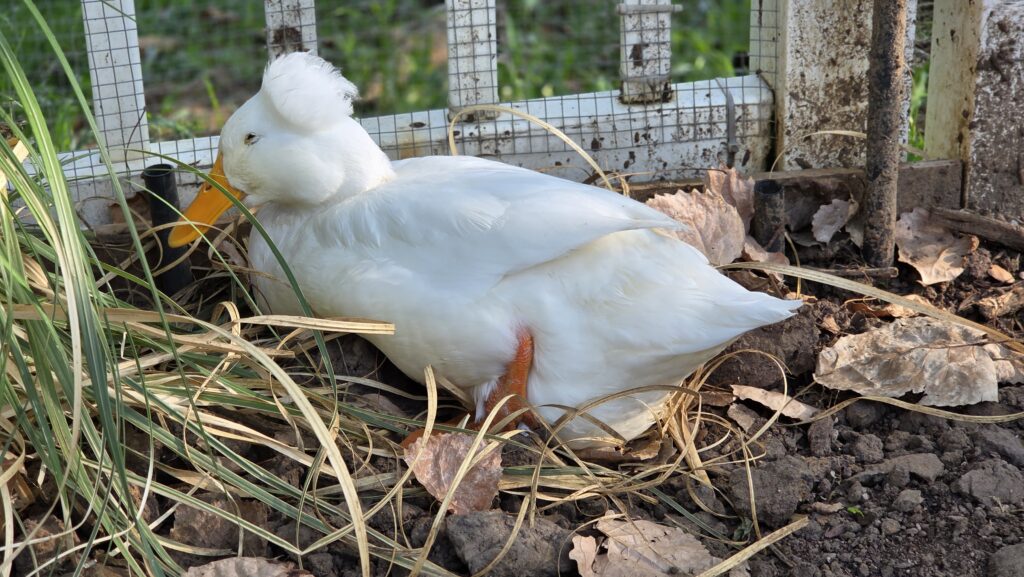
How can you tell if a duck is in pain? Unlike people, ducks cannot point to where it hurts, and they rarely make their discomfort obvious. A duck experiencing significant pain may remain quiet, continue following the flock, or even try to eat when offered a favorite treat. Sometimes, the first clues are surprisingly subtle: a slightly hunched posture, partially closed eyes, less preening, slower movement, or simply a duck that does not seem quite like herself.
As prey animals, ducks instinctively try to hide signs of pain, illness, and weakness. This natural survival behavior may protect them in the wild, but it makes recognizing pain in pet ducks particularly challenging. By the time a duck stops eating, isolates herself, or can no longer stand, the underlying problem may already be serious. Learning your duck’s normal posture, appetite, movement, and social behavior is therefore one of the most valuable things you can do as a caretaker.
Over the years, I have cared for ducks recovering from bumblefoot, reproductive emergencies, traumatic injuries, surgery, and chronic health problems. Those experiences have taught me that pain management in ducks is not optional or secondary care. Relieving pain supports comfort, but it may also help a duck rest, eat, move normally, and recover. Research has even evaluated pain medications in a temporary arthritis model in ducks, confirming that ducks experience measurable changes in movement and weight bearing when they are hurting (Bailey et al., 2019).
In this guide, we will look at the signs of pain in ducks, common causes of discomfort, veterinary pain relief options, supportive care, and the warning signs that require urgent attention. We will also discuss why human pain medications and guessed dosages can be dangerous. The goal is not to diagnose or medicate a duck at home. It is to help you recognize discomfort sooner, communicate clearly with your veterinarian, and advocate for the pain relief your duck deserves.
Important: Pain medication should only be given under the direction of a veterinarian familiar with birds. The correct medication and dose depend on the duck’s exact weight, condition, hydration, organ function, and other treatments. Never give human pain medication or reuse an old prescription without veterinary guidance.
Part of the Duck Health & Anatomy Hub, Evidence-based medical resources and anatomical research.
Quick Navigation: Jump to a Section
[hide]
- Why Ducks Hide Pain
- How to Tell if a Duck Is in Pain
- Pain or Something Else?
- Common Causes of Pain in Ducks
- How Veterinarians Treat Pain in Ducks
- Why You Should Never Guess the Dose
- Human Pain Medications Can Be Dangerous
- Supportive Care That Can Make a Duck More Comfortable
- Monitoring Whether Pain Treatment Is Working
- When Pain Is an Emergency
- Chronic Pain and Quality of Life
- From Our Flock: What Pain Management Looked Like for Krümel and Penny
- FAQ
- Listening When Your Duck Cannot Tell You It Hurts
- Further Reading & Resources
- Scientific References
Why Ducks Hide Pain
Ducks are prey animals. In the wild, showing weakness can make an injured bird more noticeable to predators. A duck that appears slow, vulnerable, or separated from the flock may become an easier target. As a result, ducks have evolved to suppress obvious signs of pain and continue behaving as normally as possible for as long as they can.
This instinct does not disappear when a duck lives safely in our backyard. Even a deeply loved pet duck may try to walk with the flock, nibble at food, or act alert while experiencing significant discomfort. She is not choosing to deceive us. Her body is following a survival strategy that has protected birds for generations.
Hiding pain may also help a duck avoid unwanted attention from other flock members. Ducks notice changes in one another quickly. A weak or injured duck may be chased away from resources, displaced from a preferred resting spot, or targeted by a more dominant flockmate. Staying with the group and appearing functional can therefore provide both physical and social protection.
Pain Does Not Always Look Dramatic
When people imagine an animal in pain, they may expect crying, struggling, or obvious distress. Ducks frequently show something much quieter.
Early changes might include:
- Walking a little more slowly
- Resting more often
- Placing less weight on one foot
- Holding the body slightly differently
- Closing the eyes more than usual
- Preening less thoroughly
- Hesitating before entering the pool
- Falling a few steps behind the flock
- Showing less interest in familiar activities
These behaviors can be easy to dismiss, especially when the duck is still eating or moving. However, continuing to eat does not prove that a duck is pain-free. A duck may accept mealworms or peas despite being uncomfortable, particularly when food is highly motivating.
Veterinary research recognizes that pain can be difficult to assess in birds because behavioral responses vary among species and individuals. Changes in posture, movement, grooming, appetite, activity, and social behavior may all provide important clues, but there is no single behavior that confirms or rules out pain (review of pain related behavior in birds).
Knowing Your Duck’s Normal Is Your Best Advantage
Because ducks often hide pain, one of the most useful tools we have is familiarity. I know how each of my ducks normally walks, rests, eats, preens, and interacts with the flock. When Emma stands differently, Ronja becomes unusually quiet, or Muffin does not rush toward something she normally loves, that change matters even if I cannot immediately explain it.
This is also why cameras can be so helpful. A duck may become more alert or mobile when we enter the run, briefly masking the behavior that concerned us. Watching from a distance can reveal how she moves and rests when she does not know anyone is observing her.
The Merck Veterinary Manual notes that behavioral changes are easiest to recognize when a caretaker understands what is normal for that individual animal. For duck owners, seemingly small deviations from normal can be more informative than waiting for a dramatic sign.
Important reminder: If a duck looks severely ill or is no longer able to hide her discomfort, the problem may already be advanced. Trust your knowledge of your flock. A subtle but persistent change deserves attention, even when you cannot yet identify the cause.
How to Tell if a Duck Is in Pain
Recognizing pain in ducks requires careful observation. There is no single posture, sound, or behavior that proves a duck is hurting. Instead, look for a combination of changes that are unusual for that individual duck.
A duck in pain may still walk, eat, swim, and remain with the flock. This is why subtle changes should not be dismissed simply because she is still functioning.
Common Signs of Pain in Ducks
| What to observe | Possible signs of pain |
|---|---|
| Posture | Hunched body, lowered head, drooping wings, tucked tail, unusually upright stance, or holding the body unevenly |
| Movement | Limping, stiffness, shortened steps, reluctance to walk, difficulty standing, or frequently sitting down |
| Weight bearing | Shifting weight between the feet, lifting one foot repeatedly, leaning to one side, or avoiding pressure on a limb |
| Eyes and expression | Partially closed eyes, squinting, reduced alertness, or a tense appearance around the eyes |
| Feathers and grooming | Persistent fluffing, reduced preening, neglected feathers, or repeatedly focusing on one painful area |
| Appetite | Eating less, taking longer to eat, dropping food, refusing favorite treats, or avoiding the feeder |
| Behavior | Withdrawal, unusual quietness, irritability, restlessness, hiding, or resisting normal handling |
| Vocalization | Distressed calling, unusual grunting, crying out when moving, or becoming noticeably quieter |
| Breathing | Rapid or shallow breathing when the duck is not hot, stressed, or recovering from activity |
| Flock interaction | Falling behind, avoiding companions, losing access to resources, or allowing flockmates to push her away |
| Daily activities | Hesitating to enter the pool, bathing less, avoiding steps, or no longer participating in familiar routines |
| Sleep and rest | Resting more than usual, repeatedly changing position, or appearing unable to settle comfortably |
These signs are not exclusive to pain. Many can also occur with illness, fear, heat stress, weakness, or neurological problems. However, several signs appearing together deserve attention, especially when they persist or become more pronounced.
Research into avian pain recognition supports evaluating changes in behavior, posture, activity, grooming, movement, and social interaction. However, species specific pain scales remain limited, and only a small portion of the available research has focused directly on ducks (Mikoni et al., 2022).
Watch Your Duck When She Does Not Know You Are Looking
Ducks sometimes become more alert when their caretaker approaches. A duck that was sitting hunched in the corner may suddenly stand, walk toward you, and even accept a treat. This brief burst of activity can make her appear more comfortable than she truly is.
Observe quietly from a window or use a camera to see how your duck behaves without your presence influencing her. Pay attention to how easily she stands after resting, whether she walks evenly, how often she changes position, and whether she can comfortably reach food and water. Normal preening, bathing, and flock participation are also important clues.
I find video especially helpful when evaluating a limp. A short recording allows me to replay the same steps, compare movement over several days, and show our veterinarian exactly what concerned me.
Compare Both Sides of the Body
Ducks often compensate for pain by shifting their weight or changing how they move. Compare the position and movement of both legs and wings. Look for uneven weight bearing, swelling, heat, redness, an unusual angle, or a different reaction when one side is approached.
Do not force a painful joint to bend or repeatedly press on a suspected injury. A gentle visual examination may provide useful information, but excessive handling can worsen the injury and cause additional distress.
Acute Pain and Chronic Pain May Look Different
Acute pain often begins suddenly after an injury, predator attack, reproductive emergency, surgery, or another medical event. The duck may limp, resist movement, breathe more rapidly, appear restless, or react when the affected area is touched.
Chronic pain is often much quieter. A duck with arthritis or an old injury may gradually walk shorter distances, rest more frequently, stop climbing, bathe less often, or struggle to keep pace with the flock. Muscle loss and alternating good and difficult days may also develop over time.
Because these changes occur gradually, they are easy to dismiss as normal aging. Age can affect a duck’s activity level, but old age itself is never a reason to accept untreated pain.
Appetite Alone Cannot Rule Out Pain
One of the most common misconceptions is that a duck cannot be in significant pain if she is still eating. Ducks are highly food motivated, and some will continue accepting favorite snacks despite considerable discomfort. A handful of mealworms is not a complete pain assessment, no matter how enthusiastically it disappears.
Look at the entire feeding pattern instead. Is your duck eating her usual amount of complete feed? Can she walk to the feeder and swallow comfortably? Does she remain there long enough to eat a normal meal, or is she only interested in especially tempting treats? Changes in body weight can reveal a problem that is not obvious from watching a single meal.
Trust the Change You Notice
You know what is normal for your duck. If Emma suddenly stands differently, Muffin stops rushing toward the pool, or Ronja becomes unusually withdrawn, I take that change seriously even when everything else seems relatively normal.
If you suspect pain, write down when the change began and whether it is improving or worsening. Record short videos of your duck walking, resting, and eating. Note her appetite, body weight, mobility, posture, grooming, droppings, social behavior, and any recent injury or unusual event. These observations can be extremely valuable because ducks do not always show the same behavior once they reach the veterinary clinic.
A single sign may not reveal the answer, but a pattern often does. When several changes appear together, or when a subtle change persists, contact a veterinarian rather than waiting for your duck to become visibly distressed.
Pain or Something Else?
Many signs associated with pain are not specific to pain. A hunched posture, partially closed eyes, reluctance to move, rapid breathing, or withdrawal from the flock can also occur with illness, fear, overheating, weakness, or neurological problems. This is why recognizing pain requires looking at the entire duck, not one isolated behavior.
The circumstances surrounding the change can provide valuable clues. Ask yourself when the behavior began, what happened immediately beforehand, and whether it improves when the environment changes. A duck panting on a hot afternoon may be trying to cool herself, while rapid breathing in a cool, quiet room may be more concerning. A duck that freezes briefly after hearing an unfamiliar sound may be frightened, but one that remains motionless with partially closed eyes may be sick or in pain.
Comparing Pain With Other Problems
| What you observe | Pain may be more likely when… | Other possible explanations |
|---|---|---|
| Reluctance to move | Movement appears stiff, uneven, guarded, or causes an obvious reaction | Weakness, exhaustion, neurological disease, severe illness, or fear |
| Rapid breathing | It continues while the duck is resting in a cool, calm environment | Heat stress, fear, handling stress, respiratory disease, or recent activity |
| Partially closed eyes | It occurs with a hunched posture, reduced activity, or other signs of discomfort | Normal sleepiness, bright sunlight, exhaustion, or illness |
| Standing on one leg | The duck repeatedly avoids one foot, limps, or has swelling or a visible injury | Normal resting and heat conservation behavior |
| Fluffed feathers | Fluffing persists and occurs with withdrawal, poor appetite, or abnormal posture | Cold temperatures, resting, preening, or settling down to sleep |
| Hiding or withdrawing | The behavior is new and accompanied by reduced movement or appetite | Fear, flock bullying, broodiness, nesting behavior, or environmental stress |
| Refusing food | The duck also appears tense, guarded, hunched, or reluctant to move | Nausea, digestive disease, infection, stress, or reproductive illness |
| Difficulty walking | One limb is protected or movement consistently worsens the response | Weakness, vitamin deficiency, toxin exposure, neurological disease, or poor footing |
| Unusual vocalization | Calling, grunting, or crying occurs during movement, handling, or elimination | Alarm, separation from the flock, excitement, mating behavior, or fear |
| Restlessness | The duck repeatedly shifts position and seems unable to become comfortable | Egg laying, egg binding, overheating, anxiety, or difficulty breathing |
Fear and Stress
A frightened duck is often highly alert. Her eyes may be wide open, her neck extended, and her body prepared to flee. She may freeze temporarily, sound an alarm call, run, hide, or try to stay close to her flockmates. Once the threat disappears and she feels safe again, her posture and behavior should gradually return to normal.
A duck in pain may be less responsive to her surroundings. She may remain hunched, guard part of her body, resist movement, or struggle to settle comfortably even in a familiar and quiet environment. Of course, pain itself can also make a duck fearful or defensive, so the two can overlap.
Heat Stress
Panting and holding the wings away from the body are common ways ducks try to release excess heat. On a hot North Texas afternoon, rapid breathing does not automatically mean pain. I first consider the temperature, humidity, access to shade, and whether the duck has cool water available.
Heat stress should improve when the duck is moved to a cooler area and given appropriate cooling support. Continued open mouth breathing, weakness, stumbling, collapse, or failure to improve is an emergency. Rapid breathing in comfortable temperatures also deserves closer investigation because pain, respiratory disease, or another serious condition may be involved.
Weakness and General Illness
Pain can make a duck reluctant to move, while weakness may make her physically unable to move normally. The distinction is not always obvious. A weak duck may wobble, sink down through the legs, struggle to hold up her head, or have difficulty maintaining balance. She may not consistently protect one particular limb or body area.
General illness can also cause many behaviors that resemble pain, including lethargy, poor appetite, fluffed feathers, closed eyes, and withdrawal. Importantly, illness and pain frequently occur together. Reproductive disease, infection, gastrointestinal problems, and traumatic injuries may cause both weakness and significant discomfort.
Neurological Problems
Loss of balance, circling, head tilt, tremors, seizures, abnormal neck position, or poor coordination suggest that a neurological problem may be present. These signs can occur with trauma, toxin exposure, nutritional deficiencies, infection, or other serious conditions.
Neurological disease does not rule out pain. A duck with a head injury, spinal injury, or other neurological condition may still be uncomfortable and may need pain relief as part of her veterinary treatment.
Respiratory Distress
A duck experiencing respiratory distress may stretch her neck, breathe with her mouth open, move her tail with each breath, make unusual respiratory sounds, or appear unable to rest comfortably. Because pain can also increase the breathing rate, it is important to watch the quality of each breath, not merely count how quickly the duck is breathing.
Labored breathing, persistent open mouth breathing, blue or unusually pale tissues, or respiratory distress at rest requires urgent veterinary attention. Avoid unnecessary restraint because handling can make it even harder for a struggling bird to breathe.
Normal Resting Behavior
Healthy ducks spend plenty of time resting, standing on one leg, tucking their bills into their feathers, and partially closing their eyes. A comfortable resting duck usually looks relaxed. She changes position normally, responds to activity around her, rises without difficulty, and rejoins the flock when something interesting happens.
A painful duck often looks tense rather than peacefully sleepy. She may remain unusually still, repeatedly reposition herself, protect one side of the body, or hesitate when standing. The most useful question is not simply, “Is my duck resting?” It is, “Is this how my duck normally rests?”

More Than One Problem May Be Present
It can be tempting to place every symptom into a single category, but ducks do not always present us with tidy answers. An injured duck may be painful, frightened, and weak at the same time. A duck with egg binding may strain, become restless, breathe rapidly, and eventually grow exhausted. A respiratory infection may cause both distress and discomfort.
You do not need to determine the exact cause before asking for veterinary help. Your role is to notice the change, document what you see, reduce unnecessary stress, and recognize when the duck needs professional evaluation.
When in doubt, record a short video. Capture your duck resting, standing, walking, and breathing before handling her. A video often preserves subtle behaviors that disappear once she becomes alert or arrives at the veterinary clinic.
Common Causes of Pain in Ducks
Pain can originate from nearly any part of a duck’s body. Some causes, such as a cut or swollen foot, may be visible during an examination. Others involve the joints, reproductive tract, digestive system, or internal organs and are much harder to recognize from the outside.
The severity of pain also does not always match the size of the visible injury. A small puncture wound can extend deeply beneath the skin, while serious reproductive or abdominal disease may cause significant pain without leaving any external mark. Any persistent change in posture, movement, appetite, or behavior deserves closer attention.
Foot Injuries and Bumblefoot
Foot pain is one of the most common problems I see in pet ducks. Ducks spend most of their lives standing and walking, so even a relatively small injury can affect their comfort and mobility.
Cuts, punctures, splinters, torn nails, cracked skin, and bruising may all make a duck reluctant to place weight on one foot. Hot, rough, abrasive, or constantly wet surfaces can damage the skin and increase the risk of further inflammation or infection.
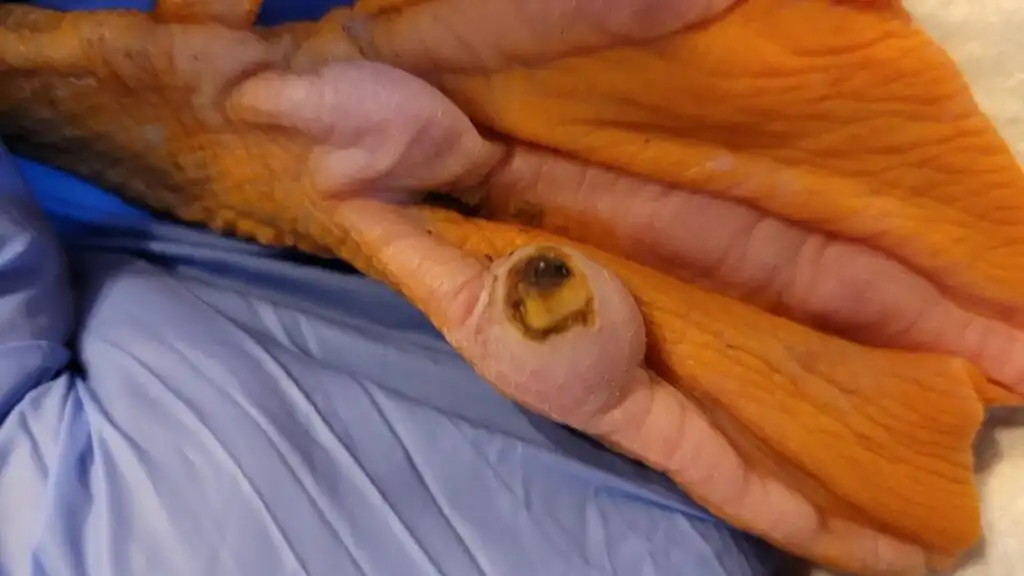
Bumblefoot, also called pododermatitis, develops when the skin on the underside of the foot becomes damaged and inflamed. Bacteria may enter through a small break in the skin, allowing infection to extend into deeper tissues. A duck may limp, lift one foot frequently, sit more than usual, or develop swelling, heat, redness, or a dark scab on the footpad.
Not every dark spot is severe bumblefoot, but it should not be ignored. Advanced infections can involve tendons, joints, or bone and may become much more difficult to treat. Pain relief may therefore be only one part of care. The underlying pressure, wound, infection, and housing conditions must also be addressed.
Leg and Joint Injuries
Ducks can injure their legs by slipping, becoming caught in fencing, jumping from an unsafe height, being stepped on, or struggling during a predator encounter. Sprains, strains, tendon injuries, joint damage, dislocations, and fractures may all cause pain.
An injured duck may take shortened steps, hold one leg at an unusual angle, drag a limb, repeatedly sit down, or use her wings for balance. Some ducks continue walking despite a significant injury, particularly when trying to remain with the flock.
Sudden inability to bear weight, an abnormal limb angle, marked swelling, or a suspected fracture requires prompt veterinary evaluation. Do not repeatedly bend the leg to test it. Restrict unnecessary movement, provide secure footing, and allow a veterinarian to determine which structures have been damaged.
Young, rapidly growing ducks can also develop painful leg problems related to nutrition, growth rate, conformation, or developmental abnormalities. These conditions should not automatically be treated as simple injuries.
Arthritis and Age-Related Changes
Older ducks may develop osteoarthritis after years of movement, previous injuries, abnormal joint alignment, or chronic foot and leg problems. Arthritis causes inflammation and degeneration within a joint, which can make standing, walking, bathing, and grooming uncomfortable.
The changes are often gradual. A duck may take longer to stand, walk more slowly in the morning, rest more frequently, hesitate at steps, or stop climbing into a favorite pool. She may still have enthusiastic moments when treats appear, which can make her daily discomfort easy to underestimate.
Reduced activity is sometimes dismissed as an unavoidable part of aging. However, slowing down and living with untreated pain are not the same thing. Veterinary pain management, weight control, nonslip surfaces, soft resting areas, accessible water, and changes to the environment can help many older ducks remain comfortable and engaged.
Predator Attacks and Other Wounds
Bites, punctures, crushing injuries, torn skin, and damaged muscle can cause severe pain even when the wound initially appears small. Predator attacks may also cause internal injury, shock, or infection that cannot be identified through a quick visual examination.
Any duck caught by a dog, cat, raccoon, fox, bobcat, or other predator should be evaluated urgently. Small puncture wounds can close over while bacteria and damaged tissue remain beneath the skin. Feathers may also conceal the true extent of an injury.
Keep the duck quiet, warm, and protected while arranging veterinary care. Control active bleeding with gentle, direct pressure using clean material, but avoid pouring harsh disinfectants into deep wounds or repeatedly manipulating the injured area.
Egg Binding and Reproductive Disease
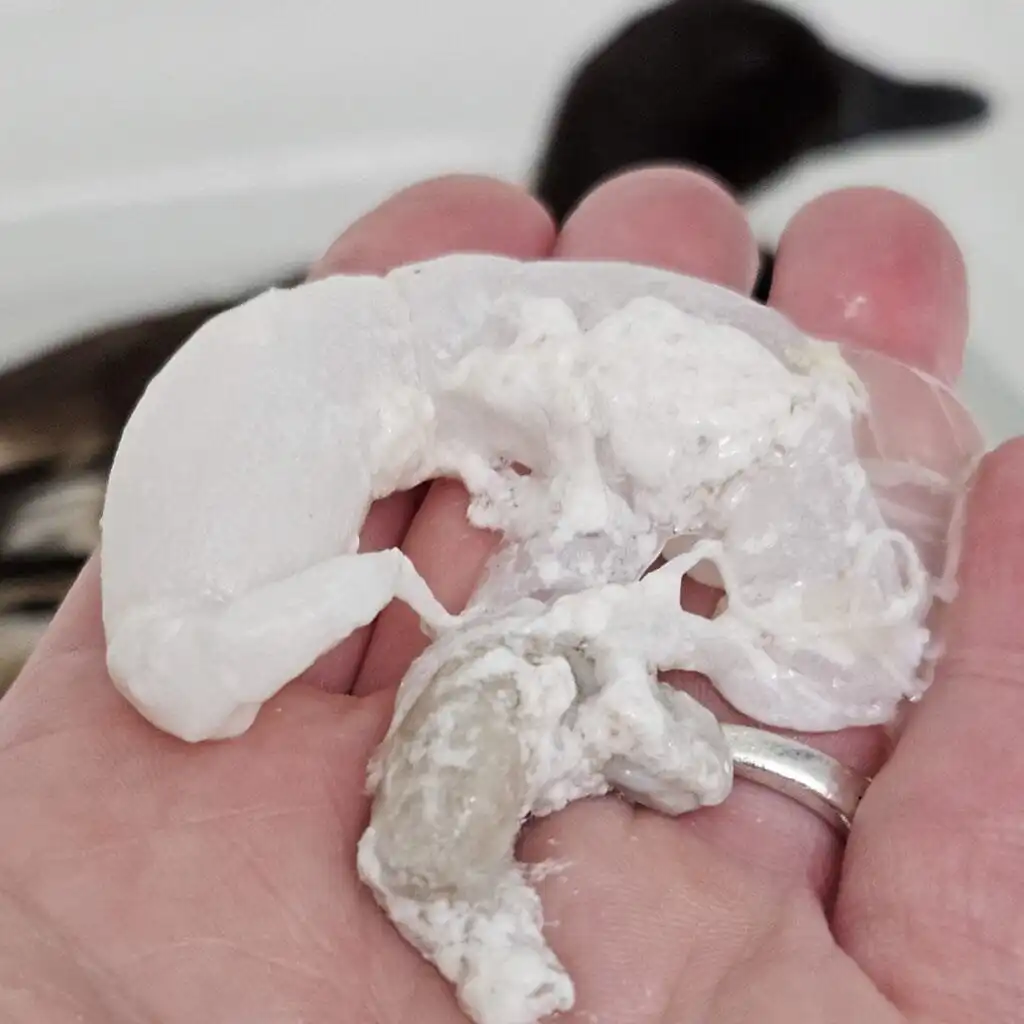
Reproductive conditions can be extremely painful and may deteriorate quickly. Egg binding occurs when a formed or partially formed egg cannot pass normally. Affected ducks may strain, repeatedly visit a nest, stand with a wide stance, pump the tail, breathe more rapidly, or appear restless and unable to become comfortable.
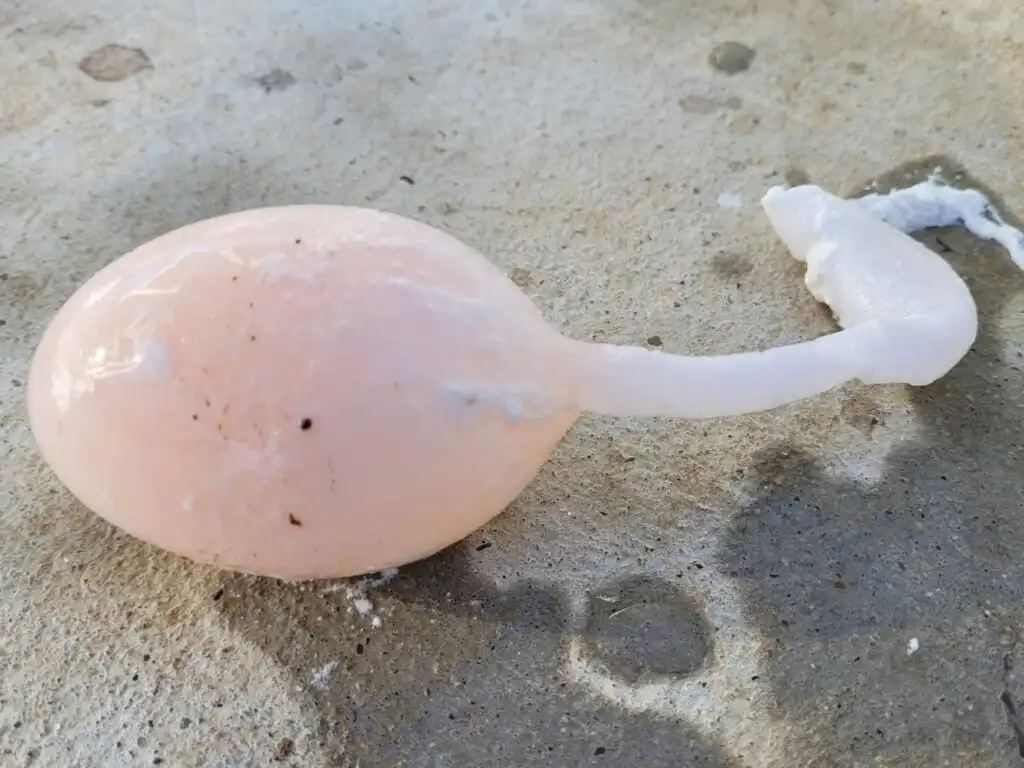
However, not every painful reproductive condition involves a stuck shell-covered egg. Internal laying, malformed or soft-shelled eggs, inflammation of the reproductive tract, egg yolk peritonitis, infection, ovarian disease, and cloacal prolapse can produce overlapping signs. Abdominal swelling, a penguin-like posture, reduced appetite, weakness, abnormal discharge, or repeated straining should always be taken seriously.
Warm baths, calcium, or other home measures are sometimes discussed online as universal solutions, but the correct treatment depends on what is actually happening inside the duck. Persistent straining, prolapsed tissue, labored breathing, weakness, or suspected egg binding requires urgent veterinary care.
Abdominal and Digestive Problems
Abdominal pain may result from a foreign body, intestinal obstruction, toxin exposure, severe infection, inflammation, organ disease, or another digestive problem. Because ducks cannot show us where it hurts, the signs may initially appear vague.
A duck with abdominal discomfort may become hunched, repeatedly reposition herself, stop eating, produce fewer or abnormal droppings, tense the abdomen, or resist being handled around the body. Abdominal enlargement or a firm, fluid filled, or unusually shaped belly may also be present, but owners should not squeeze or repeatedly palpate the abdomen.
Digestive disease and reproductive disease can look remarkably similar in female ducks. Imaging, laboratory testing, and a physical examination may be needed to distinguish between them.
Burns, Frostbite, and Skin Injuries
Ducks may experience thermal burns from heat lamps, heaters, hot surfaces, electrical cords, fires, or excessively hot water. Chemical exposure can also damage the skin, eyes, mouth, and digestive tract.
Frostbite most often affects exposed or poorly perfused tissues during severe cold exposure. The feet are especially vulnerable when ducks cannot escape frozen, wet, or unprotected surfaces. Tissue may initially appear pale, cold, swollen, or discolored, but the full extent of damage may not become apparent immediately. Frostbite can lead to tissue death when exposure is severe, according to the Merck Veterinary Manual.
Burned or frostbitten tissue can be intensely painful. Do not rub frozen tissue, break blisters, apply direct heat, or cover an injury with creams that the duck may ingest while preening. These injuries should be assessed by a veterinarian because pain, fluid loss, infection, and deeper tissue damage may all require treatment.
Skin pain can also come from torn feathers, dermatitis, flystrike, mating injuries, pressure sores, or inflamed tissue around the vent. Feathers often conceal these problems, so a careful examination of the skin is important when a duck persistently picks at one area.
Surgery and Veterinary Procedures
Surgery, wound repair, fracture stabilization, abscess treatment, biopsies, and other procedures can all produce temporary pain. Even necessary examinations may be uncomfortable when an area is already inflamed or injured.
Pain control should ideally begin before a painful procedure and continue for an appropriate period afterward. Veterinarians may combine medications that work in different ways, along with local anesthesia and supportive care, to improve comfort.
A quiet duck after surgery is not necessarily a comfortable duck. Sedation, anesthesia, stress, weakness, and pain can produce similar behavior. Ask the veterinarian what recovery should look like, when the next medication is due, and which changes require an immediate call.
Eye and Ear Conditions
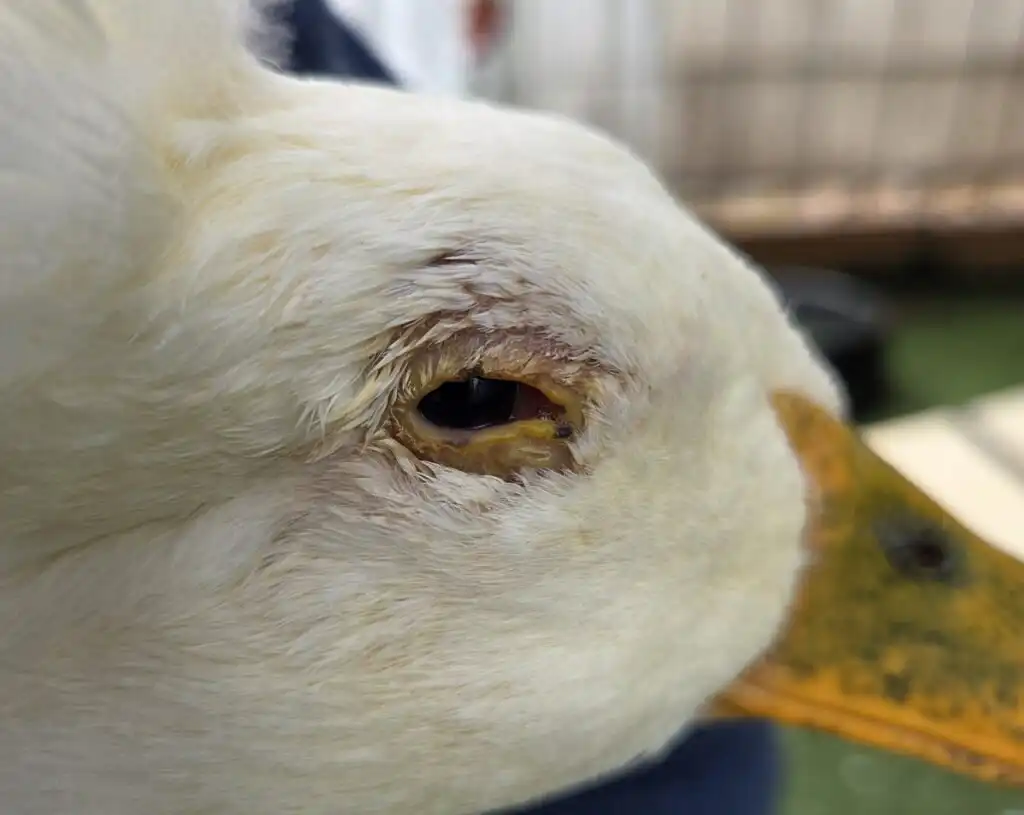
Eye problems can be particularly painful. Corneal scratches, foreign material, ulcers, trauma, infection, inflammation inside the eye, and increased pressure may cause squinting, tearing, swelling, discharge, light sensitivity, or repeated rubbing of the face.
A cloudy eye is not always painful, but cloudiness combined with redness, swelling, discharge, squinting, or a sudden behavioral change requires veterinary attention. Avoid using leftover eye medication because certain products can worsen particular eye injuries.
Ear infections, trauma, inflammation, or foreign material may also cause discomfort. Ducks do not have visible external ear flaps, so the ear openings can be easy to overlook beneath the feathers. Head shaking, scratching, discharge, swelling, head tilt, loss of balance, or reluctance to have the head touched may indicate an ear problem. Balance changes may also have neurological causes, making proper diagnosis especially important.
Chronic Disease and End of Life Conditions
Cancer, organ disease, chronic reproductive problems, advanced arthritis, recurring infections, and other long-term illnesses may cause persistent or intermittent pain. The signs can become so gradual that they start to feel like the duck’s new normal.
Chronic pain may appear as reduced mobility, poor grooming, muscle loss, withdrawal, disrupted sleep, declining appetite, or less interest in the activities the duck once enjoyed. Some ducks continue having bright, social moments despite significant disease, so quality of life should be evaluated across the entire day rather than during a single good moment.
Pain relief and palliative care can sometimes provide meaningful comfort even when the underlying disease cannot be cured. Eventually, however, there may come a point when medication and environmental support can no longer maintain an acceptable quality of life. Discussing humane euthanasia does not mean giving up. In some circumstances, it is the final way we protect a duck from suffering she can no longer escape.
A painful duck needs more than pain medication. Effective care also requires identifying and treating the underlying cause. Pain relief may help her rest, eat, move, and recover, but it cannot repair a fracture, remove an obstruction, resolve egg binding, or eliminate an infection on its own.
How Veterinarians Treat Pain in Ducks
Pain management in ducks is rarely as simple as choosing one medication. A veterinarian must first consider where the pain is coming from, how severe it appears to be, how long it has been present, and whether the duck has other medical problems.
A duck recovering from surgery may need a different approach than one living with arthritis. Likewise, pain caused by a deep wound, egg binding, eye injury, or nerve damage may respond differently to the same medication. Effective treatment therefore begins with identifying and addressing the underlying cause whenever possible.
Veterinarians may use several categories of medication to relieve pain in ducks.
| Treatment | When a veterinarian may use it |
|---|---|
| NSAIDs such as meloxicam | Inflammation, musculoskeletal pain, arthritis, injuries, and postoperative discomfort |
| Opioid medications | Moderate or severe acute pain, major trauma, and painful surgical procedures |
| Gabapentin | Certain chronic pain conditions or pain involving irritated or damaged nerves |
| Local anesthetics | Wound treatment, minor procedures, surgery, or pain affecting a specific area |
| Sedation or anesthesia | Examinations and procedures that would otherwise cause pain, fear, or unsafe movement |
| Multimodal analgesia | Combining treatments that work through different pathways for more complete pain control |
NSAIDs Such as Meloxicam
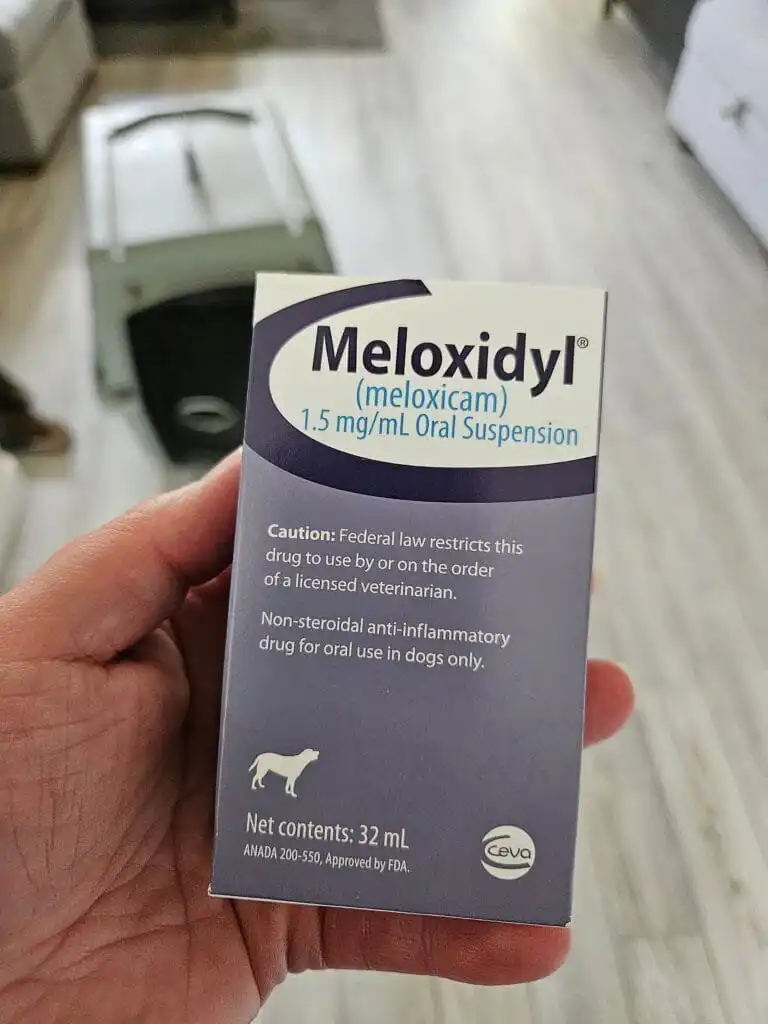
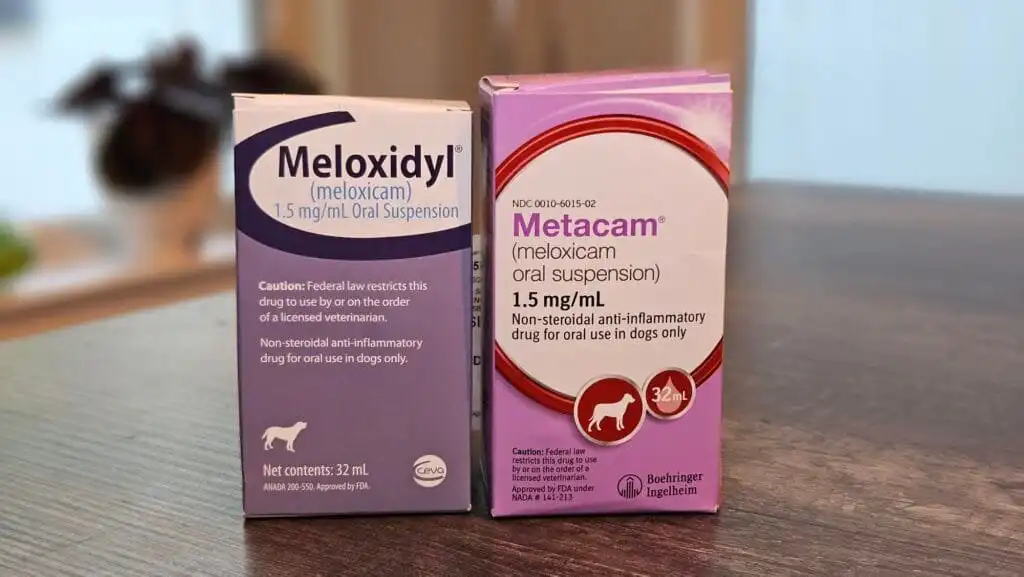
Nonsteroidal anti inflammatory drugs, commonly called NSAIDs, reduce the production of substances involved in inflammation and pain. Meloxicam is one of the NSAIDs veterinarians may prescribe for birds, including ducks.
A veterinarian may consider meloxicam for painful conditions involving inflammation, such as arthritis, bumblefoot, soft tissue injuries, joint problems, or postoperative discomfort. Reducing inflammation may help a duck stand, walk, rest, groom, and eat more comfortably.
However, meloxicam is not appropriate for every duck. NSAIDs can affect the kidneys and digestive system, particularly when an animal is dehydrated, critically ill, or already experiencing kidney problems. Other medications and underlying diseases may also influence whether an NSAID is a safe choice.
This is one reason a veterinarian may want to evaluate hydration, organ function, medical history, and concurrent treatments before prescribing it. A medication that was appropriate during one illness may not be appropriate during the next.
What the Duck Specific Meloxicam Study Found
One of the most relevant studies on pain medication in ducks compared meloxicam with tramadol in 12 Muscovy ducks experiencing experimentally induced, temporary arthritis. The researchers used a pressure sensitive walkway to measure how much force each duck placed on the affected leg. This provided a more objective assessment than simply watching for an obvious limp.
Both meloxicam and tramadol improved certain measurements of weight bearing compared with the control treatment. The differences were detected primarily during a limited period after treatment, and the study did not find a significant difference between the two medications in the primary force comparison. The results support the conclusion that both drugs can provide analgesic effects in ducks under those experimental conditions (Bailey et al., 2019).
This study is encouraging because pain research conducted specifically in ducks is limited. However, it does not establish one universal medication or dosing schedule for every pet duck. The study involved a small number of Muscovy ducks, a controlled temporary arthritis model, single treatments, and short-term monitoring. It cannot tell us how the same medications will perform in every breed, age group, illness, or chronic condition.
Opioid and Opioid Like Medications
Veterinarians may use opioid medications when a duck is experiencing moderate or severe acute pain. Situations may include major trauma, predator injuries, invasive procedures, fractures, or recovery from surgery.
Opioids work differently from NSAIDs. Rather than primarily reducing inflammation, they alter how pain signals are transmitted and perceived within the nervous system. This can make them particularly valuable when inflammation control alone would not provide enough relief.
Tramadol, the second medication evaluated in the duck arthritis study, has opioid like and additional nervous system effects. Its action can vary among species because the body must absorb and metabolize the drug in ways that influence its analgesic effect. A separate pharmacokinetic study has examined how orally administered tramadol is processed in Muscovy ducks, but even duck-specific research cannot account for every individual patient (Bailey et al., 2019).
Depending on the drug, opioids may cause sedation, changes in activity, digestive effects, or other adverse reactions. A quiet duck after receiving medication is not automatically a pain-free duck. The veterinarian must evaluate whether the duck is genuinely more comfortable rather than simply less active.
Gabapentin
Gabapentin may be considered for certain forms of chronic or neuropathic pain, meaning pain associated with abnormal or damaged nerve signaling. A veterinarian might consider it when nerve involvement is suspected or when a chronic condition is not adequately controlled through other approaches.
Evidence for gabapentin use in ducks is much more limited than the evidence available for some other species. Its use must therefore be carefully individualized. Sedation and reduced coordination are particularly important concerns in a duck that is already weak, unstable, or having difficulty walking.
Gabapentin should not be viewed as a general at-home remedy for any duck that appears uncomfortable. Whether it is appropriate depends on the suspected type of pain and the duck’s overall condition.
Local Anesthetics
Local anesthetics temporarily block pain signals from a specific area of the body. A veterinarian may use them around a wound, incision, or surgical site, or during a procedure involving a small and clearly defined area.
Because they target pain near its source, local anesthetics can reduce the amount of general medication needed. They may be incorporated into a larger pain management plan rather than used alone.
The medication, concentration, amount, and placement must be selected carefully. Birds are small patients, and an error in the quantity or location of a local anesthetic can have serious consequences. These medications should only be administered by a veterinarian trained in their use.
Sedation and Anesthesia
A painful examination or procedure may be impossible to perform safely while a duck is fully awake. Sedation can reduce fear, struggling, and distress, while anesthesia allows the veterinarian to complete surgery or another invasive procedure without conscious awareness.
However, sedation is not the same as pain relief. A sedated duck may move less while still requiring analgesic medication. General anesthesia also does not automatically provide continued comfort once the duck begins to wake.
For this reason, veterinarians commonly plan pain control before, during, and after a procedure. The goal is to prevent pain from becoming severe rather than waiting until the duck is visibly distressed during recovery.
Multimodal Analgesia
For moderate or severe pain, a veterinarian may combine several treatments that act through different pathways. This is known as multimodal analgesia.
For example, a treatment plan might include an anti-inflammatory medication, another analgesic, and a local anesthetic used around the surgical site. Environmental adjustments, treatment of the underlying condition, and careful nursing support may be added as well.
This approach can provide more complete relief than relying on one medication alone. It may also allow the veterinarian to limit the amount of any individual drug, potentially reducing certain adverse effects.
Multimodal care is especially valuable because pain has several components. Inflammation, damaged tissue, muscle tension, nerve signaling, fear, and restricted movement can all contribute to what the duck experiences.
Treating the Cause Is Part of Treating the Pain
Pain medication can make a duck more comfortable, but it does not replace treatment of the underlying problem. Bumblefoot may require pressure relief and infection control. A fracture may need stabilization. Egg binding or reproductive disease may require urgent intervention. A deep wound may need cleaning, repair, and antimicrobial treatment.
In some cases, the most effective pain relief comes from resolving the cause. Removing a foreign object, draining an infected area, correcting an obstruction, or stabilizing an injured limb may dramatically reduce discomfort.
Supportive care matters too. Soft nonslip bedding, easy access to food and water, protection from flock bullying, and limits on unnecessary movement can all support recovery. These measures complement veterinary pain control, but they should not be used as substitutes when medication is needed.
Important medication reminder. There is no universal pain medication dose for ducks. A veterinarian must consider the duck’s species, exact weight, hydration, kidney and liver function, medical condition, pain severity, and other medications. Never copy a dose from a research paper, online forum, or prescription written for another bird. Even medication previously prescribed to the same duck should not be reused for a new problem without veterinary approval.
The goal of veterinary pain management is not merely to make a duck quieter. It is to restore meaningful comfort. A well-managed duck should gradually show improvements in posture, mobility, appetite, grooming, rest, and interest in her surroundings.
Why You Should Never Guess the Dose
There is no universal medication dose that is safe for every duck. The correct dose depends on much more than the name of the medication. A veterinarian must consider your duck’s:
• Exact, current body weight
• Hydration status
• Kidney and liver function
• Age and overall health
• Medical condition and type of pain
• Other medications or supplements
• Ability to eat, drink, and metabolize the drug normally
A dose that was appropriate for one duck may be dangerous for another. Even medication previously prescribed to the same duck should not automatically be reused for a new illness or injury. Her weight, hydration, organ function, and medical needs may have changed.
Never estimate a dose, copy one from an online forum, or calculate it from a research study. Research doses are developed for specific animals under controlled conditions and may use different drug formulations or concentrations.
Medication concentration matters too. Two bottles labeled with the same drug name may contain very different amounts of medication per milliliter. Confusing milligrams with milliliters can cause a serious overdose.
Before giving any pain medication, confirm the medication, concentration, dose, frequency, route, and treatment duration with a veterinarian familiar with birds. If you are uncertain about any part of the instructions, call the clinic before administering it.
More medication does not mean better pain control. It may mean poisoning, organ damage, or death. When it comes to medication, never guess.
Human Pain Medications Can Be Dangerous
When a duck appears to be hurting, it is natural to want to provide immediate relief. However, the pain medications kept in a household medicine cabinet should never be given to a duck unless an avian veterinarian specifically prescribes them.
Ibuprofen, naproxen, acetaminophen, and aspirin can cause serious adverse effects when the medication, dose, or treatment interval is inappropriate. Potential complications may include irritation or ulceration of the digestive tract, internal bleeding, kidney damage, liver damage, neurological abnormalities, and death. Human NSAIDs such as aspirin, ibuprofen, and naproxen are among the medications most frequently associated with analgesic poisoning in animals (Merck Veterinary Manual).
This does not mean that every medication developed for people is never used in veterinary medicine. Veterinarians sometimes prescribe certain medications off label for birds when the expected benefit outweighs the risk. The important difference is veterinary supervision. A veterinarian selects the medication, calculates the dose using the duck’s current weight and health status, and determines how frequently and for how long it can be given safely.
Medications You Should Never Give Independently
| Medication or product | Why independent use is dangerous |
|---|---|
| Ibuprofen | May damage the digestive tract and kidneys |
| Naproxen | Can remain in the body for a prolonged period and cause severe toxicity |
| Acetaminophen | An inappropriate dose may damage the liver, blood, or other organs |
| Aspirin | Can irritate the digestive tract, impair normal blood clotting, and cause toxicity |
| Topical pain creams or gels | May be absorbed through the skin or swallowed during preening |
| Leftover prescription medication | May be the wrong drug, concentration, dose, or treatment for the current condition |
Aspirin deserves particular clarification because it is sometimes recommended casually in online poultry groups. A medication having a history of veterinary use does not make it safe to administer without guidance. Aspirin affects platelet function and can increase the risk of bleeding. It may be especially dangerous when a duck has trauma, internal bleeding, dehydration, kidney disease, reproductive bleeding, or another medication already in her system.
Topical Products Are Not a Safer Alternative
Pain creams, muscle rubs, medicated patches, and anti-inflammatory gels should not be applied to a duck unless a veterinarian specifically directs you to use that exact product. These preparations may contain ingredients such as diclofenac, lidocaine, menthol, methyl salicylate, capsaicin, or combinations of several active medications.
Ducks investigate their feathers constantly. A product applied to the skin can spread onto surrounding plumage and then be swallowed during preening. It may also contaminate the bill, eyes, drinking water, bedding, or another duck that grooms the treated bird. Feathers can make it difficult to see how much product remains on the skin, so there is no reliable way to prevent ingestion simply by watching the duck.
Leftover Prescriptions Are Not Automatically Safe
Do not give medication left over from another duck, another pet, or a previous illness. Even if the label carries your duck’s name, the prescription was selected for a particular medical problem at a particular point in time. Her weight, hydration, kidney function, liver function, and other treatments may have changed.
Combination products create an additional risk. A familiar brand name may contain more than one active ingredient, and liquid formulations may contain a very different concentration than expected. Never assume that a smaller piece of a human tablet becomes a safe duck dose.
⚠️ If Your Duck Accidentally Receives Human Pain Medication
Treat the exposure as urgent, even if your duck still appears normal. Contact an avian veterinarian, emergency veterinary hospital, or animal poison control service immediately. Have the packaging available and report the exact product, strength, estimated amount, time of exposure, and your duck’s current weight.
Do not wait for symptoms to develop, and do not give another medication or attempt a home detoxification treatment unless a veterinarian instructs you to do so. Early professional guidance may make a significant difference.
Human pain medication is not a safe shortcut to veterinary pain relief. If your duck is hurting, she deserves the correct medication for the correct diagnosis, not a guess from the household medicine cabinet.
Supportive Care That Can Make a Duck More Comfortable
Medication is only one part of effective pain management. A duck’s environment can either reduce strain on her body or make an already painful condition even harder to tolerate. Thoughtful supportive care can help her rest, conserve energy, maintain her appetite, and avoid further injury while the underlying problem is treated.
However, comfort care complements veterinary pain relief. It does not replace it. Soft bedding cannot control the pain of a fracture, and a warm bath cannot resolve serious reproductive disease. If a duck is hurting, she may need both appropriate veterinary medication and changes to her daily care.
Create a Quiet Hospital Area
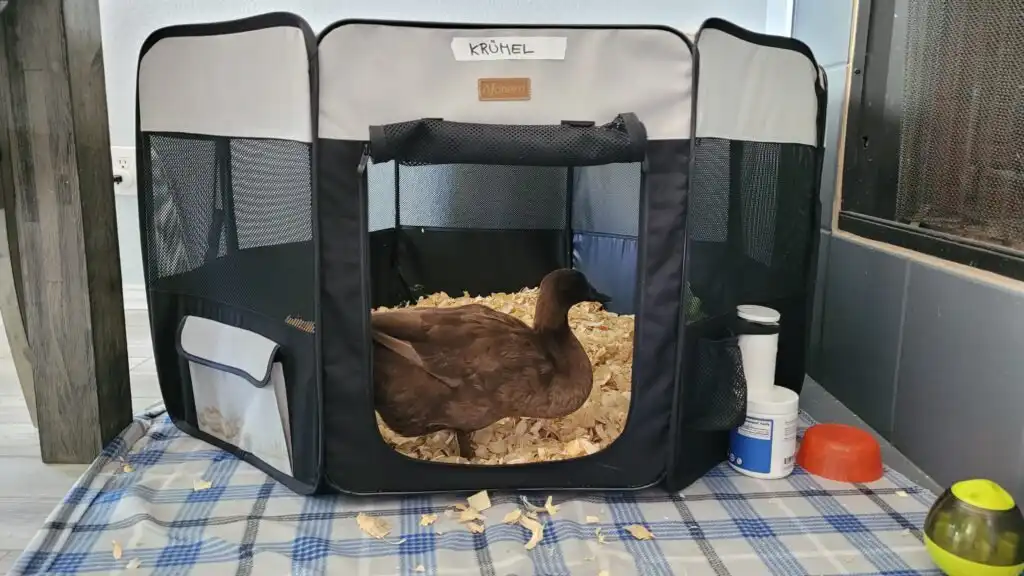
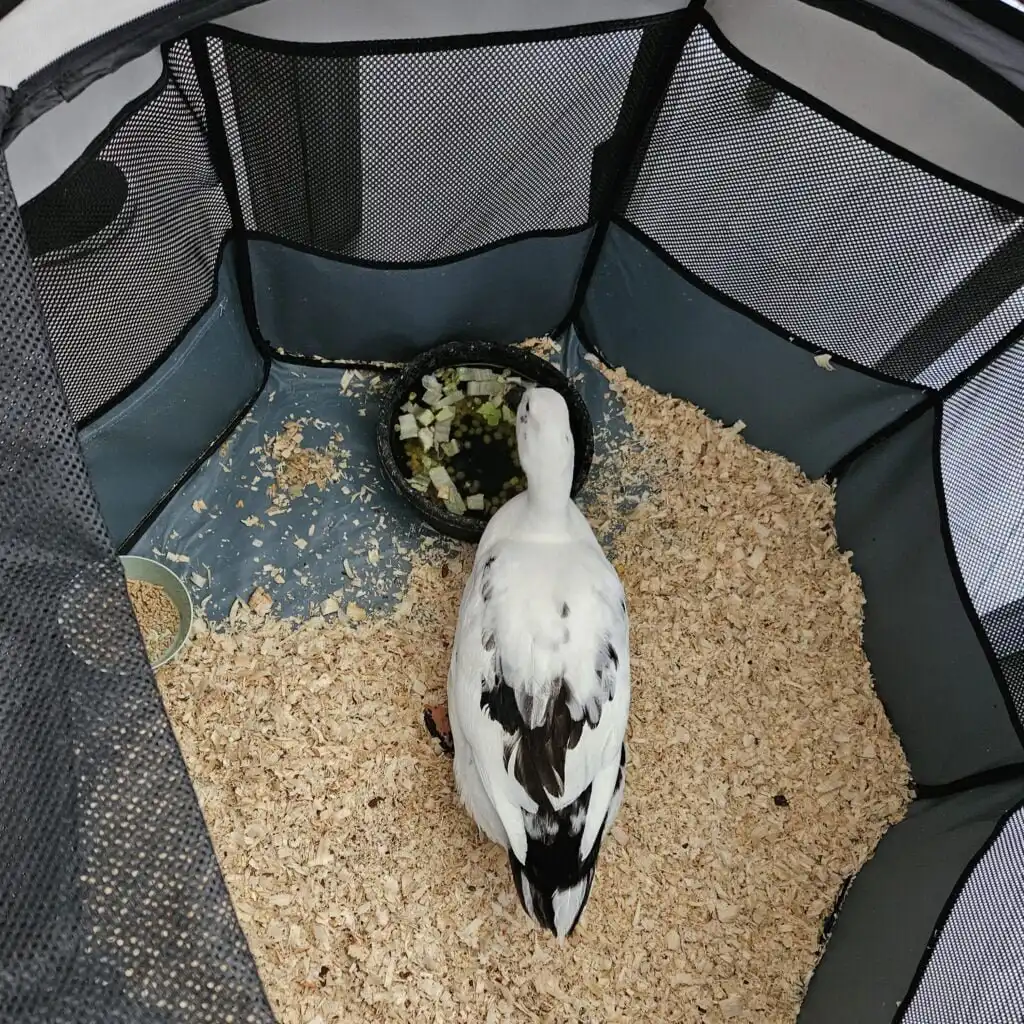
A sick or injured duck often benefits from a calm hospital area away from noise, predators, excessive handling, and flock commotion. The space should be large enough for her to turn around, stretch, and reposition herself, but not so large that she must walk extensively to reach what she needs.
Complete isolation can be stressful for a social animal. When possible, position the hospital enclosure where the duck can safely see or hear familiar flockmates without being chased, mounted, or pushed away from food and water. A calm companion may sometimes help, but only if that duck will not interfere with rest or treatment.
Provide Soft, Clean, Nonslip Bedding
Painful ducks need secure footing. Slippery floors force the legs and joints to work harder and increase the risk of falls, especially when a duck is weak, arthritic, recovering from surgery, or unable to bear weight evenly.
Use bedding that is soft, dry, clean, and easy to change. Towels, washable pads, or other veterinarian-approved materials may work well depending on the condition. Avoid loose threads, deep folds, or rough surfaces that could catch toes or irritate wounds. Bedding may need to be changed frequently because moisture and droppings can quickly contaminate wounds and damage the skin.
Keep Food and Water Within Easy Reach
A painful duck should not have to cross the enclosure repeatedly to eat or drink. Place food and water close to her resting area while leaving enough space to prevent spills from soaking the bedding.
The water container should allow her to submerge and clean her bill and nostrils without requiring her to climb, balance awkwardly, or step into a deep container. If bending toward the floor appears uncomfortable, a veterinarian may recommend adjusting the container height. Any setup must remain stable and safe from tipping.
Continue offering a nutritionally complete feed rather than relying entirely on favorite treats. Tempting foods can encourage a poor appetite, but treats alone may create a misleading impression that the duck is eating adequately.
Protect Her From Flock Bullying
Ducks quickly notice when a flockmate is moving differently. A weak or painful duck may be pushed away from resources, chased, mounted, or pecked. Even normally gentle companions can accidentally knock her over or interfere with healing.
Temporary separation may be necessary, particularly when mobility is limited. Visual contact with the flock can help reduce social stress, but physical access should only resume when it is safe. Reintroduction may need to happen gradually and under supervision.
Provide Appropriate Warmth Without Overheating
A sick, injured, or recovering duck may have difficulty regulating her body temperature. A comfortably warm, draft-free recovery area can help her conserve energy, particularly after anesthesia or during severe illness.
Warmth should always be provided carefully. Ducks can overheat quickly, especially when they cannot move away from a heat source. The enclosure should include a cooler area so the duck can choose where she is comfortable. Panting, holding the wings away from the body, restlessness, or moving as far away from the heat as possible may indicate that she is too warm.
Reduce Walking, Climbing, and Jumping
For foot pain, arthritis, leg injuries, or postoperative recovery, reducing unnecessary movement can prevent additional strain. Remove steps, steep ramps, high thresholds, and anything the duck may try to climb or jump from. Keep the route between her resting area, food, and water short and level.
Movement restriction should match the condition. A suspected fracture may require much stricter confinement than mild arthritis, while prolonged inactivity can also contribute to stiffness and muscle loss. Your veterinarian can help determine how much movement is safe and when activity should gradually increase.
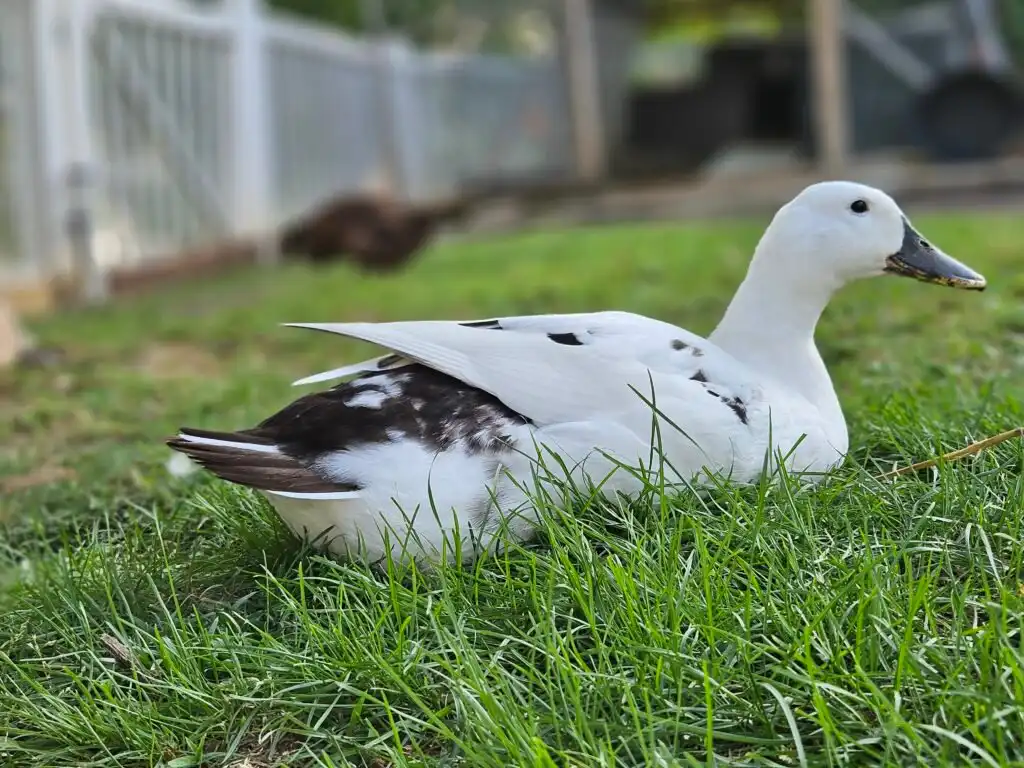
Offer Bathing Only When It Is Medically Appropriate
Bathing can be soothing and allows a duck to clean her feathers, but it is not safe in every situation. A weak duck may become chilled, struggle to exit the water, or be unable to keep her head above the surface. Swimming may also contaminate open wounds, soften healing foot tissue, disrupt bandages, or expose surgical incisions to moisture.
Ask your veterinarian when bathing can safely resume. When it is permitted, use clean, comfortably warm water and supervise closely. The duck must be able to enter and exit without climbing or slipping. Dry her gently afterward and return her to clean bedding.
Monitor Weight, Appetite, and Comfort Every Day
Daily monitoring helps reveal whether supportive care and treatment are working. Weigh the duck at approximately the same time each day using a digital baby scale, and record the result rather than relying on how heavy she feels in your hands.
Also track how much complete feed she eats, whether she drinks normally, and how her droppings change. Observe her posture, mobility, breathing, grooming, sleep, and interest in her surroundings. Short videos can make gradual improvement or decline easier to recognize and provide useful information for your veterinarian.
A duck may enthusiastically accept mealworms while eating very little of her regular food. Treat consumption should never be used as the only measure of appetite or recovery.
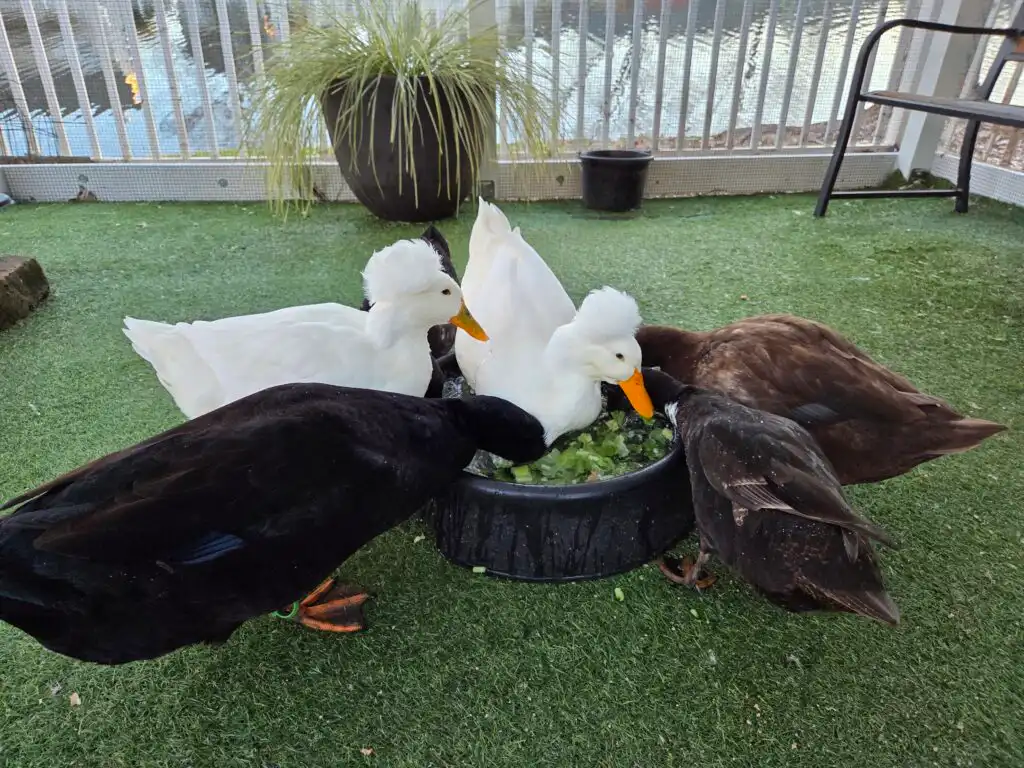
Treat the Underlying Condition
The most comfortable hospital enclosure in the world cannot resolve an untreated infection, stabilize a fracture, remove an obstruction, or correct egg binding. Supportive care helps the duck cope, but lasting improvement usually depends on identifying and treating the reason she is hurting.
Follow the veterinarian’s instructions for medication, wound care, movement restriction, bathing, follow-up examinations, and return to the flock. Contact the clinic if the duck becomes less responsive, stops eating, loses weight, has difficulty breathing, cannot stand, or appears more painful despite treatment.
Comfort Care Is Part of Pain Management, Not a Substitute
A quiet space, soft bedding, warmth, accessible food and water, and protection from bullying can make a meaningful difference. These measures reduce stress and prevent additional discomfort, but they do not replace veterinary pain medication when analgesia is needed.
A duck should not have to endure untreated pain simply because she is resting quietly. The best care combines veterinary pain relief, treatment of the underlying condition, and a recovery environment designed around her current needs.
Monitoring Whether Pain Treatment Is Working
Pain treatment should lead to meaningful improvements in your duck’s comfort and daily function. A duck may become quieter after receiving medication, but sedation alone does not mean the pain is controlled. Look for changes in how she eats, moves, rests, grooms, and interacts with her flock.
Because improvement may happen gradually, I recommend keeping a simple daily pain and recovery log. Record observations at approximately the same times each day, ideally before the next medication dose is due. This can help reveal whether relief lasts throughout the prescribed dosing interval or whether discomfort returns sooner.
Daily Pain and Recovery Log
| What to monitor | What improvement may look like | Changes that concern me |
|---|---|---|
| Appetite | Eating more complete feed, returning to the feeder normally, and showing sustained interest in meals | Eating only favorite treats, taking longer to eat, or refusing food |
| Body weight | Weight remains stable or begins returning toward the duck’s normal baseline | Continued weight loss, especially when appetite appears relatively normal |
| Walking and standing | Standing more easily, taking more even steps, and placing more weight on the affected limb | Increased limping, repeated falls, inability to stand, or worsening weight bearing |
| Resting posture | Resting in a relaxed position and changing positions comfortably | Hunching, guarding one side, repeatedly repositioning, or appearing unable to settle |
| Grooming | Resuming normal preening and bathing when medically permitted | Neglected feathers, reduced preening, or repeatedly focusing on one painful area |
| Social interaction | Showing interest in familiar ducks or people and participating in normal routines | Withdrawing, falling behind, becoming unusually irritable, or being displaced by flockmates |
| Droppings | Returning toward the duck’s usual frequency, amount, and appearance | Fewer droppings, diarrhea, straining, blood, or another persistent abnormal change |
| Response to treatment | Improved comfort and function without concerning side effects | No improvement, relief that wears off too soon, excessive sedation, weakness, vomiting, or poor coordination |
Weight and behavior should be compared with your duck’s own normal baseline, not another flock member. A naturally quiet duck may recover differently from the flock’s resident chaos coordinator.
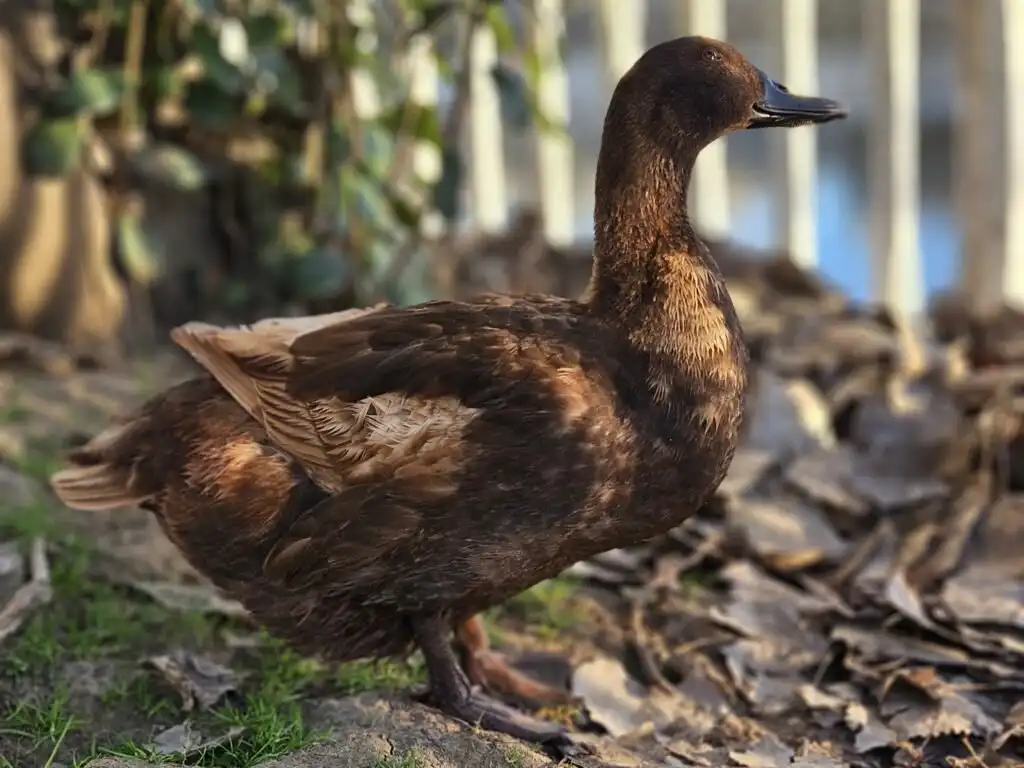
Keep the Record Simple and Consistent
Your daily entry does not need to be complicated. A short table can make changes much easier to recognize:
| Date and time | Weight | Appetite | Mobility | Posture and grooming | Social behavior | Droppings | Medication and response |
|---|---|---|---|---|---|---|---|
Use specific descriptions whenever possible. “Walked ten steps without sitting” provides more useful information than “seems better.” Record the medication exactly as prescribed, including the time it was given, and note when you first observed improvement or renewed discomfort.
Short videos are especially valuable. Try recording your duck standing up, walking across the same surface, resting, and approaching food each day. Videos allow you to compare her movement over time and give your veterinarian a clearer view of what happens at home.
🦆 Duck Health Tip: Track Weight With a Baby Scale
Ducks can lose weight even while continuing to accept treats, which is why appetite alone does not tell the whole story. During illness or recovery, I use a digital baby scale to monitor weight accurately.
Place the scale on a firm, level surface and weigh your duck at approximately the same time each day. Record the number instead of relying on how heavy she feels in your arms. A nonslip towel or mat can help her feel secure, but remember to zero the scale before weighing.
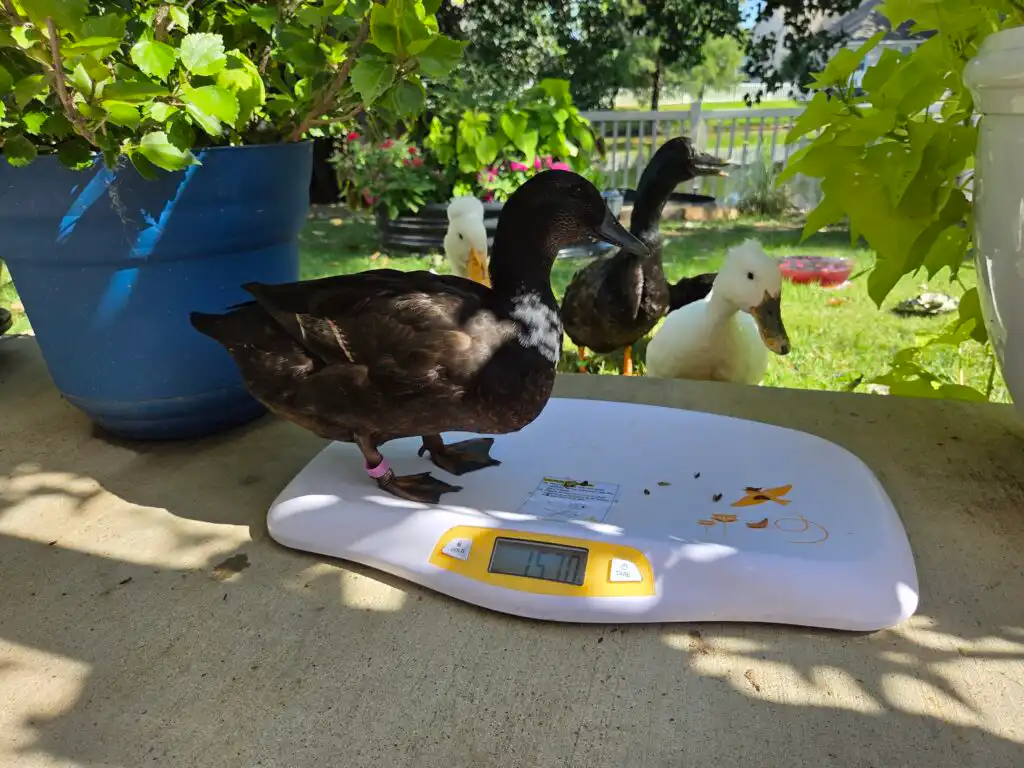
Shop the digital baby scale I use for our flock here.
(Affiliate link)
Outside periods of illness, I weigh every duck in my flock once a month. These routine measurements give me a valuable baseline and can reveal gradual weight loss before it becomes visually obvious.
Look for Trends, Not One Perfect Moment
Recovery is not always completely linear. A duck may have a more active morning followed by a tired afternoon. What matters is the overall direction. Is she eating more complete feed? Is standing becoming easier? Is she beginning to preen again? Does the medication provide consistent comfort until the next prescribed dose?
Do not change the medication amount, frequency, or timing on your own if improvement seems incomplete. Contact the veterinarian and share your written observations, weight measurements, and videos. This information can help determine whether the treatment plan, diagnosis, or supportive care needs to be reconsidered.
Birds vary in how they express discomfort, and no single behavior provides a universal measure of pain. Evaluating several behaviors together and comparing them with the individual bird’s normal routine provides a more meaningful picture of recovery (Mikoni et al., 2023).
Contact your veterinarian promptly if your duck becomes less responsive, stops eating, continues losing weight, cannot stand, develops breathing difficulty, or appears increasingly uncomfortable despite treatment. Pain that is worsening or not responding as expected should always be reassessed.
When Pain Is an Emergency
Some signs of pain should never be monitored at home to “see how things go.” They may indicate a life threatening injury, reproductive emergency, respiratory crisis, neurological problem, or serious internal disease.
Seek urgent veterinary care if your duck has:
• Severe trauma, including being struck, crushed, stepped on, or caught in fencing
• Uncontrolled bleeding or blood that continues soaking through clean material despite steady pressure
• Inability to stand, repeated collapse, or sudden loss of normal mobility
• A suspected fracture, dislocation, dangling limb, or limb held at an abnormal angle
• A deep, gaping, contaminated, or open wound
• Any predator attack, even when the visible wounds appear small
• Labored breathing, persistent open mouth breathing, pronounced tail movement with each breath, or blue or unusually pale tissues
• Suspected egg binding, repeated abdominal straining, a penguin like posture, or tissue protruding from the vent
• Neurological abnormalities such as seizures, circling, severe head tilt, tremors, loss of balance, paralysis, or an abnormal neck position
• Complete refusal of food and water, particularly when accompanied by weakness, lethargy, or reduced droppings
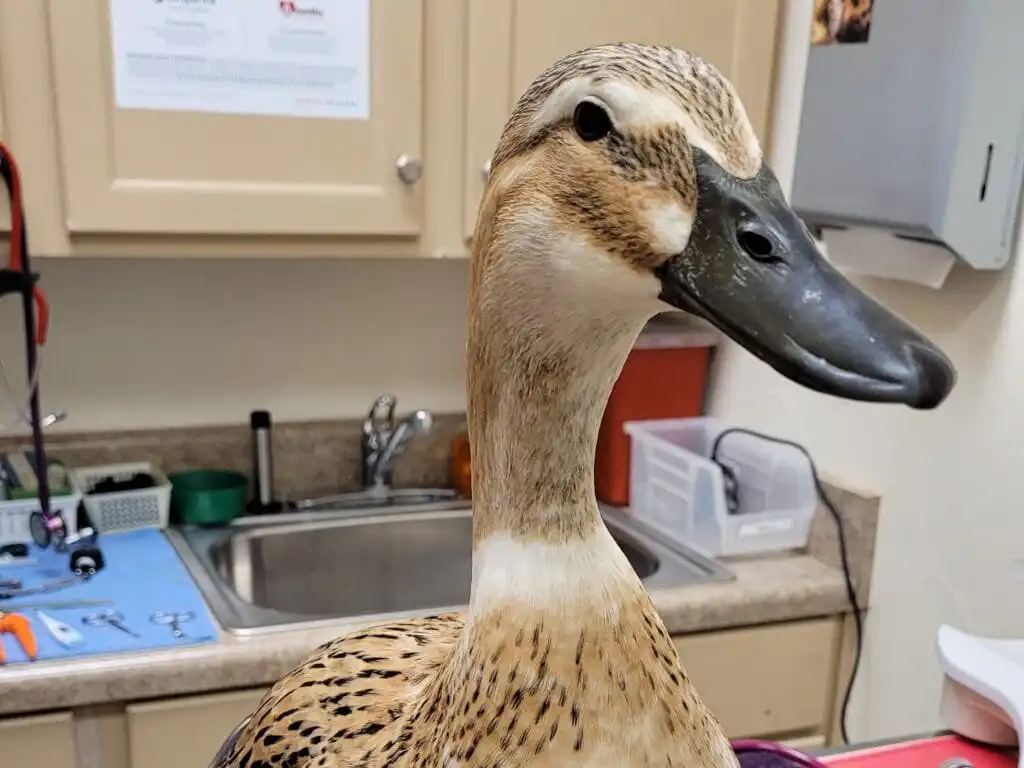
A predator attack is always urgent because feathers can conceal puncture wounds, crushed tissue, and internal injuries. Small bites may close at the surface while bacteria remain trapped underneath. Likewise, a duck that cannot stand may be suffering from more than a leg injury. Severe weakness, toxin exposure, neurological disease, internal bleeding, infection, or reproductive disease can produce similar signs.
Labored breathing requires especially careful handling. Keep the duck calm and avoid repeatedly restraining or examining her because struggling can worsen respiratory distress. Place her in a quiet, well-ventilated carrier and contact the veterinary clinic while preparing to leave.
What to Do While Arranging Veterinary Care
Keep your duck quiet, protected from flockmates, and comfortably warm without overheating. Restrict unnecessary movement, especially when trauma or a fracture is suspected. If a wound is actively bleeding, apply gentle, steady pressure with clean gauze or another clean material. Do not repeatedly lift it to check whether the bleeding has stopped.
Avoid force feeding, squeezing the abdomen, attempting to reposition a suspected fracture, or pulling on anything protruding from the vent. Do not administer human pain medication or leftover prescriptions unless a veterinarian specifically instructs you to do so.
Call the clinic before leaving when possible. Briefly explain the emergency so the veterinary team can prepare and tell you whether any immediate first aid is appropriate.
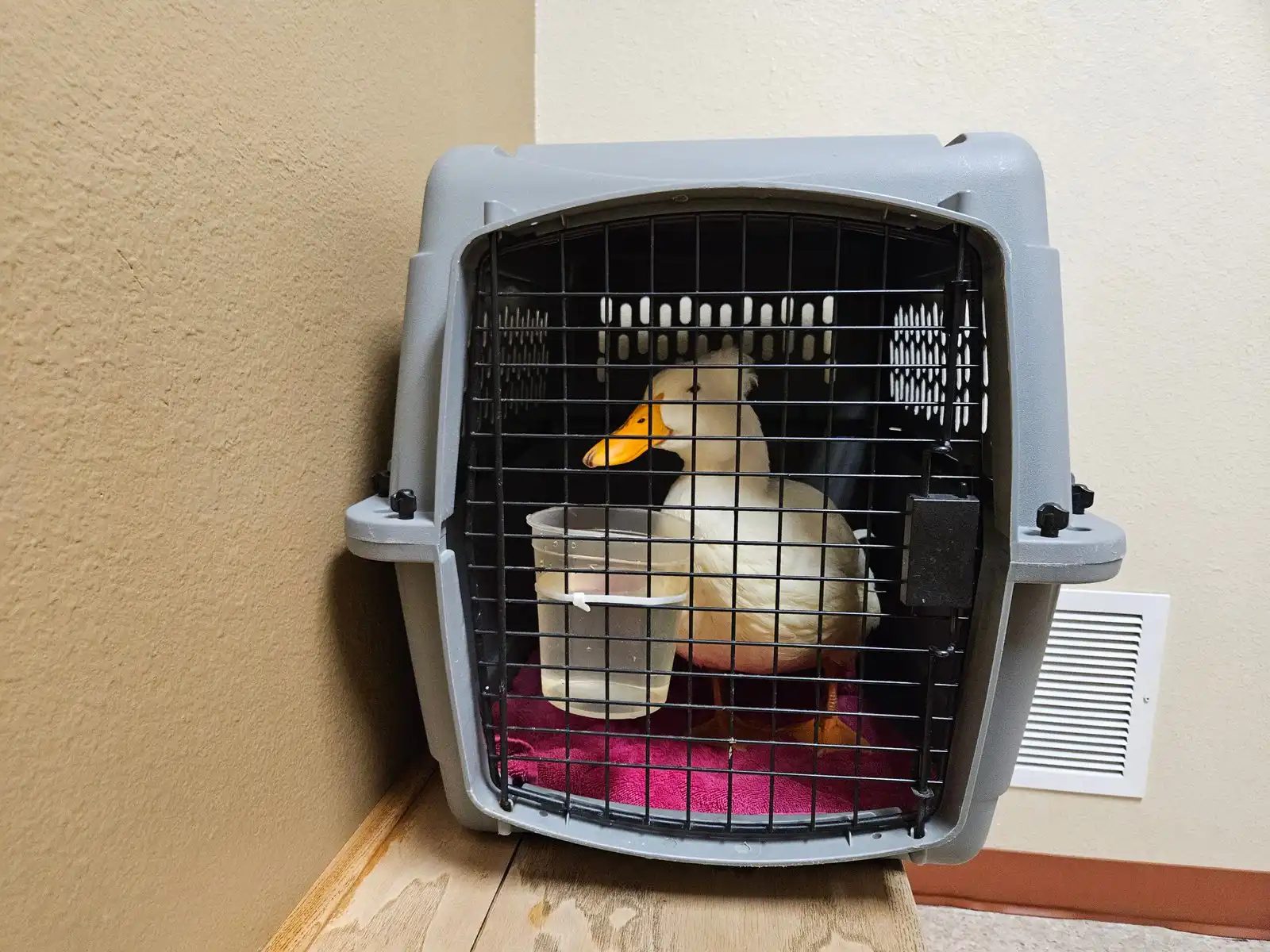
🚨 When You Are Unsure, Call
Ducks often hide pain until a problem is advanced. You do not need to identify the exact diagnosis before seeking help. Severe pain, sudden deterioration, breathing difficulty, neurological abnormalities, major trauma, persistent straining, or inability to stand warrants urgent veterinary evaluation.
Trust the change you see. It is far better to call and learn that your duck is stable than to lose valuable time during a true emergency.
Chronic Pain and Quality of Life
Not all pain is temporary. Some ducks live with arthritis, old injuries, recurring reproductive disease, cancer, organ failure, or another condition that cannot be completely cured. In these situations, care often shifts from trying to eliminate the disease to preserving as much comfort, independence, and enjoyment as possible.
Chronic pain can be difficult to recognize because the changes often develop slowly. A duck may gradually walk less, stop bathing as often, spend more time resting, or become quieter around the flock. When we see these changes every day, they can begin to feel like normal aging.
However, aging itself is not a reason to accept untreated pain.
Arthritis and Old Injuries
Arthritis is one of the most common causes of chronic discomfort in older birds. It may develop through age-related joint degeneration, but it can also follow a previous fracture, tendon injury, chronic bumblefoot, joint infection, abnormal limb alignment, or years of compensating for an injured leg.
A duck with arthritis may:
• Take longer to stand after resting
• Walk stiffly, especially in the morning
• Sit down more frequently
• Avoid ramps, thresholds, or uneven ground
• Stop climbing into a favorite pool
• Groom less because bending and balancing are uncomfortable
• Fall behind the flock
• Have good bursts of activity followed by a long recovery period
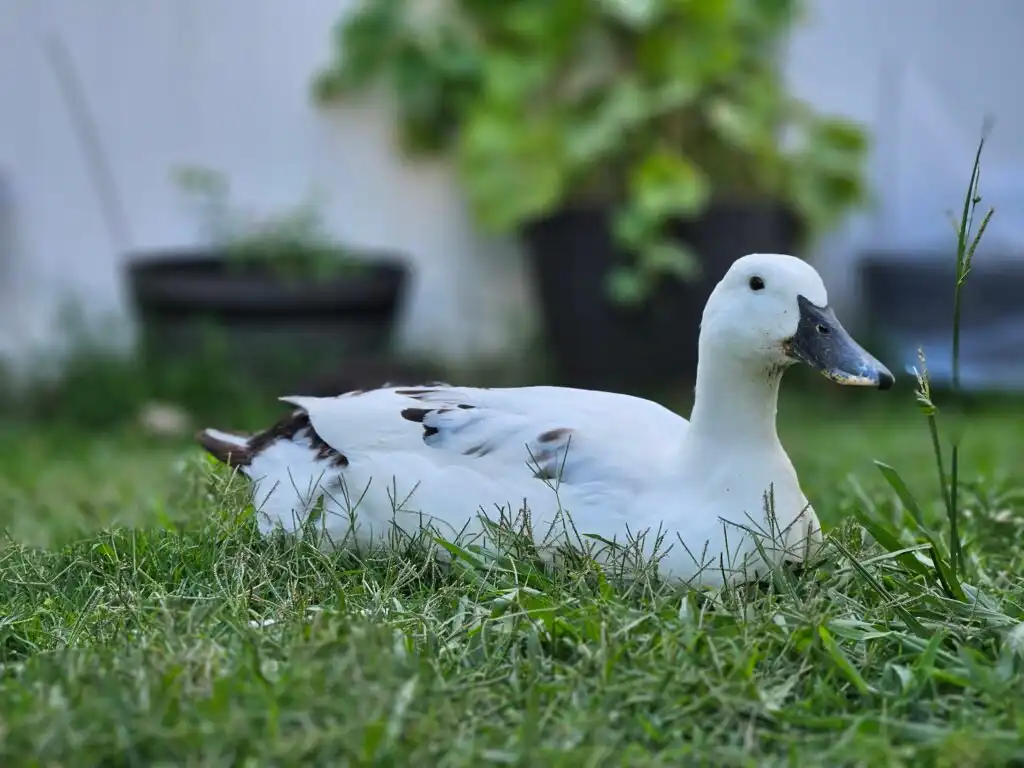
A permanent disability does not automatically mean a poor quality of life. Some ducks adapt remarkably well to limited mobility when their pain is controlled and their environment supports them. The important question is not whether the duck moves perfectly. It is whether she can move comfortably enough to meet her needs and participate in the parts of life she still enjoys.
These ducks may benefit from veterinary pain management, weight control when appropriate, secure footing, soft resting areas, lower pool entrances, and food and water placed within easy reach. Avian palliative care literature emphasizes that early pain management and environmental adjustments can help birds with osteoarthritis maintain a meaningful quality of life (Association of Avian Veterinarians Australasia).
Recurring Reproductive Problems
Chronic reproductive disease can create a particularly difficult cycle. A duck may improve after treatment, only to experience another episode of excessive laying, internal laying, salpingitis, egg yolk peritonitis, prolapse, or difficulty passing an egg.
Between episodes, she may appear bright and comfortable. During a recurrence, she may become swollen, strained, weak, breathless, or withdrawn. It is important to consider the frequency, severity, and recovery time of these episodes.
Ask:
• Are the episodes becoming more frequent?
• Does each episode cause greater discomfort?
• Is she returning fully to her normal behavior between episodes?
• Can the condition still be managed safely?
• Are treatments helping, or only providing very brief relief?
A few good days between repeated painful crises may not represent an acceptable long term quality of life. Your veterinarian can help you evaluate whether further diagnostic testing, reproductive suppression, surgery, palliative care, or another option is appropriate.
Terminal and Progressive Illness
Cancer, advanced organ disease, severe neurological disease, chronic infection, and progressive reproductive conditions may eventually reach a point where treatment can no longer reverse the illness.
Palliative care may still provide valuable time. Pain medication, nausea control, hydration support, assisted nutrition when appropriate, environmental modifications, and protection from flock pressure can help a duck remain comfortable. The goal is not simply to extend life for as long as medically possible. It is to preserve a life that the duck can still experience without uncontrolled suffering.
This distinction can be heartbreaking. A duck may still eat mealworms, respond to your voice, or have one bright hour during an otherwise difficult day. Those moments matter, but they must be considered alongside the rest of her experience.
A Duck Quality of Life Checklist
There is currently no universally validated quality of life scale designed specifically for pet ducks. The following checklist is therefore a monitoring and discussion tool, not a diagnostic test or automatic formula for making an end of life decision.
Complete it at the same time each day and consider asking another family member to score the duck independently. Comparing several days is usually more informative than judging one difficult morning or one unusually good afternoon.
| Area to evaluate | 0: Doing well | 1: Some concern | 2: Significant concern |
|---|---|---|---|
| Comfort | Appears relaxed and can settle comfortably | Occasional tension, guarding, or restlessness | Persistent pain, distress, or inability to become comfortable |
| Mobility | Can stand, walk, and reach necessities independently | Needs more time, rests frequently, or requires minor accommodations | Frequently falls, cannot stand, or cannot reach necessities without substantial help |
| Appetite | Eats a normal amount of complete feed | Eats less or prefers only favorite foods | Refuses food or cannot eat adequately |
| Hydration | Drinks normally and can reach water | Drinks less or needs water repositioned | Cannot drink independently or shows signs of dehydration |
| Body weight | Stable near her usual baseline | Mild or gradual loss | Continued or substantial weight loss |
| Grooming and cleanliness | Preens and keeps herself reasonably clean | Grooms less or needs occasional help | Cannot groom and remains persistently wet, soiled, or uncomfortable |
| Breathing | Breathes comfortably at rest | Mild change that is being medically managed | Labored breathing or respiratory distress |
| Social engagement | Interacts with ducks or trusted people | Quieter or less involved than usual | Persistently withdrawn, unresponsive, frightened, or isolated |
| Interest and enjoyment | Still enjoys favorite routines and activities | Participates less often | Shows little or no interest in previously enjoyed activities |
| Rest and sleep | Rests peacefully | Changes position often or has disrupted rest | Cannot settle, sleep, or remain comfortable |
| Response to treatment | Treatment provides reliable comfort | Improvement is incomplete or short lived | Treatment no longer controls symptoms or causes unacceptable adverse effects |
| Good days and bad days | Good days clearly outnumber bad ones | Good and bad days are becoming equal | Bad days consistently outnumber good ones |
A higher total suggests increasing concern, but the number should never be used by itself. One severe problem, such as uncontrolled pain or labored breathing, may be more important than the total score.
Veterinary quality of life tools commonly consider pain, appetite, hydration, hygiene, happiness, mobility, social function, natural behaviors, and whether good days still outnumber bad ones. Repeating the assessment regularly can make gradual decline easier to recognize (Lap of Love).
Mark Good Days and Bad Days on a Calendar
One of the simplest tools is also one of the most helpful. Mark each day on a calendar:
🟢 Good day: Comfortable, engaged, eating adequately, and able to enjoy meaningful activities
🟡 Mixed day: Some enjoyment, but also noticeable discomfort, weakness, or dependence
🔴 Bad day: Painful, distressed, unable to meet basic needs, or showing little interest in life
After several weeks, look at the pattern. Are good days still clearly outnumbering bad ones? Are the good periods becoming shorter? Are difficult days becoming more severe? Does your duck recover fully after a setback, or is her baseline steadily declining?
Keeping a written record can reduce the influence of one unusually hopeful moment. It also gives your veterinarian a clearer picture of what daily life looks like at home.
Define Meaningful Activities for Your Duck
Quality of life is individual. Before a chronic condition becomes advanced, make a short list of the activities that help make your duck who she is.
That list might include:
• Greeting the flock in the morning
• Eating her regular meals
• Dabbling in clean water
• Bathing and preening
• Resting beside a bonded companion
• Exploring the yard
• Asking for treats
• Following you around the house
• Settling comfortably at bedtime
For Krümel, closeness to people may carry particular importance. Another duck may care most about staying beside her bonded flockmate or taking a daily bath. The activity itself matters less than whether it still brings that individual duck comfort and interest.
When a duck can no longer participate in most of her meaningful activities, even with medication and environmental support, her quality of life deserves careful reassessment.
When Is It Time to Discuss Humane Euthanasia?
You do not have to wait until your duck stops eating, collapses, or reaches an obvious crisis before beginning this conversation. In fact, discussing possible end of life decisions early allows you and your veterinarian to create a plan before emotions and urgency take over.
It may be time for a serious conversation when:
• Pain or breathing difficulty cannot be controlled
• The duck can no longer stand or reach food and water comfortably
• She is experiencing repeated medical crises
• Treatment no longer restores meaningful comfort
• She continues losing weight despite appropriate care
• She no longer interacts with her flock or trusted people
• She cannot remain clean, dry, or peacefully rested
• Most of the activities she once enjoyed have disappeared
• Bad days consistently outnumber good ones
Humane euthanasia is not a failure of love or care. When suffering can no longer be adequately relieved, it can be the final way we protect a duck who has trusted us throughout her life.

A Gentle Reminder
You do not have to make this decision alone. Bring your daily log, weight records, videos, medication history, and quality of life checklist to your veterinarian. Ask what improvement is realistically possible, what further decline may look like, and which signs should indicate that waiting is no longer kind.
Our responsibility is not only to help our ducks live longer. It is to make sure the life we are preserving still contains comfort, dignity, connection, and more good days than bad ones.
From Our Flock: What Pain Management Looked Like for Krümel and Penny
Pain is not always dramatic. Sometimes it appears as a duck moving a little less, resting in an unusual position, or simply not behaving like herself. I have learned to take those subtle changes seriously because I know my ducks’ normal routines and personalities.
Krümel has experienced several reproductive challenges over the years. During those episodes, her discomfort was often visible through changes in her posture, activity, appetite, and willingness to engage with us. She could not tell me what hurt, but her behavior made it clear that something was wrong.

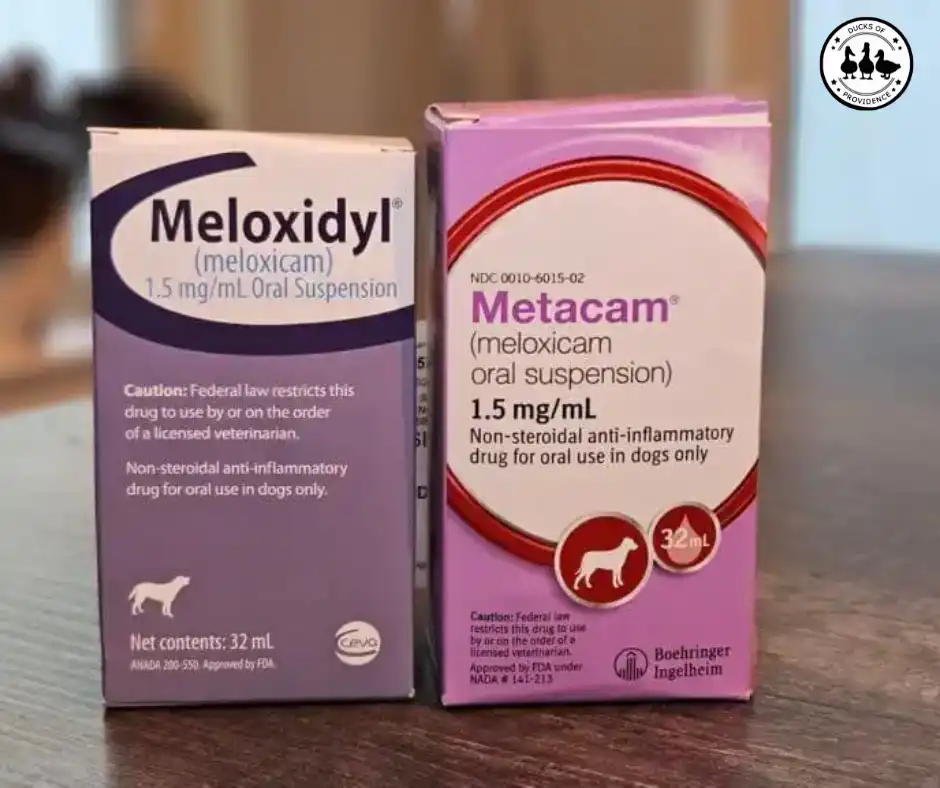
Meloxicam was the pain medication she received most often under veterinary supervision. It did not treat the reproductive problem itself, but it was an important part of her care. Relieving pain and inflammation helped her rest while we addressed the underlying condition and closely monitored her recovery. Her treatment sometimes also required other interventions, depending on what was causing the episode.
Penny’s pain looked different. As she grew older, arthritis affected her mobility and made everyday activities more difficult. She moved more slowly, rested more frequently, and needed an environment that placed less strain on her joints. Meloxicam was also prescribed to help manage her arthritis pain.
Medication was only one part of supporting her. We also made sure she had secure footing, comfortable places to rest, and easy access to food and water. These adjustments may sound small, but for an older duck with painful joints, they can make the difference between merely getting through the day and still being able to enjoy it.
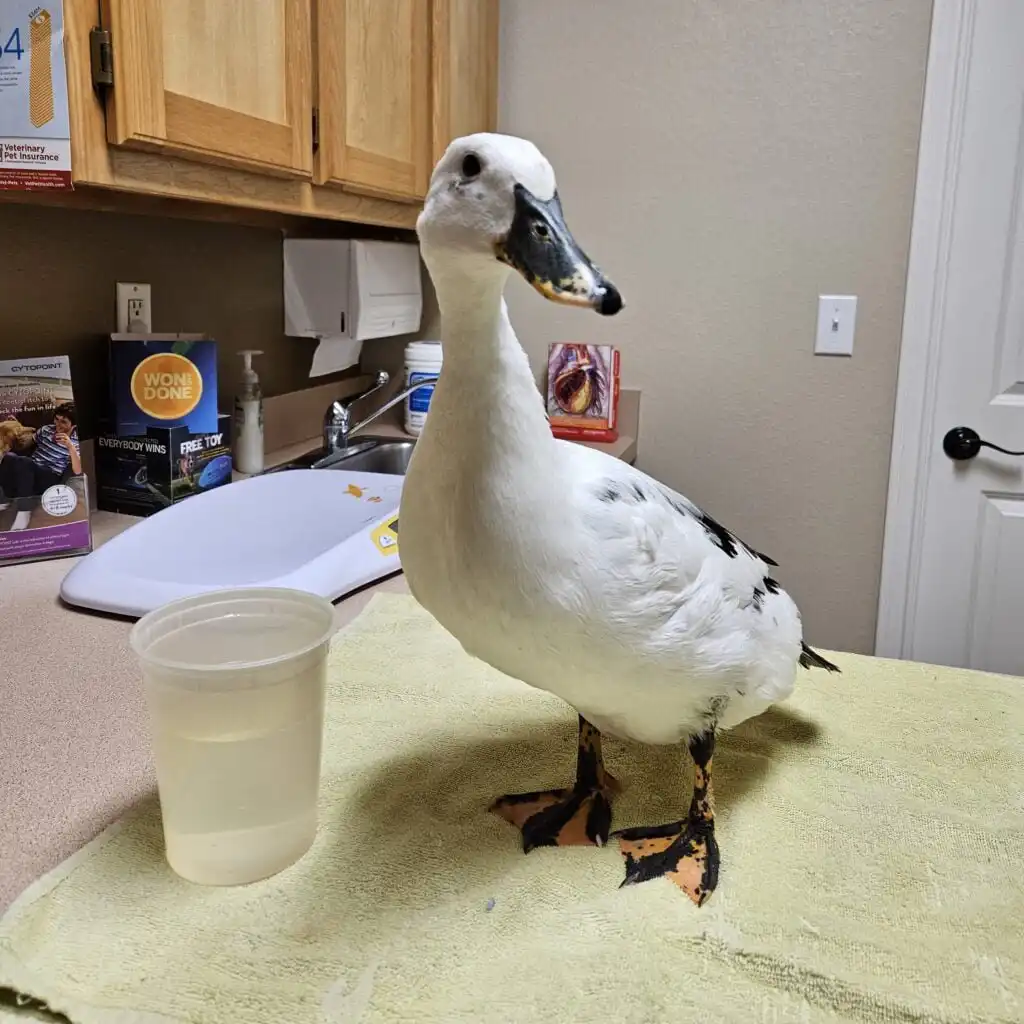
Krümel and Penny taught me that pain management is not about making a duck quiet. It is about helping her function and feel more like herself. I looked for meaningful changes: eating her regular food, standing more comfortably, preening, interacting with us, and showing interest in the routines she enjoyed.
They also taught me never to reuse medication casually, even when the same drug had helped before. Krümel’s reproductive pain and Penny’s arthritis were very different medical situations. Each required veterinary guidance, an accurate weight, and a treatment plan based on that duck’s condition at that moment.
FAQ
How can I tell whether my duck is in pain?
Pain often appears as a change from your duck’s normal behavior. Watch for limping, stiffness, a hunched posture, reduced appetite, reluctance to move, repeated repositioning, poor grooming, unusual aggression, withdrawal from the flock, rapid breathing, or guarding a particular body part.
No single behavior proves that a duck is in pain. Look at several signs together and compare them with what is normal for that individual duck.
Do ducks cry when they are hurt?
Ducks do not cry emotional tears as people do, and many remain remarkably quiet when they are hurting. Some may quack, hiss, pant, or vocalize when an injury occurs or when a painful area is touched. Others become silent and withdrawn.
Watery eyes usually indicate irritation, injury, infection, or another eye problem, not crying from sadness or pain. Squinting, swelling, redness, cloudiness, or discharge requires veterinary attention.
Can ducks take meloxicam?
Veterinarians may prescribe meloxicam to ducks for inflammation, injuries, arthritis, or postoperative pain. Research in Muscovy ducks has also demonstrated analgesic effects under specific experimental conditions (Bailey et al., 2019).
However, meloxicam is not safe to give without veterinary direction. The appropriate dose and treatment interval depend on the duck’s exact weight, hydration, organ function, diagnosis, medication concentration, and other treatments. A dehydrated duck or one with kidney problems may face greater risks.
Can I give my duck aspirin or ibuprofen?
Never give aspirin, ibuprofen, naproxen, acetaminophen, or another human pain medication unless an avian veterinarian specifically prescribes it. An inappropriate medication or dose can cause digestive injury, internal bleeding, kidney or liver damage, and potentially death.
Aspirin has sometimes been used in veterinary medicine, but that does not make it a safe home remedy. Do not copy a dose from a poultry group, research paper, or medication previously prescribed to another animal.
Does limping always mean a duck is in pain?
Limping strongly suggests that something is affecting normal movement, but the cause may range from a minor irritation to a fracture or severe infection. Bumblefoot, arthritis, sprains, wounds, foreign objects, overgrown nails, joint infections, neurological disease, and problems higher in the leg or spine can all change a duck’s gait.
Even if a duck continues eating and following the flock, limping should not be dismissed. Examine both feet and legs carefully, restrict strenuous activity, and contact an avian veterinarian if the limp is pronounced, persists, worsens, or is accompanied by swelling, heat, a wound, or an inability to bear weight.
How quickly should pain medication work?
The expected response depends on the medication, how it was administered, the type and severity of pain, and the duck’s overall condition. Some medications may begin helping within hours, while noticeable improvement in mobility or normal behavior may take longer.
Ask your veterinarian what improvement you should expect and when. Do not give an additional dose or shorten the prescribed interval because your duck does not appear better immediately. Contact the clinic if there is no expected improvement, relief wears off early, or your duck becomes excessively sleepy, weak, uncoordinated, or otherwise worse.
Should an injured duck be separated from the flock?
Temporary separation may be necessary if flockmates are chasing, mounting, pecking, or preventing the injured duck from resting and reaching food or water. Restricting activity may also be part of treatment for a fracture, foot injury, or surgical recovery.
Because ducks are social animals, complete isolation can create additional stress. When possible, create a protected hospital area where the injured duck can still see and hear familiar flockmates. A calm companion may be helpful if that duck does not disturb the patient or interfere with treatment.
Can a duck hide severe pain?
Yes. As prey animals, ducks may conceal weakness and continue eating, walking, or interacting despite significant pain. By the time the signs become obvious, the underlying problem may already be serious.
Knowing your duck’s normal habits is incredibly valuable. Subtle changes such as hanging back, bathing less, eating more slowly, sitting in a new location, or resisting normal handling may be early warning signs. Continuing to accept treats does not prove that a duck is comfortable or eating enough.
When should I contact an avian veterinarian?
Contact an avian veterinarian whenever pain is persistent, worsening, unexplained, or interfering with eating, drinking, walking, grooming, resting, or normal social behavior.
Seek urgent veterinary care for severe trauma, a predator attack, uncontrolled bleeding, an open wound, suspected fracture, inability to stand, labored breathing, neurological abnormalities, repeated abdominal straining, suspected egg binding, prolapsed tissue, or complete refusal of food and water.
You do not need to know exactly what is wrong before calling. Ducks can decline quickly, and early treatment offers the best opportunity to control pain while addressing its underlying cause.
Listening When Your Duck Cannot Tell You It Hurts
Ducks may not express pain in ways we immediately recognize. They rarely cry out or make their discomfort obvious. More often, pain appears through quiet changes: a slower walk, an unusual posture, less interest in bathing, reduced grooming, a smaller appetite, or a duck who simply does not seem like herself.
This is why knowing your duck’s normal behavior matters so much. When you understand how she usually eats, moves, rests, preens, and interacts with her flock, you are far more likely to notice when something changes.
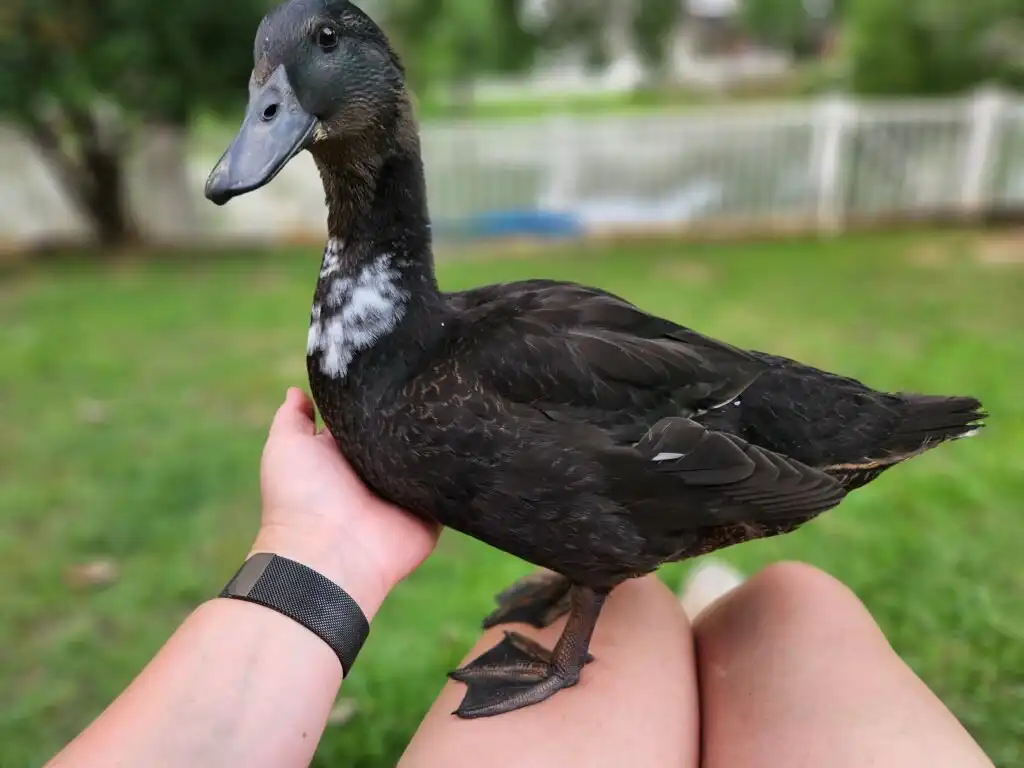
Pain should never be dismissed as weakness, stubbornness, or simply getting older. It is a medical concern that deserves attention. Supportive care can make a painful duck more comfortable, but it cannot replace veterinary diagnosis, appropriate pain relief, and treatment of the underlying condition.
My experiences with Krümel and Penny have taught me that successful pain management is not about making a duck quieter. It is about helping her regain meaningful comfort. Can she rest peacefully? Eat her regular food? Move without overwhelming discomfort? Preen, socialize, and enjoy the routines that make her life feel familiar?
Those are the improvements that truly matter.
Further Reading & Resources
- Safely Medicating Ducks: A Guide for Pet Duck Owners
- Is Your Duck in Discomfort? How to Recognize Pain in Pet Ducks
- When to Take a Duck to the Vet (My Real-Life Checklist)
- Finding a Duck-Savvy Vet: Tips for Pet Duck Owners
- Is Anesthesia Safe for Ducks? A Duck Owner’s Guide to Veterinary Sedation
- When Love Means Letting Go: A Compassionate Guide to Euthanasia in Ducks
- 31 Must-have Items for Your Pet Duck First Aid Kit
Deepen your understanding of avian wellness. Explore the full Duck Health & Anatomy Library for more specialized care guides.
Scientific References
- Bailey, R. S., Sheldon, J. D., Allender, M. C., Adkesson, M. J., & Chinnadurai, S. K. (2019). Analgesic efficacy of tramadol compared with meloxicam in ducks (Cairina moschata domestica) evaluated by ground reactive forces. Journal of Avian Medicine and Surgery, 33(2). https://doi.org/10.1647/2018-364
- Bailey, R. S., Sheldon, J. D., Allender, M. C., Papich, M. G., & Chinnadurai, S. K. (2019). Pharmacokinetics of orally administered tramadol in Muscovy ducks (Cairina moschata domestica). Journal of Veterinary Pharmacology and Therapeutics, 42(4), 380–384. https://doi.org/10.1111/jvp.12743
- Cowan, M. (2017). Palliative care and chronic pain management. Association of Avian Veterinarians Australasian Committee Annual Conference Proceedings, 25, 58–62. View the conference paper
- Hovda, T. (2025). Toxicoses from human analgesics in animals. Merck Veterinary Manual. Reviewed by Ahna Brutlag. View the veterinary reference
- Lap of Love Veterinary Hospice. (n.d.). When to say goodbye: Signs it’s time to euthanize your pet. View the quality of life resource
- Mikoni, N. A., & Paul Murphy, J. R. (2023). Pain recognition and assessment in birds. Veterinary Clinics of North America: Exotic Animal Practice. View the PubMed record