
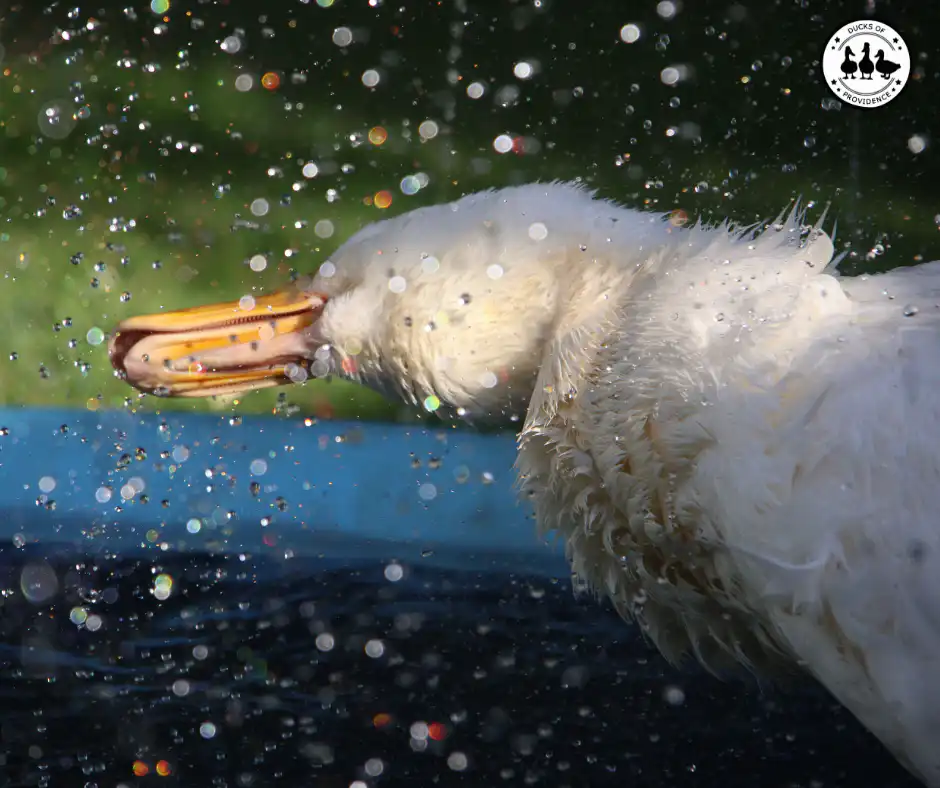
Why Is My Duck Shaking Its Head? 8 Common Causes

To keep our research-backed guides free, this site uses ads and affiliate links (earning a small commission at no cost to you). Everything here is created by a duck mom and PhD scientist, combining academic rigor with hands-on experience to provide practical, trustworthy advice for duck keepers everywhere. 🦆 Learn more
Watching your duck repeatedly shake its head can be alarming. Is it simply clearing its nostrils after a drink, or could it be the first sign of illness? The good news is that head shaking is often completely normal. Ducks frequently shake their heads after eating, drinking, swimming, or preening. However, persistent or excessive head shaking can sometimes indicate irritation, infection, parasites, or even neurological disease. Knowing the difference can help you decide whether your duck simply needs observation or prompt veterinary care.
Part of the Duck Health & Anatomy Hub, Evidence-based medical resources and anatomical research.
Table of Quick Navigation: Jump to a Section
[hide]
- 1. Clearing Water from the Nostrils (Most Common)
- 2. Cleaning Food Off Their Bill
- 3. Preening and Feather Maintenance
- 5. Ear Problems
- 6. Respiratory Disease
- 7. External Parasites
- 8. Neurological Problems (Rare but Serious)
- When Should You Worry?
- What You Should Do If Your Duck Keeps Shaking Its Head
- FAQ
- The Bottom Line: Most Head Shakes Are Normal, But Know When to Pay Attention
- Further Reading & Resources
Why is my duck shaking its head?
Most ducks shake their heads occasionally as part of normal behavior, especially after drinking, eating, swimming, or preening. Frequent head shaking accompanied by nasal discharge, swelling, balance problems, wheezing, or lethargy may indicate an underlying health problem that should be evaluated by an avian veterinarian.
1. Clearing Water from the Nostrils (Most Common)
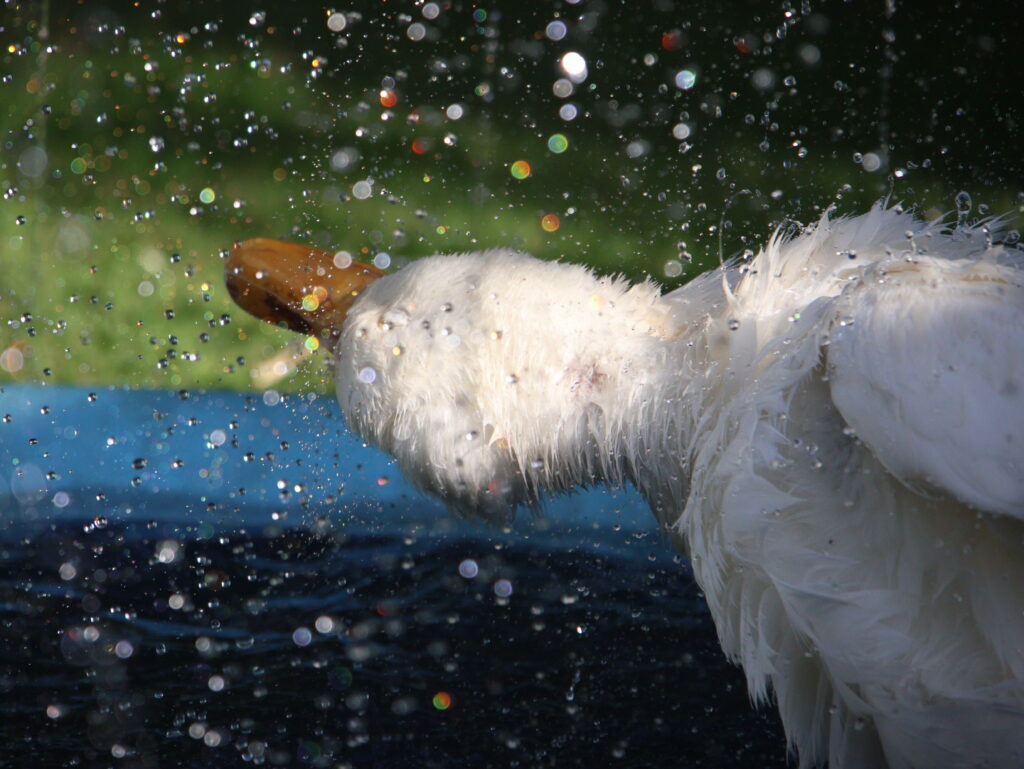
If your duck gives a quick head shake immediately after drinking or dunking its bill in water, there’s usually no reason to worry. In fact, this is one of the most common and completely normal reasons ducks shake their heads.
Unlike mammals, ducks don’t simply sip water. They submerge their bills, draw water into their mouths, and use it to rinse food down and flush their nostrils (nares). This natural cleaning process helps remove mud, dust, feed particles, and other debris that can accumulate while foraging.
After lifting their heads, ducks often give a brisk shake to fling away excess water. You may even notice tiny droplets spraying in every direction. While it can look dramatic, it’s simply part of their normal hygiene routine.
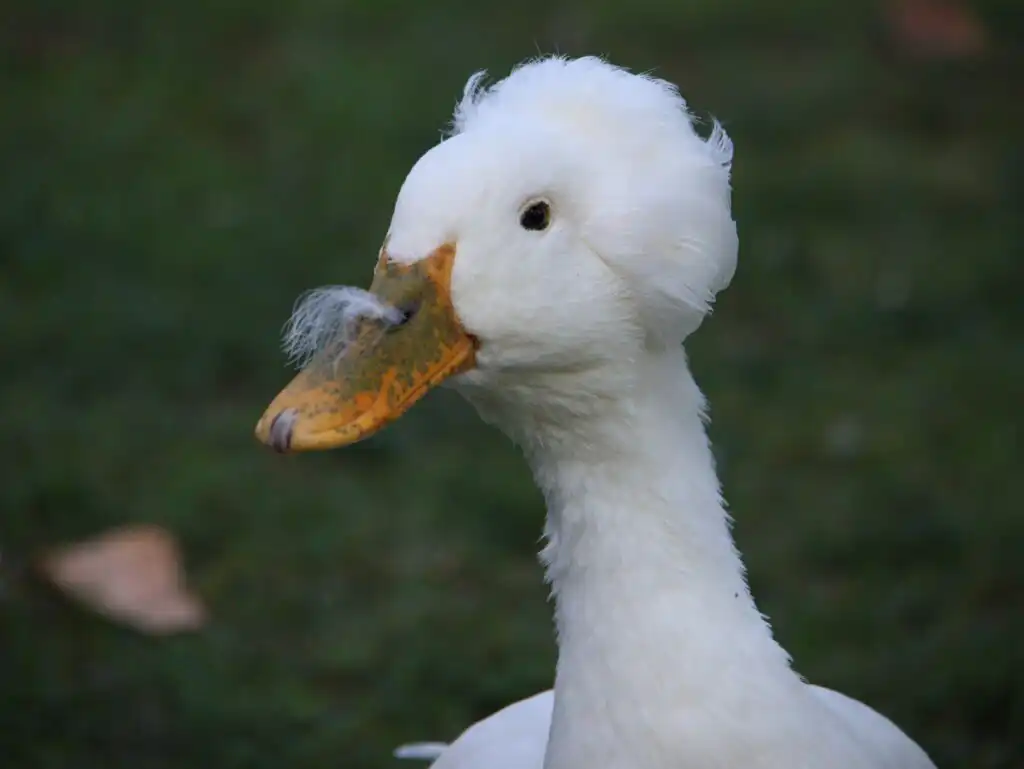
Because ducks rely on water to keep their nostrils clean, constant access to fresh, deep drinking water is essential. Shallow bowls that don’t allow a duck to fully immerse its bill make it much harder for them to clear debris from their nares, increasing the risk of irritation or infection over time.
Signs this is normal
- The behavior is brief and stops after one or two shakes.
- The head shake happens immediately after drinking or swimming.
- Your duck is otherwise bright, active, and eating normally.
- There is no nasal discharge or swelling.
Related Reading: Want to know why I always make sure my ducks have water available, even overnight? Read our guide on Why Ducks Need Water 24/7 to learn how water supports not only drinking, but also breathing, eating, grooming, and overall health.
2. Cleaning Food Off Their Bill
Another completely normal reason ducks shake their heads is to remove food stuck to their bills after eating.
Unlike mammals, ducks don’t chew their food. Instead, they scoop up feed, insects, plants, or other tasty finds and swallow them whole. Wet mash, mud, algae, leafy greens, or sticky treats can cling to the edges of the bill or around the nostrils, making a quick head shake an easy way to dislodge the mess.
You may notice this behavior most often after feeding treats like peas, watermelon, chopped lettuce, or soaked pellets. Ducks will often alternate between taking a bite, dunking their bill in water, and giving a quick shake before continuing to eat. This sequence helps rinse away food particles and keeps the bill and nares clean.
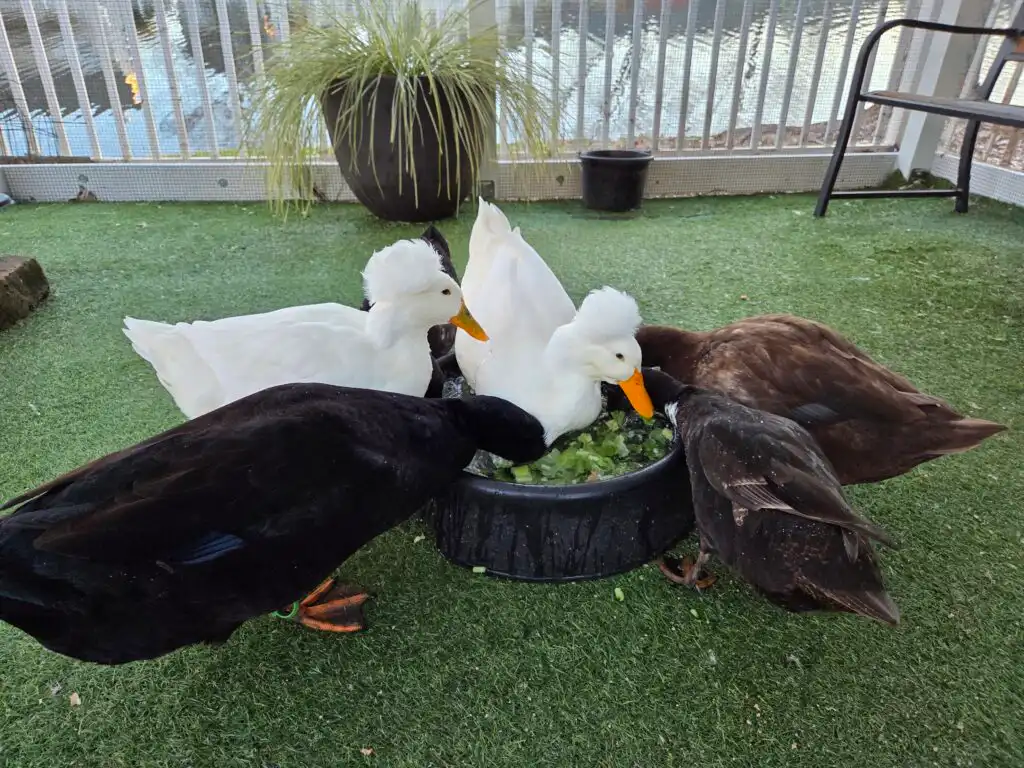
Head shaking also works together with bill rubbing. After eating, many ducks wipe their bills on the ground, grass, or even the edge of a water container to remove any remaining debris. These grooming behaviors are a normal part of maintaining a healthy bill.
Signs this is normal
- The behavior stops once the bill is clean.
- The head shaking occurs during or immediately after eating.
- Your duck continues eating with a healthy appetite.
- There are no signs of breathing difficulty or nasal discharge.
3. Preening and Feather Maintenance
Head shaking is also a normal part of a duck’s preening routine. In fact, healthy ducks spend several hours each day grooming their feathers, and a quick head shake is often just one step in the process.
During preening, ducks carefully clean and align each feather using their bills. They remove dirt, dust, loose down, and damaged feather material while spreading waterproofing oil from the uropygial (preen) gland, located near the base of the tail. This oil helps keep the feathers flexible and water-resistant.
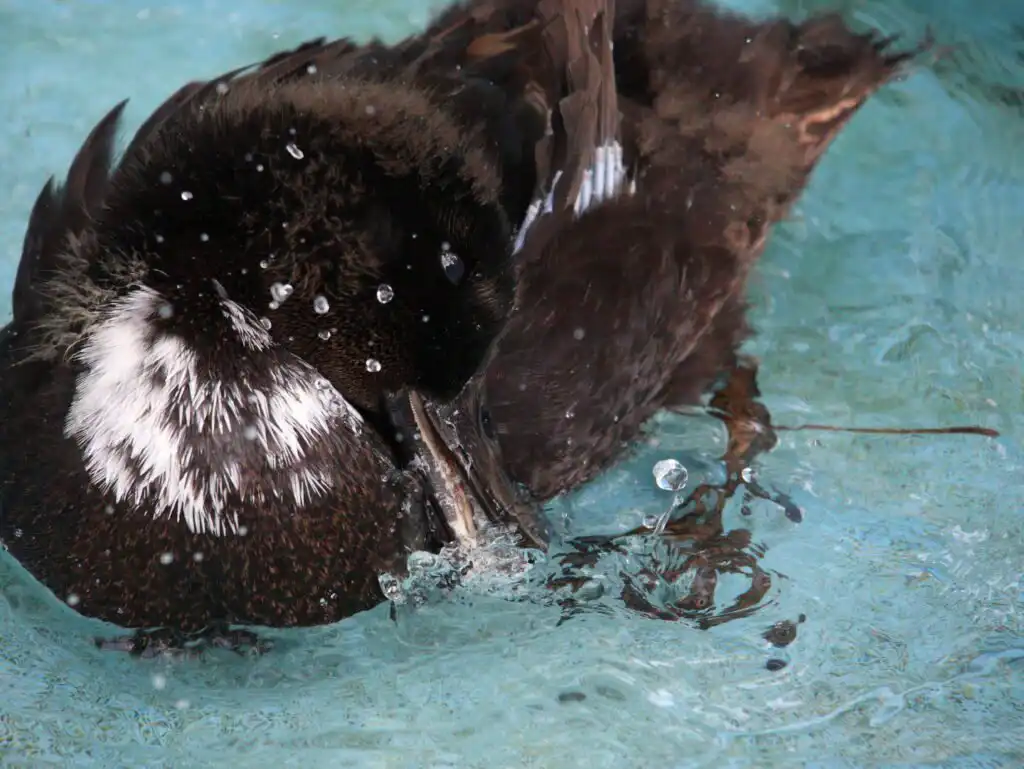
As they work through the feathers on their neck and head, ducks frequently pause to give a quick shake. This helps reposition the feathers, remove loose debris, and prepare for the next round of grooming. Many ducks will finish an extended preening session with a vigorous full-body shake that fluffs their feathers back into place.
If your duck shakes its head only occasionally while grooming and otherwise appears healthy, this is completely normal behavior.
Signs this is normal
- The head shaking occurs while your duck is preening.
- Your duck is calmly grooming and relaxing.
- The feathers appear clean and well maintained.
- There is no scratching, swelling, or discharge around the head or ears.
- Your duck resumes normal activities immediately afterward.
Did You Know? 💚
Preening isn’t just about looking nice. Healthy feathers are essential for insulation, waterproofing, flight in wild ducks, and protecting the skin underneath. That’s why ducks devote so much of their day to grooming. A few head shakes during preening are simply part of keeping their feathers in top condition.
4. Irritated Nostrils or Eyes
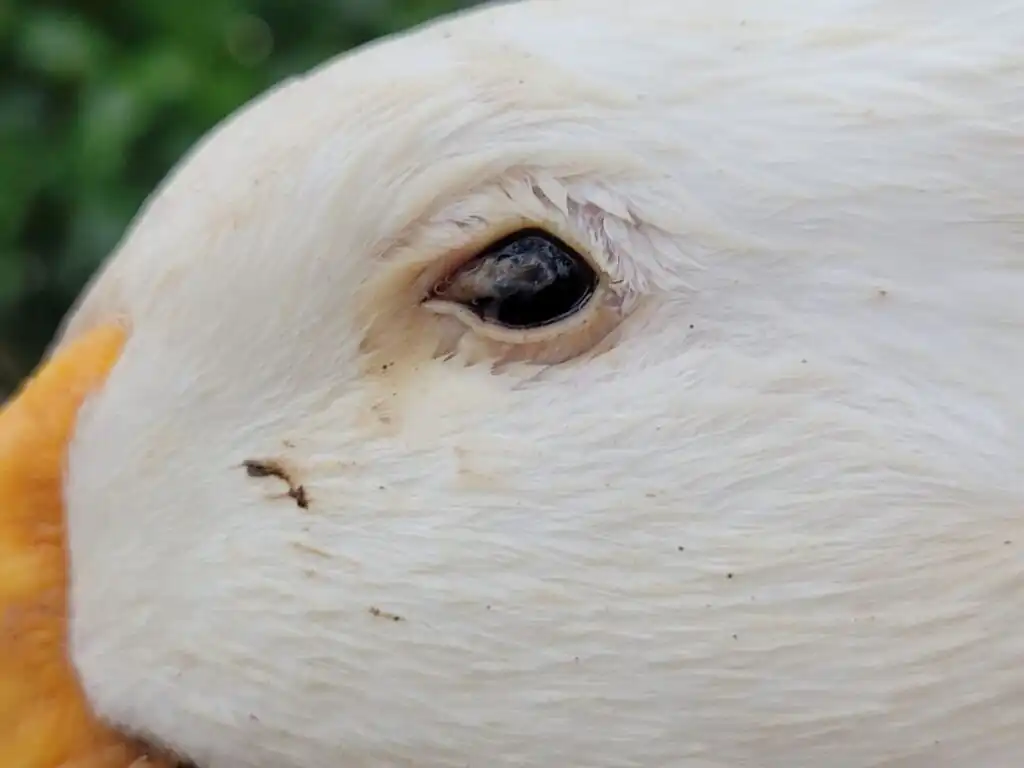
Sometimes a duck shakes its head because something is simply bothering its face. Dust, bedding, pollen, grass seeds, or other small particles can irritate the eyes or nostrils, triggering a brief series of head shakes as the duck tries to clear the irritation.
This is especially common in dry, dusty conditions or after ducks have been enthusiastically digging through mulch, straw, or loose soil. Just as we might blink or rub our eyes when something gets in them, ducks use head shaking, blinking, and bill rubbing to remove minor irritants.
A few head shakes followed by a return to normal behavior usually aren’t cause for concern. However, if the irritation persists, you may notice additional signs such as frequent blinking, rubbing the face against the ground or feathers, or watery eyes.
It’s also worth taking a look at your duck’s environment. Dusty bedding, moldy straw, poor ventilation, or excessive ammonia from soiled litter can all irritate the delicate tissues of the eyes and respiratory tract. Improving air quality often resolves mild irritation before it develops into a more serious problem.
Signs this may be the cause
- Head shaking starts after exploring dusty or dirty areas.
- Frequent blinking or squinting.
- Occasional sneezing.
- Rubbing the bill or face on the ground or wings.
- Mild watery eyes without swelling.
When to be concerned
If your duck continues shaking its head throughout the day or develops thick eye discharge, swollen eyelids, nasal discharge, difficulty breathing, or keeps one eye closed, the problem is likely more than simple irritation. These signs can indicate an eye infection, respiratory disease, or another medical condition that should be evaluated by an avian veterinarian.
Duck Mom Tip 🦆
I’ve found that good housekeeping goes a long way toward preventing irritation. We rinse our duck run every day, replace soiled bedding regularly, and make sure the shed has plenty of ventilation. A clean environment doesn’t just smell better. It also helps keep dust, ammonia, and mold from irritating sensitive eyes and airways.
5. Ear Problems
Although much less common than drinking, eating, or preening, ear problems can also cause a duck to shake its head. Because a duck’s ears are hidden beneath feathers, these issues are easy to overlook until other symptoms appear.
Unlike mammals, ducks don’t have visible ear flaps. Instead, each ear is a small opening located just behind and slightly below the eye, protected by specialized feathers. If the ear becomes irritated or painful, a duck may repeatedly shake its head in an attempt to relieve the discomfort.
Possible causes include:
- Ear infections
- Trauma or scratches around the ear opening
- Foreign material, such as plant debris
- Parasites (rare in pet ducks)
Head shaking caused by an ear problem is often accompanied by other signs. You might notice your duck scratching one side of its head, holding its head at an unusual angle, or becoming reluctant to have that side touched. Some ducks may also lose their balance if the infection affects the inner ear, although this is uncommon.
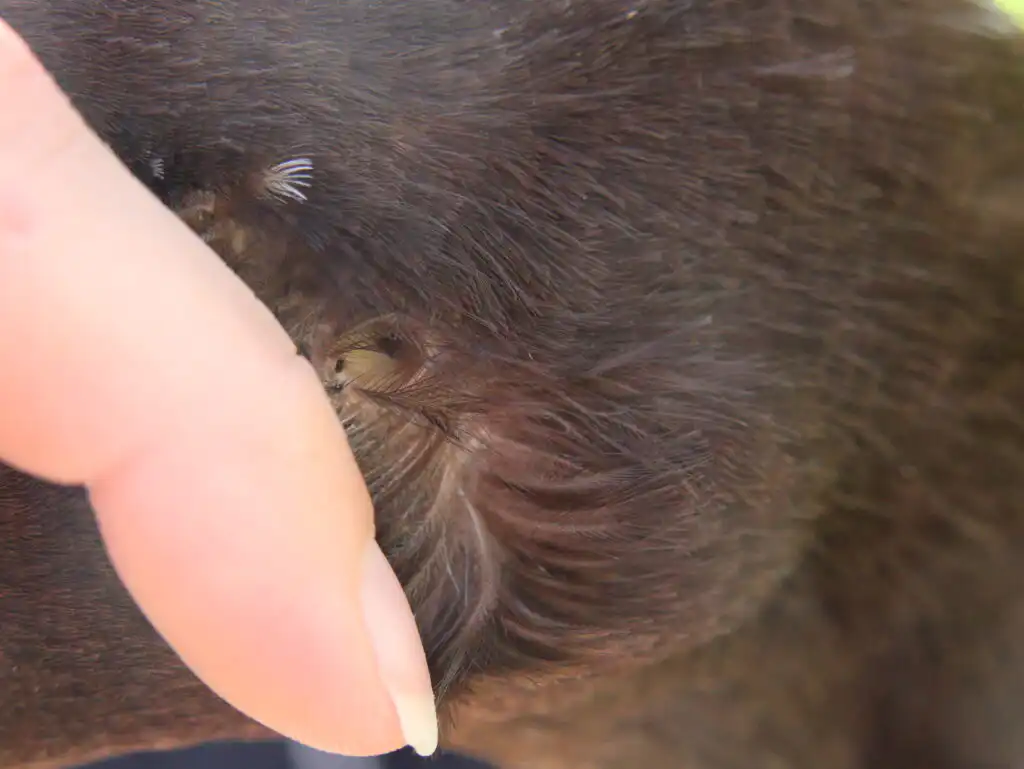
Because the ears are hidden, a quick visual inspection can be challenging. If you suspect an ear problem, gently part the feathers behind the eye in a calm, well-lit setting. The skin should look clean, with no redness, swelling, discharge, or foul odor. Avoid inserting cotton swabs or attempting to clean inside the ear, as this can cause injury.
Signs an ear problem may be present
- Frequent head shaking that isn’t associated with eating or drinking.
- Scratching around one ear.
- A head tilt.
- Redness, swelling, or discharge near the ear opening.
- Loss of balance or unusual coordination.
Fortunately, ear infections are relatively uncommon in ducks, but they do require veterinary attention. Early treatment can prevent the infection from spreading deeper into the ear, where it may begin to affect hearing or balance.
Related Reading: Want to learn more about how ducks hear and where their ears are actually located? Check out our in-depth guide, Duck Ear Anatomy and Hearing, where we explain the unique structure of the duck ear, common ear conditions, and how to recognize potential problems early.
6. Respiratory Disease
Persistent head shaking can also be an early sign of a respiratory problem, especially when it occurs alongside other symptoms. As ducks try to clear mucus or irritation from their nostrils and upper airways, they may repeatedly shake their heads in an attempt to breathe more comfortably.
Respiratory disease in ducks can have many causes, including bacterial, viral, and fungal infections. Environmental factors, such as poor ventilation, dusty bedding, mold, or high ammonia levels from wet litter, can also irritate the respiratory tract and make infections more likely.
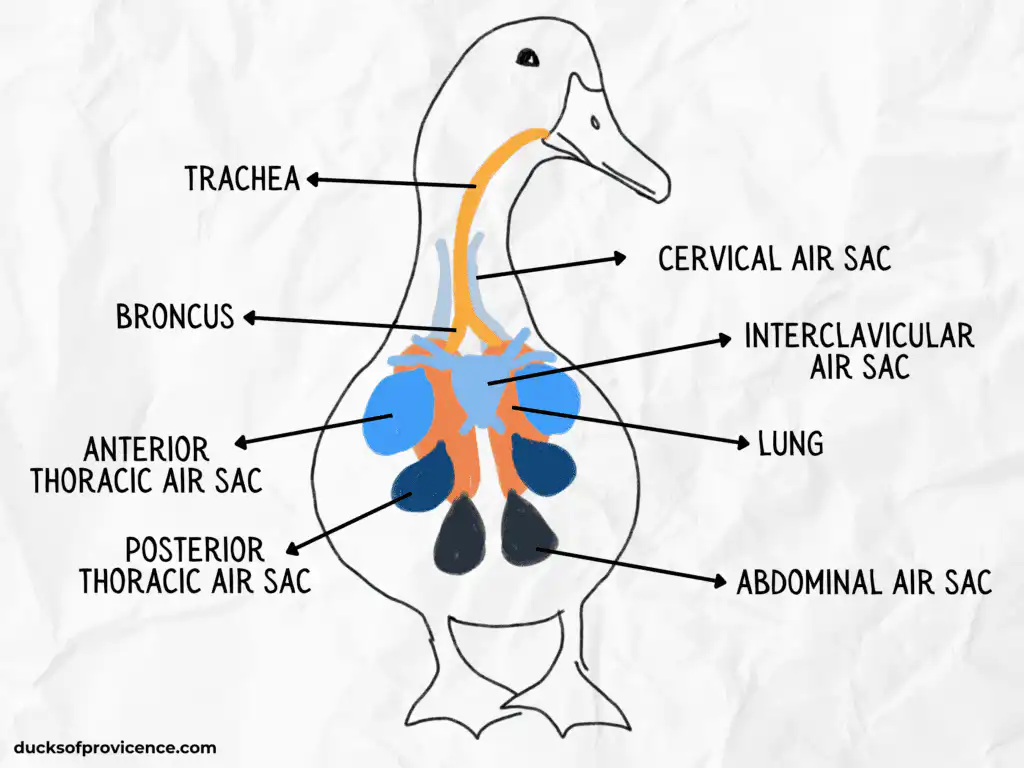
Head shaking by itself is not enough to diagnose a respiratory illness. However, when combined with other signs, it should prompt a closer evaluation.
Watch for these additional symptoms
- Nasal discharge or bubbles around the nostrils
- Sneezing or coughing
- Wheezing or clicking sounds while breathing
- Open-mouth breathing or panting when the weather is not hot
- Swollen sinuses or puffy areas around the eyes
- Reduced appetite or lower activity levels
Many respiratory diseases become much easier to treat when caught early. If your duck’s head shaking persists for more than a day or is accompanied by any of the symptoms above, it’s best to contact an avian veterinarian. Delaying treatment can allow infections to progress deeper into the lungs or air sacs, making recovery more difficult.
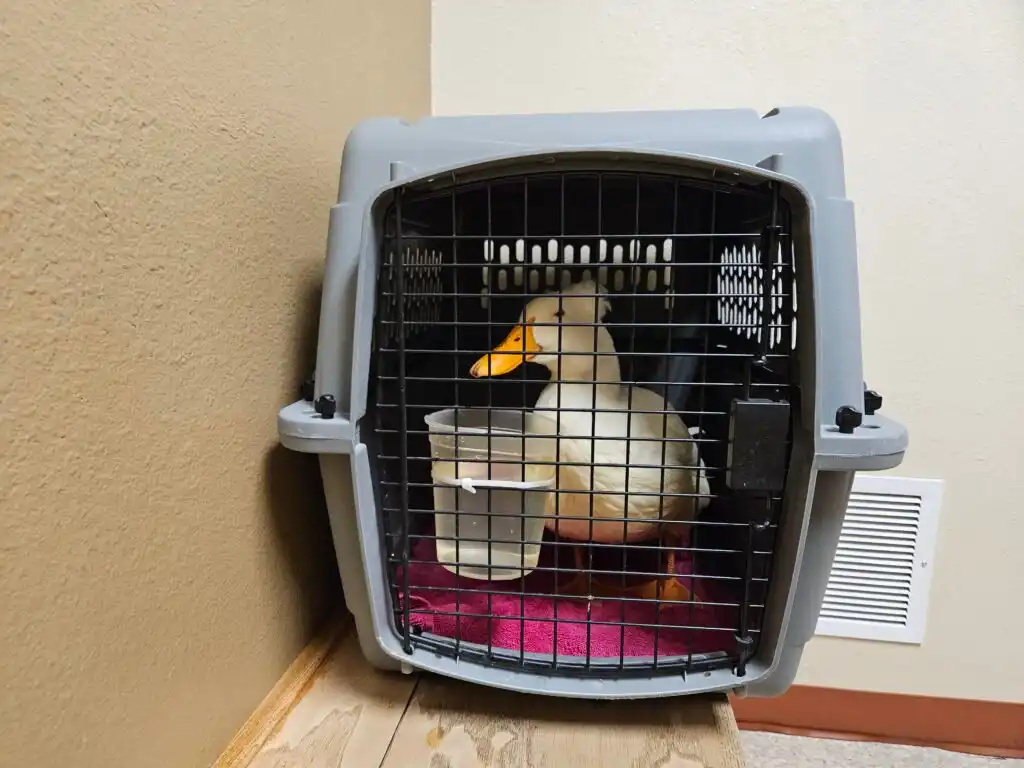
What you can do while waiting for a veterinary appointment
- Separate the affected duck if you suspect an infectious illness.
- Keep the duck warm, dry, and in a low-stress environment.
- Ensure fresh drinking water is always available.
- Improve ventilation and remove dusty or moldy bedding if needed.
- Monitor eating, drinking, and droppings closely.
Do not start antibiotics without a diagnosis. Different respiratory diseases require different treatments, and unnecessary antibiotic use can delay proper care or contribute to antimicrobial resistance.
Duck Mom Tip
One thing I’ve learned over the years is that ducks are masters at hiding illness. By the time they show obvious respiratory distress, they’ve often been sick for a while. That’s why I pay close attention to subtle changes, like repeated head shaking, quieter behavior, or eating a little less than usual. Catching those small changes early has helped us get several of our ducks treated before they became seriously ill.
7. External Parasites
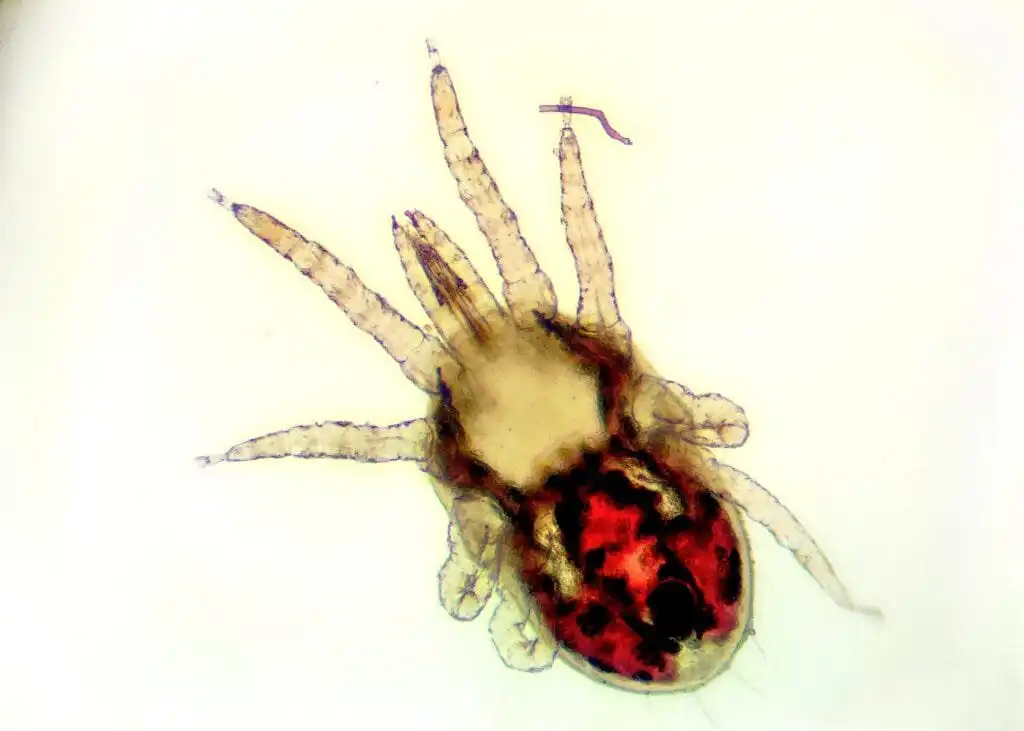
Although they’re far less common in well cared for pet ducks than in backyard chickens, external parasites can sometimes cause repeated head shaking. Mites, lice, and other tiny pests irritate the skin and feathers, leading ducks to shake their heads or scratch in an attempt to relieve the itching.
Head shaking caused by parasites usually doesn’t occur on its own. Instead, you’ll often notice your duck spending more time scratching around its head and neck, preening excessively, or appearing restless. Some ducks may also develop broken feathers or small areas of feather loss from the constant grooming.
Parasites are more likely to become a problem when ducks have close contact with chickens, wild birds, overcrowded housing, poor sanitation, or contaminated bedding. While ducks are generally less susceptible to many external parasites than chickens, shared coops or nesting areas can allow parasites to spread between species.
Signs external parasites may be the cause
- Frequent scratching around the head or neck.
- Excessive preening.
- Feather damage or feather loss.
- Restlessness, especially at night.
- Visible mites or lice around the base of feathers (though they can be difficult to spot).
If you suspect parasites, examine your duck carefully in good lighting. Gently part the feathers around the head, neck, under the wings, and around the vent, looking for moving insects, clusters of eggs attached to feather shafts, or irritated skin. Because some parasites are tiny and hide deep within the plumage, they can be easy to miss.
Treatment depends on identifying the specific parasite involved. Before using any insecticide or topical medication, consult an avian veterinarian, as products that are safe for chickens are not always safe or labeled for ducks.
From Our Flock
One habit that has become part of our monthly routine is giving every duck a quick hands-on health check. While I’m weighing each duck, I also part the feathers, look over the skin, check their eyes and nostrils, inspect their feet, and make sure there are no signs of external parasites. It only takes a few minutes, but regular exams make it much easier to notice subtle changes before they become bigger problems.
8. Neurological Problems (Rare but Serious)
In rare cases, repeated head shaking can be a sign of a neurological disorder rather than a problem affecting the bill, ears, or respiratory tract. Unlike the brief, purposeful head shakes associated with drinking or preening, neurological head movements are often repetitive, uncontrolled, or accompanied by other abnormalities.
Neurological problems can develop for many reasons, including head trauma, exposure to toxins, nutritional deficiencies, severe infections, or diseases affecting the brain and nervous system. While these conditions are uncommon, they should always be taken seriously because they often require immediate veterinary care.
Possible causes include
- Head trauma from collisions or predator attacks.
- Toxin exposure, such as lead or zinc poisoning.
- Vitamin deficiencies, particularly deficiencies affecting the nervous system.
- Severe bacterial, viral, or fungal infections.
- Botulism (limberneck).
- Less commonly, diseases affecting the brain or inner ear.
Head shaking caused by a neurological condition is rarely the only symptom. Instead, you’ll usually notice additional changes in your duck’s movement, posture, or behavior.
Warning signs that require immediate veterinary attention
- Continuous or repetitive head shaking that doesn’t stop.
- Tremors or muscle twitching.
- A persistent head tilt.
- Loss of balance or frequent falling.
- Walking in circles.
- Difficulty standing or coordinating movements.
- Seizures.
- Extreme weakness or inability to hold the head upright.
These symptoms are medical emergencies. For example, heavy metal toxicity and botulism can both affect the nervous system, but they require very different treatments. Prompt diagnosis by an avian veterinarian offers the best chance for recovery.
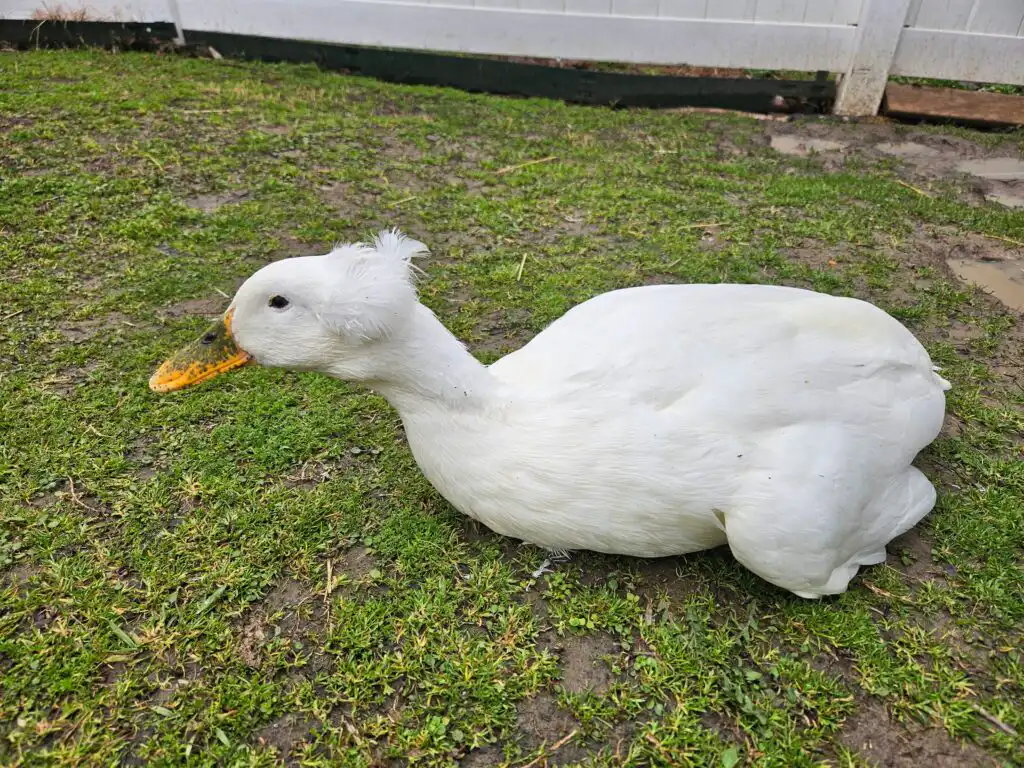
Normal vs. neurological head shaking
One of the easiest ways to tell the difference is to watch what happens after the head shake.
A healthy duck may shake its head once or twice after drinking, eating, or preening, then immediately go back to normal activities.
A duck with a neurological problem often seems unable to control the movement. The shaking may continue repeatedly, occur without an obvious trigger, or be accompanied by abnormal posture, weakness, or changes in behavior.
Duck Mom Tip 🦆
I always tell new duck owners to trust their instincts. You know your ducks better than anyone else. If a head shake looks unusual, happens repeatedly for no apparent reason, or is accompanied by balance problems, weakness, or changes in behavior, don’t wait to see if it improves on its own. Ducks instinctively hide illness, so neurological symptoms should always be evaluated as soon as possible.
When Should You Worry?
An occasional head shake is a normal part of being a duck. Most healthy ducks shake their heads after drinking, eating, swimming, or preening, then immediately go back to whatever they were doing.
The key is to look at the whole duck, not just the head shake itself. Ask yourself:
- Is my duck eating and drinking normally?
- Is it active and interacting with the rest of the flock?
- Does the head shaking only happen after drinking or grooming?
- Are there any other unusual symptoms?
If the answer to these questions is yes, the behavior is most likely normal.
However, persistent head shaking or head shaking accompanied by other signs of illness should never be ignored.
Normal Head Shaking vs. Concerning Head Shaking
| Usually Normal | May Require Veterinary Attention |
|---|---|
| Occurs after drinking or swimming | Happens repeatedly throughout the day |
| Happens after eating or preening | No obvious trigger |
| Stops after one or two shakes | Continuous or frequent episodes |
| Duck is bright, alert, and active | Lethargy or weakness |
| Normal appetite | Reduced appetite or not eating |
| No discharge from the eyes or nostrils | Nasal discharge or bubbly nostrils |
| Normal breathing | Wheezing, coughing, or open-mouth breathing |
| Walking normally | Head tilt, loss of balance, or circling |
| No swelling around the face | Swollen eyes, sinuses, or ears |
Contact an Avian Veterinarian If Your Duck Has
- Persistent head shaking lasting more than 24 hours.
- Thick nasal or eye discharge.
- Difficulty breathing or wheezing.
- A head tilt or loss of balance.
- Tremors, seizures, or other neurological signs.
- Swelling around the eyes, ears, or face.
- Loss of appetite or marked lethargy.
- A recent head injury or known exposure to toxins.
Early intervention can make a significant difference. Many conditions, such as respiratory infections, ear infections, or heavy metal toxicity, are much easier to treat before they become severe.
Remember: A head shake by itself is rarely an emergency. It’s the frequency, duration, and accompanying symptoms that determine whether your duck needs veterinary care. When in doubt, it’s always safer to have your duck examined by an avian veterinarian than to wait for symptoms to worsen.
What You Should Do If Your Duck Keeps Shaking Its Head
If you notice your duck shaking its head more than usual, don’t panic. In many cases, the cause is something completely normal, like drinking, eating, or preening. The best first step is to observe your duck carefully before jumping to conclusions.
1. Watch for a Pattern
Start by paying attention to when the head shaking occurs.
Ask yourself:
- Does it only happen after drinking?
- Is it associated with eating or preening?
- Does it occur all day long, even when your duck is resting?
- Is it becoming more frequent?
A brief head shake after drinking is very different from repeated head shaking throughout the day.
2. Perform a Quick Health Check
Take a few minutes to examine your duck from head to toe.
Look for:
- Clear eyes without redness or discharge.
- Clean nostrils with no bubbles or mucus.
- Normal breathing without wheezing or open-mouth breathing.
- Healthy feathers without excessive scratching or feather loss.
- Normal posture and balance.
- A good appetite and normal activity level.
If your duck appears bright, alert, and otherwise healthy, monitoring the behavior for a day or two is often appropriate.
3. Check the Environment
Sometimes the problem isn’t the duck at all. It’s the environment.
Consider whether anything has recently changed, such as:
- Dusty or moldy bedding.
- Poor ventilation.
- A new type of bedding or mulch.
- Recent exposure to chickens or wild birds.
- Increased pollen or other environmental irritants.
Correcting these issues may resolve mild irritation before it progresses into a more serious problem.
4. Monitor for Changes
If the head shaking continues, keep a close eye on your duck over the next 24 to 48 hours.
Watch for any new symptoms, including:
- Sneezing or coughing.
- Nasal or eye discharge.
- Swelling around the face.
- Loss of appetite.
- Lethargy.
- Head tilt or loss of balance.
The appearance of additional symptoms often provides valuable clues about the underlying cause.
5. Contact an Avian Veterinarian When Needed
If the head shaking is persistent, worsening, or accompanied by signs of illness, don’t wait too long before seeking professional advice. Ducks often hide illness remarkably well, so by the time obvious symptoms develop, the condition may already be advanced.
A veterinarian can perform a thorough examination and determine whether the cause is something simple, such as mild irritation, or a condition requiring treatment, such as an ear infection, respiratory disease, or neurological disorder.
Duck Mom Tip 🦆
Whenever one of my ducks does something unusual, I try not to focus on that single symptom. Instead, I ask, Has anything else changed? Are they eating normally? Are they still greeting me at snack time? Are they interacting with the flock? Looking at the whole picture, rather than one isolated behavior, has helped me distinguish harmless quirks from the times when a veterinary visit was truly needed.
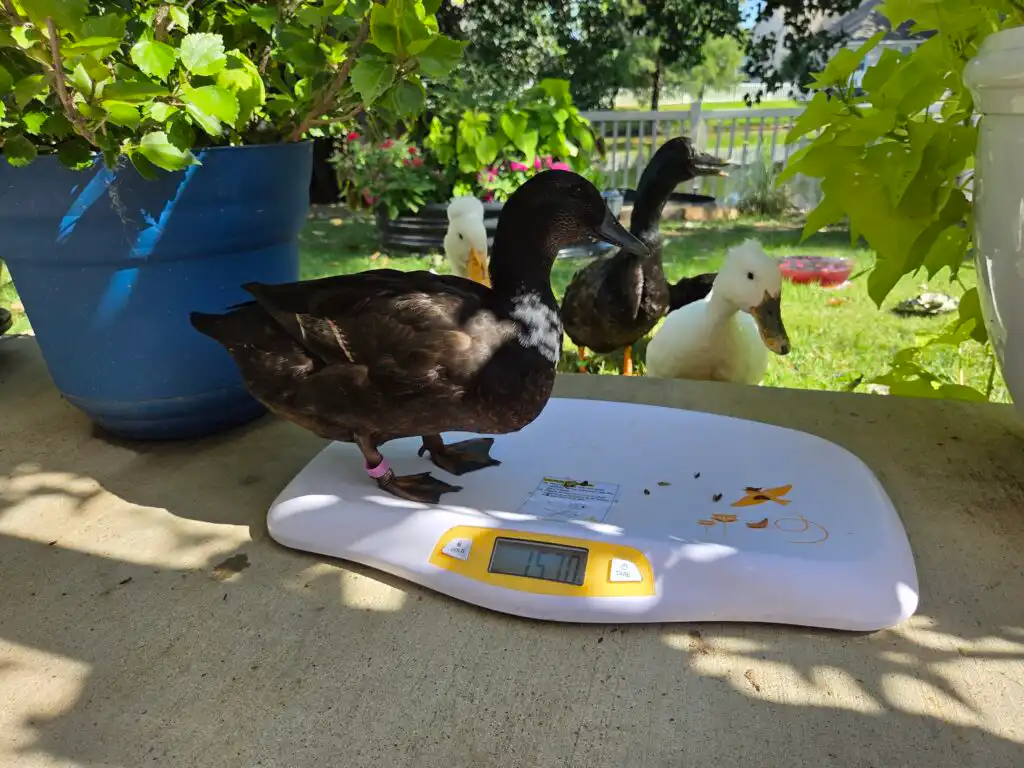
Duck Health Tip: Small Changes Matter
A single head shake usually isn’t cause for concern, but keeping track of your duck’s overall health makes it much easier to recognize when something really is wrong.
Once a month, I give each member of our flock a quick health check. I weigh them on a digital baby scale, examine their eyes and nostrils, check their feet, part the feathers to look for parasites or skin problems, and make sure they’re maintaining a healthy body condition. It only takes a few minutes, but those regular checkups help me spot subtle changes long before they become serious health issues.
A digital baby scale has become one of the most valuable tools in my duck first aid kit. Gradual weight loss is often one of the earliest signs that something isn’t right, even before a duck shows obvious symptoms.
👉 We use and recommend this digital baby scale for monthly duck health checks.
FAQ
Why does my duck shake its head after drinking?
This is usually completely normal. Ducks frequently shake their heads after dunking their bills in water to remove excess water and clear their nostrils. If your duck is otherwise healthy and the shaking stops after a few seconds, there’s typically no cause for concern.
Why is my duck shaking its head but acting normal?
If your duck is eating, drinking, preening, and behaving normally, occasional head shaking is most likely part of normal duck behavior. Common reasons include cleaning the bill, clearing the nostrils, or grooming. Continue to monitor your duck, but there’s usually no need to worry unless new symptoms develop.
Can ducks get ear infections?
Yes, although ear infections are relatively uncommon in ducks. Because their ears are hidden beneath feathers, infections can be difficult to spot. Repeated head shaking, scratching around one ear, a head tilt, swelling, or discharge near the ear opening should all be evaluated by an avian veterinarian.
Should I worry if my duck shakes its head after eating?
Food particles can stick to a duck’s bill or around the nostrils while eating. Many ducks dunk their bills in water and give a quick head shake to rinse away leftover food before continuing their meal.
Why is my duck shaking its head and sneezing?
A duck that is both shaking its head and sneezing may simply be clearing dust or water from its nostrils. However, if the sneezing persists or is accompanied by nasal discharge, swollen eyes, wheezing, or lethargy, it could indicate a respiratory infection or environmental irritation that requires veterinary attention.
Can parasites cause head shaking?
Yes, although external parasites are less common in ducks than in chickens. Mites and lice can irritate the skin and feathers around the head and neck, causing frequent head shaking, scratching, and excessive preening. Ducks that live with chickens or have frequent contact with wild birds may have a higher risk of parasite exposure.
When should I call an avian veterinarian?
You should contact an avian veterinarian if the head shaking becomes frequent or persistent, lasts more than 24 hours, or is accompanied by symptoms such as difficulty breathing, nasal or eye discharge, a head tilt, loss of balance, seizures, swelling around the face, or a loss of appetite. Ducks instinctively hide illness, so early evaluation can make a significant difference in the outcome.
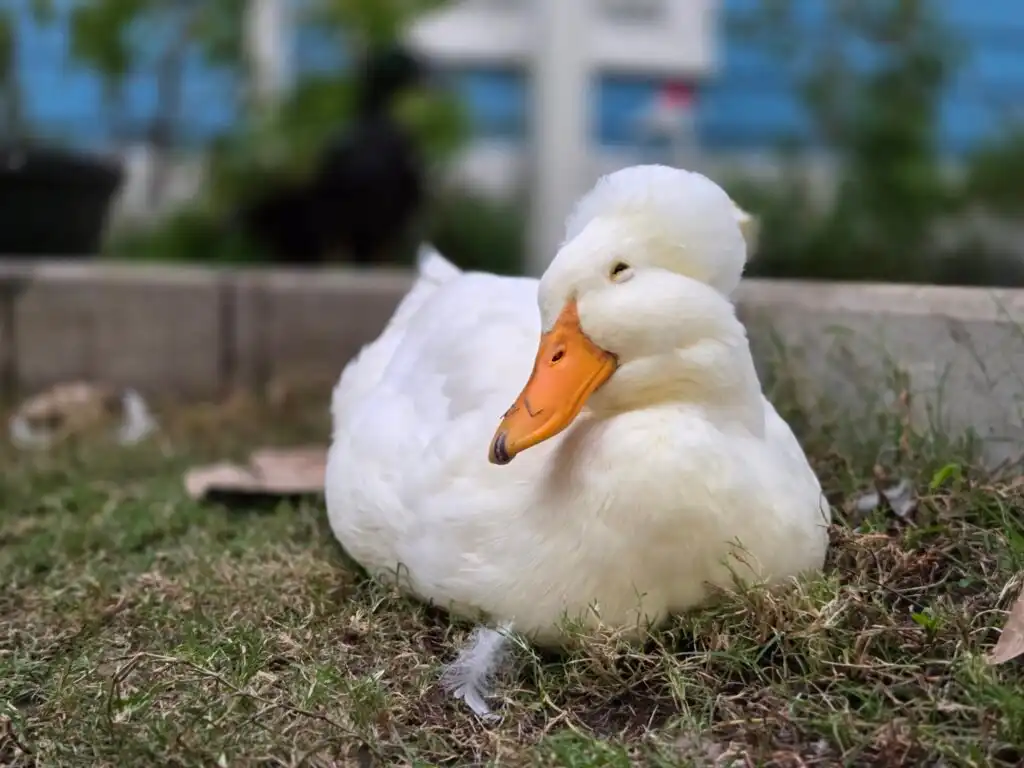
The Bottom Line: Most Head Shakes Are Normal, But Know When to Pay Attention
The first time you notice your duck repeatedly shaking its head, it’s easy to assume the worst. Fortunately, most head shaking is simply part of normal duck behavior. Whether they’re clearing water from their nostrils, cleaning their bills after a meal, or preening their feathers, ducks have plenty of perfectly harmless reasons to give a quick shake.
The key is to look beyond the head shake itself. Is your duck bright, active, eating well, and behaving normally? Or are there additional signs, such as nasal discharge, wheezing, a head tilt, or loss of balance? Those accompanying symptoms often tell the real story.
One of the best things you can do as a duck owner is become familiar with what is normal for your own flock. After years of watching Emma, Schnatterinchen, Simon, Ronja, Krümel, and Muffin, I know their little quirks, from the dramatic water sprays after drinking to their unique preening routines. That familiarity makes it much easier to recognize when one of them is acting differently and may need a closer look.
When in doubt, trust your instincts. Ducks are remarkably good at hiding illness, and it’s always better to have a questionable symptom evaluated early than to wait until your duck is seriously sick.
The better you know your ducks, the sooner you’ll recognize when something isn’t quite right.
Further Reading & Resources
- Duck Ear Anatomy and Hearing
- 16 Common Duck Health Issues Every Owner Should Know
- Why Ducks Suddenly Panic
- Why Ducks Need Water 24/7
- Duck First Aid Kit Essentials
- Duck Respiratory Problems
Deepen your understanding of avian wellness. Explore the full Duck Health & Anatomy Library for more specialized care guides.