2B or not 2B: One Duckling’s Incredible Hatching Story

Last updated: October 10th, 2026
To keep our research-backed guides free, this site uses ads and affiliate links (earning a small commission at no cost to you). Everything here is created by a duck mom and PhD scientist, combining academic rigor with hands-on experience to provide practical, trustworthy advice for duck keepers everywhere. 🦆 Learn more
This is a guest post written by Tim, who describes himself as just another guy who loves ducks.
How it all started
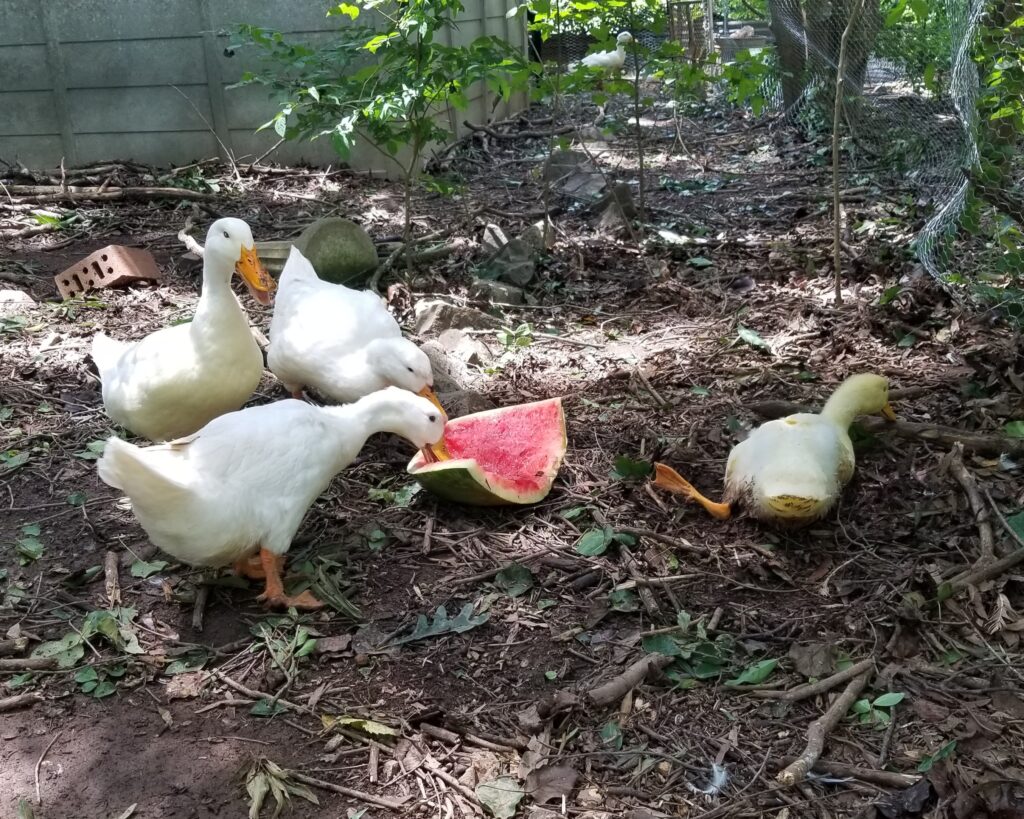
We’ve had Pekins for over 20 years now. Our first ducks were adopted from a local waterfowl rescue center. One of the first two ducks we adopted lived for over 10 years and died in our arms. During that time, ducklings were purchased from Tractor Supply. Orange, one of those ducklings, hatched her own babies. These were our first hatchings. Over the years, some of our other females hatched their own. It was always exciting to see the ducklings. However, they were not too friendly. That changed when Squeaky was hatched. Unfortunately, he had a splayed leg, and his mother tossed him out of the nest. Squeaky, because of his injury, was an indoor duck and was very well cared for and became very friendly. His leg was never right, but he enjoyed every day of his short life. After only four months, he developed other health problems. Our vet said that with leg problems along with other health problems, the best thing was to have him put to sleep. This was devastating!
The first hatching experiences
After weeks without Squeaky, it was decided to purchase an incubator and “grow our own” ducklings. This is how ducks called “5” and “2” came to be. Why did we not name them? One of the last things we did with Squeaky was to watch the episode of the Dick VanDyke show titled “Never Name a Duck”.
Months later, the incubator was put into service again and ducklings “3”, “1”, and “4” came to be. That’s another story, “The Story of the One”.
The Story of the B
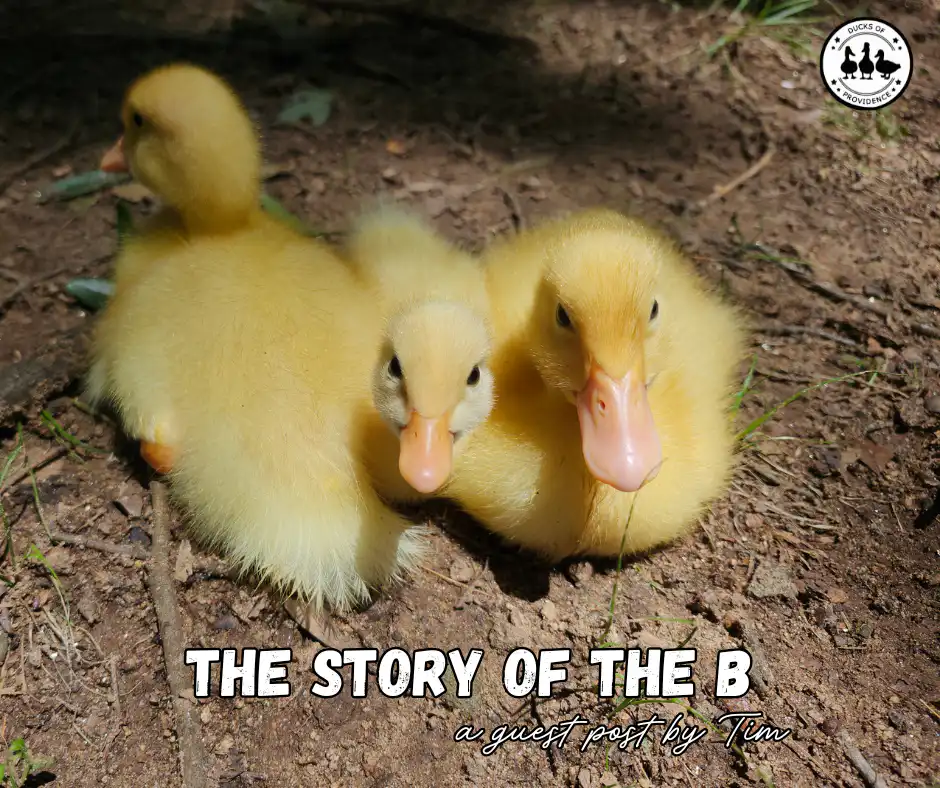
Our most recent hatch was another learning experience. Once again, two eggs hatched without incident. But one of them had a difficult time…
The B’s story starts as a random egg picked up and placed in the incubator with three other eggs. Normally the eggs are numbered, but this time I assigned letters: A, B, C, and D.
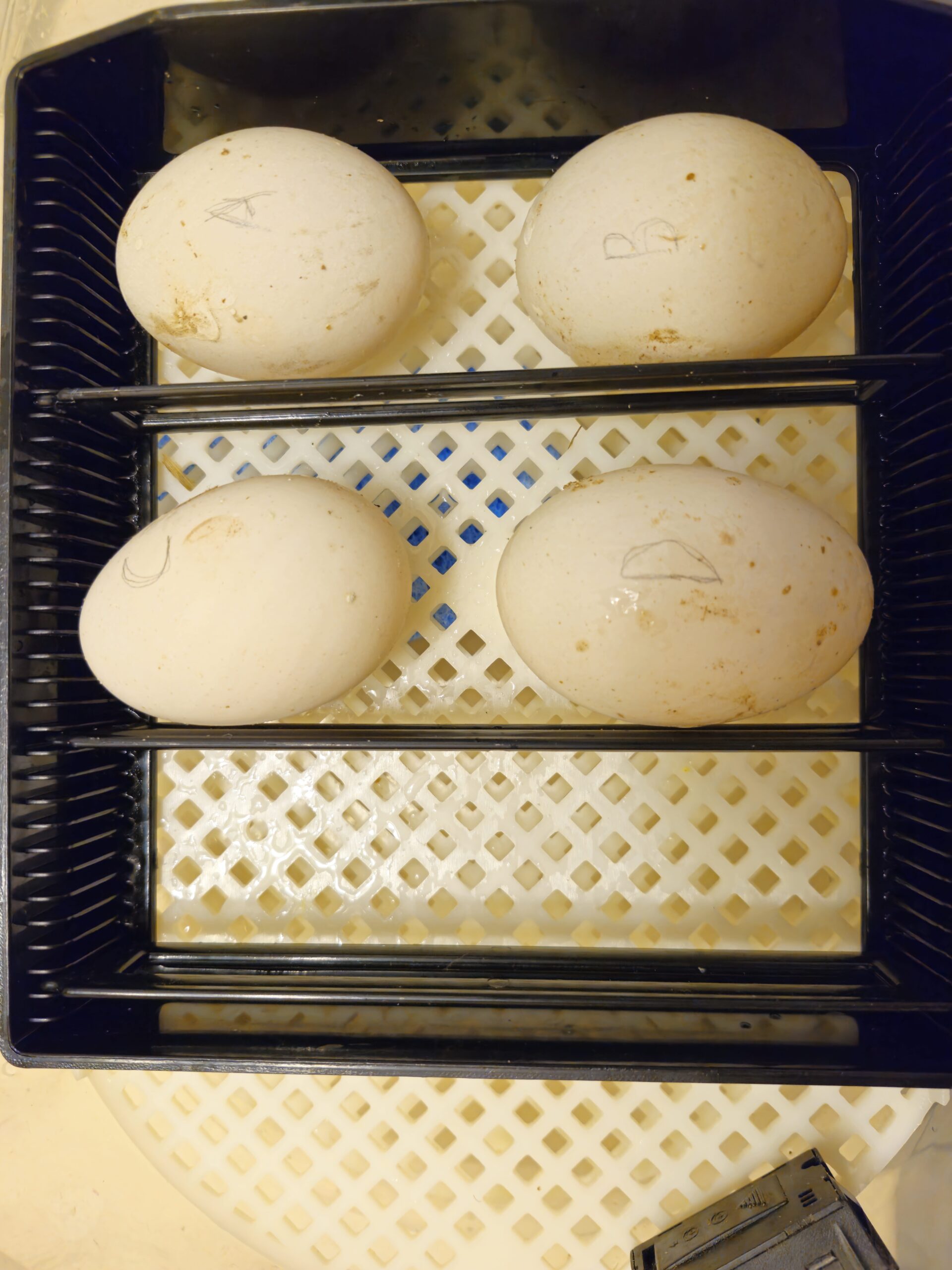
Day 10 was the first candling, and it was found that egg D was nonviable and was removed. At this time, A, B, and C appeared normal. The same was true on day 14. However, on day 16, it was discovered that egg B had a “saddle airsack”. It was also noted that egg B was developing slower than the other eggs.
For the next several days, the eggs were candled, and movement inside could be seen in all eggs. Over time, eggs A and C’s air sacs could be seen increasing; however, B’s was not.
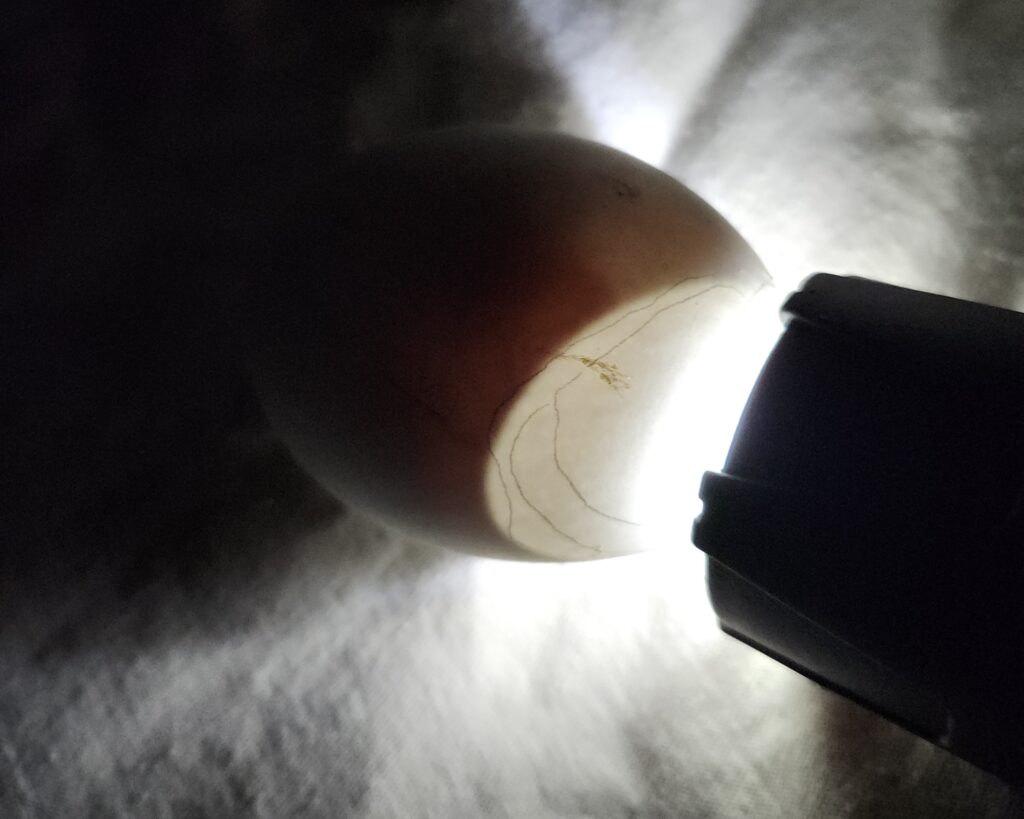
By day 24, egg A and C’s air sacs were really noticeable. B’s had increased some, but not enough. Some research was done, and it was found that putting a small emergency hole was recommended to be put in the shell at the air sac location. This was done on day 25, prior to lockdown.
The next several days included closely monitoring the temperature and humidity. Along with extra worrying about B. The internet said that “saddle eggs” were viable; however, assistance probably would be needed. It was a time for more research.
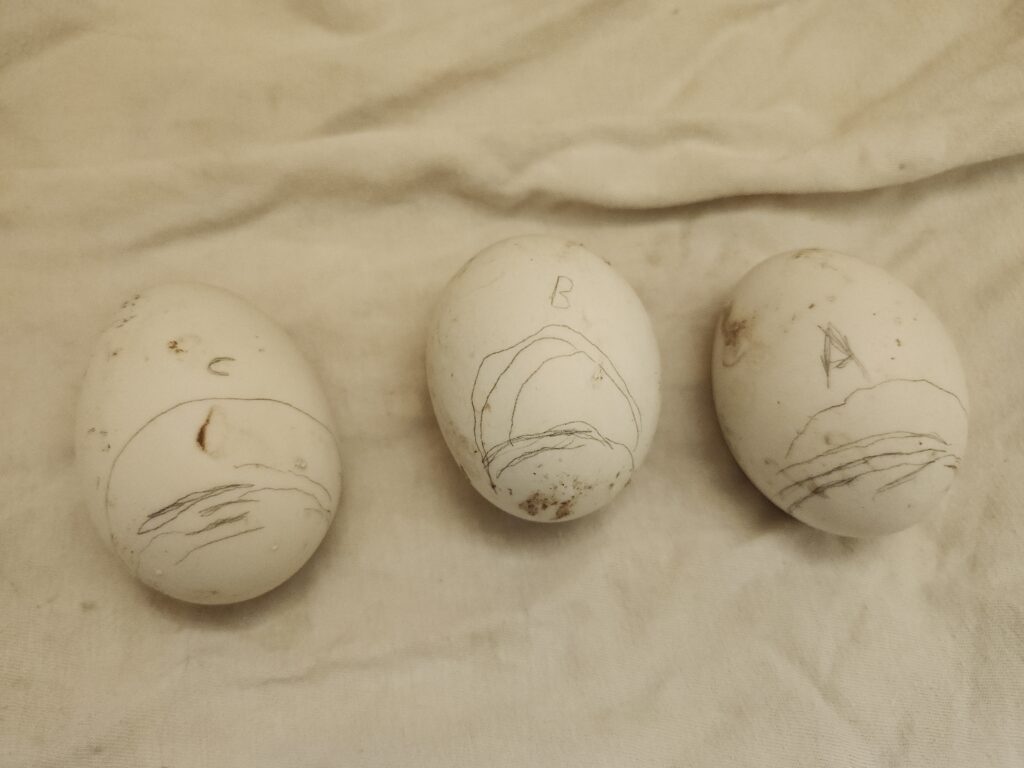
On the afternoon of the 28th day, both A and C pipped, and a few hours later hatched. But not a sign of an external pip on B. We had been down this road before with the “Pi babies”. That would be eggs “3” who hatched one day before her sister’s egg “1” and “4” who hatched a day later, back in 2023. (Pi, get it, 3.14 babies). We thought: “well, maybe B will hatch tomorrow”. Tomorrow came and went with no sign of an external pip. The incubator’s humidity had dropped to 49% during the night of the 29th day after spiking to 85% because of the hatching of A and C.
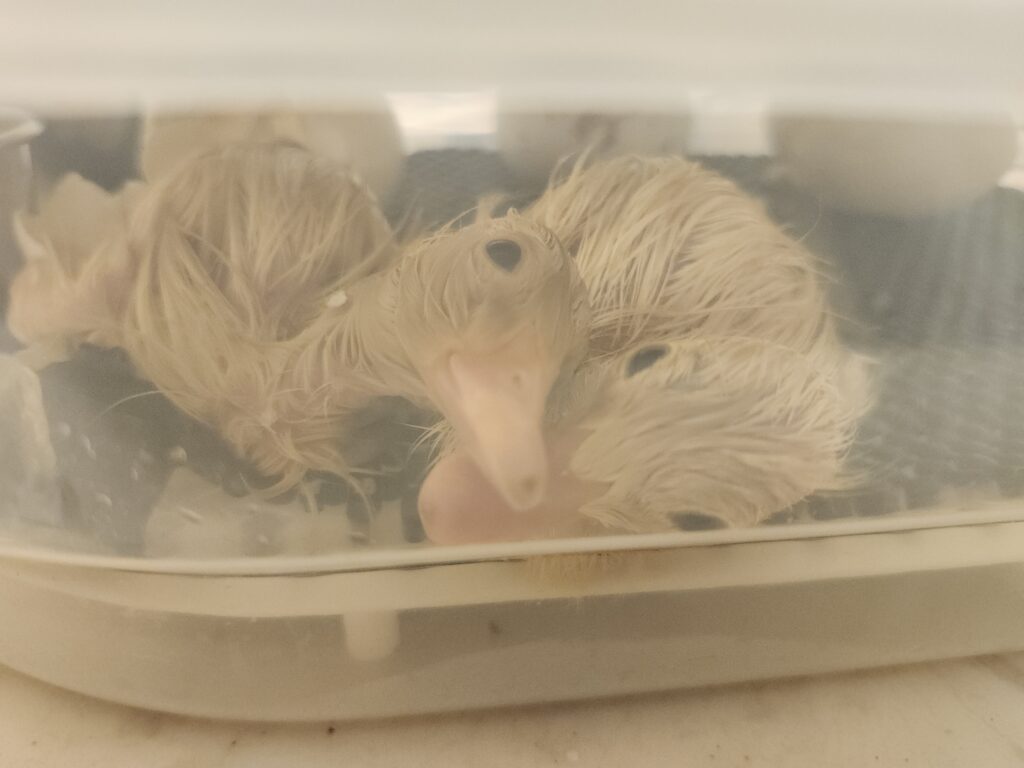
On day 30, no sign of an external pip. Reluctantly, I found a cardboard box and prepared to bury egg B, as I thought she did not make it.
Around 9 am, I unplugged the incubator, lifted the lid, picked up the egg, and heard peeping. That could not be; I have never heard an egg peep before. I asked my daughter, Emily, to verify that I was not hearing things, and she happily verified that there was both tapping and peeping coming from the egg. I plugged the incubator back in and adjusted the temperature and humidity.
Do you have a duck story to tell?
Every duck and every flock has a story worth sharing. Whether it’s a memorable hatch, an incredible rescue, a funny adventure, or a lesson you’ve learned along the way, I’d love to hear it. Guest stories help inspire and educate fellow duck keepers while celebrating the unique personalities that make ducks so special. If you’d like to share your experience on Ducks of Providence, feel free to reach out. I can’t wait to hear your story!
At approximately 2 pm, egg B was candled to check for progress. The air sac had increased a bit and was clearly visible, but still no pip. However, there still was tapping and peeping.
By 3:00 pm, the peeping had quieted down, and an attempt to assist was made. The plan was to make a hole in the air sac end of the egg. Before doing that, the egg was candled; the whole egg appeared dark. (Not knowing it at the time, B must have turned to face the other end of the egg) The attempt to open the air sac was quickly met with blood coming from the egg. This didn’t injure the duck since it was the vein of the egg. A hair dryer was quickly used to stop the blood, and the egg was put back in the incubator.
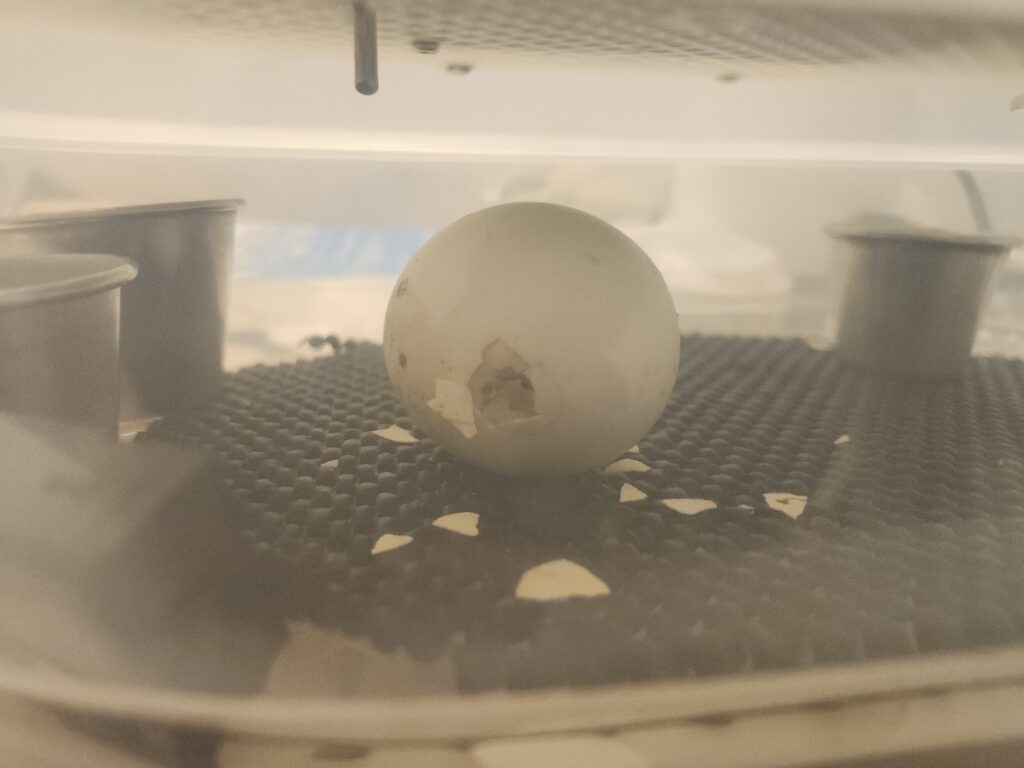
A half hour later, the egg was candled again. There was still a tapping sound. But no air sac could be seen. While putting egg B back in the incubator, it was noticed that she pipped on the wrong side of the egg. The membrane was extremely “leathery “. There was no way she could get out on her own. An attempt to remove the membrane led to blood once again, but the hair dryer stopped it. The membrane was kept as moist as possible while the shell and membrane were carefully removed. This process took over an hour.
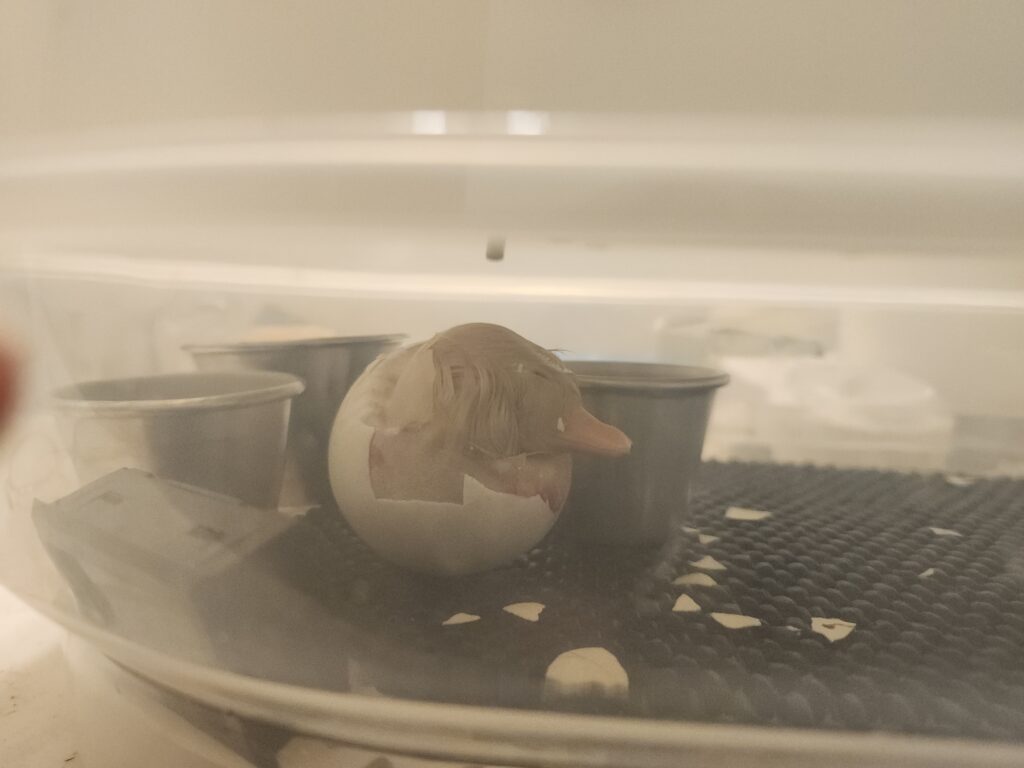
With several times thinking that she had passed away, but she didn’t and kept trying to go on. When enough eggshells were removed around her beak, her head was gently pulled out, and she rested for a bit.
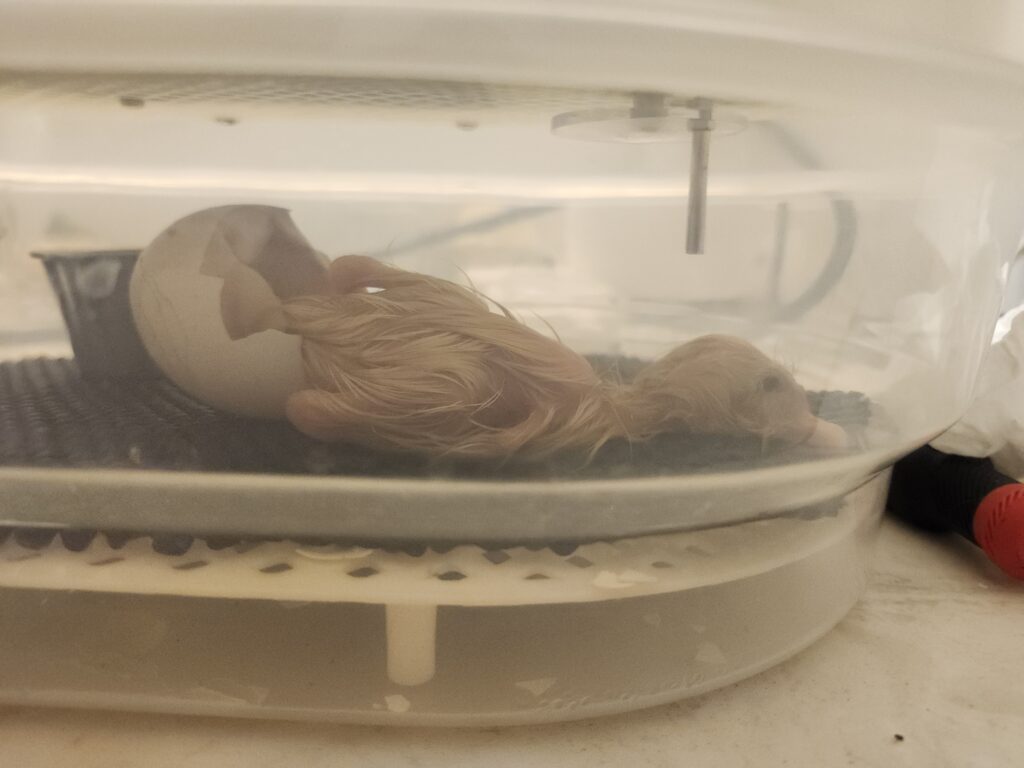
Over the next couple of hours, we continued to assist her out of the shell. First a wing, then the other. Finally her legs were freed. The umbilical cord was still attached to her. She didn’t remove it till around 9 pm.
Having gone through something similar, back in 2023, when “The One” was hatched having wry neck, we had anticipated possible problems and had Brewers Yeast, Enfamil Poly-vi-sol, and Elzefeiros probiotics & vitamins on hand.
Because her hatching was a bit premature, the remaining umbilical cord stayed attached to her for a few days. It also took a day before she was pooping regularly.
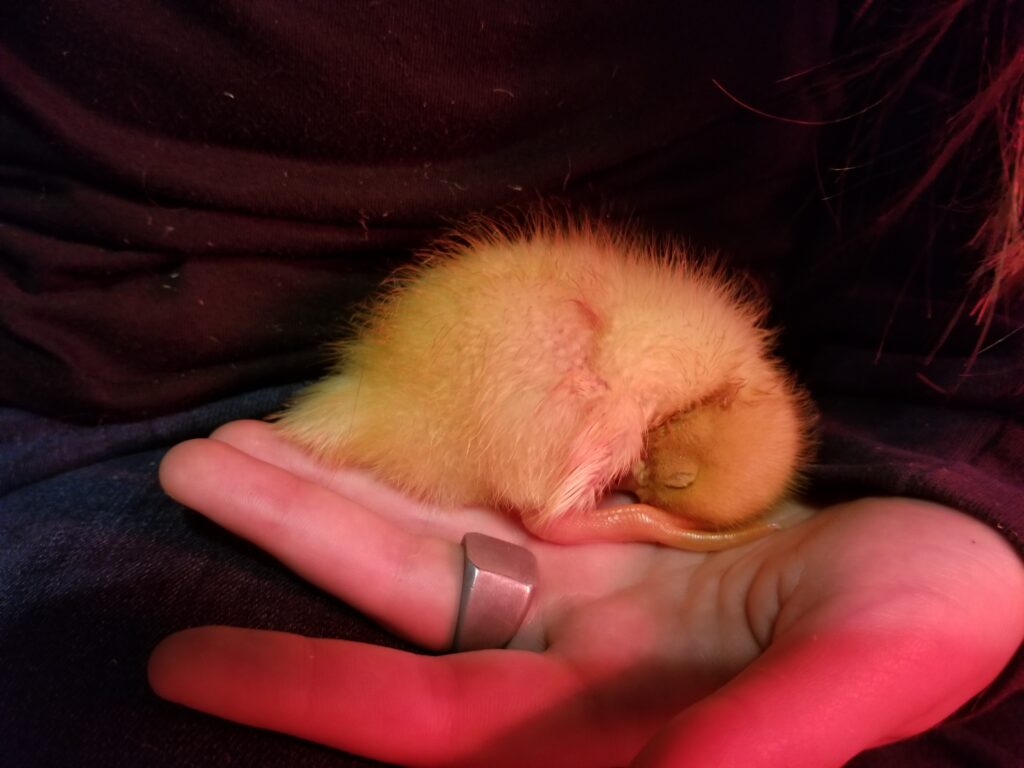
The hatching did not seem to affect the B, except for her size. Four days after A and C hatched, they weighed 3.4 ounces. However, four days after her hatch, B weighed only 1.9 ounces. Plus, her development seemed slow. She looked like a hatchling even after 5 days.
To this day, B is still smaller than her siblings. But she seems very happy and healthy.
Perhaps there were signs that B would be a lucky ducky. During lockdown, the room temperature was 77.7 degrees, and she was hatched on 7/11. She had many things go wrong, and many things go right to survive the hatching.
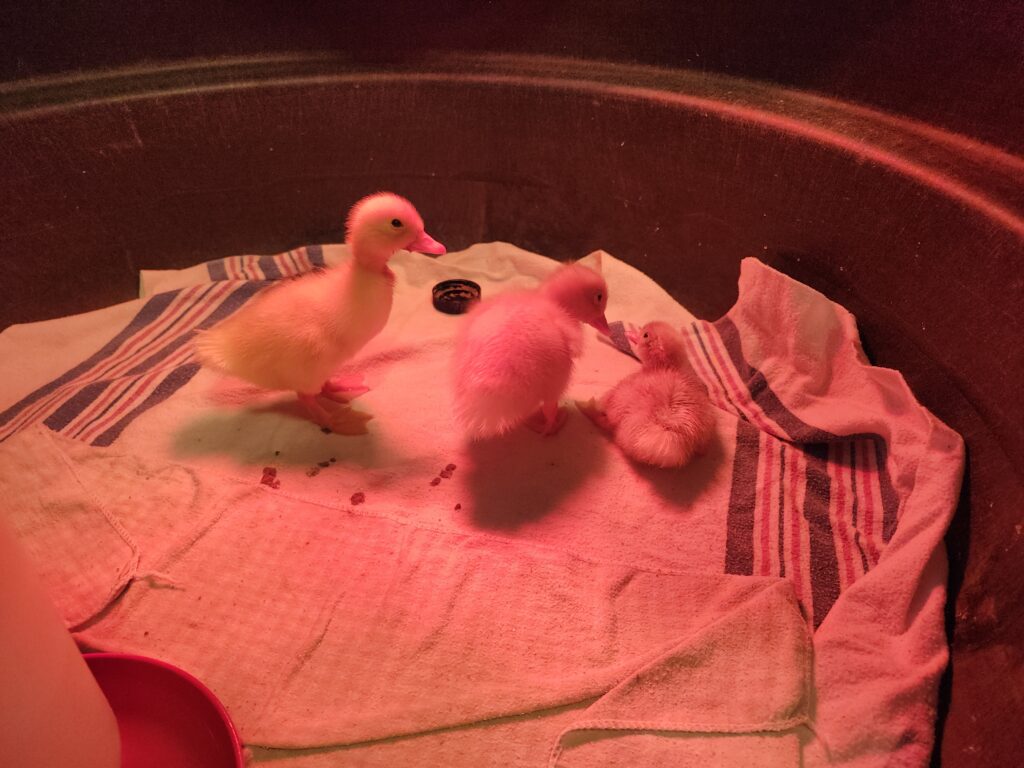
At the time of this writing, the “B” is exactly two weeks old. She is healthy, full of energy, inquisitive, and friendly, just like her two siblings. She is, however, still a bit smaller, weighing in at less than a pound. Her siblings weigh over a pound and a half. It could be in the “B”’s genes to be small. The “One” is a small girl at less than four pounds at three years old.
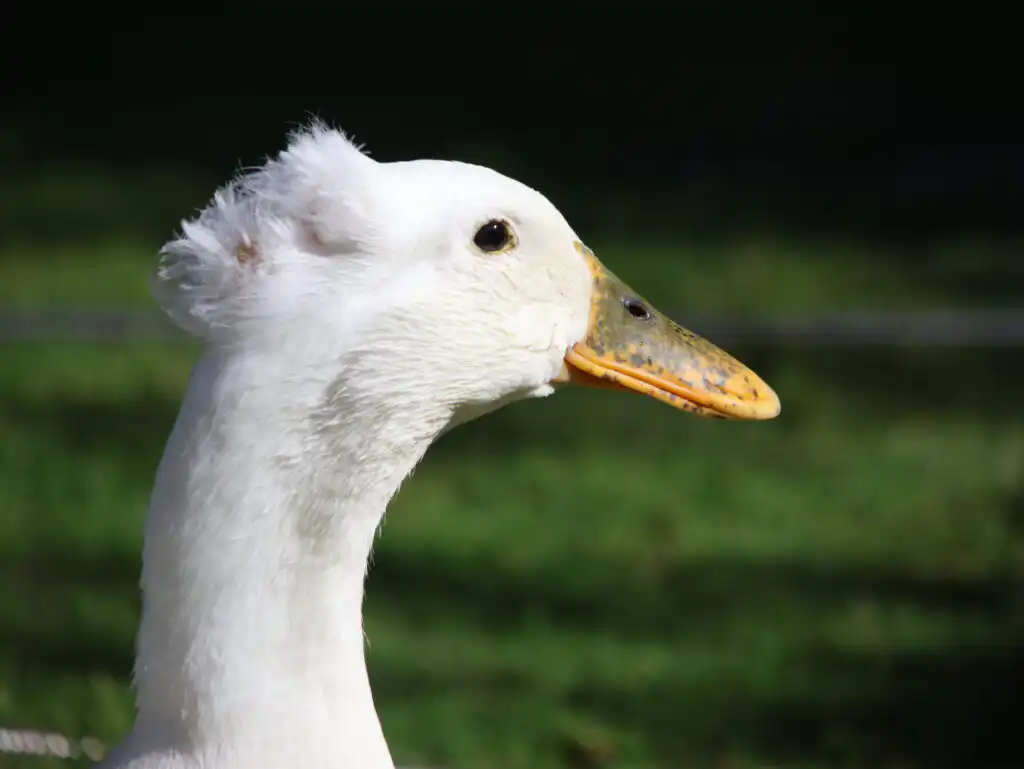
A, B, and C are slowly being introduced to the rest of the flock. In a neutral part of our property, while supervised, they all are allowed out to interact with each other. The duckling seems to be thinking, “What are you?” While the older ducks seem to be saying, “Where did you come from?”
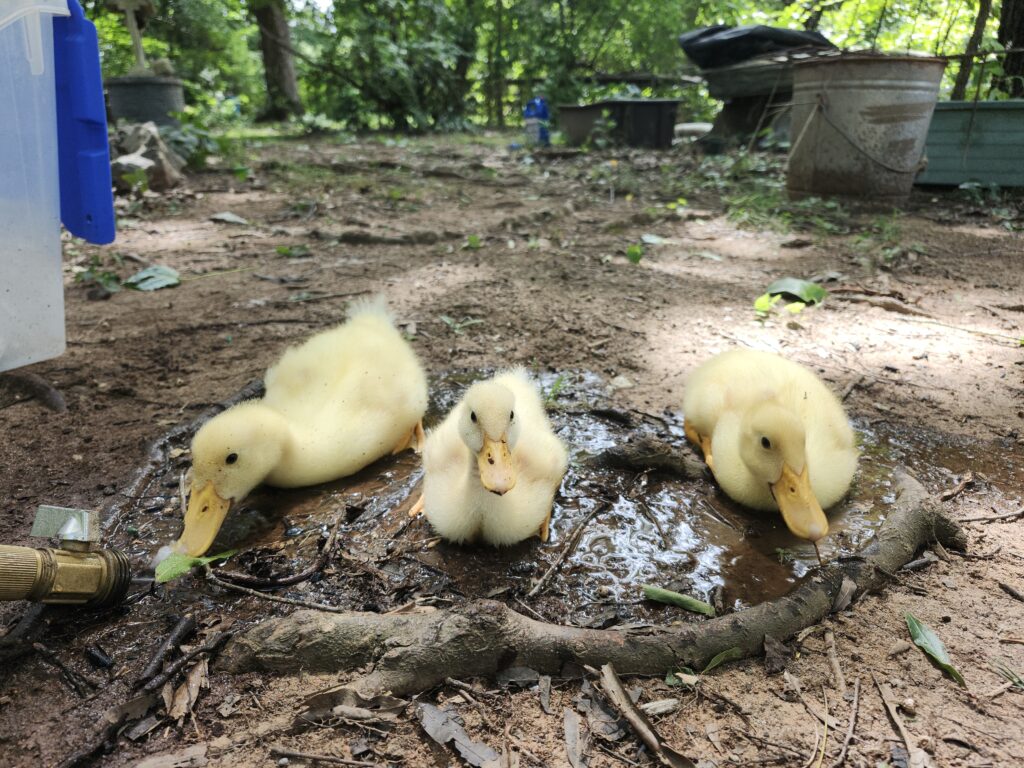
One final note: while Pekins hatch around 28 days, please wait a full 30 days. And don’t give up on them. Before hatching, the B had the will to survive many obstacles.
Udates
Tim reached out to me and shared that the B is now the same size as it’s siblings and very healthy and happy. So even if there are some complications during incubation and hatching, the ducks can still catch up with their siblings and grow up normally.
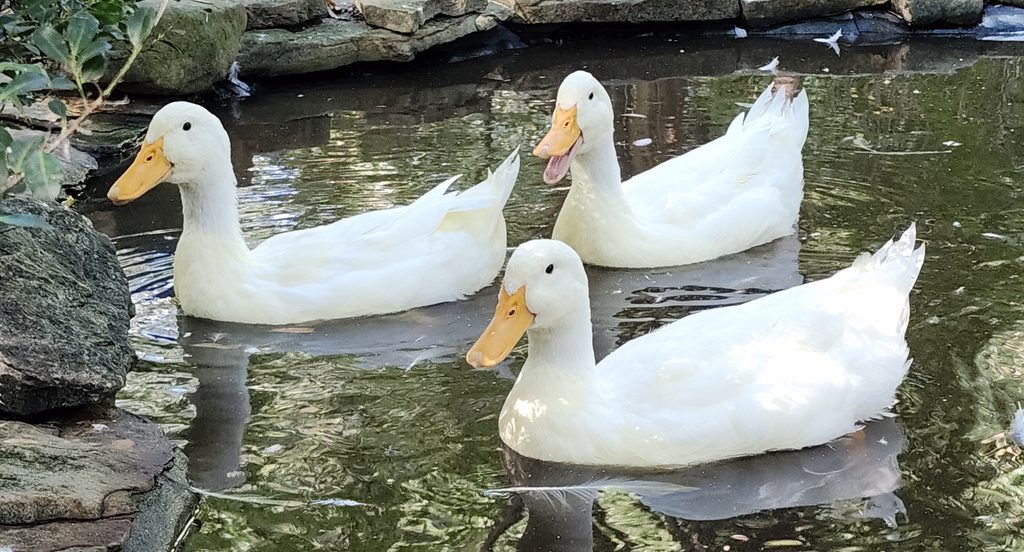
And it turned out that B is a drake. His clutch mates A and C also turned out to be drakes.
Further Reading & Resources
- Hatching Ducklings Like a Pro: Step-by-Step Incubation & Brooder Guide!
- How to Raise Ducklings: A Beginners Guide
- Spring Coop Prep for Ducklings: Bedding, Smell, and the Brooder to Coop Transition
- Color Genetics in Ducks: Why Are Some Ducklings a Surprise?
- Keeping Ducks 101: A Beginner’s Guide to Duck Care
Connect deeper with your flock. Discover more about duck psychology and social dynamics in the Community & Behavior Hub.