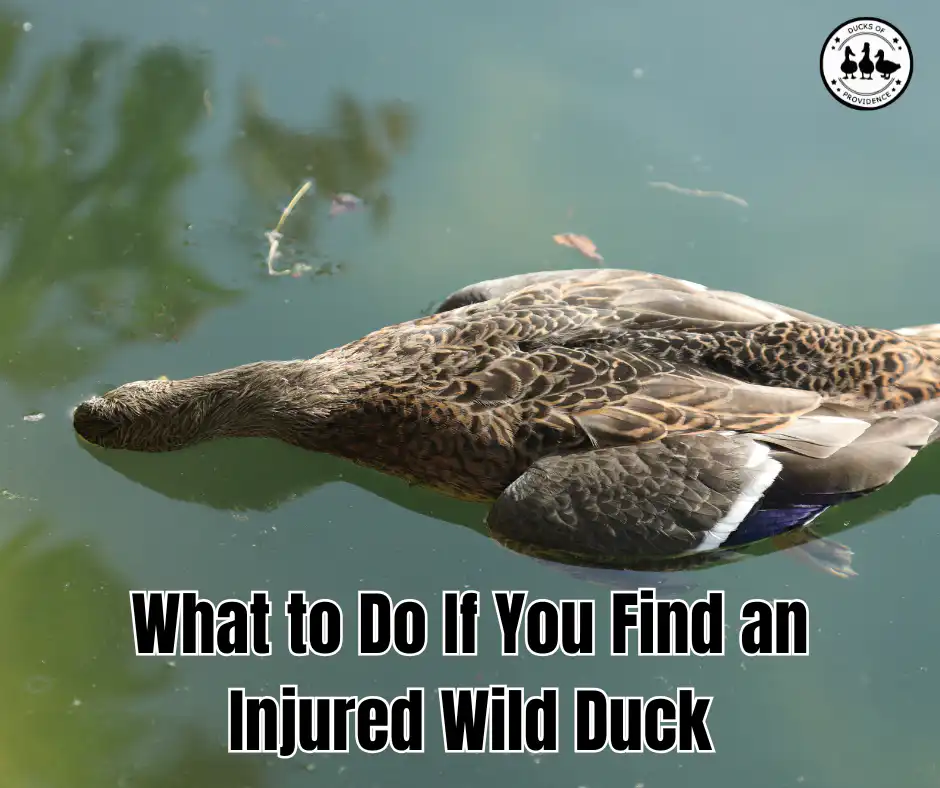
What to Do If You Find an Injured Wild Duck: A Step by Step Rescue Guide

To keep our research-backed guides free, this site uses ads and affiliate links (earning a small commission at no cost to you). Everything here is created by a duck mom and PhD scientist, combining academic rigor with hands-on experience to provide practical, trustworthy advice for duck keepers everywhere. 🦆 Learn more
Finding an injured wild duck can be upsetting, especially when you are not sure what to do next. Maybe you spotted a duck sitting alone beside a busy road, dragging a wing near a pond, struggling to walk, or tangled in fishing line. Your first instinct is probably to help, but with wildlife, how you help matters just as much as how quickly you act.
If you find an injured wild duck, the first step is usually not to immediately pick it up. Take a moment to observe the duck from a safe distance, look for signs of injury or immediate danger, and determine whether the bird truly needs intervention. If it does, your goal is to keep the duck safe and get it into the hands of a licensed wildlife rehabilitator as quickly as possible.
As a duck owner, I know how difficult it is to see a duck struggling and simply stand back. Everything in me wants to scoop that bird up and start helping. But wild ducks are different from our pet ducks. Handling, feeding, treating, and even temporarily keeping native wildlife comes with considerations that many well-meaning rescuers do not realize.
There is also one important question we need to answer early: Is the duck actually wild? Domestic ducks are unfortunately abandoned at ponds, parks, and lakes all the time. A dumped Pekin, Runner, Cayuga, or other domestic duck may need rescue too, but the appropriate next steps are different from those for an injured wild duck.
In this guide, I will walk you through what to do if you find an injured wild duck, how to recognize when a duck truly needs help, who to contact, when it is appropriate to intervene, how to safely contain and transport an injured duck, and what you should never do while waiting for professional help.
Part of the Community & Behavior Hub, Exploring the social complexity and psychological needs of domestic ducks.
Quick Navigation: Jump to a Section
[hide]
- Quick Answer: What to Do If You Find an Injured Wild Duck
- Is the Duck Actually Injured?
- What If You Find a Duckling Alone?
- Wild Duck or Domestic Duck? This Matters
- Who Should You Call for an Injured Wild Duck?
- When Should You Pick Up an Injured Wild Duck?
- How to Safely Catch an Injured Wild Duck
- How to Temporarily House and Transport an Injured Wild Duck
- Should You Give an Injured Wild Duck Food or Water?
- Common Wild Duck Injuries and What to Do
- What to Do If a Wild Duck Is Tangled in Fishing Line or Has a Fishhook
- What If You Find Multiple Sick or Dead Wild Ducks?
- What Happens at a Wildlife Rehabilitator?
- Frequently Asked Questions About Injured Wild Ducks
- You Found an Injured Wild Duck: Your Next Step
- Further Reading & Resources
Quick Answer: What to Do If You Find an Injured Wild Duck
If you have an injured duck in front of you right now, focus on keeping the bird safe and minimizing stress. You do not need to diagnose the injury or provide treatment yourself.
- Observe before you approach. Watch the duck from a short distance. Look for bleeding, a drooping wing, inability to stand or walk, difficulty breathing, entanglement, or other obvious signs of injury. A duck that is simply resting does not necessarily need help.
- Check for immediate danger. If the duck is in traffic, being approached by a predator, trapped, or in another life-threatening situation, getting it out of danger may take priority. Otherwise, avoid rushing toward or chasing it.
- Determine whether the duck is wild or domestic. This matters because wild ducks generally need a licensed wildlife rehabilitator, while an abandoned domestic duck may need a domestic waterfowl rescue or sanctuary.
- Keep people and pets away. Give the duck space. Dogs, children, crowds, and repeated attempts to catch it can add significant stress and may cause an injured bird to flee.
- Contact a licensed wildlife rehabilitator. Explain where the duck is, what you observed, and whether you can safely remain nearby. Follow their instructions before attempting capture whenever possible.
- Only capture the duck when necessary. If a rehabilitator asks you to contain the bird, or the duck is in immediate danger and cannot safely remain where it is, use a towel or lightweight blanket and minimize chasing and handling.
- Place the duck in a secure, ventilated box or carrier. Line the bottom with a towel and keep the container somewhere quiet, dark, and comfortably warm until you can transport the duck or receive further instructions.
- Do not force food, water, or medication. Do not pour water into the duck’s bill, force feed it, or give human medications. An injured or neurologically impaired bird can accidentally inhale food or water, and inappropriate medications can cause additional harm.
Most importantly, your job is not to diagnose or treat the duck. Your job is to protect it from further harm and connect it with qualified wildlife care.
Is the Duck Actually Injured?
Before trying to catch a wild duck, take a few minutes to observe it from a distance. Ducks do plenty of things that can look concerning when you are not familiar with their normal behavior. They sleep on the ground, tuck their heads under their wings, sit quietly for long periods, stand on one leg, and sometimes choose resting spots that seem rather questionable to us humans.
A duck that allows you to get relatively close is also not automatically injured. Wild ducks living in parks and neighborhoods can become accustomed to people, particularly in areas where they are regularly fed.
Instead of focusing on one behavior, look at the whole picture. Watch how the duck moves, breathes, reacts to its surroundings, and interacts with other ducks.
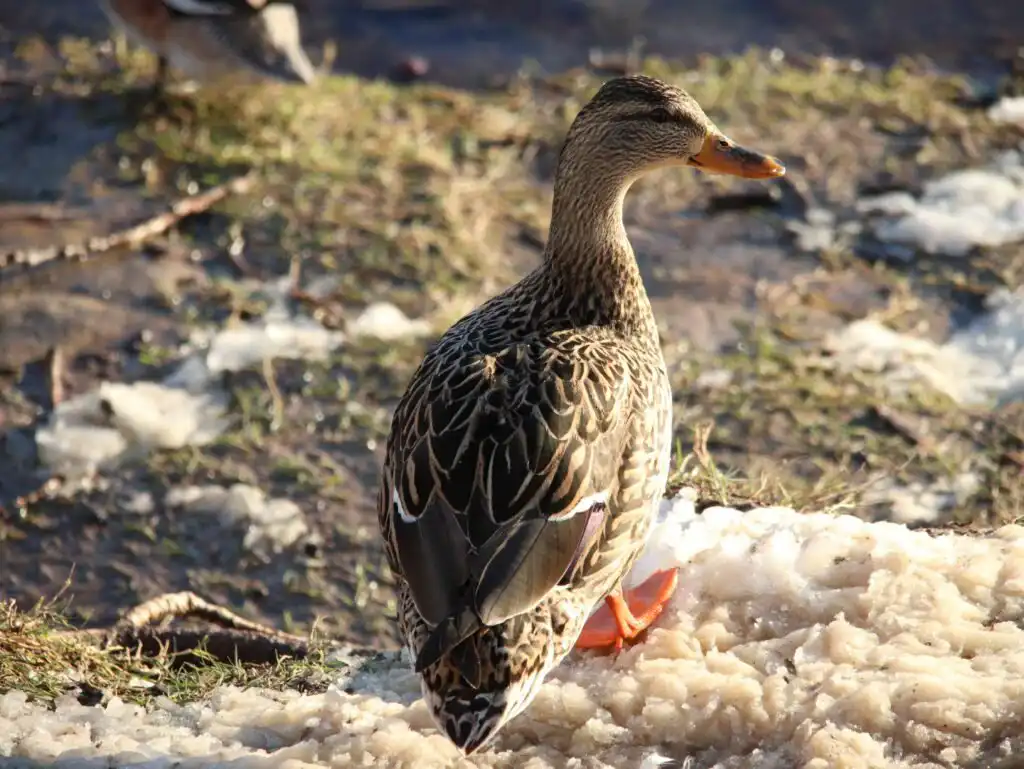
Signs a Wild Duck May Need Help
Some signs are much more concerning than others. A duck that cannot stand, has an obviously injured wing, is bleeding, or has experienced known trauma should be assessed by a wildlife professional.
| What You Observe | How Concerned Should You Be? |
|---|---|
| Unable to stand or repeatedly falling over | Urgent. This can indicate serious injury, weakness, toxicity, or neurological disease. |
| Leg dragging or inability to bear weight | Concerning. A fracture, joint injury, foot injury, or other trauma may be present. |
| One wing hanging noticeably lower than the other | Concerning. A drooping wing can indicate a fracture or other wing injury. |
| Active bleeding, puncture wounds, or exposed tissue | Urgent. The duck needs professional assessment. |
| Open bill breathing or obvious difficulty breathing | Urgent. Respiratory distress requires prompt attention. |
| Fishing line, netting, or other material wrapped around the duck | Needs intervention. Entanglement can cause severe injuries even when the duck is still moving normally. |
| Embedded fishhook | Needs professional help. Do not simply pull an embedded hook out. |
| Circling, tremors, severe weakness, or inability to hold the head normally | Urgent. These can be signs of neurological disease, toxicity, or trauma. |
| Hit by a vehicle or attacked by a predator | Urgent. Internal injuries and small puncture wounds may not be immediately visible. |
| Sitting quietly but alert, with no obvious injury | Observe first. Resting alone is not necessarily abnormal. |
A known traumatic event matters even when the duck initially looks okay. Birds are remarkably good at hiding weakness. A duck that was struck by a car, caught by a dog, or attacked by another predator may have internal injuries or puncture wounds that you cannot see from several feet away.
Some Strange Looking Duck Behaviors Are Completely Normal
This is where a little patience can prevent an unnecessary rescue. If the duck is not in immediate danger, watch for several minutes before deciding that something is wrong.
| Behavior | What It May Mean |
|---|---|
| Sitting with the head tucked under a wing | Usually normal resting or sleeping |
| Standing on one leg | Common resting behavior |
| Lots of twisting, stretching, and feather fluffing | Normal preening |
| Sitting quietly in vegetation | A female may be nesting |
| Temporarily unable to fly | May occur during the annual molt when flight feathers are replaced |
| Crouching or freezing as you approach | May simply be a response to your presence |
| Swimming, preening, eating, and interacting normally | Generally reassuring signs |
What If the Duck Cannot Fly?
This one can be tricky because a wild duck that does not fly away when approached is not necessarily injured.
Many waterfowl become temporarily flightless during their annual molt while replacing their primary flight feathers. Young ducks may also not yet be capable of flight.
Look for additional clues instead. A wing hanging unusually low, visible swelling, difficulty walking, bleeding, weakness, or abnormal balance makes an injury much more likely.
If you are unsure, take a photo or short video from a respectful distance and contact a wildlife rehabilitator. Being able to describe exactly what you are seeing can help a rehabilitator decide whether the duck needs to be captured.
Duck Mom Tip: Unless the duck is in immediate danger, observation is often your best first tool. A few quiet minutes watching how the duck walks, swims, preens, and responds to its surroundings can tell you much more than immediately trying to catch it.
What If You Find a Duckling Alone?
Finding a tiny duckling by itself can trigger every rescue instinct you have. A baby duck peeping alone near a pond certainly looks like it needs help, but an unattended duckling is not always abandoned.
The mother may be nearby, temporarily out of sight, or trying to gather the rest of her brood. If the duckling is warm, active, alert, and in a reasonably safe location, do not immediately pick it up and take it home.
Instead, step back and watch quietly from a distance. Your presence may actually prevent the mother from returning.
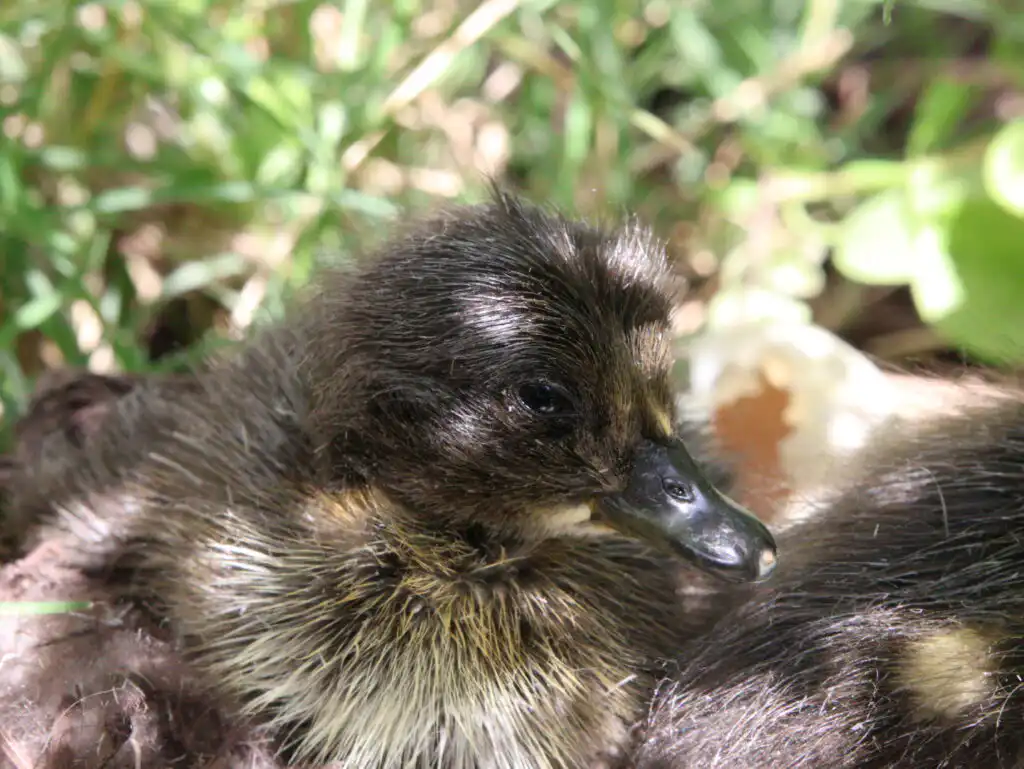
When Should You Help a Lone Duckling?
The circumstances surrounding the duckling are often more useful than the fact that it is alone.
| What You Find | What to Do |
|---|---|
| Alert duckling near a pond with adult ducks nearby | Observe from a distance. Mom may return or call the duckling back to the group. |
| Duckling temporarily separated from its mother by people or activity | Give them space. Allow the family an opportunity to reunite. |
| Duckling separated from Mom by a curb, fence, or other obstacle | Assess whether simple assistance can safely reunite them. |
| Duckling in a road or other immediate danger | Intervene if you can do so safely. Move it only far enough to remove the immediate danger while keeping it near the area where its family was found. |
| Duckling trapped in a storm drain, pool, or other structure | Rescue assistance may be necessary. Contact wildlife professionals if you cannot safely resolve the situation. |
| Duckling visibly injured, bleeding, weak, or unable to walk normally | Contact a wildlife rehabilitator. |
| Duckling cold, lethargic, or barely responsive | This is urgent. Contact a wildlife rehabilitator immediately. |
| Mother confirmed dead | The duckling needs help. Contact a licensed wildlife rehabilitator. |
| Duckling remains alone and distressed with no adult returning | Contact a wildlife rehabilitator for guidance before taking it home. |
Do Not Try to Raise a Wild Duckling Yourself
It can be incredibly tempting. After all, ducklings are tiny, vulnerable, and exceptionally good at convincing humans that we have suddenly become their mother.
But raising a wild duckling is very different from raising a domestic duckling.
Wild ducklings need appropriate nutrition, opportunities to develop normal waterfowl behaviors, suitable companions, and careful management that prevents them from becoming habituated to humans. A wildlife rehabilitator’s goal is not simply to keep the duckling alive. The goal is to raise a healthy wild bird that can eventually be released and function normally in the wild.
There are also legal considerations. Many native wild ducks in the United States are protected under the Migratory Bird Treaty Act, and wildlife rehabilitation requires appropriate permits.
What If You Cannot Find the Mother?
If Mom does not return, resist the urge to start feeding the duckling while you figure things out. Contact a licensed wildlife rehabilitator first and follow their instructions.
If you must temporarily contain the duckling because it is injured or in immediate danger, place it in a secure, ventilated container lined with a soft towel and keep it quiet and comfortably warm while arranging professional help.
Young ducklings can lose body heat quickly, so warmth is particularly important. At the same time, avoid direct contact with heating pads or other heat sources that could cause overheating or burns.
Duck Mom Note: With a healthy lone duckling, reunification with Mom is always the outcome I would hope for first. Taking a duckling away should be reserved for situations where it is truly orphaned, injured, trapped, or in immediate danger.
Wild Duck or Domestic Duck? This Matters
Before deciding who to call, there is another important question to answer: Is the duck actually a wild duck?
We tend to assume that any duck living on a public pond, lake, or neighborhood waterway is wild. Unfortunately, that is not always the case. Domestic ducks are frequently abandoned at public ponds, and they may live alongside Mallards and other wild waterfowl.
This distinction matters because an injured native wild duck generally belongs in the care of a licensed wildlife rehabilitator, while an abandoned or injured domestic duck may need help from a domestic waterfowl rescue, farm animal sanctuary, or veterinarian instead.
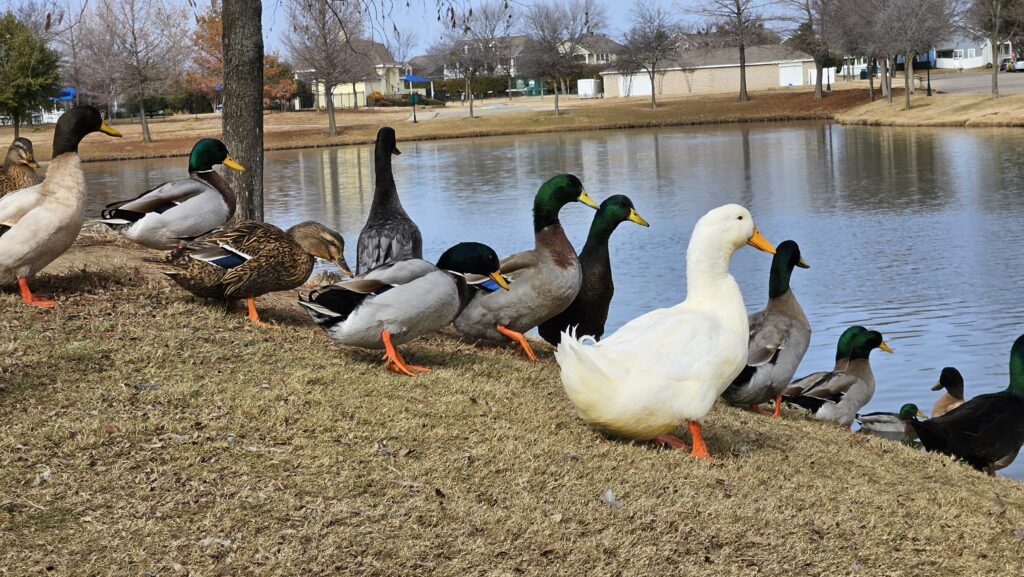
How Can You Tell a Wild Duck From a Domestic Duck?
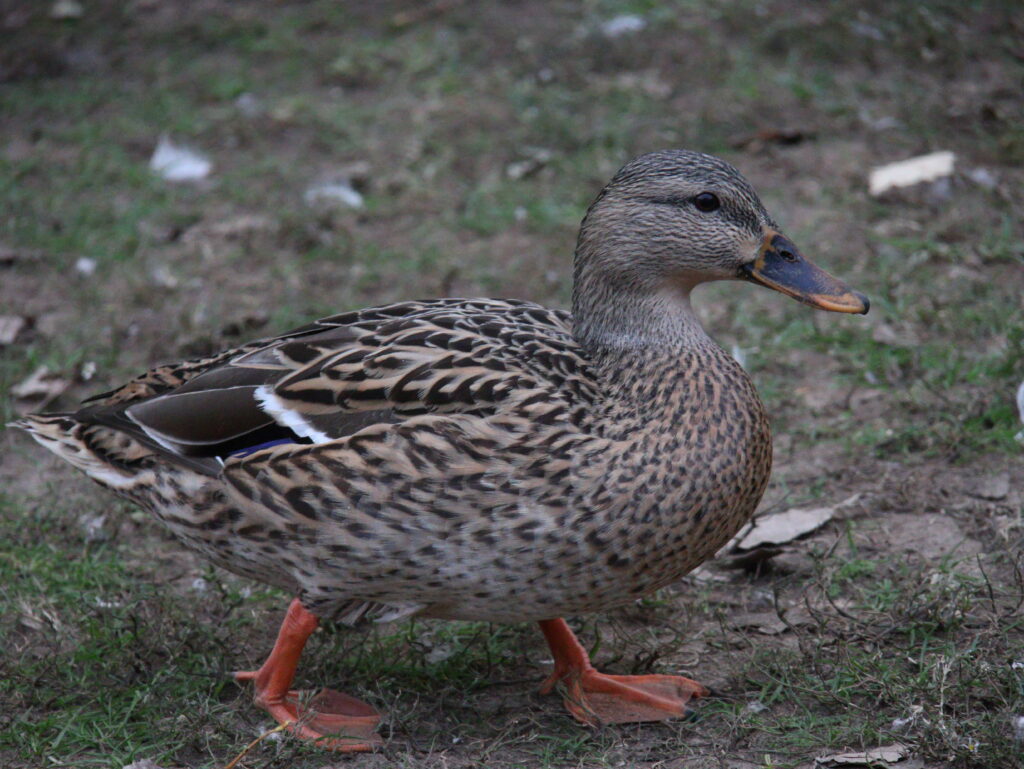
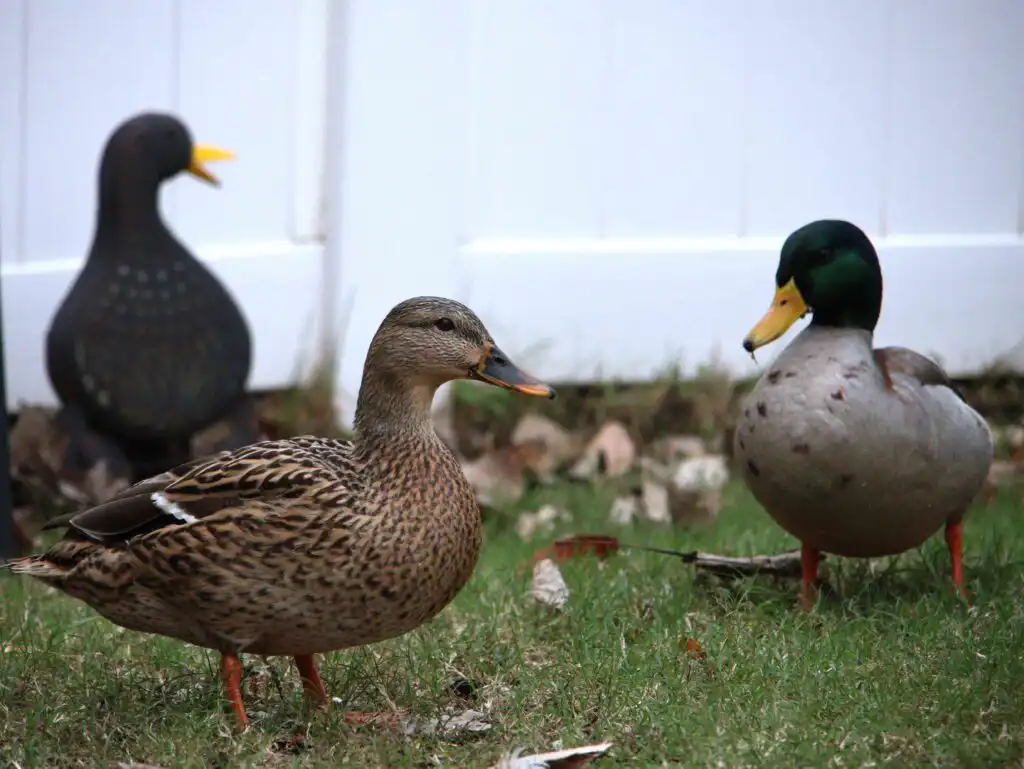
There is no single characteristic that works for every duck, but appearance, body size, behavior, and flight ability can provide useful clues.
| Clue | Wild Duck | Domestic Duck |
|---|---|---|
| Body shape | Usually relatively streamlined and lightweight | Many breeds are heavier and more robust |
| Flight ability | Most healthy adults can fly well | Many domestic breeds have limited flight ability or cannot fly |
| Behavior around people | Often wary, although park ducks can become accustomed to humans | May be unusually comfortable around people or approach looking for food |
| Color and markings | Often resembles a recognizable native species such as a Mallard | May be solid white, unusually large, heavily patterned, crested, or otherwise unlike local wild species |
| Common examples | Mallards and other native waterfowl | Pekins, Cayugas, Runners, Swedish ducks, Welsh Harlequins, and many other domestic breeds |
| Who usually helps | Licensed wildlife rehabilitator | Domestic duck rescue, sanctuary, experienced waterfowl rescue, or veterinarian |
A large white duck is one of the biggest clues. The familiar white Pekin is a domestic breed, not a wild species. Pekins are heavy bodied ducks that generally cannot fly well enough to migrate or escape many predators.
But color alone is not enough. Domestic ducks come in an enormous range of colors, including black, brown, gray, blue, and patterns that can look surprisingly similar to wild ducks. Domestic Mallard derived ducks can also interbreed with wild Mallards, making identification even more complicated.
A Friendly Duck Is Not Necessarily Domestic
Behavior can provide clues, but it should not be your only test. Wild ducks living at heavily visited parks may walk straight toward people because they have learned that humans arrive with food.
Likewise, a frightened domestic duck that has recently been abandoned may want absolutely nothing to do with you.
That is why I prefer to consider several characteristics together rather than relying on one clue.
Why Abandoned Domestic Ducks Need Help Too
If you determine that the duck is domestic, please do not assume that living on a pond means it is doing fine.
Domestic ducks have been selectively bred to live under human care. Many cannot fly effectively, leaving them particularly vulnerable to dogs, coyotes, bobcats, raccoons, and other predators. They may also struggle to find appropriate nutrition, shelter, and safe places to rest.
Releasing a domestic duck at a pond is abandonment, not a return to nature.
I have an entire guide about duck dumping that explains why releasing domestic ducks is so dangerous and what you can do when you find one.
Duck Mom Tip: If you are unsure whether the duck is wild or domestic, take several clear photos from different angles. A wildlife rehabilitator or domestic duck rescue may be able to help identify the bird before you attempt to catch it.
Once you have determined that you are dealing with an injured wild duck, the next question becomes much easier: Who should you call for help?
Who Should You Call for an Injured Wild Duck?
Once you are reasonably certain that a wild duck is injured, the next question is usually: Who do I call?
Ideally, you want to reach someone experienced with wildlife who can tell you whether the duck needs to be captured and where it can receive appropriate care. A licensed wildlife rehabilitator is often the best place to start, but depending on where you live and the circumstances, there are several other resources that may be able to help.
Where to Find Help in the United States
| Resource | When It May Help |
|---|---|
| Licensed wildlife rehabilitator | Usually the best first choice for an injured wild duck. Make sure the rehabilitator accepts waterfowl. |
| Animal Help Now (AHNow) | Excellent starting point for locating nearby wildlife rehabilitators and wildlife emergency resources throughout the United States. |
| State wildlife agency | Can provide information about permitted rehabilitators, wildlife regulations, disease concerns, and unusual wildlife situations. |
| Game warden or conservation officer | Particularly useful when the animal is in a dangerous location, wildlife laws are involved, you cannot safely capture the bird, or you do not know which local resource to contact. |
| Veterinarian | May be able to provide emergency assessment and stabilization. Always call before arriving because not every veterinary clinic accepts wildlife. |
| Animal control | Availability varies considerably by community, but some agencies respond to injured wildlife or can direct you to an appropriate organization. |
| Wildlife hospital or wildlife center | Larger facilities may provide veterinary treatment and rehabilitation for injured waterfowl. Call ahead to confirm that they accept ducks. |
One of my favorite starting points in the United States is Animal Help Now. You can enter your location and search for wildlife emergency resources near you.
Resource: Animal Help Now, Wildlife Emergency
https://ahnow.org/
The U.S. Fish and Wildlife Service is another important resource for information about migratory birds. Most native wild ducks are protected migratory birds, and rehabilitation requires appropriate permits. Federal regulations do, however, include a Good Samaritan provision allowing someone who finds a sick, injured, or orphaned migratory bird to temporarily possess the bird for the purpose of immediately transporting it to a permitted rehabilitator.
If You Are in Texas
For my fellow Texans, the Texas Parks and Wildlife Department (TPWD) maintains a list of permitted wildlife rehabilitators organized by county. If you cannot find someone in your county, check surrounding counties as well.
You can also contact a Texas Game Warden when you need guidance about injured wildlife, particularly if the animal cannot safely be approached or you are unsure how to proceed.
Texas resources:
Texas Parks and Wildlife Department Wildlife Rehabilitation
https://tpwd.texas.gov/huntwild/wild/rehab/
Texas Game Wardens
https://tpwd.texas.gov/warden/
I would always recommend calling before attempting to capture an injured wild duck unless the bird is facing an immediate threat.
What If You Are Outside the United States?
Wildlife rehabilitation laws and rescue systems vary considerably between countries, so the exact organization you need may be different.
A great international starting point is the International Wildlife Rehabilitation Council (IWRC). Their international rehabilitator directory can help you locate wildlife professionals outside the United States, and they also maintain wildlife emergency information specifically for Europe.
International resources:
International Wildlife Rehabilitation Council
https://theiwrc.org/international_rehabilitators/
IWRC Wildlife Emergency Resources for Europe
https://theiwrc.org/resources/emergency/europe/
If you cannot locate a wildlife rehabilitator, contact your country’s wildlife authority, conservation agency, animal welfare organization, or a veterinarian experienced with wild birds. Local bird rescue organizations may also know exactly who handles injured waterfowl in your region.
Finding Help in the United Kingdom
Readers in England and Wales can contact the RSPCA, which provides specific guidance for injured ducks, geese, swans, and other wild birds. The RSPCA operates wildlife centers and can also help direct people toward appropriate veterinary or rehabilitation care.
UK resource:
RSPCA Injured Wildlife
https://www.rspca.org.uk/adviceandwelfare/wildlife/injured
The British Wildlife Rehabilitation Council can also be useful when searching for wildlife rehabilitation services.
One important caution for UK readers is that current guidance includes additional precautions around sick and dead wild birds because of avian influenza. Waterfowl are particularly relevant to avian influenza surveillance, so always check current government or wildlife authority recommendations before handling a visibly sick bird.
Finding Help in Other European Countries
Europe does not have one universal wildlife rescue system. Depending on the country, injured wildlife may be handled by wildlife rehabilitation centers, veterinary clinics, animal welfare organizations, government wildlife authorities, or specialized bird rescue groups.
For example, in Germany you may encounter organizations described as Wildvogelhilfe, Wildtierhilfe, or Wildtierstation. Searching for one of these terms together with your city or region can help locate nearby assistance.
Across Europe, a good order of contact is generally:
Wildlife rehabilitation center → wildlife or bird rescue organization → veterinarian experienced with wildlife → regional wildlife authority.
The IWRC international directory is a useful place to begin if you do not know what organization operates in your country.
What Information Should You Provide When You Call?
You do not need to know the duck’s species or diagnose what is wrong. Simply provide as much useful information as you can.
Tell them exactly where the duck is, what you have observed, whether it can stand or walk, whether it appears able to fly, and whether there is visible bleeding, entanglement, or another obvious injury. Mention any known trauma, such as being hit by a vehicle or attacked by a dog.
A few clear photographs or a short video taken from a respectful distance can be extremely useful. A wildlife professional may be able to determine whether intervention is necessary and give you specific instructions for safely capturing the duck.
Call Before You Capture Whenever Possible
Unless the duck is in immediate danger, I recommend finding someone who can accept the bird before catching it.
Not every wildlife rehabilitator works with birds, and not every bird rehabilitator accepts waterfowl. The U.S. Fish and Wildlife Service specifically recommends confirming that an appropriate wildlife rehabilitator is available before intervening when circumstances allow.
The same principle is useful internationally. Wildlife laws vary between countries, and capturing or possessing native wildlife may be regulated.
Your job is not to become a wildlife rehabilitator on the spot. Your job is to recognize that the duck needs help, keep the situation from getting worse, and connect that bird with someone qualified to provide the care it needs.
Duck Mom Tip: Wildlife emergencies have a remarkable talent for happening on weekends and after business hours. I recommend saving the number of your nearest wildlife rehabilitator, wildlife center, and local wildlife authority in your phone before you ever need them.
When Should You Pick Up an Injured Wild Duck?
Once you have identified a duck that may be injured, it can be tempting to immediately grab a towel and attempt a rescue. But not every injured wild duck should be captured right away.
If the duck is in a relatively safe location, your best first step is usually to contact a wildlife rehabilitator and follow their instructions. Catching a wild duck is stressful for the bird, and an unsuccessful attempt can make the situation worse. A frightened duck may run into traffic, enter deep water, or use precious energy trying to escape.
There are, however, situations where waiting may put the duck at greater risk.
When to Intervene and When to Wait
| Situation | Best Approach |
|---|---|
| Duck is injured but resting in a safe location | Call a wildlife rehabilitator first. Avoid approaching until you have a plan. |
| Duck is in or immediately beside moving traffic | Intervention may be necessary if you can do so without putting yourself in danger. |
| Duck is being actively attacked by a dog, cat, or other animal | Stop the immediate threat if you can do so safely, then contact a wildlife professional. |
| Duck is tangled in fishing line or netting | Contact a rehabilitator. Capture may be necessary, but you want a plan before the duck escapes into the water. |
| Duck has an embedded fishhook | The duck likely needs professional care. Do not simply pull the hook out. |
| Duck is trapped in a fenced area, building, storm drain, or other dangerous location | Contact wildlife rescue, animal control, a game warden, or another appropriate local authority for assistance. |
| Duck cannot stand or escape and is exposed to predators, people, or extreme weather | Prompt containment may be appropriate while professional help is arranged. |
| Duck is swimming normally in open water | Do not chase it into or across the water. Contact a rehabilitator and develop a capture plan. |
| You are unsure whether the duck actually needs help | Observe, take photos or video, and contact a wildlife professional before attempting capture. |
Never Put Yourself in Danger to Rescue a Duck
This deserves to be said clearly: your safety comes first.
Do not walk into moving traffic, climb onto unstable structures, enter storm drains, venture onto thin ice, or swim into deep water to reach an injured duck. A wildlife rescue can quickly turn into a human emergency.
If the duck is somewhere you cannot safely reach, call for assistance. Depending on your location, that may mean a wildlife rehabilitator, game warden or conservation officer, animal control agency, park ranger, wildlife rescue organization, or emergency services when there is an immediate public safety issue.
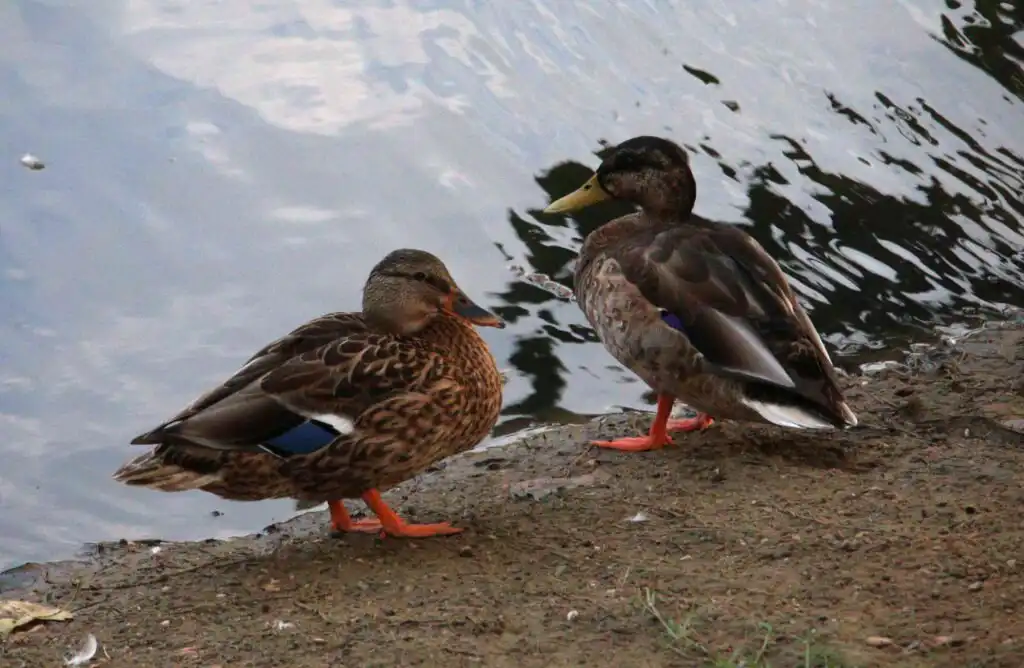
Avoid the Long Duck Chase
Ducks can be remarkably difficult to catch, even when they are injured. If the duck can still walk, run, or swim, repeatedly chasing it around a pond is rarely a good strategy.
Stress alone is a concern, but there is another practical problem: every failed capture attempt teaches the duck that you are trying to catch it. The next attempt may become considerably harder.
If the duck heads toward open water when you approach, stop. Do not keep pushing it farther from shore. A wildlife rehabilitator may recommend waiting until the bird returns to land or may use a different capture strategy.
Whenever possible, have your carrier, towel, and transportation plan ready before the first capture attempt.
What If the Duck Is Bleeding?
Active bleeding, a large open wound, exposed tissue, or severe trauma makes the situation more urgent. Contact a wildlife rehabilitator or veterinarian immediately.
If the duck can be safely contained, keep handling to an absolute minimum. Do not start cleaning deep wounds, probing injuries, removing embedded objects, or applying medications unless a wildlife professional specifically instructs you to do so.
Remember that what you can see may only be part of the injury. A tiny puncture from a predator can hide substantial damage beneath the feathers.
What If the Duck Flies Away?
If an injured duck flies away during your approach, do not automatically pursue it.
Make note of where it went and tell the wildlife rehabilitator what happened. If possible, observe from a distance to see where the duck settles.
The fact that a duck can fly is reassuring in some respects, but it does not prove that the bird is healthy. Ducks with foot injuries, fishing line entanglement, wounds, and some illnesses may still be capable of flight.
Duck Mom Tip: Before attempting a capture, ask yourself one simple question: “What am I going to do with this duck once I catch it?” Have a secure container and a destination lined up first whenever circumstances allow. Catching the duck is only the beginning of the rescue.
How to Safely Catch an Injured Wild Duck
If a wildlife rehabilitator recommends capturing the duck, or the bird is in immediate danger and cannot safely remain where it is, the goal is to make the capture quick, calm, and as low-stress as possible.
Before approaching, get everything ready. You do not want to successfully catch an injured duck and then realize your carrier is still in the garage.
1. Gather What You Need First
For a basic rescue, you do not need specialized wildlife equipment. A large towel or lightweight blanket, a secure ventilated cardboard box or pet carrier, and another towel for the bottom of the container are usually enough.
If possible, have a second person help. One person can guide the duck while the other handles the actual capture.
Wear gloves when appropriate, particularly if there is blood, fecal material, or concern about infectious disease. Wash your hands thoroughly afterward even if you wore gloves.
2. Approach Slowly and Calmly
Move deliberately rather than rushing toward the duck. Try to position yourself so that the bird does not have an easy escape route toward traffic, deep water, or another hazard.
Avoid surrounding the duck with a crowd of people. More helpers are not necessarily better. To an injured wild bird, five enthusiastic rescuers approaching from every direction can look a lot like five predators.
If the duck becomes increasingly distressed or starts heading toward open water, back off and reassess.
3. Use a Towel to Contain the Duck
When you are close enough, gently place or drop a towel over the duck’s body. Covering the bird can reduce visual stimulation and make it easier to safely control the wings.
Once the towel is over the duck, gently secure the wings against the body.
Be firm enough that the duck cannot violently flap, but never squeeze its chest or body tightly. Birds need movement of the chest and body wall for normal breathing, so excessive restraint can interfere with respiration.
4. Support the Duck’s Body
Lift the duck with its body supported and its wings contained against its sides. Keep handling brief and controlled.
Never pick up a duck by its wings, legs, neck, or head.
An injured leg or wing may already be fractured, and pulling or allowing the bird to struggle by an injured limb can make the damage considerably worse.
Also keep your face away from the duck’s head. Ducks generally are not trying to hurt you, but a frightened wild bird may bite, scratch, or strike while attempting to escape.
5. Place the Duck Directly Into the Prepared Container
Once you have control of the duck, place it directly into your prepared box or carrier rather than holding it longer than necessary.
A cardboard box can actually work very well for wildlife transport because it is dark, quiet, and visually enclosed. Make sure it has adequate ventilation and is securely closed so the duck cannot escape during transport.
Line the bottom with a towel or other nonslip material so the bird is not sliding around.
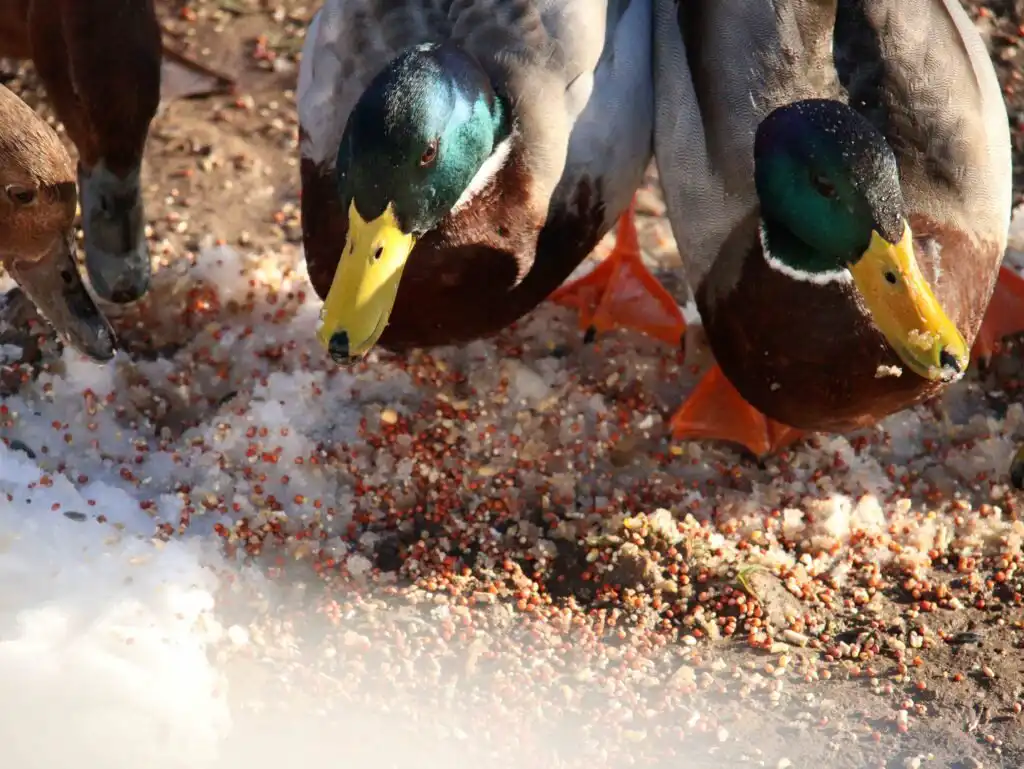
What Not to Do During a Duck Rescue
| Avoid | Why |
|---|---|
| Chasing the duck for a prolonged period | Causes stress and may drive the bird into water or another dangerous location |
| Chasing a duck into deep water | Makes capture much more difficult and may exhaust an injured bird |
| Grabbing a wing or leg | Can worsen fractures and soft tissue injuries |
| Holding the duck tightly around the chest | Excessive restraint can interfere with normal breathing |
| Carrying the duck around unnecessarily | Adds stress and increases the chance of escape or further injury |
| Letting children or pets approach | Creates additional stress and introduces another injury risk |
| Trying to straighten a crooked wing or leg | A suspected fracture should be evaluated by a professional |
| Removing deeply embedded hooks or objects | Removal can cause additional tissue damage or bleeding |
A Note About Sick Wild Ducks
An injured duck and a sick duck are not always the same rescue situation.
If the duck is showing neurological signs, severe respiratory symptoms, unusual discharge, profound weakness, or you find multiple sick or dead waterfowl in the same area, do not automatically handle the bird.
Waterfowl can carry infectious diseases, including avian influenza. Current recommendations can change as outbreaks occur, so contact your local wildlife authority, wildlife rehabilitator, or animal health agency before handling a suspiciously sick bird.
We will discuss what to do when you find multiple sick or dead ducks in more detail later in this guide.
Duck Mom Tip: Once the duck is safely contained, resist the temptation to keep checking on it. Opening the box every few minutes to see how it is doing may feel reassuring to us, but darkness and quiet are generally much less stressful for the bird. Get it contained, keep things calm, and focus on getting it to professional help.
How to Temporarily House and Transport an Injured Wild Duck
Once you have safely contained an injured wild duck, the best temporary setup is usually surprisingly simple. This is not the time to create a miniature duck habitat with a pool, food bowls, toys, and bedding. Your goal is short-term stabilization and safe transportation to professional care.
For most injured wild ducks, think dark, quiet, secure, and minimally handled.
Setting Up a Temporary Transport Box
A sturdy cardboard box is often an excellent option. A secure pet carrier can also work, particularly for a larger duck.
| What the Duck Needs | What to Provide |
|---|---|
| Secure containment | A sturdy cardboard box or appropriately sized pet carrier that closes securely |
| Ventilation | Several ventilation holes with adequate airflow |
| Nonslip footing | A clean towel, puppy pad, or similar material on the bottom |
| Low stimulation | Keep the container covered or visually enclosed and place it somewhere quiet |
| Comfortable temperature | Keep the duck protected from temperature extremes without overheating it |
| Minimal handling | Leave the duck alone unless a wildlife professional instructs you otherwise |
The container should be large enough for the duck to sit comfortably, but it does not need enough space to walk around. In fact, too much room can allow an injured bird to flap, struggle, and potentially worsen an injury during transport.
Keep the Duck Quiet and Dark
Wild ducks perceive humans as potential predators. Even when we are trying to help, being stared at, touched, talked to, and repeatedly checked can be extremely stressful.
Once the duck is contained, place the box somewhere quiet and away from children, pets, television, music, and household activity.
Avoid repeatedly opening the box to check on the bird. If you need to confirm that it is okay, do so as briefly and quietly as possible.
Should You Keep an Injured Duck Warm?
An injured bird should be protected from becoming chilled, particularly if it is wet, weak, or in shock. However, warm does not mean hot.
Keep the container in a comfortable, temperature-controlled environment and out of direct sunlight. Never leave an injured duck inside a parked car, even for a short period in warm weather.
If a rehabilitator recommends supplemental heat, follow their specific instructions. Do not place an injured duck directly against a heating pad or other hot surface where it cannot move away.
Transporting the Duck in Your Car
Place the box somewhere stable where it cannot slide, tip, or fall during braking or turns. Keep the car quiet and at a comfortable temperature.
The duck does not need to see out the window. A darkened box is usually much less stressful than an open carrier surrounded by unfamiliar movement.
Drive directly to the wildlife rehabilitator, wildlife hospital, or veterinarian who has agreed to receive the bird.
And as tempting as it may be, this is probably not the time for a duck rescue selfie. The less handling and stimulation the bird experiences, the better.
Keep Wild Ducks Away From Your Own Flock
If you already keep ducks, chickens, geese, or other birds, this part is especially important: do not bring the injured wild duck into your coop, duck house, run, or flock area.
Wild birds can carry pathogens and parasites even when they appear healthy. An injured or sick bird presents an even greater unknown.
Keep the rescued duck completely separate from your birds and their equipment. Do not share water bowls, feeders, towels, carriers, footwear, or cleaning supplies without appropriate cleaning and disinfection.
After handling the duck or its container, wash your hands thoroughly. Clean and disinfect reusable equipment before it goes anywhere near your own flock. Changing shoes and clothing before caring for your birds is another sensible precaution when there has been direct contact with sick or injured wildlife.
As a duck owner myself, I would be especially cautious here. Helping one duck should never inadvertently put your entire flock at risk.
What If You Have to Keep the Duck Overnight?
Sometimes wildlife emergencies happen after hours and immediate transfer simply is not possible. If a wildlife rehabilitator has instructed you to hold the duck temporarily, keep it securely contained in the same quiet, dark, temperature controlled environment.
Do not move it into a backyard enclosure or allow it to swim around your bathtub. Do not introduce it to your pet ducks for company.
Most importantly, follow the instructions provided by the rehabilitator regarding food, water, temperature, and any other overnight care. The needs of a weak duckling, an adult with a fractured wing, and a neurologically compromised duck can be very different.
Duck Mom Tip: More care is not always better during those first few hours. A quiet box may look terribly boring to us, but for a frightened and injured wild duck, reducing handling and stimulation can be one of the most helpful things you can do while arranging professional care.
Can You Legally Keep an Injured Wild Duck Overnight?
There is also a legal side to temporarily keeping an injured wild duck.
In the United States, most native ducks and other wild waterfowl are protected under the Migratory Bird Treaty Act (MBTA). In general, you cannot simply capture a wild duck, bring it home, and decide to care for it yourself.
However, federal regulations recognize that members of the public sometimes encounter injured migratory birds. A person who finds a sick, injured, or orphaned migratory bird may temporarily possess the bird for the purpose of immediately transporting it to a permitted wildlife rehabilitator. This is sometimes referred to as the Good Samaritan provision.
That does not give you permission to rehabilitate the duck yourself, keep it as a pet, or hold it indefinitely while you see whether it gets better.
If immediate transfer is impossible and you need to keep the duck temporarily, contact a licensed wildlife rehabilitator or wildlife authority as soon as possible and document whom you contacted and what instructions you received.
State laws may impose additional requirements, so federal protection is not the only consideration. This is another reason I recommend contacting your state wildlife agency, game warden, conservation officer, or licensed wildlife rehabilitator rather than assuming that wildlife laws are the same everywhere.
What About Outside the United States?
Wildlife protection laws vary considerably between countries, but the general principle is similar: native wild birds are often legally protected, and wildlife rehabilitation may require permits or authorization.
In the United Kingdom, for example, wild birds are protected under wildlife legislation, and there are restrictions on possessing wild birds and certain species. European countries have their own national wildlife laws in addition to protections arising from European conservation frameworks.
If you are outside the United States, contact your country’s wildlife authority, wildlife rehabilitation organization, animal welfare organization, or an experienced wildlife veterinarian for guidance.
| Situation | General Approach |
|---|---|
| Moving a duck out of immediate danger | Provide only the intervention necessary to protect the bird and seek professional guidance |
| Temporarily containing an injured duck for transport | May be permitted under applicable wildlife laws, but requirements vary by location |
| Keeping the duck overnight because no facility is open | Contact a wildlife professional and follow their instructions |
| Treating and rehabilitating the duck yourself | Usually requires appropriate wildlife rehabilitation authorization |
| Keeping a recovered wild duck as a pet | Generally not permitted for protected native wildlife |
| Domestic duck found at a public pond | Different laws and rescue considerations may apply because domestic ducks are not the same as protected native wildlife |
The safest rule is simple: rescue should be a bridge to professional care, not the beginning of keeping a wild duck at home.
The legal details can vary by species and location, so when in doubt, contact the appropriate wildlife authority before proceeding.
Duck Mom Note: Wanting to help an injured duck is exactly the right instinct. The goal is simply to make sure our help gives that bird the best chance of eventually returning to the wild. For a wild duck, that usually means getting it into the hands of a properly permitted rehabilitator as quickly as possible.
Should You Give an Injured Wild Duck Food or Water?
Once an injured duck is safely contained, one of the first instincts many of us have is to offer food and water. Ducks love water, after all, so surely that must help.
The answer is a little more nuanced.
If you are transporting an injured wild duck to a wildlife rehabilitator or veterinarian within a relatively short time, feeding is usually not the priority. However, if the duck will be waiting for a while and is alert and able to hold its head normally, you can offer a small, stable bowl of clean water and allow the duck to decide whether it wants to drink.
The important word here is offer. Never force an injured duck to drink.
Never Force Food or Water
An injured, severely weak, or neurologically impaired duck may not swallow normally. Trying to syringe water, pour liquid into the bill, or force the duck’s head into a water bowl can cause the liquid to enter the respiratory tract.
Place water within reach and leave the choice to the duck. The container should be stable and shallow enough that the duck cannot climb into it, tip it over, or become soaked.
If the duck is unable to hold its head upright, is severely weak, is having seizures or other neurological signs, or appears unable to swallow normally, do not offer an open water container without first speaking with a wildlife rehabilitator or veterinarian.
| What You May Be Tempted to Do | Better Approach |
|---|---|
| Offer a small bowl of clean water to an alert duck | Yes. Allow the duck to drink voluntarily |
| Syringe water into its mouth | No. Never force fluids |
| Dip or push the duck’s bill into water | No. Let the duck choose whether to drink |
| Give electrolyte solutions | Ask the rehabilitator first |
| Immediately offer food or treats | Wait for professional guidance |
| Give human pain medication | Never without veterinary direction |
| Give leftover antibiotics or other duck medications | Do not medicate without veterinary direction |
| Put the duck in a bathtub or pool | Keep the injured bird contained and dry unless instructed otherwise |
What About Food?
Unless you will be caring for the duck temporarily under the direction of a wildlife rehabilitator, there is usually no need to rush to feed it.
A few hours without food is generally less concerning than giving an injured bird inappropriate food or attempting to force feed it. If there will be a significant delay before transfer, ask the rehabilitator what, if anything, you should offer.
And please skip the bread. Even during a rescue, bread does not magically become good duck food.
Please Do Not Give Human Pain Medication
An injured duck may clearly be uncomfortable, and wanting to relieve that pain is completely understandable. But do not give aspirin, ibuprofen, acetaminophen, or other human medications on your own.
Medication selection and dosing in birds require veterinary knowledge. The wrong medication or dose can cause serious complications and may interfere with treatment once the bird reaches professional care.
The same applies to antibiotics, dewormers, supplements, and medications you may already have for your own ducks.
What About Wound Care?
If the duck has a visible wound, resist the urge to turn your kitchen counter into an emergency treatment room.
Do not probe deep wounds, attempt to straighten fractures, remove deeply embedded objects, or apply random ointments, powders, essential oils, or disinfectants.
If there is significant active bleeding, contact the rehabilitator or veterinarian and ask what they want you to do while arranging transport.
For most rescuers, minimal intervention and prompt access to qualified care is the safer approach.
And No Swimming Yet
Offering drinking water does not mean giving the duck somewhere to swim.
A weak, neurologically impaired, hypothermic, contaminated, or badly injured duck may be unable to swim safely, climb out of a container, regulate its body temperature, or maintain normal waterproofing.
Until a wildlife professional has assessed the duck, do not put it in a bathtub, kiddie pool, pond, or other swimming water simply because it is a duck.
Duck Mom Tip: Think drinking water, not swimming water. An alert injured duck can be offered a small bowl and allowed to drink voluntarily. What we never want to do is force water into a duck that may not be able to swallow safely.
Common Wild Duck Injuries and What to Do
Wild ducks can be injured by vehicles, predators, fishing equipment, collisions, territorial fights, and unfortunately, human activity. Some injuries are obvious. Others can be surprisingly difficult to see beneath all those feathers.
You do not need to determine exactly what is wrong before seeking help. In fact, trying to diagnose or treat an injury yourself can sometimes make matters worse. Instead, focus on what you can observe and communicate that information to the wildlife rehabilitator.
Here is a quick guide to some of the situations you may encounter:
| What You See | What It Could Mean | What You Should Do |
|---|---|---|
| Wing hanging lower than the other | Fracture, dislocation, soft tissue injury, or trauma | Contact a wildlife rehabilitator. Do not attempt to straighten or splint the wing yourself. |
| Limping or holding one foot up | Foot wound, fishing line injury, sprain, fracture, joint problem, or other trauma | Observe whether the duck can bear weight. Persistent or severe lameness warrants professional assessment. |
| Unable to stand or walk | Significant trauma, neurological disease, toxicity, severe weakness, or leg injury | Treat as urgent and contact a wildlife professional. |
| Bleeding or open wound | Predator attack, collision, fishing equipment, bite, or other trauma | Arrange professional care promptly. Ask for instructions if active bleeding is significant. |
| Small puncture wounds | Frequently associated with predator bites | Do not underestimate them. Punctures can hide deeper tissue damage and contamination. |
| Fishing line wrapped around a leg or wing | Entanglement injury that can progressively restrict circulation and cut into tissue | Rescue is needed. Do not assume the duck is fine because it can still walk or swim. |
| Fishhook embedded in the bill or body | Fishing related injury | Contact a rehabilitator. Do not forcefully pull out an embedded hook. |
| Drooping head, inability to hold the neck normally, or profound weakness | Trauma, toxicity, botulism, neurological disease, or severe systemic illness | Avoid unnecessary handling and contact a wildlife professional promptly. |
| Circling, tremors, loss of balance, or other neurological signs | Head trauma, toxicity, infectious disease, or another neurological problem | Contact wildlife authorities or a rehabilitator before handling when possible, particularly if multiple birds are affected. |
| Open bill breathing or obvious respiratory distress | Trauma, severe stress, respiratory disease, overheating, or other serious illness | Minimize handling and seek professional help urgently. |
| Duck struck by a vehicle | Fractures, head trauma, internal injuries, or shock | Professional assessment is needed even if external injuries appear minor. |
| Duck caught by a dog or cat | Bite wounds, punctures, crushing injuries, or internal trauma | Seek professional care promptly, even when the wounds look small. |
| Duck covered in oil or another unknown substance | Contamination that can damage waterproofing and may be toxic when preened | Do not immediately wash the duck. Contact a wildlife rehabilitation or wildlife response organization for instructions. |
Do Not Judge an Injury by the Amount of Blood
One of the challenges with ducks is that their feathers can hide quite a lot. A bird may have significant bruising, puncture wounds, fractures, or internal injuries without dramatic external bleeding.
The opposite can happen too. A relatively superficial injury may look frightening because blood spreads across feathers.
This is why I would never use “there isn’t much blood” as the deciding factor for whether a duck needs help.
Known Trauma Is Important
If you actually witnessed the event, tell the wildlife rehabilitator.
A duck that was hit by a car, grabbed by a dog, attacked by a cat, struck by fishing equipment, or involved in another significant traumatic event deserves professional assessment even if it manages to stand up afterward.
Birds are remarkably good at hiding weakness. Looking surprisingly normal immediately after an accident does not rule out a serious injury.
Some Problems Become Worse With Time
Entanglement is a particularly good example. Fishing line wrapped around a leg may initially cause little more than a limp. As swelling develops and the line tightens, however, it can compromise circulation and cut deeply into tissue.
Likewise, small predator punctures can introduce bacteria deep beneath the skin even when the surface wound looks insignificant.
When you see an obvious injury, earlier intervention generally gives the wildlife rehabilitator more options than waiting until the duck can no longer function normally.
Duck Mom Tip: Take clear photos before or after contacting the rehabilitator if you can do so without stressing the duck. A photo of a dangling wing, swollen foot, fishing line, or abnormal posture can communicate much more than trying to describe it over the phone.
What to Do If a Wild Duck Is Tangled in Fishing Line or Has a Fishhook
Fishing line and discarded tackle are serious hazards for ducks and other waterfowl. A strand of nearly invisible line can become wrapped around a foot, leg, wing, or bill. Hooks may become embedded in the skin or mouth, and in some cases, a duck may swallow the hook entirely.
What makes these injuries particularly deceptive is that the duck may continue walking, swimming, and even flying for some time.
Unfortunately, that does not mean the problem is minor.
Why Fishing Line Is So Dangerous
Fishing line does not stretch as tissue becomes swollen. Once wrapped tightly around a leg or foot, it can gradually cut into the skin and restrict circulation. The line may eventually become so deeply embedded that feathers or swollen tissue hide it almost completely.
Entangled birds may also become caught on branches, vegetation, fencing, or underwater debris and be unable to escape.
| What You Find | What to Do |
|---|---|
| Loose fishing line near the duck but not attached | Remove and dispose of the line safely if you can do so without disturbing wildlife |
| Line loosely wrapped around a duck with no visible injury | The line still needs to be completely removed. Contact a wildlife rehabilitator if you cannot safely capture the duck |
| Line tightly wrapped around a foot or leg | Professional assessment is recommended because circulation and underlying tissue may already be affected |
| Line cutting into swollen or damaged tissue | Do not simply pull it free. The duck needs professional care |
| Hook superficially caught in feathers only | Contact a wildlife professional if you are uncertain whether skin is involved |
| Hook embedded in the skin, foot, wing, or bill | Do not forcefully pull it out. Contact a rehabilitator |
| Fishing line disappearing into the mouth or a suspected swallowed hook | Do not pull on the line. Seek professional help promptly |
| Duck still attached to fishing tackle or other debris | Capture may be urgent before the bird becomes further entangled or escapes into open water |
Do Not Just Cut the Visible Fishing Line
If you see line hanging from a duck, cutting off the loose end may seem helpful. But never assume that removing the visible portion has solved the problem.
There may still be line wrapped around the leg, hidden beneath feathers, embedded in swollen tissue, or extending into the mouth.
If you can safely contain the duck, a wildlife rehabilitator can examine the entire bird and make sure all of the line has been removed.
What About an Embedded Fishhook?
Resist the temptation to simply grab the hook and pull.
Fishhooks are designed not to come back out easily. The barb can tear additional tissue during removal, and the hook may be deeper than it appears.
Hooks involving the eye, mouth, throat, joints, or other sensitive areas are particularly concerning.
If fishing line extends from the duck’s mouth, do not tug on it. A swallowed hook may be lodged in the mouth, esophagus, or farther into the gastrointestinal tract. Pulling the line could cause serious internal injury.
Contact a wildlife rehabilitator or veterinarian and follow their instructions.
If You Are Fishing When You Find the Duck
If a duck becomes accidentally hooked while you are fishing, do not cut the line and allow the bird to swim away with the hook still attached.
Keep control of the line without dragging or suspending the duck by it. Ask other people to keep the area calm, and contact a wildlife rehabilitator or appropriate wildlife authority for guidance if the hook cannot be safely addressed.
Never swing or lift a hooked duck using the fishing line.
Prevention Makes a Real Difference
Many fishing related wildlife injuries are preventable.
If you fish, always take discarded line, hooks, lures, and other tackle home with you or place them in an appropriate fishing line recycling container. If you see abandoned fishing line along a pond or shoreline and can safely retrieve it, pick it up.
Even a short piece of line can become wrapped around a duck’s leg.
Duck Mom Note: Fishing line can be incredibly difficult to see once it disappears beneath feathers. If you notice a wild duck repeatedly lifting one foot, limping, or having unexplained swelling around a leg or foot, take a closer look from a distance. Entanglement should always be on your list of possibilities around heavily fished ponds.
What If You Find Multiple Sick or Dead Wild Ducks?
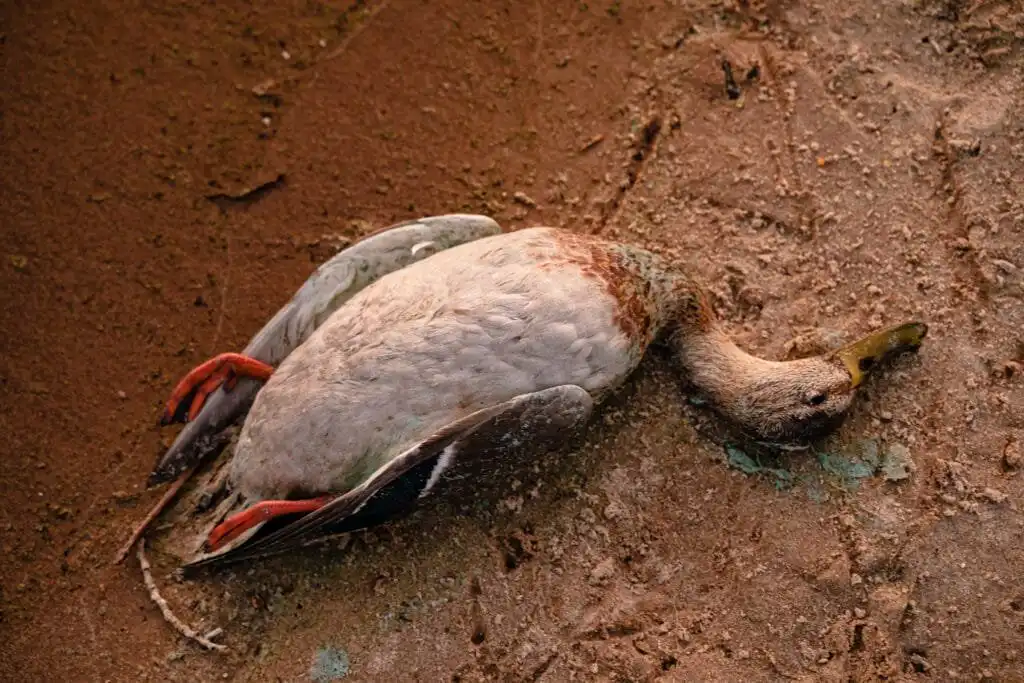
Finding one duck with a drooping wing or injured leg is one thing. Finding several ducks sick, behaving abnormally, or dead in the same area is different.
At that point, I would stop thinking primarily about individual rescue and start considering the possibility of an infectious disease, toxin, or environmental problem.
Avian influenza is one important concern. Wild waterfowl, including ducks, geese, and swans, are natural hosts for avian influenza A viruses, and infected birds do not always show obvious signs of illness. Highly pathogenic avian influenza, or HPAI, continues to be detected in wild birds in the United States.
Other causes of multiple sick or dead waterfowl are possible too, which is exactly why unusual mortality events should be reported rather than diagnosed by someone standing beside the pond.
When Should You Be Concerned?
| What You Observe | What to Do |
|---|---|
| One duck with an obvious traumatic injury | Contact a wildlife rehabilitator as described earlier |
| Several ducks suddenly sick in the same area | Do not handle them. Report the situation to the appropriate wildlife authority |
| Multiple dead ducks around the same pond or lake | Report the deaths rather than collecting the birds yourself |
| Duck with tremors, seizures, circling, severe incoordination, or unusual head and neck position | Keep your distance and contact wildlife authorities or a rehabilitator for guidance |
| Duck with severe respiratory signs or discharge combined with profound illness | Avoid direct contact and seek professional guidance |
| Sick or dead wild ducks near your own poultry or pet ducks | Keep your flock completely separated and strengthen biosecurity immediately |
Do Not Start Picking Up Sick or Dead Birds
As difficult as it can be to walk away from a struggling duck, do not handle multiple sick or dead wild birds unless a wildlife or public health authority specifically instructs you to do so.
The CDC currently recommends avoiding direct contact with sick or dead wild birds whenever possible and observing them from a distance. If contact with potentially infected birds is unavoidable, appropriate personal protective equipment is recommended.
Keep children, dogs, cats, and other animals away as well.
Report Unusual Wild Bird Illness or Deaths
In the United States, contact your state wildlife agency, state veterinarian, or appropriate wildlife disease authority. The CDC also directs people to report unusual animal illnesses or deaths through state authorities or the USDA.
USDA APHIS Avian Influenza Information
For readers outside the United States, contact your country’s wildlife authority, veterinary authority, wildlife disease surveillance program, or public health agency. Reporting procedures vary by country, particularly during active avian influenza outbreaks.
Because recommendations and outbreaks change over time, I recommend checking your government’s current guidance rather than relying on an old social media post or rescue discussion.
If You Keep Ducks or Chickens Yourself, Be Extra Careful
This part is particularly important to me as a pet duck owner.
If I encountered several sick or dead wild ducks, I would treat the area as a potential biosecurity risk to my own flock. I would not walk through the affected area and then head straight into my duck run wearing the same shoes.
Wild birds can carry avian influenza viruses without appearing sick, and contaminated environments can also present an exposure risk.
If you keep poultry or pet waterfowl, keep your birds away from the affected area and prevent them from sharing ponds, water sources, feeders, or other spaces with sick wild birds. Be mindful of shoes, clothing, carriers, equipment, and anything else that could potentially carry contaminated material back to your flock.
Dogs and cats should also be kept away from sick or dead wildlife. Avian influenza viruses can infect mammals, including pets, although this is much less common than infection in birds.
What If You Already Touched the Duck?
Do not panic. The CDC currently considers the overall H5 bird flu risk to the general U.S. public to be low, but people with close or prolonged unprotected exposure to infected animals have greater risk.
Wash your hands thoroughly with soap and water, avoid touching your eyes, nose, and mouth, and clean potentially contaminated clothing or equipment appropriately.
If you had significant unprotected exposure to birds suspected or confirmed to have H5 avian influenza and subsequently become ill, contact a healthcare provider or your public health department and tell them about the bird exposure. CDC guidance specifically considers recent animal exposure when determining who may need testing.
Duck Mom Note: One of the hardest parts of helping animals is recognizing when not touching them is actually the safer and more responsible choice. If several wild ducks are suddenly sick or dead, step away, keep pets and your own flock away, and report what you are seeing. Wildlife disease surveillance depends in part on people noticing and reporting these unusual events.
What Happens at a Wildlife Rehabilitator?
Handing an injured duck over to a wildlife rehabilitator can feel surprisingly emotional. You found the bird, worried about it, figured out how to catch it, and drove it somewhere safe. Then suddenly you have to leave without knowing exactly what happens next.
The reassuring part is that this is where your job as the rescuer ends and specialized wildlife care begins.
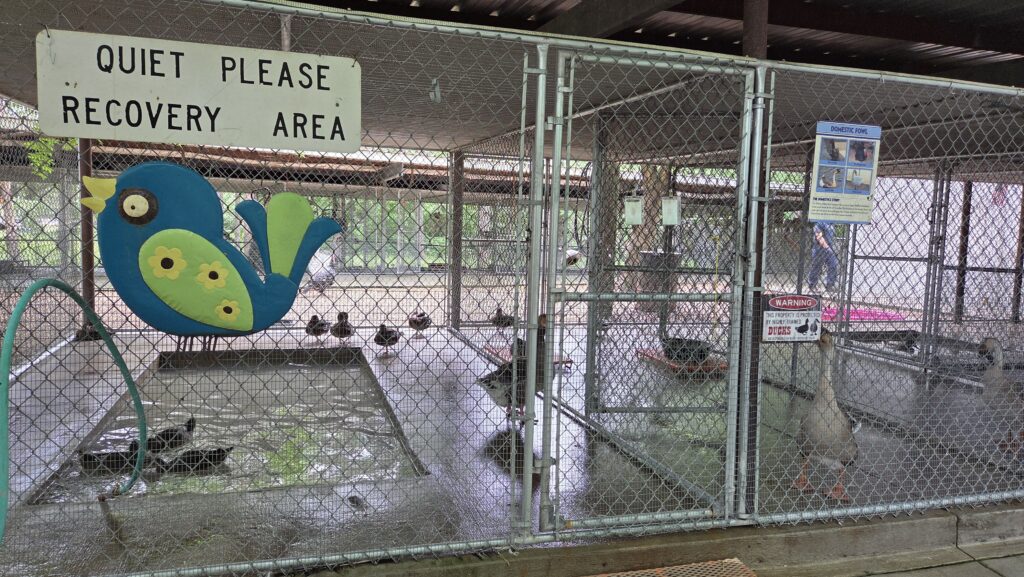
A licensed wildlife rehabilitator will assess the duck’s condition and determine what it needs. Depending on the facility and severity of the injury, veterinary care may also be involved.
From Intake to Release
| Stage | What May Happen |
|---|---|
| Initial assessment | The duck is evaluated for wounds, fractures, neurological abnormalities, dehydration, body condition, respiratory problems, and other signs of illness or trauma. |
| Stabilization | Immediate concerns such as shock, dehydration, pain, bleeding, or temperature abnormalities are addressed. |
| Diagnostics | When necessary, veterinary evaluation may include radiographs, blood work, fecal testing, or other diagnostic procedures. |
| Treatment | Depending on the injury, treatment may include wound care, medications, fracture management, nutritional support, or surgery. |
| Recovery | The duck is housed in an environment appropriate for its condition while wounds heal and strength returns. |
| Rehabilitation | As the bird improves, rehabilitators assess normal movement, swimming, waterproofing, feeding behavior, and flight ability when appropriate. |
| Release assessment | Before release, the duck must be able to function independently and have a reasonable chance of surviving in the wild. |
| Return to the wild | Whenever possible, successfully rehabilitated wild ducks are released into suitable habitat, often near the area where they were originally found when appropriate. |
Rehabilitation Is About More Than Healing the Injury
For a pet duck, recovery happens in an environment where being comfortable around humans is perfectly fine. For a wild duck, that is not the goal.
Wildlife rehabilitators try to minimize human habituation so the bird retains the behaviors it needs to survive independently. A rehabilitated duck must be able to find food, respond appropriately to threats, interact normally with other waterfowl, maintain its feathers and waterproofing, and move well enough to survive without human assistance.
For many species, successful release may also depend on adequate flight ability.
This is one reason raising or rehabilitating a wild duck at home, even with the very best intentions, is not equivalent to professional wildlife rehabilitation.
Will the Rehabilitator Give You Updates?
Maybe, but do not be disappointed if they cannot.
Many wildlife rehabilitators care for a tremendous number of animals with limited staff and funding. Providing individual updates to every person who brings in an animal may simply not be possible.
Ask at intake whether the facility provides updates and whether your duck will receive a case or identification number. Some organizations are happy to provide follow up information, while others may only contact you if they need additional details.
Will the Duck Be Released Where You Found It?
When medically appropriate and consistent with the species’ needs, rehabilitators generally aim to return wildlife to suitable habitat. The exact release location depends on several factors, including the species, time of year, original location, habitat quality, and circumstances surrounding the injury.
If you know exactly where you found the duck, provide that information at intake. A precise location is much more useful than simply saying, “at a pond somewhere near town.“
What If the Duck Cannot Be Released?
Unfortunately, not every injured wild duck can be saved or returned to the wild.
Some injuries are simply too severe. In other cases, a bird may survive but be left with permanent impairment that prevents it from feeding, escaping predators, flying when necessary, or otherwise living independently.
Wildlife professionals consider both survival and quality of life when making these decisions. Depending on the bird’s condition, species, applicable laws, and available placement options, a non-releasable animal may require humane euthanasia.
That can be difficult to hear after you worked so hard to rescue a duck. But successful wildlife rehabilitation is not simply about keeping an animal alive at any cost. The goal is to give that animal the opportunity to return to a functional life in the wild without prolonged suffering.
Duck Mom Note: If you bring an injured wild duck to a rehabilitator, you have already done something important regardless of the eventual outcome. You gave that bird access to assessment, pain management, treatment, and, when possible, a second chance at returning to the wild.
Frequently Asked Questions About Injured Wild Ducks
Who do I call if I find an injured wild duck?
Your best first call is usually a licensed wildlife rehabilitator who accepts waterfowl. In the United States, Animal Help Now can help you locate wildlife rehabilitators near you. You can also contact your state wildlife agency, game warden or conservation officer, wildlife hospital, or local animal control agency for guidance. Outside the United States, contact your local wildlife rehabilitation organization, wildlife authority, animal welfare organization, or a veterinarian experienced with wild birds.
Can I take an injured wild duck home?
You may be able to temporarily contain an injured wild duck while arranging transport to professional care, but that is different from keeping and rehabilitating the bird yourself. In the United States, most native ducks are protected under the Migratory Bird Treaty Act, and wildlife rehabilitation requires appropriate authorization. Laws differ internationally, so contact your local wildlife authority or rehabilitator for guidance.
Should I give an injured wild duck food and water?
Do not force food or water. If an adult duck is alert, able to hold its head normally, and waiting for transport, you can offer a small, stable bowl of clean water and allow it to drink voluntarily. Never syringe water into the mouth or push the duck’s bill into water. Food is usually not an immediate priority during a short wait for professional care. Ask the wildlife rehabilitator what they recommend if transfer will be delayed.
What should I put an injured wild duck in?
A secure, ventilated cardboard box lined with a clean towel makes a good temporary transport container for many injured ducks. Keep the box somewhere quiet, dark, and at a comfortable temperature. Avoid unnecessary handling and keep children and pets away. Do not put the duck in a bathtub, swimming pool, or your pet duck enclosure while it waits for transport.
What should I do if an injured wild duck cannot fly?
Not every duck that cannot fly is injured. Adult waterfowl can become temporarily flightless while molting, and young ducks may not yet be able to fly. Look for additional signs such as a drooping wing, swelling, bleeding, difficulty walking, weakness, or abnormal behavior. If you are unsure, take a photo or short video from a respectful distance and ask a wildlife rehabilitator for guidance rather than immediately attempting capture.
What should I do if I find a wild duck with a broken wing or leg?
Do not try to straighten, splint, or reposition the injured limb yourself. Keep the duck as calm and still as possible and contact a licensed wildlife rehabilitator or veterinarian who accepts wildlife. If you are instructed to capture the bird, contain it carefully in a small, secure transport box where it cannot flap or move excessively. A professional assessment is important because what looks like a simple broken wing or leg may involve additional tissue or internal injuries.
You Found an Injured Wild Duck: Your Next Step
Finding an injured wild duck can leave you feeling helpless, especially when you are standing there wondering whether you should intervene or leave the bird alone. The good news is that you do not need to know how to diagnose or treat a duck to make a meaningful difference.
Start by observing the bird and making sure it truly needs help. If it is injured but safe where it is, contact a licensed wildlife rehabilitator before attempting capture. If the duck is in immediate danger, move quickly but safely, minimize handling, and arrange professional care as soon as possible.
If you do need to temporarily contain the duck, remember the basics: quiet, dark, secure, and comfortable. Offer drinking water only when appropriate and never force food, water, or medication. Most importantly, resist the urge to do too much. With an injured wild bird, getting it safely into experienced hands is often the best care you can provide.
And if the duck you found turns out to be a domestic duck living at a public pond, please do not assume it belongs there. Domestic ducks are frequently abandoned, and they need a different kind of rescue. My guide on duck dumping and abandoned domestic ducks can help you decide what to do next.
As someone who loves ducks, I know how difficult it is to walk past a bird that appears to be struggling. Sometimes helping means picking up a towel and a transport box. Sometimes it means making a phone call and waiting nearby. And sometimes the most responsible thing we can do is keep our distance and let trained wildlife professionals take over.
Your next step: Find a licensed wildlife rehabilitator or wildlife rescue resource in your area and save their contact information in your phone. Hopefully you will never need it. But when a duck emergency happens, knowing exactly who to call can make all the difference.
Further Reading & Resources
- Rogers Wildlife Rehabilitation Center: A Place Where Second Chances Take Flight
- Duck Dumping: Understanding the Problem and How You Can Help
- Botulism in Ducks: Causes, Symptoms, Treatment, and Prevention
- Understanding Avian Influenza (Bird Flu)
- Mallard Ducks: From Wild Ancestors to Backyard Companions
- Wood Ducks: North America’s Tree-Nesting, Wild Beautys
Connect deeper with your flock. Discover more about duck psychology and social dynamics in the Community & Behavior Hub.