
What I Wish I Knew Before Getting Ducks: 12 Things Every New Duck Owner Should Know

Last updated: September 30th, 2026
To keep our research-backed guides free, this site uses ads and affiliate links (earning a small commission at no cost to you). Everything here is created by a duck mom and PhD scientist, combining academic rigor with hands-on experience to provide practical, trustworthy advice for duck keepers everywhere. 🦆 Learn more
If you are thinking about getting ducks, you have probably already pictured the best parts: happy quacks in the backyard, ducks splashing in a little pool, fresh eggs, and a flock waddling excitedly toward you when you step outside. And yes, living with ducks can absolutely be that wonderful.
But there are also a few things I really wish I knew before getting ducks.
I knew ducks needed food, water, shelter, and companionship. What I did not fully understand was just how much water they would use, how quickly they could turn a perfectly dry area into mud, how difficult it could be to find a veterinarian who actually treats ducks, or how much thought would eventually go into predator protection, nutrition, reproductive health, flock dynamics, and even vacation planning.
Most importantly, I did not realize how different owning ducks is from simply keeping ducks alive.
After years of caring for my own flock, including routine daily care, medical emergencies, extreme North Texas summers, winter weather, hormonal drake drama, and more muddy laundry than I care to count, I have learned that ducks are relatively straightforward animals in some ways and surprisingly complex in others.
That does not mean I regret getting them. Quite the opposite. Knowing what I know now, I would still choose ducks. I would simply prepare differently.
So, if you are wondering what to know before getting ducks, this is the guide I wish I had when I started. These are the practical lessons that surprised me most, the mistakes I would avoid today, and the things I believe every future duck owner should understand before bringing those adorable webbed feet home.
Part of the Beginner’s Handbook, Essential foundational data for new duck parents.
Quick Navigation: Jump to a Section
[hide]
- 1. Ducks Are Much Messier Than You Think
- 2. Ducks Need More Water Than a Chicken Waterer Can Provide
- 3. Ducks Should Not Live Alone
- 4. Duck Housing Is More Complicated Than Buying a Cute Coop
- 5. Predator Protection Has to Be Taken Seriously From Day One
- 6. Finding a Duck Veterinarian Can Be Surprisingly Difficult
- 7. Ducks Hide Illness Really Well
- 9. Female Ducks Can Have Serious Reproductive Problems
- 10. Drakes Can Completely Change Your Flock
- 11. Ducks Will Change Your Yard
- 12. Ducks Require More Time and Commitment Than Most People Expect
- Would I Still Get Ducks?
- Frequently Asked Questions About Getting Ducks
- If I Could Start Over With Ducks
- Further Reading & Resources
1. Ducks Are Much Messier Than You Think
You have probably heard that ducks are messy. I certainly had.
What I did not understand before getting ducks was the sheer scale and creativity of that mess.
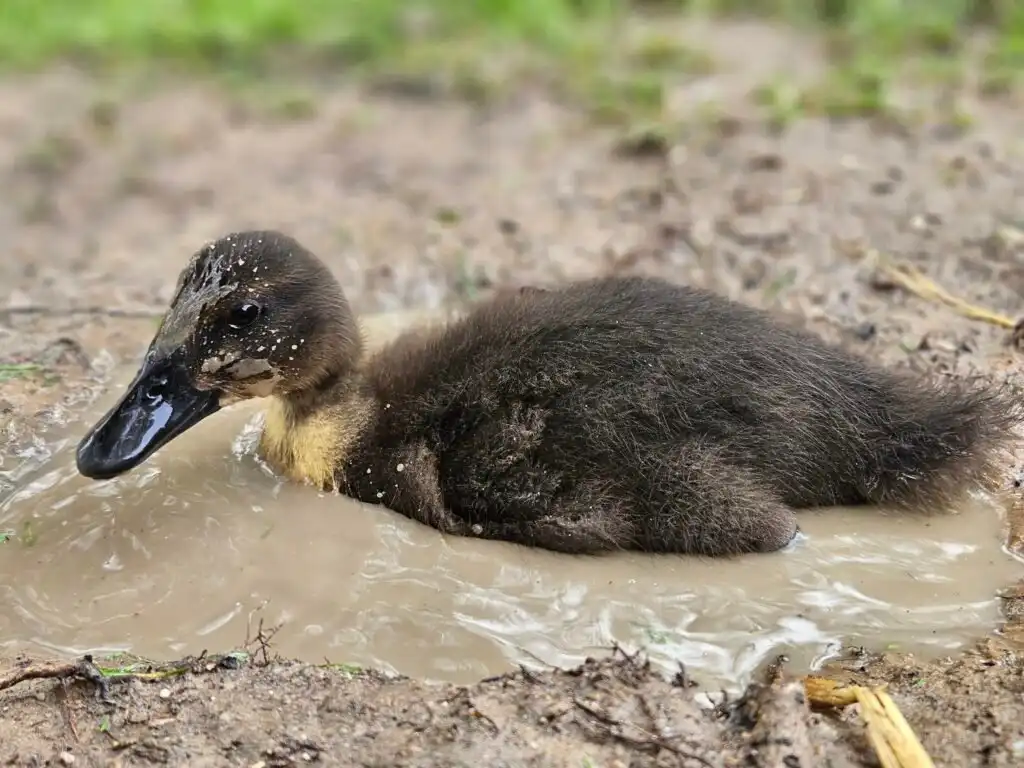
Ducks do not simply spill a little water next to their bowl. They splash it, dabble in it, carry food into it, rinse their bills in it, bathe in it, and then walk through whatever puddle they just created. Give a duck clean water and a dry patch of ground, and somehow you will soon have mud.
There is actually a biological reason for much of this behavior. Ducks are waterfowl. They use water for far more than drinking. They regularly immerse and rinse their bills, clean their nostrils and eyes, preen their feathers, and bathe. Dabbling and probing wet soil with the bill are also completely normal foraging behaviors.
In other words, you cannot train the mess out of a duck without also restricting normal duck behavior.
Ducks Also Poop. A Lot.
This is another reality that deserves more than a passing mention.
Ducks have a relatively rapid digestive system and defecate frequently throughout the day and night. Unlike a dog, they cannot simply wait until you let them outside in the morning. And unlike chickens, their droppings are often quite wet.
Combine frequent droppings with spilled water, wet feet, damp bedding, and leftover food, and a poorly designed duck area can become unpleasant very quickly.
That is not just a cleanliness issue.
Persistently wet bedding and poor ventilation can contribute to high humidity, ammonia accumulation, bacterial growth, flies, foot problems, and poor overall environmental hygiene. Keeping ducks successfully therefore involves much more than periodically scooping poop. You have to manage water and moisture.
Water Management Became One of My Biggest Duck Keeping Lessons
If I could redesign my original duck setup knowing what I know today, I would think about drainage before almost anything else.
Where will spilled water go?
What happens after several days of rain?
Can you easily dump and refill water containers?
Can wet areas dry?
Can you remove soiled bedding without turning the entire duck house upside down?
These questions may not be nearly as exciting as choosing a cute duck house or picking names for your new flock, but they will have a much bigger impact on your daily life.
Our own setup has evolved tremendously because of this. I have learned to think about drainage, washable surfaces, bedding, water placement, and cleaning access as part of the enclosure design, rather than trying to manage the mess after it happens.
🦆 Duck Mom Tip: Plan for the Mess, Don’t Fight It
One of the best pieces of advice I can give a new duck owner is this: design your setup around the fact that ducks are going to make a mess.
Put water where splashing will not create a disaster. Choose surfaces that can drain and be cleaned. Make water containers easy to dump and refill. Keep particularly wet areas away from sleeping spaces whenever possible.
Your goal is not to keep a duck enclosure perfectly dry and spotless. With ducks, that would be a full-time job and possibly a minor miracle.
The goal is to create an environment where normal duck mess is easy to manage and does not become a health problem.
Once I stopped asking, “How do I keep my ducks from making such a mess?” and started asking, “How can I make this mess easier to manage?” duck keeping became a whole lot easier.
2. Ducks Need More Water Than a Chicken Waterer Can Provide
Before getting ducks, I knew they loved water. What I did not fully appreciate was that water is not just entertainment for ducks. It is an essential part of their normal daily care and behavior.
A small chicken waterer may technically give a duck something to drink, but drinking is only one reason ducks need access to water.
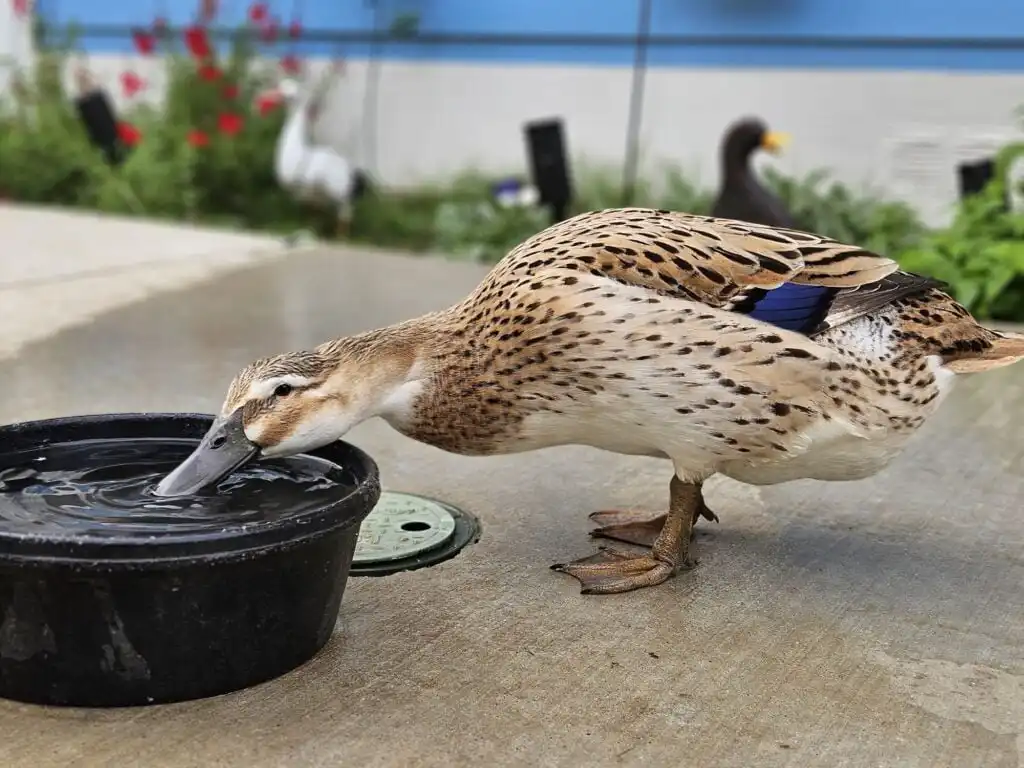
At minimum, ducks need clean water deep enough to completely submerge their bills and ideally their entire heads. They use water to rinse food and debris from their bills, flush their nostrils, clean around their eyes, and maintain normal preening and grooming behaviors.
If you have ever watched a duck enthusiastically plunge her entire head into a bucket and come back up looking extremely pleased with herself, you are watching basic duck maintenance in action.
Drinking Water and Swimming Water Are Not the Same Thing
This is an important distinction for new duck owners.
Ducks do not need a pond to survive, and you certainly do not need to build a backyard lake before bringing ducks home. But they do need appropriate drinking and head-dunking water available consistently.
Swimming and bathing water provides additional opportunities for natural behaviors, including bathing, preening, splashing, and simply being a duck. A kiddie pool, stock tank, or other appropriately designed bathing area can provide this without requiring a permanent pond.
The important part is understanding that a tiny poultry waterer is not an adequate substitute for water that allows proper head immersion.
They Will Make Their Clean Water Dirty Almost Immediately
This was another lesson I learned quickly.
You can scrub a water container, fill it with beautiful crystal-clear water, step away for approximately three minutes, and return to something resembling soup.
That is normal.
Ducks bring dirt, feed, vegetation, and whatever else happens to be attached to their bills directly into their water. They may also stand in containers that allow it, splash surrounding debris back into them, or decide that the freshly cleaned drinking bucket is obviously the perfect place for a bath.
Because of this, duck water needs to be checked, refreshed, and cleaned frequently.
It also brings us right back to the first lesson: water management and drainage need to be part of your enclosure design from the beginning.
Ducks Need Water When They Eat
Ducks should also have access to drinking water whenever food is available.
They use water while eating to help manipulate and swallow food and to clear material from their bills. I would never intentionally provide my ducks with dry feed without also making water available.
This is particularly important when planning nighttime housing. In our flock, food and water remain available overnight. After watching our ducks on cameras, I have seen them wake up during the night to drink, eat, and groom themselves. Their day does not simply switch off when I close the duck house door.
If you are interested in why we made that choice, I go into the reasoning in much more detail in our Do Ducks Need Water All Night? guide.
🦆 Duck Mom Tip: Bigger Is Not Always Better
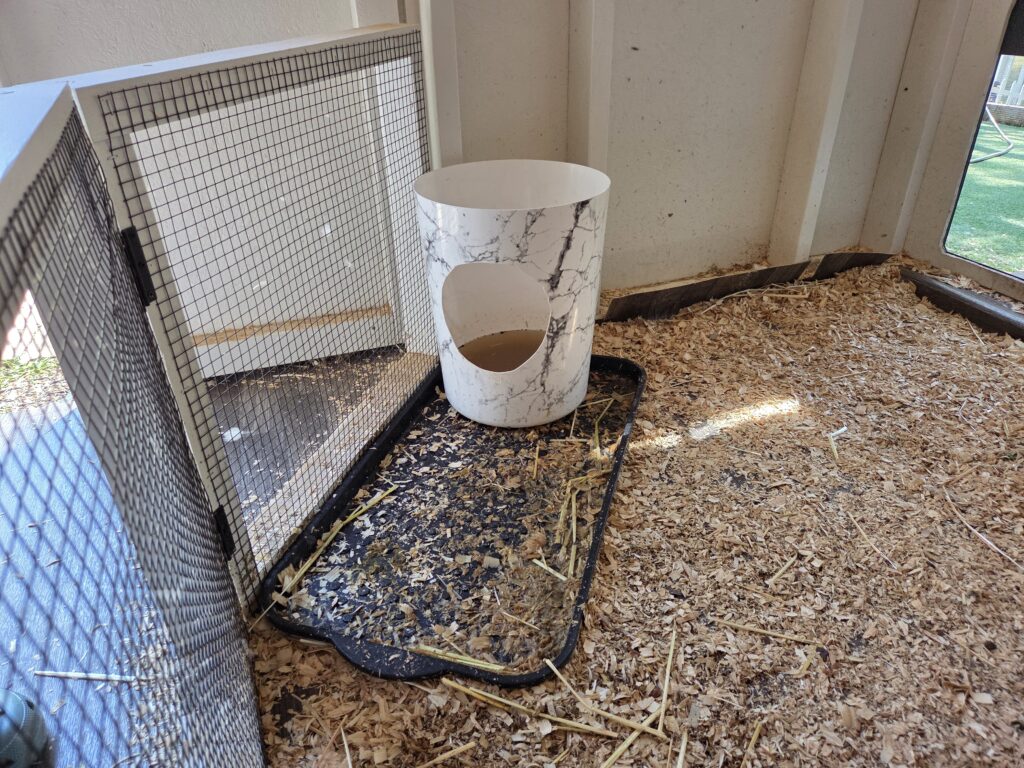
When choosing drinking containers, I care less about whether something is marketed specifically for poultry and more about whether it actually works for a duck.
I want a container that is deep enough for full bill and head dunking, stable enough that it will not easily tip, easy to scrub, and practical to refill every day.
And remember that every gallon of water you put into your duck enclosure has the potential to end up on the ground.
Choose your water station accordingly.
Providing appropriate water is one of the biggest differences between keeping ducks and keeping many other backyard birds. Once you understand that ducks do not simply drink water but actively use it to maintain themselves, many of their seemingly ridiculous water habits suddenly make perfect sense.
3. Ducks Should Not Live Alone
This is one of the most important things I wish every future duck owner understood before bringing home that first adorable duckling: ducks are flock animals, and they should not be kept alone.
A duck can become incredibly attached to a person. Some will follow us around the yard, call when they see us, sit beside us, ask for treats, and develop surprisingly strong individual relationships with their humans. I know firsthand just how deep that bond can become.
But we are still not ducks.
We cannot spend 24 hours a day with them. We do not sleep beside them in the duck house, forage with them, preen alongside them, or communicate through the subtle vocalizations and body language another duck understands instinctively.
Human companionship can be an important and wonderful part of a pet duck’s life, but it should add to duck companionship rather than replace it.
Start With More Than One Duck
If you are planning to get ducks, I strongly recommend starting with at least two compatible ducks rather than getting one duck now and assuming you can add another later.
In many situations, I actually prefer three.
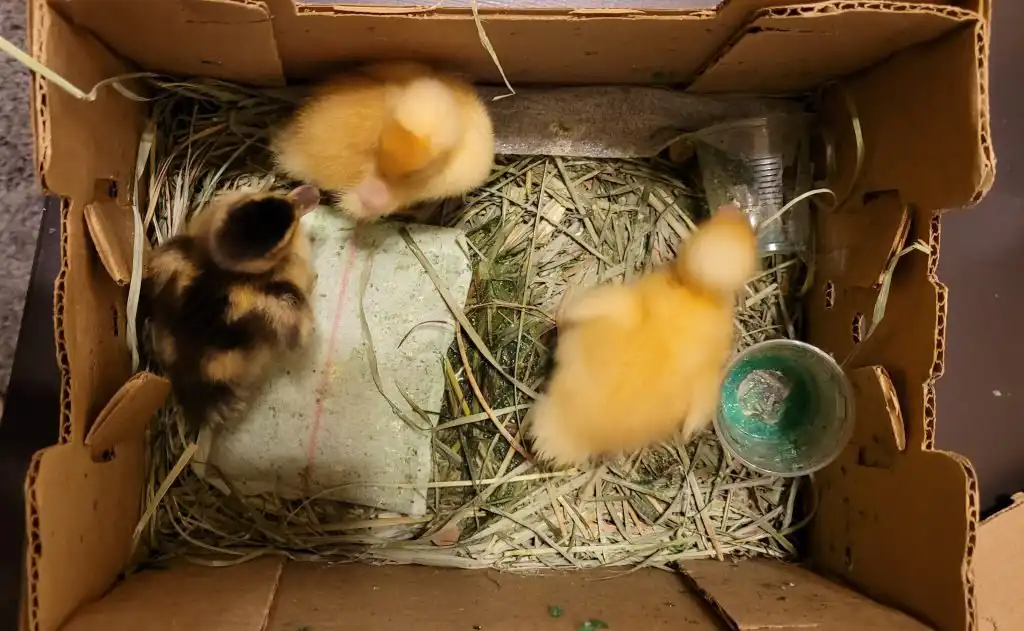
With only two ducks, the entire social relationship depends on that pair. If one becomes sick, needs to be hospitalized, has to be temporarily separated, or dies, the remaining duck is suddenly alone. A flock of three provides a little more social flexibility.
Of course, adding more ducks also means more space, more food, more water, more poop, and higher veterinary costs, so this does not mean that everyone should simply keep expanding their flock. Choose a flock size you can responsibly care for.
Flock Dynamics Are More Complicated Than I Expected
One thing that surprised me after years of living with ducks is just how individual their relationships can be.
Ducks have preferences.
They form close friendships. They choose favorite companions. Some tolerate each other without being particularly close. Others squabble. Personalities can clash. Relationships can also change with age, hormones, breeding season, illness, or the introduction of a new flock member.
Our own flock is a perfect example.
Some of our ducks are practically inseparable, while others require much more careful management. Simon and Ronja are best buddies. Emma and Schnatterinchen have a close relationship. Muffin and Simon, on the other hand, are definitely not exchanging friendship bracelets anytime soon.
We sometimes rotate parts of our flock between different areas because keeping everyone safe and comfortable matters more than forcing six ducks to coexist peacefully simply because they are all ducks.
That was something I never expected when I started.
A Human Bond Does Not Replace a Flock
This is particularly important when people see highly bonded pet ducks online.
A duck following her person around the house can be incredibly sweet, but we need to be careful not to interpret human attachment as evidence that the duck does not need other ducks.
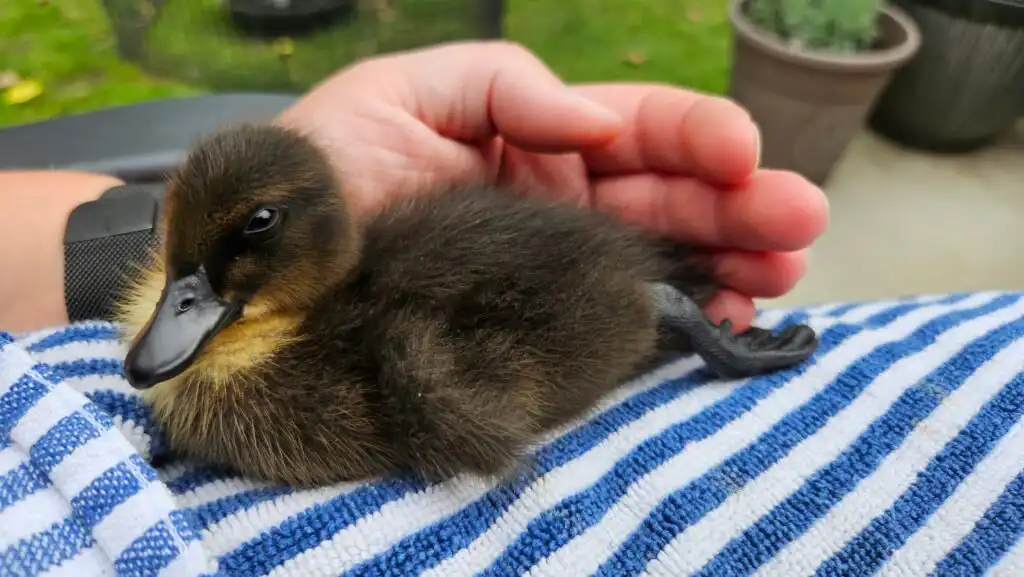
Krümel and I have an exceptionally close relationship. She spends part of her life inside our home, seeks me out, and has become deeply integrated into my daily routine. But Krümel also spends her days outside with the flock. She gets to forage, socialize, bathe, communicate, and simply exist around other ducks.
I want her to have both.
When we choose to keep a social animal as a pet, part of responsible ownership is recognizing that our love for that animal does not automatically fulfill every behavioral need she has.
🦆 Duck Mom Tip: Plan for the Flock You Can Maintain
Before getting ducks, do not just ask yourself whether you have room for a duck.
Ask whether you have the resources for a small flock.
That means considering housing space, run size, feed costs, water management, veterinary expenses, vacation care, and the possibility that individual ducks may occasionally need to be separated.
And if you already have a single duck, do not panic. There are situations where temporary solitary housing is necessary, especially during illness, quarantine, or recovery. The goal is simply to provide appropriate duck companionship whenever it is safe and practical to do so.
If you want to explore this topic in more detail, including what loneliness can look like and what to do if you currently have only one duck, I have a complete guide on Do Ducks Get Lonely?
Ducks may become our pets, but to each other, they are something we can never quite be: a flock.
4. Duck Housing Is More Complicated Than Buying a Cute Coop
When I first started thinking about duck housing, it seemed fairly straightforward. Buy a coop, add some bedding, make sure the ducks are protected at night, and you are done.
I quickly learned that a cute chicken coop is not automatically a good duck house.
Ducks have different needs than chickens, especially when it comes to floor space, ventilation, moisture, accessibility, and nighttime routines. A setup that looks adorable in a product photo may become frustrating very quickly once you add several wet, muddy ducks to it.
Ducks Need Floor Space, Not Roosting Space
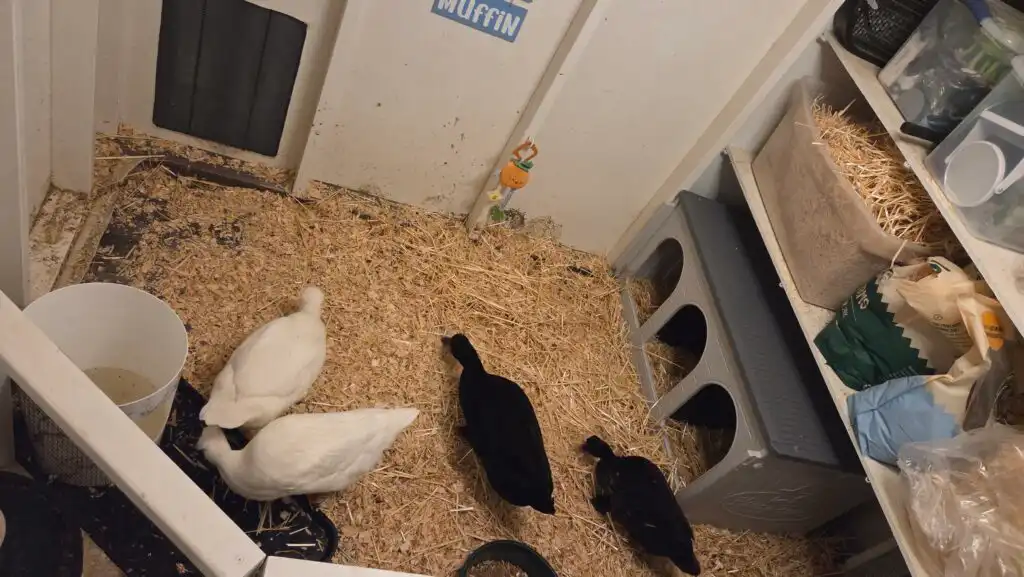
Unlike chickens, ducks generally sleep on the ground. They do not need traditional roosting bars, and vertical space does not compensate for inadequate floor space.
When evaluating a duck house, I pay much more attention to usable floor area, ventilation, ease of cleaning, and how comfortably every duck can move around.
The entrance matters too. Ducks are not particularly graceful climbers. Steep ramps and tiny elevated doors that work perfectly well for chickens can be awkward for ducks, particularly heavier breeds, older ducks, or birds with mobility problems.
Low entrances and gently sloped, nonslip ramps are much more duck-friendly.
Ventilation Is Essential
Ducks introduce a tremendous amount of moisture into their environment through wet feathers, droppings, and water use. In an enclosed house, that moisture can accumulate surprisingly quickly.
Good ventilation helps remove humidity, ammonia, and stale air while keeping the sleeping area healthier.
But ventilation does not mean creating a draft directly across sleeping ducks.
Ideally, a duck house should provide plenty of air exchange, particularly higher in the structure, while still giving the flock a protected place to rest.
This becomes especially important during winter, when our instinct may be to seal every little opening to keep ducks warm. In many situations, excessive moisture and poor air quality are a bigger concern than cold temperatures themselves.
Make It Easy to Clean
This sounds obvious until you have to clean the enclosure every single day.
Can you stand inside it?
Can you reach every corner?
Can you remove wet bedding easily?
Can you carry a bucket through the door?
Can you hose or wipe down appropriate surfaces?
These practical details matter enormously.
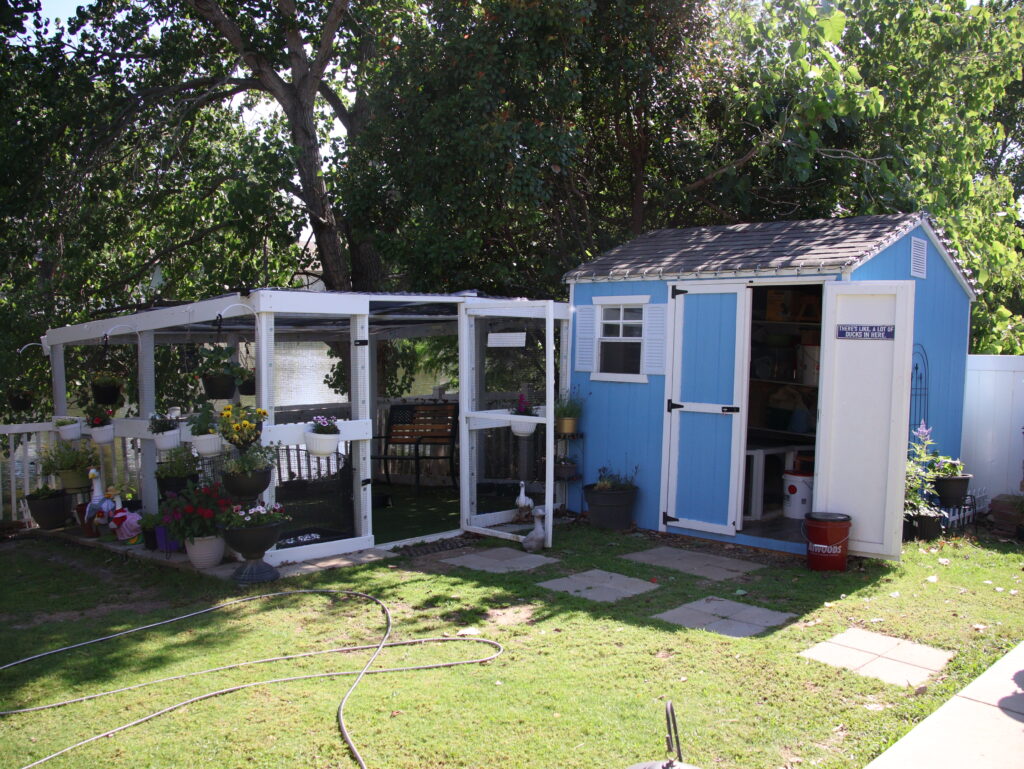
Our current duck shed is 8 × 8 feet, although only part of that space is used as the primary sleeping area for the outdoor flock. Having a structure large enough for me to comfortably enter and clean has made daily care much easier than trying to reach through a tiny coop door.
When you are choosing housing, do not just imagine your ducks inside it.
Imagine yourself cleaning it in the rain at 8:30 at night.
Suddenly, that tiny decorative door looks a little less charming.
Your Duck House Is Only Part of the Setup
The nighttime shelter also needs to connect to a safe daytime environment.
For our six ducks, we use a 12 × 12 foot covered run, in addition to their other supervised outdoor spaces. Over the years, we have modified the ground, drainage, shade, water stations, and different sections of the enclosure as we learned what worked for our flock.
That is another thing I wish I knew before getting ducks: your setup will probably evolve.
You may discover that one area stays too wet. You may need more shade. A drainage solution that looked perfect on paper may not survive a North Texas thunderstorm. Flock dynamics may suddenly require a separate section.
Good duck housing is less about creating a beautiful enclosure once and more about creating a system you can adapt.
Ducks May Not Put Themselves to Bed
This one surprised me.
If you are accustomed to chickens returning to their coop at dusk, do not automatically expect ducks to follow the same routine. Some ducks can learn a bedtime routine, but you should not assume they will independently march into a secure house every evening just because the sun went down.
Our ducks know their bedtime routine very well. In the evening, I go outside, make sure everyone is safely inside, check their food and water, give them their bedtime snacks, and secure the coop for the night.
Yes, bedtime snacks are apparently part of the contract now.
Predator Protection Means More Than Closing a Door
A duck house also needs to protect the flock from predators.
That means thinking beyond the obvious entrance.
Check:
- Door and latch security
- Ventilation openings
- Windows
- Gaps around the roof
- Weak hardware
- Digging access
- The connection between the house and run
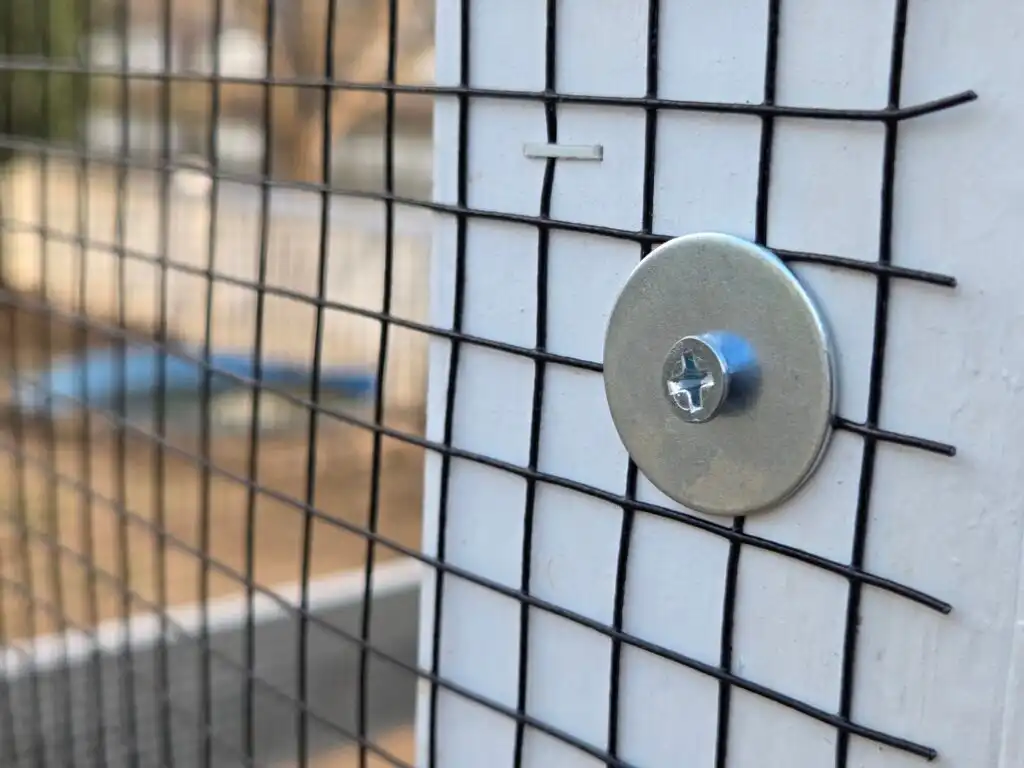
Chicken wire can help contain poultry, but it is not reliable predator protection. For vulnerable openings, appropriately sized welded hardware cloth is generally a much better choice.
And predator protection is not something I would save for later. We will talk much more about that in the next section because it deserves its own discussion.
🦆 Duck Mom Tip: Design Housing Around Your Daily Routine
When planning a duck house, think beyond the ducks’ basic needs and consider how you will actually use the space 365 days a year.
I want to be able to walk in, inspect every duck, replace bedding, clean efficiently, refill food and water, and secure everyone without crawling around on my knees.
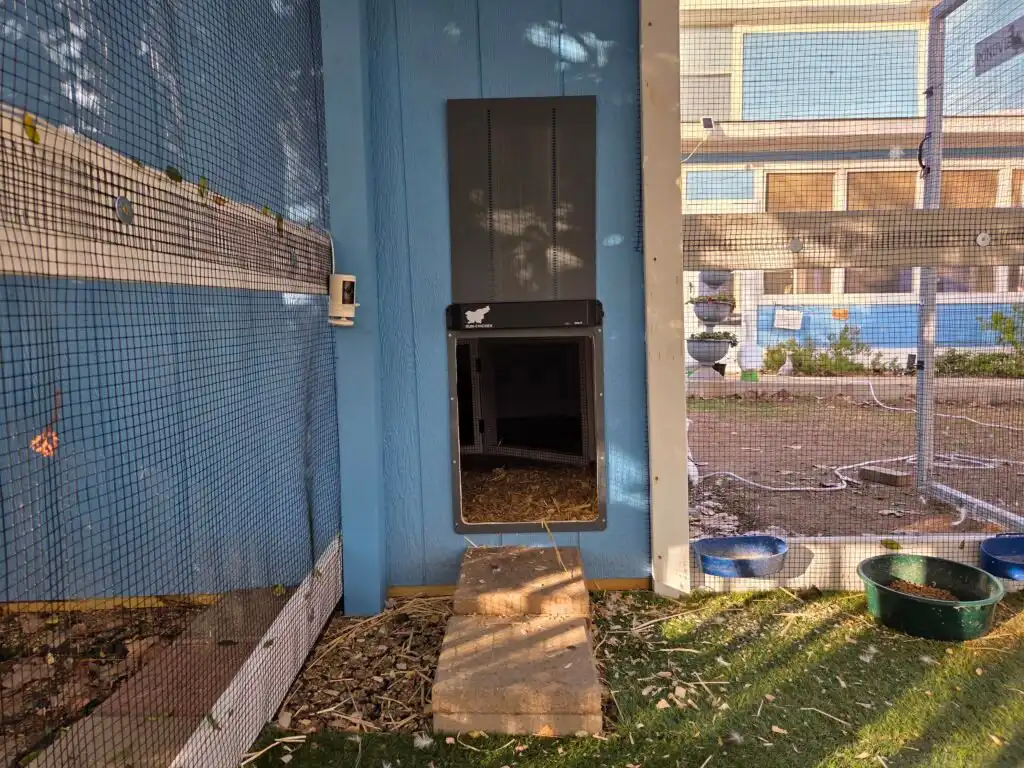
Automation can help too. We use a Run Chicken automatic coop door as part of our setup. I still personally check and secure my flock at bedtime, but having an automatic door makes our morning routine much easier.
Ducks of Providence readers can use code providence15 for 15% off.
Your duck house needs to be safe, dry, well ventilated, predator resistant, easy to clean, and practical for both your ducks and you. But that does not mean it cannot also be beautiful. With proper planning, you absolutely can have both. Our own setup has taught me that a thoughtfully designed duck space can work well for the flock, make daily care easier, and still be a backyard space you genuinely enjoy looking at. The key is to plan for function first, then build the cute details around what actually works for ducks.
5. Predator Protection Has to Be Taken Seriously From Day One
This is one of the less enjoyable things to think about when you are excitedly preparing for new ducks, but it is also one of the most important.
Ducks are prey animals, and predators are a reality of keeping them outdoors.
I wish I had understood from the beginning that predator protection is not simply about locking ducks inside at night. A secure nighttime house is essential, but depending on where you live, your flock may encounter predators during the day too.
In North Texas, potential threats can include raccoons, coyotes, bobcats, hawks, owls, snakes, and even neighborhood dogs. And unfortunately, a predator does not need much time to cause devastating injuries.
Daytime Does Not Automatically Mean Safe
It is easy to associate predator attacks with nighttime, but ducks can also be vulnerable during daylight hours.
Birds of prey are an obvious daytime concern, while other predators may become active around dawn, dusk, or even during the middle of the day when an opportunity presents itself.
This is why I prefer thinking in terms of layers of protection rather than assuming one fence or one locked door makes a flock completely safe.
Depending on your setup, those layers might include secure fencing, a covered run, predator-resistant hardware cloth, protection against digging, reliable latches, supervised free ranging, and secure nighttime housing.
There Is No Such Thing as 100% Predator Proof
I also want to be careful with the phrase “predator proof.” We use it frequently in duck keeping, but the reality is that no outdoor enclosure can ever be guaranteed 100% predator proof.
Predators are persistent, surprisingly intelligent, and sometimes incredibly strong. They can dig, climb, squeeze through small openings, manipulate weak latches, and take advantage of damage we may not have noticed yet. Weather, shifting soil, corrosion, and normal wear can also create vulnerabilities in an enclosure that was once extremely secure.
That does not mean predator protection is hopeless. Quite the opposite. The goal is to reduce risk as much as reasonably possible by creating multiple layers of protection.
A well-constructed enclosure using sturdy materials, secure latches, covered areas, digging protection, and regular inspections can dramatically reduce the likelihood of an attack. But I never want a duck owner to become complacent because something was sold or described as “predator proof.”
For me, the better mindset is predator-resistant, regularly inspected, and continually improved.
We cannot promise our ducks that nothing will ever happen. What we can do is make it as difficult as possible for a predator to reach them.
Chicken Wire Is Not Predator Proofing
This is an important distinction for new duck owners.
Chicken wire is primarily designed to keep poultry contained. It is not particularly effective at keeping determined predators out. Raccoons and other animals can reach through larger openings, and some predators can tear or manipulate lightweight fencing.
For vulnerable areas of our enclosure, I prefer appropriately sized welded hardware cloth and sturdy construction.
Pay attention to the small details too. A beautiful enclosure with one weak latch or an unsecured gap along the roof can still leave your flock vulnerable.
Raccoons, in particular, are remarkably good at manipulating simple closures. If a latch feels like something a clever toddler could open, I would not trust it against a raccoon.
Free Ranging Always Comes With Risk
I love watching my ducks explore, forage, search for insects, and investigate the yard. Those behaviors are an important part of their lives.
But free-ranging is never completely risk-free.
Supervision can reduce that risk, but it cannot eliminate it entirely. A hawk can appear quickly. A loose dog can enter a property unexpectedly. A predator may learn your flock’s routine.
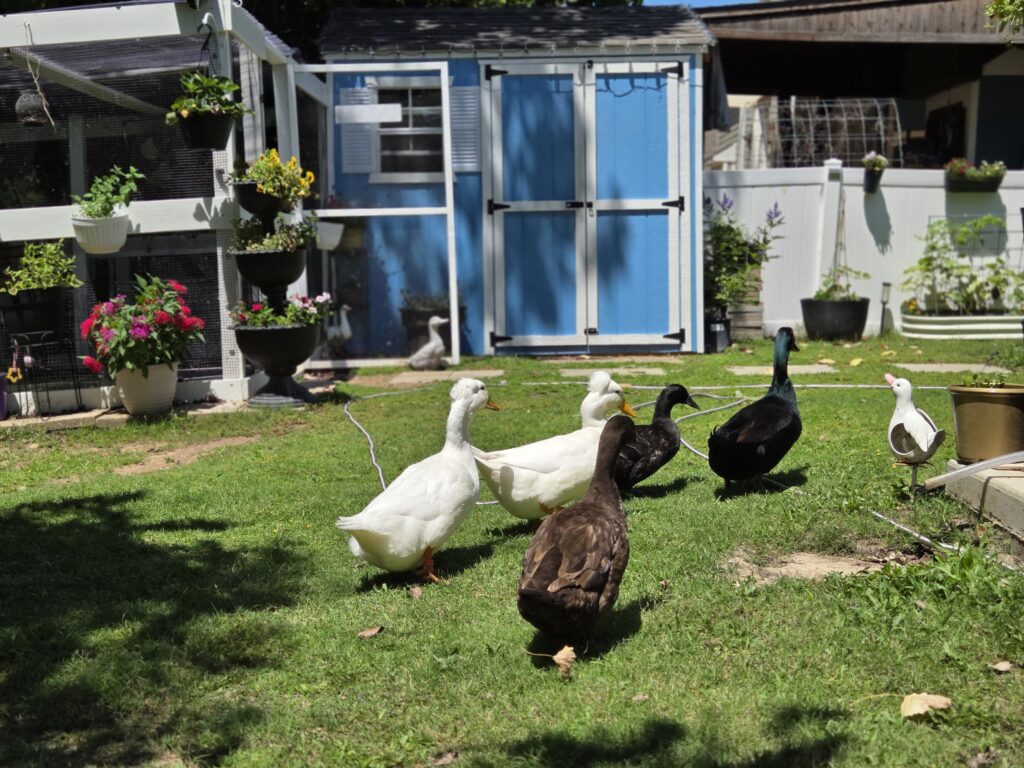
Every duck owner ultimately has to decide what level of managed risk is appropriate for their flock and property. For me, that means providing a secure covered run where the ducks can spend time safely while also allowing additional outdoor exploration when circumstances permit.
Predator Protection Is Easier Than Predator First Aid
This is the part I hope new duck owners never have to learn through experience.
Predator attacks can cause puncture wounds, crushing injuries, fractures, internal trauma, shock, and wounds hidden underneath feathers. A duck may initially appear surprisingly normal despite serious injuries because, as prey animals, ducks can hide weakness extremely well.
That is why prevention deserves so much attention.
You cannot eliminate every possible risk. Even excellent duck keepers can experience predator attacks. But you can make your property far less accessible and far less appealing to predators.
🦆 Duck Mom Tip: Inspect the Enclosure From the Predator’s Perspective
Every so often, I walk around our setup and deliberately look for weaknesses.
Could something dig underneath this edge?
Could a raccoon reach through here?
Is that latch still secure?
Has hardware cloth loosened?
Did weather create a new gap?
Could something climb onto the roof?
Predator proofing is not a project you complete once and never think about again. Enclosures age, soil shifts, hardware loosens, and predators adapt. Regular inspections should become part of routine duck care.
And if the worst does happen, knowing what to do during those first few minutes matters. I have a complete guide on Signs a Predator Attacked Your Ducks and What to Do Immediately, including how to recognize hidden injuries, provide initial first aid, manage shock, and determine when emergency veterinary care is needed.
I would much rather spend an extra afternoon reinforcing an enclosure than spend a night wondering whether an injured duck is going to survive.

Build predator protection into your duck setup before the ducks ever arrive. It is one of those investments you hope never has to prove how important it really is.
6. Finding a Duck Veterinarian Can Be Surprisingly Difficult
This is something I wish someone had told me before I ever needed one: finding a veterinarian who will actually treat ducks can be surprisingly difficult.
When you have a dog or cat, you can usually call several veterinary clinics nearby and find someone who can help. Ducks are different.
Not every veterinarian treats birds. Not every veterinarian who treats birds sees poultry or waterfowl. And even a clinic that sees ducks for routine appointments may not be equipped to handle a complicated emergency.
The worst time to discover all of this is when you are holding a sick or injured duck and desperately calling clinics.
Find a duck savvy veterinarian before you need one.
Avian Vet Does Not Always Mean Duck Vet
This distinction surprised me when I first started keeping ducks.
Some avian veterinarians primarily work with companion birds such as parrots, cockatiels, and budgies. Others may see chickens but have limited experience with ducks. Some practices specifically exclude poultry or waterfowl altogether.
When you call a clinic, I recommend being very specific:
“Do you regularly treat pet ducks?”
If they do, ask what types of cases they can manage. Can they perform diagnostic imaging? Bloodwork? Fecal testing? Surgery? Reproductive care? Can they hospitalize a duck if necessary?
You do not necessarily need one clinic that can do absolutely everything. But knowing where you would go for routine care and where you would go for an emergency can save an enormous amount of time.

Emergency Veterinary Care Can Be Even Harder to Find
This deserves its own warning.
A veterinarian who sees your duck during regular business hours may not provide overnight or weekend emergency care. And your nearest emergency animal hospital may not accept ducks.
Unfortunately, ducks do not schedule their emergencies for Tuesday morning at 10:00.
I recommend identifying your options ahead of time. Keep the clinic names and phone numbers somewhere easy to access, and periodically confirm that they still treat ducks because policies and staffing can change.
I would much rather spend ten minutes making those calls while everyone in my flock is healthy than start searching at midnight during an emergency.
Veterinary Care Should Be Part of Your Duck Budget
Ducks are sometimes described as inexpensive pets. Their initial purchase price certainly can be.
Their veterinary care may not be.
An examination, diagnostic imaging, laboratory testing, medications, surgery, hospitalization, or emergency treatment can quickly cost considerably more than the duck herself ever did.
That does not make the duck less deserving of care.
One of the financial questions I think every prospective owner should consider is not simply, “Can I afford to feed these ducks?” but “Can I afford to seek veterinary care when one of them becomes sick or injured?”
An emergency fund specifically for your animals can make difficult situations a little easier.
Learn Basic First Aid, But Know Its Limits
I strongly believe duck owners should know basic first aid.
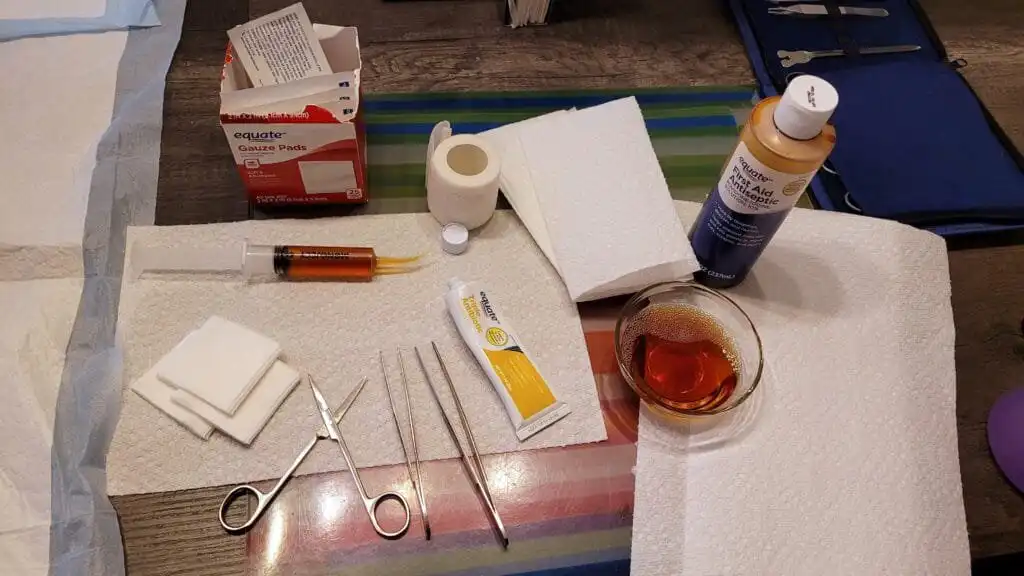
We keep supplies on hand for situations such as wounds, bleeding, eye irritation, dehydration, and temporary supportive care. Having an appropriate first aid kit can be incredibly valuable, especially when something happens after normal veterinary hours.
But a well-stocked first aid kit does not turn us into veterinarians.
Some conditions that look minor externally can involve fractures, internal injuries, infections, reproductive emergencies, toxicity, or other problems that cannot be diagnosed or treated appropriately at home.
Home care is often about stabilizing the duck and buying time until professional care is available, not replacing veterinary medicine.
Know Your Ducks Before Something Goes Wrong
One thing that has helped me tremendously is knowing what is normal for each member of our flock.
I know their approximate weights. I know who normally eats first, who is particularly vocal, how they walk, how they interact with the others, and what their usual behavior looks like.
That information becomes incredibly useful when speaking with a veterinarian.
Keeping basic health records can help too. Record weights, medications, previous illnesses, reproductive history, and anything unusual you observe. Photos and short videos of abnormal behavior can also be useful because, naturally, your duck may suddenly decide to act perfectly normal once you arrive at the veterinary clinic.
Ducks have impeccable timing.
🦆 Duck Mom Tip: Build Your Veterinary Plan Now
If you already have ducks and do not know where you would take one tonight if something happened, this is a great time to figure that out.
I recommend having:
- A veterinarian who routinely treats ducks
- A plan for after-hours emergencies
- Clinic phone numbers saved in your phone
- A transport carrier ready to use
- A basic duck first aid kit
- Recent weights for every duck
- An emergency fund for veterinary expenses
I also recommend establishing a relationship with your veterinarian before an emergency whenever possible. Having a veterinary team that already knows you and your flock can make future care much easier.
If you are struggling to find someone, I have a complete guide on How to Find a Duck Savvy Veterinarian, including what to ask when calling a clinic and where to look for veterinary resources.
Finding a good duck veterinarian may take more effort than you expect, but it is one of the most important things you can do before your ducks ever need medical care.
Because when a duck suddenly becomes sick, the question should not be “Who will even see a duck?”
You want to already know who you are calling.
7. Ducks Hide Illness Really Well
One of the most important lessons I have learned as a duck owner is that a duck can be sick long before she looks obviously sick.
Ducks are prey animals. In nature, appearing weak can make an animal more vulnerable, so there is a strong survival advantage to continuing normal behaviors for as long as possible. By the time a duck is sitting alone, refusing food, struggling to walk, or visibly lethargic, the underlying problem may already be significant.
That is why good duck care involves more than reacting when something looks wrong.
You need to learn what normal looks like first.
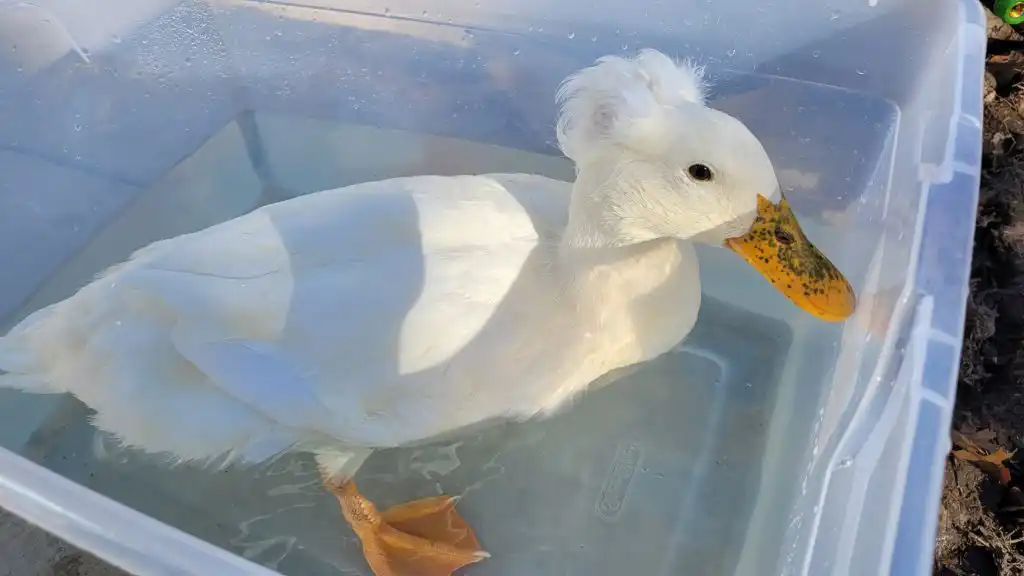
Know What Is Normal for Each Duck
When you live with a flock long enough, you start noticing tiny differences between individuals.
Who is always first to the food bowl?
Who comes running for treats?
Who talks constantly?
Who prefers to nap in a particular corner?
Who normally hangs out with whom?
Those details might seem insignificant, but they create a behavioral baseline. A subtle change can sometimes be your first indication that something is wrong.
If one of my ducks suddenly hangs back while everyone else races toward a favorite snack, I pay attention. If someone who is normally vocal becomes unusually quiet, I notice. If a duck starts separating herself from her usual companion, I want to know why.
One unusual behavior does not automatically mean your duck is sick. But a change from that individual duck’s normal behavior deserves attention.
Weight Can Tell You What Feathers Hide
This is something I wish more new duck owners knew.
Ducks are covered in a remarkable amount of feathers. Those feathers can hide gradual changes in body condition surprisingly well.
A duck may look perfectly normal while slowly losing weight underneath all that fluff.
That is why I am a big advocate for routine weight checks.
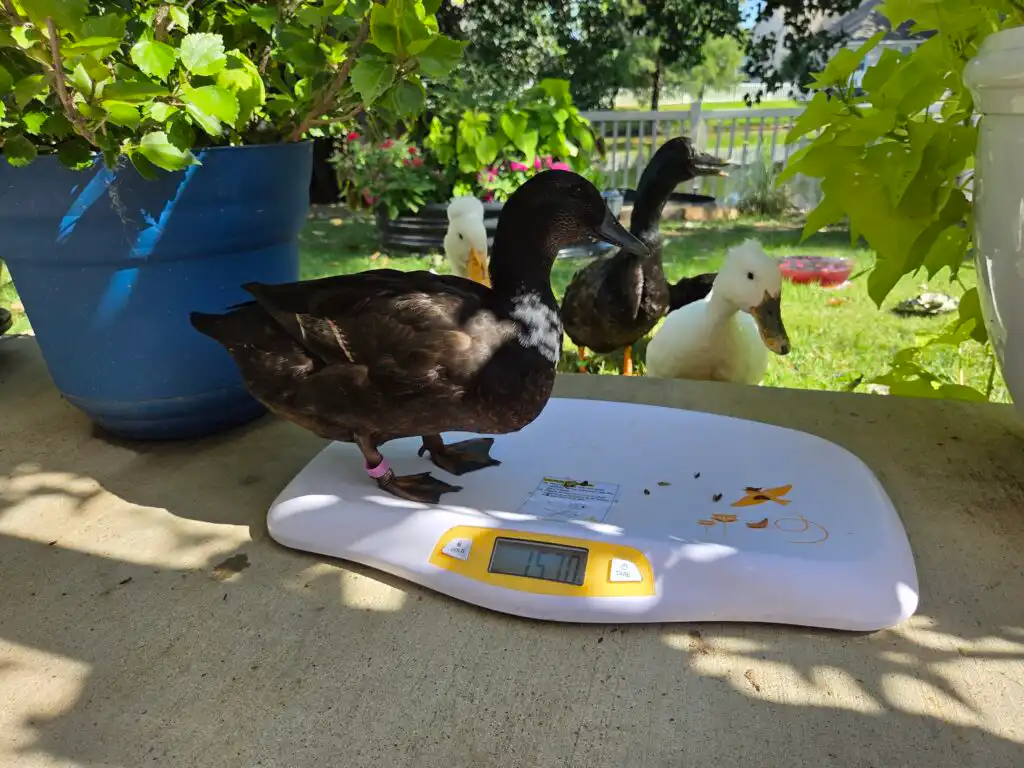
We weigh every duck in our flock about once a month using a digital baby scale and record the results. I care much more about the trend than a single number. A duck’s weight can fluctuate somewhat, but unexplained progressive weight loss is something I want to catch early.
Regular weighing also gives you a reliable baseline to provide your veterinarian if your duck becomes ill.
And there is another practical benefit: many medications used in veterinary medicine are dosed according to body weight. Knowing whether your duck weighs 1.8 kg or 2.8 kg can matter.
Learn to Watch More Than Appetite
Appetite is extremely useful, but it should not be your only health indicator.
Some ducks continue eating even when something is wrong.
When I check my flock, I am also paying attention to:
- Body weight and body condition
- Posture and tail position
- Walking and balance
- Breathing
- Eyes and nostrils
- Droppings
- Feather condition
- Activity level
- Vocalization
- Social behavior
- Food and water intake
For females, I also pay close attention to egg laying and reproductive behavior, particularly if something suddenly changes.
You are essentially building a picture of the whole duck rather than waiting for one dramatic symptom to appear.
Small Changes Can Matter
Some of the earliest warning signs of illness or pain can be surprisingly subtle.
A duck may spend a little more time sitting.
She may walk slightly slower.
Her tail may sit lower than usual.
She may stop joining the flock for certain activities.
Her droppings may change.
She may still eat, but not with her usual enthusiasm.
This does not mean you need to panic every time your duck takes an extra nap. Ducks have quiet days too.
Instead, look for changes, persistence, combinations of symptoms, and progression.
A duck who naps more one afternoon but otherwise eats, drinks, walks, interacts, and behaves normally may simply be resting. A duck who suddenly becomes quieter, eats less, loses weight, and repeatedly separates from the flock is telling you something very different.
🦆 Duck Mom Tip: Make Health Checks Routine
Do not wait until you suspect illness to examine your ducks.
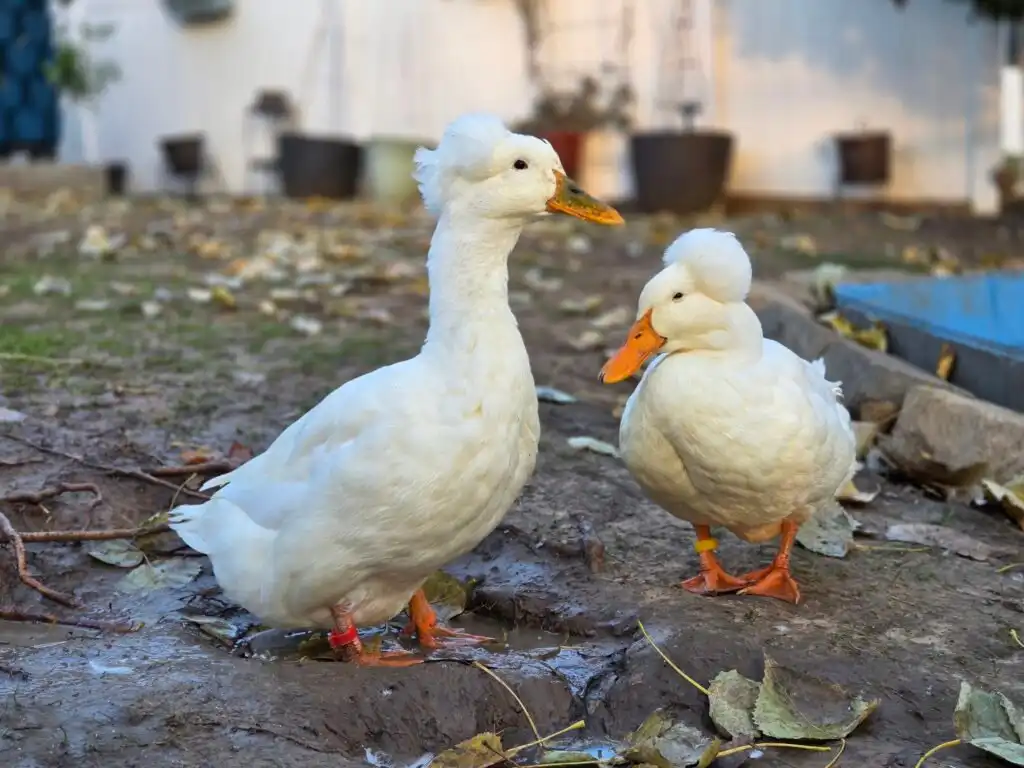
I like to combine everyday observation with more deliberate routine health checks. Get familiar with how your ducks’ feet feel, what their eyes normally look like, what healthy feathers look like, and what their normal body condition feels like underneath all those feathers.
And record their weights.
A simple health log with the date, weight, and any observations can become incredibly valuable over time. You do not need an elaborate spreadsheet unless, like me, that happens to make you happy.
A notebook works just fine.
If you are not sure what to examine, I walk through the process step by step in my Duck Health Check guide, including what I look at from bill to webbed feet.
Learning your ducks’ normal behavior is one of the most powerful health monitoring tools you have at home. You may not be able to diagnose an illness by observation alone, and you should not try to replace veterinary diagnostics.
But you can recognize that something has changed.
And with ducks, noticing that change early can make an enormous difference.
9. Female Ducks Can Have Serious Reproductive Problems
This is something I was not prepared for when I first got female ducks.
We tend to talk about duck eggs as a wonderful bonus of keeping hens. And they can be. Finding that first egg is exciting, and there is something pretty special about collecting eggs from ducks you know and love.
But egg production is also a major physiological process, and laying ducks can develop reproductive problems that range from relatively minor to life-threatening.
If you are considering female ducks, I think you should know about this possibility before the first egg ever appears.
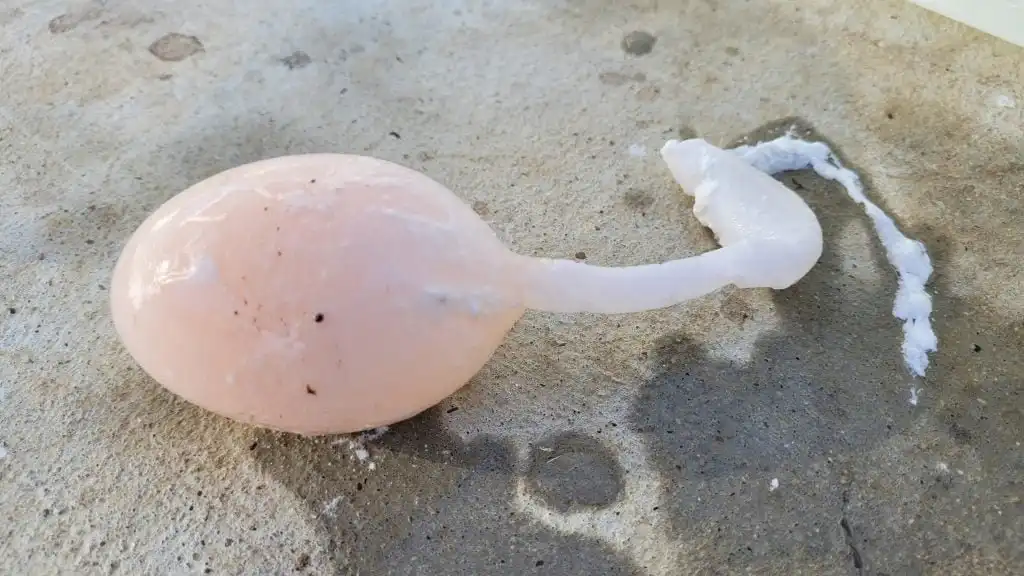
Producing an Egg Takes a Lot From the Body
A laying duck is doing far more than simply producing a shell every morning.
Egg formation requires substantial nutritional resources, particularly calcium, protein, energy, vitamins, and minerals. Calcium is especially important because large amounts are required for eggshell formation.
This is one reason appropriate nutrition matters so much for laying females. Hens need a balanced diet formulated for their life stage, with appropriate access to supplemental calcium when needed.
But even with excellent nutrition and husbandry, reproductive problems can still happen.
Egg Laying Can Go Wrong
Female ducks can experience several reproductive disorders, including:
- Egg binding
- Soft shelled or malformed eggs
- Cloacal or oviduct prolapse
- Reproductive tract infections
- Internal laying
- Egg yolk peritonitis
- Chronic excessive egg production
- Other ovarian or oviduct disorders
Some reproductive problems develop gradually. Others can become emergencies very quickly.
A hen who suddenly stops eating, repeatedly strains, develops a noticeably lowered or penguin like posture, has abdominal swelling, spends unusual amounts of time in the nest, isolates herself, or simply seems not quite right deserves close attention.
Not every abnormal behavior in a laying duck is a reproductive emergency, but reproductive disease should always be somewhere on your radar when a female duck becomes ill.
High Producing Ducks Can Be Particularly Challenging
Domestication has selected some duck breeds and lines for very high egg production. That can mean a hen produces far more eggs than her wild ancestors ever would.
More eggs mean repeated demands on the reproductive tract and the rest of the body.
This does not mean every productive laying duck will develop reproductive disease. Many do very well. But I wish I had understood earlier that egg production itself can become a health management issue, particularly in ducks who lay frequently or develop recurring problems.
For some hens with serious chronic reproductive disease, an avian veterinarian may even discuss medical options to temporarily suppress reproductive activity. Those decisions are very individual and belong in the hands of a veterinarian experienced with ducks.

From Our Flock: What Krümel Taught Me About Reproductive Health
Krümel has taught me more about duck reproductive health than I ever wanted to learn.
She has experienced significant reproductive challenges over the years, and managing them has meant learning to recognize very subtle changes in her behavior, working closely with our veterinarians, monitoring her condition, and making decisions based on her health rather than simply whether she was still producing eggs.
Those experiences completely changed the way I look at laying.
An egg is not just something that appears in the nest each morning. It represents an enormous amount of biological work happening inside that little body.
Because I know Krümel so well, sometimes the first clue that something is bothering her is simply that she is behaving differently. That is another reason the routine observation we discussed in the previous section matters so much.
Know What an Emergency Looks Like
Reproductive problems are also one of the reasons I strongly recommend finding a duck savvy veterinarian before you need one.
If you see tissue protruding from the cloaca, suspect an egg is stuck, notice significant bleeding, see repeated unproductive straining, or your duck is weak, collapsed, having difficulty breathing, or rapidly deteriorating, contact a veterinarian promptly.
Do not repeatedly manipulate the abdomen or attempt to force an egg out yourself. What appears to be a straightforward stuck egg may be more complicated than it looks.
🦆 Duck Mom Tip: Keep Track of Egg Production
If you have female ducks, it can be surprisingly helpful to keep a basic record of egg production.
You do not necessarily need to identify every single egg from every hen, although some of us admittedly become very good at recognizing who laid what.
What matters is learning your flock’s general patterns.
A sudden change in laying combined with changes in appetite, posture, behavior, or body weight can provide useful information when something is wrong.
And remember that not laying is not automatically a problem. Ducks naturally change their laying patterns with age, season, daylight, molting, broodiness, stress, and other factors. I explain those normal changes in much more detail in our guide No Eggs From Your Ducks? Here’s Why.
I still love finding duck eggs in the nest. But I no longer look at egg production only as a perk of having female ducks.
I see it for what it really is: a complex physiological process that deserves the same attention as nutrition, housing, and every other part of duck health.
If you are planning to bring home female ducks, enjoy the eggs when they come. Just make sure you are prepared to care for the hardworking little body that produces them.
10. Drakes Can Completely Change Your Flock
If you are getting ducklings, there is something else you need to think about before those adorable little fluff balls grow up:
What happens if you have a drake?
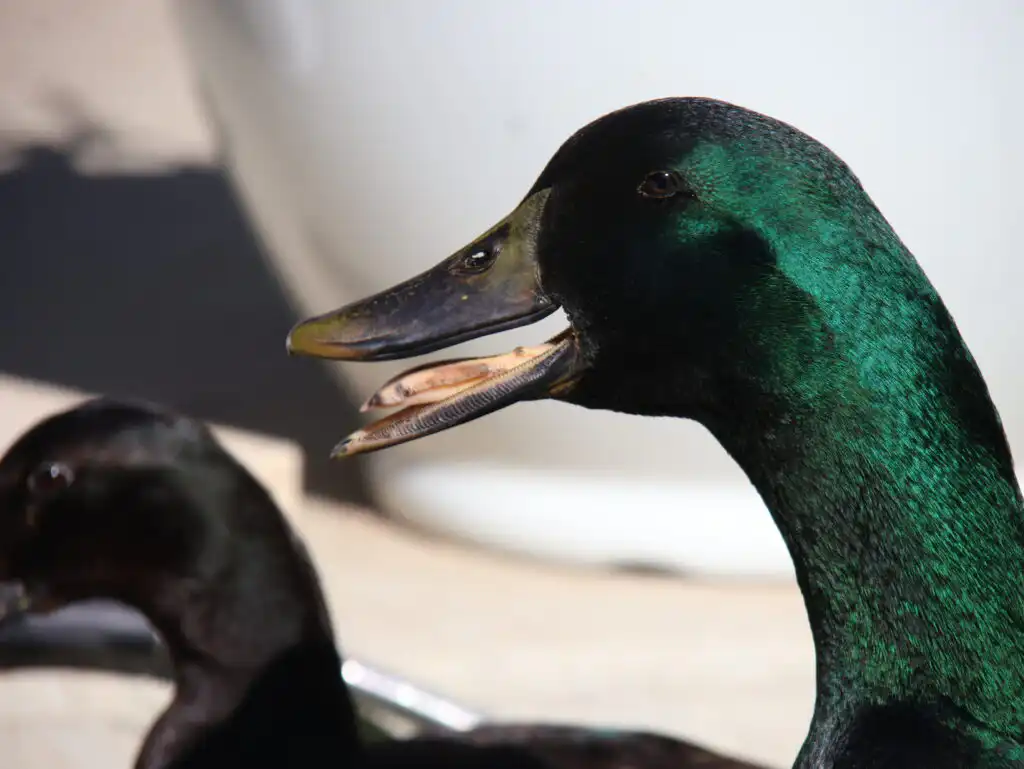
Male ducks can be wonderful pets. Simon is full of personality, incredibly handsome, and an important part of our flock. But keeping a drake introduces an entirely different set of considerations, particularly once hormones and breeding season enter the picture.
This is one area where I think new duck owners are often caught completely off guard.
That sweet little duckling who follows you everywhere can grow into a hormonal adult male with some very strong opinions about the ladies in his life.
Drake Behavior Can Change With the Seasons
Drakes can behave very differently throughout the year.
As daylight increases and breeding season approaches, reproductive hormones can increase mating behavior, territorial behavior, competition, chasing, and aggression. A drake who seems perfectly relaxed during one part of the year may become much more intense during spring and summer.
That does not make him a bad duck.
It means he is a drake responding to biology.
Understanding that distinction helped me tremendously. Instead of expecting Simon to behave exactly the same way throughout the year, I have learned to anticipate seasonal changes and adjust our flock management accordingly.
The Male to Female Ratio Matters
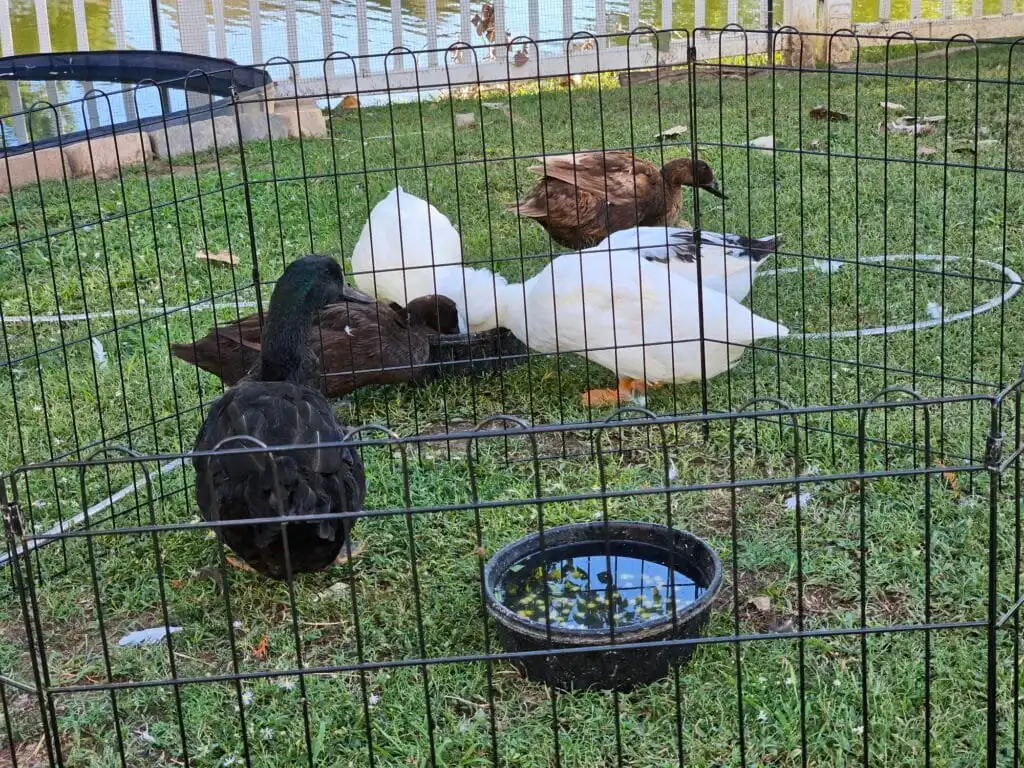
You will often see recommendations to keep approximately four to six females per drake.
That can be a useful starting point, but I wish someone had told me that ratios are not magic.
You can have the correct number of females and still have problems.
A drake may choose a favorite hen and repeatedly mate with her while barely paying attention to the others. Another hen may be particularly submissive or unable to escape him easily. Individual personalities, body size, age, health, and flock dynamics all matter.
So rather than simply counting ducks, watch the ducks themselves.
Overmating Can Seriously Injure a Hen
Repeated mating is not merely annoying for the female.
Overmated hens may develop feather loss on the head, neck, or back, skin injuries, exhaustion, stress, or more serious trauma.
Mating in water can present additional risks if a hen is repeatedly submerged or unable to get away.
If one female is being targeted excessively, adding more hens is not always the answer. Sometimes the safest solution is physical separation.
And yes, that may mean maintaining more than one enclosure or dividing your existing space.
More Than One Drake Can Add Another Layer of Complexity
Keeping multiple drakes can work in some flocks, but it requires careful management.
Drakes may compete with one another for females, particularly during breeding season. That competition can lead to chasing, fighting, increased mating pressure on hens, or rapidly changing flock dynamics.
Some groups of males coexist beautifully. Others do not.
This is another recurring theme in duck keeping: the individual ducks in front of you matter more than a formula you found online.
From Our Flock: Simon Has Opinions
Simon is a perfect example of why I no longer assume that a good flock ratio automatically means a peaceful flock.
He and Ronja are extremely close and spend a lot of time together. But Simon has also decided that he absolutely does not like Muffin.
Why?
You would have to ask Simon.
Unfortunately, he is refusing interviews.
His behavior toward her means we cannot simply put everyone together and hope they sort it out. We currently rotate parts of our flock between different areas so everyone gets plenty of outdoor time while remaining safe.
It takes more work, but that is part of responsible flock management.
I would much rather rearrange our routine than allow one duck to spend her day being chased or attacked.
🦆 Duck Mom Tip: Have a Separation Plan Before You Need One
This is one of the most practical pieces of advice I can give anyone considering a mixed sex flock.
Plan how you would separate your ducks before a problem develops.
You may need temporary separation because of overmating, aggression, illness, injury, introductions, or changing flock dynamics.
That does not necessarily mean building an entirely separate duck house. A divided run, secure pen, temporary enclosure, or other thoughtfully designed space may be enough depending on the situation.
The important thing is that you have an option.
Trying to figure out where to put an aggressive drake after you discover an injured hen is much more stressful than having a plan ready.
Should Beginners Avoid Drakes?
Not necessarily.
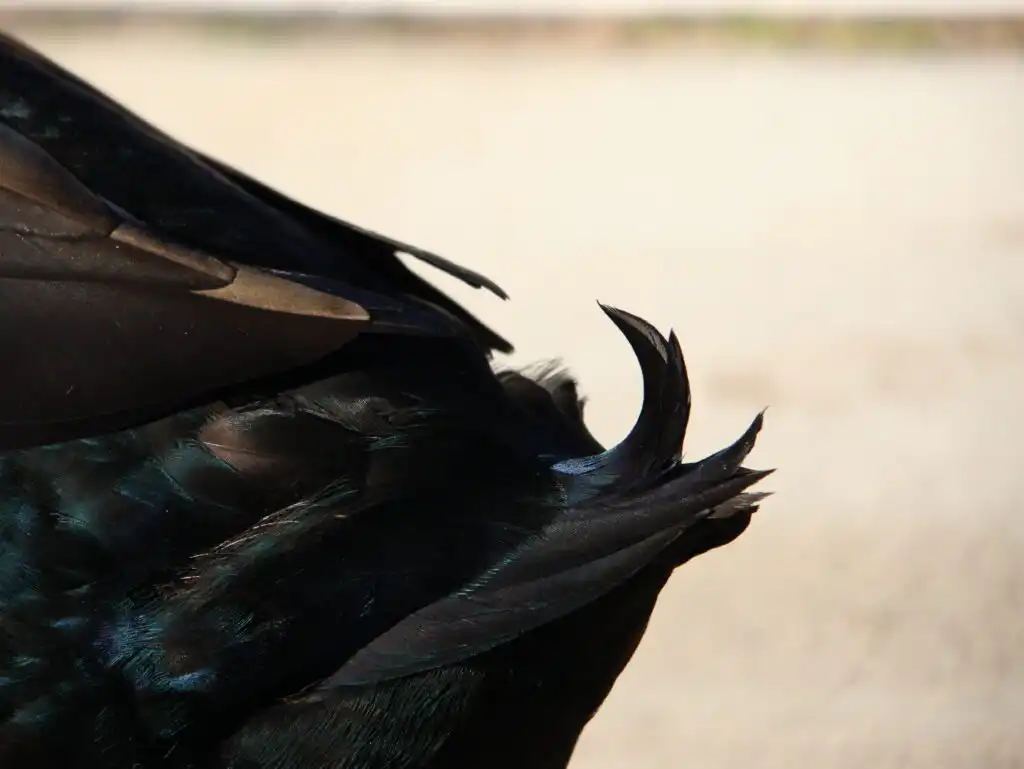
Drakes can be fantastic companions, and males have some advantages too. They do not lay eggs, so you do not have the reproductive health concerns associated with egg production. They also have their own personalities, behaviors, and charm.
But I would never recommend getting a drake without understanding what adult male duck behavior can involve.
If you are buying unsexed ducklings, you also need a plan for what you will do if several turn out to be male. Rehoming a drake can be considerably more difficult than people expect, especially because there are often far more unwanted males than appropriate homes available.
Before getting ducklings, think beyond the fluffy stage.
Think about the adult flock you are actually prepared to manage.
Because when hormones arrive, your peaceful little group of ducklings can suddenly turn into a complicated social experiment with feathers.
And sometimes Simon is running the experiment.
11. Ducks Will Change Your Yard
If you have visions of a perfectly manicured lawn with a few beautiful ducks gracefully wandering through it, I have some news for you.
The ducks have their own landscaping plans.
Before getting ducks, I understood that they might nibble on plants and make a little mud around their pool. What I did not appreciate was just how effectively a flock of determined ducks can remodel a backyard.
And the funny thing is that, from their perspective, they are not destroying anything.
They are simply being ducks.
Dabbling Is Normal Duck Behavior
One of the most characteristic duck behaviors is dabbling.
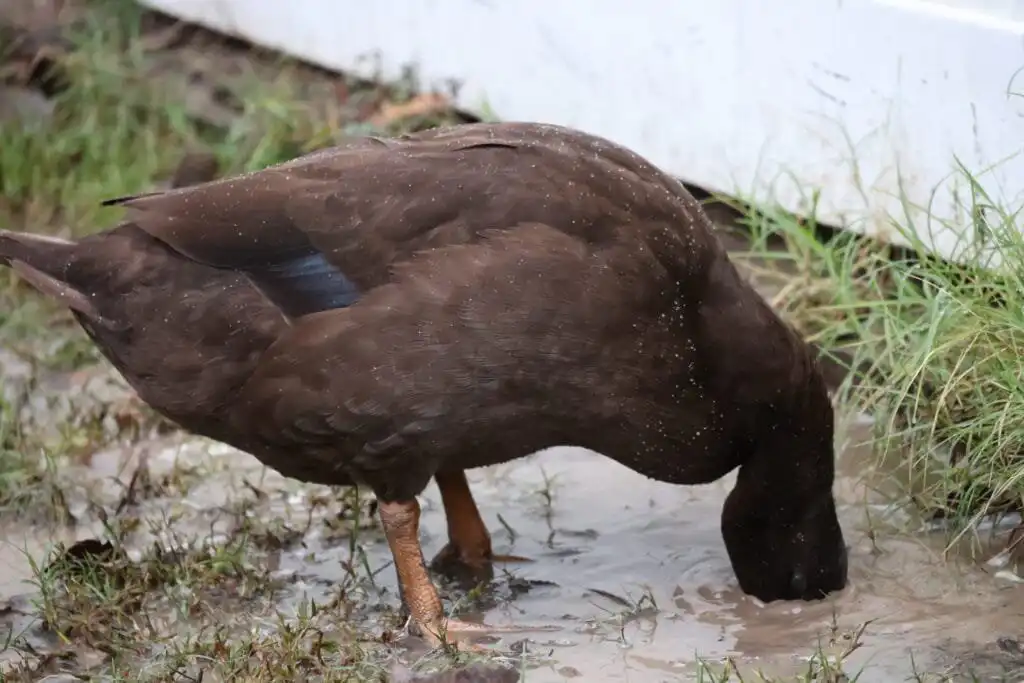
Ducks use their bills to investigate soil, mud, shallow water, vegetation, and just about anything else that looks promising. They probe, scoop, filter, and search for insects, worms, seeds, plant material, and other edible treasures.
Give them a patch of damp soil, and they may happily drill little holes into it with their bills.
Give them a patch of damp soil next to a water bucket, and you may soon have an excavation project.
This behavior is completely normal and provides valuable opportunities for foraging and environmental enrichment.
Unfortunately, your lawn may disagree.
Water Plus Ducks Plus Soil Equals Mud
If there is one equation every new duck owner should memorize, it might be:
Water + Ducks + Dirt = Mud
Lots of mud.
Ducks splash water while drinking and bathing. Then they walk through the wet area, dabble in the softened soil, splash a little more water, and repeat the process.
What started as a small damp patch beside the water bucket can become a substantial mud pit remarkably quickly.
This is why the water management we talked about earlier matters so much. Where you place pools, buckets, and other water sources can determine what happens to the surrounding ground.
If you put a large water station directly onto an area you desperately want to keep pristine, your ducks may interpret that as a personal challenge.
Your Plants May Become Snacks
Ducks can also be enthusiastic gardeners, although their definition of gardening is slightly different from mine.
They may nibble grass, flowers, vegetables, herbs, seedlings, and other vegetation. They can flatten delicate plants simply by walking or resting on them. Freshly watered garden beds are especially tempting because damp soil is wonderful for dabbling.
Some plants can also be toxic, so before allowing ducks access to landscaped areas, it is worth checking whether the plants growing there are safe.
If there is something in my yard that I truly do not want the ducks to investigate, I protect the plant rather than expecting the ducks to understand landscaping boundaries.
That approach saves everyone a lot of frustration.
You Can Still Have a Beautiful Backyard
I do not want this section to make it sound as though getting ducks means surrendering your entire property to mud and chaos.
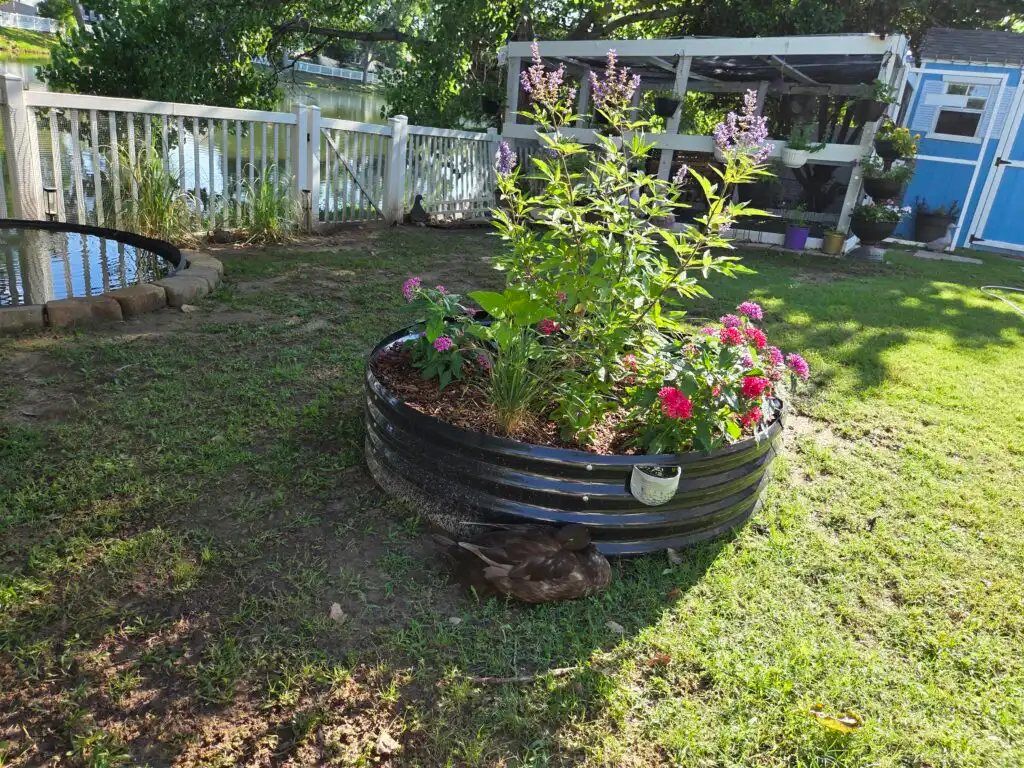
You absolutely can have both a functional duck environment and a backyard you enjoy.
The difference is planning.
Over the years, we have changed our own duck areas considerably. Our run includes carefully chosen ground materials, drainage solutions, designated water areas, shade, and surfaces that can withstand the daily activities of six ducks.
It did not happen all at once.
Some ideas worked beautifully. Others taught us exactly what not to do next time.
That is part of keeping animals in a backyard environment. You observe how they actually use the space and adjust accordingly.
Work With Natural Duck Behavior, Not Against It
This was one of the biggest mindset changes for me.
Instead of asking:
“How do I stop my ducks from doing this?”
I started asking:
“Where can I let them do this safely?”
If they want to dabble, give them an appropriate area where a little mud is acceptable.
If they love bathing, design the pool area so spilled water can drain.
If they destroy delicate vegetation, protect the plants you care about and give the ducks access to areas that can tolerate their foraging.
If one section of the run consistently becomes wet, change the surface or improve drainage rather than repeatedly replacing muddy material.
Good duck enclosure design works with duck biology.
🦆 Duck Mom Tip: Build a Duck Zone
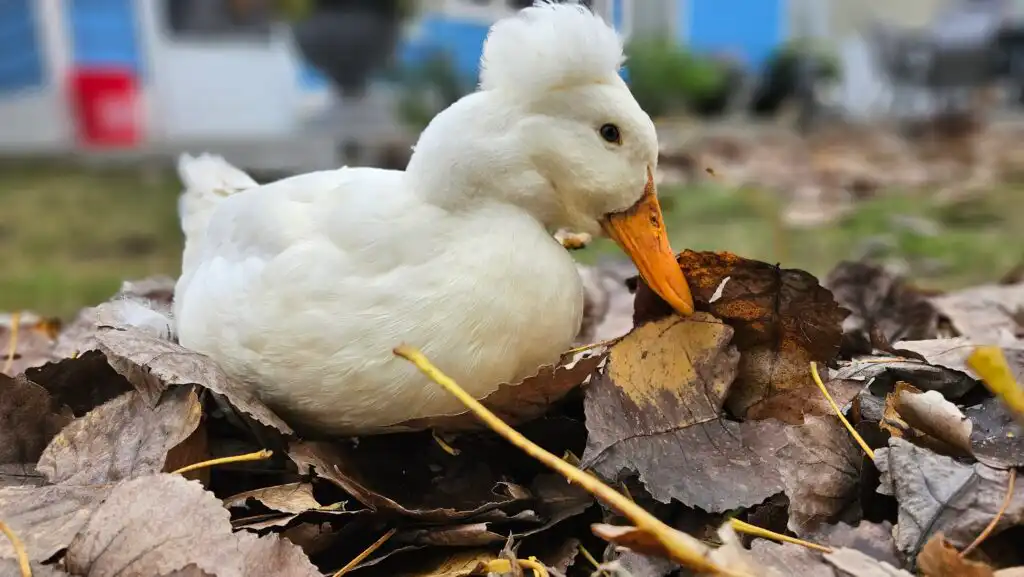
If you care about maintaining parts of your yard, one of the easiest solutions is to create a dedicated duck friendly zone.
Think about where you want:
- Pools and bathing water
- Drinking stations
- Foraging areas
- Shade
- Mud-friendly spaces
- Easily washable or drainable surfaces
- Protected landscaping
Then decide which areas should be off limits or only accessible under supervision.
This gives your ducks opportunities to express normal behaviors without requiring you to sacrifice every square foot of your backyard.
And remember that your setup will probably evolve. What works for two ducklings may not work for six adult ducks. What works during a dry spring may reveal some serious shortcomings during the first week of heavy rain.
That is okay.
Our own duck area today looks very different from the setups I imagined when we first started keeping ducks, because the ducks themselves taught me how the space needed to function.
So yes, ducks will probably change your yard.
There may be fewer perfect patches of grass. There will almost certainly be more mud. You may eventually find yourself getting unusually excited about drainage systems.
But with thoughtful planning, you can create a space that supports natural duck behavior and still have a beautiful backyard you love spending time in.
Just accept that the ducks may always consider themselves part of the landscaping committee.
12. Ducks Require More Time and Commitment Than Most People Expect
If there is one thing I wish I had understood before getting ducks, it is that duck keeping is not something you simply fit into your life. Eventually, it becomes part of your life.
Ducks need care every single day.
There are no weekends off because you are tired. No skipping the evening routine because it is raining. No leaving extra food out and disappearing for a few days.
They need fresh water, appropriate food, a clean environment, health checks, safe housing, and someone who makes sure they are securely tucked away at night.
And they will need those things tomorrow too.
The Daily Routine Is More Than Feeding Them
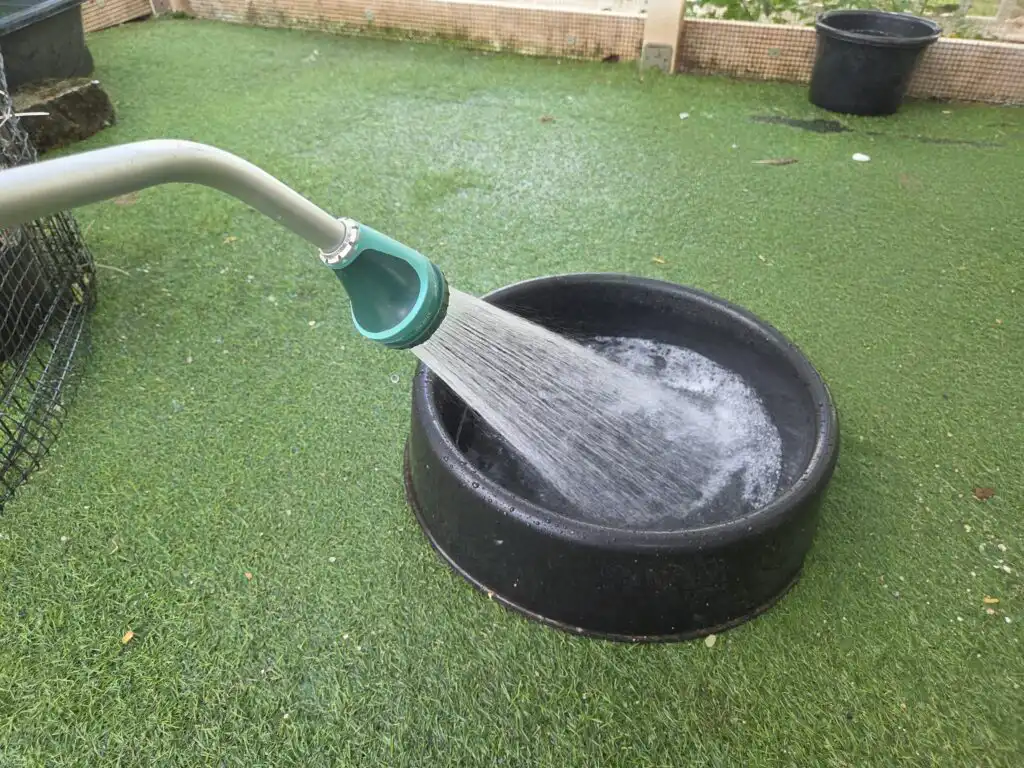
On a normal day, duck care may include feeding, refreshing multiple water containers, cleaning dirty water, checking bedding, managing pools, inspecting the enclosure, watching the flock for health problems, and securing everyone for the night.
Some days are easy.
Other days you will clean a water bucket and watch a duck immediately put a muddy bill into it.
That is character building.
The amount of time required depends enormously on your setup. Good enclosure design can make duck care much more efficient, while a poorly designed setup can turn simple chores into a frustrating amount of work.
That is another reason I encourage people to think about drainage, cleaning access, water placement, and housing design before bringing ducks home.
Weather Changes Everything
Daily duck care also changes throughout the year.
Here in North Texas, summer means thinking constantly about heat. We provide shade, fans, plenty of fresh water, opportunities to cool down, and additional cooling measures when temperatures become extreme.
Winter brings different challenges. Water can freeze. Bedding requirements change. Severe weather may require additional shelter and much more frequent monitoring.
Then there are thunderstorms, heavy rain, high winds, power outages, and every other surprise Mother Nature decides your flock needs to experience.
Your ducks cannot look at the weather forecast and prepare their enclosure themselves.
That part is on us.
Vacations Require Planning
This is a big one.
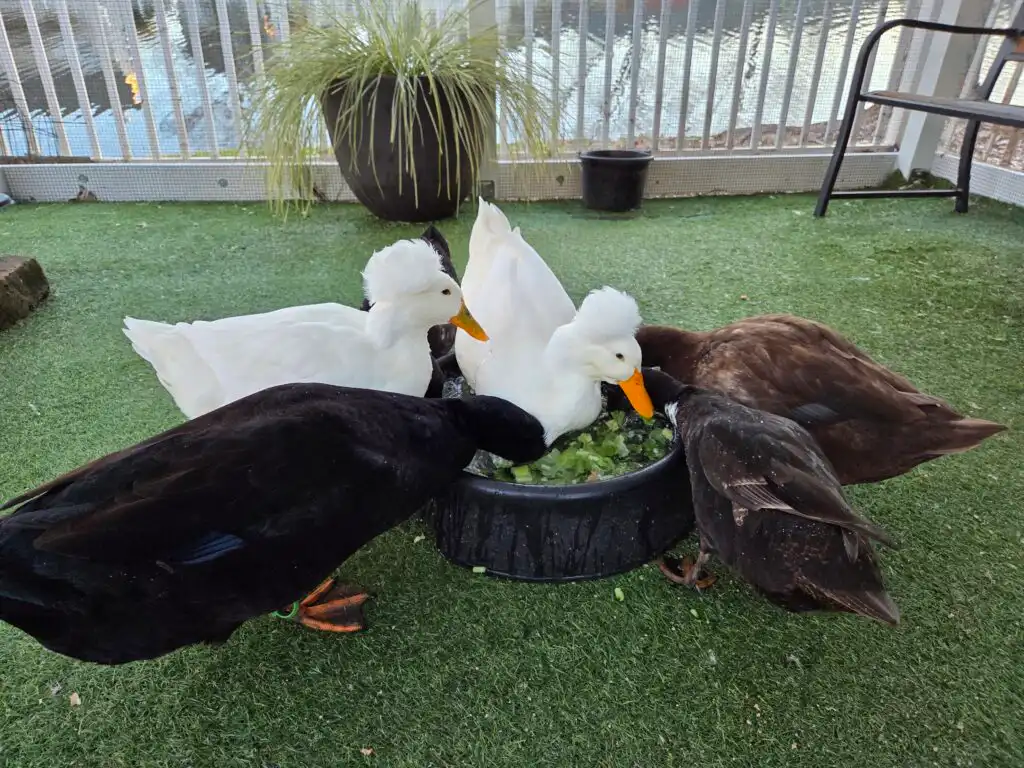
You cannot simply fill a giant feeder and leave ducks alone for a weekend.
Someone needs to provide fresh water, feed them, check that every duck is healthy, manage their housing, and securely lock them away at night.
And that person needs to understand ducks.
A well-meaning neighbor who is perfectly comfortable feeding your cat may be much less comfortable when a duck suddenly starts limping, refuses to go inside, or turns an entire water station upside down.
Finding reliable duck sitters can therefore become part of vacation planning.
Sometimes our travel plans are shaped around the ducks, and that is simply part of the commitment we chose when we brought them into our lives.
Ducks Can Be a Long-Term Commitment
A healthy domestic duck can live for many years, with lifespan varying considerably by breed, genetics, husbandry, and health.
That cute duckling you bring home this spring may still be part of your family many years from now.
Before getting ducks, think about what your life might look like several years into the future.
Will you still have appropriate housing?
What happens if you move?
What if your work schedule changes?
Can you continue providing veterinary care?
Who will care for them when you travel?
No one can predict every life change, of course. But ducks should never be treated as a temporary backyard experiment.
When we bring an animal home, we take responsibility for the life that follows.
Sometimes Duck Care Becomes Medical Care
Most days are wonderfully ordinary.
Then one morning, someone is limping.
A hen develops a reproductive problem.
A duck gets injured.
Someone needs medication twice a day.
Suddenly your normal routine includes weighing a duck, giving medication, preparing a recovery space, scheduling veterinary appointments, cleaning more frequently, and closely monitoring appetite and droppings.
We have been through many of those seasons with our own flock.
They are not the fun parts of duck ownership, but they are just as much a part of loving these animals as swimming pools and treats.
🦆 Duck Mom Tip: Build Systems Before You Need Them
One of the best things we have done over the years is create routines and systems that make daily care easier.
- Know who feeds the ducks.
- Know who locks them up.
- Keep supplies organized.
- Have extra bedding and food available.
- Maintain a first aid kit.
- Know your veterinarian.
- Have carriers and temporary recovery enclosures ready.
- Figure out who can care for your flock if you cannot.
When something goes wrong, you do not want to invent your emergency plan while holding a sick duck.
Would I Still Get Ducks?
After everything I have written in this article, you might expect my answer to be complicated.
It isn’t.
Absolutely.
I would get ducks again. I would just do some things differently.
Our ducks have brought an extraordinary amount of joy into our lives. They have distinct personalities, friendships, routines, preferences, and an incredible ability to make ordinary moments entertaining.
They have also brought mud, veterinary bills, early mornings, late nights, complicated flock dynamics, emergency situations, and an impressive amount of poop.
I would not trade the first list to avoid the second.
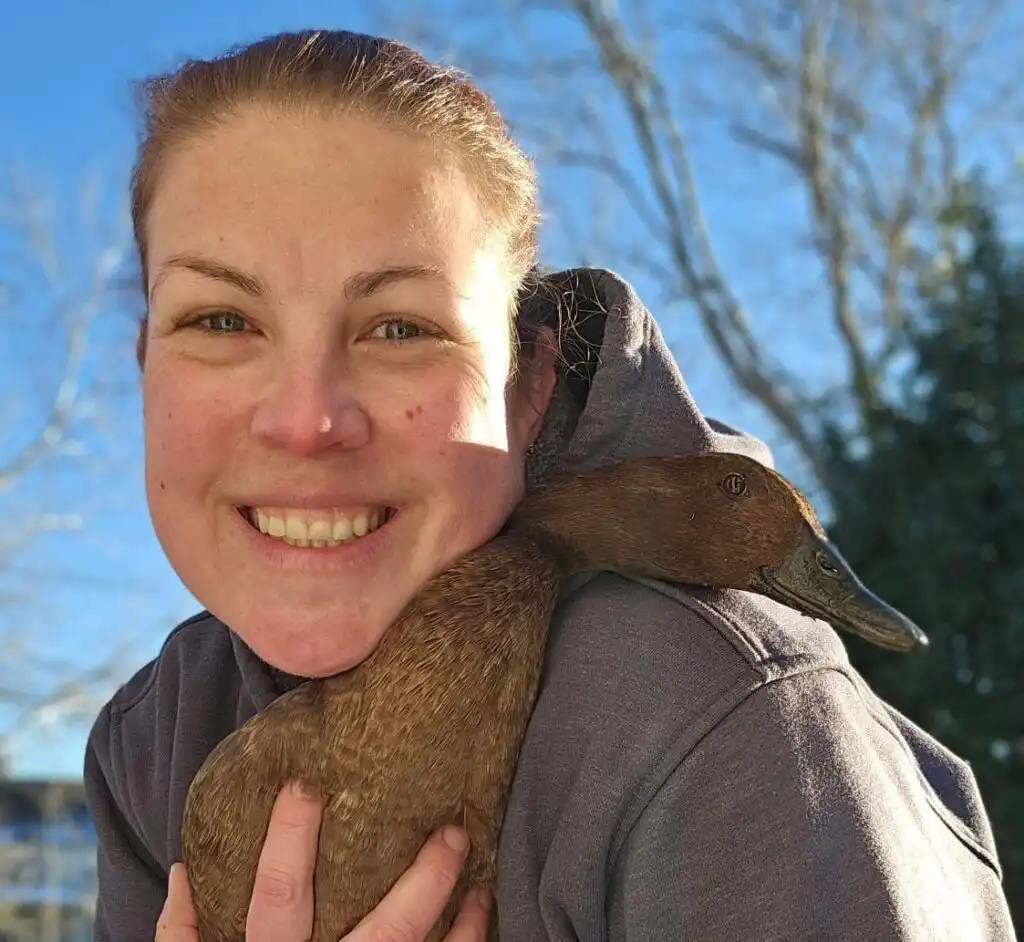
That is probably the biggest thing I wish I knew before getting ducks: the work and the joy are not separate parts of duck ownership. They come together.
You clean the pool because watching them splash in fresh water makes you happy.
You stand outside in miserable weather because six little lives are depending on you.
You learn about nutrition, anatomy, behavior, predators, reproductive health, and medications because somewhere along the way these funny little birds stopped being the ducks and became your ducks.
And one day you realize that carrying another bucket of water across the yard does not feel particularly unusual anymore.
It is simply part of your day.
That is the commitment.
And for me, it has been completely worth it.
Frequently Asked Questions About Getting Ducks
Are ducks good pets for beginners?
Ducks can be wonderful pets for beginners, but they are not necessarily low-maintenance pets. They need appropriate companionship, secure housing, predator protection, balanced nutrition, plenty of clean water, regular cleaning, and access to veterinary care.
If you are willing to learn about their needs and establish the right setup before bringing them home, ducks can be incredibly rewarding companions. I recommend doing your research first rather than assuming their care will be similar to keeping chickens.
How many ducks should a beginner get?
I recommend starting with at least two ducks because ducks are highly social flock animals and should not normally live alone. Three can sometimes provide even more social flexibility because one duck is not left completely alone if another becomes sick, needs temporary separation, or dies.
However, more ducks also mean more space, food, water, cleaning, and veterinary expenses. Start with a flock size you can comfortably support long-term rather than bringing home more ducklings simply because they are adorable. That is admittedly easier said than done.
Are ducks harder to care for than chickens?
Neither species is necessarily “harder,” but ducks and chickens have different husbandry needs. Ducks generally create considerably more moisture around water, require water deep enough to dunk their heads, sleep on the ground rather than roosting, and may not independently return to their house at night.
Duck housing therefore needs to prioritize drainage, ventilation, usable floor space, water management, and easy cleaning. If you are already experienced with chickens, do not assume that the exact same setup will automatically work well for ducks.
Do ducks need a pond?
No. Pet ducks do not need a permanent pond, but they do need appropriate access to clean water.
At minimum, drinking water should be deep enough for ducks to fully submerge their bills and preferably their heads so they can clean their nostrils and eyes. Providing additional bathing water allows ducks to perform normal behaviors such as bathing, preening, and splashing.
A kiddie pool, stock tank, or another safe bathing setup can work very well. Whatever you choose, plan for frequent cleaning and drainage because your ducks will almost certainly make the water dirty much faster than you expect.
What is the hardest part about owning ducks?
For many people, the biggest surprise is not one particular task but the daily commitment. Ducks need care every day regardless of weather, work schedules, vacations, or how tired you are.
Water management, cleaning, predator protection, finding a duck-savvy veterinarian, managing flock dynamics, and dealing with unexpected health problems can all be challenging. A thoughtfully designed setup makes an enormous difference, which is why I recommend planning your housing, water, drainage, veterinary care, and emergency options before your ducks arrive.
What should I know before getting pet ducks?
Before getting pet ducks, understand that you are committing to social animals that may live with you for many years. They need duck companionship, appropriate nutrition, plenty of water, secure and predator-resistant housing, room for normal behaviors, routine health monitoring, veterinary care, and daily attention.
You should also be prepared for mud, frequent cleaning, seasonal changes in behavior, reproductive health concerns in females, hormonal behavior in drakes, and the possibility that your flock dynamics may change over time.
The goal is not to scare you away from ducks. It is to help you start prepared. The more you understand before bringing ducks home, the easier it is to build a life with them that works for both you and your flock.
If I Could Start Over With Ducks
If I could go back to the day before ducks entered my life, I would have a lot to tell myself.
I would say: build the drainage first. Find the veterinarian before you need one. Make the enclosure bigger than you think it needs to be. Take predator protection seriously. Buy the good water buckets. Learn what healthy duck behavior looks like. And accept right now that the lawn is never going to be quite the same.
But I would never tell myself not to get the ducks.
Knowing what I know now, I would make that decision all over again.
The biggest lesson I have learned is that responsible duck keeping is not about creating a perfect setup or never making mistakes. I certainly did not start with all the answers. Our housing has changed. Our routines have changed. Our understanding of nutrition, health, behavior, and flock management has grown tremendously. Much of what I know today came from observing our ducks, asking questions, reading the research, working with veterinarians, and sometimes learning the hard way that something needed to change.
That is part of becoming a better duck owner.
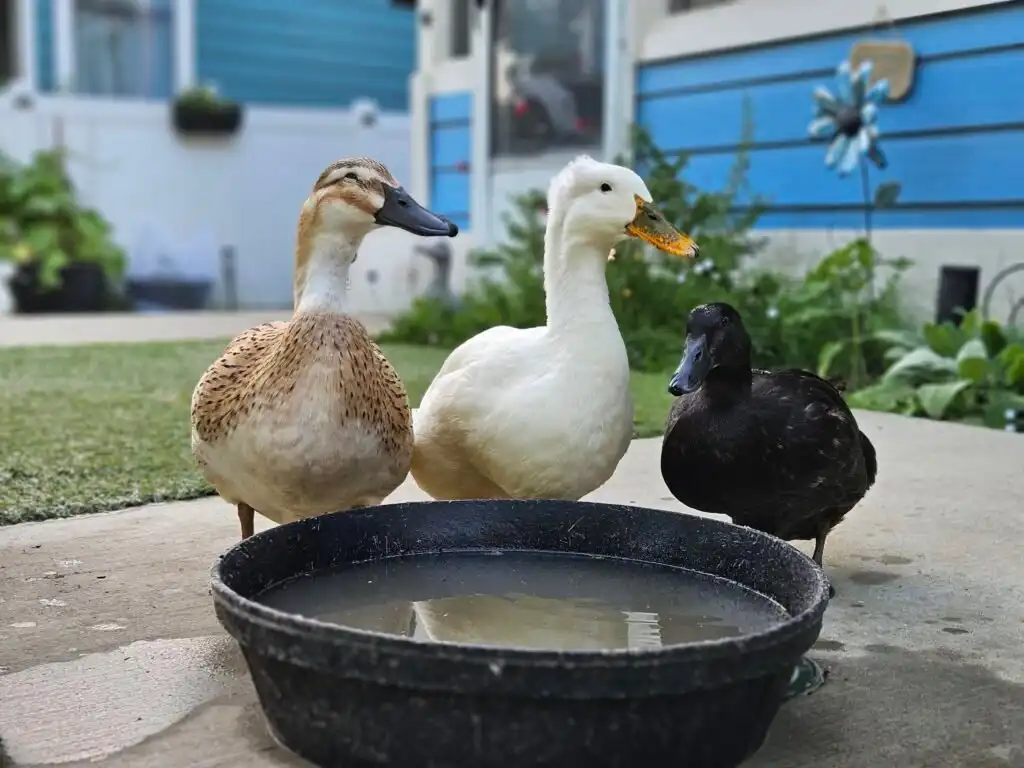
What matters is being willing to keep learning and adapt your care as your flock’s needs change.
Ducks are messy. They are loud. They can be expensive. They require planning. They will complicate vacations, destroy patches of grass, create impressive quantities of mud, and occasionally send you outside in your pajamas because you heard a suspicious noise.
They will also recognize you.
They will come running when they see you. They will develop friendships, routines, favorite foods, and wonderfully distinct personalities. You will learn the difference between an excited quack and an annoyed one. You will know who stole the treat without seeing it happen. And eventually, you may find yourself standing in the backyard discussing duck poop with another person as though this is an entirely normal conversation.
For the record, it becomes normal surprisingly quickly.
The One Thing I Hope You Take Away
If you are reading this because you are thinking about getting ducks, I do not want you to walk away wondering whether ducks are too much work.
Instead, ask yourself a better question:
Am I prepared to give ducks the life they actually need?
If the answer is yes, then all of this preparation is worth it.
Learn before they arrive. Build a safe setup. Plan for water and mud. Find your veterinarian. Budget for medical care. Understand that ducks need other ducks. Think about what happens when those tiny ducklings become adult hens and drakes.
And then enjoy them.
Because being prepared does not take the fun out of getting ducks. It gives you more room to enjoy them without constantly scrambling to solve problems you never knew were coming.
Your Next Step
If ducks are in your future, head over to our Start Here section next. I have put together the duck care guides I wish I had when I was beginning, covering housing, feeding, health, behavior, water, predator protection, and everyday flock care.
You do not need to know everything before bringing home your first ducks.
But you should know what you are signing up for.
And if, after reading all of this, you are still thinking, Yes. I absolutely want ducks.
Then welcome to the flock.
You are going to need more towels.
Further Reading & Resources
- Pet Ducks: How Many should I have? And where do I get them from?
- How Long Do Ducks Live?
- Keeping Ducks 101: A Beginner’s Guide to Duck Care
- Quackonomics 101: Exploring Pet Duck Cost
- Pet Ducks: The Ultimate Guide to Keeping and Caring for Them
- How Old Is My Duck in Human Years? A Guide to Duck Life Stages
- Top 8 Duck Websites Every Pet Duck Owner Should Bookmark
- A Full Day of Duck Care: What It Actually Looks Like
- Drake Management: How to Keep Male Ducks Without Flock Drama
- Duck Care Myths: Advice That Sounds Right… But Isn’t
Master the basics of evidence-based care. Explore the full Beginner’s Handbook to build a strong foundation for your flock.