
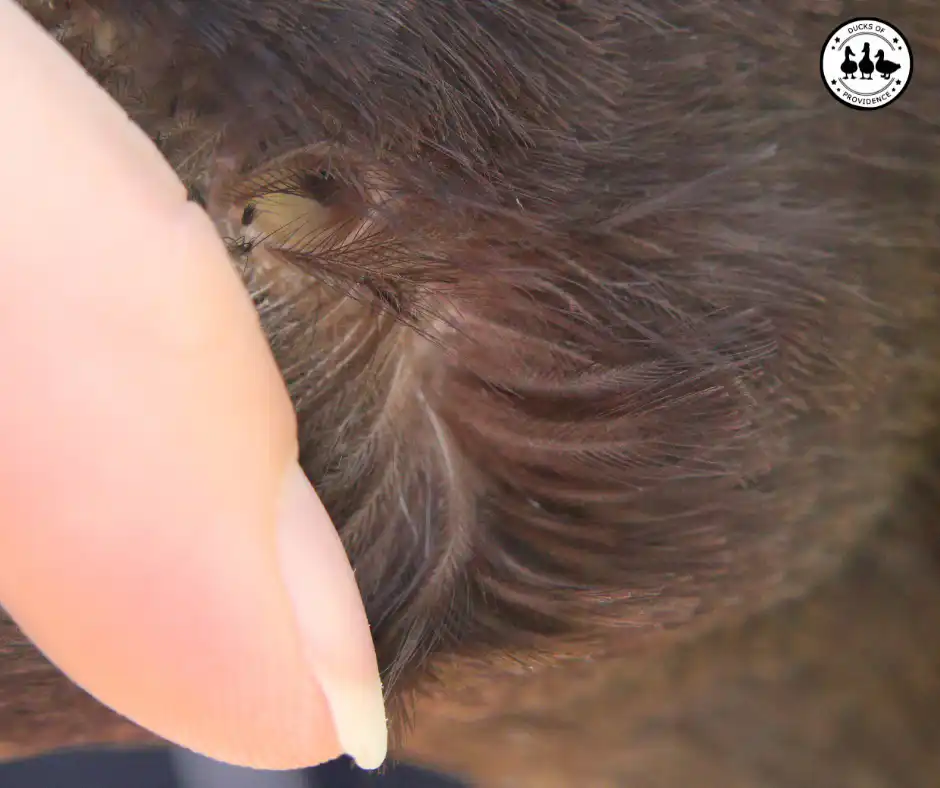
Duck Ears: The Hidden Anatomy Behind a Duck’s Amazing Hearing

To keep our research-backed guides free, this site uses ads and affiliate links (earning a small commission at no cost to you). Everything here is created by a duck mom and PhD scientist, combining academic rigor with hands-on experience to provide practical, trustworthy advice for duck keepers everywhere. 🦆 Learn more
At first glance, ducks seem to have no ears at all. Unlike dogs, cats, or people, there are no visible ear flaps sticking out from the sides of their heads. Yet ducks hear remarkably well. They recognize the voices of flock mates, respond to distant predator calls, communicate with ducklings before they even hatch, and quickly detect sounds that humans often overlook.
Understanding how duck ears work helps us better appreciate their behavior and also recognize health problems before they become serious. In this guide, we’ll explore duck ear anatomy, how ducks hear, common ear diseases, hearing loss, and when an ear problem requires veterinary attention.
Part of the Duck Health & Anatomy Hub, Evidence-based medical resources and anatomical research.
Table Quick Navigation: Jump to a Section
[hide]
- Where Are a Duck’s Ears?
- Duck Ear Anatomy
- How Ducks Hear
- How Good Is a Duck’s Hearing?
- Why Hearing Is So Important
- Common Ear Problems in Ducks
- Ear Problems vs Neurological Problems
- Can You Clean a Duck’s Ears?
- When to See an Avian Vet
- FAQ About Duck Ears and Hearing
- The Hidden Science of Duck Hearing
- Further Reading & Resources
- References
Where Are a Duck’s Ears?
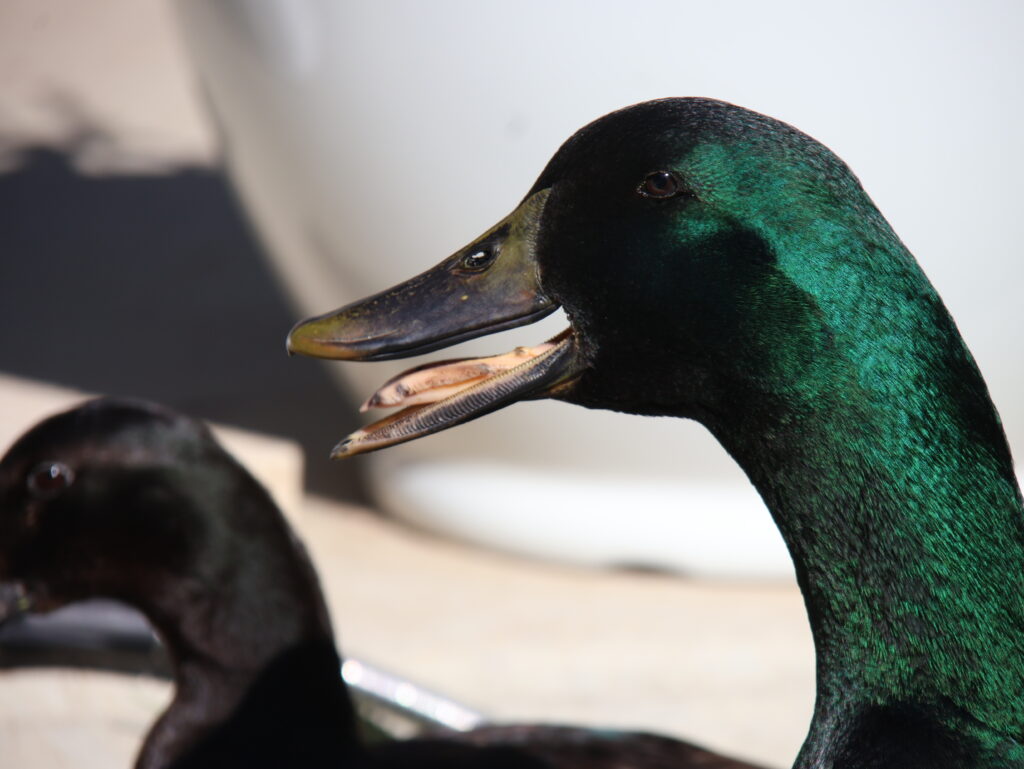
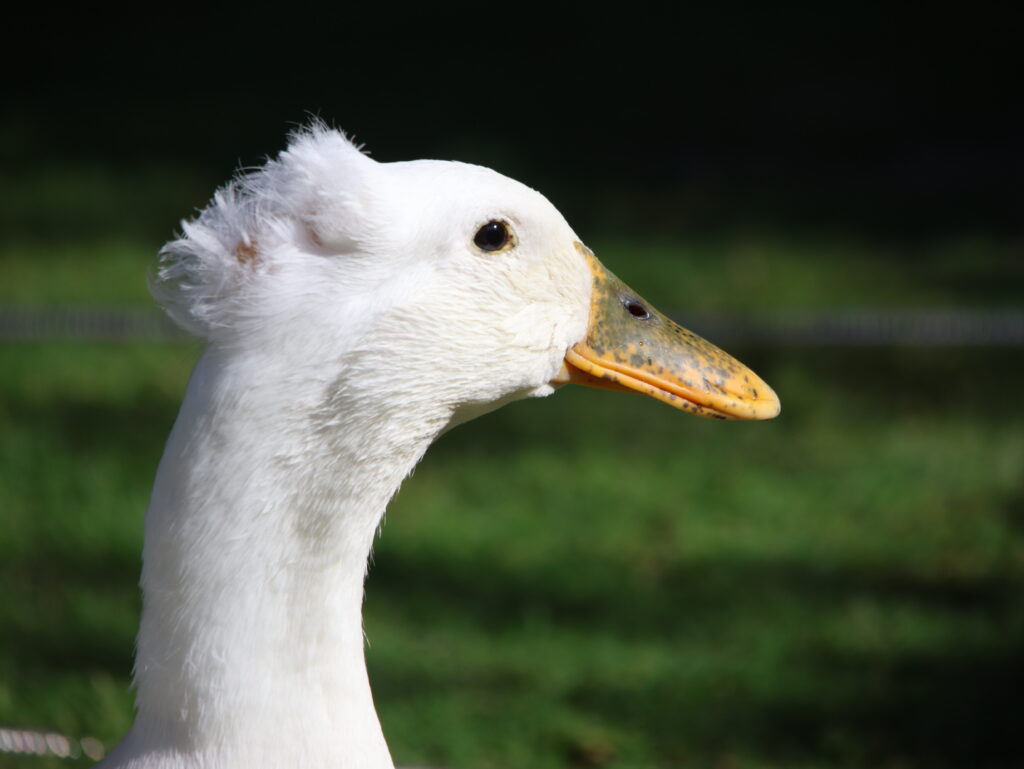
One of the most common questions I hear is, “Where are a duck’s ears?“ If you’ve ever looked closely at your duck’s head, you may have noticed that there are no visible ears like those of a dog, cat, or human. That’s because ducks do not have external ear flaps, also called pinnae. Instead, their ears are small openings hidden beneath their feathers.
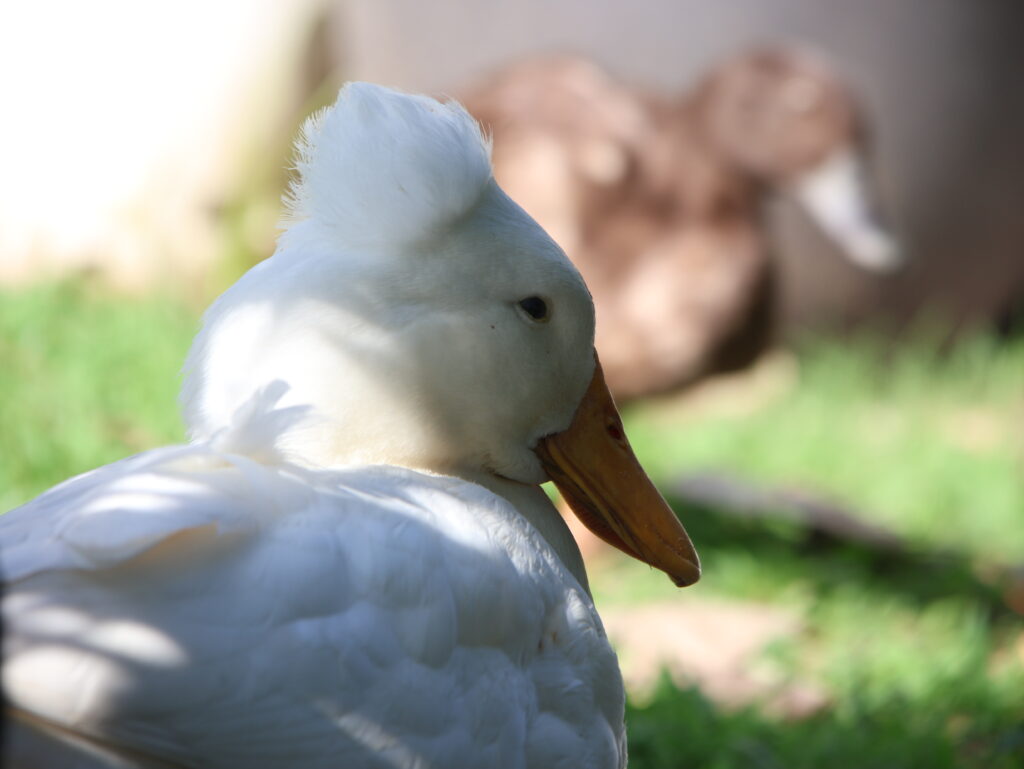
The ear opening is located slightly behind and just below each eye on either side of the head. It is covered by a layer of soft, specialized feathers known as auricular feathers. These feathers conceal the ear while still allowing sound waves to pass through to the ear opening.
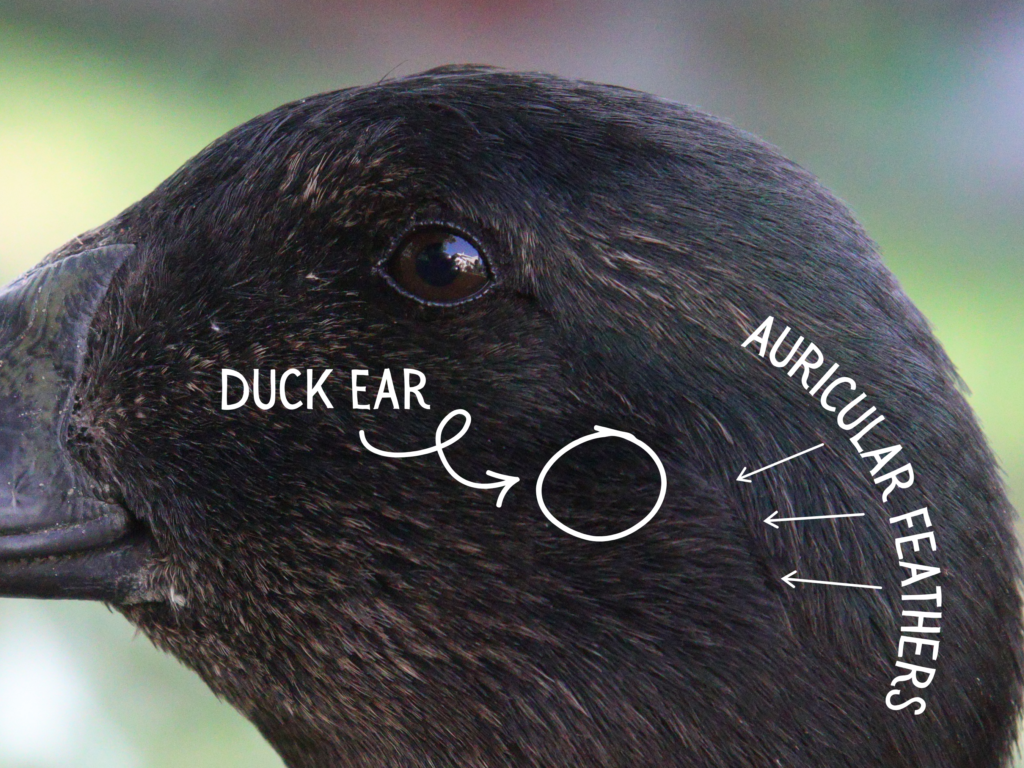
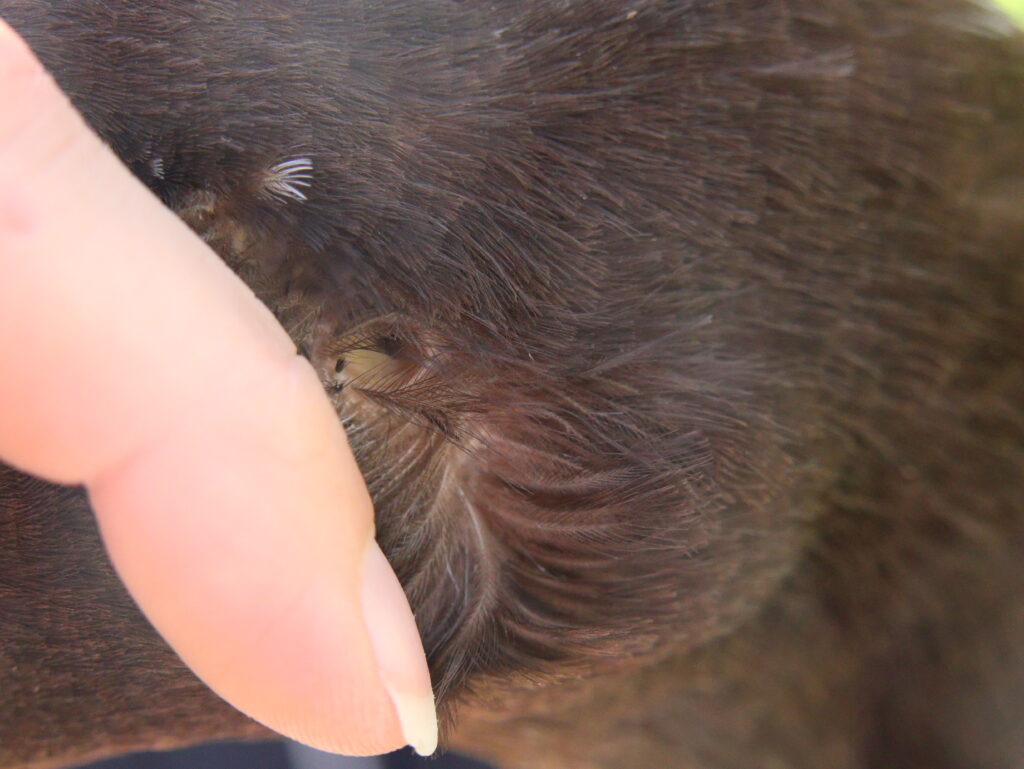
If you gently part the feathers in this area, you may be able to see a small oval opening in healthy ducks. However, there is generally no need to do this routinely, and the feathers should not be pulled or trimmed. These feathers serve several important functions:
| Function | Why It Matters |
|---|---|
| Protect the ear opening | Keeps dirt, dust, insects, and debris from entering the ear canal. |
| Maintain waterproofing | Helps prevent water from reaching the ear while swimming, bathing, or diving. |
| Reduce injury | The hidden location protects the ear from scratches, pecking, and vegetation. |
| Allow normal hearing | The feathers are soft enough that sound waves can still reach the ear effectively. |
This design is a remarkable example of evolutionary adaptation. Ducks spend much of their lives in and around water, so large external ears would create drag while swimming, trap water, and be more vulnerable to injury. By hiding the ears beneath protective feathers, ducks maintain excellent hearing while keeping this delicate sensory organ safe.
I remember the first time I looked for the ears on one of my own ducks. After years of caring for them, I realized I had never actually seen an ear. Once I gently parted the feathers behind Emma’s eye, there it was: just a tiny opening, much smaller than I had imagined. It was a great reminder that some of the most important parts of a duck’s anatomy are completely hidden from view.
Duck Mom Tip: If you’re checking this area because your duck has been scratching its head, shaking its head repeatedly, or seems painful around the ear, avoid inserting anything into the opening. Healthy duck ears require no routine cleaning, and probing the ear can cause injury. If you notice swelling, discharge, or a foul odor, it’s time to have your duck examined by an avian veterinarian.
Duck Ear Anatomy
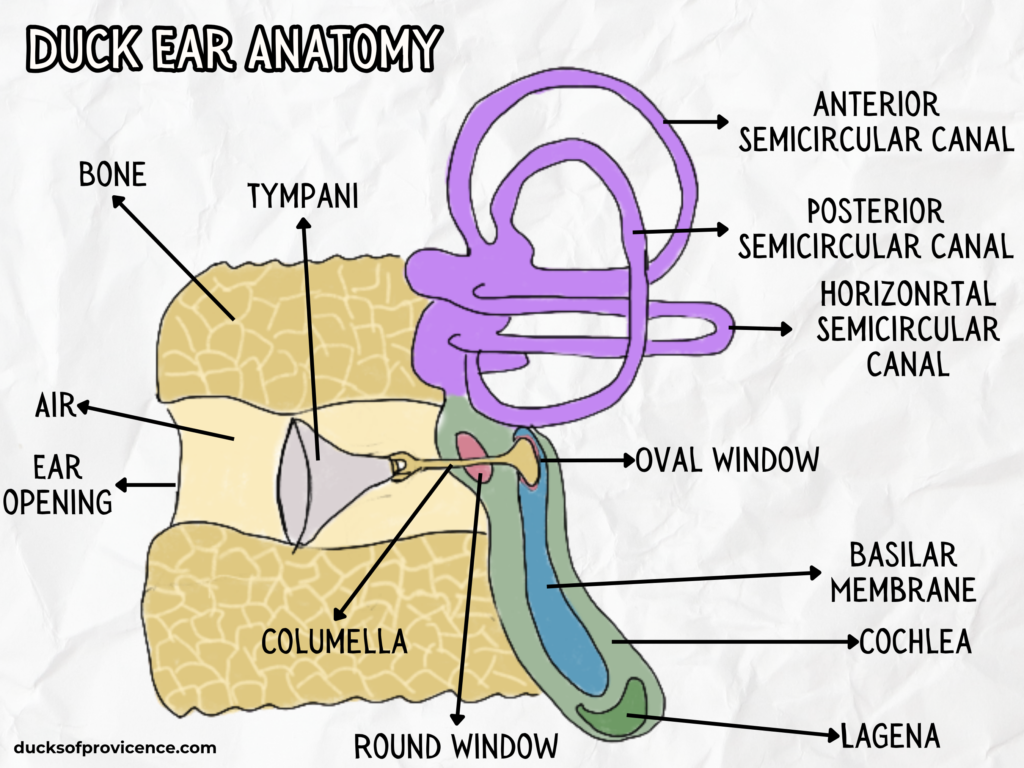
Although a duck’s ears are hidden from view, the structures inside are surprisingly sophisticated. Like other birds, ducks have an outer ear, middle ear, and inner ear, but these look quite different from the ears of mammals. Understanding how these parts work together helps explain not only how ducks hear, but also why ear problems can affect balance and coordination.
The Outer Ear
The outer ear is the simplest part of the avian ear. Instead of an external ear flap, it consists of a small ear opening covered by protective auricular feathers. This opening leads into a short ear canal that carries sound waves toward the eardrum.
Unlike mammals, ducks cannot move or rotate their ears to focus on sounds. Instead, the shape of their head, the position of both ears, and their highly specialized brain allow them to determine where sounds are coming from.
The Middle Ear
At the end of the ear canal lies the tympanic membrane, more commonly known as the eardrum. When sound waves reach the eardrum, it vibrates just as it does in humans.
Behind the eardrum is the middle ear, an air filled chamber containing a single tiny bone called the columella (also known as the stapes in birds). This bone acts like a miniature lever, transmitting vibrations from the eardrum to the inner ear.
One fascinating difference between birds and mammals is the number of hearing bones:
| Mammals | Ducks and Other Birds |
|---|---|
| Three middle ear bones (malleus, incus, stapes) | One middle ear bone (columella) |
Despite having only one hearing bone, ducks hear extremely well. Evolution has produced a lightweight and efficient hearing system that works exceptionally well for their lifestyle.
The Inner Ear
The inner ear is where sound is converted into electrical signals that the brain can interpret. It contains two major components:
The cochlea
The cochlea contains thousands of specialized sensory hair cells. As vibrations enter from the columella, these cells bend and generate nerve impulses that travel to the brain through the auditory nerve. This is how a duck recognizes familiar quacks, your voice, or the rustle of a predator approaching through the grass.
Unlike the spiral shaped cochlea found in mammals, a bird’s cochlea is slightly curved and much shorter, yet it performs the same essential function of converting sound into nerve signals.
The vestibular system
Located beside the cochlea is the vestibular apparatus, which is responsible for balance, head position, and spatial orientation. It includes fluid filled semicircular canals that detect movement in different directions.
This is why diseases affecting the inner ear often cause much more than hearing problems. Ducks with inner ear disease may develop:
- Head tilt
- Loss of balance
- Circling
- Difficulty walking
- Rolling
- Poor coordination
These signs can resemble neurological disease because the systems controlling hearing and balance are so closely connected.
Duck Ear Anatomy at a Glance
| Structure | Function |
|---|---|
| Auricular feathers | Protect the ear opening while allowing sound to pass through |
| Ear opening | Entry point for sound waves |
| Ear canal | Carries sound to the eardrum |
| Tympanic membrane (eardrum) | Vibrates in response to sound |
| Columella | Transmits vibrations from the eardrum to the inner ear |
| Cochlea | Converts sound vibrations into nerve signals |
| Auditory nerve | Sends hearing information to the brain |
| Vestibular system | Controls balance, posture, and head movement |
Did You Know? The same inner ear that allows your ducks to hear your voice also helps them keep their balance while swimming, waddling across uneven ground, and even shaking water from their feathers. That is why ear disorders can sometimes first appear as balance problems rather than obvious hearing loss.
For me, understanding the anatomy makes many duck behaviors easier to appreciate. Every time my flock suddenly lifts their heads toward a distant sound that I can barely hear, I’m reminded just how efficient this hidden little hearing system really is. Despite having no visible ears, ducks are equipped with an elegant sensory system that has been refined over millions of years of evolution.
Why Don’t Ducks Have External Ears?
Ducks evolved without external ear flaps (pinnae) because they simply don’t need them. Instead, their ears are small openings hidden beneath specialized feathers, an adaptation that is perfectly suited to their semi aquatic lifestyle.
External ears would create several disadvantages for ducks:
- Increase drag while swimming, making movement through the water less efficient.
- Trap water, increasing the risk of irritation or infection.
- Be more vulnerable to injury from vegetation, pecking, or predators.
- Disrupt the smooth, streamlined shape of the head.
Instead, ducks rely on soft auricular feathers to protect the ear opening. These feathers help keep out dirt and debris while still allowing sound waves to reach the ear.
Although ducks don’t have visible ears like mammals, their hearing is highly effective. Evolution has favored a compact, lightweight, and well-protected hearing system that allows ducks to communicate with their flock, detect predators, and navigate their environment without the need for external ear flaps.
How Ducks Hear
Now that we’ve looked at the anatomy, let’s follow the path of a sound from the environment to a duck’s brain. Although the structures differ somewhat from those of mammals, the basic process is remarkably similar. Every quack from a flock mate, rustle of leaves, or distant predator call is converted into electrical signals that the brain can interpret in just a fraction of a second.
Step 1: Sound Enters the Ear
Sound begins as vibrations traveling through the air. These sound waves pass through the auricular feathers and enter the small ear opening hidden behind the duck’s eye. The feathers protect the ear without significantly blocking sound.
Step 2: The Eardrum Vibrates
The sound waves travel down the short ear canal until they reach the tympanic membrane, or eardrum. Different sounds produce different vibration patterns. A loud alarm quack creates stronger vibrations than the gentle peeping of newly hatched ducklings.
Step 3: The Columella Amplifies the Signal
The vibrating eardrum moves the columella, the single hearing bone in the middle ear. The columella efficiently transfers these vibrations into the fluid-filled inner ear while also helping amplify the signal.
Step 4: Hair Cells Convert Vibrations into Nerve Signals
Inside the cochlea, sound vibrations create waves in the inner ear fluid. These waves bend thousands of microscopic sensory hair cells. As the hair cells move, they convert mechanical vibrations into electrical impulses.
These delicate hair cells are essential for hearing. Unlike feathers, they do not regenerate if they are permanently damaged, which is why hearing loss from severe injury or aging may be irreversible.
Step 5: The Brain Interprets the Sound
The electrical impulses travel along the auditory nerve to specialized regions of the brain, where they are interpreted almost instantly.
Instead of hearing a collection of random noises, the brain identifies meaningful sounds, such as:
- The contact calls of flock mates.
- The distinctive voice of a bonded human caregiver.
- The alarm call signaling a potential predator.
- The begging calls of ducklings.
- Environmental sounds like approaching footsteps or rustling vegetation.
This rapid processing allows ducks to react within fractions of a second, an essential survival skill for prey animals.
Hearing With Two Ears
Like humans, ducks use both ears together to determine where a sound is coming from. Tiny differences in the timing and intensity of a sound reaching each ear allow the brain to estimate its direction.
Although ducks cannot swivel external ears toward a sound, they often compensate by making quick head movements. You may notice your ducks briefly pause, stretch their necks, or tilt their heads before deciding whether something deserves attention. These subtle adjustments help them pinpoint the source of a sound more accurately.
Why Fast Hearing Matters
For ducks, hearing is about much more than communication. It is a critical survival tool.
A duck that recognizes the warning call of another flock member even half a second sooner may have enough time to dive into the water, run for cover, or take flight before a predator strikes. Likewise, ducklings rely on hearing to stay close to their mother, even when tall grass or vegetation blocks their view.
This combination of efficient anatomy, rapid nerve signaling, and sophisticated brain processing gives ducks the ability to constantly monitor their surroundings, even while feeding, preening, or resting.
From the Flock: I’ve noticed this countless times with Emma, Simon, and the rest of our flock. I’ll hear nothing unusual, yet suddenly every duck freezes at the exact same moment, lifts its head, and stares toward the tree line. A few seconds later, I’ll finally hear what they detected first, whether it’s a hawk calling overhead, a barking dog, or a delivery truck several houses away. Their hearing often alerts them to changes in their environment well before I notice them.
How Good Is a Duck’s Hearing?
Although ducks are not known for having exceptional hearing in the same way owls are, their hearing is highly adapted to their lifestyle. They do not need to detect the faintest sounds over long distances. Instead, they excel at hearing the frequencies that matter most for communication, social interactions, and predator detection.
In other words, ducks hear what is important to a duck.
Ducks Hear the Sounds That Matter Most
Research has shown that ducks are particularly sensitive to the frequency range used in duck vocalizations. This allows them to distinguish between different calls and respond appropriately, even in noisy environments such as ponds filled with other waterfowl.
Their hearing helps them:
- Recognize the voices of flock mates.
- Detect alarm calls from other ducks.
- Hear approaching predators before they become visible.
- Stay connected with the flock while foraging.
- Locate calling ducklings hidden in vegetation.
- Communicate during courtship and breeding.
For a prey animal that often feeds with its head down, being able to hear danger before seeing it can make the difference between life and death.
Ducks Can Recognize Familiar Voices
Many duck owners notice that their ducks respond differently to familiar and unfamiliar people. While ducks rely heavily on vision, they also learn to recognize individual voices.
My own flock often reacts before they can even see me. If I call them from inside the house or around the corner of the yard, I usually hear a chorus of excited quacks within seconds. They have learned to associate my voice with safety, food, and positive experiences.
This ability develops through repeated social interactions and is one of the many reasons ducks form such strong bonds with both their flock mates and the humans they trust.
Ducklings Begin Hearing Before They Hatch
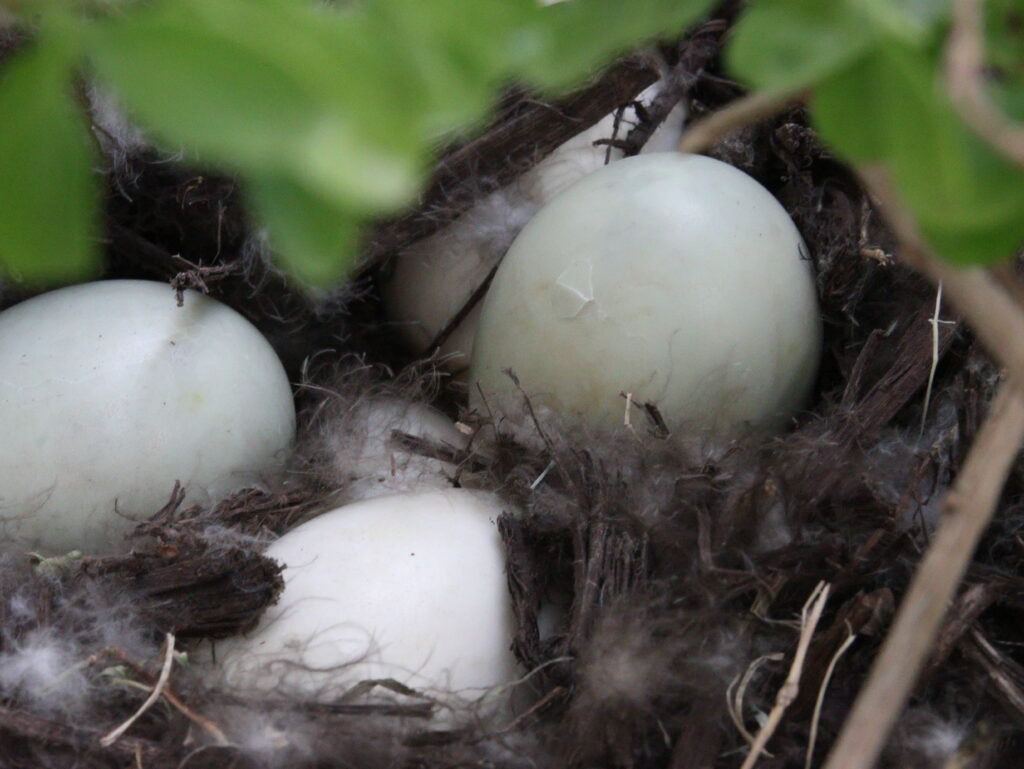
One of the most remarkable aspects of duck hearing is that it begins before a duckling ever leaves the egg.
During the final days of incubation, the auditory system has developed enough for embryos to hear sounds from both inside and outside the egg. They begin communicating with their siblings through soft peeps and respond to the mother’s vocalizations.
Scientists believe these early conversations help synchronize hatching so that ducklings emerge within a relatively short period of time. Once hatched, they already recognize their mother’s voice, making it easier to stay together as a family.
Hearing Works Together With Vision
Ducks rarely rely on a single sense. Instead, they combine hearing with their excellent vision to constantly monitor their surroundings.
Imagine a duck peacefully dabbling with its head underwater. Its field of vision is temporarily reduced, but its ears continue monitoring the environment. If another duck gives an alarm call or a predator makes an unexpected noise, the duck can immediately lift its head and assess the situation.
This teamwork between the eyes and ears is one reason ducks are so alert and can react incredibly quickly to potential threats.
Can Ducks Hear Better Than Humans?
Not necessarily. Humans generally hear a broader range of frequencies, especially very high-pitched sounds. Ducks, however, are more sensitive to the sounds that are most relevant to their daily lives.
Rather than having better hearing, ducks have specialized hearing. Evolution has fine-tuned their auditory system to detect the calls of other ducks, identify subtle environmental sounds, and quickly recognize signs of danger.
Did You Know? Ducks don’t need visible ears to be excellent listeners. Their hearing is precisely tuned to the sounds of flock life, allowing them to communicate, avoid predators, and even recognize familiar voices. It’s another example of how evolution has shaped ducks into highly successful and socially connected animals.
Why Hearing Is So Important
For ducks, hearing is much more than the ability to detect sound. It is a vital sense that helps them survive, communicate, navigate their social world, and care for their young. Because ducks are prey animals, they are constantly gathering information about their surroundings, even when they appear relaxed.
Many of the behaviors we observe in our backyard flocks are directly linked to how well they can hear.
| Situation | How Hearing Helps |
|---|---|
| Predator detection | Detects approaching predators before they are visible, giving ducks valuable time to escape. |
| Flock communication | Allows ducks to stay in contact while foraging, swimming, or exploring different areas. |
| Recognizing alarm calls | Quickly alerts the entire flock to potential danger, even if only one duck spots the threat. |
| Parent and duckling communication | Helps mothers and ducklings stay together through constant vocal contact. |
| Courtship and breeding | Enables drakes and hens to recognize mating calls and communicate during breeding season. |
| Social bonding | Helps ducks identify familiar flock mates and trusted human caregivers. |
| Nighttime awareness | Allows resting ducks to remain alert to unusual sounds, even in darkness or dense vegetation. |
Hearing Keeps the Flock Together
Ducks are highly social animals that rarely rely on vision alone to stay connected. While grazing through tall grass or swimming around a pond, flock members frequently make quiet contact calls to let one another know where they are.
If one duck wanders too far away, the others often respond vocally until the group is reunited. This constant communication helps maintain flock cohesion and reduces the risk of an individual becoming isolated, which would make it more vulnerable to predators.
I’ve noticed this many times with my own flock. If Krümel or Muffin are inside the house while the others are outside, everyone seems much more settled once they hear each other’s familiar voices. Even when they can’t see one another, they know the flock is still together.

Alarm Calls Save Lives
One of the most important functions of hearing is recognizing alarm calls.
If a single duck spots a hawk, hears a coyote, or notices an unfamiliar person approaching, it often gives a distinctive warning call. The rest of the flock reacts almost instantly, even if they never saw the original threat.
This rapid transfer of information allows the entire flock to respond within seconds by:
- Freezing to assess the situation.
- Running toward shelter or water.
- Looking upward for aerial predators.
- Gathering together as a group.
- Becoming unusually quiet until the danger has passed.
This is one reason panic can spread so quickly through a flock. Hearing allows information to travel much faster than vision alone.
Hearing Helps Ducks Sleep Safely
Even while resting, ducks never become completely unaware of their surroundings.
Although sleeping ducks reduce their responsiveness, their hearing continues to monitor the environment for unusual sounds. A sudden predator call, loud noise, or disturbance near the coop can quickly wake the flock.
Providing a secure, enclosed duck house doesn’t just protect ducks physically. It also reduces the number of unfamiliar sights and sounds they experience overnight, helping them rest more comfortably while remaining prepared to respond if necessary.
A Sense Ducks Depend On Every Day
Whether your ducks are greeting you in the morning, chatting while they forage, responding to a distant hawk, or quietly reassuring one another at bedtime, hearing plays a role in almost everything they do.
Because their ears are hidden, it’s easy to overlook just how important this sense is. Yet every day, your ducks are constantly listening, interpreting, and responding to the world around them. Understanding that helps explain many of their behaviors and reminds us why changes in hearing, balance, or responsiveness should never be ignored.

Common Ear Problems in Ducks
Fortunately, ear diseases are less common than eye, respiratory, or foot problems in pet ducks. The ear opening is well protected by feathers, and the ear canal is relatively short, helping reduce the risk of injury and contamination.
However, ear problems can and do occur. Because the ears are hidden beneath feathers, the signs are often subtle at first. In some cases, the first clue is not a hearing problem at all, but a change in balance, coordination, or behavior.
Ear Infections (Otitis)
An ear infection, or otitis, occurs when bacteria, fungi, or, less commonly, other microorganisms infect the ear. In ducks, infections may involve the outer ear (otitis externa) or, more seriously, the middle or inner ear (otitis media or interna).
Possible causes include:
- Bacterial infections
- Fungal infections
- Trauma around the ear
- Foreign material entering the ear canal
- Spread of infection from nearby tissues
- Underlying illness that weakens the immune system
An infection affecting the inner ear is particularly concerning because this is where the organs responsible for balance are located.
Possible signs of an ear infection include:
- Frequent head shaking
- Scratching around one ear
- Swelling near the ear opening
- Redness or inflammation
- Discharge from the ear
- A foul odor
- Sensitivity when the head is touched
- Head tilt
- Loss of balance or stumbling
If you notice any of these signs, your duck should be evaluated by an avian veterinarian. Ear infections rarely resolve on their own and may require prescription antibiotics or antifungal medications.
Hearing Loss
Just like people and other animals, ducks can experience partial or complete hearing loss.
Potential causes include:
- Aging
- Chronic or untreated ear infections
- Head trauma
- Congenital abnormalities
- Damage to the sensory hair cells of the inner ear
- Certain neurological diseases
Unlike feathers, the delicate sensory hair cells inside the cochlea have very limited ability to recover after significant damage. Depending on the underlying cause, hearing loss may be temporary or permanent.
Signs of hearing loss can be subtle:
- Reduced response when called
- Startling more easily when approached
- Not reacting to normal flock vocalizations
- Difficulty locating the source of sounds
- Changes in social interactions
Because ducks rely on multiple senses, a duck with mild hearing loss may compensate well with vision, making the problem difficult to recognize until it becomes more advanced.
Head Trauma
Head injuries deserve special attention because they can affect both hearing and balance.
A fall, predator attack, collision, or accidental injury may damage the structures of the ear or the nerves that carry hearing information to the brain.
After any significant head injury, monitor your duck closely for:
- Head tilt
- Circling
- Poor coordination
- Loss of balance
- Changes in responsiveness
- Abnormal eye movements
When Schnatterinchen suffered her head injury, one of the things we watched most carefully was whether her behavior changed in ways that suggested damage to her hearing or balance. Thankfully, she recovered remarkably well, but it reinforced how closely these systems are connected and why head injuries should always be taken seriously.
Ear Mites: Are They a Problem?
Many dog and cat owners are familiar with ear mites, but they are not considered a common problem in ducks. While external parasites can occasionally affect birds, ear mites are rarely the cause of ear irritation in pet ducks.
If your duck is repeatedly scratching its head or shaking its head, an ear infection, injury, skin irritation, or another underlying medical condition is much more likely than ear mites.
Ear Problems or Neurological Disease?
One challenge is that diseases affecting the inner ear can produce signs that closely resemble neurological disorders.
A duck with an inner ear infection may develop:
- Head tilt
- Rolling
- Circling
- Difficulty standing
- Loss of coordination
These same signs can also occur with conditions such as wry neck, head trauma, toxin exposure, or diseases affecting the brain.
Because the treatments differ dramatically, it is impossible to diagnose the cause based on these signs alone.
Duck Mom Tip: Any duck that suddenly develops a head tilt, loses its balance, rolls, has seizures, or cannot stand should be seen by an avian veterinarian as soon as possible. While an ear infection is one possible cause, these signs are always considered a medical emergency until proven otherwise.
Ear Problems vs Neurological Problems
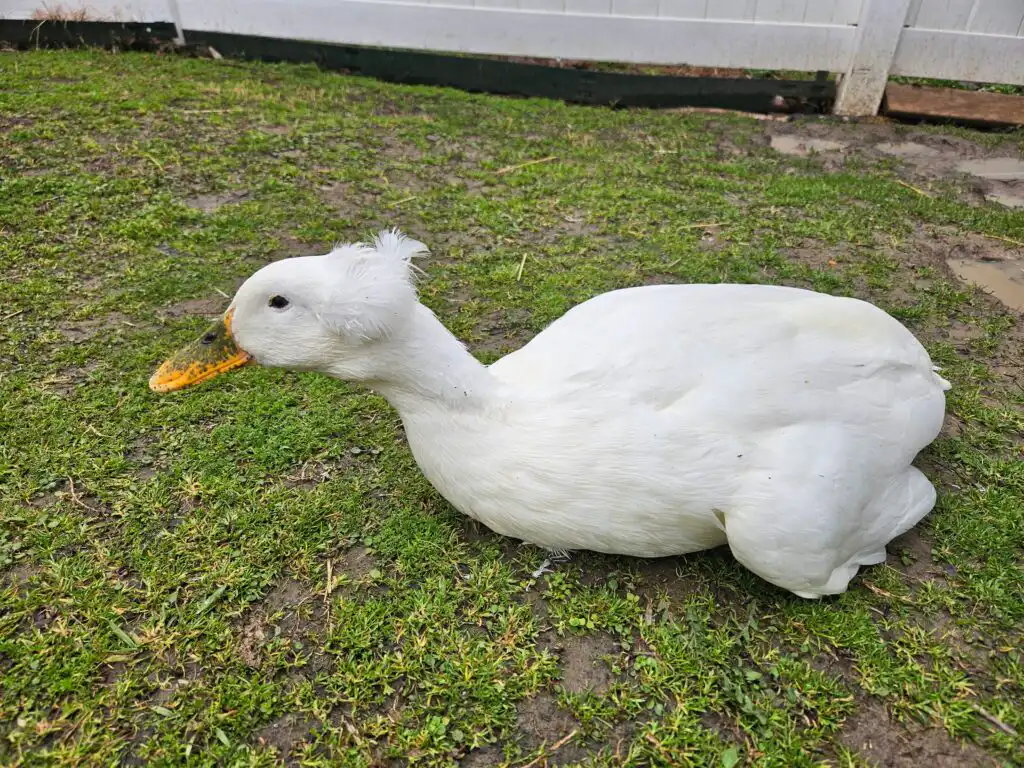
One of the challenges in diagnosing ducks is that ear disorders and neurological diseases can produce many of the same symptoms. This is because the inner ear doesn’t just control hearing. It also contains the vestibular system, which is responsible for balance, posture, and spatial orientation.
When the inner ear becomes inflamed or damaged, a duck may develop signs that look remarkably similar to those caused by diseases affecting the brain or nervous system.
Signs That Can Occur With Both Conditions
Whether the problem originates in the inner ear or the nervous system, you may notice:
- Head tilt
- Loss of balance
- Stumbling or falling over
- Circling
- Rolling
- Difficulty standing or walking
- Poor coordination
- Abnormal eye movements (nystagmus)
- Reduced responsiveness
Unfortunately, these signs alone cannot tell you where the problem is located.
Possible Causes
| Inner Ear Disorders | Neurological Disorders |
|---|---|
| Ear infections (otitis interna) | Wry neck (torticollis) |
| Trauma affecting the inner ear | Head trauma or concussion |
| Inflammation | Toxin exposure (for example, lead or botulism) |
| Rare tumors | Brain inflammation (encephalitis) |
| Congenital abnormalities | Nutritional deficiencies (such as vitamin E deficiency) |
| Stroke or other central nervous system disorders (rare) |
In some cases, both the ear and nervous system may be affected simultaneously, particularly after severe head trauma or widespread infection.
Why a Veterinary Exam Is Essential
Because the treatments vary depending on the underlying cause, it is impossible to determine the diagnosis based on appearance alone. Your veterinarian may perform a physical and neurological examination, assess the ears, and recommend additional diagnostics, such as imaging or laboratory tests, if needed.
Trying to treat a duck at home without knowing whether the problem is an ear infection, toxin exposure, or a neurological disease can delay the correct treatment and reduce the chances of recovery.
Duck Mom Tip: Any duck that suddenly develops a head tilt, cannot keep its balance, rolls repeatedly, has seizures, or is unable to stand should be treated as a medical emergency. Even if the cause turns out to be an ear infection, these signs warrant immediate evaluation by an experienced avian veterinarian. Early diagnosis and treatment offer the best chance for a full recovery.
Can You Clean a Duck’s Ears?
The short answer is no. Healthy duck ears do not require routine cleaning.
Unlike dogs or cats, ducks have a naturally protected ear opening hidden beneath auricular feathers. These feathers help keep out dirt, dust, and water while still allowing sound to reach the ear. Under normal circumstances, the ear is self-maintaining, and there is no need to clean it as part of your regular care routine.
In fact, attempting to clean a healthy duck’s ears can do more harm than good.
What You Should Never Do
Avoid:
- Inserting cotton swabs or other objects into the ear canal.
- Flushing the ear with water or cleaning solutions.
- Applying over-the-counter ear medications intended for dogs, cats, or humans.
- Trimming or removing the protective feathers around the ear opening.
The ear canal and eardrum are delicate, and inserting anything into the ear can cause irritation, injury, or even push debris deeper into the canal.
When Should You Check the Ear?
While routine cleaning isn’t necessary, it’s a good idea to look around the ear area if your duck develops signs such as:
- Frequent head shaking
- Repeated scratching near one ear
- Swelling around the ear opening
- Redness or discharge
- A foul odor
- A head tilt or balance problems
If you gently part the feathers and notice anything abnormal, resist the urge to clean or treat the ear yourself. Instead, schedule an appointment with an avian veterinarian, who can safely examine the ear using specialized equipment and prescribe the appropriate treatment if needed.
Duck Mom Tip: Healthy duck ears are usually a hands-off body part. In most cases, the best care you can provide is simply monitoring for changes. If your duck starts shaking its head, scratching at one side, or develops balance problems, let your veterinarian determine whether the ear is involved rather than trying to clean it at home.
When to See an Avian Vet
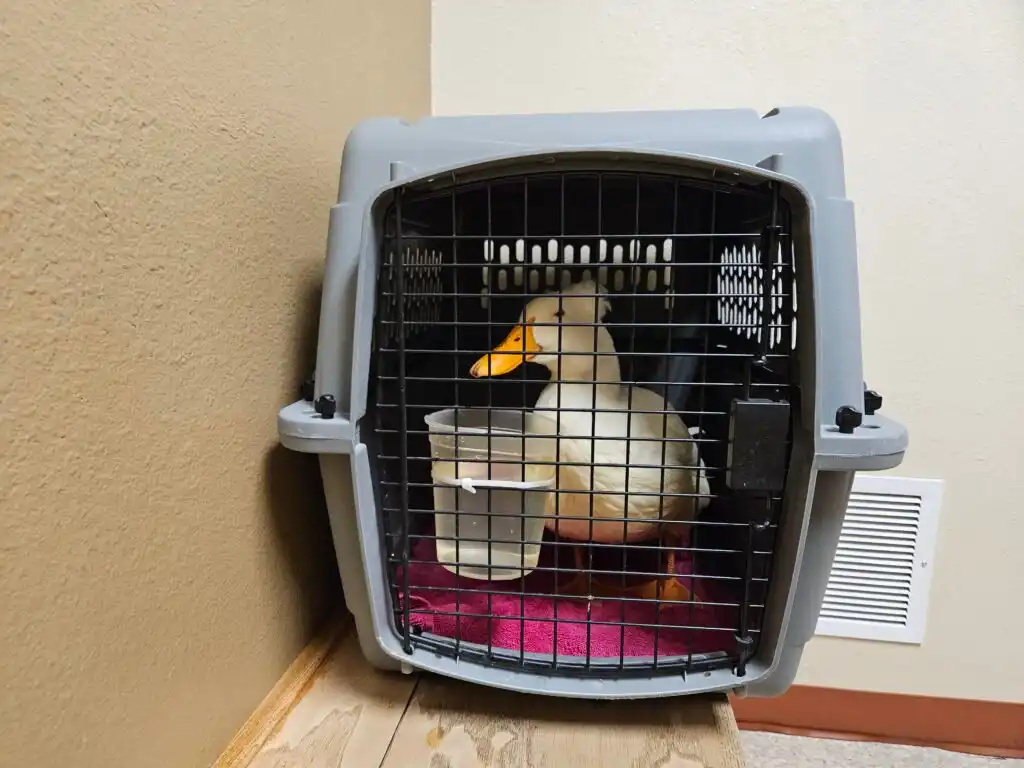
Because a duck’s ears are hidden beneath feathers, ear problems often go unnoticed until they become more advanced. While minor irritation around the head may not always be an emergency, any signs involving the ear, hearing, or balance should be taken seriously.
The good news is that ear infections and many other conditions can often be treated successfully when diagnosed early. Delaying veterinary care, however, can allow an infection to spread deeper into the ear or lead to permanent damage.
Signs That Should Prompt a Veterinary Visit
| Sign | Why It Matters | Urgency |
|---|---|---|
| Head shaking or repeated scratching | May indicate irritation, infection, or pain | Within 24–48 hours if persistent |
| Swelling around the ear | Could indicate infection or trauma | Prompt veterinary visit |
| Discharge from the ear | Suggests infection or injury | Prompt veterinary visit |
| Foul odor | Often associated with bacterial or fungal infection | Prompt veterinary visit |
| Reduced response to sounds | May indicate hearing loss or neurological disease | Schedule an examination |
| Head tilt | May be caused by an inner ear disorder or neurological disease | Same day |
| Loss of balance or stumbling | Suggests involvement of the inner ear or nervous system | Emergency |
| Rolling, seizures, or inability to stand | Severe neurological signs requiring immediate care | Emergency |
Trust Your Instincts
As duck owners, we quickly learn what is normal for each member of our flock. If one of your ducks suddenly seems quieter than usual, doesn’t respond when the flock calls, startles unusually easily, or develops changes in posture or balance, it’s worth paying attention.
In my experience, ducks are incredibly good at hiding illness. By the time they show obvious clinical signs, they may already be quite sick. That’s why I always recommend erring on the side of caution. If something doesn’t seem right, it’s far better to have your duck examined early than to wait and hope the problem resolves on its own.
Duck Mom Tip: Ear infections, head trauma, toxin exposure, and neurological diseases can all look surprisingly similar in ducks. If your duck develops a head tilt, loses its balance, or suddenly cannot stand, don’t try to determine the cause at home. Seek veterinary care immediately. Early diagnosis gives your duck the best chance of a full recovery.
FAQ About Duck Ears and Hearing
Do Ducks Have Ears?
Yes, ducks have ears. Their ears are small openings located behind and slightly below each eye, hidden beneath specialized feathers. Although they lack external ears like mammals, ducks hear very well and use hearing for communication, navigation, predator detection, and caring for their young.
Can Ducks Hear Before They Hatch?
Yes. Ducklings begin hearing before they hatch. During the final days of incubation, their auditory system is developed enough to detect sounds from both inside and outside the egg.
Researchers have found that duck embryos communicate with one another through soft peeping calls before hatching. These vocalizations are thought to help synchronize hatching so that most of the ducklings emerge within a relatively short period. This is important because, in the wild, a mother duck typically leaves the nest with her brood soon after the last ducklings hatch.
Can Ducks Go Deaf?
Yes, ducks can experience partial or complete hearing loss, although it is considered relatively uncommon. Hearing loss may result from aging, chronic ear infections, head trauma, congenital abnormalities, or diseases affecting the inner ear or nervous system. Because ducks rely on both hearing and vision, mild hearing loss can be difficult to recognize until it becomes more advanced.
Can Ducks Hear Underwater?
Yes, but hearing is less effective underwater than in air. Ducks spend much of their time swimming and dabbling, and while sound can travel through water, their hearing system is primarily adapted for detecting sounds in the air, where communication and predator detection are most important.
Do Ducks Have Earwax?
No, ducks do not produce earwax like humans do. Their ears are naturally protected by auricular feathers and the structure of the ear canal, which help prevent dirt and debris from entering. Healthy duck ears do not require routine cleaning.
Why Does My Duck Keep Shaking Its Head?
Occasional head shaking is normal and may simply be part of preening or drying off after a swim. However, repeated or persistent head shaking can indicate an ear infection, irritation, a foreign object, parasites, or another medical condition. If head shaking is accompanied by scratching, swelling, discharge, a head tilt, or balance problems, your duck should be examined by an avian veterinarian.
Can Ducks Hear Better Than They Can Smell?
Yes. While ducks do have a sense of smell, hearing and vision are much more important for finding flock mates, detecting predators, and navigating their environment. Their auditory and visual systems play a far greater role in their daily behavior than their sense of smell.
The Hidden Science of Duck Hearing
Although you can’t see them, your ducks’ ears are working every moment of the day. From recognizing the voices of flock mates and trusted caregivers to detecting the distant call of a predator, their hearing plays a vital role in communication, survival, and overall well-being.
Learning about duck ear anatomy also helps us become better duck keepers. Understanding where the ears are located, how hearing works, and which signs may indicate an ear or neurological problem allows us to recognize illness earlier and seek veterinary care before a condition becomes more serious.
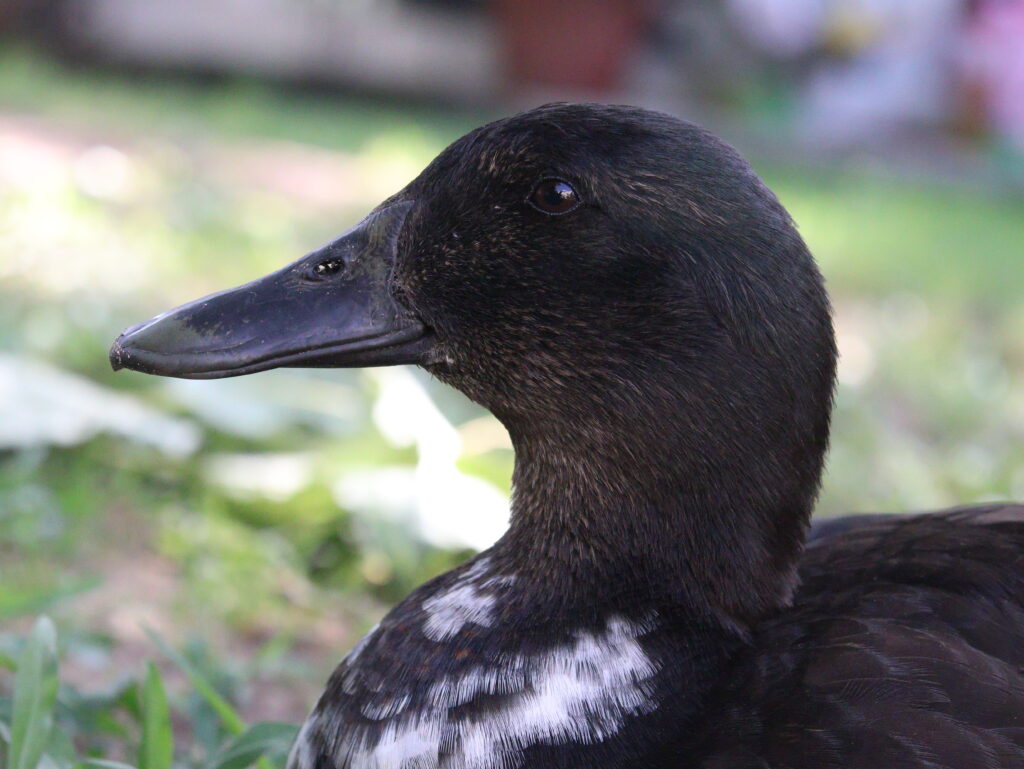
One of the things I love most about studying duck anatomy is discovering how perfectly each body system is adapted to their lifestyle. Their hidden ears are a great example. Rather than having large external ears, ducks have a compact, feather-protected hearing system that works exceptionally well whether they’re swimming, foraging, flying, or resting.
The next time your flock suddenly lifts their heads toward a sound you haven’t even noticed yet, you’ll know there’s an incredible amount of biology happening beneath those feathers. It’s just one more reminder that ducks are far more complex, intelligent, and fascinating than most people realize. 🦆
Further Reading & Resources
- Duck Anatomy: A Complete Guide for Pet Owners
- Why Ducks Suddenly Panic (And What They Might Be Trying to Tell You)
- How Ducks Sleep: Brain Hemispheres, Posture, and Safety
- When to Take a Duck to the Vet (My Real-Life Checklist)
- Finding a Duck-Savvy Vet: Tips for Pet Duck Owners
Deepen your understanding of avian wellness. Explore the full Duck Health & Anatomy Library for more specialized care guides.
References
- Saito, N. (1980). Structure and Function of the Avian Ear. In: Popper, A.N., Fay, R.R. (eds) Comparative Studies of Hearing in Vertebrates. Proceedings in Life Sciences. Springer, New York, NY. https://doi.org/10.1007/978-1-4613-8074-0_8
- Lyn S. Miranda Portillo, et. al. Anatomical and molecular insights into avian inner ear sensory hair cell regeneration, Developmental Biology, Volume 525, 2025, Pages 13-25
- Greenacre, C. B., & Morishita, T. Y. (Eds.). (2021). Backyard poultry medicine and surgery: A guide for veterinary practitioners (2nd ed.). Wiley-Blackwell.