
Duck Mating Season: Managing Aggression, Ratios, and Reproductive Health

Last updated: February 28th, 2026
To keep our research-backed guides free, this site uses ads and affiliate links (earning a small commission at no cost to you). Everything here is created by a duck mom and PhD scientist, combining academic rigor with hands-on experience to provide practical, trustworthy advice for duck keepers everywhere. 🦆 Learn more
Duck mating behavior can be surprising, confusing, and, to the uninitiated, deeply concerning. If you have ever wondered how ducks mate, why drakes exhibit such intense aggression, or how to protect your hens during the peak breeding season, you aren’t alone. Understanding the mechanics of waterfowl reproduction is essential for responsible, stress-free flock management.
As a scientist and experienced duck owner, I approach duck breeding from a dual perspective: combining an understanding of reproductive physiology with real-world, backyard experience. Duck courtship is a complex biological event driven by a mix of hormones, specialized anatomy, and social hierarchy. While displays like head-bobbing and wing-flapping are fascinating parts of the natural photoperiod response, other behaviors can quickly become stressful or dangerous for your hens if not properly managed.
In this comprehensive guide, we break down the unique evolutionary biology of how ducks mate, distinguish between normal and problematic behaviors, and share practical strategies to keep your flock safe and balanced. Whether you are navigating your first spring or looking to optimize your drake-to-hen ratios, this post provides the science-informed clarity you need to manage your flock with confidence and care.
Part of the Community & Behavior Hub, Exploring the social complexity and psychological needs of domestic ducks.
The Biological Reality: Why Duck Mating Looks Aggressive
If you are a first-time duck owner, witnessing your flock’s first mating season can be a jarring experience. Unlike the gentle courtship often seen in other bird species, waterfowl mating is characterized by high-speed chases, splashing, and what appears to be physical struggle. It is common for owners to worry that their hens are being “attacked” or that the drakes have suddenly become aggressive.
However, as we look closer through a biological lens, we see that these behaviors are deeply rooted in evolutionary reproductive strategies. In the wild, ducks have evolved complex physical and behavioral traits to ensure the survival of their genetics. What looks like aggression to the human eye is actually a programmed sequence of instinctual behaviors, from the “bobbing” courtship displays to the physical grip the drake must maintain to stay balanced, especially when mating on water.
Understanding the physiology and hormonal triggers behind these interactions is the first step in moving from a worried observer to an informed flock manager. By recognizing the difference between natural reproductive drives and actual physical harm, you can better monitor your flock’s health while respecting their natural biological rhythms.
The Evolutionary “Arms Race” of Waterfowl Biology
Ducks possess one of the most sophisticated reproductive systems in the avian world. While 97% of bird species rely on a brief “cloacal kiss,” waterfowl have evolved a complex, physical mechanism for internal fertilization. This is a result of millions of years of co-evolution between males and females.
Specialized Drake Anatomy
Male ducks (drakes) are among the few birds with an intromittent organ, a flexible, corkscrew-shaped phallus. This organ is capable of explosive eversion, a high-speed extension that allows for successful mating on the water. Interestingly, this organ is seasonally deciduous. It regrows each spring under the influence of rising testosterone levels and regresses significantly during the off-season to conserve energy.
The Female Response: A Biological Gatekeeper
Female ducks have evolved an equally unique and counter-intuitive reproductive tract. To maintain mate choice and control over their own reproductive success, the female’s vaginal tract is a series of clockwise spirals and “dead-end” pockets.
Because the drake’s phallus spirals counter-clockwise, the female’s anatomy acts as a biological barrier. This ensures that fertilization is most successful when the female is receptive and relaxed, allowing her muscles to facilitate the path for the sperm. In cases of forced copulation (unwanted mating), the female can physically restrict access, effectively choosing which drake’s genetics are passed on to the next generation.
Interesting Facts: The Science of Duck Reproduction
- Size Variability: Phallus length is often correlated with the level of social competition in a flock. In some species, it can reach lengths of 8–10 inches, though domestic ducks are typically more moderate.
- Sperm Storage: Females possess sperm storage tubules, allowing them to store viable sperm for up to two weeks. This means a single successful mating can fertilize an entire clutch of eggs.
- Control over Paternity: Studies in evolutionary biology show that females successfully “filter” up to 95% of unwanted matings, ensuring their offspring are sired by their preferred partners.
How This Affects Your Breeding Management
Understanding this “arms race” helps you become a better breeder. For the scientist-led backyard:
- Selection for Temperament: Breeding for calmer drakes isn’t just about flock peace. It’s about working with the female’s biology rather than against it.
- Prioritize a Low-Stress Environment: Since fertilization success depends on the female being “relaxed and receptive,” a high-stress coop with too many drakes will actually lower your hatch rates.
- The 14-Day Rule: Because of sperm storage, if you are switching breeding pairs to select for specific traits (like egg color or size), you must isolate the female for at least 14 days before introducing the new drake to ensure “purity” of the clutch.
Would you like more details on egg incubation or hatching? ➡️ Read Hatching Ducklings Like a Pro: Step-by-Step Incubation & Brooder Guide!
Why Ducks Prefer Water: Buoyancy and Safety During Mating
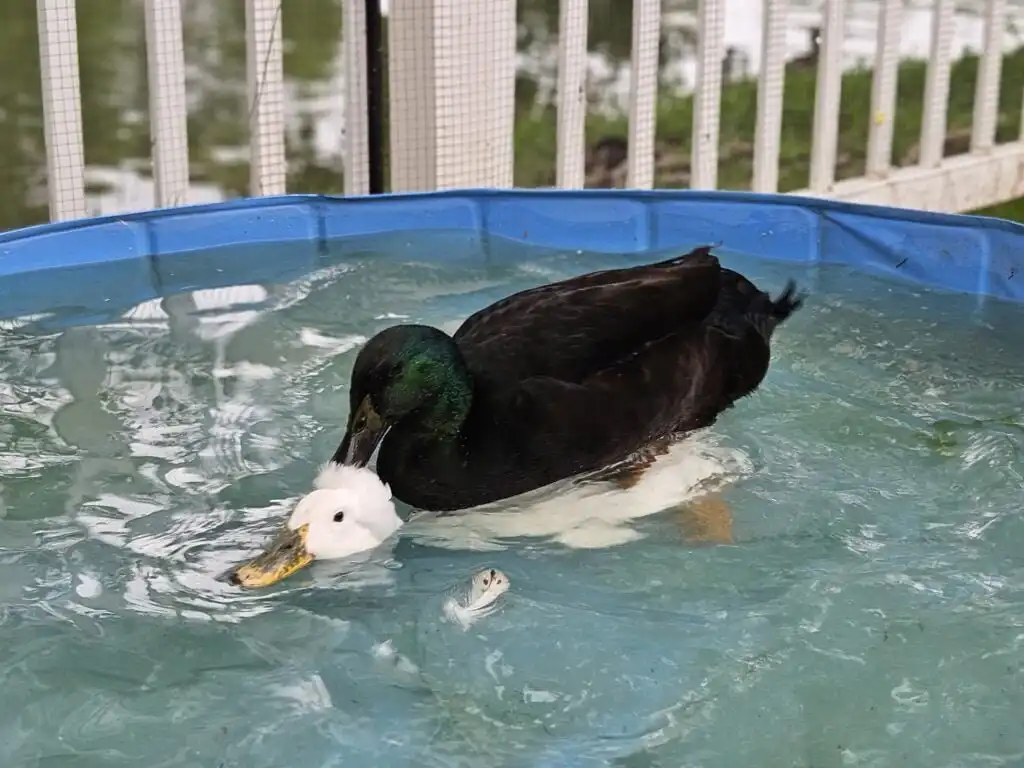
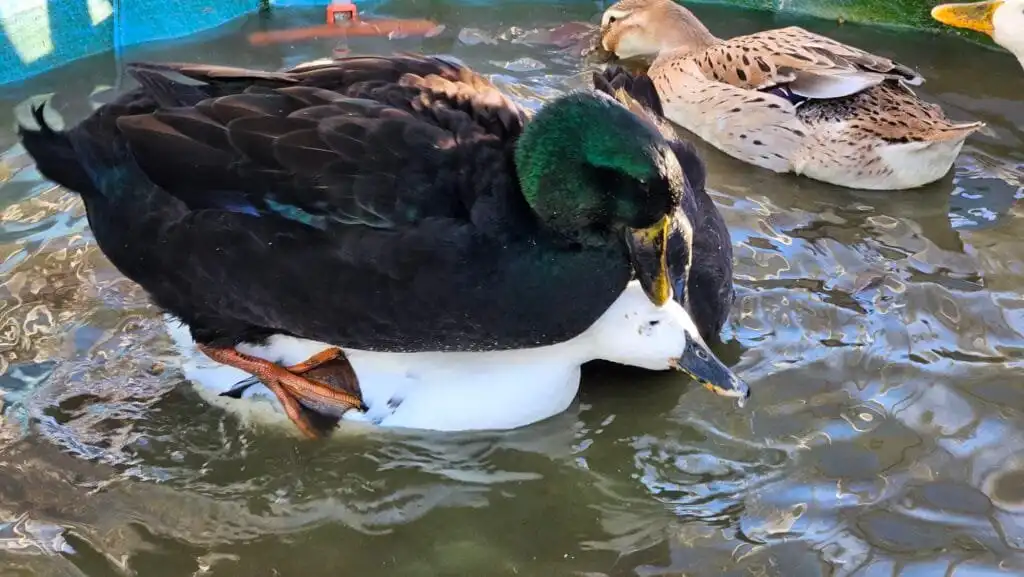
While some poultry species are strictly land-based, ducks have evolved as specialized waterfowl with a reproductive strategy that favors an aquatic environment. Mating in water is not merely a preference. It is a biological advantage that provides buoyancy, which significantly reduces the mechanical stress on a female’s skeletal system.
Unlike chickens, ducks lack the same terrestrial stability during the mating act. Because drakes possess a specialized intromittent organ that requires precise positioning, the water’s surface tension and support allow for a more successful and less “forceful” interaction. This buoyant support helps prevent the drake from placing his full weight on the female’s joints and minimizes the risk of feather follicle damage or skin tears on her back and neck.
Creating the Ideal Breeding Environment
On land, a duck’s webbed feet are designed for paddling, not for gripping dry ground during high-energy social interactions. Without the support of water, mating attempts often become “clumsy,” leading to accidental injuries or increased stress for the hen. To support your flock’s natural biological rhythms, it is vital to provide an accessible water source.
Whether you use a natural pond or a durable pre-formed pond, ensuring the water is deep enough to provide full buoyancy, typically at least 8 to 12 inches, will encourage safer, more natural behavior. For smaller setups, a heavy-duty stock tank or a sturdy kiddie pool with easy-access ramps can serve as an excellent “breeding pool,” allowing your hens a safe space to maneuver and escape if the interaction becomes too intense.
While ducks can mate on land if necessary, providing an aquatic option is a key component of science-based flock management that prioritizes the physical welfare of your hens.
Is Mating Dangerous? Understanding the Risk of Drowning
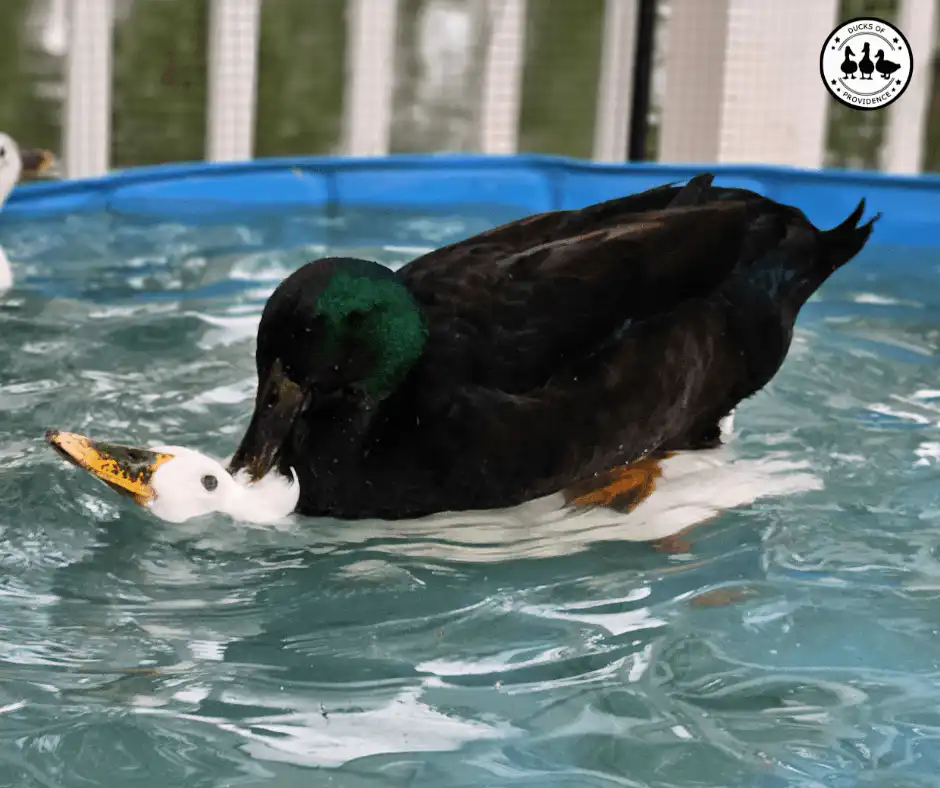
One of the most distressing sights for any keeper is witnessing a drake hold a hen’s head underwater. While it may appear that male ducks drown female ducks on purpose, this is almost always a biological byproduct of their mating mechanics.
The drake must grip the back of the hen’s neck with his bill to maintain stability and ensure successful penetration with his corkscrew anatomy. However, in an aquatic environment, this physical “anchor” can inadvertently pin the hen’s head beneath the surface.
The Physiology of Breath-Holding in Ducks
Ducks are remarkably adapted for submersion. When a duck’s head goes underwater, they trigger a diving reflex that slows their heart rate and conserves oxygen.
- How long can they hold their breath? Most domestic ducks can comfortably stay submerged for 30 to 60 seconds during normal foraging.
- The Danger Zone: During the physical exertion of mating, a hen’s oxygen demand increases. If she is held under for more than 20–30 seconds while struggling, she can quickly reach a point of exhaustion and respiratory distress.
When Does It Become Dangerous?
While a single mating encounter is rarely fatal, certain conditions significantly increase the risk of drowning:
- Multiple Drakes (The “Pile-On”): The greatest risk occurs when multiple drakes attempt to mate with one hen simultaneously. This “forced copulation” can keep a hen submerged indefinitely as drakes compete for position, preventing her from surfacing for air.
- Deep Water with Steep Edges: If the water is too deep for the hen to touch the bottom and she cannot “push off” to the surface, she can become exhausted.
- Mating Fatigue: A hen that is being over-mated throughout the day will have lower energy reserves, making her less capable of keeping her head above water during an encounter.
Pro-Tip for Flock Safety
To minimize the risk of drowning, ensure your breeding pools have “shallow-out” zones or ramps. This allows the hen to move toward shallower water where she can regain her footing and lift her head, regardless of the drake’s grip.
Does Size Matter? The Risks of Weight Disparity
When managing a mixed-breed flock, the physical weight of your ducks becomes a critical safety factor. A “full-size” drake, such as a Pekin or Muscovy, can weigh between 8 and 12 pounds, while a bantam hen, like a Call Duck, may weigh as little as 1.5 pounds. This massive weight disparity creates two life-threatening risks: Skeletal Trauma and Immediate Drowning.
1. Mechanical and Respiratory Distress
When a drake mounts a hen, he places his weight onto her synsacrum (the fused lower spine and pelvis). If the drake is significantly heavier than the hen, the pressure can cause spinal misalignment or even pelvic fractures. More critically, because birds do not have a diaphragm, they rely on the expansion of their ribcage to breathe. A heavy drake can physically compress a small hen’s chest, leading to asphyxiation before the mating act is even completed.
2. The Sink Factor: Increased Drowning Risk
While we’ve discussed that ducks prefer mating in water for buoyancy, that buoyancy has a limit. A bantam hen’s body displacement is only designed to support her own weight and perhaps a similarly sized mate.
When a 10-pound Pekin drake mounts a 2-pound bantam hen in the water, his weight exceeds her “buoyancy threshold.” Instead of the water supporting them both, the drake’s weight submerges the hen entirely. Because he is gripping her neck to stay balanced, he may unknowingly hold her underwater for the duration of the encounter. For a small hen, this leads to rapid exhaustion and a high probability of drowning.
Scientist’s Warning: In a mixed-weight flock, the “safety of the water” becomes a liability. A large drake can sink a small hen in seconds, leaving her unable to surface for air.
Compatibility Reference Table
To ensure reproductive fitness and flock safety, aim for drakes and hens of similar weight classes:
| Drake Size | Average Weight | Safe Hen Pairings |
| Heavy (Pekin, Muscovy, Rouen) | 8–12 lbs | Large breeds only. |
| Medium (Khaki Campbell, Runner) | 4–5.5 lbs | Medium to Large breeds. |
| Bantam (Call Duck, East Indie) | 1.5–2.5 lbs | Bantam breeds only. |
How to Protect Your Smaller Hens
If you have a weight mismatch in your flock, proactive management is required during the high-hormone spring season:
- Selective Separation: House your bantams in a separate run from heavy-breed drakes during peak mating hours (early morning).
- Provide “Shallow Escapes”: Ensure your pools have shallow ledges where a bantam hen can get her feet on the ground to push herself and the drake up toward the surface.
- Monitor the “Pile-On”: Never allow multiple drakes near a bantam hen. The combined weight is fatal.
Spring Surge: Navigating Aggressive Duck Mating Behavior
Drakes (male ducks) can be quite persistent and sometimes aggressive when it comes to mating. Unlike some birds that have fancy courtship dances, male ducks often chase females until they give in. This happens because of their strong breeding instincts, especially in spring and early summer when their hormones are through the roof.
One of the most common mating behaviors in drakes is neck-grabbing. A drake will often bite and hold onto the back of a female’s neck to keep her in place while mating. While this is natural behavior, it can sometimes lead to feather loss, stress, or even injuries if the female is overmated or the drake is too forceful. You should monitor your ducks to see if a drake is particularly aggressive or if a female appears to be struggling. You should separate them to ensure your girls’ safety if that’s the case.
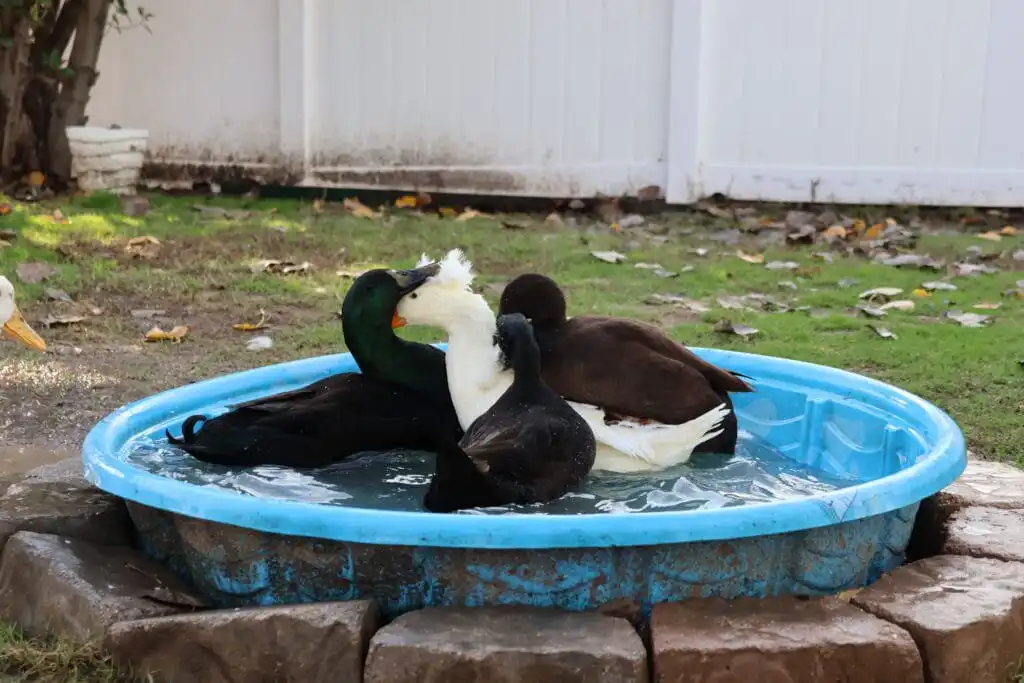
The risk of overmating increases significantly when too many males are in a flock. Drakes can become highly competitive, fighting with each other over the females. This can cause injuries to the males and put a lot of stress on the females, who may get chased too much and become exhausted or even injured. A good rule of thumb is to maintain a ratio of 1 drake to 3-5 females to prevent overmating. If you have more drakes than females, consider separating the extra males or keeping an all-female flock if you are not interested in breeding.
Separate Aggressive Drakes
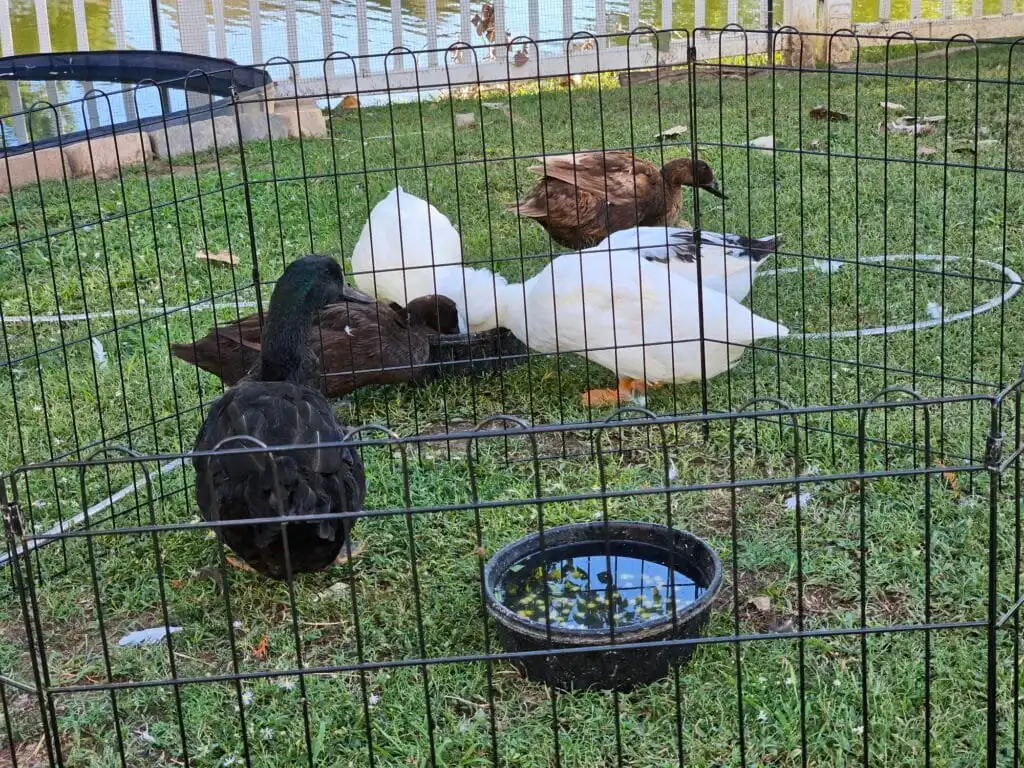
In extreme cases, aggressive male ducks may need to be separated, especially if they hurt females or disturb the flock. We call this drake jail. Fencing an area off for your drake(s) to allow them to cool off and to give your girls a break. We need to do this during the springtime with our Simon. Even though he is the only drake and has six girls, his hormones make him a jerk, and he wouldn’t stop chasing and mating the girls. In addition, you should give your flock plenty of space, water, and hiding spots, which can help reduce stress and let females escape unwanted attention.
How to Create a Simple Drake Jail
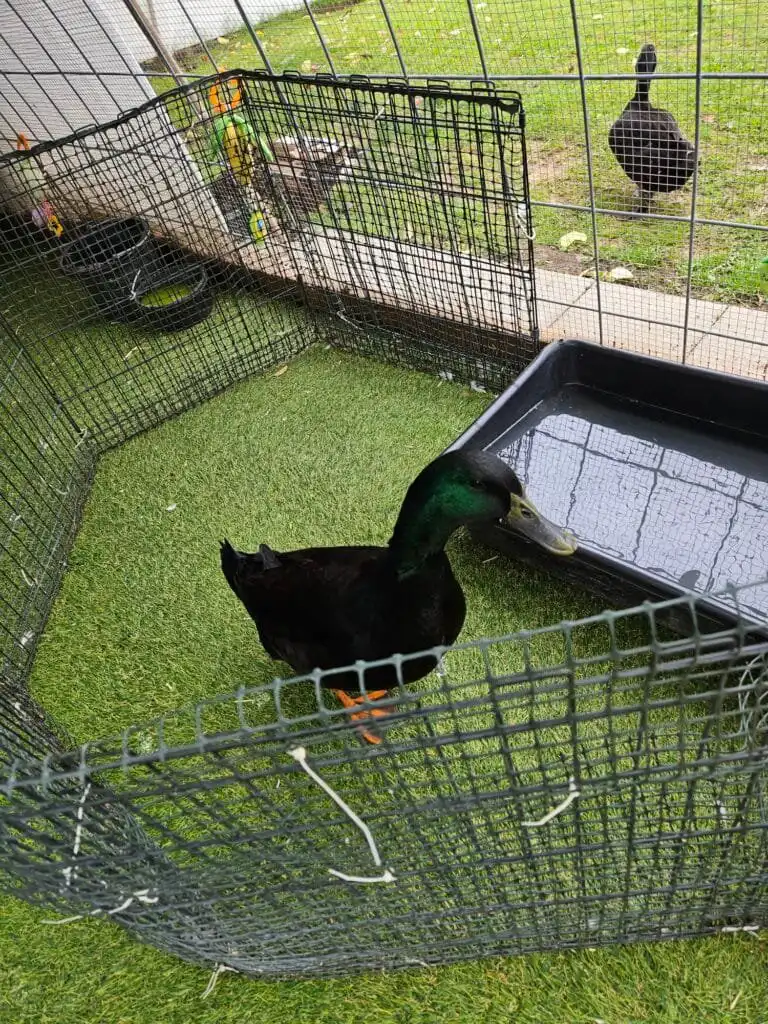
If you have an overly aggressive drake or need to give your females a break from persistent mating, setting up a “drake jail” is an easy and effective solution. This doesn’t mean punishing your drake. It simply provides a controlled space where he can still see and interact with the flock without overwhelming the hens.
To create a simple drake jail, use foldable metal playpens to fence off a section of your existing duck run. These playpens are easy to set up, adjustable in size, and can be moved as needed. Make sure the area is large enough for your drake to move around comfortably and that he has constant access to fresh water and food. Placing a small shelter or shade in the enclosure will also help keep him protected from the elements.
Separating a drake temporarily can help reduce stress in your flock, prevent overmating injuries, and give the females time to recover. Just be sure to reintroduce him gradually when the time comes to ensure a smooth transition back into the group.
The Ideal Drake-to-Hen Ratio
Maintaining the right male-to-female ratio in your flock is important for keeping your ducks happy, healthy, and stress-free. Drakes (male ducks) have strong mating instincts, and if there are too many of them in a flock, it can lead to overmating, injuries, and even aggressive competition between males.
The general recommendation is to keep a ratio of 1 drake to 3-5 hens (female ducks). This balance ensures that the females are not constantly harassed, giving them enough time to rest and recover between matings. A single drake can mate with multiple females without causing excessive stress. On the other hand, having too many drakes can result in relentless chasing, feather loss, and even injuries from repeated forced matings.
If the ratio is off, here’s what can happen:
- Too many drakes (e.g., 1:1 ratio or more males than females): The males will compete aggressively for mates, leading to fights, injuries, and increased stress levels. Females may be overmated, resulting in bald spots on their necks and backs, wounds from excessive pecking, foamy eyes, or exhaustion from constantly avoiding drakes. In extreme cases, overmating can lead to death. If too many drakes try to mate with the same female, they can drown them.
- No or only a few drakes (e.g., a flock of only females): If breeding isn’t a priority, an all-female flock is perfectly fine and often much calmer. Ducks will still engage in social behaviors, but there will be no aggressive mating or dominance struggles.
- Balanced ratio (1 drake per 3-5 hens): This allows for natural mating without overwhelming the females, reduces fighting among males, and keeps the flock more peaceful.
- Bachelor flock (a flock of only males): only males is another option that works well for many. If there are no girls, there won’t be any competition and fewer fights among them. They still may be more aggressive during spring, and you might need to separate them to prevent them from fighting temporarily.
What If You Have Too Many Drakes?
If you end up with too many drakes in your flock, there are a few solutions:
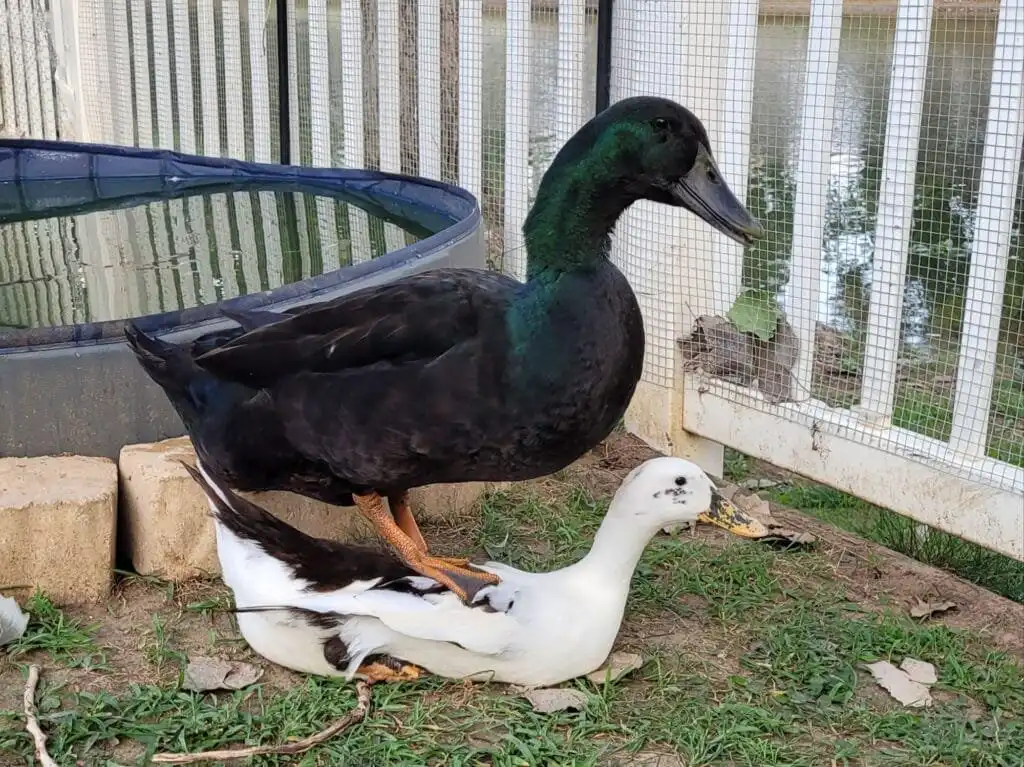
- Separate the extra males: Keep a bachelor flock of drakes separate from the females. Male ducks can live together peacefully if no females are around to compete with.
- Rehome excess drakes: If you don’t have space for multiple pens, you may need to find new homes for extra males.
- Increase the number of females: If you want to keep multiple drakes, adding more hens to maintain the proper ratio can help reduce mating pressure.
Providing plenty of space, multiple water sources, and hiding spots can also help minimize stress and allow females to escape if needed.
Your best option is to try to prevent having too many drakes in the first place. Refrain from getting ducklings as straight runs, as you won’t know their gender until they are old enough to tell. Read more about this topic in our post Pet Ducks: How Many should I have? And where do I get them from?
When Female Ducks Mate Other Females: Dominance or Affection?
If you’ve ever noticed a female duck mounting another female, you might be wondering what’s going on. While it may look like typical mating behavior, this act is not about reproduction. Rather, it’s a display of dominance or affection driven by hormonal spikes.
During the breeding season, female ducks experience an increase in hormones, which can lead to unexpected behaviors, including mounting other females. This doesn’t mean that ducks form same-sex mating pairs like some other animals do; instead, it’s a reaction to their elevated reproductive instincts. In some cases, it can be a way for a more dominant female to establish her place in the pecking order, reinforcing her status within the flock. Other times, it can be a sign of bonding and companionship, as ducks are social animals expressing closeness differently. Our girls do this all the time, and we call it surfing.
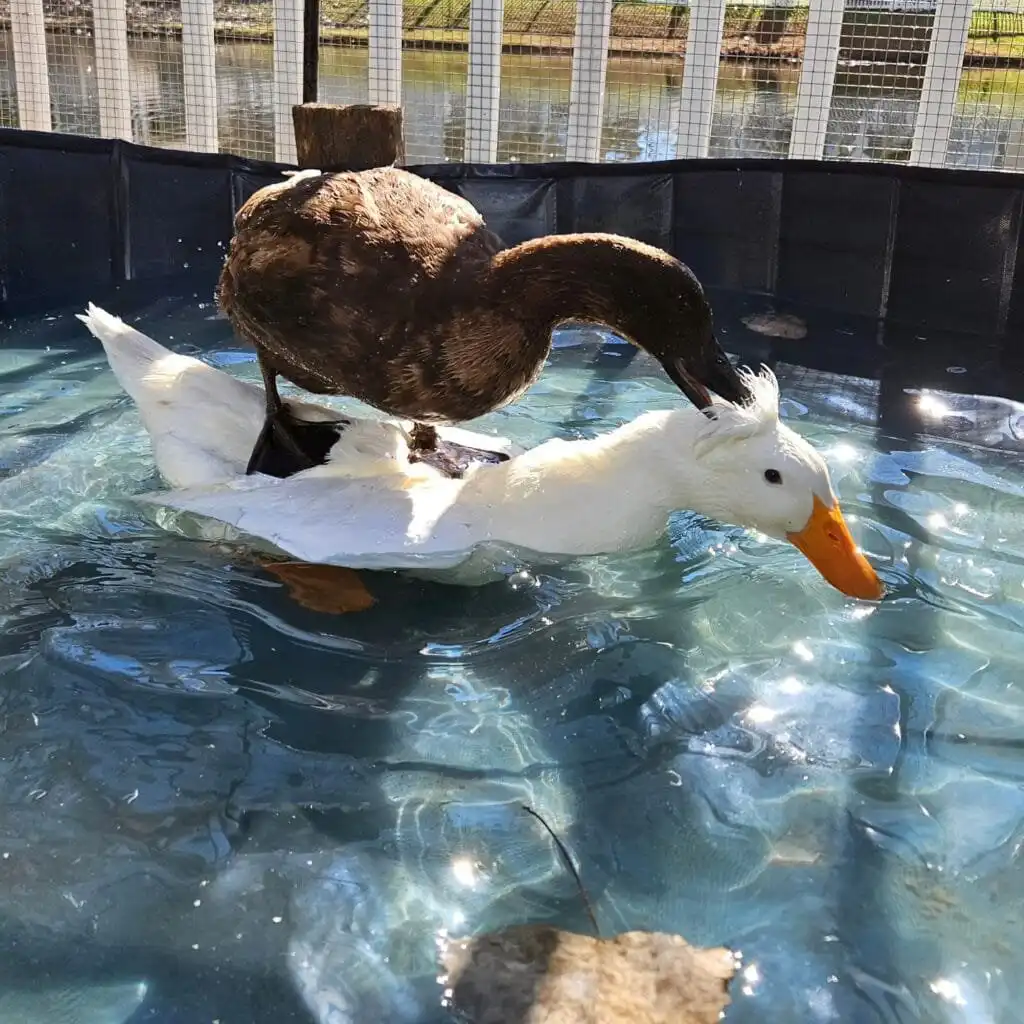
While this behavior is generally harmless, it’s important to ensure that it doesn’t lead to stress or injury, especially if one female is being repeatedly mounted. Keeping an appropriate male-to-female ratio and providing plenty of space for your ducks to interact naturally can help maintain harmony in the flock.
Signs of Overmating or Injury
When drakes (male ducks) mate too frequently with hens (female ducks), it can lead to stress, exhaustion, and physical injuries. Overmating is a common issue, especially when too many males are in a flock or if one hen becomes a particular drake’s favorite. Understanding the signs of overmating and how to prevent injury can help keep your ducks safe and healthy.
Common Signs of Overmating in Ducks
- Feather Loss on the Back and Neck
- During mating, drakes grab the back of the hen’s neck to hold her in place. Over time, this can cause feather loss, bald spots, and even skin irritation.
- Feather loss is most noticeable on the back, sides, and top of the head.
- Cuts, Scrapes, or Open Wounds
- If a drake is too aggressive or if multiple males are competing for the same female, she may develop cuts or abrasions from their claws or beaks.
- Open wounds can lead to infection, especially if they get dirty or wet.
- Limping or Leg Injuries
- Mating in water reduces strain on the female, but if forced to mate frequently on land, she may develop leg or joint injuries from being pinned down.
- Limping or difficulty walking can be a sign of excessive pressure or strain.
- Lethargy and Stress
- Overmated females may become less active, isolate themselves, or hide from the drakes.
- You may notice changes in appetite or a reduction in normal behaviors like foraging and swimming.
- Foamy Eye
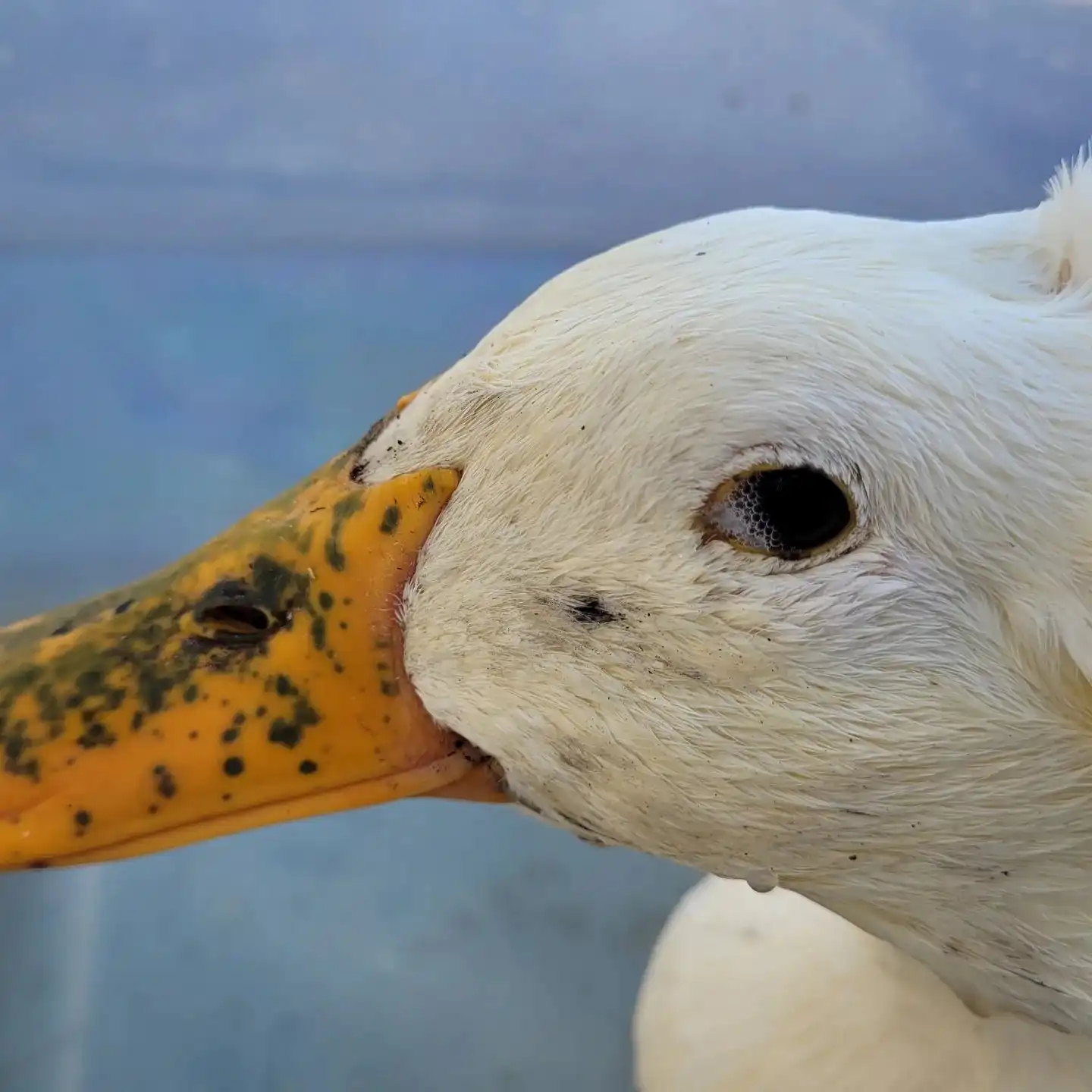
- When drakes repeatedly grab the females by the head or dunk them in water during mating, it can lead to eye injuries or infections.
- The foam is usually a response to irritation or mild respiratory issues, often made worse by stress.
- Avoiding the Drakes
- A female that is being overmated may try to run away or stay away from the males.
- She might refuse to enter the water if she associates it with mating-related stress.
- Death
- Mating-related deaths in ducks usually occur when multiple drakes overwhelm a single female, leading to exhaustion, drowning, or severe injuries. Since ducks mate in water, a female can be held down too long, causing her to suffocate.
- On land, excessive mating can result in fatal wounds or internal injuries.
- To prevent this, it’s important to maintain a proper male-to-female ratio, provide plenty of space and water, and separate overly aggressive drakes when needed.
How to Prevent Overmating & Protect Your Ducks
✅ Maintain a Proper Male-to-Female Ratio
- The best ratio is 1 drake for every 3-5 hens to prevent excessive mating.
- If you have too many drakes, consider rehoming some or keeping them separate from the females.
✅ Provide Hiding Spots & Safe Spaces
- Adding bushes, shelters, or floating islands in your ducks’ environment can give females a place to escape.
- Ensure the duck house has multiple entrances and exits so a female can avoid a persistent male.
✅ Separate Aggressive Drakes
- If a particular drake is causing injuries or stress, consider removing him from the flock temporarily or giving him a separate enclosure. We call this Drake Jail.
- In extreme cases, housing drakes separately from females and only allowing supervised interactions can be necessary.
✅ Monitor for Injuries & Treat Promptly
- Check your ducks regularly for signs of wounds or bald spots.
- If a duck has an open wound, clean it with saline solution or an antiseptic spray and consider applying a topical antibiotic (like Veterycin).
- Isolate injured ducks until they recover to prevent further pecking or mating attempts.
By keeping a close eye on your flock and making necessary adjustments, you can prevent overmating-related injuries and ensure a healthier, happier environment for your ducks.
Mating Season and Hormonal Changes
Like many other birds, ducks experience seasonal hormonal changes that influence their mating behaviors. For most duck breeds, the peak mating season is in the spring, triggered by increasing daylight hours. The longer days stimulate hormonal shifts, particularly in drakes, leading to increased testosterone levels. This hormonal spike fuels their instinct to impress females, establish dominance, and compete for mates.
Seasonal vs. Year-Round Breeding
Most domestic ducks follow a seasonal breeding pattern. Some breeds, such as Muscovy ducks, can breed year-round, especially in warmer climates with favorable food and nesting conditions. Mallard-derived domestic ducks, on the other hand, typically mate and nest from late winter through early summer.
However, some individuals may mate outside of this timeframe, especially if they are kept in environments with artificial lighting that extends daylight hours. Our ducks mate all year round (without having artificial light that extends their daylight hours), but the frequency increases in spring. And the girls tend to go broody only in the spring. From our observations, the ducks do not only mate for the sole purpose of raising offspring. They do it as a way to show dominance in some cases and affection in other cases.
Common Courtship and Flirting Behaviors in Ducks
As hormones rise, ducks show a variety of courtship behaviors to attract mates and strengthen pair bonds. These behaviors vary slightly between breeds but often include:
- Head-bobbing: Drakes rapidly bob their heads up and down while facing a female, signaling their interest. Females often respond by bobbing back if they are interested.
- Wing-flapping: Males (and sometimes females) will flap their wings energetically, sometimes while standing up in the water, to show off their strength and vitality.
- Tail-wagging: A quick side-to-side motion of the tail, often combined with soft vocalizations, is another common part of duck flirting.
- Drake Dance: Male ducks have a funny way of trying to impress females. They start by flicking their tails up, followed by a quick move in which they quickly stretch their necks forward while leading their flock. As they do this, they make a raspy, trilling sound. It’s a bit hard to describe, but you will be amused when you see it in person. See the video below to see our Simon in action.
- Water displays: Drakes may splash, swim in circles around a female, or dip their heads under the water to get their attention. The girls will make zoomies in the pool, diving in circles and splashing to attract the drakes.
- Feather preening: Grooming is an important bonding activity. Ducks will often preen themselves or gently nibble at a potential mate’s feathers as a sign of affection.
How Hormones Affect Mating Behavior
- Drakes become more territorial: During peak mating season, males may become more aggressive, chasing off rivals and asserting dominance within the flock.
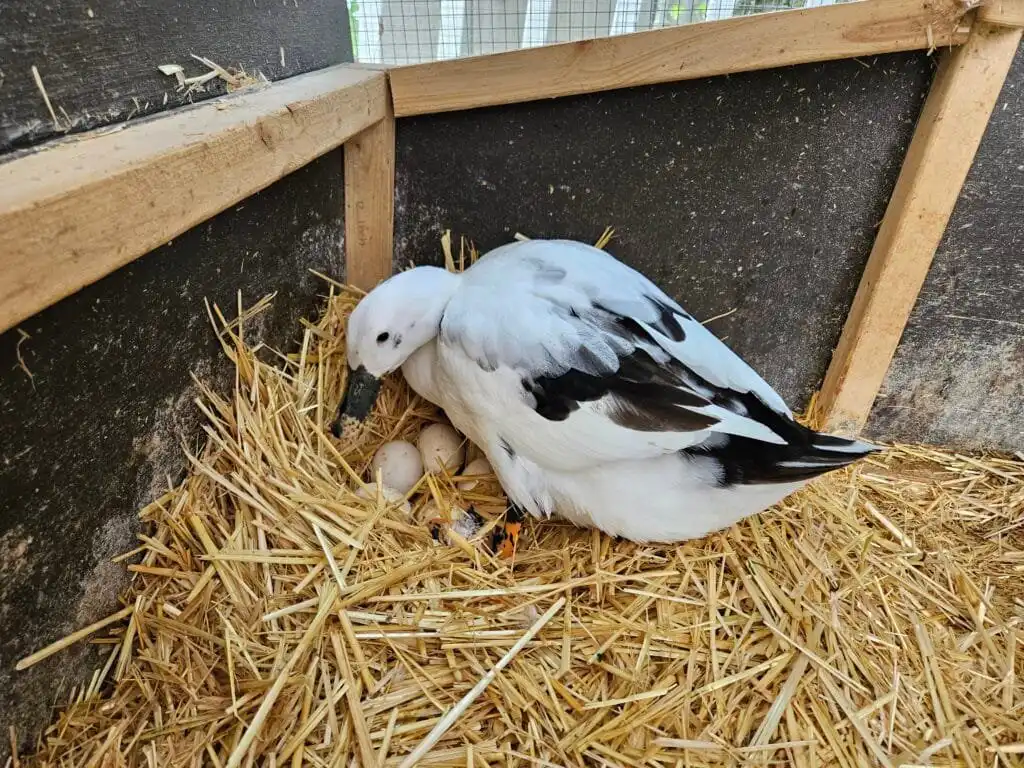
- Females prepare for nesting: As estrogen levels rise, females may start searching for nesting spots, plucking out down feathers to line nests, and spending more time in secluded areas.
- Changes in egg production: Higher hormone levels also increase egg-laying frequency, with many ducks reaching peak production in spring and early summer.
Managing Mating Season in Domestic Ducks
Adjust lighting if needed: If you want to extend or shorten the breeding season, controlling artificial lighting can influence hormone levels and egg production. However, this is not recommended because it changes their natural hormone levels and can lead to reproductive issues. If you want to keep your ducks as pets and not as egg-producers, you should refrain from this practice.
Monitor aggression: If you have multiple drakes, watch for excessive fighting or overmating of females. Adjust the male-to-female ratio if needed.
Provide safe nesting areas: If breeding is desired, make sure your females have quiet and secure spaces for laying eggs and raising ducklings.
Watch for signs of stress: If females seem overwhelmed, are losing too many feathers, or are avoiding drakes constantly, intervention may be needed, such as providing more space or temporarily separating aggressive males (drake jail).
Fertilized Eggs vs. Unfertilized Eggs
One of the most common misconceptions about ducks is that they need a male to lay eggs. However, just like chickens, female ducks (hens) will lay eggs regardless of whether they have mated. The presence of a drake (male duck) only determines whether the eggs have the potential to hatch into ducklings.
How Does Fertilization Work?
When a drake mates with a hen, his sperm travels into her reproductive tract and can fertilize eggs for up to two weeks. This means that even if the pair only mates once, multiple eggs laid over the following days could still be fertilized. The storage of sperm inside the female allows for continuous fertilization without needing frequent mating.
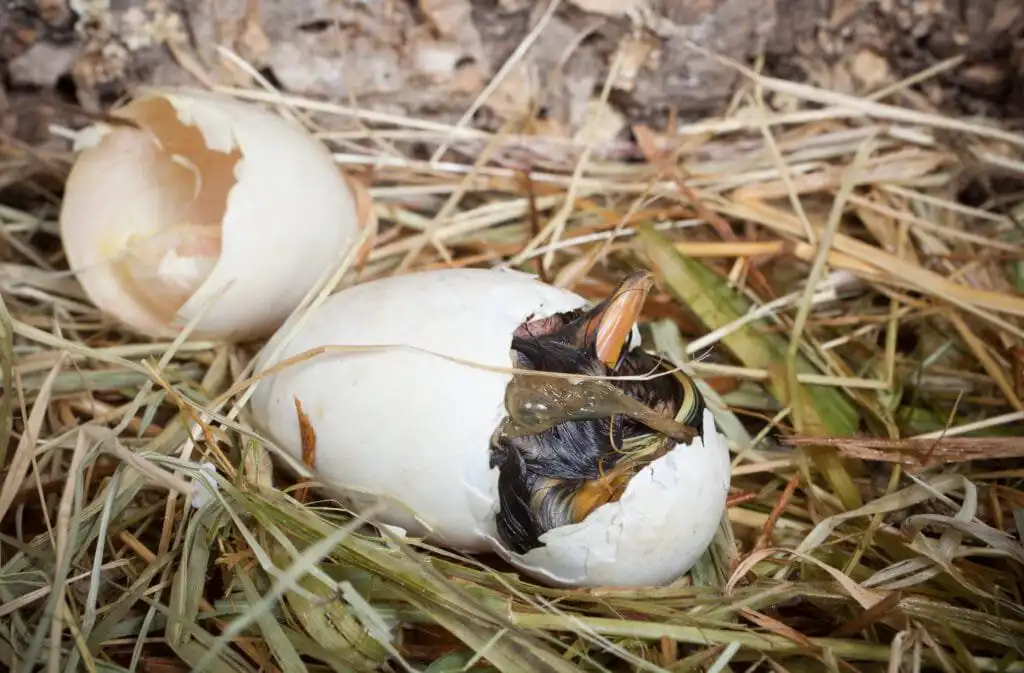
After fertilization, the egg develops an embryo, but for that embryo to grow into a duckling, the egg must be incubated at the right temperature and humidity—either naturally by the hen or artificially in an incubator.
➡️ Learn more: Hatching Ducklings Like a Pro: Step-by-Step Incubation & Brooder Guide!
Key Differences Between Fertilized and Unfertilized Eggs
| Feature | Fertilized Egg | Unfertilized Egg |
|---|---|---|
| Contains a developing embryo? | Yes, if incubated | No |
| Will it hatch into a duckling? | Only if incubated | No |
| Edible? | Yes | Yes |
| Appearance when cracked open | Small white bullseye (germinal disc) on yolk | Plain yolk, no bullseye |
| Requires a male? | Yes | No |
How to Tell If an Egg Is Fertilized?
If you are unsure whether an egg is fertilized, you can check by using a method called candling:
- Hold the egg up to a bright light (such as a flashlight in a dark room).
- If the egg has been incubated for a few days, you may see veins and a dark embryo developing inside. This means it is fertilized and growing.
- If the egg is infertile, it will appear clear with no visible signs of development.
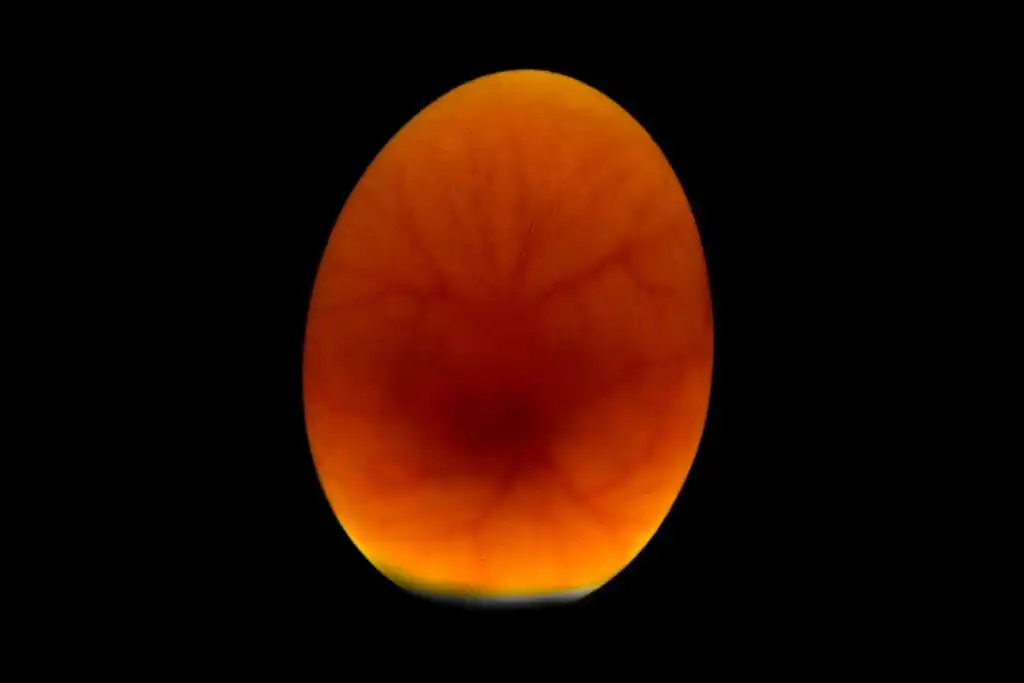
Cracking open freshly laid eggs that have not been incubated can reveal a small white bullseye on the yolk, indicating fertilization. If the yolk is plain with no visible bullseye, the egg was never fertilized.
Can You Eat Fertilized Eggs?
Yes! Fertilized eggs are completely safe to eat and taste no different from unfertilized eggs. If eggs are collected daily and stored properly, there is no risk of them developing into embryos. However, if a fertilized egg has been incubated for several days, it may contain visible blood vessels or a partially developed embryo, making it unsuitable for consumption.
What Happens If a Duck Sits on Fertilized Eggs?
If a female duck becomes broody, she may start sitting on her eggs to incubate them. If the eggs are fertilized and she maintains the right temperature and humidity, they will develop and hatch in about 28 days (or 35 days for Muscovies). If the eggs are unfertilized, they will never develop, and the hen may need encouragement to leave the nest to resume normal behavior.
Broodiness and Incubation
Broodiness is the natural instinct of a female duck (hen) to sit on her eggs and incubate them until they hatch. Not all duck breeds are equally likely to go broody. Some are excellent natural mothers, while others have little to no interest in hatching eggs. If you’re hoping to hatch ducklings, understanding which breeds are prone to broodiness and the basics of incubation can help ensure a successful hatch.
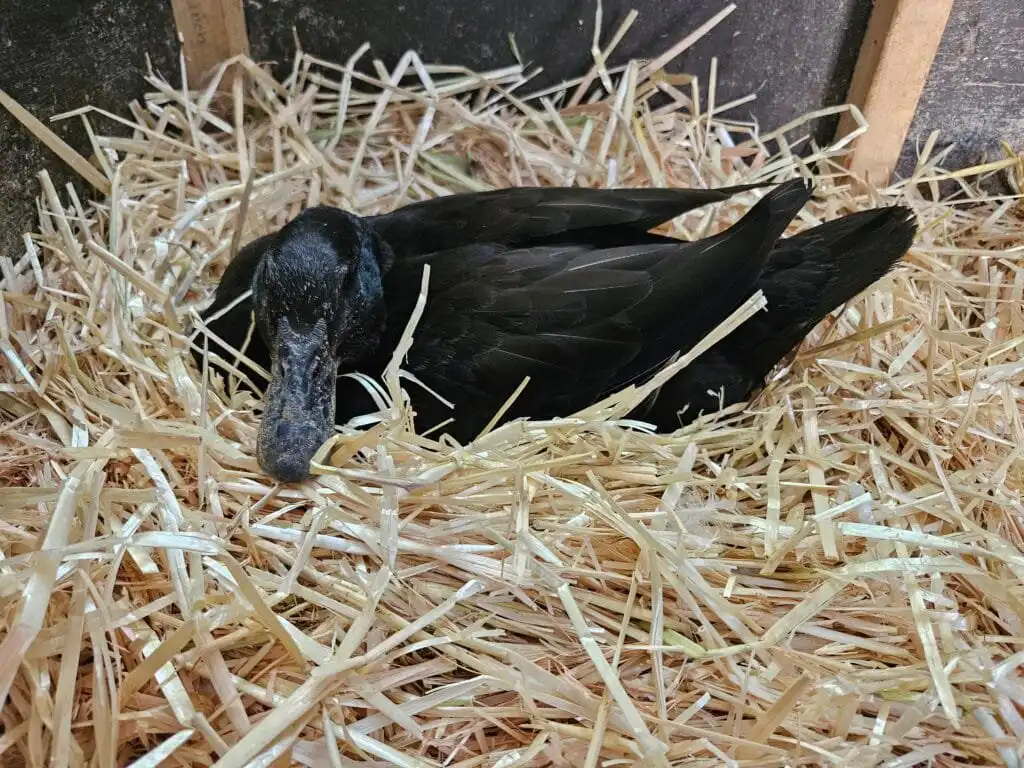
Ducks That Are More Likely to Go Broody
Certain duck breeds have a strong maternal instinct and will readily sit on their eggs until they hatch. These breeds tend to be more dedicated to incubation and caring for their ducklings:
- Muscovy Ducks: One of the best natural mothers; they are persistent brooders and will even hatch other birds’ eggs.
- Welsh Harlequins: Known for their calm temperament and strong broody instincts.
- Cayugas: Occasionally broody, but some individuals will sit on eggs.
- Silver Appleyards: A larger breed with a strong breeding instinct.
- Mallards: Since they are a wild breed, they naturally tend to go broody and raise their young.
Ducks That Rarely Go Broody
Some breeds have been bred more for egg production or meat, meaning their broody instincts have been diminished. These ducks will typically lay eggs and ignore them, requiring an incubator or a surrogate broody hen to hatch ducklings.
- Pekins: Rarely sit on their eggs and are poor brooders.
- Runner Ducks: More focused on laying than incubating.
- Khaki Campbells: Excellent layers but almost never go broody.
- Buff Ducks: Lay well, but don’t usually incubate their eggs.
If you keep these breeds and want ducklings, you’ll likely need to use an incubator or place the eggs under a broody duck or chicken.
Natural Incubation by a Broody Hen
If a hen decides to go broody, she will sit on her eggs full-time for about 28 days (35 days for Muscovies). Here’s what to expect:
- Nesting Behavior: A broody duck will choose a quiet, hidden spot and start plucking her own feathers to line the nest.
- Reluctance to Leave the Nest: She will only leave once or twice a day to eat, drink, and bathe, spending the rest of the time keeping the eggs warm.
- Protectiveness: A broody hen may become more territorial and hiss or peck if disturbed.
- Turning the Eggs: The duck instinctively rotates the eggs to ensure even warmth and prevent the embryos from sticking to the shell.
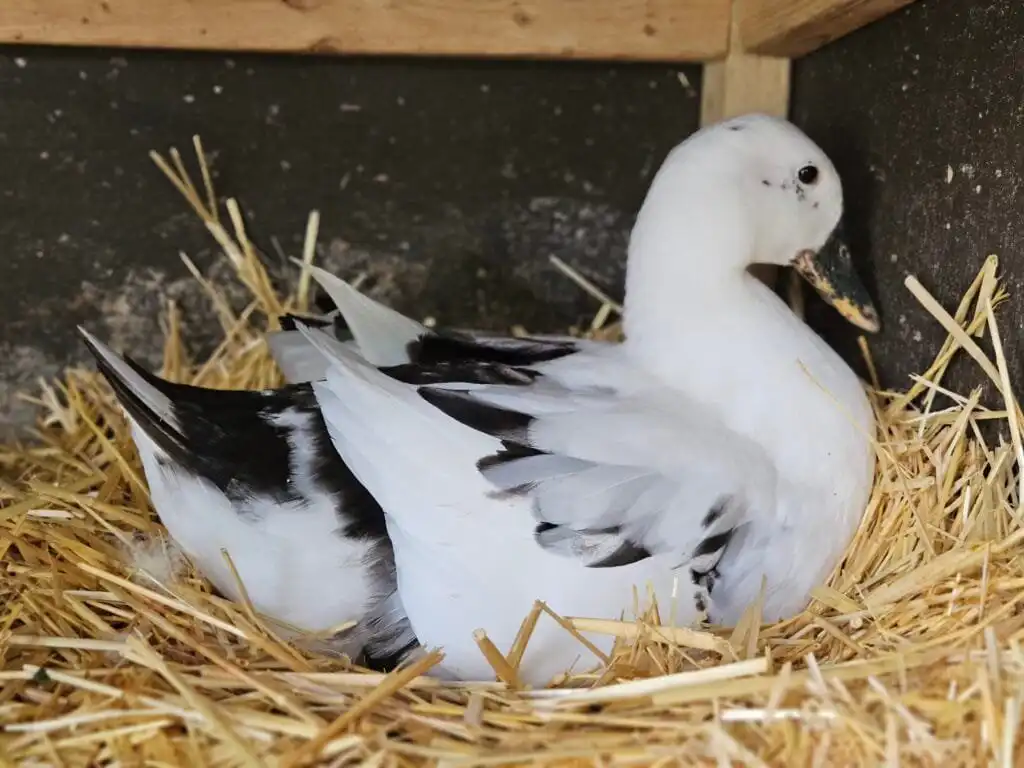
Caring for a Broody Duck:
- Ensure she has a safe, predator-proof area for nesting.
- Provide easy access to food and water nearby, as broody hens eat less than usual.
- Check for non-viable eggs (bad eggs can rot and contaminate the nest).
Artificial Incubation (Using an Incubator)
If your ducks aren’t broody, you can hatch fertilized eggs using an incubator. This method requires careful temperature and humidity control to mimic natural incubation.
Basic Incubation Guidelines:
| Factor | Recommended Setting |
|---|---|
| Temperature | 99.5°F (37.5°C) for forced-air incubators, 101-102°F (38.3-38.9°C) for still-air incubators |
| Humidity | 55-65% for the first 25 days, then increase to 75% for hatching |
| Turning Eggs | 3-5 times daily until day 25 (automatic turners help) |
| Incubation Period | 28 days for most ducks, 35 days for Muscovies |
| Lockdown Period | Stop turning eggs and increase humidity on the last 3 days before hatching |
Incubator Pros & Cons:
✅ More control over hatching conditions
✅ Useful for breeds that don’t go broody
❌ Requires monitoring and adjustments
❌ Lower hatch rate than natural incubation in some cases
Hatching & Beyond
Once the ducklings pip (crack the shell) and hatch, allow them to dry fully inside the incubator or under their mother before moving them to a warm brooder. If using artificial incubation, ducklings need a heat lamp or heating plate at 90°F (32°C) for the first week, gradually reducing the temperature as they grow.
➡️ Learn more: Hatching Ducklings Like a Pro: Step-by-Step Incubation & Brooder Guide!
➡️ Learn more: How to Raise Ducklings: A Beginners Guide
Frequently Asked Questions about Duck Mating
When is Duck Mating Season?
For most domestic breeds, duck mating season begins as the days lengthen in late winter and peaks during the spring. This is triggered by photoperiodism. The increase in daylight hours signals the drake’s endocrine system to increase testosterone production. While some domestic ducks may exhibit duck breeding behaviors year-round, you will notice the highest intensity between March and June.
How Do Ducks Mate?
If you’ve ever wondered how do ducks mate, the answer is far more biologically complex than most other bird species. While the majority of birds rely on a brief “cloacal kiss,” drakes have evolved a specialized corkscrew-shaped penis.
This anatomy is a result of a fascinating “evolutionary arms race.” To facilitate successful mating on the water, the drake’s organ undergoes explosive eversion, a high-speed physical extension that allows for internal fertilization.
Do Female Ducks Mount Each Other?
Yes, it is very common to see female ducks mount each other. This behavior is usually not about reproduction but rather social hierarchy and dominance. Similar to “pecking orders” in chickens, ducks use mounting to establish who is the “Alpha” in the flock. It can also occur when a hen has a hormonal surge or if there is no drake present to lead the flock.
How many hens should I have per drake?
To maintain a healthy flock dynamic, the ideal drake-to-hen ratio is usually 1:4 or 1:5 (one male for every four to five females). If you have too many drakes, the females can suffer from “overmating,” leading to physical injury, feather loss, and chronic stress.
Why do male ducks hold the female’s head underwater?
While it looks like the male ducks are drowning female ducks, they are actually gripping the back of the neck to maintain balance during the physical act of mating. Because ducks often mate on water, this can lead to the female being momentarily submerged.
Scientist’s Note: If you see multiple drakes targeting one hen, you must intervene, as this is when the risk of accidental drowning or exhaustion becomes dangerous.
Can ducks mate on land?
While ducks prefer to mate on water, which provides buoyancy and protects the female’s joints from the drake’s weight, they can and will mate on land. If they do, ensure they have soft bedding or grass to prevent “bumblefoot” or other foot pad injuries during the process.
How can I tell if my hen is being overmated?
Keep an eye out for “mating patches”, areas on the back of the neck or the base of the wings where feathers have been pulled out. If the skin looks red, broken, or if the hen is hiding and avoiding the flock, it is time to give her a “break” by temporarily separating the drakes.
Why Do Male Ducks Drown Female Ducks?
One of the most distressing sights for a keeper is seeing a drake hold a hen’s head underwater. While it may look like the male ducks drown female ducks on purpose, it is usually an unintentional consequence of the mating position.
The drake grips the back of the hen’s neck to stay balanced. If the water is too deep or there are multiple drakes attempting to mate with the same hen (a behavior known as “forced copulation”), she can be submerged for too long.
The Bottom Line: Managing Duck Mating for a Healthy Flock
Mating ducks may seem like a simple natural process, but it comes with its own set of challenges that every duck keeper should understand. From the fascinating flirting behaviors to the unique anatomy of ducks, knowing how to manage the dynamics of your flock is key to ensuring a safe and stress-free environment. Remember the importance of maintaining a proper male-to-female ratio, recognizing signs of overmating or injury, and providing your ducks with the space and care they need to thrive. With a little knowledge and attention, you can help your ducks navigate their love life in a healthy, balanced way, ensuring they stay happy and healthy.
Read Further Reading & Resources
- Male and Female Duck Reproductive Systems
- How to Raise Ducklings: A Beginners Guide
- Hatching Ducklings Like a Pro: Step-by-Step Incubation & Brooder Guide!
- Pet Ducks: How Many should I have? And where do I get them from?
- How Often Do Ducks Lay Eggs? Breaking Down Duck Egg Production and More
Connect deeper with your flock. Discover more about duck psychology and social dynamics in the Community & Behavior Hub.
References
- Patricia L. R. Brennan, Ian Gereg, Michele Goodman, Derek Feng, Richard O. Prum, Evidence of phenotypic plasticity of penis morphology and delayed reproductive maturation in response to male competition in waterfowl, The Auk, Volume 134, Issue 4, 1 October 2017, Pages 882–893, https://doi.org/10.1642/AUK-17-114.1
- Brennan, Patricia L R et al. “Explosive eversion and functional morphology of the duck penis supports sexual conflict in waterfowl genitalia.” Proceedings. Biological sciences vol. 277,1686 (2010): 1309-14. doi:10.1098/rspb.2009.2139
- BBC Science Focus: How the battle of the sexes left the duck with an awkwardly long, corkscrew-shaped penis (accessed 2/15/2025)
- Yale Scientific: Unraveling the Mysteries of Duck Mating (accessed 2/15/2025)

Hi there, we have two ducks, one male (Pekín) other female (Rouen). The male (“Loveboat” is his name) grew quite rapidly and has become HUGE, whereas the female (“Daphne” is her name) is just a standard size Rouen/Mallard duck.
Loveboat and Daphne are ‘a couple’ and are each other’s companions amongst our backyard flock of chickens, ALL of which free-range daily, and are secured from predators nightly. Loveboat and Daphne mate, although I’m not exactly sure how often as I am not outdoors watching them 24/7.
His size and weight have long been a concern relative to him mating with his girlfriend, but yesterday evening brought on a whole new level of concern when suddenly Daphne’s legs were laying behind her, as though Loveboat had mounted and smashed her with his fat-A**!
I thought she was injured and now just doomed, without the ability to stand on her feet or walk. Placing her in their pool, still she just floated with her legs bent back behind her as if they were now stuck that way. Naturally, we separated the two as we worked to help her and provide her with comfort and a separate space, which normally they sleep in the same coop/cage together every night.
This morning, when I came out to release the chickens and ducks, there stood Daphne, ON HER FEET and pacing around as usual, as though nothing had even occurred! I was shocked. How on earth did she go from not walking, her legs behind her, and looking like she had been severely injured and with a possible broken leg/hip (or two), to now standing on her feet like she always has, and pacing and walking around? OVERNIGHT!?
I am so very grateful, and relieved, but I am also very confused by what seems like a reverse injury and overnight recovery that little Daphne dealt with and handled herself.
Maybe she just had some nerves pinched or her ligaments were dislocated. But in any case, I am happy that she is fine again! Have you considered getting more girls? That would take some pressure off of Daphne.