
How to Improve Duck Pool Water Quality with Size and Filtration

Last updated: May 7th, 2026
To keep our research-backed guides free, this site uses ads and affiliate links (earning a small commission at no cost to you). Everything here is created by a duck mom and PhD scientist, combining academic rigor with hands-on experience to provide practical, trustworthy advice for duck keepers everywhere. 🦆 Learn more
If you keep ducks, you already know this frustration.
You fill the pool with fresh, clean water… and within hours, it looks like a completely different situation. Cloudy, muddy, full of debris, and somehow already in need of cleaning again.
I have been there more times than I can count.
With a mixed flock of six, keeping water clean is not just a chore. It can start to feel like a constant battle. Between poop, sand, food, and summer algae, duck pools turn into a mess fast. And if you are anything like me, you start wondering if there is actually a better way… or if this is just part of duck life.
The truth is, ducks will always be messy.
But your setup makes a bigger difference than you might think.
In this post, I am sharing what happened when we upgraded from a smaller, uneven pool to a properly leveled 80-inch pool and added a simple solar filtration system. Not just what we did, but what actually changed for our ducks and our daily routine.
Because this was not just about getting a bigger pool. It was about improving water quality, duck health, and creating a system that works with you instead of against you. And the difference was immediate.
Quick Navigation: Jump to a Section
[hide]
- When the Old Setup Stopped Working
- Starting Fresh: Level Ground, Bigger Vision
- Watching Them Become Ducks Again
- Why Space and Depth Matter More Than We Think
- What Those Extra Inches Really Mean: Water Volume Comparison
- The Reality: Ducks Turn Water into Chaos
- Adding Movement: The Solar Fountain Experiment
- What Moving Water Changes
- Creating a Pond-Like Space
- Final Thoughts: Rethinking the Way We Set Up Water for Our Ducks
- Related Articles
Part of the Housing & Environment Hub, Engineering safe, bio-appropriate habitats for backyard flocks.
When the Old Setup Stopped Working
Sometimes you don’t realize how much something isn’t working… until it really isn’t working anymore.
Our old pool had served us well for a long time. It was the same height as the new one, about 12 inches deep, but much smaller in diameter. At the beginning, it felt perfectly adequate. The ducks had water, they were splashing, preening, going through their routines. Everything seemed fine.
But over time, something subtle started happening. The ground underneath shifted just enough that the pool was no longer level. Not dramatically, just slightly uneven. The kind of change you almost ignore because it happens so gradually.
At first, it did not seem like a big deal. The water line looked a little off, but the pool was still holding water. The ducks were still using it. Life went on.
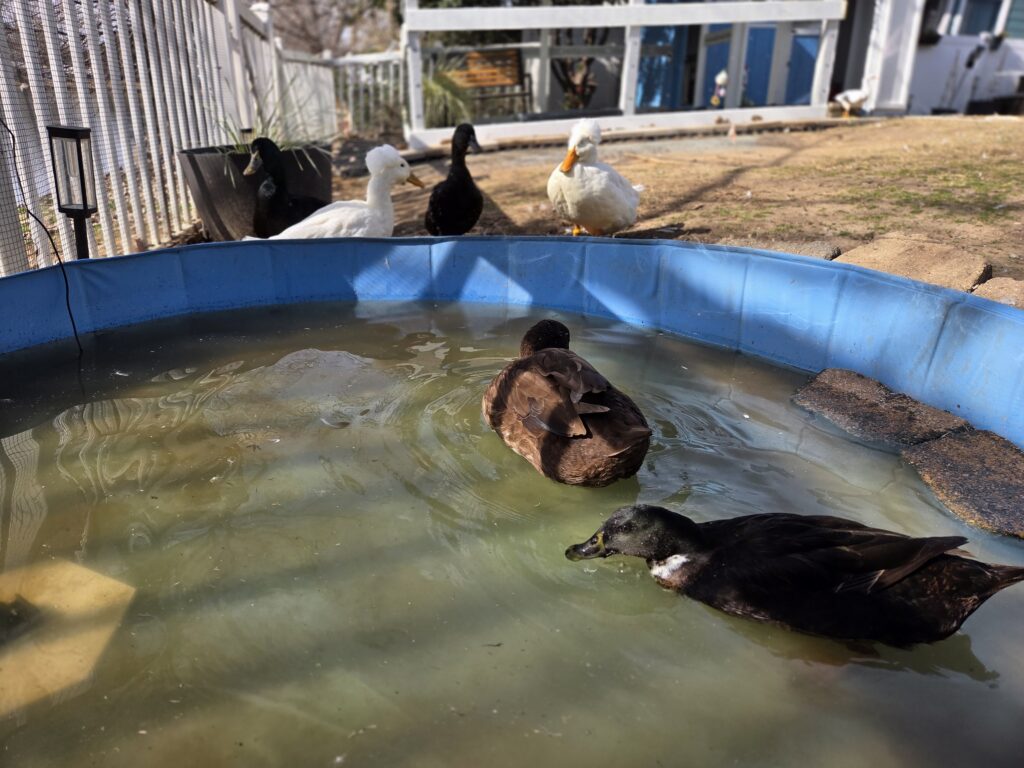
Little by little, the imbalance became more obvious. The water began to collect unevenly, pooling deeper on one side while the other side became increasingly shallow. What used to be a fully usable space started shrinking in functionality. The deeper end was crowded, while the shallow end turned into more of a muddy standing area than a true swimming zone.
And the ducks adapted, because they always do. Instead of gliding across the water, they started clustering in that deeper corner. Instead of fully submerging, they were mostly standing, splashing, and doing quick, partial dips. The longer, relaxed bathing sessions became shorter. The diving almost disappeared. Even the way they preened started to change, more rushed, less thorough.
It was not a sudden shift. It was slow enough that I almost missed it. But once you see it, you cannot unsee it. What used to be a place where they could swim had quietly turned into something they were just… making do with.
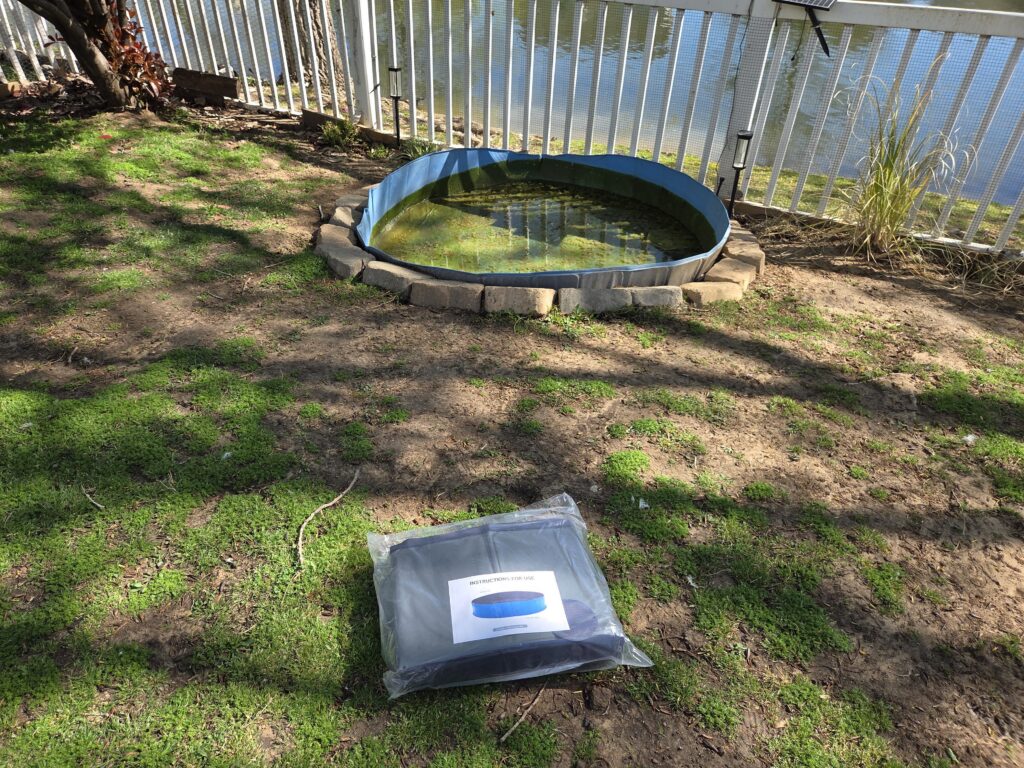
And that is when it really hit me. They were no longer able to be ducks in their water. So when the old pool finally broke, I did not hesitate. I decided to go bigger and do it right.
Starting Fresh: Level Ground, Bigger Vision
We leveled the entire area carefully, making sure the base was stable and even. This time, I did not rush it. I had learned the hard way that even a small imbalance can turn into a big problem over time, especially with something as heavy and constantly used as a duck pool. So we took our time, adjusting the ground, checking it from multiple angles, and really making sure everything sat exactly how it should.
It took some effort, more than I initially expected, but I knew from experience that this step would make or break the entire setup. A level foundation is not just about looks. It determines how the water distributes, how the pool holds up structurally, and ultimately how usable that space is for the ducks.
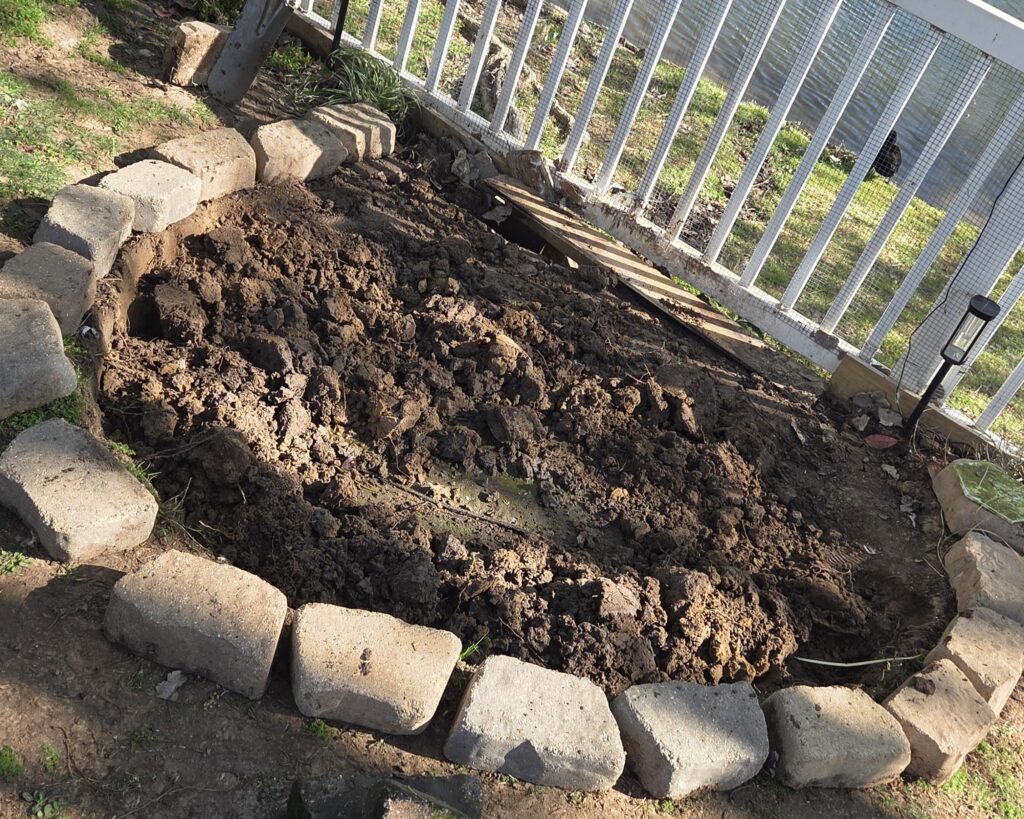
We had used pavers before around the old pool, and they worked well at first. But just like the ground underneath, they shifted over time. Between rain, constant splashing, and eight very enthusiastic ducks going in and out all day, things slowly moved out of place. Some pavers sank slightly, others tilted, and before long, the entry points were not as stable or predictable anymore.
We reset the pavers on a properly leveled base, making sure each one sat firmly and evenly. The goal was not just to place them, but to anchor them as part of the overall structure. The difference was noticeable right away. Instead of wobbly or uneven steps, the ducks now had solid, reliable access points. They could walk in and out without hesitation, without slipping, and without that awkward shuffle we sometimes saw before.
It also helped keep the surrounding area more controlled. With a stable footing, there was less frantic splashing at the edges, which meant fewer muddy patches forming right where they enter and exit the pool.
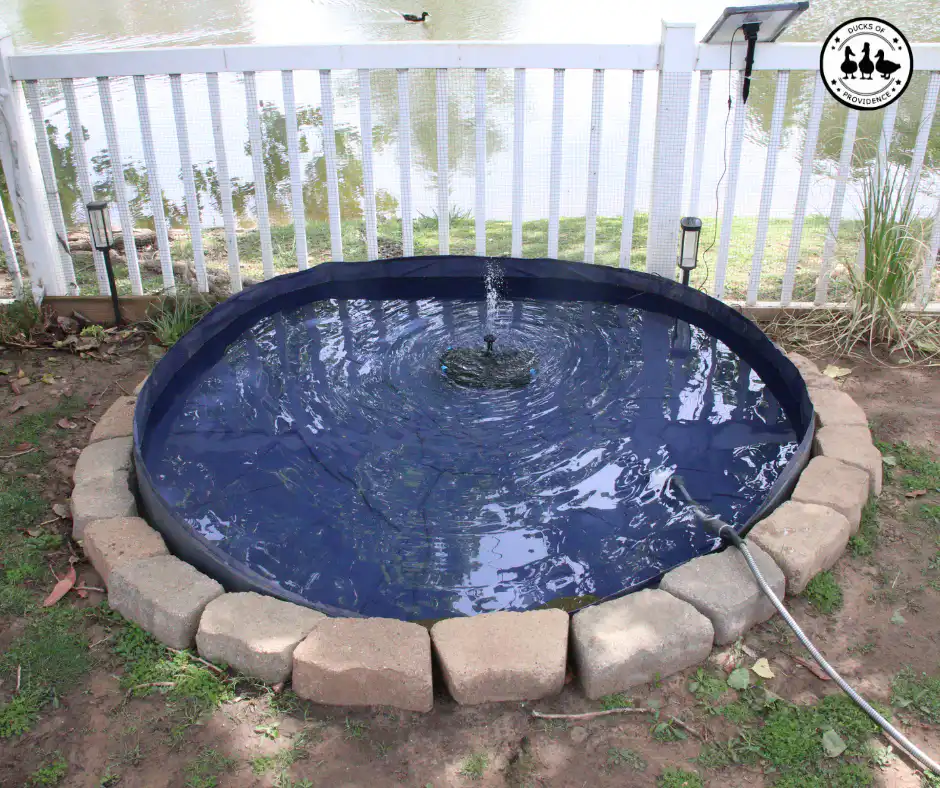
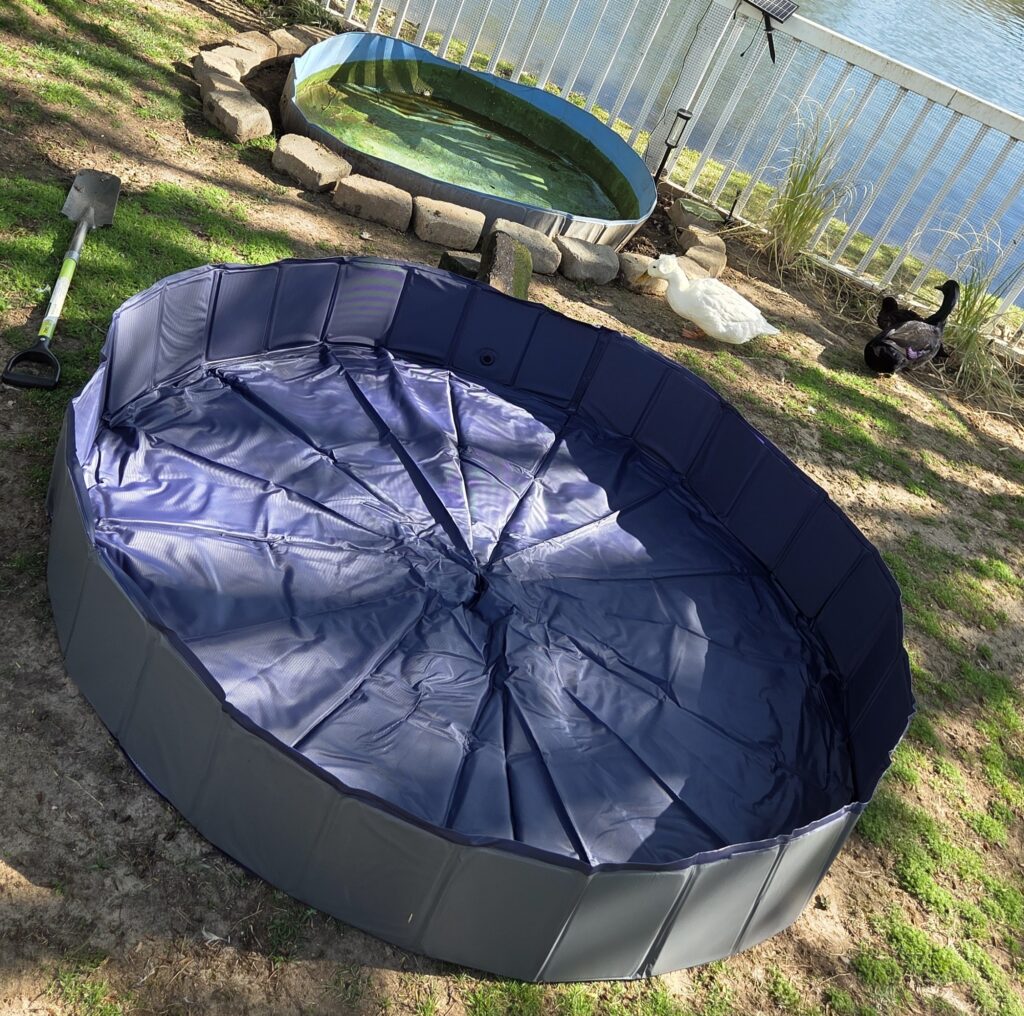
And then we set up the new pool. An 80-inch diameter, still 12 inches high, but dramatically larger in surface area. Seeing it in place for the first time really put things into perspective. It did not just feel like a slightly bigger version of the old one. It felt like a completely different scale.
When we filled it, the most satisfying part was watching the water settle perfectly evenly across the entire base. No tilt, no shallow side, no compromise. Just a full, consistent depth from edge to edge.
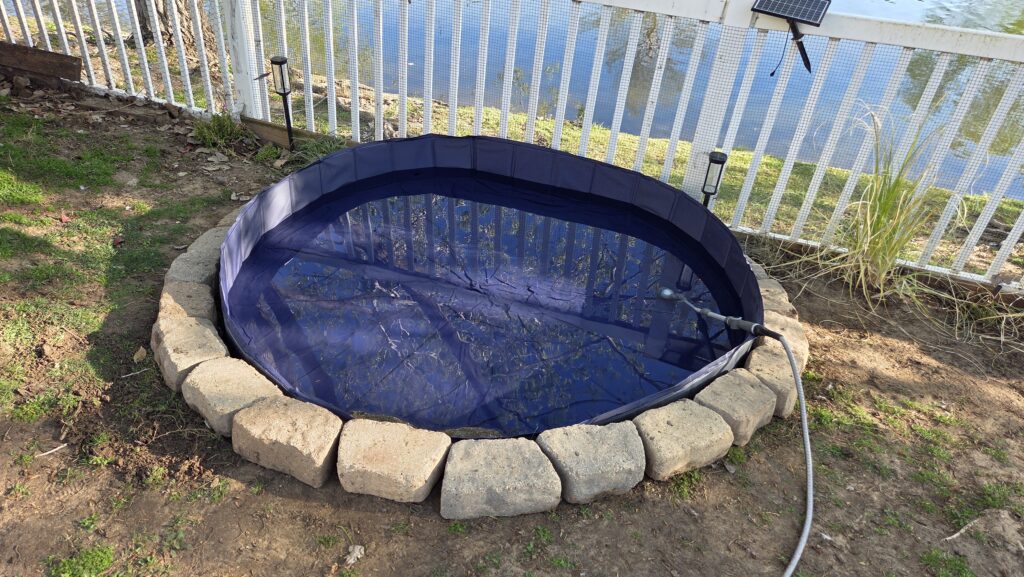
The difference was immediate. Even before the ducks got in, you could tell this was going to change things. The space felt open, balanced, and usable in a way the old setup had not been for a long time. And once the ducks stepped in, it became very clear that this was not just an upgrade in size.
It was an upgrade in how they could actually use the water.
Watching Them Become Ducks Again
I still remember the first time they got into the new pool. There was no hesitation. They stepped in, paused for just a second as if taking it in, and then… everything changed.
It started almost quietly, with a few careful steps into the water. But within moments, that calm turned into pure excitement. They began moving in a way I had not seen in a while. Not just standing and splashing in place, but actually swimming. Real swimming. Floating, gliding, turning, moving across the entire pool instead of being confined to one small corner.
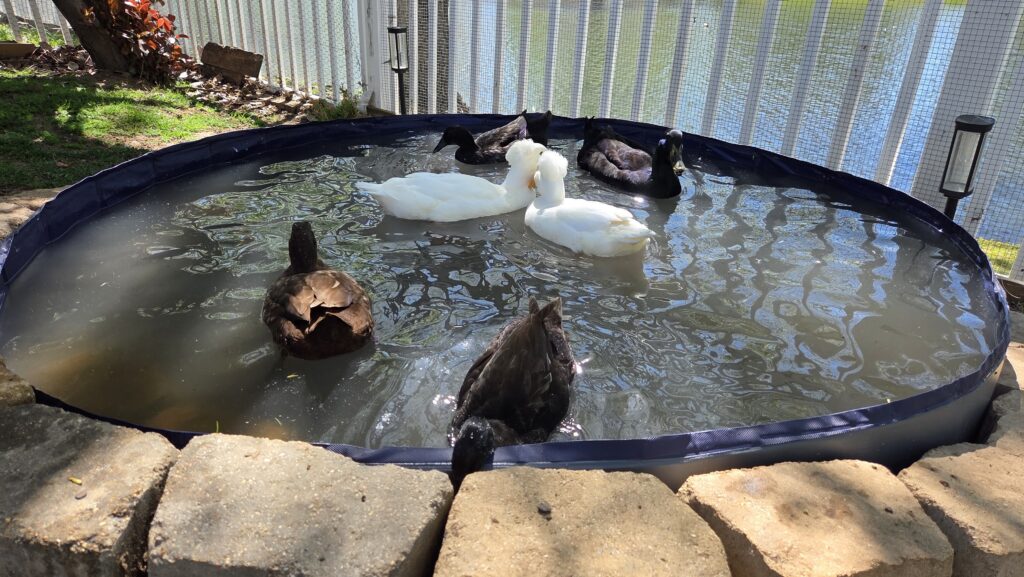
And then came the zoomies.
If you have ducks, you know exactly what I mean. That sudden burst of energy where they paddle as fast as they can, dart across the water, flap their wings, and send droplets flying everywhere. One starts, another joins, and suddenly the whole pool is alive with motion.
But this time, it went even further. They were not just racing across the surface. They were diving into it. In the middle of those zoomies, they would suddenly dip forward, push their heads and upper bodies underwater, and pop back up, only to take off again in another direction. It was this beautiful mix of speed, play, and instinct. Quick dives, splashes, turns, and then another burst of movement. Over and over again.
I stood there watching them, and I could not help but smile. This was not just them using the pool. This was them fully engaging with it.
They dipped their heads deeply, rolled their bodies through the water, and followed up those dives with that familiar full-body shake that only happens when a duck is truly satisfied, when every feather has been properly soaked and reset. You could see how much more complete their bathing routines were, how much longer they stayed, how relaxed and energized they seemed at the same time.
That is when you realize how important water is beyond just hygiene.
Water is where ducks regulate their body temperature, especially during those intense Texas afternoons when the heat feels relentless. It is where they engage in proper preening, working oil through their feathers to maintain waterproofing and insulation. It is where they interact, drifting alongside each other, occasionally bumping gently, sharing space in a way that reinforces their social bonds.
It is also where they release energy. Swimming is an exercise, and those zoomies, especially with the diving mixed in, are a full-body workout. You see muscles engage, wings stretch, and movement that simply cannot happen on land.
And yes, it is also where mating behaviors naturally occur, which is another reminder that water is deeply tied to their biology, not just their comfort.
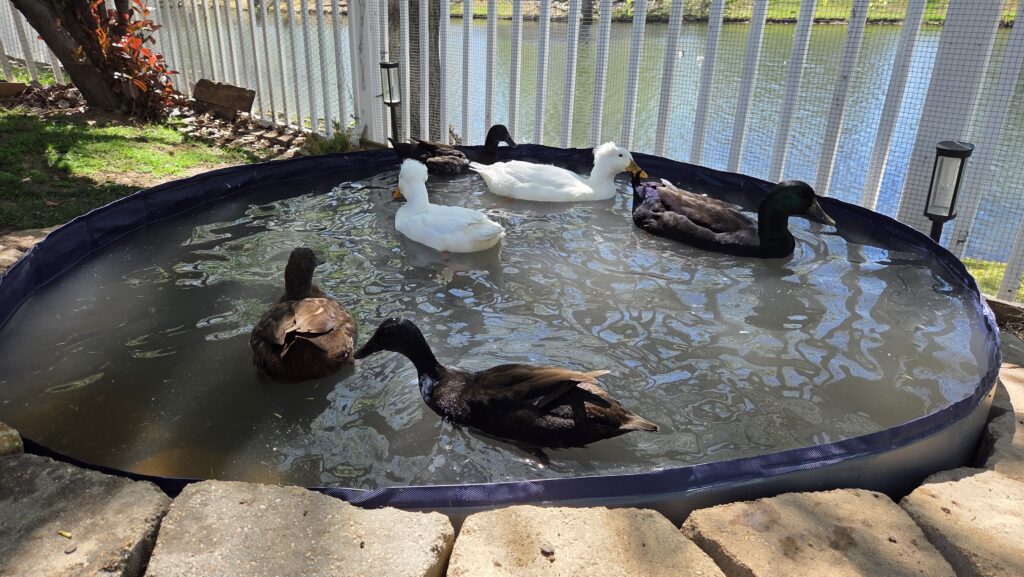
Our 80-Inch Pool Upgrade
If you are constantly battling dirty duck water, upgrading your pool size can make a bigger difference than you might expect.
We switched to an 80-inch diameter, 12-inch deep pool, and the added space completely changed how our ducks use the water. More room to swim, dive, and float naturally, plus a noticeable improvement in how long the water stays cleaner.
It is a simple upgrade, but one that supports better water quality, enrichment, and overall duck health. If your current pool feels too small or hard to maintain, going bigger is absolutely worth considering.
In the smaller, uneven pool, many of these behaviors had slowly faded. Not completely, but enough that I noticed their absence once they came back.
In the new one, they returned instantly, as if a switch had been flipped.
Krümel floated calmly, almost drifting, taking her time and enjoying the space. Muffin explored every inch of the pool, curious as always, testing corners, moving in and out, fully engaged with her environment. And Emma, of course, claimed her space with confidence, but this time without pushing anyone else out, because she did not have to.
There was enough room for everyone to move, to dive, to play, to rest, and to just be ducks.
Why Space and Depth Matter More Than We Think
When we talk about duck pools, it is easy to focus on convenience. How easy is it to clean? How often do I have to refill it? Does it fit in my yard?
But underneath all of that is something much more important: Water access is directly tied to duck physiology.
And both space and depth determine whether that physiology is actually supported… or quietly compromised.
From a biological standpoint, ducks are designed for water. Their entire body plan reflects that. They have dense, waterproof plumage, webbed feet optimized for propulsion, and a specialized oil gland, the uropygial gland, located at the base of the tail. This gland produces lipids that ducks distribute across their feathers during preening, creating a hydrophobic barrier that keeps water out and maintains insulation.
But here is the key point many people miss: This system only works properly if ducks have enough water to fully engage with it.
When a duck bathes, it is not just getting wet. It is performing a coordinated sequence of behaviors. It dips its head, draws water across its back, shakes, preens, and repeats. This process ensures that the oil is evenly distributed across the feather structure, from the down layer all the way to the outer contour feathers.
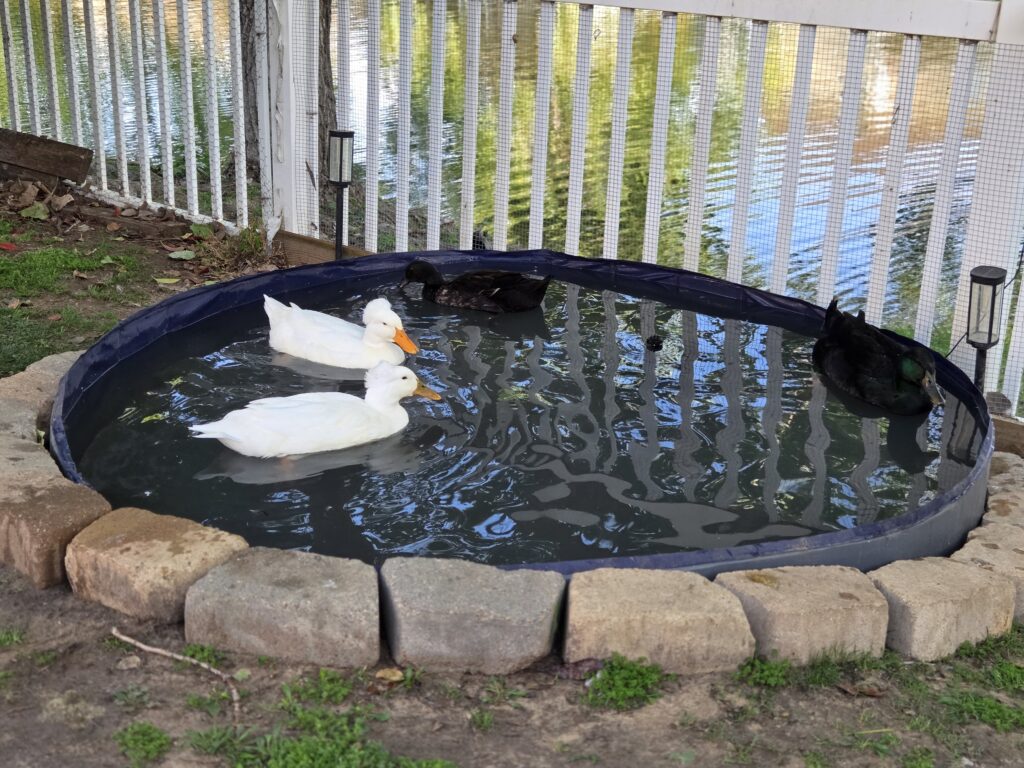
If the water is too shallow, that process becomes incomplete.
I have seen this firsthand. In the old, uneven pool, the ducks could not submerge fully across most of the surface. They adapted, of course, but their movements were abbreviated. Less rolling, fewer full dips, shorter bathing sessions. It worked just enough to get by, but not enough to be optimal.
With the new pool, that changed immediately. Because the depth is now consistent throughout, they can submerge wherever they are. That freedom leads to more complete bathing cycles, which directly supports feather integrity, waterproofing, and thermal regulation.
And this matters more than it might seem. A duck that cannot maintain proper feather condition is more vulnerable to:
- waterlogging
- heat stress in summer
- loss of insulation in cooler temperatures
- skin irritation and secondary infections
So when we talk about depth, we are not just talking about preference.
We are talking about preventive health.
Space, on the other hand, influences behavior in a different but equally important way.
Ducks are social animals, but like any social species, they need enough room to express natural behaviors without constant interference. In a confined space, especially around a high-value resource like water, you start to see subtle competition. It may not always look aggressive, but it shows up as crowding, displacement, and shortened access time for more timid individuals.
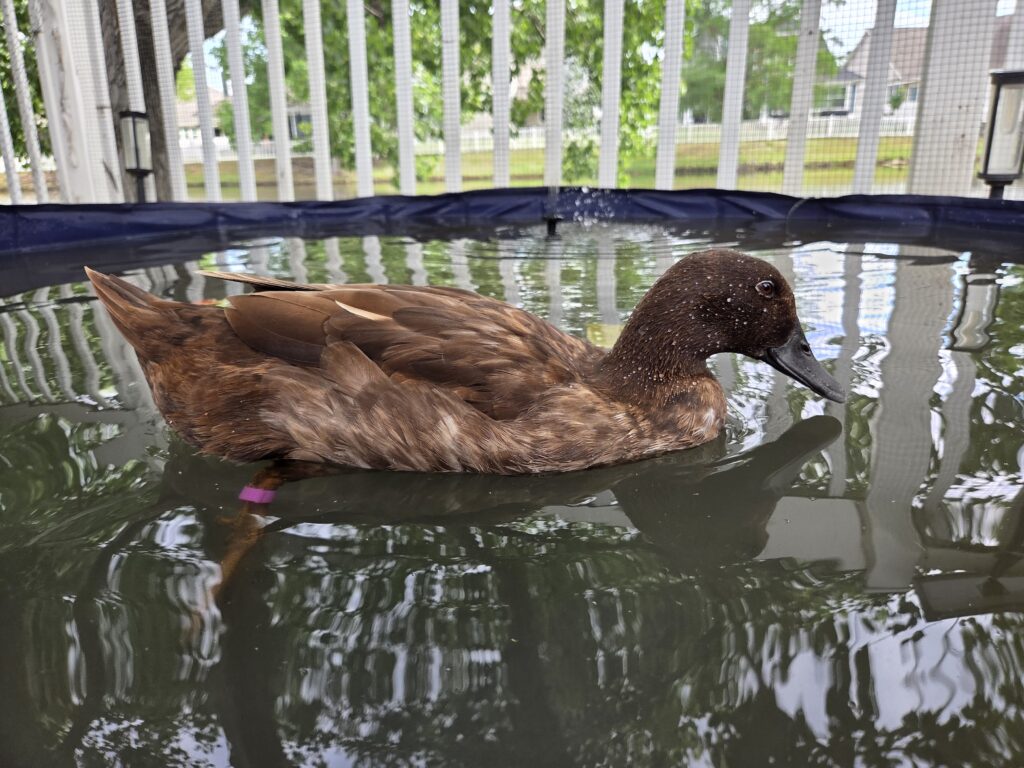
In a larger pool, that pressure is reduced. Each duck has the ability to choose where to be, how long to stay, and how to interact. This leads to longer, more relaxed bathing sessions and a more balanced group dynamic. You see fewer interruptions, fewer quick exits, and more of those calm, floating moments that tell you a duck feels secure.
There is also a mechanical aspect to space that is often overlooked.
Swimming is one of the most effective forms of exercise for ducks. It engages their legs, core, and wings in a coordinated way that simply cannot be replicated on land. When space is limited, movement becomes restricted. Ducks paddle in place instead of traveling. They expend less energy and engage fewer muscle groups.
With more surface area, movement becomes dynamic.
They glide, turn, accelerate, and yes, launch into those zoomies with diving mixed in. That kind of activity supports muscle tone, joint health, and overall fitness, especially in domestic breeds that may already be predisposed to reduced mobility.
And then there is thermoregulation.
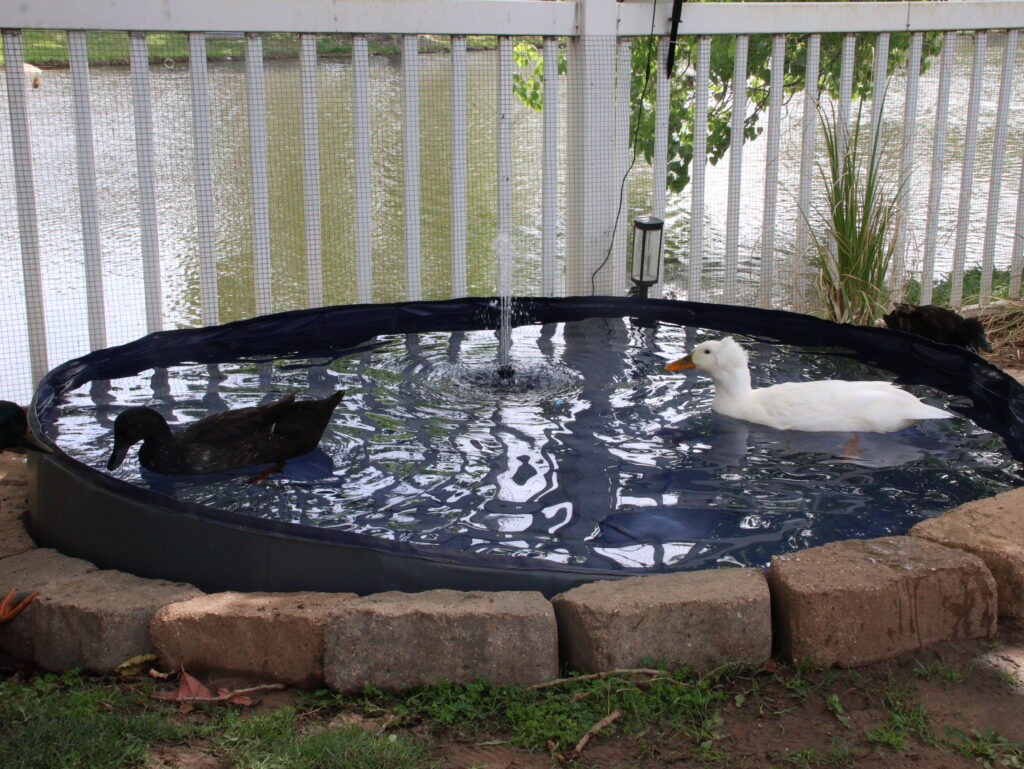
Here in North Texas, heat is not just a seasonal inconvenience. It is a real physiological stressor. Ducks rely on water to dissipate heat, as they do not sweat like mammals. Immersion allows them to cool down efficiently, especially when they can submerge their bodies and increase heat exchange across their featherless areas, like their feet and bill.
A shallow or overcrowded pool limits that cooling effect. A deeper, more spacious pool enhances it.
When I watch my ducks now, especially during the hottest parts of the day, I see them fully settled into the water, bodies relaxed, sometimes just floating quietly. That stillness is not inactivity. It is active thermoregulation.
So when we talk about upgrading a pool, it is easy to frame it as a quality-of-life improvement. But in reality, it goes deeper than that. Space and depth influence:
- feather health
- waterproofing
- thermoregulation
- social dynamics
- physical activity
In other words, they shape how well a duck can function as a duck. And once you see that connection, it becomes very hard to go back to thinking of a pool as just a container of water.
What Those Extra Inches Really Mean: Water Volume Comparison
When I say the new pool feels bigger, that is not just perception. It is measurable. And this is where things get really interesting.
Because when you increase the diameter of a circular pool, you are not just adding a little more space. You are increasing both surface area and water volume in a nonlinear way. That means even a modest increase in diameter creates a surprisingly large difference in how the pool functions.
Let’s look at the numbers. Both pools have the same height of 12 inches, so the key differences come from diameter, surface area, and resulting volume.
| Pool Size | Diameter | Surface Area | Approx. Water Volume |
|---|---|---|---|
| Old Pool | 72 inches | ~28.3 sq ft | ~211 gallons |
| New Pool | 80 inches | ~34.9 sq ft | ~261 gallons |
That is:
- about 6.6 additional square feet of surface area
- about 50 extra gallons of water
And both of those matter more than you might expect.
The increased surface area gives your ducks more room to actually use the water. More space to spread out, swim, turn, and engage in natural behaviors without crowding. This directly impacts flock dynamics and reduces that subtle competition we often see in smaller setups.
The increased volume, on the other hand, improves the system itself. More water means better dilution of waste, slower buildup of organic material, and more stable water conditions overall.
So those extra eight inches? They are not just eight inches. They translate into:
- noticeably more swimming space
- a meaningful increase in water volume
- improved dilution of waste
- a more stable and manageable system overall
And when you combine that with a level base and consistent depth across the entire pool, the difference becomes very obvious.
It is one of those upgrades that looks small on paper, but in real life, it changes everything.
The Reality: Ducks Turn Water into Chaos
As much as I love this new setup, and as much as it has improved things, there is one truth that remains unchanged.
Ducks will turn even the most beautiful, crystal-clear water into chaos. And they will do it fast.
It starts the moment they step in. What looks like a calm, clean pool instantly becomes an active system. They bring in sand on their feet, bits of bedding stuck to their feathers, and often a mouthful of food they decided to rinse mid-snack. Within minutes, you can already see tiny particles suspended in the water.
And then there is something I see all the time in our yard.
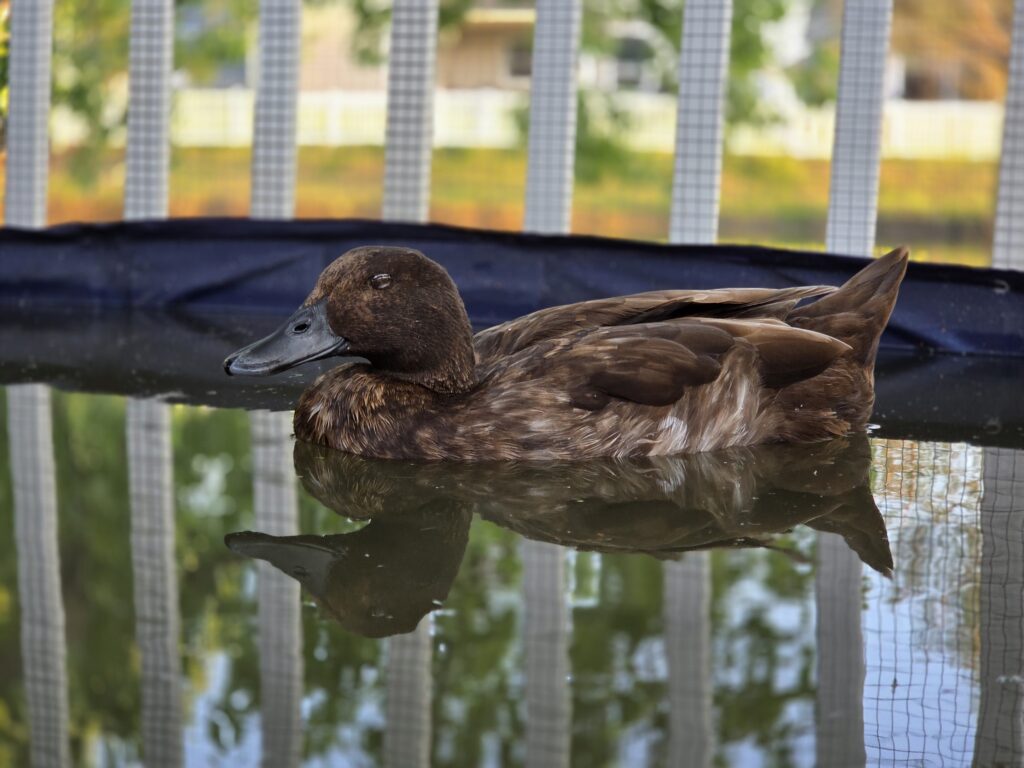
They go play in muddy puddles nearby, happily dabbling and digging, getting their bills and feet covered in wet soil… and then they come straight to the pool to rinse off. It makes perfect sense from their perspective. The pool is their clean water source. But what that means for the pool is that all that mud, sand, and fine debris gets introduced at once. You can literally watch the water change in real time.
Then comes the part we all know: they poop in it…a lot.
From a biological perspective, this is completely normal. Ducks have a relatively fast digestive system, and water stimulates elimination. In the wild, this is not an issue because there is constant water exchange. In a backyard setup, however, everything accumulates in a closed system.
So now you have organic waste, uneaten food, fine sediment from muddy bills, and whatever else they decided to carry in that day, all mixing together.
And if that was not enough, summer adds another layer: Algae.
With sunlight, warmth, and nutrients present, algae growth becomes almost inevitable. That green tint creeping in is not just cosmetic. It is a sign that the system is becoming more biologically active, and not necessarily in a way that benefits water quality.
Before the upgrade, this combination meant one thing: frequent water changes.
We were doing full clean-outs about once a week, sometimes more often depending on how heavily they used the pool and how hot it was. The good news is that the pool itself is relatively easy to clean. It has a built-in plug, so draining the water is straightforward and does not require tipping or wrestling with it.
But here is the reality no one really talks about. When you are dealing with over 200 gallons of water, easy to drain does not mean quick or effortless.
It takes time for that volume to empty. It takes time to refill. And every time you do it, you are using a significant amount of water. Especially here in Texas, that is something I am very aware of. It adds up, both in terms of time and cost.
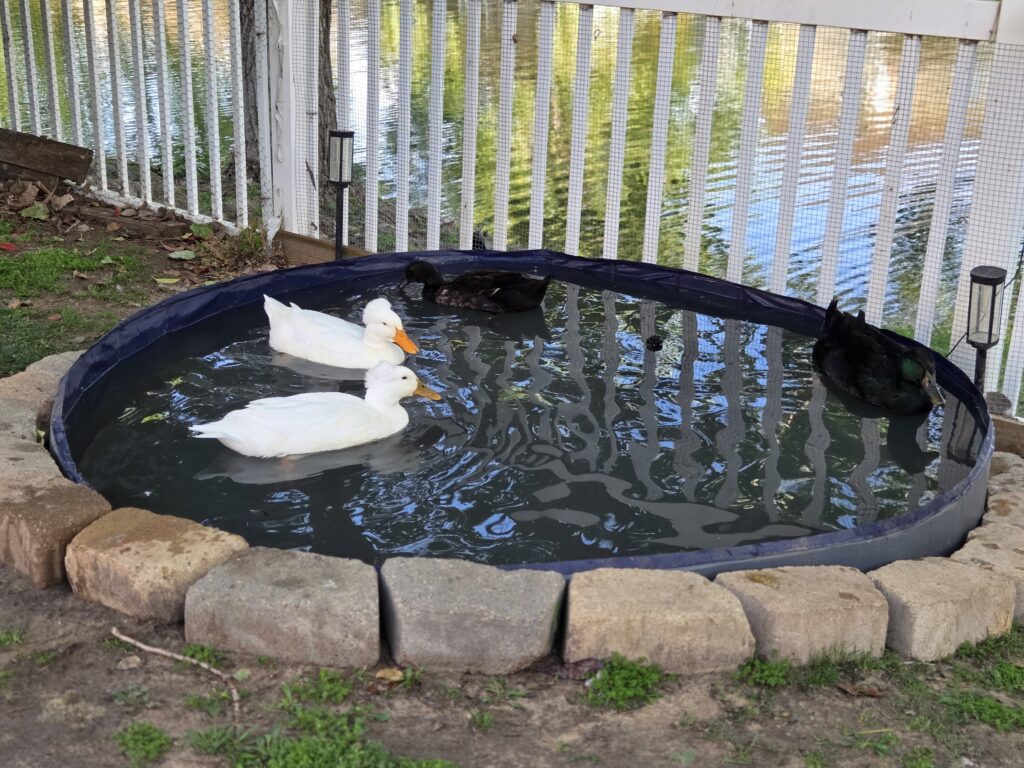
There were definitely moments where I looked at the pool and thought, I just cleaned this… how are we back here already?
But here is where things start to shift. Even though ducks will always create this level of mess, the way your system handles it can vary dramatically.
With the larger pool, the same amount of “duck chaos” is now distributed across a greater volume of water. That alone slows down how quickly things deteriorate. The water still gets dirty, but it does so more gradually. It buys you time.
And when you combine that with water movement and filtration, even if it is just a simple solar setup, you start shifting from a system that collapses quickly to one that is more stable and manageable.
It does not remove the mess. Nothing will. But it changes the pace of it. And that, in daily duck life, makes a bigger difference than you might expect.
Because instead of constantly reacting to a problem, you start to feel like you are actually staying ahead of it.
Adding Movement: The Solar Fountain Experiment
At some point, I realized that increasing the pool size was only solving part of the problem.
Yes, the extra water volume helped with dilution. Yes, the ducks had more space and were clearly happier. But the underlying issue remained. The water was still a closed system, and without any kind of movement, everything they brought into it would just sit there, slowly building up.
And stagnant water, from a biological standpoint, is never ideal.
In still water, oxygen levels tend to drop over time, especially as organic material begins to break down. That creates an environment where anaerobic bacteria can thrive, the kind that contribute to unpleasant odors and faster water degradation. Add heat and sunlight into the mix, which we have plenty of here in North Texas, and you have the perfect conditions for algae growth and rapid decline in water quality.
So I started thinking about how to introduce movement into the system.
Not something complicated, and definitely nothing that required running electrical cords across a wet backyard. Safety is always my first concern, especially with water involved. I wanted something simple, self-contained, and ideally powered by what we have an abundance of here: Sunlight.
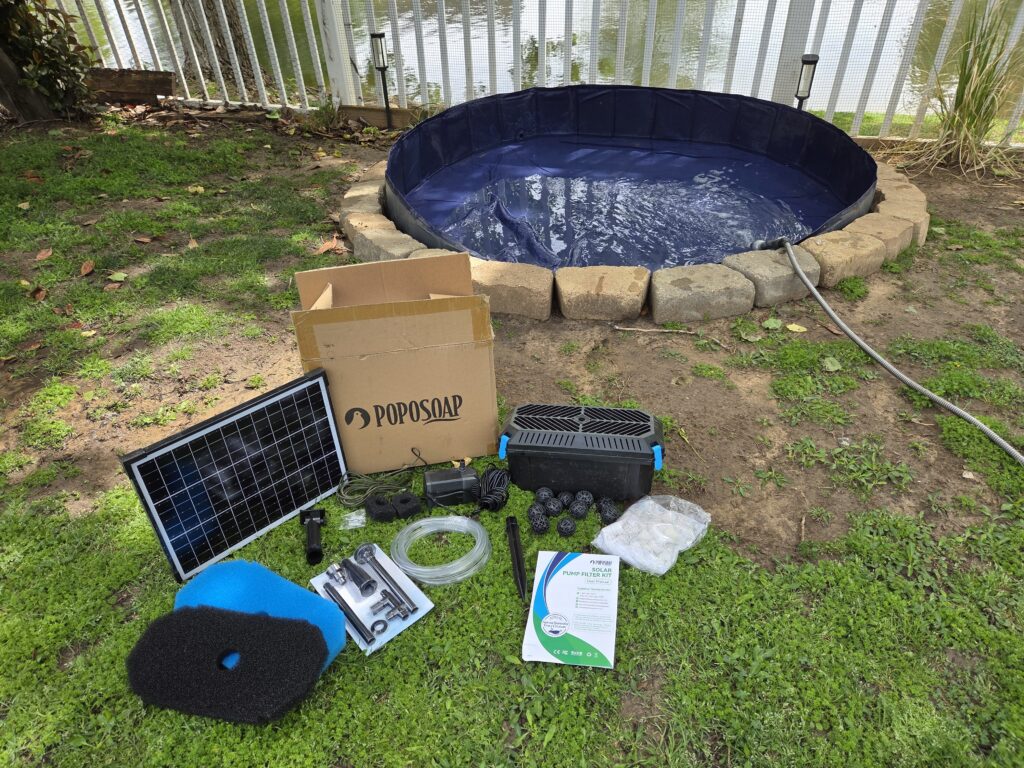
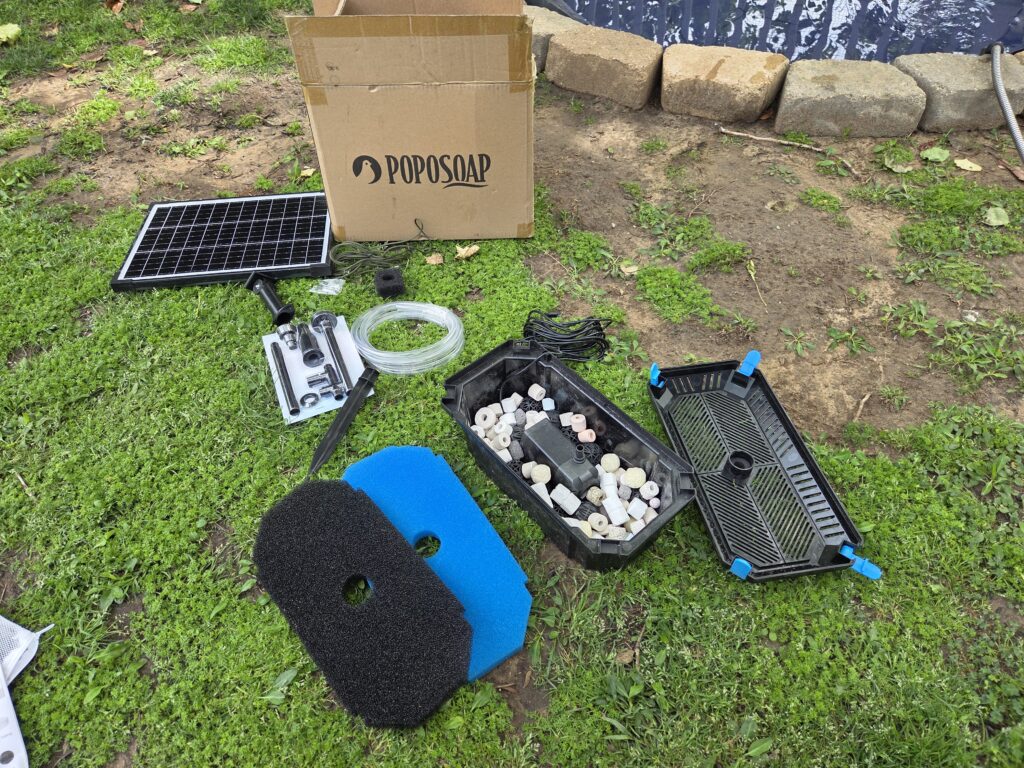
That is how I ended up trying a solar-powered fountain and filter system. We installed the 20W Pond Solar Filter Pump Kit 280GPH from Poposoap, and I was honestly curious to see whether it would make a noticeable difference or just be a nice visual feature.
Installation was refreshingly simple. The solar panel sits in direct sunlight, and the pump starts working as soon as it receives enough light. No wiring, no timers, no complicated setup. Within minutes, we had a functioning fountain creating gentle movement across the surface of the pool.
And the first thing I noticed was not just how it looked, but how the water behaved.
Instead of sitting still, the surface was constantly shifting. That movement helps with aeration, meaning oxygen is being introduced into the water. Oxygenated water supports a more balanced microbial environment and slows down the dominance of anaerobic processes that lead to that stale water condition.
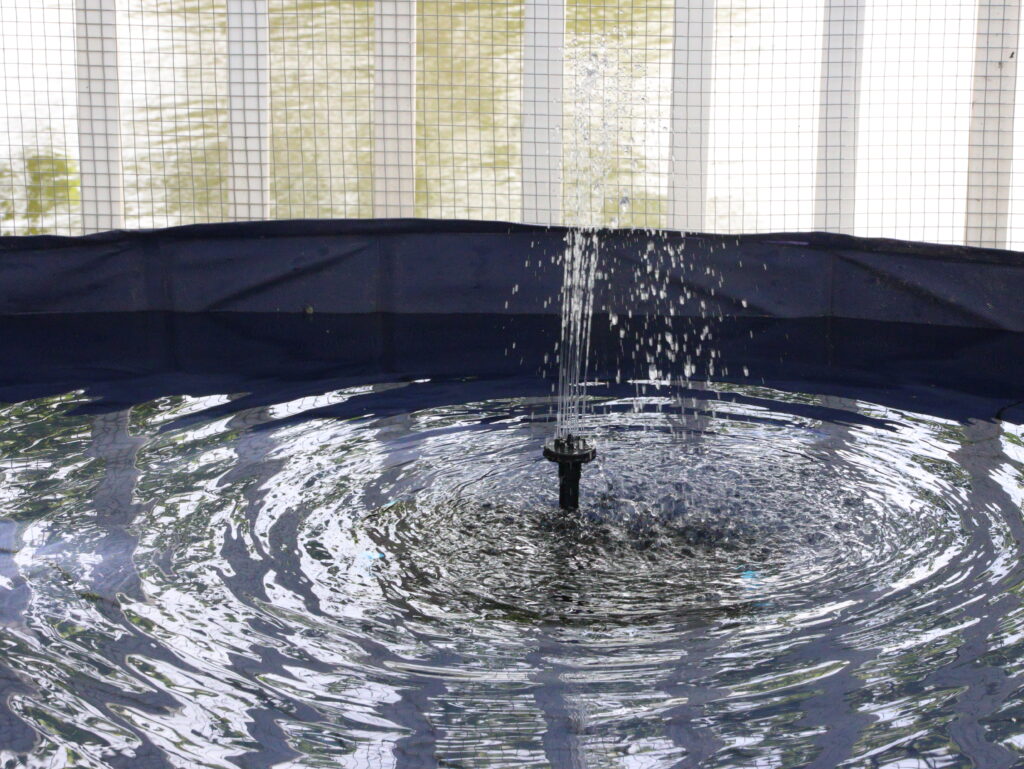
It also helps distribute heat more evenly. In direct sun, still water can warm up quickly, especially at the surface. With the fountain running, there is continuous mixing, which prevents hot spots and keeps the overall temperature slightly more stable. On those really hot days, even a small reduction in water temperature can make a meaningful difference for the ducks.
Another benefit is that movement disrupts the surface just enough to make it less attractive for mosquitoes to lay eggs. It is not a complete solution, but it is an added layer of prevention that works quietly in the background.
Now, the filter component is important to talk about realistically.
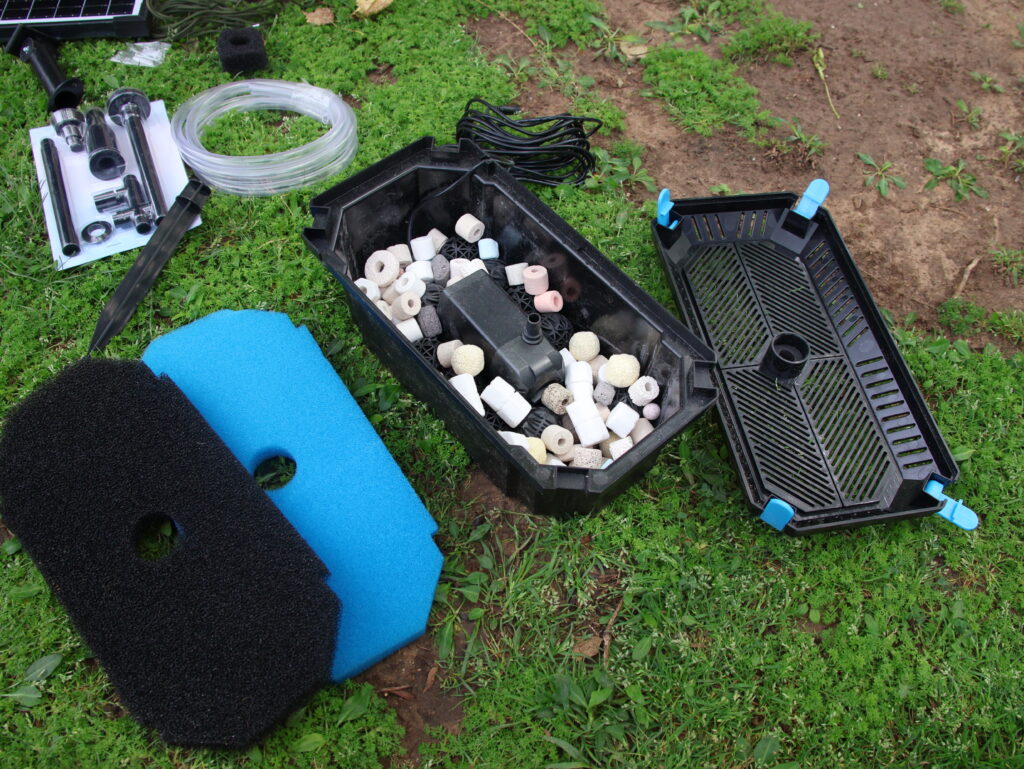
This is not a full-scale pond filtration system. It is a pre-filter, designed to catch some of the finer debris and keep water circulating. With six ducks, there is simply too much organic input for a small filter to keep up with entirely.
But that does not mean it is not helpful.
What it does is slow things down. It captures some of the floating particles, keeps water moving, and prevents that rapid stagnation we used to see. Combined with the larger water volume, it creates a system that is noticeably more stable over time.
And then there is the unexpected part. The ducks noticed it.
At first, they approached it cautiously, watching the movement, tilting their heads, clearly trying to figure out what this new thing in their pool was doing. But it did not take long before curiosity took over. Some ignored it completely, others interacted with the flowing water, dipping their bills right into the stream.
It added a new layer of enrichment. Not something overwhelming or disruptive, just a subtle change that made the environment more dynamic.
And standing there, watching the water move, seeing the ducks engage with it, I realized that this was not just about improving water quality.
It was about creating a system that feels a little more like what they are naturally drawn to. Moving water. Living water.
And that, in combination with the larger pool, brought everything together in a way I had hoped for, but honestly did not fully expect.
What Moving Water Changes
The moment the fountain started running, the water felt different.
Not dramatically at first, but noticeably. The surface was no longer still. Instead, there was a constant, gentle movement that gave the whole pool a more alive feeling. And while that might sound like a small detail, it actually has a meaningful impact on water quality.
In a stagnant pool, oxygen levels tend to drop over time, especially as organic material begins to break down. That creates the perfect environment for anaerobic bacteria, the kind that contribute to foul smells and faster water degradation. When you introduce movement, even something as simple as a small solar fountain, you are continuously mixing the water and increasing oxygen exchange.
That shift alone helps slow down how quickly the water turns.
Another thing I noticed, especially during our hotter days here in Texas, is that moving water seems to stay slightly cooler. It is not a dramatic temperature drop, but enough to matter. Instead of heat building up in one layer, the constant circulation distributes it more evenly. And for ducks, that can make a real difference when they are using the pool to regulate their body temperature.
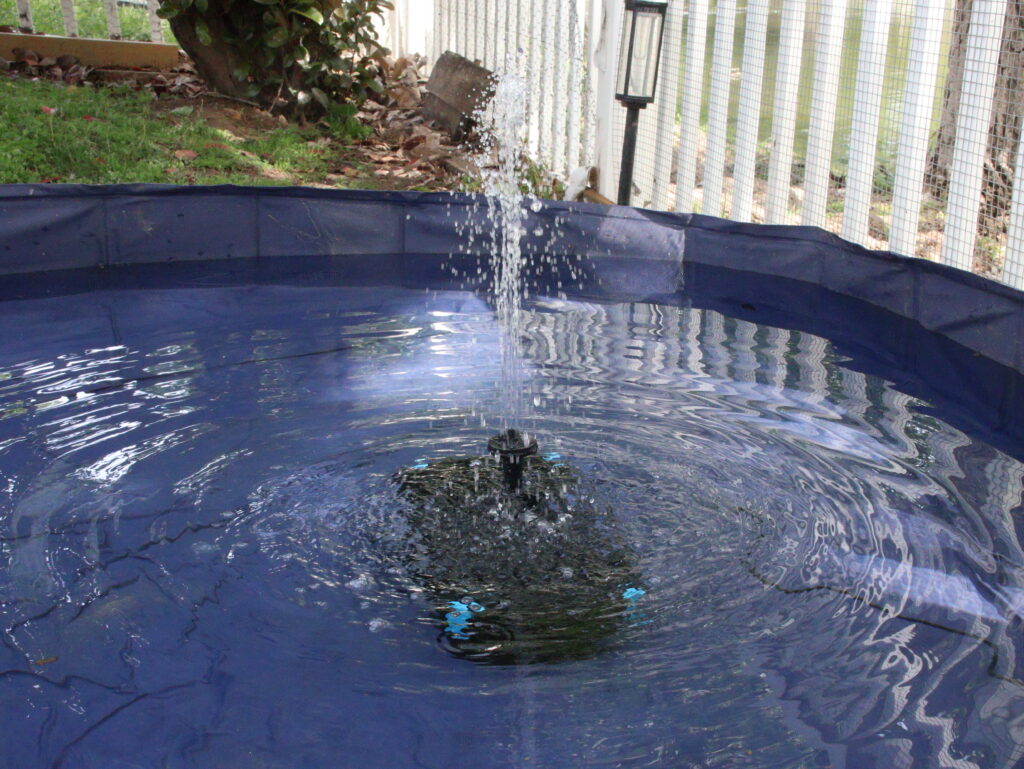
There is also a surface effect that is easy to overlook. Still water creates an ideal landing zone for mosquitoes. With movement, that surface is constantly disrupted, making it much less attractive for them to lay eggs. It is not a complete solution, but it is one more layer of protection working in the background.
And then there is the visual and behavioral side of things.
Ducks are naturally drawn to moving water. It signals freshness. Safety. A dynamic environment. Once the fountain was running, I noticed some of the ducks interacting with it, dipping their bills into the stream, investigating the flow, and incorporating it into their normal routines. It added a subtle layer of enrichment that I had not originally planned for.
Now, it is important to be realistic.
This is not a full filtration system that will keep your water perfectly clean on its own. With six ducks, that would be an unrealistic expectation. But what it does do is slow the process of water degradation, helping you maintain better conditions for longer.
Combined with the larger pool size, that gentle movement shifts the system from something that breaks down quickly to something that feels more balanced and manageable.
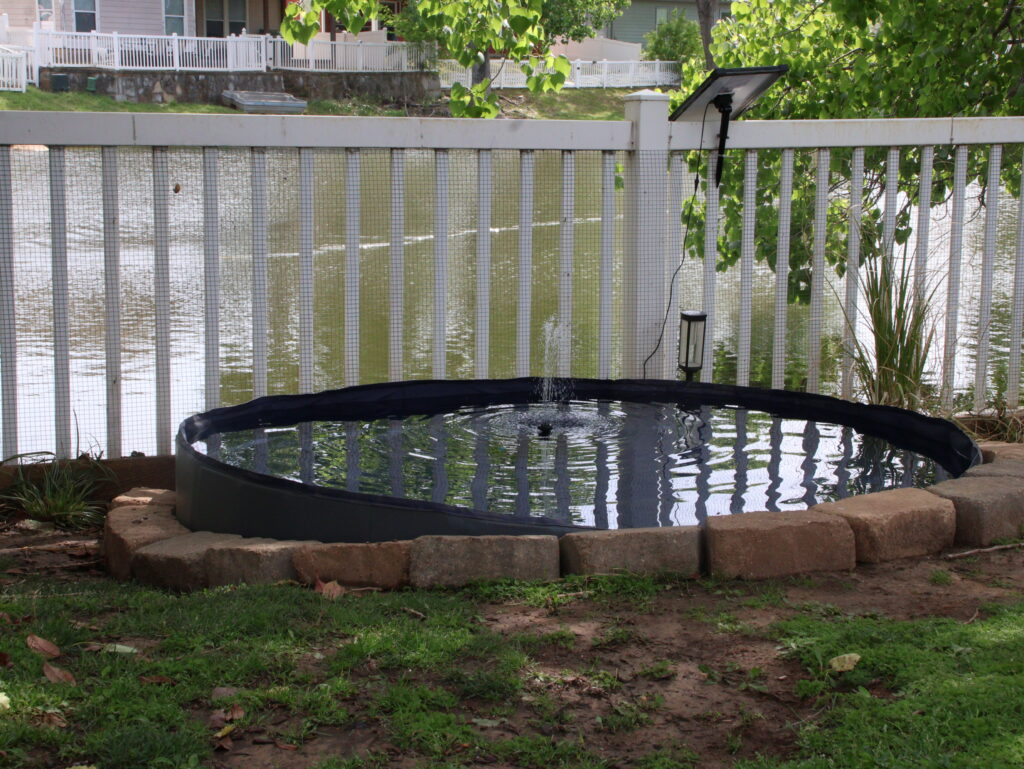
And when you are caring for ducks every day, that small shift can make a surprisingly big difference.
Creating a Pond-Like Space
Once the pool itself was in place and the fountain was running, I found myself wanting to take it one step further.
Not in a complicated way, but in a way that felt more natural.
Up to that point, the setup was functional. It worked, the ducks were happy, and everything was doing what it was supposed to do. But visually, it still looked like what it was. A plastic pool placed in the yard.
And I kept thinking about how ducks interact with water in a more natural setting.
They do not just move between open ground and a clear, defined edge. There is usually a transition. Plants, textures, areas to explore, places to nibble, and little pockets of shade and cover. That in-between space matters more than we often give it credit for.
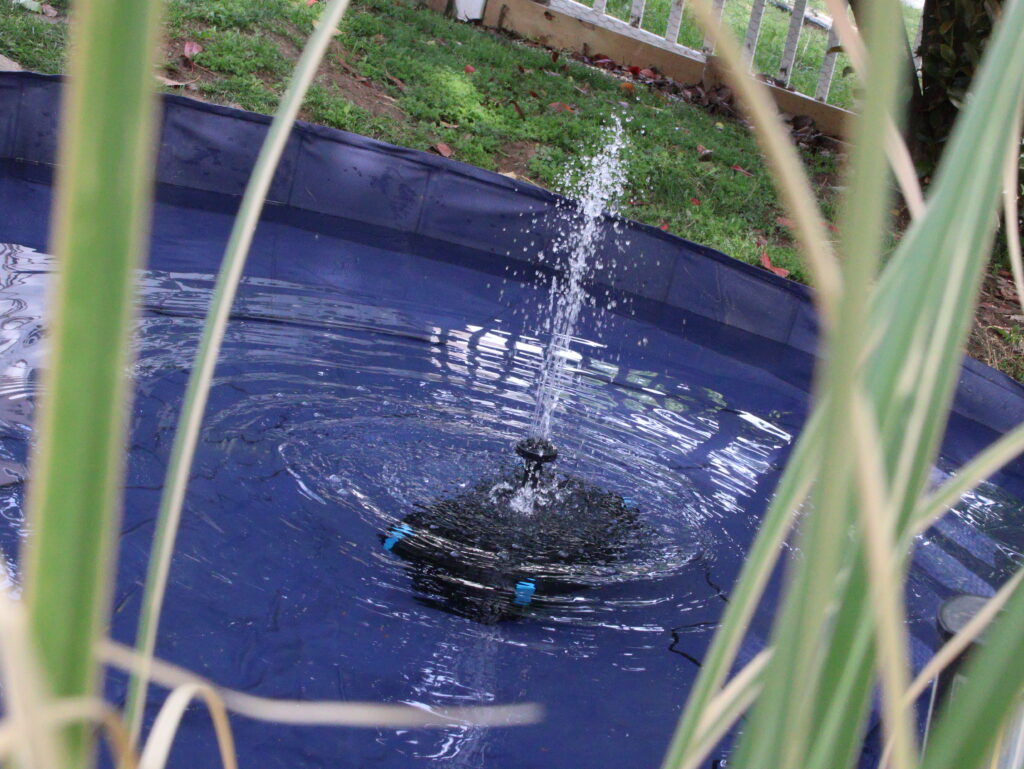
So I planted ornamental grasses around the pool.
At first, it was honestly just to soften the look. I wanted the space to feel a bit more intentional and less like a temporary setup. But very quickly, it became clear that this change was not just for me.
The ducks noticed. They started spending more time around the edges, moving in and out of the grasses, nibbling on the blades, and exploring the area before and after getting into the water. Instead of a single point of activity, the whole space around the pool became part of their environment.
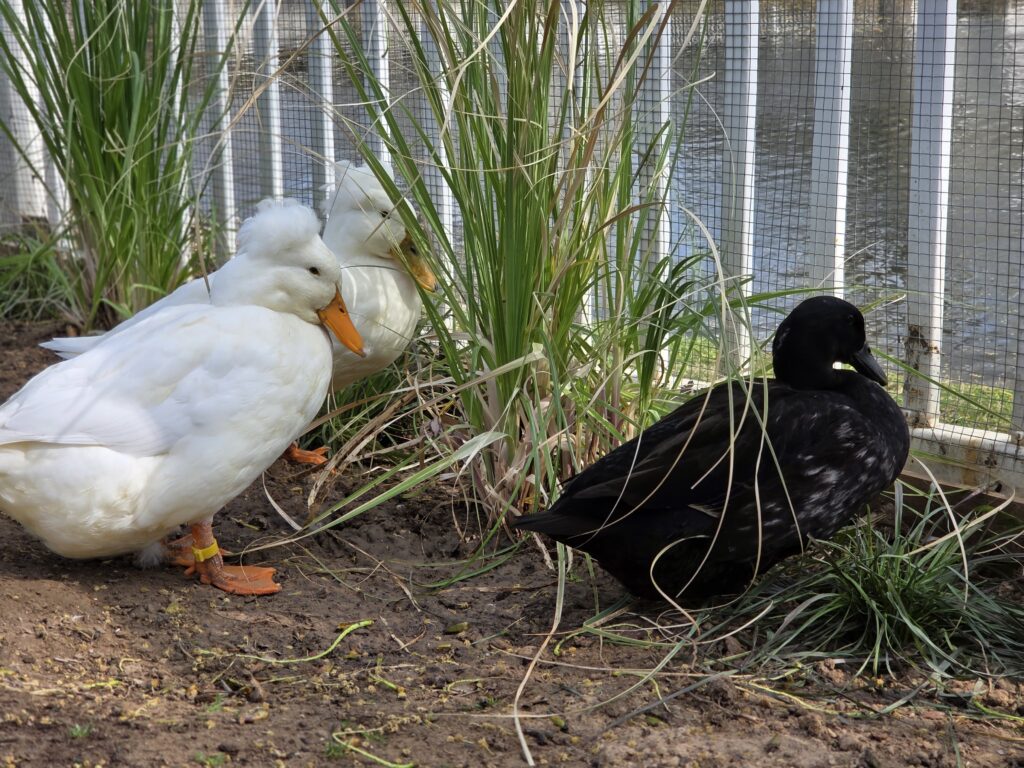
And that is where the shift happens. You are no longer just providing a water source. You are creating a micro-habitat.
From a behavioral standpoint, this adds an important layer of enrichment. Ducks are naturally curious and benefit from environments that encourage exploration. The grasses create variation in texture and visibility, which stimulates that curiosity without overwhelming them. It gives them a sense of choice. They can linger at the edges, move through cover, or step directly into open water.
It also changes how they use the pool itself. Instead of rushing in and out, I started noticing more gradual transitions. They would approach through the grasses, pause, preen, step into the water, and then move back out to rest or forage. It felt more fluid, more aligned with how they would naturally interact with water in the wild.
There is also a practical side to this.
The plants help break up splashing at the edges, reducing how much water gets thrown directly onto the surrounding ground. Over time, this can help limit the formation of muddy areas right next to the pool. They also provide a bit of shade, which is always a welcome addition during hot days.
And then there is something harder to quantify, but just as important: It feels calmer.
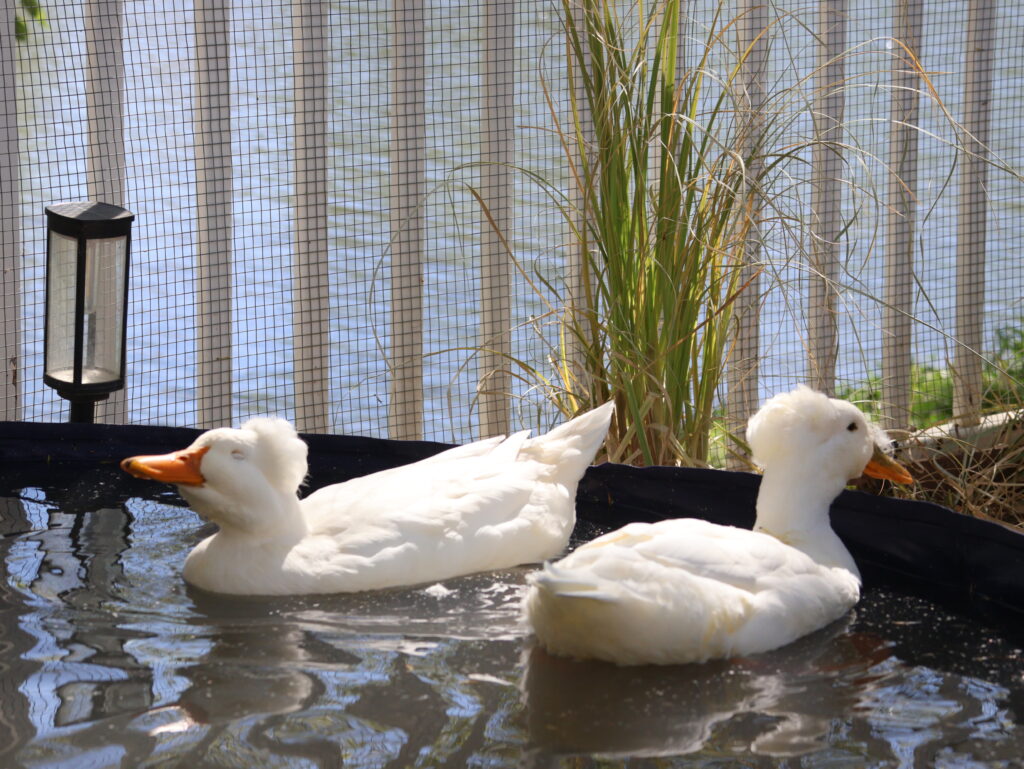
Standing there, watching the ducks move between water and plants, hearing the soft rustling of the grasses, seeing the sunlight reflect off moving water, it creates a space that feels more balanced. Less like a chore zone, and more like a place where your ducks can truly settle in.
It is still a backyard setup. It is not a natural pond. But it is closer. And sometimes, those small changes are what make the biggest difference, not just for the ducks, but for how we experience caring for them.
Final Thoughts: Rethinking the Way We Set Up Water for Our Ducks
This upgrade started as a simple fix for a broken pool, but it turned into something much bigger.
Once we improved the size, depth, and added movement, everything changed. The ducks did not just use the water, they truly engaged with it. More swimming, more diving, more of those joyful zoomies. And at the same time, the water stayed cleaner longer, and the whole system felt easier to manage.
That is when it clicked for me. Sometimes it is not about doing more work. It is about creating a setup that actually works.
So if you are constantly dealing with dirty water, take a step back and look at your space. Could your pool be bigger? More level? More dynamic?
Even small changes can make a big difference.
And once your ducks start swimming, diving, and fully enjoying their water again, you will know you got it right. 🦆
Our Go-To Solar Fountain Setup
If you are looking for an easy way to improve water quality without dealing with cords or complicated installs, this is the setup we use: the 20W Pond Solar Filter Pump Kit 280GPH.
It adds gentle water movement, helps with aeration, and slows down how quickly the pool turns. It is not a full filtration system, but paired with a larger pool, it makes a noticeable difference.
Simple to set up, runs on sunlight, and our ducks were curious about it right away. Definitely a worthwhile upgrade if you want a more stable and natural water setup.
Related Articles
- Ducks and Water: How Much They Need, Why It Matters, and How to Manage It Safely
- The Science of Duck Preening: Feather Care, Oil Glands, and Health
- Enrichment and Toys for Ducks
Is your habitat optimized for safety? Return to the Habitat Guide for more research on predator-proofing and sanctuary design.