
Electrolytes for Ducks: When They Help and When They Don’t

To keep our research-backed guides free, this site uses ads and affiliate links (earning a small commission at no cost to you). Everything here is created by a duck mom and PhD scientist, combining academic rigor with hands-on experience to provide practical, trustworthy advice for duck keepers everywhere. 🦆 Learn more
If you have ever cared for ducks during a scorching summer day, brought home a box of newly hatched ducklings, or worried about a sick member of your flock, you may have wondered whether electrolytes for ducks could help.
Electrolyte supplements are a popular addition to many duck keepers’ first aid kits, and for good reason. They can provide helpful support during certain stressful situations, such as extreme heat, a long journey, illness, or recovery after a predator attack. But does that mean your ducks need electrolytes in their water every day? And are all those colorful poultry supplement packets the same?
The answer is a little more complicated than a simple yes or no. Some products contain electrolytes alongside vitamins and minerals, while others also include probiotics or ingredients that provide energy. Understanding what is in the package can help you choose a product that makes sense for your flock.
Here in North Texas, our ducks know a thing or two about hot weather, and I like to keep a waterfowl supplement on hand when they could use some extra support. But I also believe that supplements should have a purpose. For healthy ducks on an ordinary day, clean water and a balanced diet are the foundation.
In this guide, we’ll explore what electrolytes actually do in a duck’s body, when they may be useful, and when they won’t solve the problem. We’ll also compare popular poultry supplements, including VitaMetz, Poultry Nutri Drench, Sav A Chick, and Hydro Hen, so you can feel more confident about what you are offering your flock.
Part of the Duck Health & Anatomy Hub, Evidence-based medical resources and anatomical research.
Quick Navigation: Jump to a Section
[hide]
- Quick Answer: When Should You Give Ducks Electrolytes?
- What Are Electrolytes?
- Why Might Ducks Need Extra Electrolytes?
- When Can Electrolytes Help Ducks?
- What Else Is in Electrolyte Supplements for Ducks?
- Comparing Electrolyte Supplements for Ducks
- Comparing the Guaranteed Analyses
- How to Use Electrolytes for Ducks Safely
- When Electrolytes Won’t Help
- From Our Flock: How I Use Electrolytes
- Frequently Asked Questions About Electrolytes for Ducks
- A Little Extra Support, When Your Ducks Need It
- Further Reading & Resources
Quick Answer: When Should You Give Ducks Electrolytes?
Electrolytes for ducks can be helpful as short term support during extreme heat, after transport or another stressful event, and in some cases during illness or recovery. Newly arrived ducklings may also benefit after a long or difficult journey.
However, electrolytes are not usually necessary every day for healthy ducks eating a balanced diet. Think of them as a tool to keep on hand for specific situations, not a routine replacement for fresh, plain water.
| Situation | Can electrolytes help? | What else matters? |
|---|---|---|
| Extreme summer heat | They may provide support during periods of heat stress. | Provide shade, airflow, cooling options, and plenty of fresh water. |
| Newly arrived ducklings | They may offer short term support after shipping or a stressful journey. | Provide the right brooder temperature, clean water, and a balanced duckling starter feed. |
| Illness or recovery | They may be useful as part of a veterinarian’s supportive care plan. | A sick duck needs appropriate diagnosis and treatment. |
| After a stressful event | They may offer short term support after transport, evacuation, or another major disruption. | Address injuries, safety, and other immediate needs first. |
| An ordinary day | Healthy ducks generally do not need routine electrolyte supplements. | Fresh water and a balanced diet provide the foundation. |
Remember: Electrolytes do not cool down an overheated duck, treat an injury or infection, or replace veterinary care. Always offer fresh, plain drinking water alongside any electrolyte solution. 🦆
What Are Electrolytes?
You have probably heard of electrolytes in sports drinks or supplements for people. But ducks need them, too!
Electrolytes are minerals that carry an electrical charge when dissolved in body fluids, such as blood and the fluid inside cells. These tiny charged particles help regulate some of the body’s most important functions, from keeping fluids in balance to allowing muscles and nerves to work properly.
Some of the main electrolytes include:
- Sodium
- Potassium
- Chloride
- Calcium
- Magnesium
Your ducks normally get these minerals through their feed and water. Their bodies carefully regulate the amount of each one because having too much or too little can interfere with normal body functions.
What Do Electrolytes Do in a Duck’s Body?
Electrolytes do much more than help with hydration. Here is a closer look at the jobs they perform:
| Function | Why It Matters |
|---|---|
| Fluid balance | Electrolytes help regulate how water moves between the blood, cells, and other body fluids. |
| Nerve function | They help carry the electrical signals that allow nerves to communicate with muscles and organs. |
| Muscle function | Electrolytes help muscles contract and relax, including the muscles involved in movement and the heartbeat. |
| Acid and base balance | They help maintain the proper balance of acids and bases in body fluids, which is important for normal cell function. |
You can think of electrolytes as part of your duck’s internal communication and balancing system. They help keep water where it needs to be and allow cells to send the signals that keep the body working.
Electrolytes and Hydration Work Together
Water and electrolytes go hand in hand, but they are not the same thing. Water provides the fluid, while electrolytes help regulate how that fluid is distributed and used throughout the body.
If a duck loses fluids or eats and drinks less than usual, their balance of water and electrolytes can be affected. In some situations, replacing both may be helpful. But adding an electrolyte powder to a water bowl does not automatically hydrate a duck who is not drinking.
That is why fresh water always comes first. If your duck is too weak to drink or you are concerned about dehydration, contact your veterinarian. Your duck may need a different form of fluid support. 🦆
Why Might Ducks Need Extra Electrolytes?
Under normal circumstances, healthy ducks get the electrolytes they need from a balanced diet and have access to enough fresh water to maintain their fluid balance. Their bodies continually adjust to keep things running smoothly.
But sometimes, a duck’s usual routine is disrupted. Extreme heat, illness, fluid loss, or a stressful journey can change how much a duck eats and drinks or affect its fluid balance. In these situations, an electrolyte supplement may provide short term support.
Heat and Fluid Balance
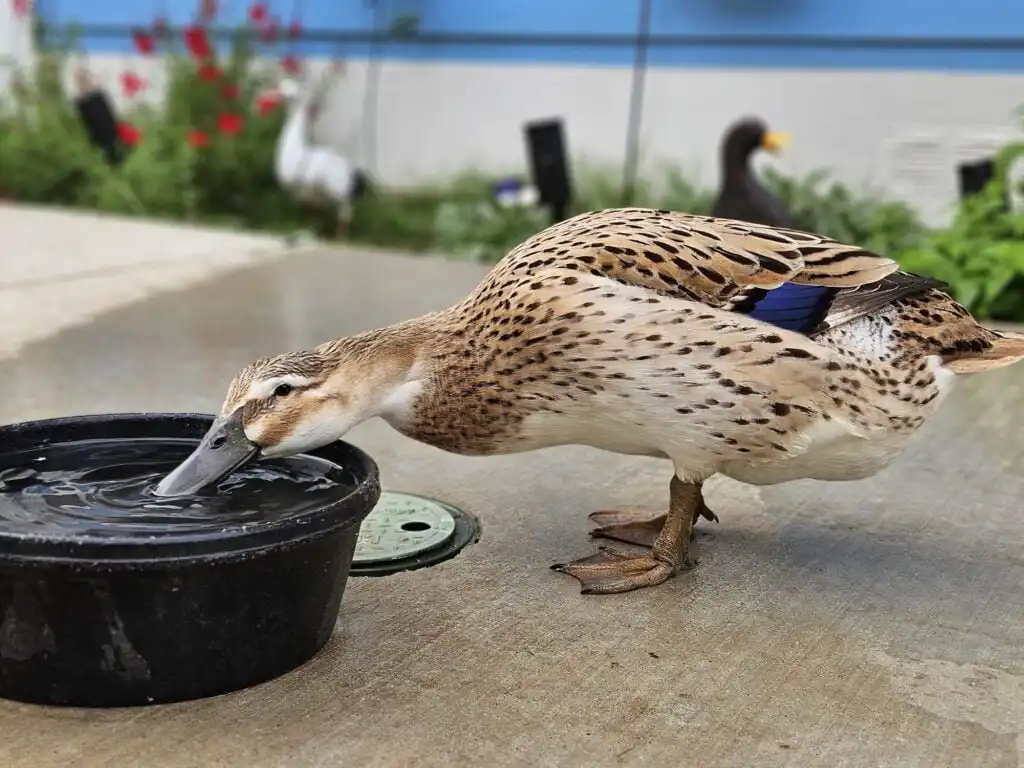
During hot weather, ducks need plenty of water to stay hydrated and help regulate their body temperature. When temperatures climb, you may notice your ducks drinking more and panting to release heat.
Panting also changes the amount of carbon dioxide a bird breathes out. When a bird pants heavily, this can affect the balance of acids and bases in its blood. Electrolytes play a role in maintaining that balance, which is one reason poultry electrolyte supplements are sometimes used during heat stress.
However, electrolytes do not lower the temperature around your ducks or replace the need for cooling. Shade, good airflow, fresh water, and access to bathing water remain essential on hot days.
Illness and Fluid Loss
A sick duck may drink or eat less than usual. Some illnesses can also cause fluid loss, making it harder to maintain a healthy balance of water and electrolytes.
Depending on what is causing the problem, a veterinarian may recommend electrolytes as part of supportive care. But a supplement in the water is not always enough, especially if a duck is too weak to drink. In that case, the duck may need veterinary care and fluids given in another way.
Stress and Changes in Routine
Shipping, transport, evacuation, or a frightening event can interrupt a duck’s normal access to food and water. A newly arrived duckling, for example, may have spent many hours traveling before reaching its new home.
Offering an appropriate electrolyte solution for a short time may be one way to provide extra support while the duck settles in. That does not mean every stressful event causes an electrolyte imbalance or that every duck needs a supplement afterward. The duck’s condition and circumstances matter.
The important distinction: Electrolytes can support a duck when its usual balance may be affected, but they do not fix the underlying cause. An overheated duck still needs to cool down, an injured duck still needs care, and a sick duck may need veterinary treatment. 🦆
When Can Electrolytes Help Ducks?
Now that we know what electrolytes do, let’s look at some situations where you might consider offering them. Remember that a supplement is only one small part of caring for your ducks. Their environment, access to water, and overall condition matter, too.
During Summer Heat
If you live somewhere with hot summers, you know how challenging the heat can be for a flock. Here in North Texas, keeping our ducks comfortable during the summer takes planning, plenty of shade, and a whole lot of fresh water!
During periods of extreme heat, electrolytes may provide short term support as part of your heat management routine. I like to keep a waterfowl supplement on hand for those especially hot or stressful days.
But the most important things we can do are help our ducks cool down and make sure they can drink. Depending on your setup, that might mean providing shade, improving airflow, refreshing water frequently, or giving them access to a pool or shallow tub for bathing.
Watch for signs that a duck is struggling, such as heavy panting, weakness, difficulty standing, or unusual lethargy. A duck showing severe signs needs prompt cooling and veterinary help. Electrolyte water alone is not enough.
When New Ducklings Arrive
Bringing home ducklings is exciting! But whether they came from a local breeder or traveled through the mail, their journey may have disrupted their normal access to food and water.
A poultry or waterfowl electrolyte supplement may be useful for short term support after a long or stressful journey. Follow the product directions, make sure it is suitable for ducklings, and offer fresh, plain water alongside the supplement.
Of course, a packet of electrolytes cannot make up for an unsuitable brooder. Your ducklings also need a safe environment, an appropriate heat source, and a balanced starter feed that meets their nutritional needs, including enough niacin.
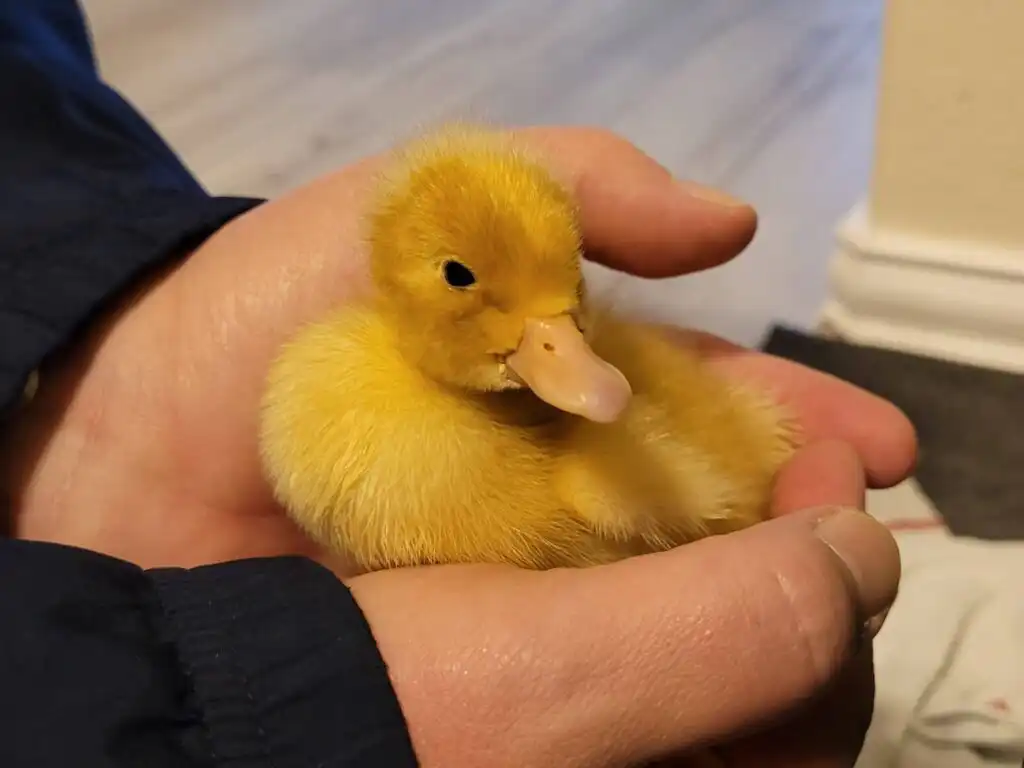
A healthy duckling does not automatically need electrolytes simply because they are new to your home. Pay attention to how they are behaving, eating, and drinking, and contact a veterinarian if you are concerned.
When a Duck Is Sick or Recovering
When one of our ducks is under the weather, we naturally want to do everything we can to help them feel better. Depending on the situation, electrolytes may be part of a veterinarian’s supportive care plan, especially when fluid intake or fluid loss is a concern.
But a sick duck needs more than an electrolyte supplement. An infection, injury, digestive problem, or another illness needs to be identified and treated appropriately.
If your duck is weak, not drinking, having trouble breathing, or getting worse, contact your veterinarian promptly. A duck who cannot drink enough may need fluids given by a veterinarian.
Safety note: Do not force water or electrolyte solution into a duck’s bill. Liquid can enter the airway, especially if the duck is weak or unable to swallow normally.
After a Stressful Event
Not every difficult day involves illness or extreme heat. Ducks can also experience stress during:
- A move or evacuation
- A long car ride or transport
- A veterinary visit
- A predator attack or another frightening event
- A major disruption to their normal routine
In some of these situations, offering electrolytes for a short time may provide extra support while your ducks settle back in. But stress alone does not necessarily mean a duck has lost electrolytes, and a supplement is not always needed.
After a predator attack, your first priorities are to move your duck somewhere safe, check for injuries, and contact a veterinarian. Even injuries that look small can be serious. Provide a quiet place to recover and access to fresh water, then ask your veterinarian whether additional supportive care is appropriate.
What Else Is in Electrolyte Supplements for Ducks?
Pick up a poultry electrolyte supplement and look at the ingredient list. You may find much more than sodium and potassium!
Many products combine electrolytes with vitamins, trace minerals, and ingredients that provide energy. Some also contain probiotics or acidifiers. These combinations can be convenient, but the ingredients do different jobs, and not every product contains the same ones.
Here is a closer look at what you might find.
Vitamins
Vitamins support many normal processes in a duck’s body, including metabolism, growth, and tissue maintenance. Depending on the product, you may see vitamins such as vitamin A, vitamin D, vitamin E, and several B vitamins.
Some supplements also contain niacin, a B vitamin that is particularly important for growing ducklings. While a supplement may provide some niacin, it should not be the main strategy for meeting a duckling’s daily needs. A balanced feed appropriate for ducklings remains the foundation.
More vitamins are not always better. Some, including vitamins A and D, can build up in the body when given in excessive amounts. This is one reason to follow label directions and avoid routinely combining multiple supplements unless your veterinarian recommends it.
Trace Minerals
You may notice minerals such as zinc, iron, manganese, or selenium on a supplement label. Ducks need these in small amounts for normal body functions.
Some minerals, such as sodium and potassium, are present as electrolytes. Others are included primarily as trace nutrients. Either way, the amount matters: a balanced feed already supplies minerals, and adding too much through supplements can cause problems.
Energy Sources
Some products contain ingredients such as dextrose, molasses, or maltodextrin. These ingredients provide a source of energy, though their amounts and roles vary between formulas.
For example, dextrose is a form of glucose, a simple sugar that cells can use for energy. But a little sugar in a supplement does not replace a balanced diet or provide enough nutrition for a duck who is not eating.
Probiotics
Probiotics are live microorganisms included to support digestive health. You may see names such as Lactobacillus or Bacillus on a label.
Some electrolyte products contain probiotics in the same formula. Others sell an electrolyte supplement and a probiotic supplement separately. The effects of a probiotic depend on the microorganisms, the amount provided, and how the product is used, so we should not assume every product works the same way.
Acidifiers
Some supplements also contain acidifiers, such as citric acid. These ingredients can affect the acidity of a product or solution and may be included as preservatives or to support the digestive environment.
Their presence does not mean a duck needs acidic drinking water every day, and their benefits depend on the formulation and how it is used.
How Do These Ingredients Compare?
| Ingredient | Main role | Important distinction |
|---|---|---|
| Electrolytes | Support fluid balance, nerve signals, muscle function, and acid and base balance | Electrolytes and water work together, but they are not the same thing. |
| Vitamins | Support growth and normal body processes | Extra vitamins do not replace a balanced diet, and excessive amounts can be harmful. |
| Trace minerals | Support normal body functions in small amounts | Ducks need appropriate amounts, not unlimited amounts. |
| Energy sources | Provide energy through ingredients such as dextrose or molasses | They do not replace a complete feed. |
| Probiotics | Supply live microorganisms intended to support digestive health | Not every electrolyte product contains probiotics. |
| Acidifiers | Affect acidity and may serve different purposes in a formula | Their role depends on the ingredient and product. |
The takeaway: A product labeled as an electrolyte supplement may offer several ingredients in one scoop, but that does not mean every duck needs all of them. Next, we can look at some popular products and compare what is actually in each one.
Comparing Electrolyte Supplements for Ducks
If you have ever browsed the poultry aisle looking for electrolytes, you know how many options there are. Some products contain vitamins and electrolytes, while others also include probiotics, minerals, or acidifiers.
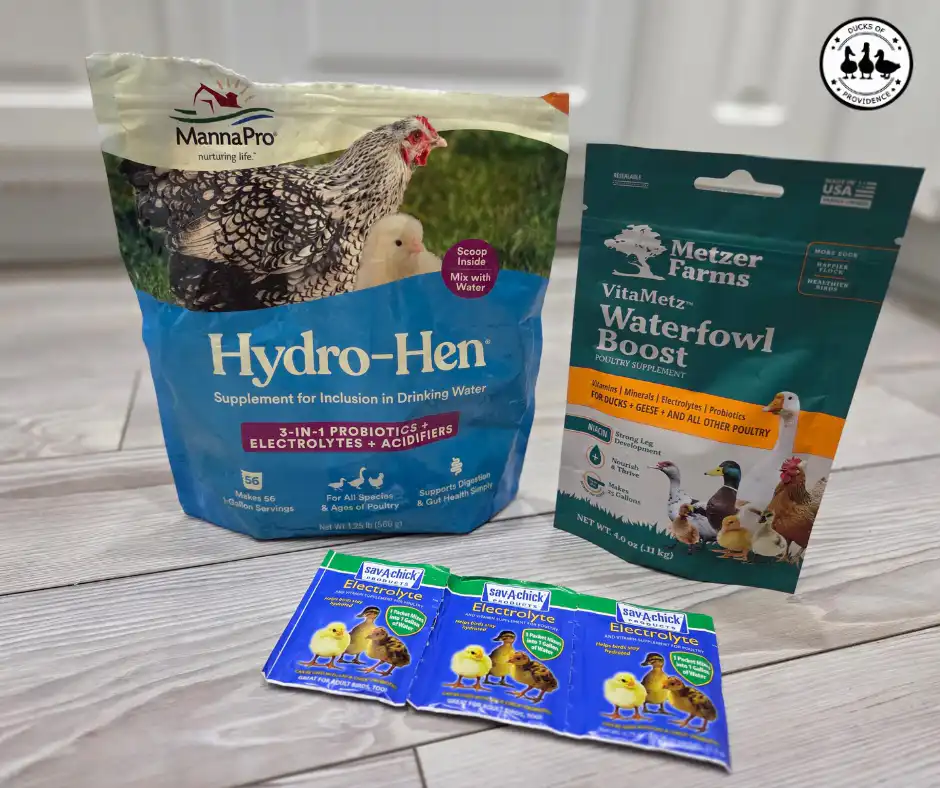
To help make sense of the labels, I compared five popular supplements: VitaMetz Waterfowl Boost, Sav A Chick, Hydro Hen, Rooster Booster, and Grubbly Farms Vitamins + Electrolytes.
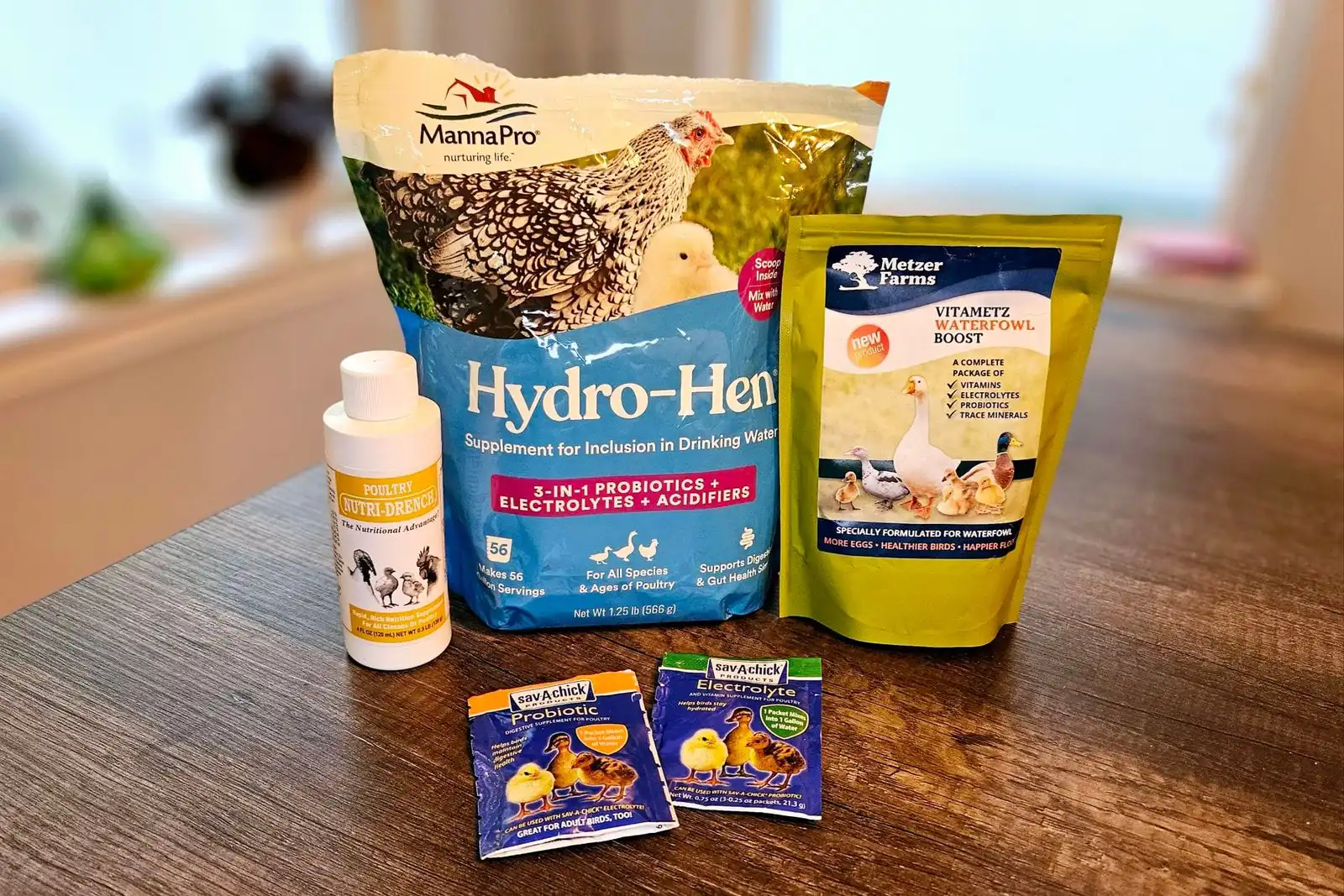
For VitaMetz, Sav A Chick, and Hydro Hen, I also looked at the labels on the packages I have at home. That gave me a better look at their ingredients and guaranteed analyses.
Keep in mind: Formulas and labels can change. The information below reflects the labels and product information reviewed for this comparison. Always check your own package for the most current ingredients, mixing instructions, and species recommendations.
| Product | Electrolytes | Added vitamins | Probiotics | Other notable ingredients | Waterfowl information |
|---|---|---|---|---|---|
| VitaMetz Waterfowl Boost | Yes | Yes, including niacin | Yes | Trace minerals and dextrose | Formulated specifically for ducks and other waterfowl |
| Sav A Chick Electrolyte & Vitamin Supplement | Yes | Yes, including niacin | No; sold separately | Dextrose and added colors | Marketed for poultry; confirm directions for ducks |
| Hydro Hen | Yes | No added vitamin blend listed | Yes | Acidifiers and energy sources | Manufacturer specifically includes ducks and other waterfowl |
| Rooster Booster Vitamins & Electrolytes with Lactobacillus | Yes | Yes | Yes | Maltodextrin | Marketed for poultry; confirm directions for ducks |
| Grubbly Farms Vitamins + Electrolytes | Yes | Yes, including niacin | Not listed in this formula | Betaine | Marketed primarily for chickens; confirm directions for ducks |
A note on labels: Formulas may change, and a brand may sell several products with similar names. Check the ingredient list and directions on your own package before use.
Comparing the Guaranteed Analyses
A guaranteed analysis tells us the minimum or maximum amounts of certain nutrients or other components in a product. It does not necessarily list an amount for every ingredient.
The following values refer to the concentrated product, not the finished drinking water.
| Nutrient or component | VitaMetz | Sav A Chick | Hydro Hen |
|---|---|---|---|
| Salt, minimum | Not listed | 8.0% | 1.80% |
| Salt, maximum | Not listed | 9.0% | 2.30% |
| Sodium, minimum | Not listed | 14.0% | Not listed |
| Sodium, maximum | Not listed | 14.5% | Not listed |
| Potassium, minimum | Not listed | 15.0% | 0.40% |
| Vitamin A, minimum | 10,900,000 IU/lb | 1,280,000 IU/lb | Not listed |
| Vitamin D3, minimum | 3,630,000 IU/lb | 3,200,000 IU/lb | Not listed |
| Vitamin E, minimum | 36,000 IU/lb | 960 IU/lb | Not listed |
| Niacin, minimum | 50,000 mg/lb | Not listed | Not listed |
| Total microorganisms, minimum | Not listed | Not listed | 100 million CFU/g |
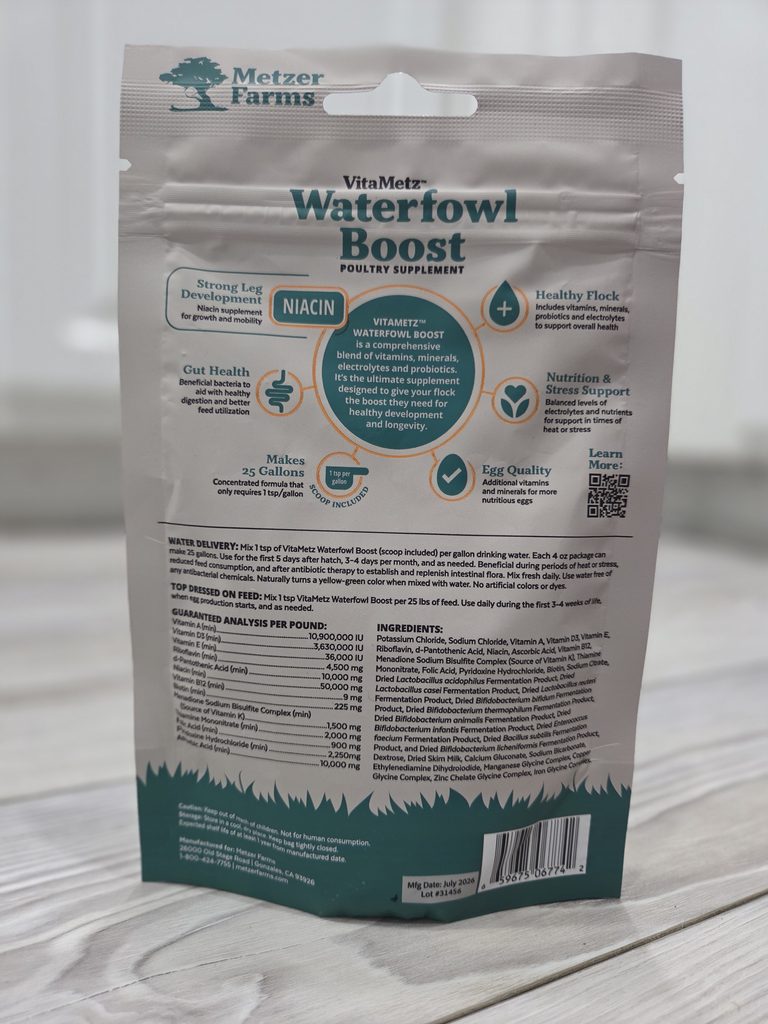
Not listed means the amount does not appear in the guaranteed analysis on the package reviewed. It does not necessarily mean the ingredient is absent. For example, VitaMetz lists potassium chloride as an ingredient but does not state a potassium amount in the photographed analysis.
A complete numerical analysis for Grubbly Farms was not available on the product page I reviewed. I also found differing Rooster Booster analyses online, so I would want to check a current package before adding its values to this table.
More Vitamins Listed on the VitaMetz Label
These are the additional minimum amounts per pound of concentrated powder:
| Vitamin or vitamin source | Minimum amount per pound |
|---|---|
| Riboflavin, vitamin B2 | 4,500 mg |
| Pantothenic acid, vitamin B5 | 10,000 mg |
| Vitamin B12 | 9 mg |
| Biotin, vitamin B7 | 225 mg |
| Menadione sodium bisulfite complex, source of vitamin K | 1,500 mg |
| Thiamine mononitrate, vitamin B1 | 2,000 mg |
| Folic acid, vitamin B9 | 900 mg |
| Pyridoxine hydrochloride, vitamin B6 | 2,250 mg |
| Ascorbic acid, vitamin C | 10,000 mg |
Why These Numbers Are Not the Whole Story
Before choosing a product based on the biggest number, there is an important detail: the products are not all mixed at the same rate. A percentage in the powder does not tell us the concentration in the water until we know how much powder is added.
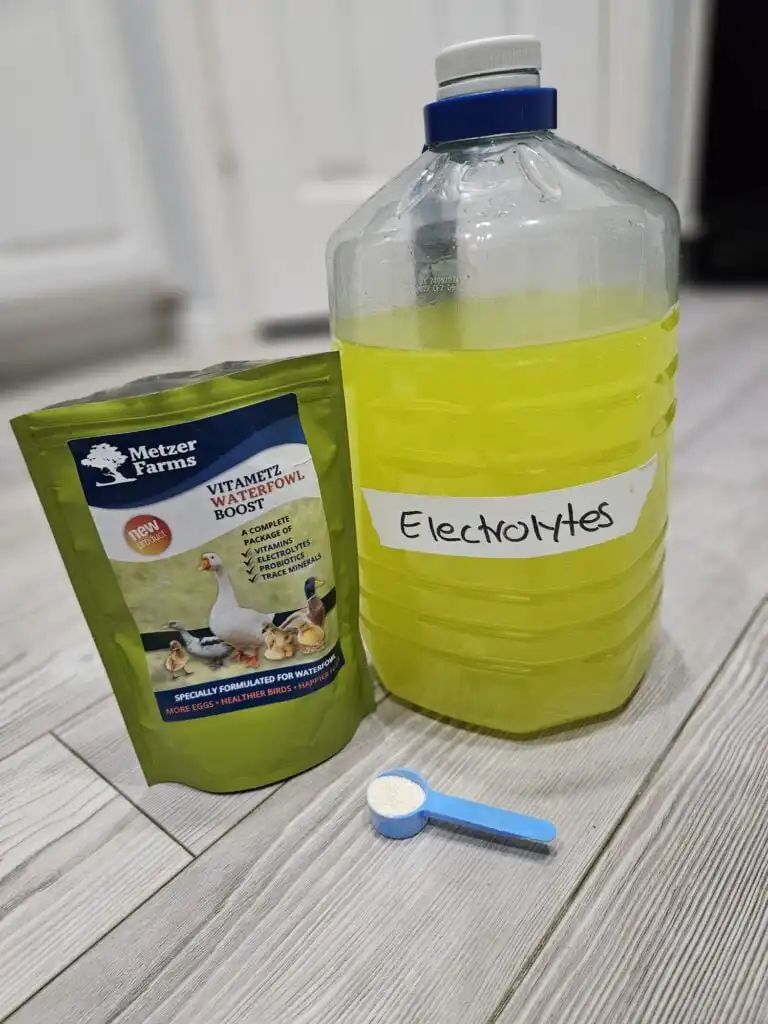
For example, my Sav A Chick packet contains approximately 0.25 ounce of powder for one gallon, while the Hydro Hen manufacturer describes one scoop as approximately 10 grams per gallon. VitaMetz calls for one teaspoon per gallon, but the package does not state the weight of that teaspoon.
Even after calculating a concentration in the water, we would not know exactly how much an individual duck receives. That depends on how much of the solution they drink.
What Is in Each Product?
Ingredient lists help us see what is included, even when the label does not provide the amount of every ingredient. I have grouped the ingredients below to make the lists easier to read.
VitaMetz Waterfowl Boost
| Ingredient group | Ingredients |
|---|---|
| Electrolytes and mineral sources | Potassium chloride, sodium chloride, sodium citrate, calcium gluconate, sodium bicarbonate, ethylenediamine dihydroiodide, manganese glycine complex, copper glycine complex, zinc chelate glycine complex, and iron glycine complex |
| Vitamins | Vitamins A, D3, E, B2, B5, B3, C, B12, K, B1, B9, B6, and biotin |
| Fermentation products | Lactobacillus acidophilus, Lactobacillus casei, Lactobacillus reuteri, Bifidobacterium bifidum, Bifidobacterium thermophilum, Bifidobacterium animalis, Bifidobacterium infantis, Enterococcus faecium, Bacillus subtilis, and Bifidobacterium licheniformis |
| Other ingredients | Dextrose and dried skim milk |
VitaMetz is my favorite in this group because it was formulated specifically for waterfowl. As duck keepers, we know that our feathered friends are not simply chickens who enjoy swimming!
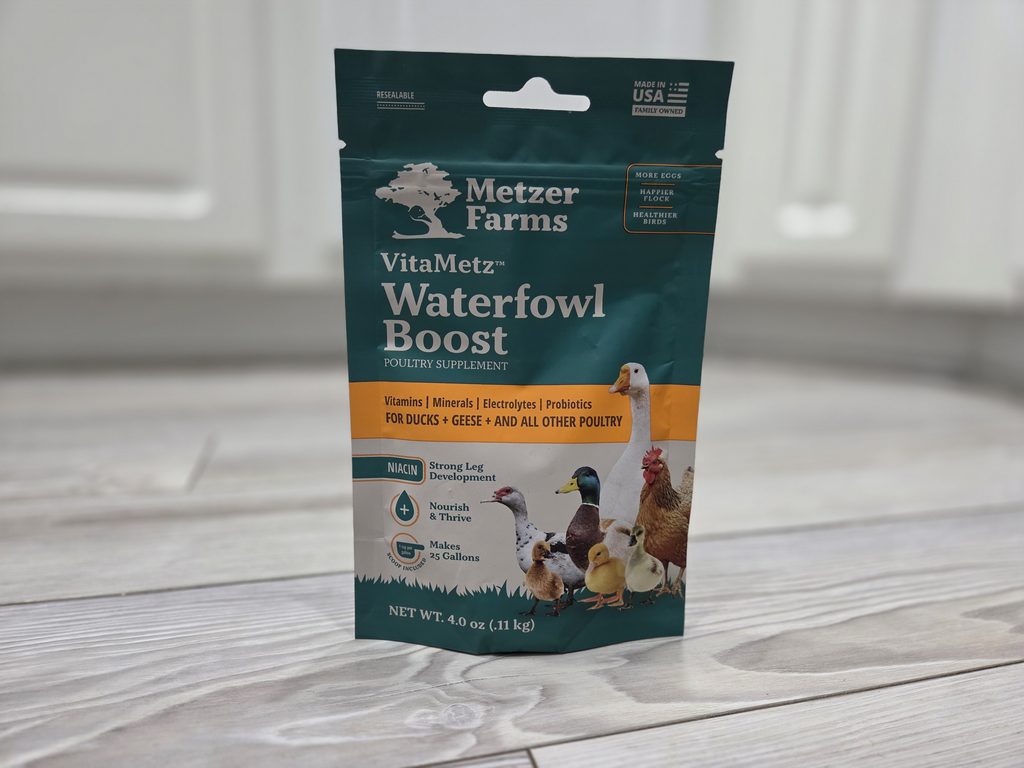
Pros
- Formulated for ducks, geese, and other waterfowl.
- Contains electrolytes, vitamins, trace minerals, and beneficial microorganisms.
- Includes niacin, with a guaranteed minimum amount listed on the package.
- Provides a detailed vitamin analysis.
Cons
- The guaranteed analysis on my package does not list amounts for sodium, potassium, or microorganisms.
- It is a combination product, so you need to consider what else your ducks receive before adding other supplements.
- The amount a duck consumes depends on how much treated water they drink.
My take: I appreciate having a supplement designed with waterfowl in mind. I keep it on hand for situations when my flock may need extra support, such as particularly challenging North Texas heat.
Sav A Chick Electrolyte & Vitamin Supplement
| Ingredient group | Ingredients listed |
|---|---|
| Electrolyte and mineral sources | Potassium chloride, sodium citrate, sodium bicarbonate, sodium chloride, sodium acetate, and magnesium sulfate |
| Vitamins | Vitamins A, D3, E, C, K, B1, B2, B6, B12, niacin, pantothenic acid, and folic acid |
| Energy source | Dextrose |
| Other ingredients | Silicon dioxide and FD&C colors Yellow No. 6 and Red No. 40 |
| Probiotics | None listed in this formula |
Sav A Chick offers a separate probiotic supplement that its manufacturer says can be mixed with the electrolyte product according to its directions. www.savacaf.com
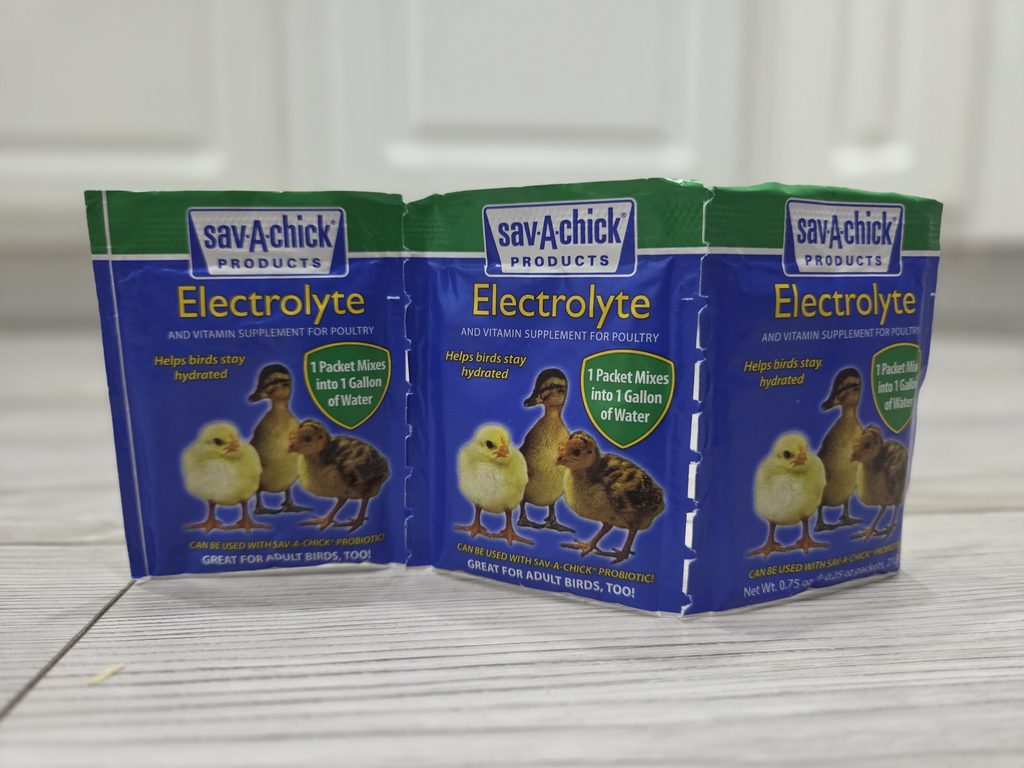
Sav A Chick combines electrolytes and vitamins in premeasured packets. Each packet is designed to make one gallon of solution.
Pros
- Convenient packets make measuring simple.
- Contains several electrolyte sources and vitamins, including niacin.
- A separate probiotic product is available if you want both, following the manufacturer’s directions.
- The manufacturer’s directions call for plain water to be offered separately.
Cons
- The electrolyte formula does not include probiotics.
- A full gallon may be more than a small flock needs at one time.
- Contains added colors, which some keepers may prefer to avoid.
- Check the packet or manufacturer for directions specific to ducks and ducklings.
My take: This is a convenient option to keep in an emergency kit, especially if you like individual packets. Just remember that the electrolyte and probiotic products are separate
Hydro Hen
| Ingredient group | Ingredients listed |
|---|---|
| Electrolyte and mineral sources | Salt, potassium chloride, sodium citrate, zinc sulfate, iron sulfate, and magnesium sulfate |
| Probiotic microorganisms | Lactobacillus acidophilus, Enterococcus faecium, and Bacillus subtilis |
| Fermentation extracts | Aspergillus oryzae and Bacillus subtilis fermentation extracts |
| Energy sources | Dextrose and maltodextrin |
| Other ingredients | Citric acid, silicon dioxide, natural and artificial flavors, sodium saccharin, and sorbic acid |
| Added vitamin blend | None listed in the published ingredient list |
Hydro Hen’s manufacturer describes the formula as a combination of electrolytes, probiotics, and acidifiers. mannapro.com
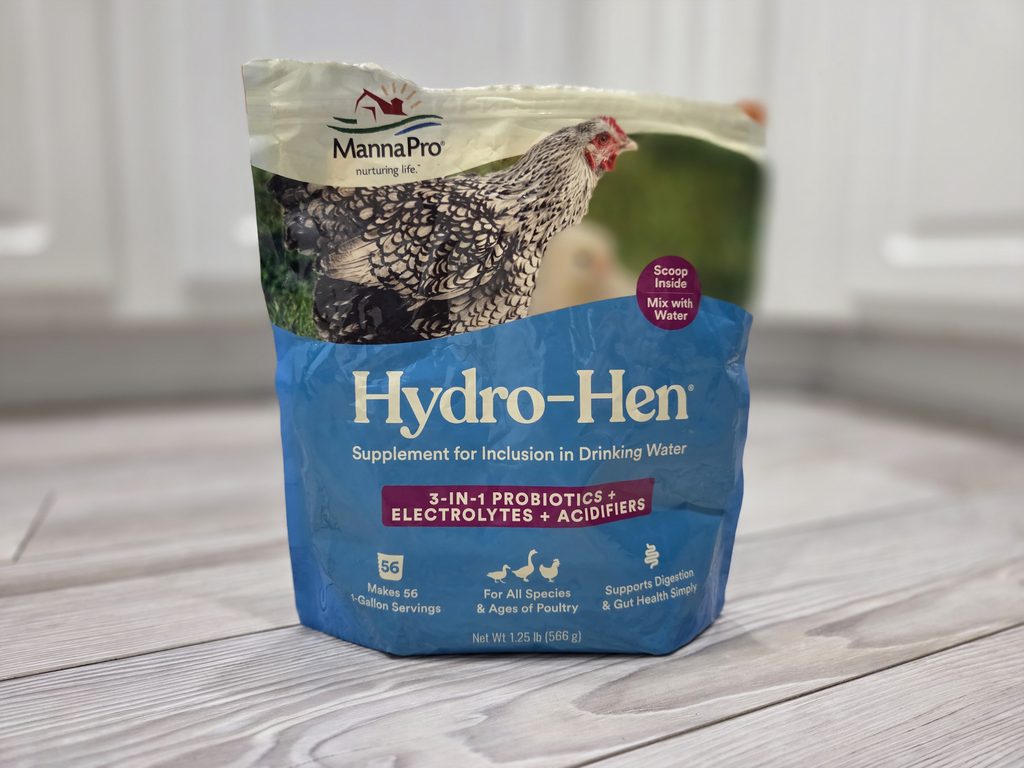
Pros
- The manufacturer specifically lists ducks and other waterfowl.
- Combines electrolytes and probiotics in one product.
- Its published guaranteed analysis includes a minimum microorganism count.
- Directions include offering the solution alongside fresh, plain water.
Cons
- The published ingredient list does not include a broad added vitamin blend or niacin.
- It contains flavors and a sweetener, which some keepers may prefer to avoid.
- Its ingredient profile is different from a vitamin and electrolyte product, so the two should not be assumed to provide the same support.
My take: Hydro Hen may appeal to keepers looking for an electrolyte and probiotic combination that explicitly includes ducks on the label.
Rooster Booster Vitamins & Electrolytes with Lactobacillus
| Ingredient group | Ingredients listed |
|---|---|
| Electrolyte sources | Potassium chloride and salt |
| Vitamins | Vitamins A, D3, E, B1, B2, B6, pantothenic acid, and folic acid |
| Beneficial microorganisms | Fermentation products from Bacillus subtilis, Enterococcus faecium, Lactobacillus casei, Lactobacillus acidophilus, Bifidobacterium thermophilum, and Bifidobacterium longum |
| Other ingredient | Maltodextrin |
| Niacin | Not listed in the ingredient list reviewed |
This comparison refers specifically to Vitamins & Electrolytes with Lactobacillus, not the brand’s Poultry Cell or Poultry Booster formulas. birdpalproducts.com
This Rooster Booster formula combines electrolytes, selected vitamins, and several types of beneficial microorganisms.
Pros
- Provides electrolytes, vitamins, and probiotics in one product.
- Contains several types of listed microorganisms.
- Available as a powder that can be mixed into drinking water.
Cons
- Niacin is not listed in the ingredient list reviewed, so I would not choose it as a niacin source for ducklings.
- Numerical analyses found online are inconsistent; check the current package before comparing nutrient amounts.
- The manufacturer describes it for poultry generally, so confirm directions for ducks and ducklings.
My take: This is another combination product, but it is important to check the exact label. Rooster Booster makes several supplements, and their co
Grubbly Farms Vitamins + Electrolytes
| Ingredient group | Ingredients listed |
|---|---|
| Electrolyte and mineral sources | Salt, potassium chloride, sodium ascorbate, calcium ascorbate, and magnesium glycine chelate |
| Vitamins | Vitamins A, E, B1, B2, B6, B12, niacin, pantothenic acid, vitamin K source, folic acid, vitamin C sources, and 25 hydroxy vitamin D3 |
| Other ingredient | Betaine anhydrous |
| Probiotics | None listed in this formula |
Grubbly Farms offers a separate Prebiotics + Probiotics product. Its Vitamins + Electrolytes formula contains betaine, a compound that helps cells manage water balance. grubblyfarms.com
Grubbly Farms combines vitamins and electrolyte sources with betaine. Its probiotic product is sold separately.
Pros
- Contains vitamins and electrolyte sources in one powder.
- Niacin is included in the ingredient list.
- Contains betaine.
- A separate prebiotic and probiotic formula is available.
Cons
- The product page focuses on chickens, so duck and duckling suitability should be confirmed with the manufacturer.
- Probiotics are not listed in this formula.
- The complete numerical analysis was not available on the product page I reviewed.
- A listed source of niacin does not tell us how much an individual duck receives.
My take: This may be a useful product to explore, especially if you already shop with Grubbly Farms. Before recommending it specifically for ducks, I would want confirmation of the appropriate waterfowl directions.
Which Product Is Best for Your Ducks?
There is no single supplement that every flock needs. My preference is VitaMetz because it was developed for waterfowl, but the best choice depends on your reason for using a supplement, the age and condition of your ducks, and the information on the product label.
Whatever you choose, offer fresh, plain water alongside the supplement, follow the package directions, and remember that a supplement cannot replace balanced feed or veterinary care.
How to Use Electrolytes for Ducks Safely
When offering electrolytes for ducks, the amount you mix, how you serve it, and how long you use it all matter. A supplement can provide useful support, but adding extra powder just to be safe is not the answer.
Follow the Mixing Instructions
Always follow the directions on the specific product you are using. Different formulas have different concentrations, so one teaspoon of one product is not necessarily equivalent to one teaspoon of another.
Use the included scoop when provided, measure the water accurately, and avoid heaping scoops unless the label specifically calls for them. If you only need a smaller batch, scale both the powder and water proportionally using measurements you can make accurately. Otherwise, prepare the full labeled amount.
A stronger solution is not necessarily more helpful. Too much powder can provide excessive salts or other nutrients and may make the water less appealing to your ducks.
Always Offer Plain Water, Too
Offer electrolyte solution in a separate container alongside fresh, plain drinking water. Your ducks should have a choice, especially if they dislike the taste of the supplement.
Keep both containers easy to reach. For a duck recovering in a separate pen, make sure drinking water is close enough to access comfortably without creating a tipping or bedding problem.
I would use a dedicated drinking container for the supplement rather than add it to the swimming pool. Duck pools collect dirt, feed, and droppings quickly, making them a poor place to offer a carefully mixed solution.
Mix Fresh and Keep Containers Clean
Follow the label’s instructions for preparing and replacing the solution. Many poultry supplements call for a fresh batch daily, but a dirty bowl needs changing sooner.
Empty the container and wash it before refilling. Avoid repeatedly topping off yesterday’s mixture, and keep prepared solution out of direct sunlight when possible.
Store the powder according to the package directions, usually somewhere cool and dry. Close the package tightly and use a dry scoop to keep moisture out.
Use Supplements for a Specific Reason
For healthy ducks eating an appropriate, balanced diet, electrolytes generally do not need to become a permanent addition to the water.
There is no single schedule that fits every product or situation. Follow the label and your veterinarian’s advice, then reassess whether the reason for supplementing is still present. A difficult journey, a brief period of extreme heat, and an ongoing illness may require different approaches.
Here is the question I ask myself: What am I trying to support, and does my flock still need that support?
Be Careful About Combining Products
Many electrolyte supplements already contain vitamins, minerals, or probiotics. Adding another product may duplicate ingredients without providing an additional benefit.
Before combining anything, compare the labels. Be particularly careful with products containing overlapping vitamins and minerals.
Some manufacturers specifically allow certain combinations, such as their own electrolyte and probiotic formulas. That does not mean every supplement can be mixed together.
If your duck receives medication through drinking water, ask your veterinarian before adding supplements to that water. Do not assume the products are compatible.
Watch What Your Duck Actually Drinks
Putting a supplement in a bowl does not guarantee your duck receives it. Watch whether they drink willingly, and make sure other flock members are not blocking access.
If a duck avoids the treated water, keep plain water available rather than trying to make them drink the supplement.
A duck who is too weak to drink needs veterinary help, not a stronger electrolyte mixture. Do not force liquid into their bill, particularly if they are struggling or cannot swallow normally, because it can enter the airway.
Before you mix: Check the label, measure carefully, provide plain water alongside the solution, and know why you are offering it. Those simple steps help keep supplementation purposeful.
When Electrolytes Won’t Help
When a duck seems unwell, it is natural to reach for something that might help. I understand that urge. But electrolytes for ducks are supportive supplements, not a treatment for every problem. Knowing their limits helps us avoid delaying the care a duck actually needs.
They Cannot Treat an Infection or Injury
Electrolytes do not kill bacteria, treat parasites, close wounds, or relieve pain. They may sometimes be part of supportive care, but the underlying problem still needs attention.
After a predator attack, for example, offering electrolyte water does not address puncture wounds or internal injuries. A duck who appears relatively normal can still have injuries hidden beneath their feathers. Veterinary assessment takes priority.
They Cannot Replace Cooling During Heat Stress
Electrolytes do not lower the temperature in the run or directly cool an overheated duck.
If a duck is struggling in the heat, the immediate priority is helping them cool down. Move them out of the heat, provide a cooler environment and accessible drinking water, and seek veterinary help for severe signs such as collapse or difficulty standing. Do not wait to see whether an electrolyte drink solves the problem.
They Cannot Make Up for an Unbalanced Diet
A supplement does not turn an unsuitable diet into a complete one. Ducks still need appropriate amounts of protein, energy, vitamins, and minerals from their regular feed.
Even a product containing niacin does not automatically meet a growing duckling’s needs. The amount they receive depends on the concentration and how much treated water they drink.
Leg weakness should not automatically be blamed on niacin deficiency. Injury, illness, and other nutritional problems can cause similar signs and need proper assessment.
They Cannot Replace Veterinary Fluids
An electrolyte solution in a bowl only helps if a duck drinks enough of it. A severely dehydrated or very weak duck may need fluids administered by a veterinarian.
Making the mixture stronger will not solve that problem. Neither will forcing liquid into the bill, which risks sending it into the airway.
They Are Not a Daily Health Insurance Policy
It can be tempting to add a little something to the water every day, just in case. But more supplementation does not automatically mean better health.
For a healthy flock, the most useful daily investments remain straightforward: balanced feed, clean water, safe housing, a suitable environment, and attention to changes in behavior.
Your next step: Before reaching for electrolytes, ask, “Does my duck need supplemental support, or is there a problem that needs treatment?” If your duck is weak, injured, struggling to breathe, or getting worse, contact your veterinarian promptly.
From Our Flock: How I Use Electrolytes
Here in North Texas, summer duck care involves plenty of fresh water, shade, fans, and a watchful eye on how everyone is handling the heat. I also keep electrolytes in our duck first aid kit, ready for situations when the flock may need extra support.
My personal favorite is VitaMetz Waterfowl Boost. I appreciate that it was formulated specifically for waterfowl and combines electrolytes with vitamins, trace minerals, and beneficial bacteria. When shopping for duck supplies, it is refreshing to find a product developed with our birds in mind!
But having it available does not mean I add it to every water bowl every day. I use supplements with a purpose, such as providing additional support during particularly challenging summer conditions. Fresh, plain water is always available alongside the supplemented water.
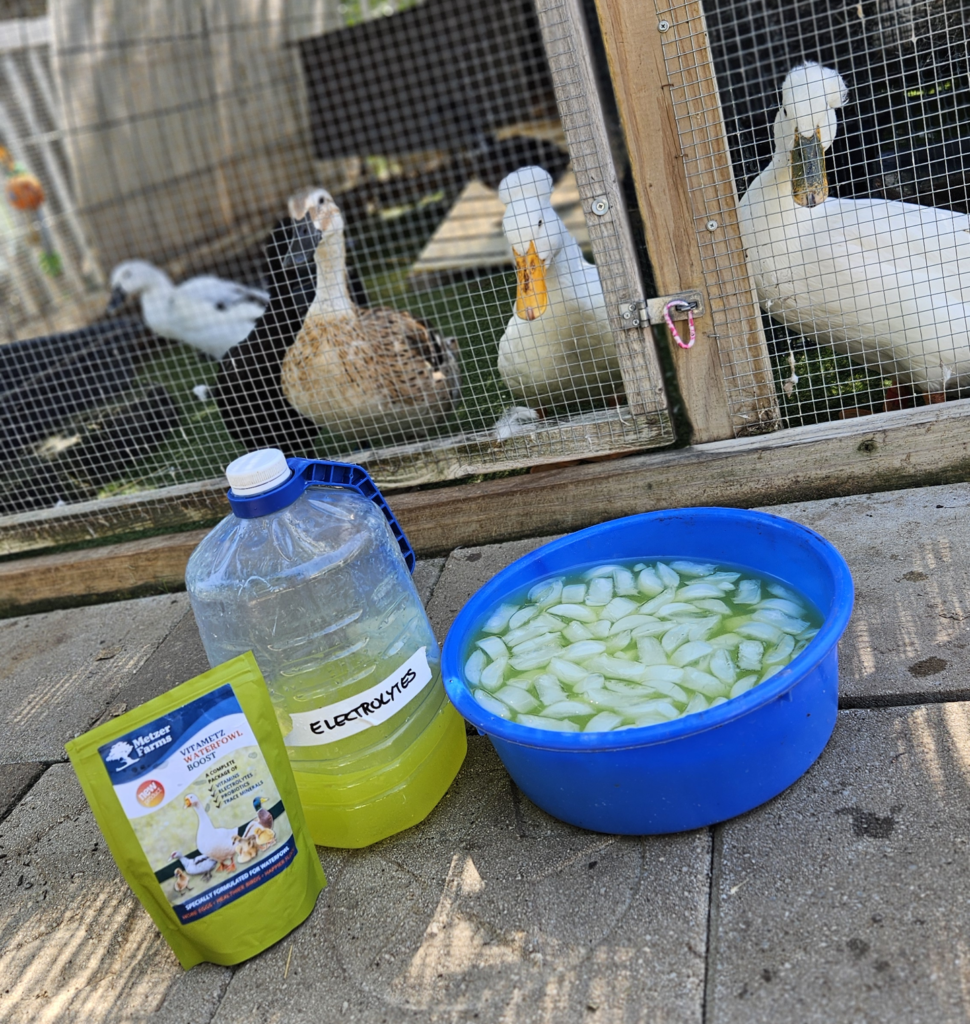
For Emma, Schnatterinchen, Simon, and the rest of our flock, the daily basics still do most of the work: balanced feed, clean drinking water, bathing opportunities, and a comfortable environment. On hot days, I also like to add ice cubes to their plain drinking water or the electrolyte water for an extra refreshment. On especially difficult summer days, keeping them comfortable may also mean bringing ducks inside to cool off in the air conditioning.
As both a scientist and a duck mom, I want to understand what I am offering and why. A supplement can be a useful tool, but I do not expect it to solve every problem. Watching my ducks and responding to what they actually need matters more than automatically reaching for a scoop of powder.
Frequently Asked Questions About Electrolytes for Ducks
Can ducks have electrolytes every day?
Healthy ducks eating a balanced diet generally do not need electrolyte supplements every day. I prefer to use them for a specific reason, such as a particularly challenging heat wave or a stressful journey. Follow your product’s directions and ask your veterinarian about longer use, especially if your duck has an ongoing health condition.
Can ducklings have electrolytes?
Some poultry and waterfowl supplements are suitable for ducklings when mixed according to their directions. They may provide short term support after shipping or another stressful journey.
However, not every healthy duckling needs electrolytes. An appropriate brooder, fresh water, and balanced starter feed remain the priorities. A supplement containing niacin also does not automatically replace a diet that meets a duckling’s niacin needs.
Should I give my ducks electrolytes during hot weather?
Electrolytes may provide additional support during periods of heat stress, but they are not necessary simply because the weather is warm. Focus first on shade, airflow, fresh drinking water, and cooling opportunities.
Electrolytes cannot cool an overheated duck. A duck showing severe weakness, collapse, or difficulty standing needs prompt cooling and veterinary help.
Can I use chicken electrolytes for ducks?
Some general poultry electrolyte products are labeled for ducks and other waterfowl, while others focus on chickens. Check the specific product rather than assuming every chicken supplement is suitable for ducks.
If ducks or waterfowl are not included in the directions, contact the manufacturer or your veterinarian. Never assume that different products use the same mixing rate.
Do ducks still need plain water when they have electrolyte water?
Yes. Offer fresh, plain drinking water in a separate container alongside the electrolyte solution. This gives your ducks a choice and ensures they can drink even if they dislike the supplement’s taste.
Prepare fresh solution according to the label, and replace it sooner if it becomes dirty.
Can electrolytes help a sick duck?
They may be part of supportive care, depending on the illness and your veterinarian’s advice. However, electrolytes do not treat infections, injuries, or the underlying cause of a duck’s symptoms.
A duck who is too weak to drink needs veterinary attention. Do not make the mixture stronger or force liquid into their bill.
Are vitamins, probiotics, and electrolytes the same thing?
No. Electrolytes help regulate fluid balance, nerve signals, and muscle function. Vitamins support normal body processes, while probiotics provide live microorganisms intended to support digestive health.
Some supplements combine these ingredients, but others contain only certain groups. Read the ingredient list and guaranteed analysis to see what a product actually provides.
Can I make homemade electrolytes for ducks?
For this guide, I recommend a properly labeled poultry or waterfowl product rather than an improvised recipe. Getting the concentration right matters, and household measuring errors can produce a solution with too much salt or sugar.
Keep a suitable product in your first aid kit so you can follow clear mixing directions when needed. For a sick or dehydrated duck, ask your veterinarian which type of fluid support is appropriate.
A Little Extra Support, When Your Ducks Need It
Electrolytes for ducks can be a useful addition to your first aid kit, whether you are preparing for summer heat, welcoming ducklings after a long journey, or supporting a duck under veterinary care. The key is knowing why you are offering them and understanding their limits.
For our flock, I like having VitaMetz on hand. But the foundation of their care is still fresh water, balanced feed, a comfortable environment, and paying attention to changes in their behavior. Sometimes they need extra support. Other times, they need a freshly filled water bowl, some shade, and a few ice cubes for a little summer refreshment.
Your next step: Check the supplement in your duck first aid kit. Read the ingredients, review the mixing instructions, and check its expiration or best use date. A little preparation now means one less thing to figure out when your flock needs you. 🦆
Further Reading & Resources
- Supplements for Ducks: What Your Pet Ducks Really Need
- 31 Must-have Items for Your Pet Duck First Aid Kit
- 16 Common Duck Health Conditions You Should Know About
- When to Take a Duck to the Vet (My Real-Life Checklist)
- Duck Nutrition Myths vs. Facts: What Your Flock Really Needs
Deepen your understanding of avian wellness. Explore the full Duck Health & Anatomy Library for more specialized care guides.