
The Pet Duck Handbook
A Science-Based Guide for Backyard and Companion Ducks
Because pet ducks deserve more than basic care.
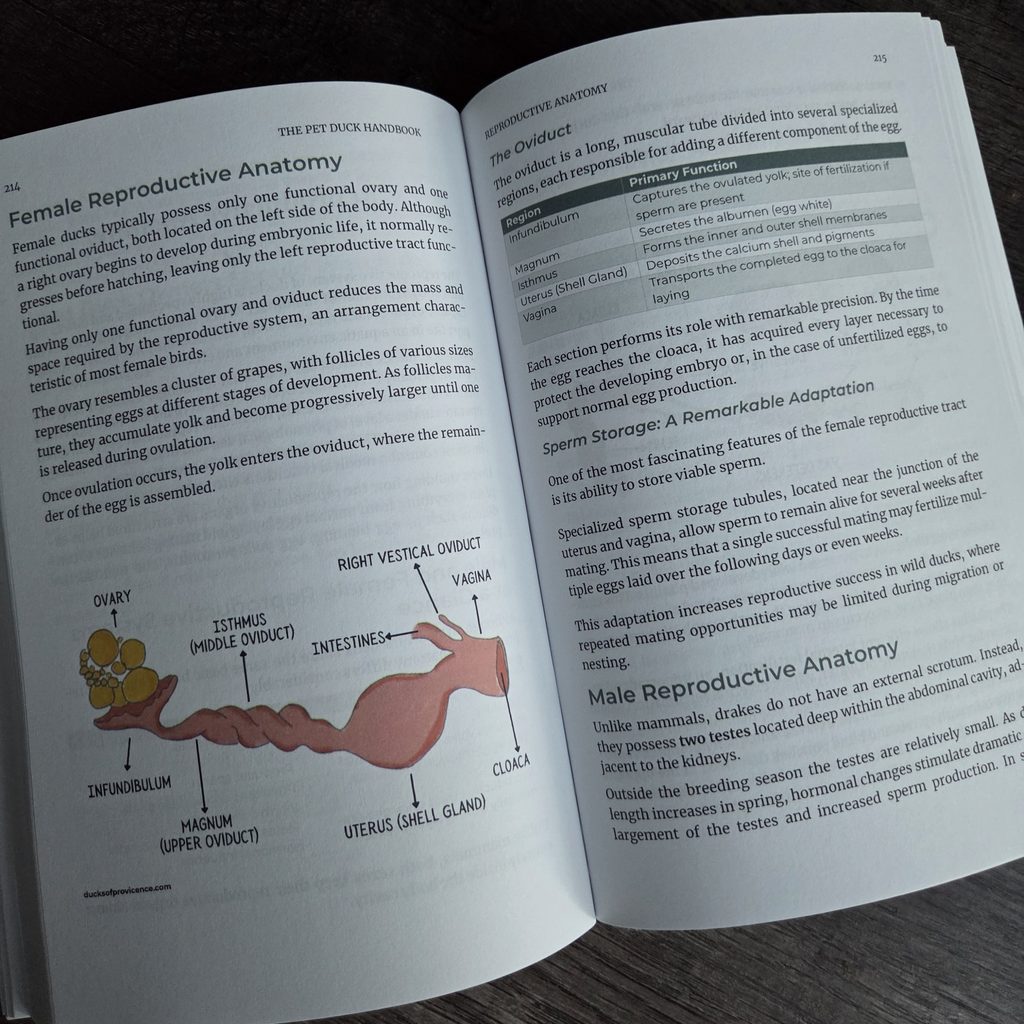
How do you set up a brooder for your first ducklings? What should a healthy duck foot look like? And when a duck starts sitting more than usual, how do you know whether she’s resting or something is wrong?
The Pet Duck Handbook is the guide I wanted when I brought home my first ducks. It brings together the science behind good duck care and the lessons I’ve learned from living with my own flock. Whether you’re getting ready for your first ducks or you’ve been keeping them for years, you’ll find practical guidance for everyday care and the moments when you’re unsure what to do next.

What you’ll find inside
- Getting started with ducks. Choose a flock that fits your home and raise ducklings through their first weeks.
- Housing and enrichment. Set up a coop and run that are easier to clean and give your ducks room to forage, bathe, and explore.
- Nutrition at every life stage. Choose a feed, understand when supplements are useful, and make sense of conflicting advice about treats.
- Health checks and first aid. Learn what’s normal for your ducks, what changes to watch for, and when to call an avian veterinarian.
- Life with a flock. Navigate introductions, drake behavior, and the changing needs of ducks as they age.
How is the book different from the Ducks of Providence blog?
If you’ve ever landed here because your duck laid a soft-shelled egg or your run turned into a mud pit, you already know what the blog is good for. I write articles that help you tackle one question at a time. The Pet Duck Handbook brings those questions together so you can see how feeding, housing, health, and flock behavior fit into the day-to-day care of your ducks.
You can read it from the beginning as you prepare for your first flock, or keep it handy and use the index when you have a specific question. If a duck starts sitting more than usual, for example, you can look up how to check her feet, what other changes to watch for, and when to call your avian vet. Comparison tables and checklists make it easier to find the details you need without reading a whole chapter.
I wrote it to be the book you reach for on a quiet afternoon when you’re planning a better run, and on the evening when someone skips dinner and you find yourself thinking, That’s odd. She never skips peas.
Why I wrote this book
When I brought home my first ducks, I thought I was prepared. I’d done my research, and as a scientist, I was used to sorting through evidence. Then I actually lived with ducks.
I had questions that were surprisingly hard to answer. Some answers were buried in research papers or veterinary resources. Much of the practical advice I found was written for farms. I wanted guidance for people whose ducks would grow old with them, go to the vet when they were sick, and have names like Schnatterinchen.
So I wrote the book I kept looking for. My hope is that it helps you feel more confident caring for your ducks and gives you a place to turn when one of them does something that makes you stop and wonder, Is that normal?
About Melanie
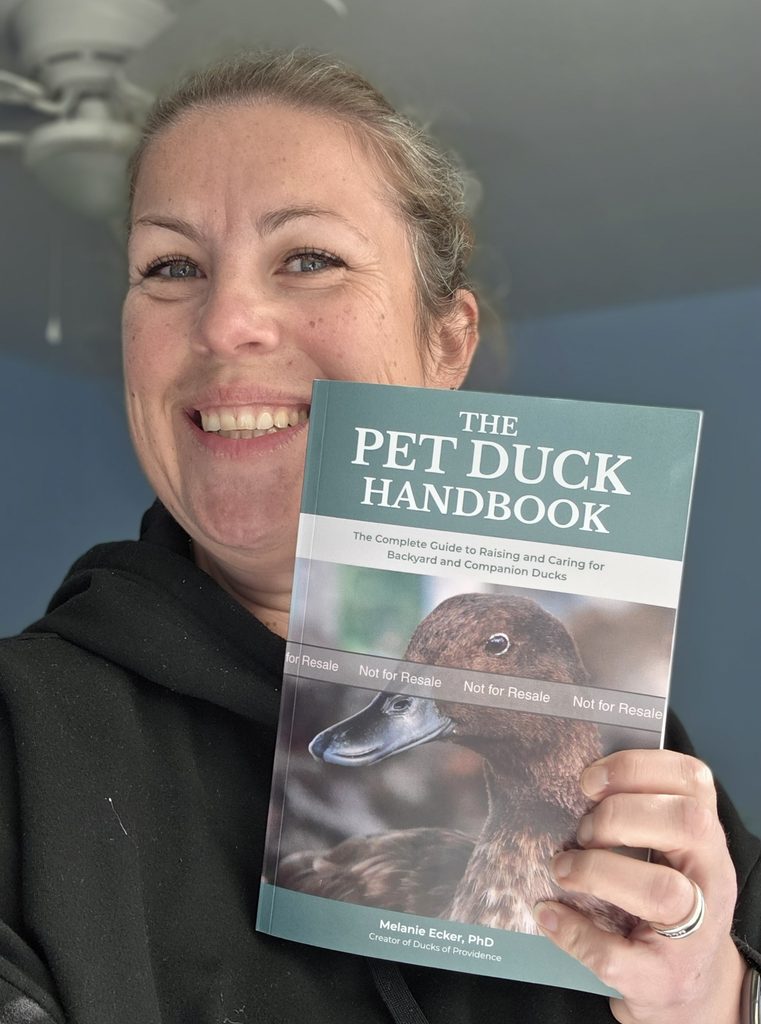
I’m Melanie Ecker, PhD, a scientist, educator, and the duck keeper behind Ducks of Providence. My flock has taught me plenty about duck care, including how often a perfectly good setup needs rethinking once actual ducks move in. Throughout the book, I share stories from our flock alongside the science, including what worked, what I changed, and what I wish I’d known sooner.