
The Emotional Reality of Keeping Ducks (No One Talks About This)

To keep our research-backed guides free, this site uses ads and affiliate links (earning a small commission at no cost to you). Everything here is created by a duck mom and PhD scientist, combining academic rigor with hands-on experience to provide practical, trustworthy advice for duck keepers everywhere. 🦆 Learn more
Keeping ducks is often portrayed as peaceful, simple, and endlessly cute. Social media is full of fluffy ducklings, funny waddles, and backyard pond photos. But there is another side to duck keeping that many people rarely talk about openly: the emotional reality. From constant worry about predators and illness to the deep bonds that form through daily care, ducks can affect us far more deeply than most people expect.
In this post, I want to talk honestly about the emotional highs and lows of life with ducks, including the joy, stress, heartbreak, and connection that come with loving these incredible animals.
Part of the Community & Behavior Hub, Exploring the social complexity and psychological needs of domestic ducks.
Quick Navigation: Jump to a Section
[hide]
- Ducks Change You in Ways You Never Expect
- The Emotional Bond With Ducks Is Real
- The Constant Worry Nobody Warns You About
- The Guilt Can Be Overwhelming Sometimes
- Duck Keeping Can Be Emotionally Exhausting
- The Joy Is Also Bigger Than People Realize
- People May Not Understand Your Attachment
- Ducks Teach You About Responsibility and Compassion
- The Emotional Side of Duck Keeping Deserves More Conversation
- FAQ About the Emotional Reality of Keeping Ducks
- Final Thoughts
- Further Reading & Resources
Ducks Change You in Ways You Never Expect
Most people get ducks expecting a fun backyard hobby. They picture cute ducklings, fresh eggs, funny waddles, and peaceful afternoons watching ducks splash around in water. And honestly, those moments are very real. Ducks bring an incredible amount of joy, entertainment, and personality into everyday life.
What many people do not expect, though, is how much ducks slowly reshape the way you live and think.
Duck keeping becomes part of your daily structure in a way that is difficult to understand until you experience it yourself. Your routines begin revolving around morning feedings, cleaning water stations, checking the flock, collecting eggs, preparing for weather changes, and making sure everyone is safe before bedtime. Things that once felt minor suddenly become important. You start paying attention to shade in your yard, drainage after storms, predator activity in the neighborhood, and even the timing of sunset because it affects your ducks.
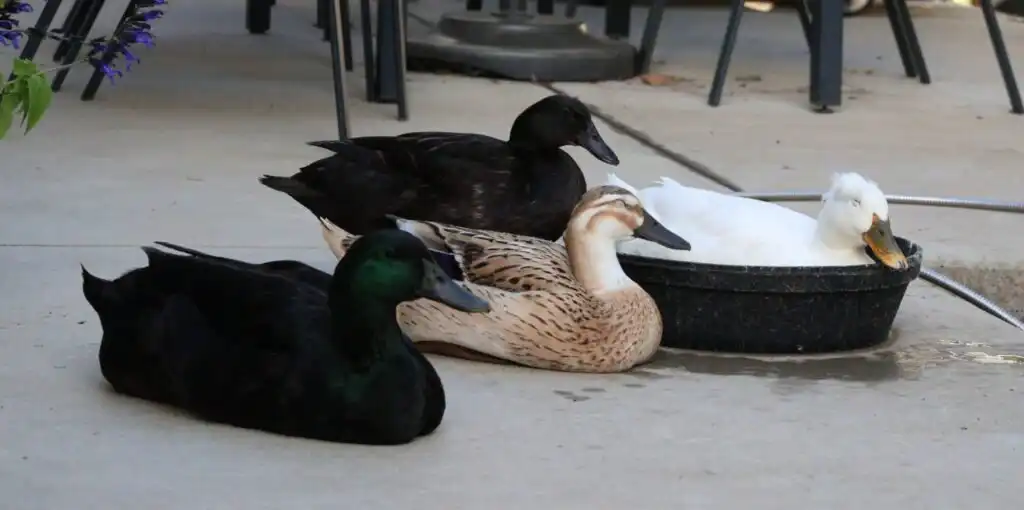
Over time, ducks stop feeling like animals that simply live in your backyard. Each duck develops their own habits, routines, and personality traits that become familiar parts of daily life. You learn who is bold, who is nervous, who always starts the morning arguments, and who quietly waits for snacks in the background. You notice who prefers certain sleeping spots, who dislikes being handled, and who immediately runs over when they hear your voice.
I honestly did not realize how emotionally integrated ducks would become in my life when we first started our flock. Now, even small parts of the day feel tied to them. Some of my favorite moments are incredibly ordinary: watching the flock forage in the grass, hearing their quiet chatter while cleaning the yard, or seeing everyone settle down peacefully in the evening.
Ducks also change how you experience responsibility and caregiving. Unlike many pets that are more independent, ducks rely heavily on consistent daily management. Their environment, nutrition, safety, water quality, and social dynamics all depend on us. That level of responsibility creates a very different relationship than many people initially expect when they first bring home ducklings.
And somewhere along the way, these daily routines stop feeling like chores.
They simply become part of life.
The Emotional Bond With Ducks Is Real
One of the biggest misconceptions about ducks is that they are emotionally simple animals. Because they are birds, many people assume the relationship stays fairly surface level compared to dogs or cats.
In reality, ducks are highly social animals that form routines, recognize familiar individuals, respond to trust, and develop very distinct personalities. The longer you live with them, the more obvious these differences become.
Some ducks constantly seek interaction and follow their favorite people around the yard. Others are more independent but still want to remain nearby. Some are bold and curious, while others are cautious observers who take much longer to trust new situations. Even within the flock itself, you begin noticing strong friendships, preferred companions, social tension, and individual dynamics.
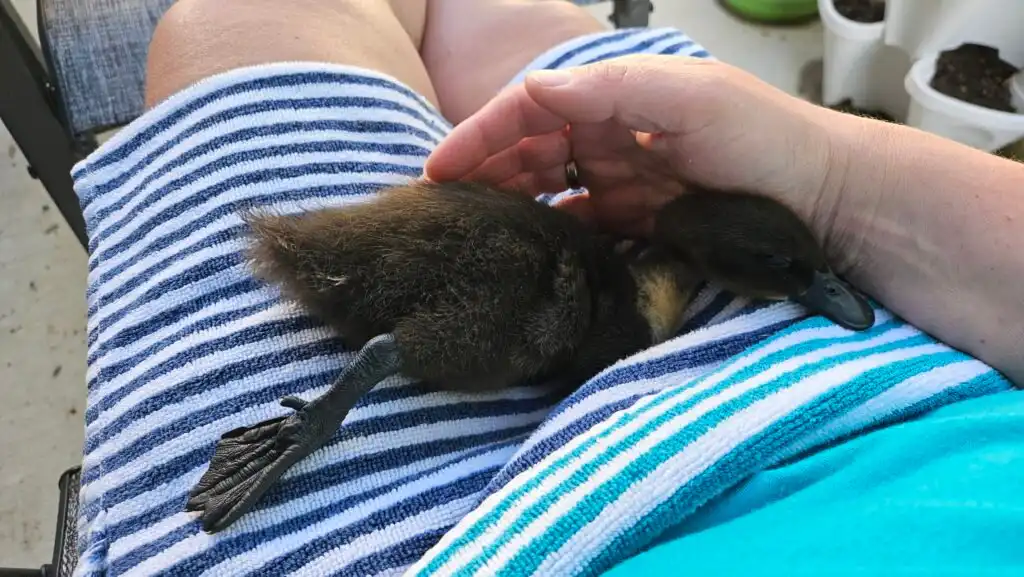
That emotional connection rarely happens all at once. It develops slowly through consistent daily care and repeated interaction. Feeding them every morning, sitting outside with them after work, helping during molts or illnesses, carrying nervous ducks during storms, or simply talking to them throughout the day all contribute to building familiarity and trust.
Over time, you begin recognizing subtle behaviors that would probably look meaningless to outsiders but feel deeply personal to you. A duck choosing to sit near you voluntarily. Excited tail wagging when treats appear. The flock running toward you when you walk outside. A nervous duck relaxing once they hear your voice.
These are small moments, but they add up quickly.
I think many duck keepers eventually realize that the emotional attachment does not come from one dramatic experience. It comes from hundreds of ordinary daily interactions repeated over months and years.
| Daily Moments That Build Emotional Bonds | Why They Matter |
|---|---|
| Morning greetings | Ducks learn routines and recognize familiar caregivers |
| Hand feeding treats | Builds trust and positive association |
| Evening lock-up routines | Creates consistency and security |
| Caring for sick or injured ducks | Deepens emotional attachment through caregiving |
| Sitting quietly with the flock | Allows ducks to become comfortable with your presence |
| Talking to ducks daily | Reinforces familiarity through voice recognition |
| Raising ducklings | Creates especially strong human-duck bonds through imprinting |
| Helping nervous ducks through stressful situations | Builds trust and dependency |
One thing that surprised me personally was how emotionally rewarding these interactions can become. Ducks may not show affection in the same way as traditional companion animals, but they absolutely develop trust, familiarity, and social comfort with the people who care for them consistently.
And once that bond forms, it becomes very difficult not to care deeply about them.
The Constant Worry Nobody Warns You About
One of the most emotionally exhausting parts of keeping ducks is the constant background level of worry that develops over time.
People often imagine duck keeping as peaceful and relaxing, and in many ways it is. But behind that peaceful image is the reality that ducks are vulnerable animals that depend almost entirely on us for their safety and well-being. Once you become emotionally attached to your flock, it becomes very difficult to stop mentally monitoring potential risks.
Predators are always in the back of your mind. So are heat waves, storms, standing water, respiratory disease, injuries, egg-laying complications, rodents, parasites, and flock conflicts. Even routine situations can suddenly turn into emergencies with ducks, especially because they are prey animals that instinctively hide weakness for as long as possible.
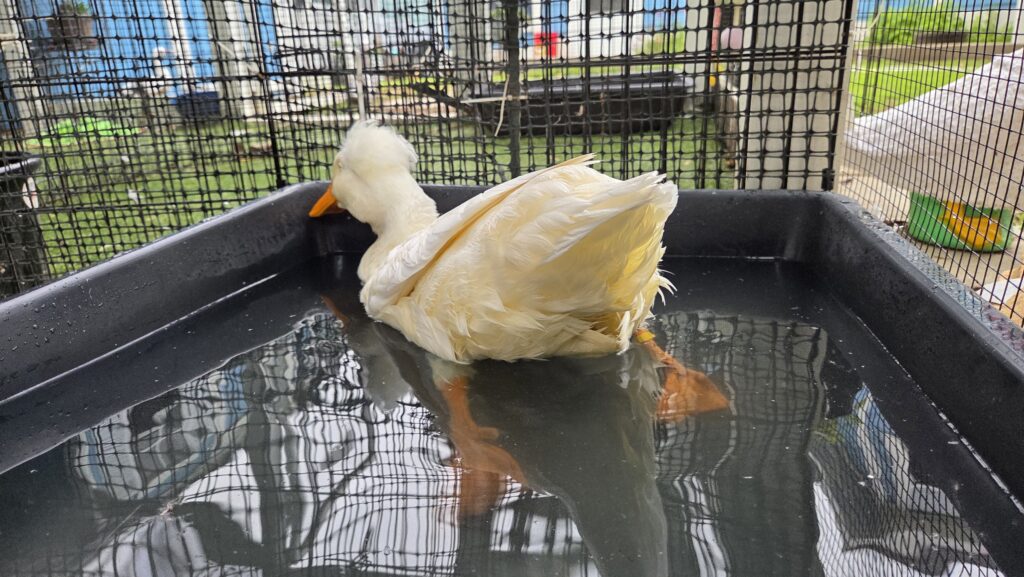
That changes the way many duck owners observe their flock.
You become extremely attentive to subtle changes because you learn that obvious symptoms often appear late. Small details that other people would never notice suddenly feel important.
- A duck standing slightly differently.
- A lowered tail posture.
- Sleeping apart from the flock.
- Less enthusiasm for treats.
- Reduced interest in swimming.
- A slight limp.
- Quiet behavior in a normally vocal duck.
You start mentally comparing everyone to their normal behavior patterns every single day without even realizing you are doing it.
I think many experienced duck owners develop a level of hypervigilance over time, not because they want to be anxious, but because early intervention genuinely matters with birds. Ducks can decline very quickly once symptoms become obvious.
| Common Duck Owner Worries | Why It Becomes Emotionally Stressful |
|---|---|
| Predators | Fear of sudden attacks, especially overnight or during free ranging |
| Illness and hidden symptoms | Ducks often mask illness until they are seriously sick |
| Reproductive emergencies | Fear of sudden attacks, especially overnight or during free-ranging |
| Veterinary procedures and surgery | Anxiety surrounding anesthesia, procedures, and waiting for updates |
| Extreme heat or cold | Constant monitoring during dangerous weather conditions |
| Avian influenza outbreaks | Fear of exposure from wild birds and mandatory flock confinement |
| Flock bullying or drake aggression | Worry about injuries and long-term stress within the flock |
| Injuries and mobility problems | Ducks can decline quickly if they stop eating, walking, or swimming normally |
| Toxicity risks | Fear of metal poisoning, unsafe plants, contaminated water, or household hazards |
| Travel and time away from home | Difficulty trusting others with complex duck care routines |
| Aging ducks | Emotional stress as mobility, stamina, and health gradually decline |
| Overnight emergencies | Fear that something could happen while everyone is asleep |
| Recovering ducks | Constant observation after illness or surgery can become mentally exhausting |
| Sudden losses | Ducks can deteriorate rapidly, leaving owners questioning whether they missed early signs |
I remember the sleepless nights when Krümel was struggling with reproductive issues. Every evening felt uncertain. Was she acting slightly better today or just hiding discomfort? Would she make it through the night comfortably? Was the treatment helping enough? There were nights when I checked on her repeatedly instead of sleeping properly because I was terrified of missing signs that things were getting worse.
The same happened when Emma developed a prolapse. Even after treatment and stabilization, the fear does not immediately disappear. You keep watching constantly, worried about recurrence, monitoring every poop, every posture change, every trip to the water bowl. Your brain never fully relaxes because you know how quickly these situations can become serious.
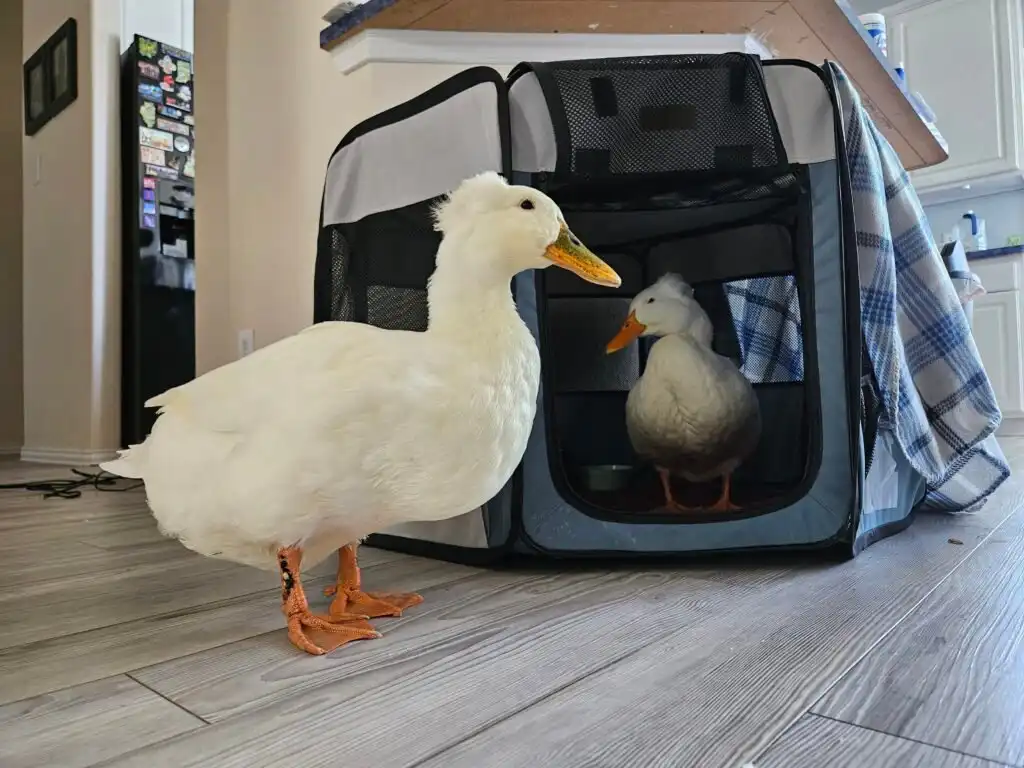
Our Indoor Duck ICU Setup
Over the years, one thing I have learned is that having a simple duck ICU setup ready before an emergency happens can make an incredibly stressful situation much easier. We use a soft foldable playpen indoors for recovering ducks, along with puppy pads, shallow water dishes, soft towels, and a safe heat source if needed. Having a quiet, easy-to-monitor recovery area has helped us through surgeries, reproductive emergencies, injuries, and illness countless times.
And honestly, one of the hardest feelings is when a duck is at the veterinary hospital for surgery or procedures, and you cannot do anything except wait.
Those days feel incredibly long.
You keep checking your phone constantly, hoping for updates. You replay worst-case scenarios in your head while trying to stay calm. Even when you trust your avian vet completely, handing over a duck for anesthesia or surgery is emotionally difficult because these animals are such fragile little creatures, and you know there are always risks involved.
I do not think people outside the duck world fully understand how emotionally consuming this can become. You are not just caring for animals. You are carrying responsibility for lives that depend entirely on you to notice problems early, make good decisions, and act quickly during emergencies.
At the same time, this level of observation is also part of responsible duck keeping. Many serious illnesses are first recognized because an owner noticed something subtle that just did not feel right before major symptoms appeared.
The difficult part is learning how to stay observant without letting the fear completely take over your life.
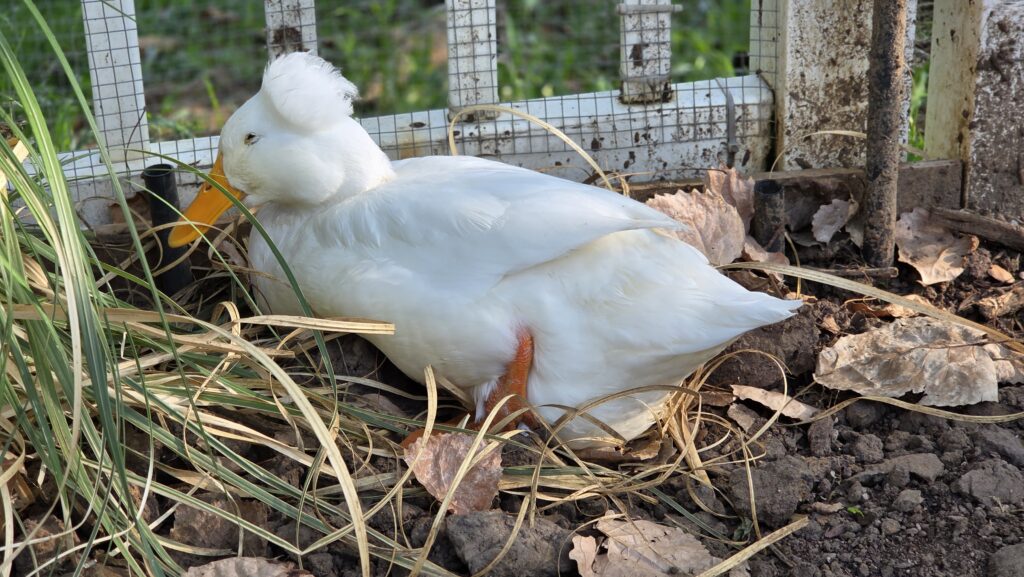
Most duck keepers probably know this feeling well: checking the coop multiple times before bed during storms, watching a recovering duck for hours after treatment, or sitting awake researching symptoms at 2 a.m. because one of your ducks acted slightly differently that day.
It comes from caring deeply.
And honestly, I do not think enough people talk openly about how emotionally heavy that responsibility can sometimes feel.
The Guilt Can Be Overwhelming Sometimes
Guilt After Illness, Injury, or Loss
I think one of the hardest emotional realities of keeping ducks is the guilt that can follow illness, injury, or loss.
Duck owners often carry an enormous sense of responsibility because these animals depend completely on us. And when something goes wrong, it is very easy to turn that responsibility inward and start questioning every decision you made.
- Could I have noticed the symptoms earlier?
- Should I have called the vet sooner?
- Did I miss something important?
- Could I have prevented this somehow?
Even when you logically understand that not every illness or tragedy is preventable, those thoughts can stay with you for a very long time.
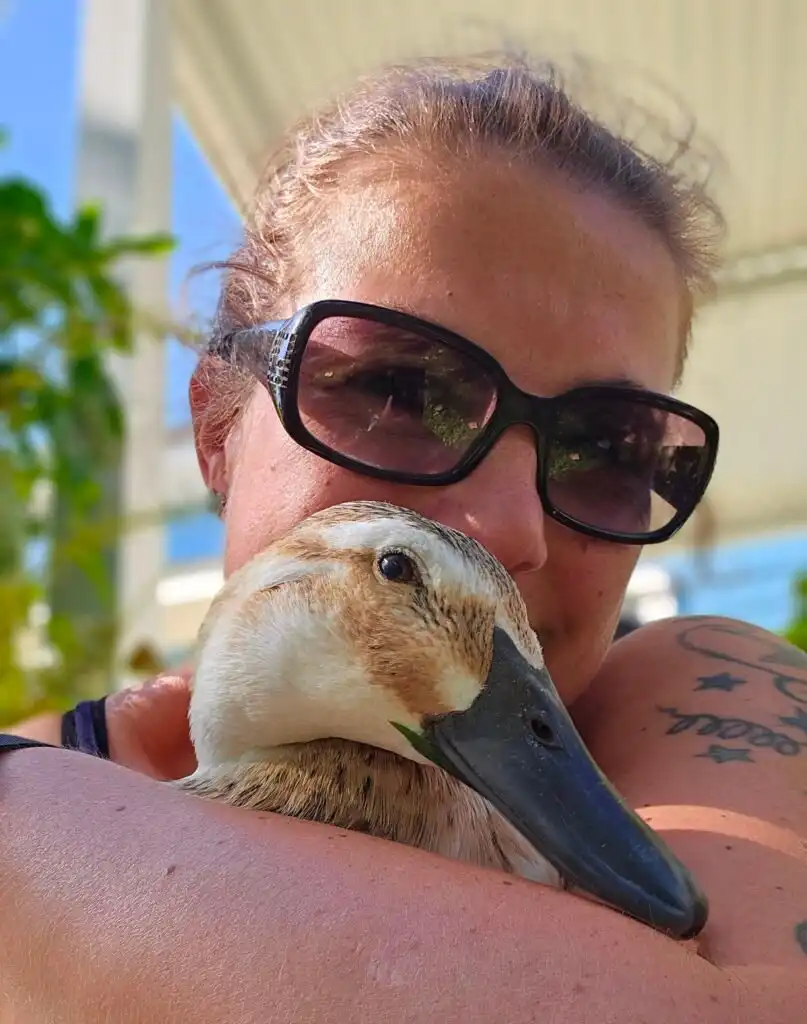
I still think about Hertha often.
Her illness happened incredibly fast during a long holiday weekend when veterinary offices were closed. At first, something just felt slightly off. She became quieter, more isolated from the flock, less interested in food. We monitored her closely and planned to call the vet as soon as they reopened, but by Monday morning, she had deteriorated significantly. We managed to get an appointment the same day.
But we never made it there.
She passed away before we could even reach the clinic.
That experience stayed with me because sudden loss leaves behind so many unanswered questions. For a long time, I kept replaying everything in my head afterward. Could I have recognized the seriousness sooner? Should I have pushed harder to find emergency care farther away? Did I underestimate how sick she really was?
And honestly, I think many duck owners carry these kinds of thoughts quietly after losing a bird.
The same emotional struggle can happen even when you do have time to make decisions.
With Penny, we eventually had to make the heartbreaking decision to let her go because of severe arthritis and declining quality of life. Rationally, I know we made that decision out of love and compassion. She was struggling more and more, and we did not want her to continue suffering simply because we were not emotionally ready to say goodbye.
But even now, there are still days where I question myself. Did we wait too long? Or not long enough? Was there something else we could have tried? Did she still have more good days ahead of her?
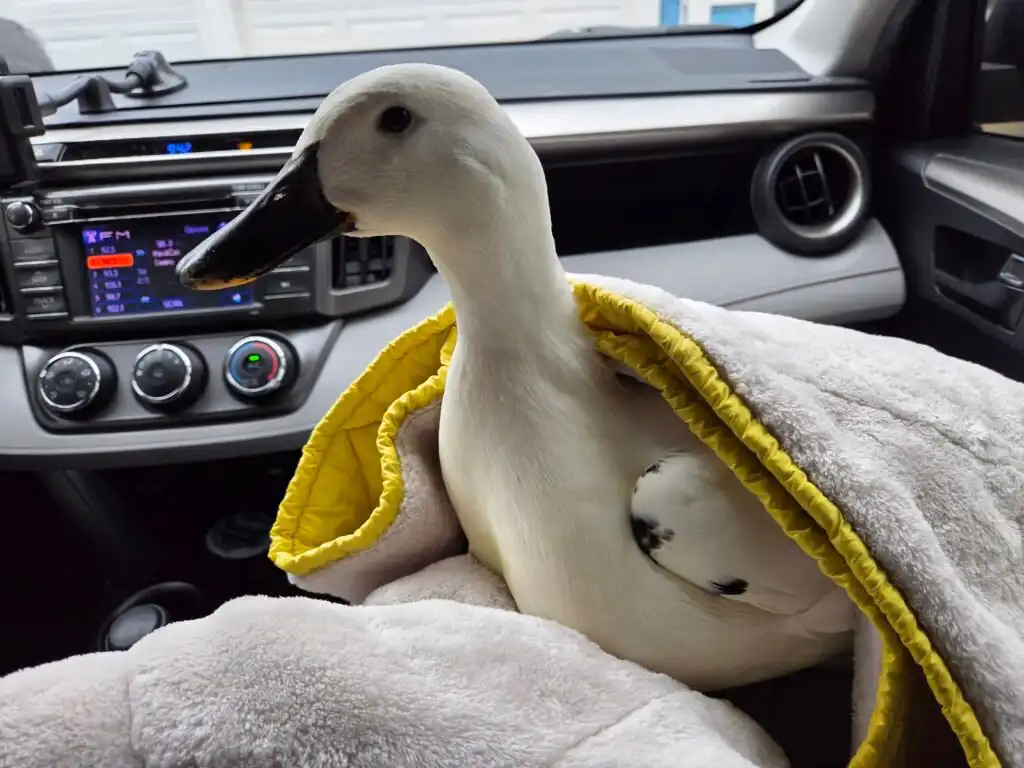
I do not think people talk enough about how emotionally difficult humane euthanasia decisions can be for pet duck owners. Choosing to end suffering is one of the kindest responsibilities we sometimes have as caregivers, but that does not make it emotionally easy afterward.
And the truth is, guilt often exists because we cared deeply.
The more attached we are to our ducks, the more responsibility we feel for every outcome. We want to protect them from pain, illness, fear, and suffering. So when something bad happens, many of us instinctively look for ways we could have fixed it, even when the situation may have been outside our control.
Over time, I have learned that duck keeping requires accepting a very uncomfortable reality: sometimes even excellent care, close observation, experienced veterinary support, and deep love are still not enough to change the outcome.
That does not mean we failed them.
It means we are caring for living creatures, and biology can be unpredictable and unfair sometimes.
I think one of the most compassionate things duck owners can do for themselves is recognize that grief and guilt are not always the same thing. Feeling heartbroken after losing a duck does not automatically mean you made the wrong decisions. Often, it simply means the bond was real, and the loss mattered deeply.
Looking for an avian vet? The Association of Avian Veterinarians Vet Finder is an excellent resource to help locate qualified avian veterinarians experienced with ducks and other birds in your area.
Guilt After Predator Attacks
Another source of guilt that many duck owners struggle with after losses are predator attacks.
Thankfully, we have never experienced a devastating predator attack in our own flock, but I have spoken to many duck owners over the years who carry enormous guilt after losing ducks this way. And honestly, I think predator-related guilt can be especially cruel because people often blame themselves very heavily afterward.
They replay everything in their minds.
- Should I have reinforced the fencing sooner?
- Why did I not close the coop earlier that night?
- Was the hardware cloth secure enough?
- Should I have supervised free-ranging more closely?
- Could I have prevented this if I had checked one more time?
The reality is that predators can be incredibly persistent and surprisingly intelligent. Even experienced duck keepers with strong setups can still experience losses or close calls. Hawks can strike during daytime free-ranging. Raccoons can manipulate latches. Dogs can break through fencing. Coyotes can dig. Sometimes accidents happen despite people genuinely trying their best to create safe environments.
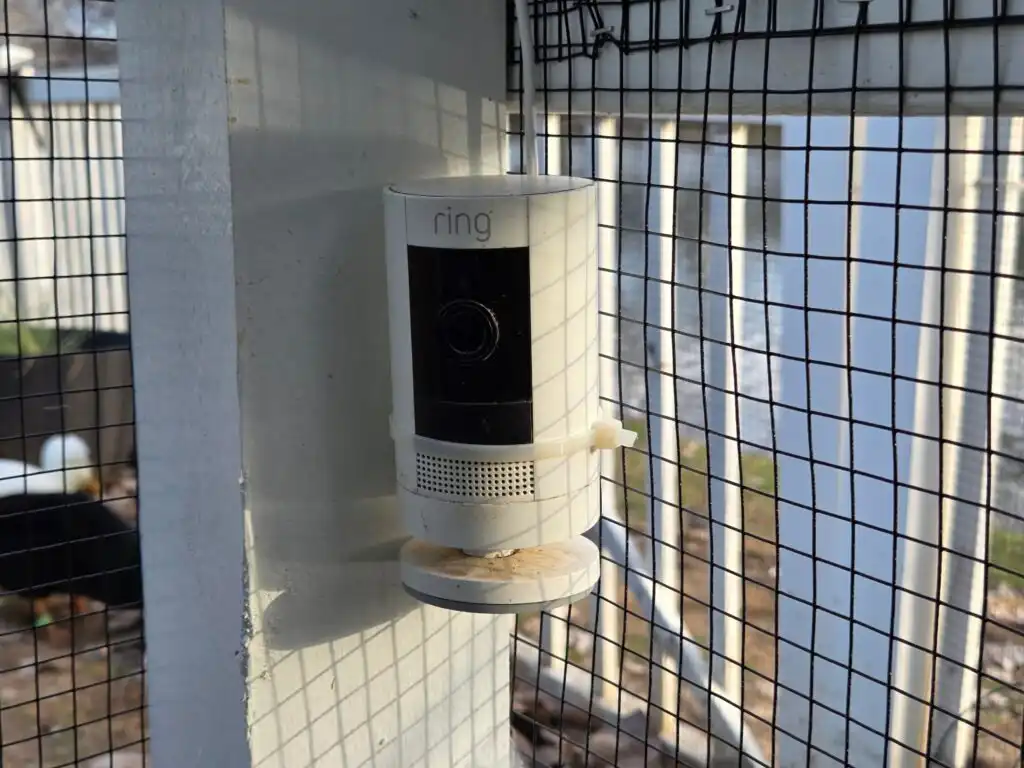
Why We Use Security Cameras for Our Ducks
One of the best upgrades we ever added to our duck setup was installing security cameras around the coop and run. Cameras help us monitor predator activity, check on the flock during storms, and keep an eye on recovering or vulnerable ducks without constantly disturbing them overnight. Honestly, they also provide a huge amount of peace of mind, especially after stressful health scares or during extreme weather.
That does not mean predator-proofing is unimportant. Responsible housing and supervision absolutely matter and significantly reduce risk. But I also think it is important to acknowledge that many people who experience predator losses already cared deeply and were trying hard to protect their flock.
The emotional aftermath can be extremely traumatic. Many owners describe feeling intense guilt, shame, grief, and even fear afterward, especially when the loss was violent or sudden. Some become afraid to leave the house, constantly recheck locks and fencing, or struggle to emotionally recover from the experience for a long time.
I think duck communities sometimes need more compassion in these situations. Education and prevention are important, but people who have already experienced devastating losses often do not need judgment piled onto their grief. Most are already blaming themselves far more harshly than anyone else ever could.
Duck Keeping Can Be Emotionally Exhausting
There are seasons where keeping ducks feels peaceful, rewarding, and almost therapeutic. Sitting outside watching the flock forage through the grass or hearing happy splashing sounds from the pool can genuinely make stressful days feel lighter.
But there are also periods where duck keeping becomes emotionally exhausting in ways that many people are not prepared for.
Unlike casual backyard hobbies, duck care never fully pauses. Ducks still need care during heat waves, storms, holidays, illness, busy work weeks, and personal hardships. The daily responsibilities continue regardless of what else is happening in your life, and when medical or flock issues arise, the emotional load can increase very quickly.
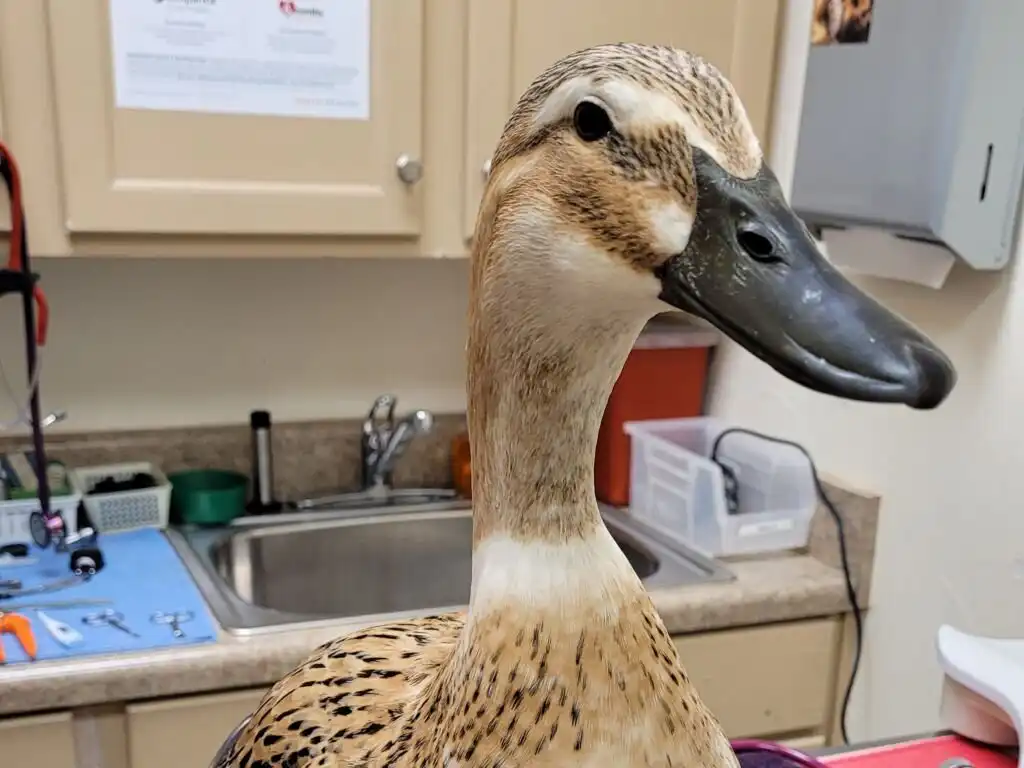
Health problems are especially draining because ducks often require intensive supportive care. Medications, baths, wound cleaning, isolation setups, physical therapy, syringe feeding, monitoring droppings, checking mobility, administering supplements, scheduling vet appointments, and watching for subtle changes can quickly become part of everyday life when a duck is sick.
There were periods with Krümel where it honestly felt like we were living from vet visit to vet visit. Bloodwork, hormone treatments, medications, chelation therapy, monitoring reproductive issues, adjusting indoor setups, checking behavior constantly, trying to balance hope with realism emotionally. Even with a scientific background, there were moments where it felt overwhelming because when it is your duck, emotions and objectivity do not separate as easily as people might think.
Long-term care situations can also become emotionally complicated because you are constantly balancing quality of life, financial limitations, emotional attachment, and practical reality. You desperately want to do everything possible, but at the same time, caregiving fatigue is real.
| Emotionally Difficult Situations | Why They Can Feel So Exhausting |
|---|---|
| Chronic illness | Requires ongoing monitoring, medications, and emotional uncertainty |
| Reproductive disease | Often unpredictable and emotionally stressful due to sudden emergencies |
| Predator attacks | Traumatic to witness and emotionally difficult during recovery |
| Elderly or disabled ducks | Daily supportive care can become physically and emotionally demanding |
| Veterinary emergencies | Financial pressure and fear often happen simultaneously |
| Post-surgery recovery | Constant monitoring and fear of complications can lead to sleepless nights |
| Severe weather events | Creates anxiety about heat stress, flooding, freezing, or power outages |
| Flock bullying or drake aggression | Requires constant management to keep everyone safe |
| Introducing new ducks | Emotional stress from quarantine, integration issues, and social tension |
| End-of-life decisions | One of the most emotionally difficult responsibilities in duck keeping |
And then there is the emotional pressure of always being mentally on alert. Many duck keepers struggle to fully relax because part of their brain is constantly monitoring the flock, especially after experiencing previous health scares or losses.
You can love your ducks deeply and still admit that caring for them is sometimes mentally and emotionally draining.
I actually think more people in the duck community should talk openly about caregiver fatigue. Loving animals does not mean every moment is easy. There can be stress, anxiety, frustration, grief, financial pressure, and exhaustion mixed in with all the joy and affection.

At the same time, most of us continue because the emotional rewards are also incredibly meaningful. Even during difficult periods, there are still those quiet moments that remind you why you keep going: a recovering duck finally acting like themselves again, the flock greeting you excitedly in the morning, or seeing a previously sick duck happily splashing in water again after weeks of worry.
The Joy Is Also Bigger Than People Realize
For all the emotional difficulty that can come with duck keeping, the joy is also far deeper and more meaningful than most people expect.
I think that is why so many of us continue despite the stress, the mess, the worry, and the heartbreak that sometimes comes with loving animals so deeply.
Ducks bring a kind of happiness that is difficult to explain unless you have experienced it yourself. There is something incredibly grounding about stepping outside in the morning and being greeted by an excited flock running toward you. Even after stressful days, watching ducks splash in water, nap in the sun, or quietly forage through the grass has a calming effect that feels very different from the constant noise and pressure of everyday life.
Some of the happiest moments in duck keeping are honestly the smallest ones.
- Muffin falling asleep next to Krümel.
- Simon proudly announcing absolutely nothing important to the entire neighborhood.
- Watching the flock enjoy fresh rain puddles like they are the greatest gift on earth.
- A nervous rescue duck finally learning to trust you enough to eat treats from your hand.
Those little moments add up over time and become part of your emotional routine.
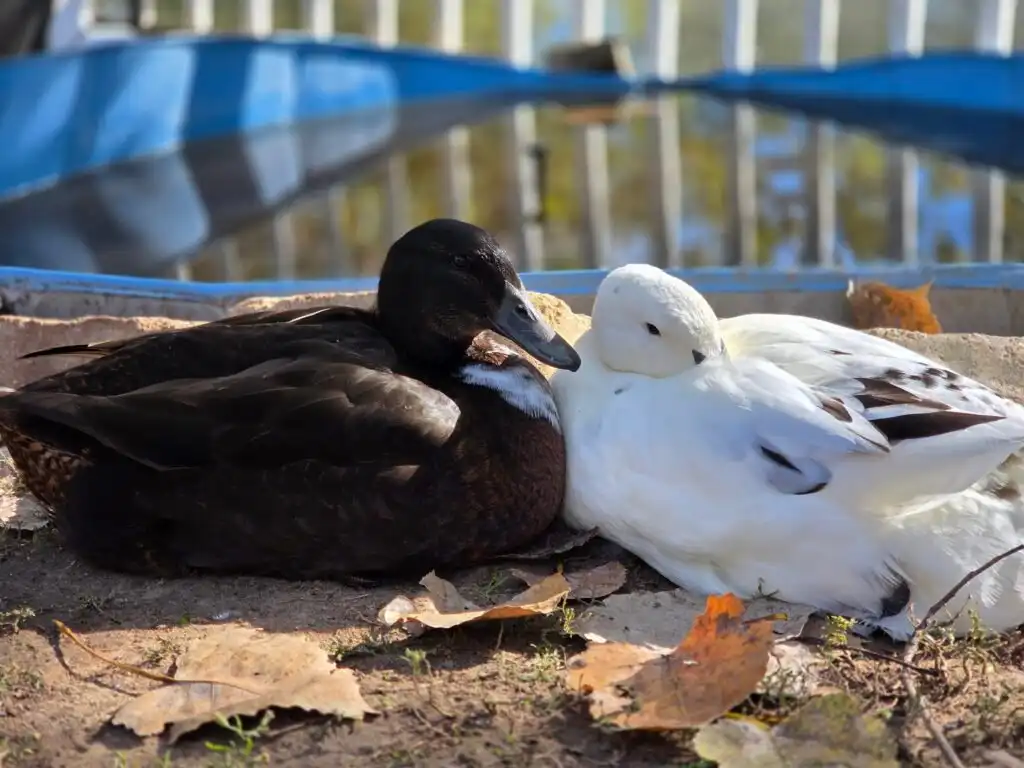
Ducks also bring structure and purpose to daily life in a way that many people underestimate. No matter what kind of day you are having, the ducks still need breakfast, fresh water, clean pools, and evening lock-up. That consistency can actually become emotionally comforting. Caring for them creates routines that pull you outside, keep you active, and reconnect you with nature and seasonal rhythms.
I have also noticed that ducks make people more observant and present. You start appreciating tiny details you may have ignored before: the sound of soft duck chatter in the evening, the excitement over a favorite snack, the way ducks stretch out in the sun after swimming, or how peaceful the flock looks resting together at the end of the day.
And then there is the emotional connection itself, which can be incredibly rewarding.
There is something very special about earning the trust of an animal that chooses to feel safe around you. Ducks may show affection differently than dogs or cats, but they absolutely form bonds and routines with the people who care for them consistently. Over time, those relationships begin to feel surprisingly meaningful.
| Joyful Parts of Duck Keeping | Why They Matter Emotionally |
|---|---|
| Morning flock greetings | Creates daily connection and routine |
| Watching ducks swim and forage | Calming and emotionally grounding |
| Building trust with nervous ducks | Deeply rewarding over time |
| Caring for ducklings | Creates strong emotional bonds and memorable experiences |
| Quiet evenings with the flock | Encourages mindfulness and relaxation |
| Seeing sick ducks recover | Brings enormous relief and gratitude |
| Individual duck personalities | Makes every duck feel unique and irreplaceable |
| Sharing life with the flock daily | Creates companionship and emotional attachment |
I honestly think ducks change the emotional atmosphere of a home. They bring noise, mud, chaos, and occasional destruction, but they also bring laughter, comfort, routine, companionship, and moments of peace that are difficult to replace once you experience them.
Even after all the difficult moments we have gone through with our flock, I would still choose this life with ducks again without hesitation.
Because the joy really is that big.
People May Not Understand Your Attachment
One emotional challenge that many duck owners quietly experience is feeling misunderstood by people who have never lived with ducks themselves.
To outsiders, ducks are often seen as simple farm animals, backyard livestock, or temporary novelty pets. Because of that, people sometimes struggle to understand why duck owners become so emotionally attached or why losses and medical emergencies can affect us so deeply.
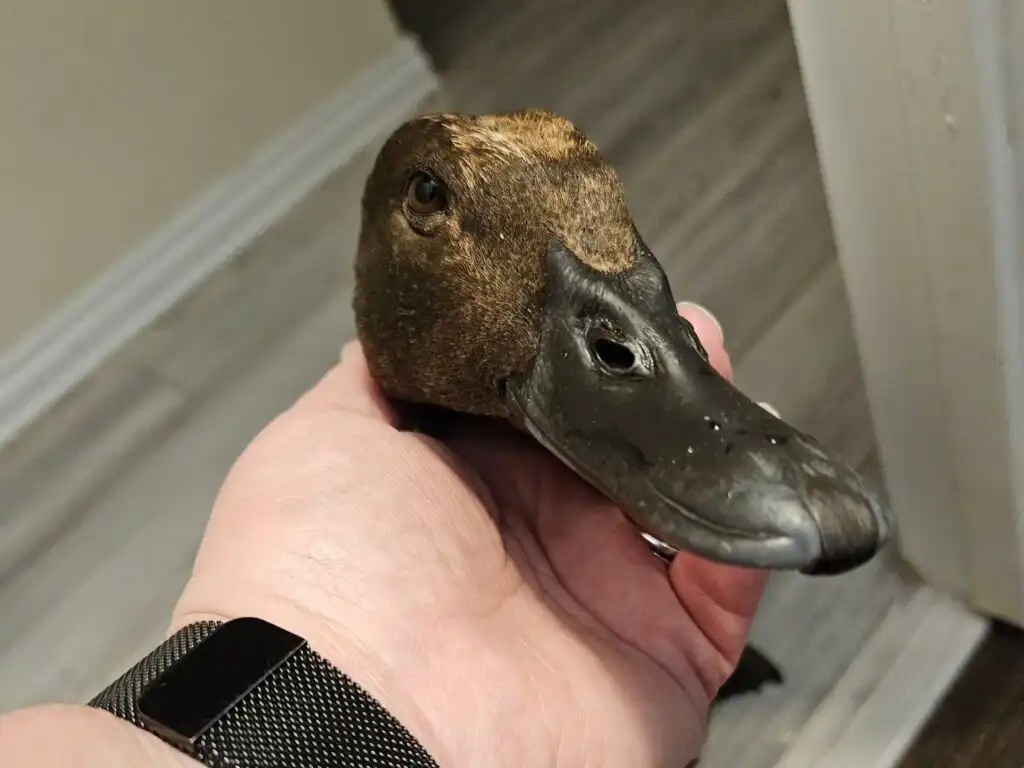
You may hear comments like:
- “They are just ducks.”
- “At least you can get another one.”
- “You spent how much at the vet?”
Or people may seem confused when you rearrange travel plans, lose sleep over a sick duck, or grieve heavily after a loss.
But duck owners know the reality is very different.
Once you live closely with ducks, they stop feeling interchangeable very quickly. Every duck develops their own personality, routines, social role within the flock, and relationship with the humans around them. Some are confident leaders. Some are anxious followers. Some constantly demand attention, while others quietly stay nearby in their own way.
And because ducks become part of your daily life, their absence becomes very noticeable when they are gone. The yard feels quieter. Certain routines suddenly feel empty. You instinctively look for ducks that are no longer there.
I still catch myself thinking about Penny sometimes when opening treats because she was always one of the first to react. Even after loss, those habits stay with you because the relationship was real.
I also think many duck owners eventually become protective of their attachment because they realize not everyone will understand it. Over time, you stop trying to justify why you care so deeply about these animals. You simply accept that the bond exists whether other people understand it or not.
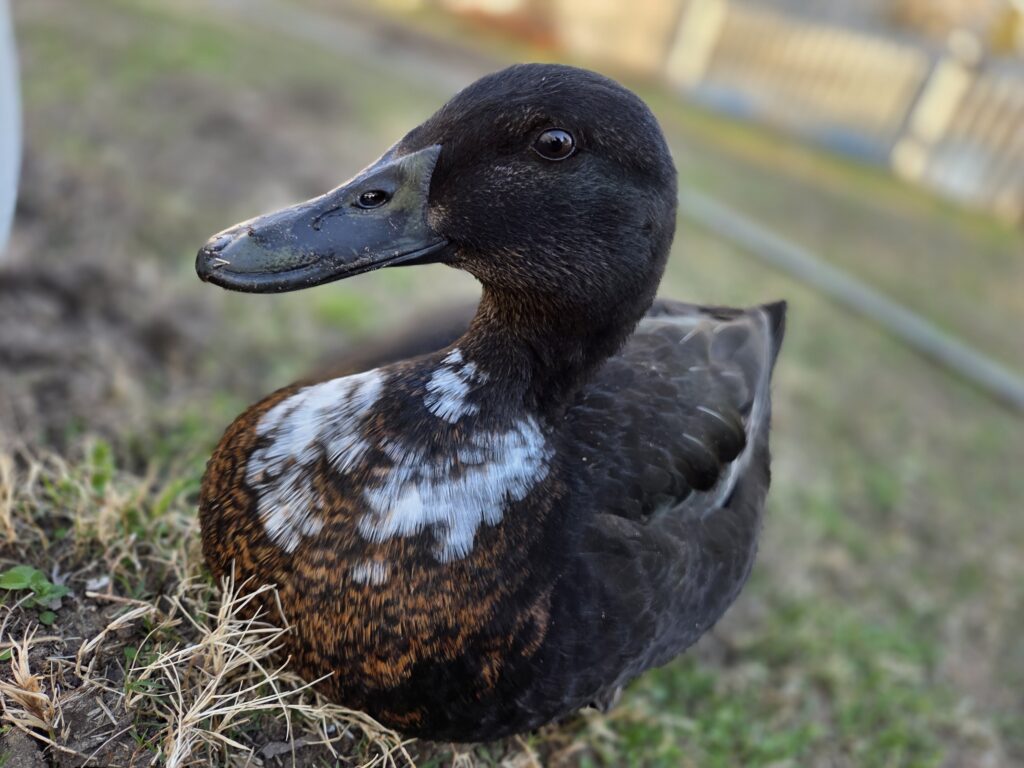
And honestly, there is nothing irrational about becoming emotionally attached to animals you care for every single day.
- We celebrate their milestones.
- We worry when they are sick.
- We adapt our homes and schedules around their needs.
- We learn their personalities and preferences.
- We comfort them during stressful situations.
Of course, strong emotional bonds form under those circumstances.
One thing I have always appreciated about the duck community is that other duck keepers immediately understand these feelings without needing much explanation. They understand why people drive hours to avian vets, spend sleepless nights monitoring recovering ducks, build elaborate predator-proof setups, or cry over the loss of a flock member.
Because once you truly know ducks, it becomes impossible to see them as just ducks anymore. They become individuals. And for many of us, they become family.
Ducks Teach You About Responsibility and Compassion
I honestly think living with ducks changes the way you think about caregiving and responsibility.
Ducks depend on us for nearly every aspect of their well-being: safe housing, clean water, nutrition, protection from predators, medical care, social stability, and daily observation. Unlike hobbies that can be paused or ignored for a few days, ducks require consistency. They still need care when you are tired, stressed, sick, busy, or emotionally overwhelmed yourself.
Over time, that responsibility teaches you to become more patient, observant, adaptable, and compassionate.
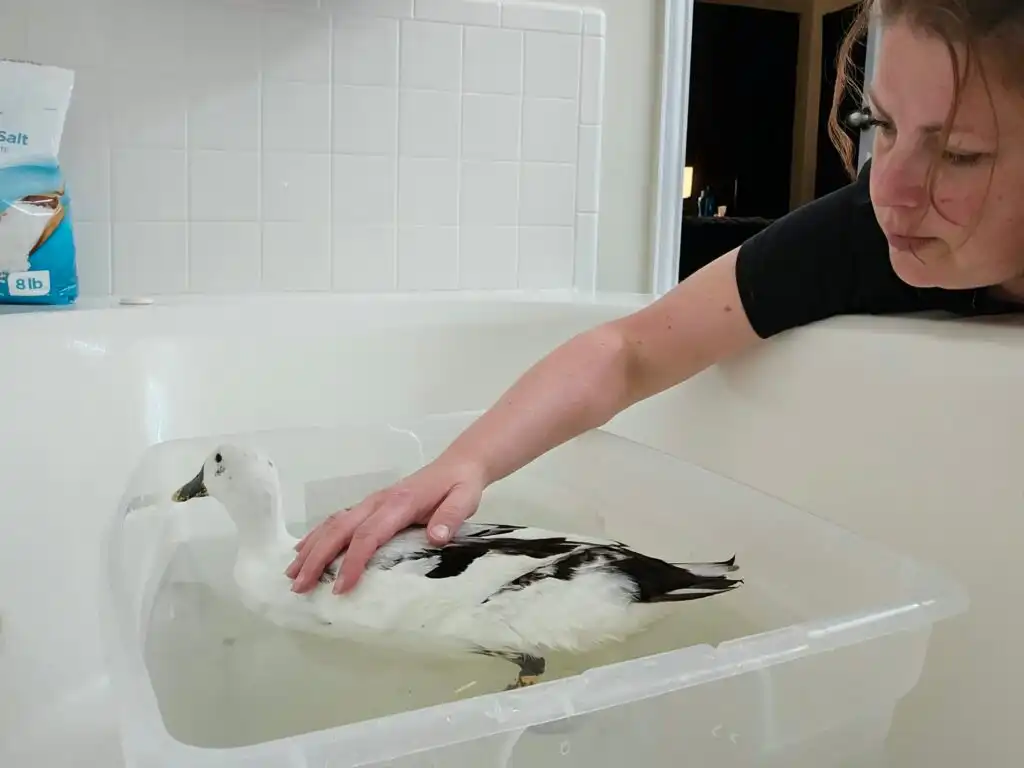
You learn how much small acts of care matter. Sitting with a nervous duck after a stressful vet visit. Helping a recovering duck eat. Adjusting flock dynamics to protect weaker birds. Waking up early during heat waves to refresh pools and monitor everyone closely. These moments may seem minor individually, but together they shape the way you approach responsibility and empathy.
Ducks also teach you that compassion is not always convenient.
Sometimes it means cleaning wounds late at night, rearranging your schedule around medications, spending money you did not plan to spend at the emergency vet, or making heartbreaking quality-of-life decisions because keeping an animal alive is not always the same thing as preventing suffering.
At the same time, ducks remind you how meaningful caregiving can be.
There is something incredibly rewarding about earning the trust of animals that rely on you completely and knowing that the life you created for them is safe, enriching, and full of comfort. I think many duck owners become more emotionally aware and more empathetic over time because caring deeply for animals changes how you view vulnerability, trust, and responsibility itself.
The Emotional Side of Duck Keeping Deserves More Conversation
I think one of the reasons the emotional side of duck keeping can feel so overwhelming is because people rarely talk about it honestly. Most content online focuses on the cheerful and visually appealing parts of life with ducks: fluffy ducklings, beautiful backyard ponds, funny flock behavior, fresh eggs, and peaceful farm-style moments. Those things are absolutely part of duck keeping, but they are not the full picture.
What often stays hidden behind the scenes is the emotional responsibility that comes with caring deeply for animals that depend entirely on you.
Many duck owners quietly carry a tremendous amount of emotional weight. There are sleepless nights spent monitoring a sick duck, constant worry during extreme weather, anxiety while waiting for veterinary updates during surgery, grief after losing a flock member, and the lingering self-doubt that can follow difficult medical or end-of-life decisions. At the same time, there is also deep joy, comfort, companionship, and emotional connection woven into daily life with ducks.
That combination can be difficult to explain to people who have never experienced it themselves.
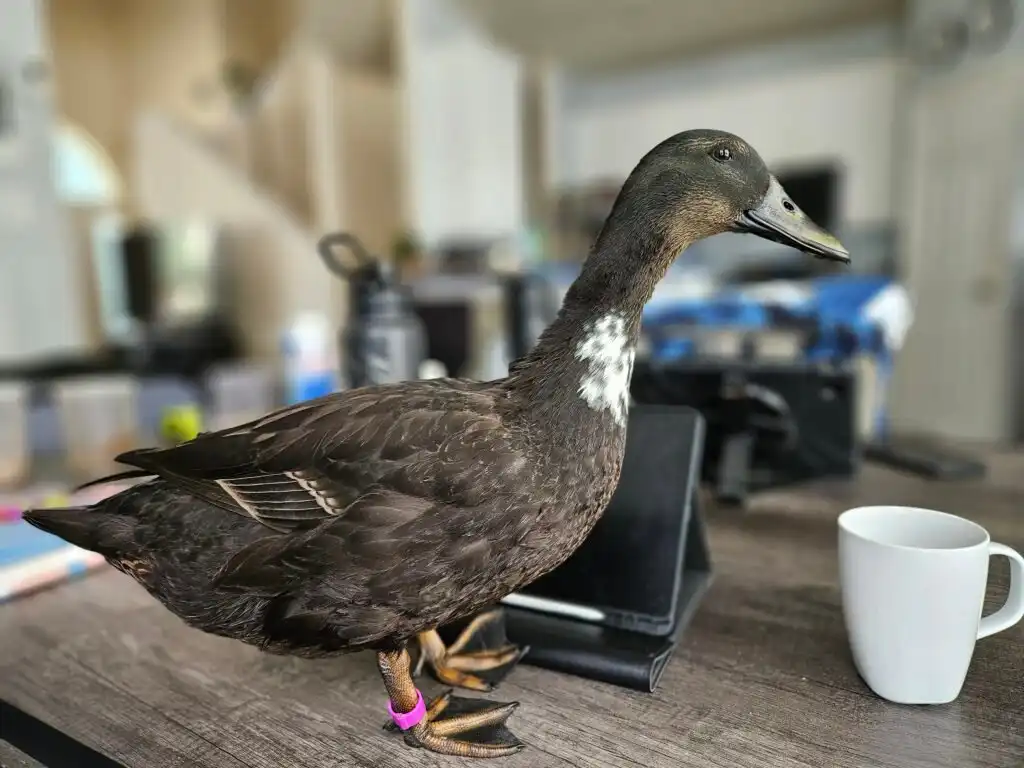
I also think many newer duck owners are unprepared for how emotionally intense duck keeping can sometimes become. We often discuss practical topics like housing, nutrition, predator-proofing, and health care, but we do not talk enough about caregiver fatigue, grief, emotional attachment, or the mental load that comes with constantly being responsible for vulnerable animals.
And honestly, I think normalizing those conversations matters.
Feeling emotionally invested in your ducks does not make you overly sensitive or irrational. It means the relationship is meaningful to you. When you spend years structuring your routines around caring for animals, learning their personalities, protecting them from danger, helping them through illness, and sharing daily life with them, strong emotional bonds naturally form.
I also think talking openly about the difficult parts helps people feel less isolated when they are struggling. So many duck owners privately question themselves after losses, feel emotionally drained during long medical situations, or carry guilt over things they could not control. Hearing that other people experience the same fears, grief, stress, and attachment can be incredibly validating.
Because the truth is that duck keeping is not emotionally shallow at all.
For many of us, these animals become deeply woven into our homes, routines, and emotional lives. And I honestly believe that reality deserves far more open conversation than it usually receives.
FAQ About the Emotional Reality of Keeping Ducks
Is it normal to become emotionally attached to ducks?
Absolutely. Ducks are social animals with unique personalities, and many owners form very deep emotional bonds with them over time.
Why does losing a duck hurt so much?
Ducks become part of daily routines and family life. Caring for them every day creates a strong emotional attachment, and grief when they pass away can be very intense.
Can ducks recognize their owners?
Yes. Ducks can recognize familiar people, routines, voices, and behaviors. Many ducks show clear excitement and trust around their primary caregivers.
Is duck keeping emotionally stressful?
It can be. Duck owners often worry about predators, illness, weather, and flock safety. Caring for sick or elderly ducks can also be emotionally exhausting.
Do ducks help mental health?
Many duck keepers report that spending time with their ducks helps reduce stress and creates a calming daily routine. However, caregiving responsibilities can also be emotionally demanding.
Final Thoughts
Before I had ducks, I never fully understood how deeply animals could shape everyday life in such quiet but meaningful ways. Ducks become part of your routines, your home, your emotional world, and eventually even the way you experience good days and difficult ones.
Living with ducks teaches you to slow down and pay attention. You notice small behavior changes, weather patterns, social dynamics within the flock, and tiny moments of trust that might seem insignificant to other people but mean everything to you. Over time, the relationship becomes much more than basic animal care. It becomes companionship, responsibility, and emotional connection woven into daily life.
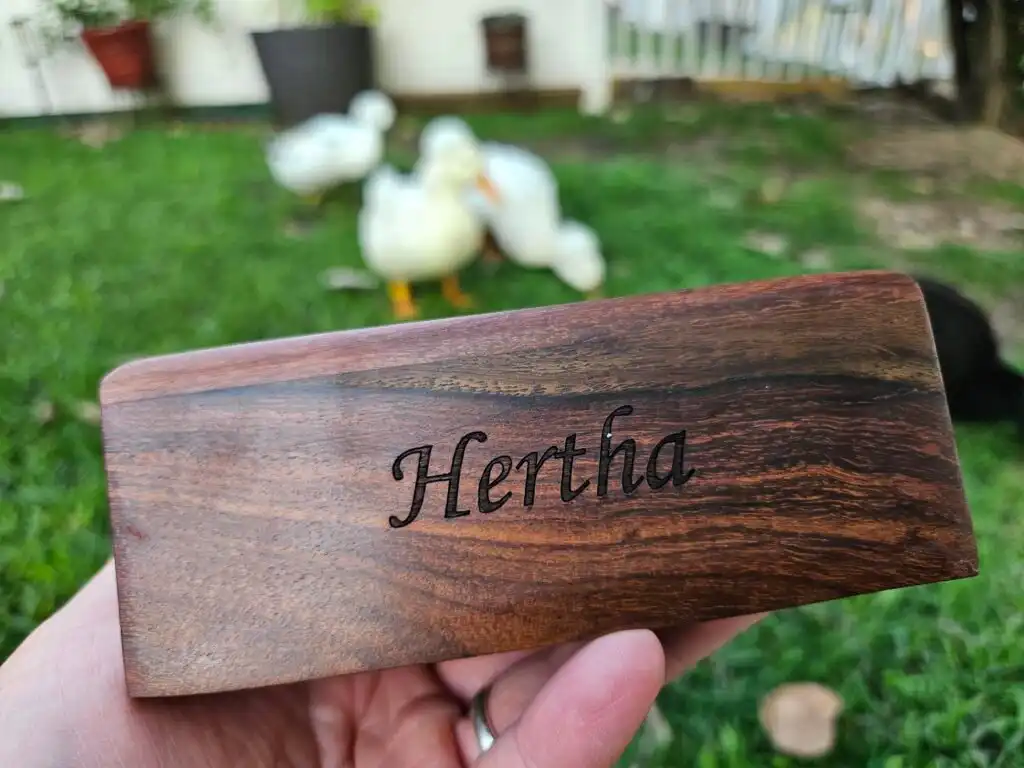
And yes, sometimes that connection hurts.
There will likely be moments of worry, heartbreak, exhaustion, and grief. There may be sleepless nights during illness, difficult medical decisions, or losses that leave the yard feeling strangely quiet afterward. Loving animals deeply always comes with vulnerability.
But I also think that vulnerability is part of what makes the experience so meaningful.
Because alongside the difficult moments come countless small moments of joy that slowly become part of who you are: the excitement of morning greetings, peaceful evenings with the flock, the trust of a once-nervous duck, the comfort of familiar routines, and the simple happiness of sharing life with these funny, intelligent, emotional little creatures.
Ducks may not realize how profoundly they affect us.
But for many of us, they truly do change our lives.
Further Reading & Resources
- Duck Personalities – What They Reveal About Our Ducks (and Us!)
- Ducks as emotional support animals
- My Biggest Lessons from Raising Ducks for Four Years
- Handling Your Duck’s Passing: Coping with Loss
- When Love Means Letting Go: A Compassionate Guide to Euthanasia in Ducks
- Remembering Hertha: A Tribute to Our Beloved Duck
Connect deeper with your flock. Discover more about duck psychology and social dynamics in the Community & Behavior Hub.