
How to Build a Predator-Resistant Duck Run: A Step-by-Step DIY Guide

Last updated: June 30th, 2026
To keep our research-backed guides free, this site uses ads and affiliate links (earning a small commission at no cost to you). Everything here is created by a duck mom and PhD scientist, combining academic rigor with hands-on experience to provide practical, trustworthy advice for duck keepers everywhere. 🦆 Learn more
Building a truly functional duck habitat is a unique blend of engineering and animal husbandry. It’s about more than just fencing; it’s about creating a secure ecosystem that respects the natural behaviors of your flock while providing the peace of mind every keeper craves. After months of sketching designs and researching the most durable materials to withstand the elements (and the enthusiasm of the ducks themselves), our vision of a predator-resistant sanctuary finally moved from the whiteboard to the backyard.
There is something really satisfying about finally giving your ducks the kind of space you have been picturing in your head for years. For us, the new duck run started with the shed. Building the 8×8 duck shed was the first big step toward a setup that feels intentional and truly duck-centered, not just good enough for now. Once the shed was in place, it was obvious the run needed to match it, both in safety and in quality. A cozy house is great, but ducks need a secure outdoor area where they can spend their day doing what ducks do best: waddling, foraging, splashing, napping in the sun, and causing a little harmless chaos.
Part of the Housing & Environment Hub, Engineering safe, bio-appropriate habitats for backyard flocks.
Quick Navigation: Jump to a Section
[hide]
Why we built a new duck run
This run has been a long dream of mine. Not in a Pinterest-perfect way, but in a practical, everyday-life way. I wanted a duck area that makes it easier to care for them well, keeps them safe, and gives me peace of mind when I’m not standing out there watching every move. Over the years, we’ve learned so much through trial and error. What drains well. What turns into a muddy mess. What predators test first. What makes cleaning easier, and what makes you regret your choices at 10 p.m. with a headlamp on. This project brought all of those lessons together.
And honestly, this is also the first time I feel like I could finally afford the duck setup of my dreams, or at least what is within the limits of our property. If I had unlimited space, it would be so much bigger. Ducks can never have too much room, and I could easily imagine expanding this into a giant duck kingdom with multiple zones, extra shade structures, and an entire water feature situation that would make my wallet cry. But within what we have, we aimed for the best blend of space, safety, and real-life functionality. Something that works for the ducks and for us.
If you’ve ever had that feeling of wanting to upgrade your setup but waiting for the right time, the right budget, or the right plan, you’re not alone. This run is proof that sometimes those long-term dreams really do happen, one project at a time.
The evolution of our duck runs over the years
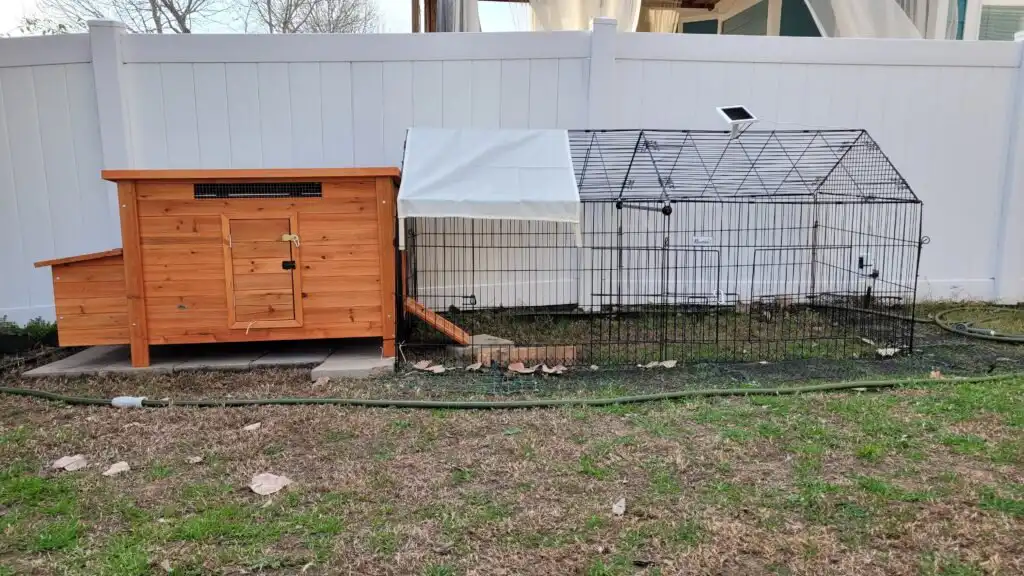
When we first started with ducks, we had three girls and very little real understanding of what duck keeping actually looks like day to day. Like many new duck parents, we thought the most important thing was having something safe for the night. The plan was simple: a small coop for sleeping, a small run for nighttime security, and free roaming in the yard during the day. On paper, it sounded reasonable. In reality, it was meant to fail.
We bought a small premade coop with an easy-to-assemble run. Looking back now, it checked boxes but didn’t solve problems. The duck run was far too small for active ducks, and while the run itself wasn’t terrible for them, it was terrible for us. Cleaning was a nightmare. Some spots were almost impossible to reach because access points were limited, and that meant corners stayed dirty longer than they should have. Ducks are messy by nature, and a setup that fights you every time you try to clean is not sustainable.
We also learned very quickly that free roaming was not a safe option for us here in North Texas. The predator pressure is real. Hawks and other aerial predators are common, and on the ground, we have raccoons, bobcats, stray dogs, and cats. What felt like a peaceful backyard to us was very much a hunting ground to everything else. So instead of enjoying the yard during the day, the ducks were suddenly confined to a space that was never designed for full-time use.
To give them more room, we built a makeshift daytime enclosure using construction fencing with avian netting on top. It was a temporary solution and very much felt like one. It wasn’t truly predator-proof and relied heavily on luck and constant supervision. Thankfully, nothing happened during that phase, but it was not something I ever felt comfortable with long term.
That changed after a nighttime bobcat attack. We intervened at the right moment, and luckily nothing happened beyond a massive shock for everyone involved, ducks and humans alike. That was our wake-up call. Within a very short time, we urgently built something safer, bigger, and easier for us to work in: an 8×12 ft hoop coop.
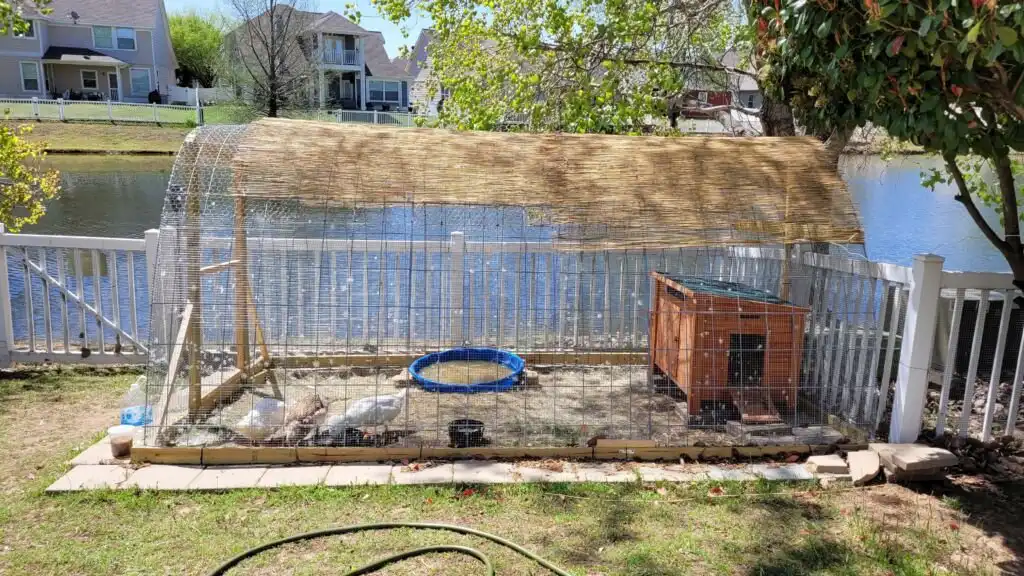
The hoop coop was a huge improvement. For our three ducks at the time, it felt spacious. It was far more secure against predators, and the biggest upgrade for us was accessibility. At about seven feet tall, we could walk inside comfortably. Their coop was inside the hoop structure, and for that phase of our duck journey, I was genuinely happy. The ducks had the space and security they needed when we couldn’t supervise yard time, and caring for them became easier instead of harder.
Like everything else in duck keeping, the hoop coop evolved. We built new duck houses. We experimented with ground covers, starting with soil and straw, moving to pea gravel, and eventually testing turf. We added lighting, shade covers, misting systems for summer heat, security cameras, and enrichment like toys and water features. Each change was driven by observation and experience. What worked stayed. What didn’t quietly disappeared.
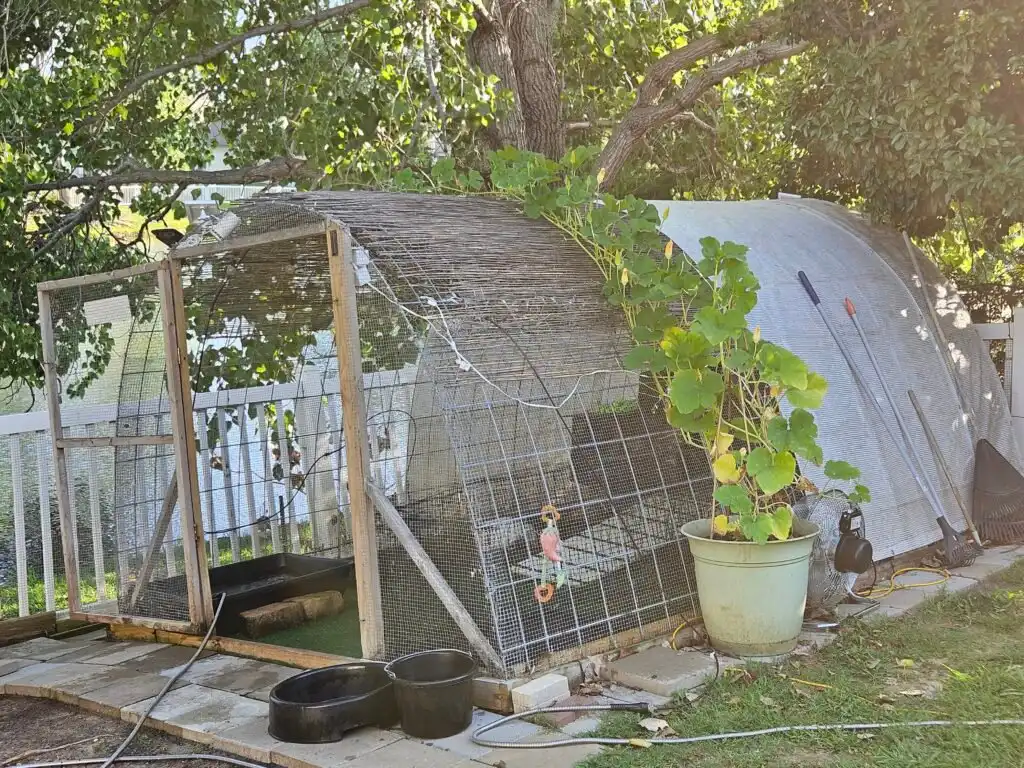
But then our flock grew. At our maximum, we had eight ducks, and the hoop coop started to feel small again. It wasn’t unsafe, but it no longer matched the level of space and quality of life I wanted for them. I knew I wanted something bigger and more permanent, but that meant waiting. Saving. Planning. And honestly, being patient.
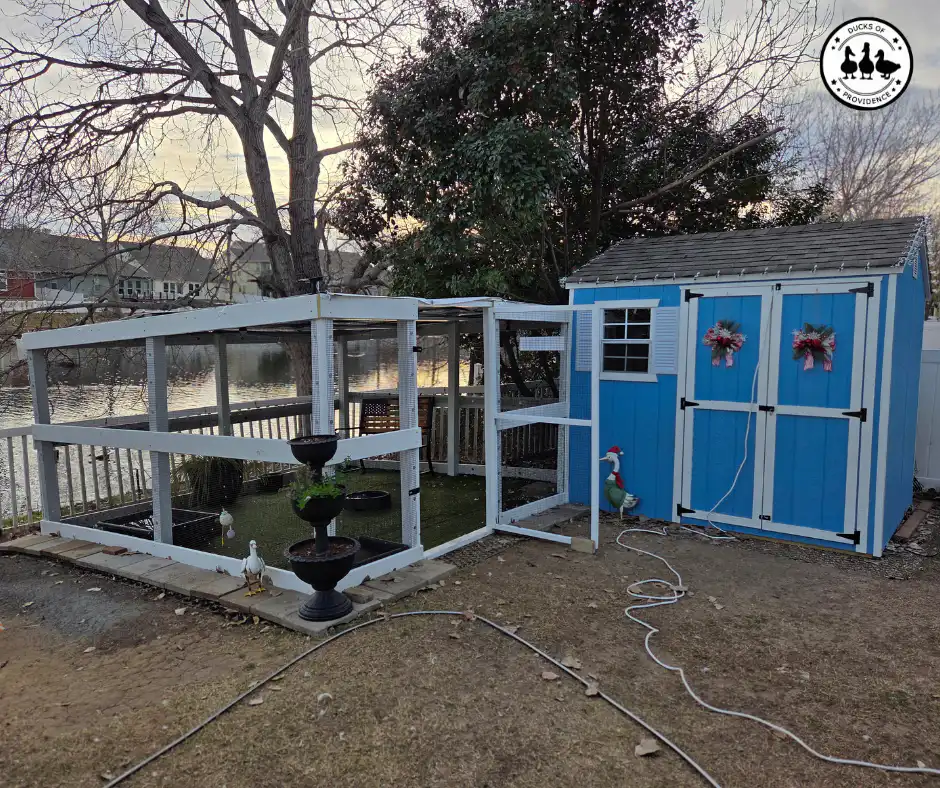
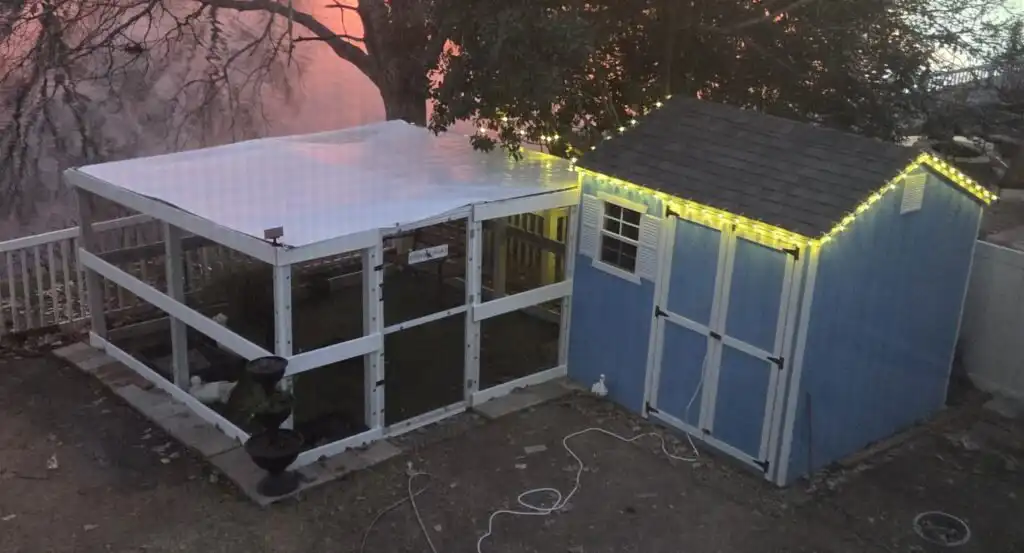
Now, after all those years of learning, trial, error, and adjustment, we’ve finally been able to custom-build a 12×12 duck run that brings everything together. Every choice in this new setup is informed by what didn’t work before. Ironically, we are now down to six ducks instead of eight, but that just means even more space for them. And after everything we’ve learned along the way, that feels like the best possible outcome.
Duck run size and layout
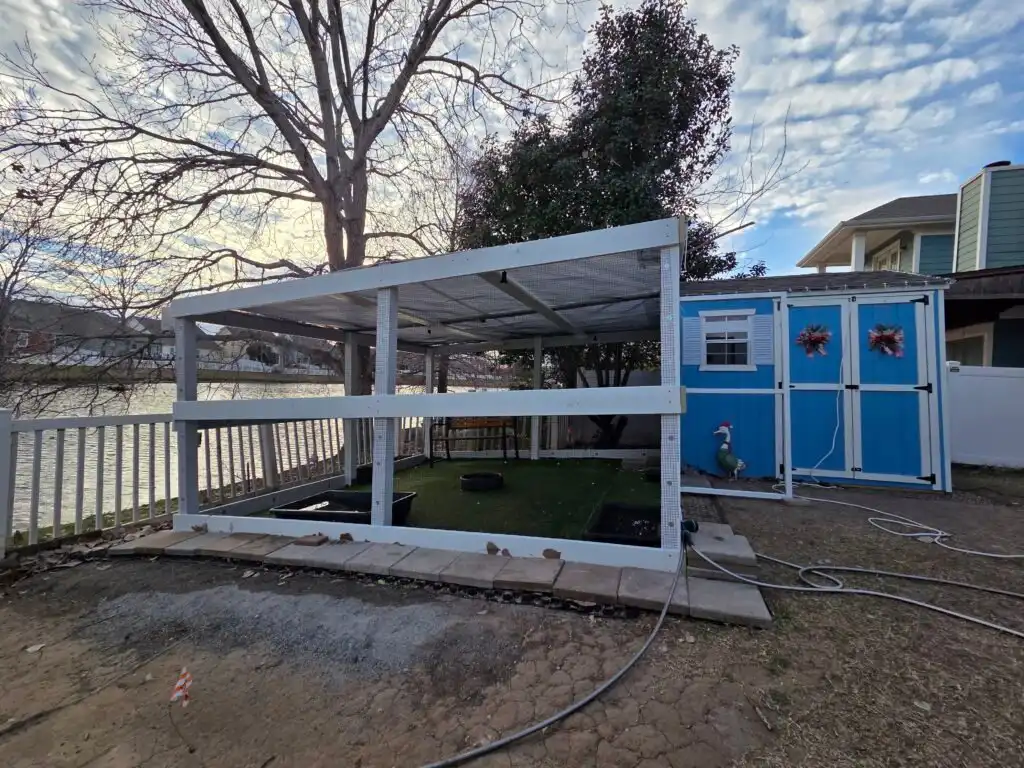
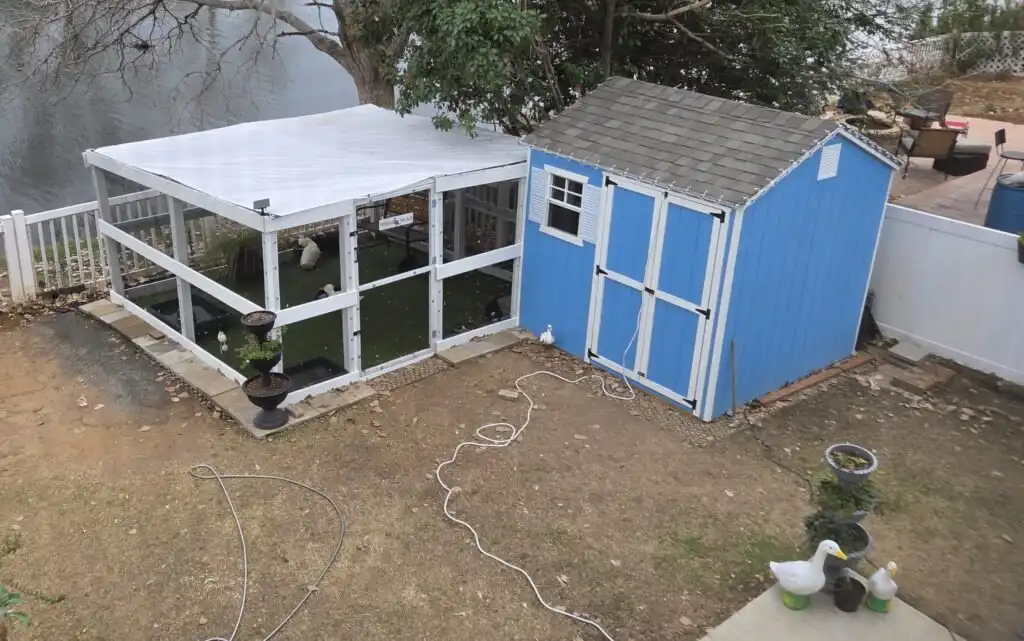
We built a 12×12 ft run directly attached to the shed, creating one continuous, secure duck area where the ducks can move freely between their sleeping space and their outdoor space without ever being exposed. One intentional design choice was keeping the shed attached to the run rather than placing it inside the run. This may sound like a small detail, but it makes a big difference.
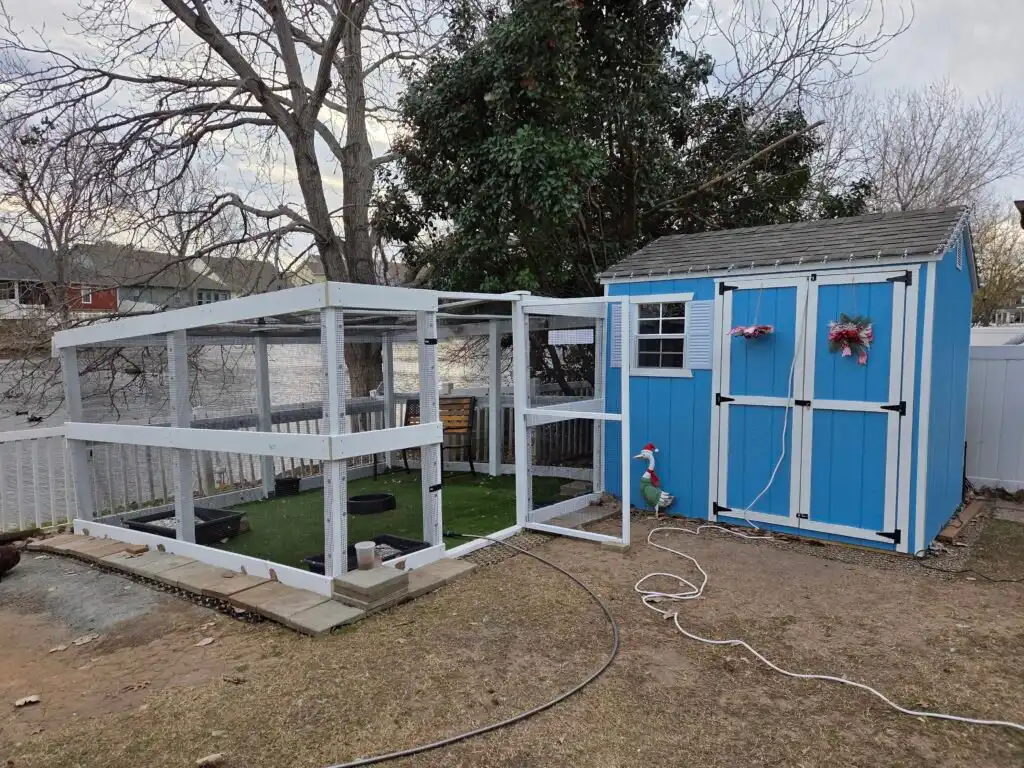
In our previous hoop coop layout, the night house (the actual coop) was placed inside the run. While that setup worked for a long time, it did come with a tradeoff: we lost usable square footage inside the run. The house was elevated, and the ducks could sleep underneath it, which helped, but it was still not ideal. That space was partially blocked, harder to clean, and not as flexible for water stations or enrichment. At the time, it was the best option we had, but it taught us an important lesson about how quickly interior structures eat into functional duck space.
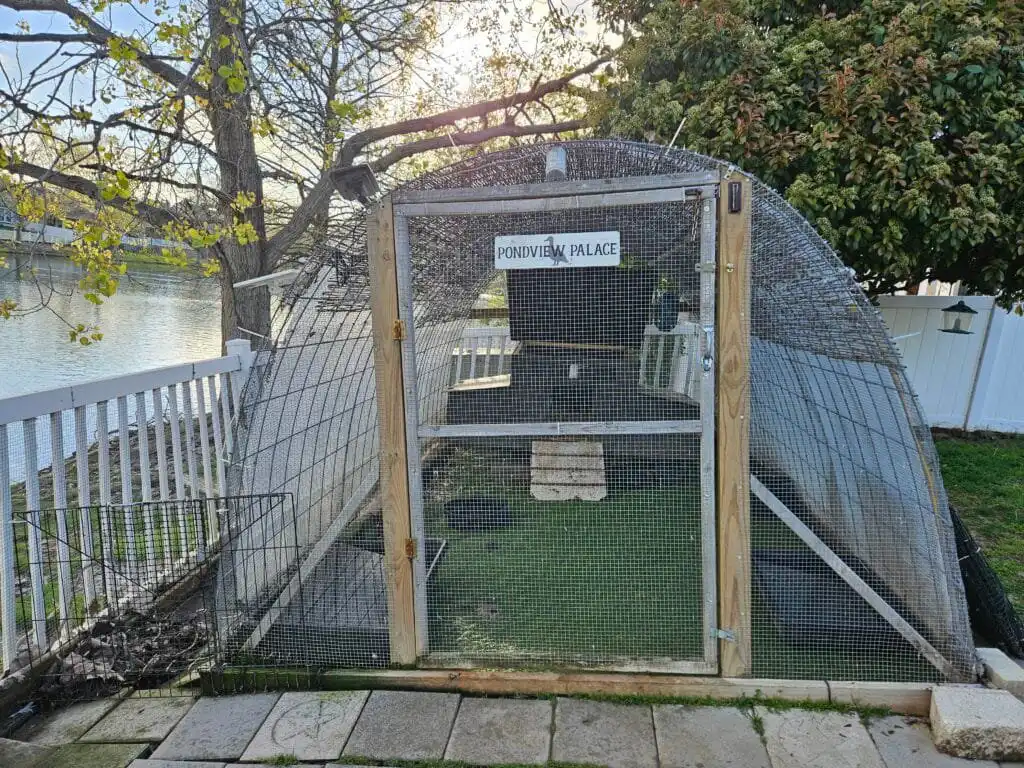
By attaching the shed externally this time, the ducks can use the entire 12×12 run plus the 8×4.5 ft interior section of the shed that belongs to them. None of that space is sacrificed to walls or structures inside the run. For ducks, usable floor space matters far more than we often realize, especially for movement, flock dynamics, and access to resources without crowding.
When planning the layout, we focused on how the space would actually be used throughout the day, not just how it looked on paper.
Key layout considerations
- Direct access to the shed for easy in and out
- Enough room for multiple water stations and enrichment
- Space for us to step inside comfortably and clean without gymnastics
- Clear sightlines so we can observe flock dynamics at a glance
Layout, however, goes well beyond square footage.
We designed the duck run to support shade and shelter, which is essential in Texas. Ducks need places to escape the sun, even within a secure enclosure. Lighting was planned from the start so we can safely check on the flock during early mornings or evenings without disturbing them unnecessarily. Security cameras cover the entire area, giving us visibility day and night and allowing us to respond quickly if something feels off.
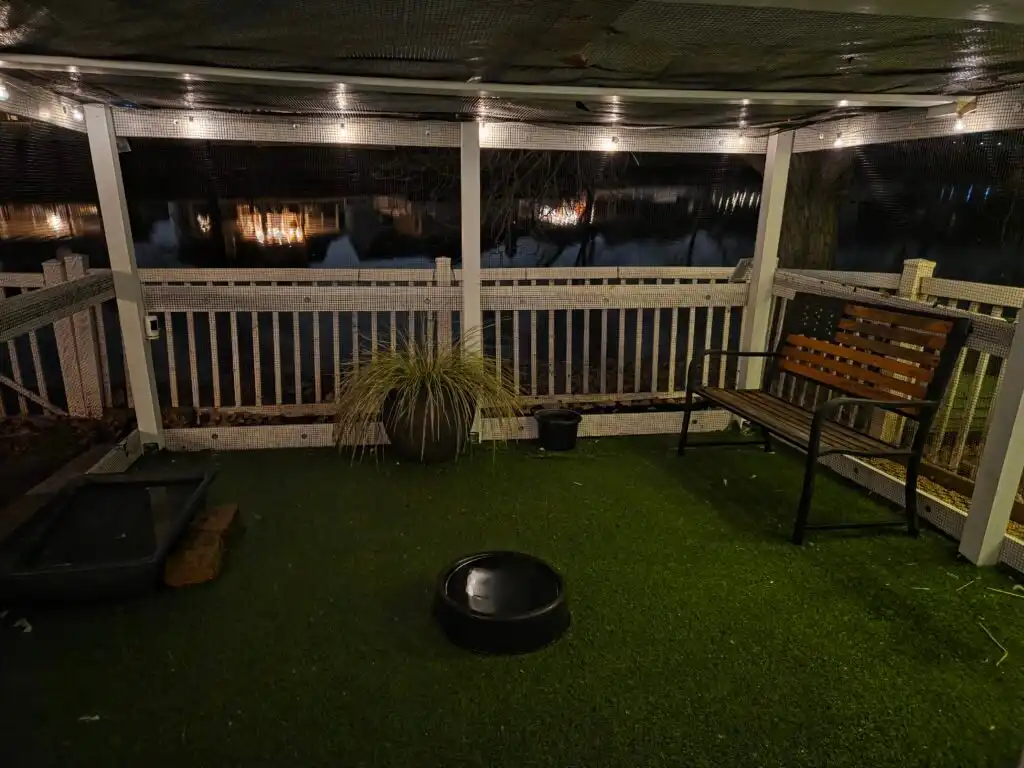
Inside the run, the ducks have hideouts and visual breaks, which are surprisingly important. These areas allow lower-ranking ducks to rest without being constantly visible and help reduce social stress. We added multiple water sources for both drinking and bathing, spaced out so no one gets blocked or pushed away. Ducks and water are inseparable, and limiting access is a recipe for tension.
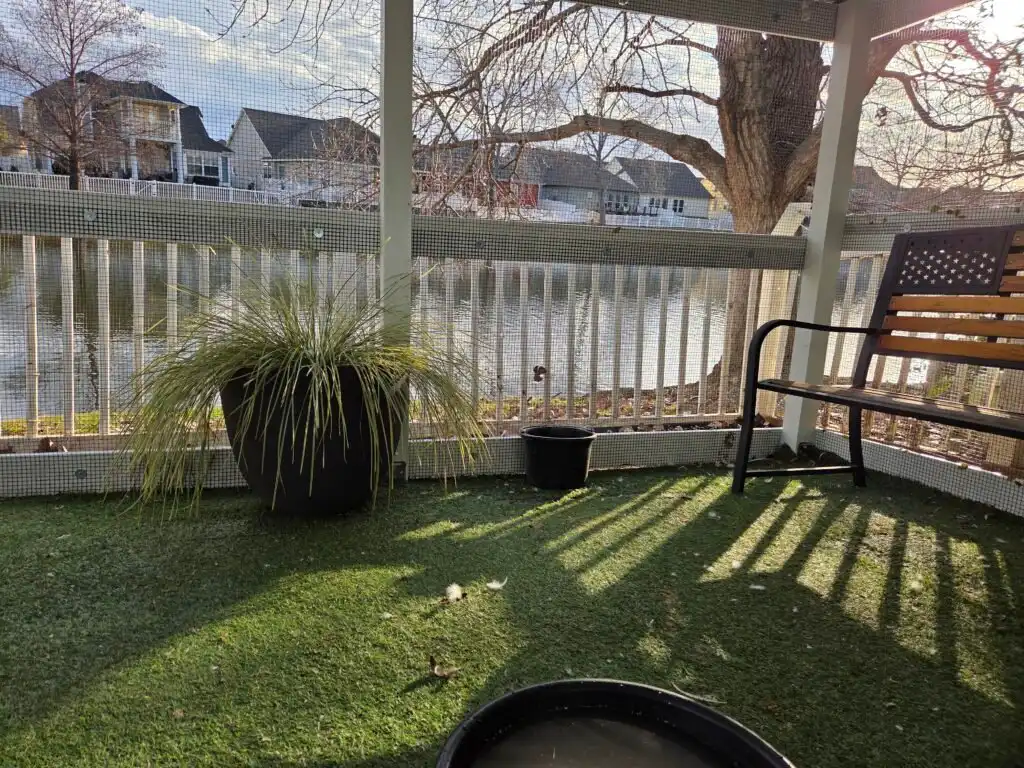
Predator protection was built into every side of the run, from the ground up. We also prioritized good drainage to prevent standing water and muddy conditions, which can quickly lead to foot problems. Artificial turf, a soft, forgiving ground surface, helps keep duck feet healthy and comfortable, especially for heavier breeds.
And yes, aesthetics mattered too. The duck run looks clean, intentional, and fits into our yard in a way that makes me happy every time I see it. Being able to enjoy watching the ducks from the dining room window is one of those small but meaningful benefits. If you’re going to invest this much time and effort, it should be a space that brings you joy as well as keeping your ducks safe and comfortable.
Materials we used (and why)
For this duck run, we made one rule very early on: predator-proofing comes before convenience. Every material choice was guided by safety, durability, and long-term usability. Shortcuts almost always show up later, usually at the worst possible moment.
Main materials
- Pressure-treated lumber for framing
- 1/2 inch black hardware cloth (19 gauge) on all sides and the top
- Screws with washers in addition to staples
- White exterior paint to match the shed
The 1/2-inch black-coated hardware cloth is non-negotiable in our opinion. The small mesh size helps keep out not only raccoons and snakes, but also rats and other smaller predators that can squeeze through surprisingly tiny gaps.
We also strongly prefer the black polymer-coated version over standard galvanized hardware cloth. While galvanized wire contains zinc, which raises concerns about potential zinc exposure or ingestion over time, the coating adds an extra barrier and layer of protection. It is also more durable and holds up better against weather and wear.
The black coating has an added bonus: it improves visibility through the fencing, making the run feel more open for the ducks while also being more discreet in your yard.
For strength, we recommend choosing 19 gauge or thicker. This helps the wire resist bending, tearing, or being manipulated by persistent predators, especially those like raccoons that will actively test weak points.
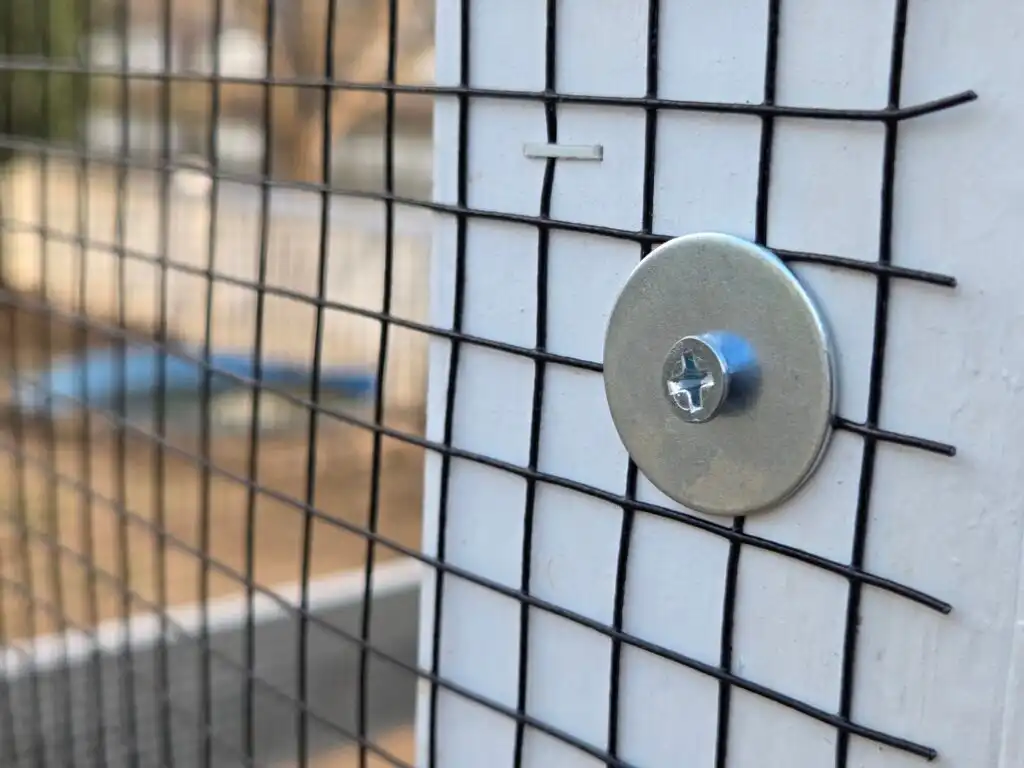
We used 4×4 posts for the main structure and anchored them deep into the ground with heavy-duty anchor screws. This gives the run real stability, especially during strong winds and storms, which are common here in Texas. A solid frame matters just as much as the fencing attached to it.
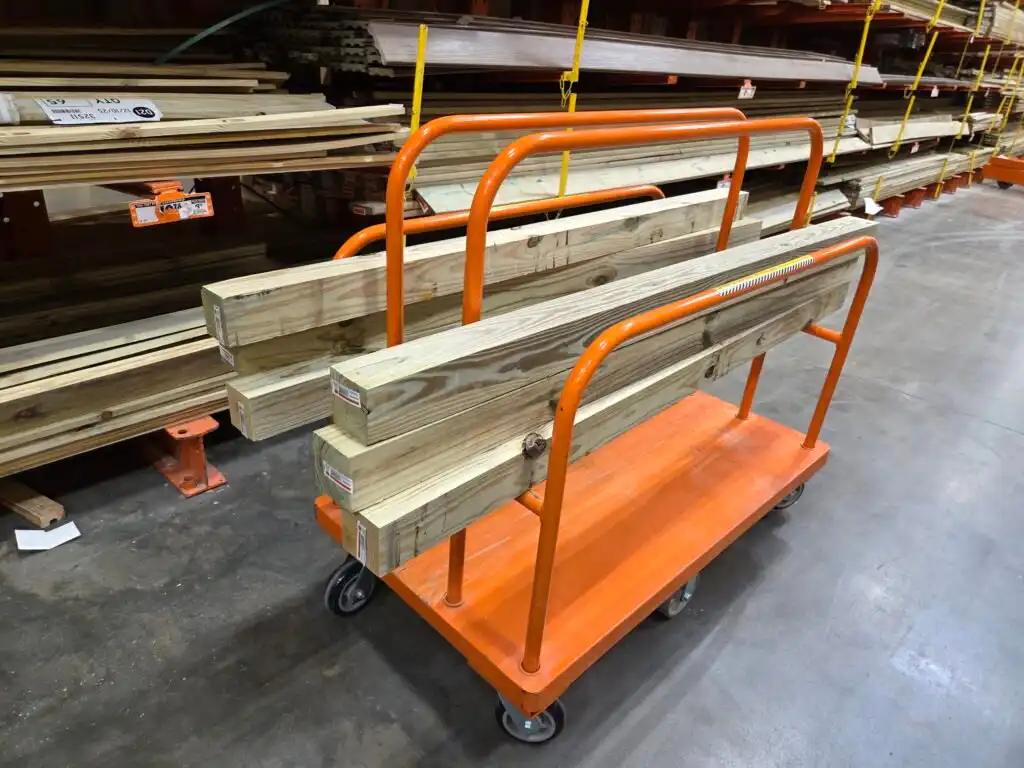
The hardware cloth was attached first directly to the posts. After that, we added horizontal lumber on the outside of the structure and secured the hardware cloth again from the opposite side, essentially sandwiching it in place. This layered approach makes it much harder for predators to pry, pull, or chew their way in.
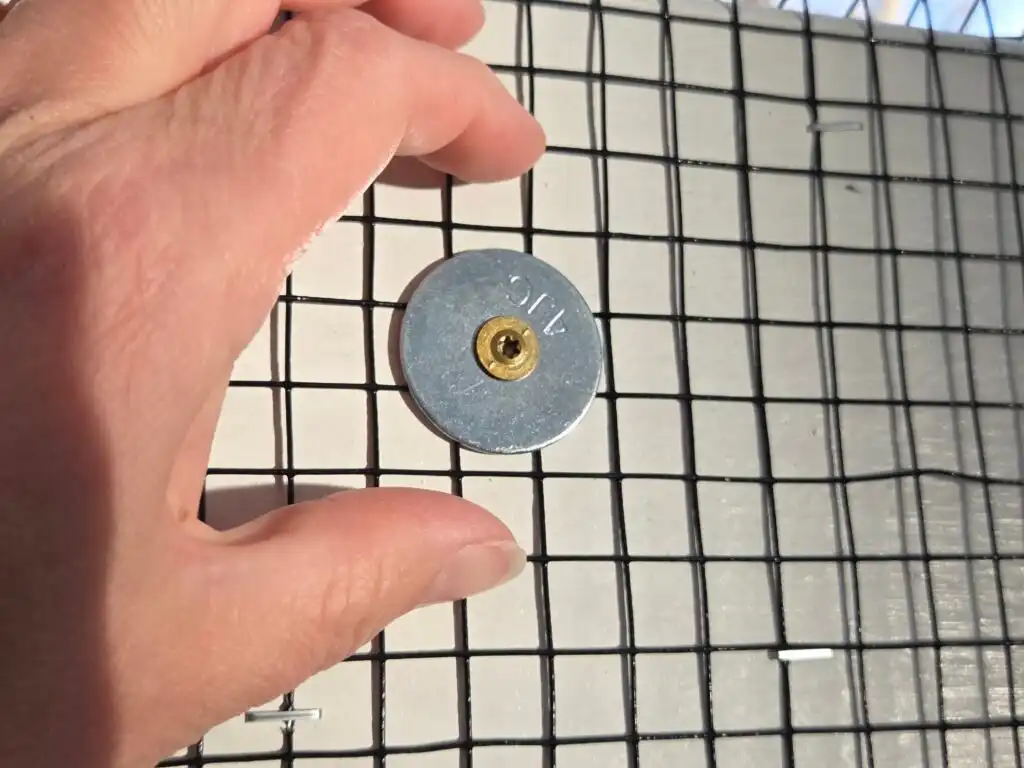
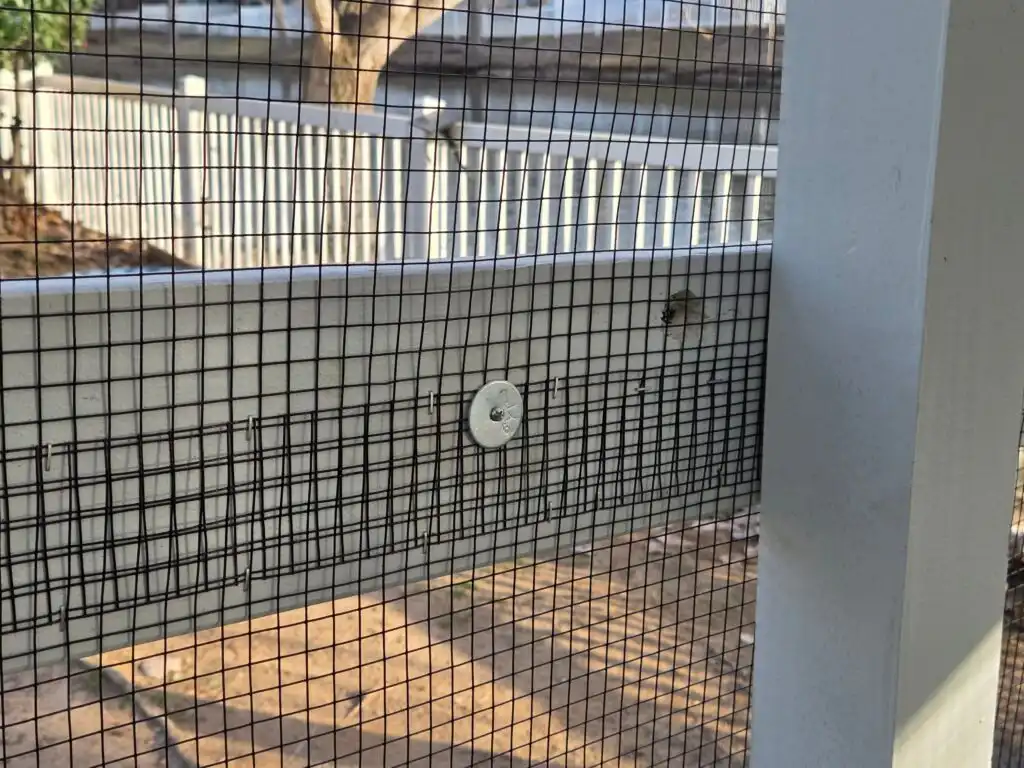
Staples alone are not enough, which is why we also used screws with washers throughout. Washers prevent the hardware cloth from tearing loose over time and add a level of security that staples simply can’t provide on their own.
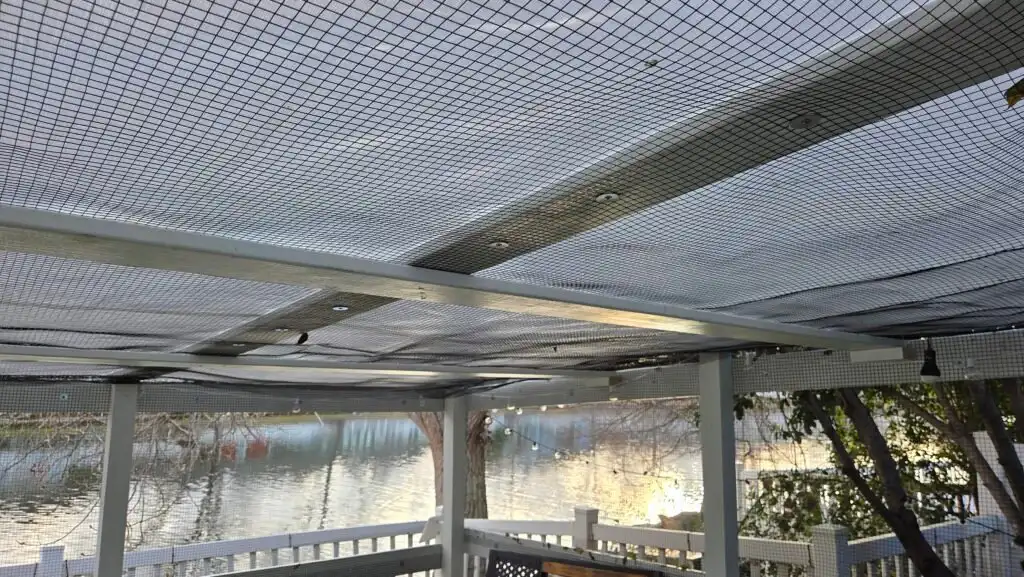
The roof received just as much attention as the walls. We installed multiple lumber pieces across the top in both directions, including cross supports. This creates a rigid grid that supports the hardware cloth and prevents sagging. On top of the hardware cloth, we added a tarp. The tarp serves several purposes: extra protection, shade, and rain cover. While ducks don’t mind getting wet, I do, especially when it comes to keeping food dry and preventing muddy conditions underneath.
The roof cover also plays an important role in duck behavior. Blocking constant overhead movement helps reduce stress from aerial predators. Ducks that can always see the sky are often more alert and jumpy. Providing overhead cover allows them to relax, forage, and rest without being on edge all the time.
Painting the duck run white was not just an aesthetic choice. It improves visibility inside the run, making it easier to spot damage, dirt buildup, or anything that doesn’t belong. It also reflects heat better than darker colors, which is a small but helpful bonus during hot summers. Matching the shed was simply the finishing touch that made the whole setup feel intentional and cohesive.
Every one of these material choices is something we arrived at through experience. Some lessons were learned the easy way, others the hard way, but all of them shaped the run we have now.
Ground cover: What’s under our ducks’ feet
The ground took the most planning out of this entire project, and for good reason. What’s under your ducks’ feet affects everything: cleanliness, drainage, foot health, odor, and how much effort daily maintenance takes. Our yard has a natural slope, and while there’s nothing we can do to change that, we could design the ground in a way that works with it instead of fighting it.
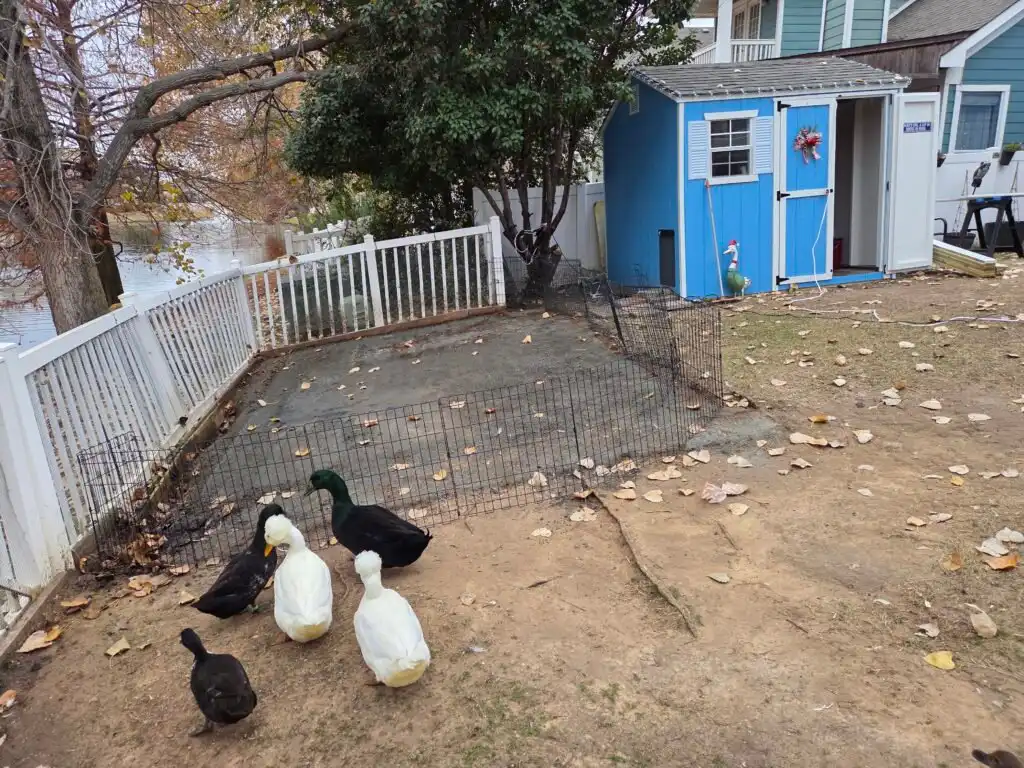
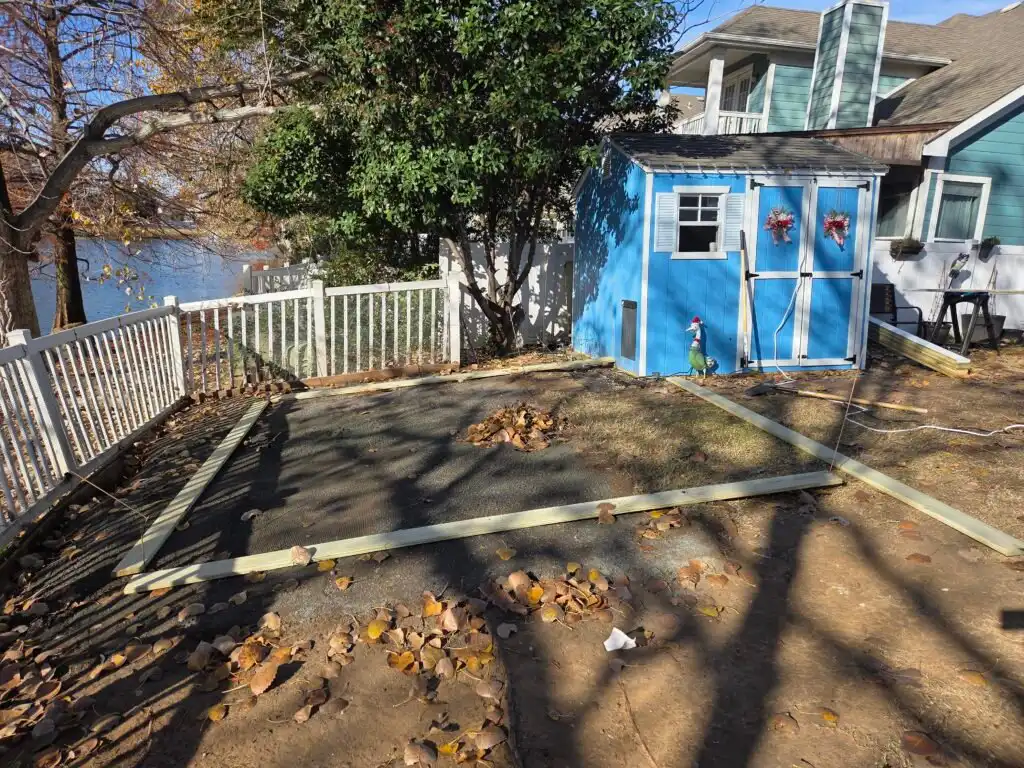
The first step was ground preparation. We spent a lot of time leveling and shaping the surface so it was even to walk on while still maintaining a gentle slope for water runoff. The goal wasn’t to make it perfectly flat, but to avoid dips and low spots where water would collect. This step matters more than most people realize and sets the foundation for everything that comes after.
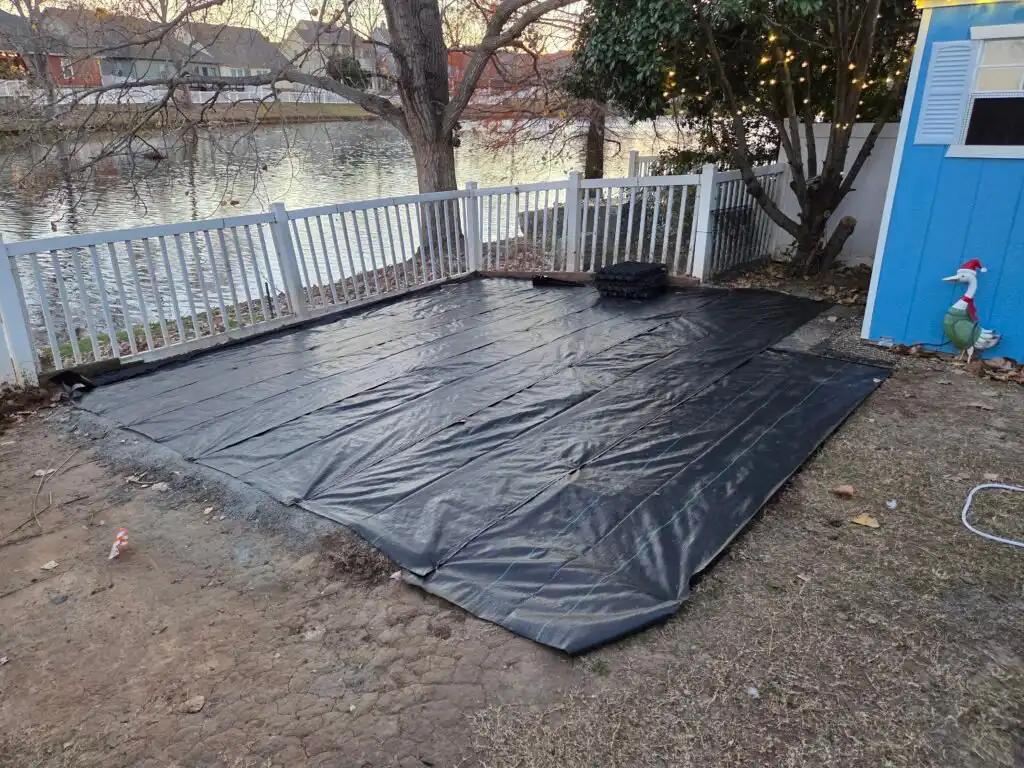
Once the ground was prepped, we added landscape fabric across the entire run. This layer helps prevent weeds from pushing up through the surface and keeps soil from mixing with the drainage layers above it. It’s an invisible component once everything is finished, but it plays a big role in keeping the system stable long term.
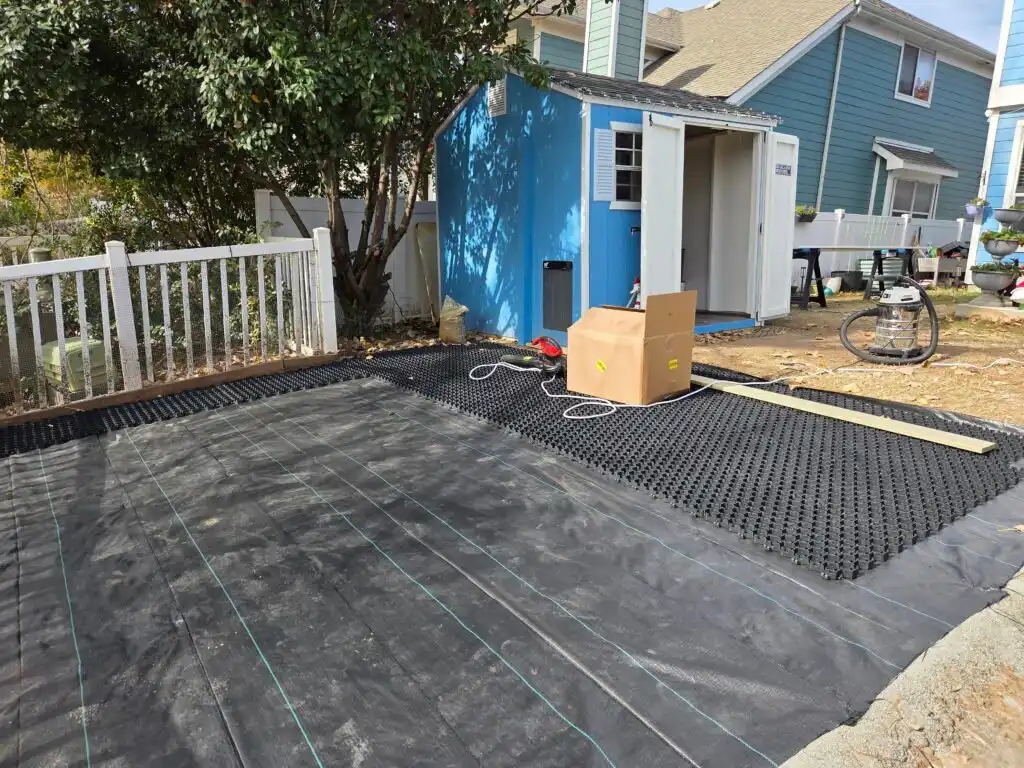
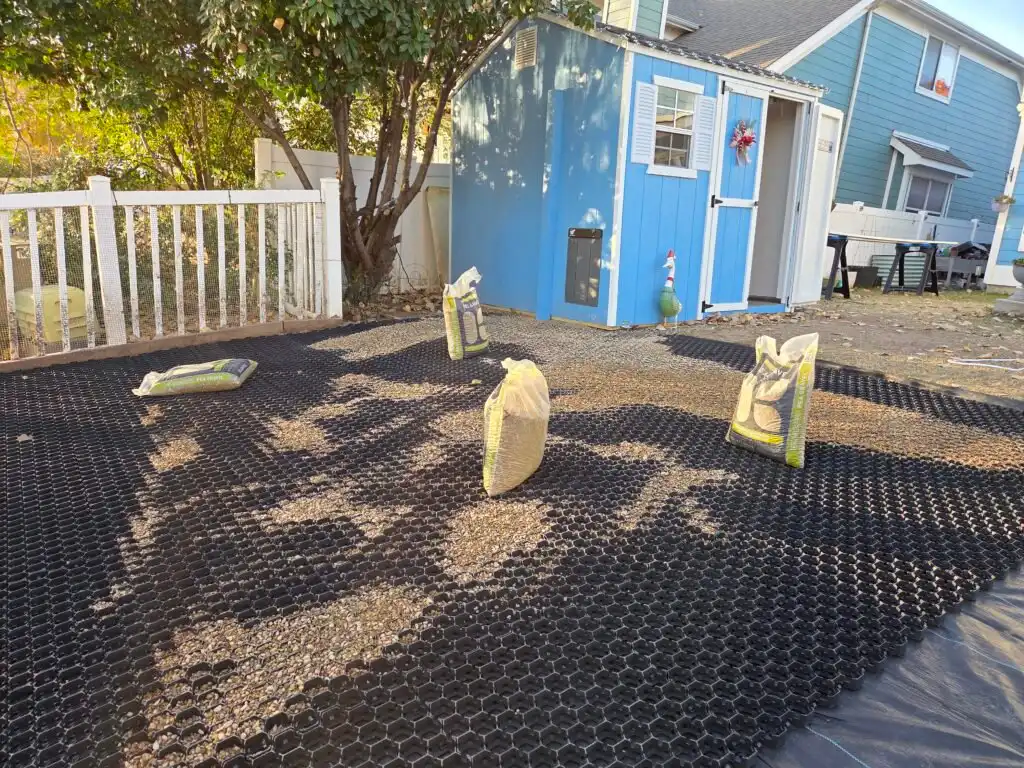
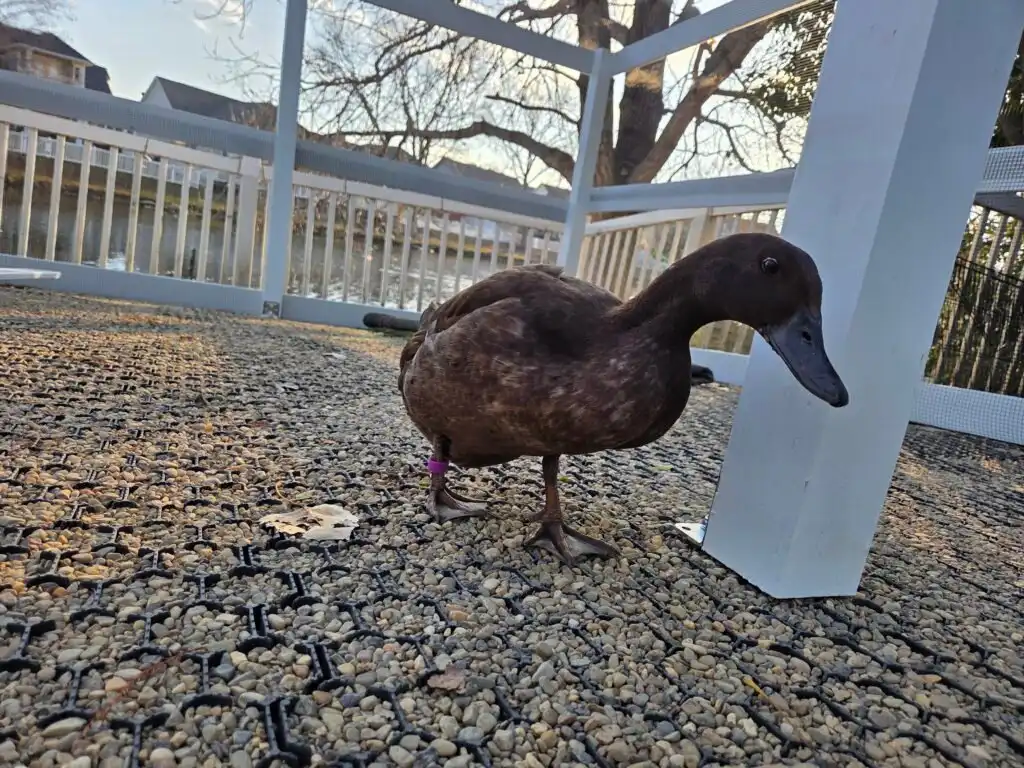
On top of the fabric, we installed plastic grid panels, which act as a structural base. These grids distribute weight evenly and keep the ground from shifting or compacting unevenly over time.
We then filled the grids with pea pebbles, creating a firm but permeable layer that allows water to move through quickly instead of pooling on the surface.
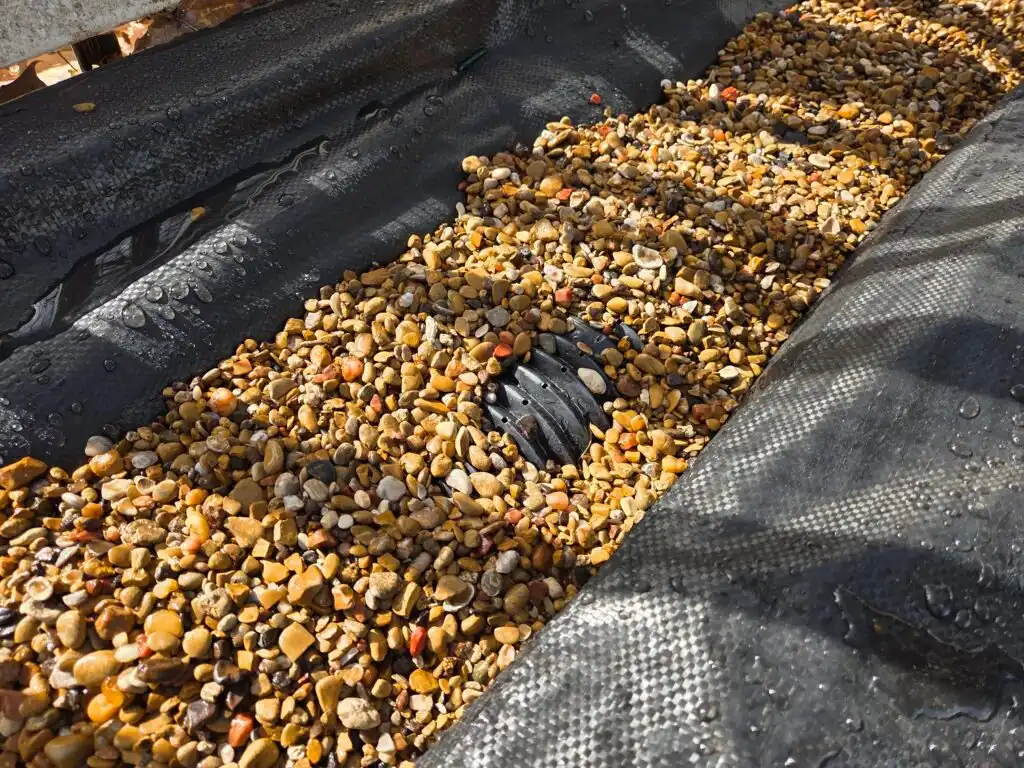
To further manage water, we installed a French drain at the lower end of the run. Any water that moves down through the pea pebbles is collected there and directed away from the run in one controlled location. This helps prevent erosion and keeps water from washing out the edges of the setup. It’s one of those behind-the-scenes features you hope you never have to think about again, which usually means it’s doing its job.
Only after the entire run structure was finished did we add the artificial turf as the final layer. Installing turf at the very end prevents damage during construction and ensures it fits perfectly within the completed frame. The turf serves as the main walking surface for the ducks, providing a soft, forgiving layer that’s easy on their feet. After years of experimenting with soil, straw, and gravel, this has been the best balance we’ve found between comfort and cleanliness.
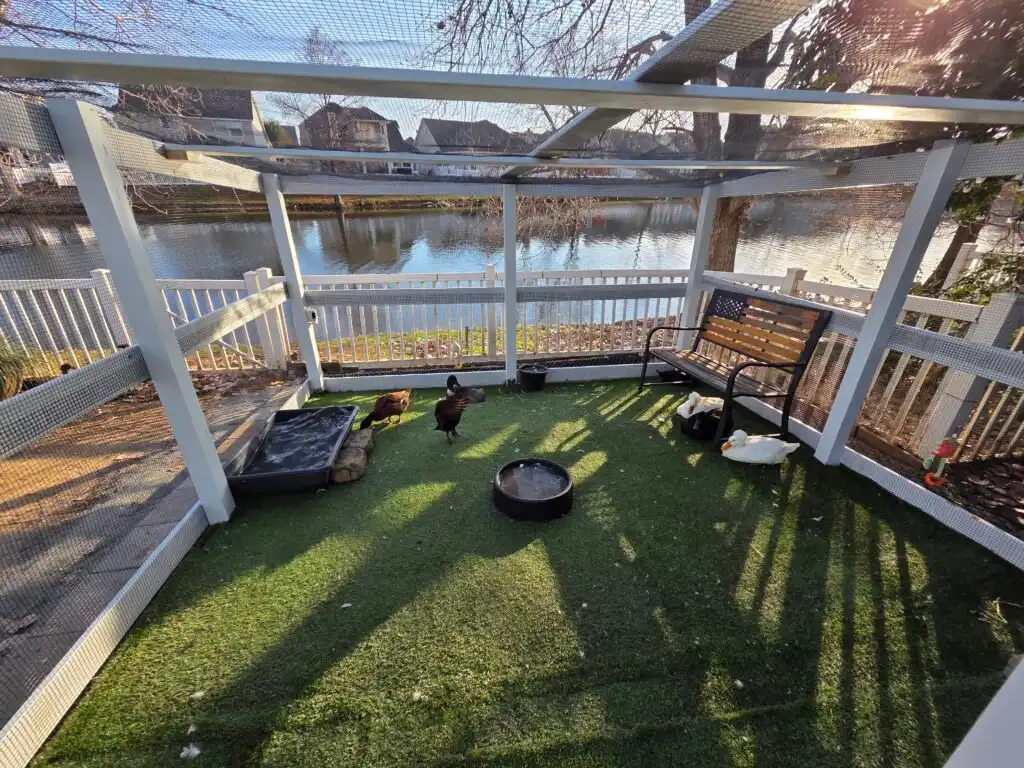
Turf also makes maintenance significantly easier. We can hose it down quickly, rinse away messes, and keep the run looking and smelling fresh without turning it into a muddy disaster. Combined with the drainage layers underneath, water moves through the system instead of sitting on top of it.
Our layered ground system
- Evened and graded soil with a gentle slope
- Landscape fabric for separation and weed control
- Plastic grid panels for structure and drainage
- Pea pebbles to support water flow
- Artificial turf as the final surface
This combination keeps mud away, drains extremely well during Texas rainstorms, and is gentle on duck feet. After years of trial and error, this setup reflects everything we’ve learned about what actually works in a real, lived-in duck run.
How we built it: A step-by-step overview
While this duck run looks complex now, the build itself followed a clear sequence. Breaking it into phases made the project manageable and helped us avoid costly mistakes. This is a high-level overview rather than a cut list, but it captures the order and logic behind the build.
We started with the ground, which we already covered in detail earlier. Getting the surface prepped and graded first was essential because everything else depends on it being stable and draining correctly.
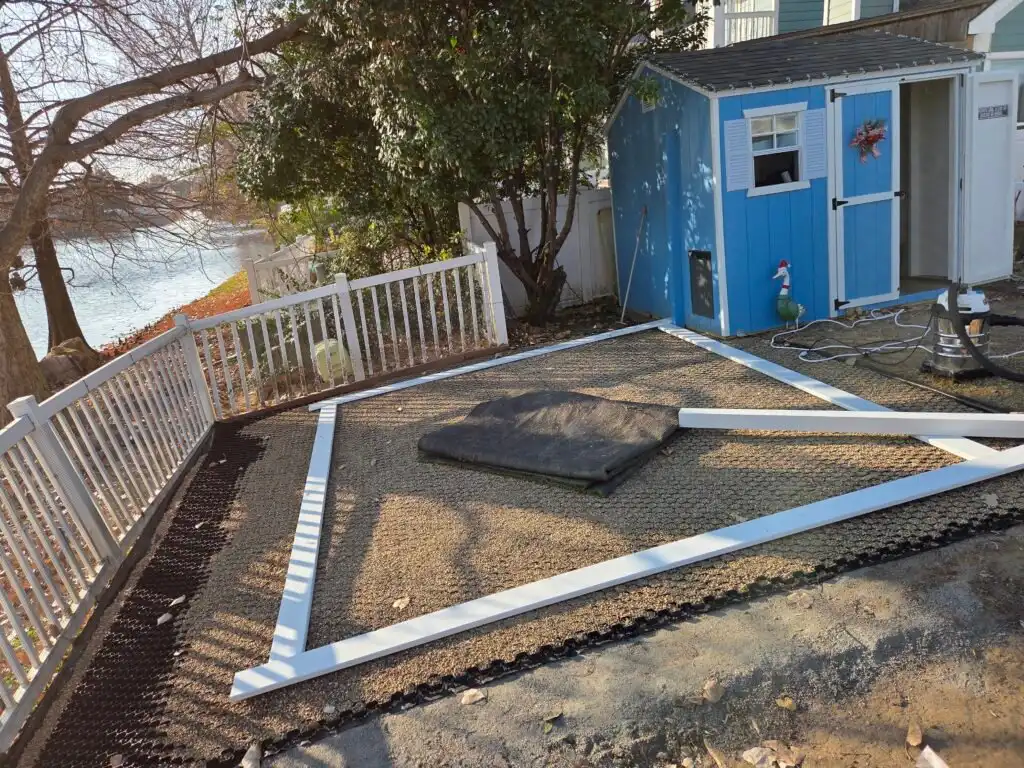
Once the ground was ready, we moved on to the structure.
The first major step was installing the 4×4 posts. These were placed at all corners and at roughly 6-foot intervals along the perimeter. Each post was secured using ground anchors, which gave the structure immediate stability without the need for concrete. This step is especially helpful if you’re working alone or over multiple days.
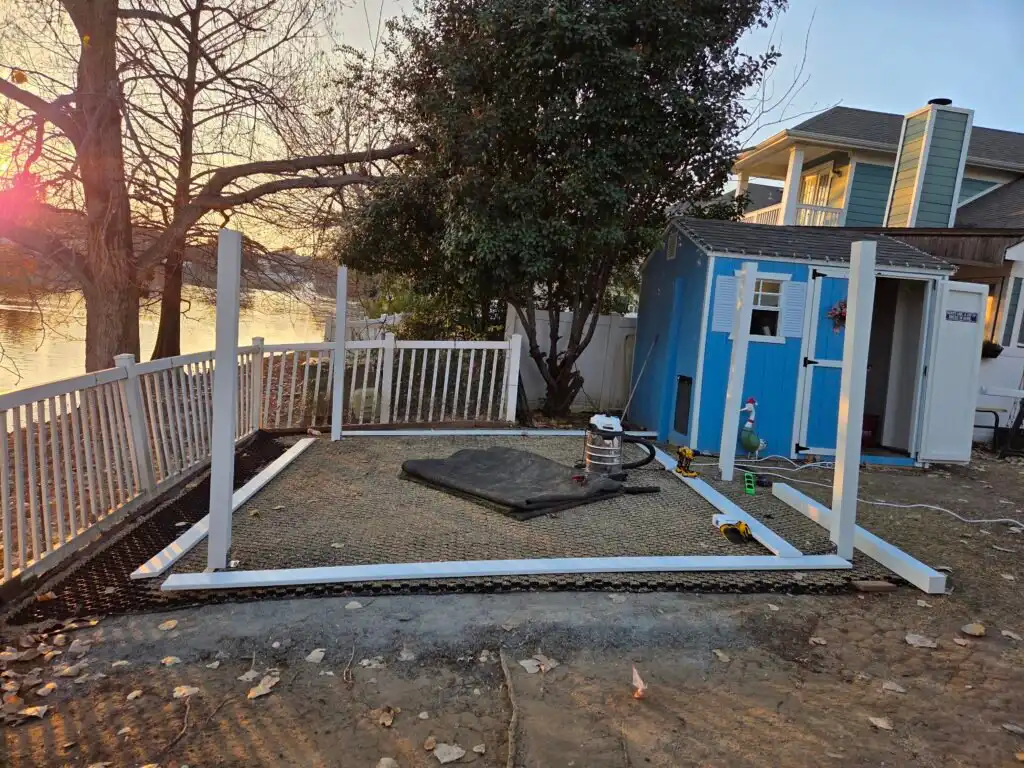
With the posts in place, we added temporary horizontal lumber from the inside to keep everything square and steady while we worked. These temporary supports were crucial during the next phase, when we began attaching the hardware cloth.
Next, we stapled the hardware cloth directly to the 4×4 posts. At this stage, the temporary lumber stayed in place to prevent any movement or shifting. Once the hardware cloth was attached on the outside, we removed the temporary boards and reinstalled them on the outside of the run, over the already installed hardware cloth. This allowed us to secure the hardware cloth from the opposite side, effectively sandwiching it between the posts and the horizontal lumber for added strength and predator resistance.
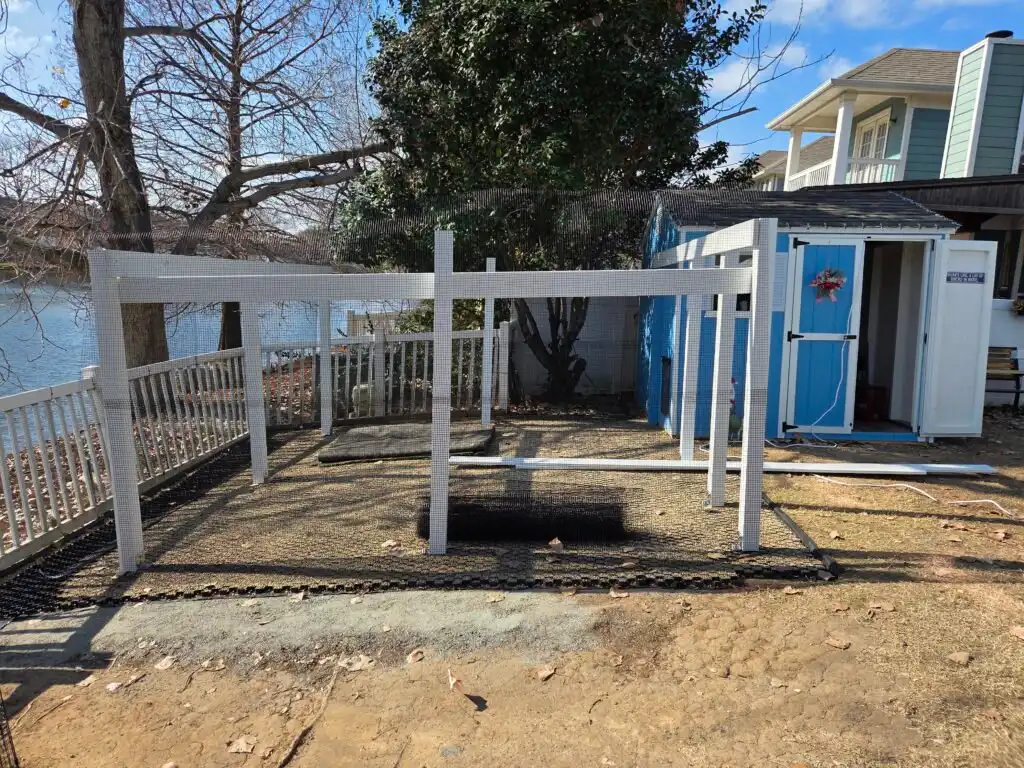
The roof was the trickiest part of the entire build. Working overhead always is. We carefully attached the hardware cloth across the top, making sure there were no gaps at any seams or edges. Cross beams were added in multiple directions to support the roof and prevent sagging. Taking extra time here was worth it. A secure roof is just as important as solid walls.
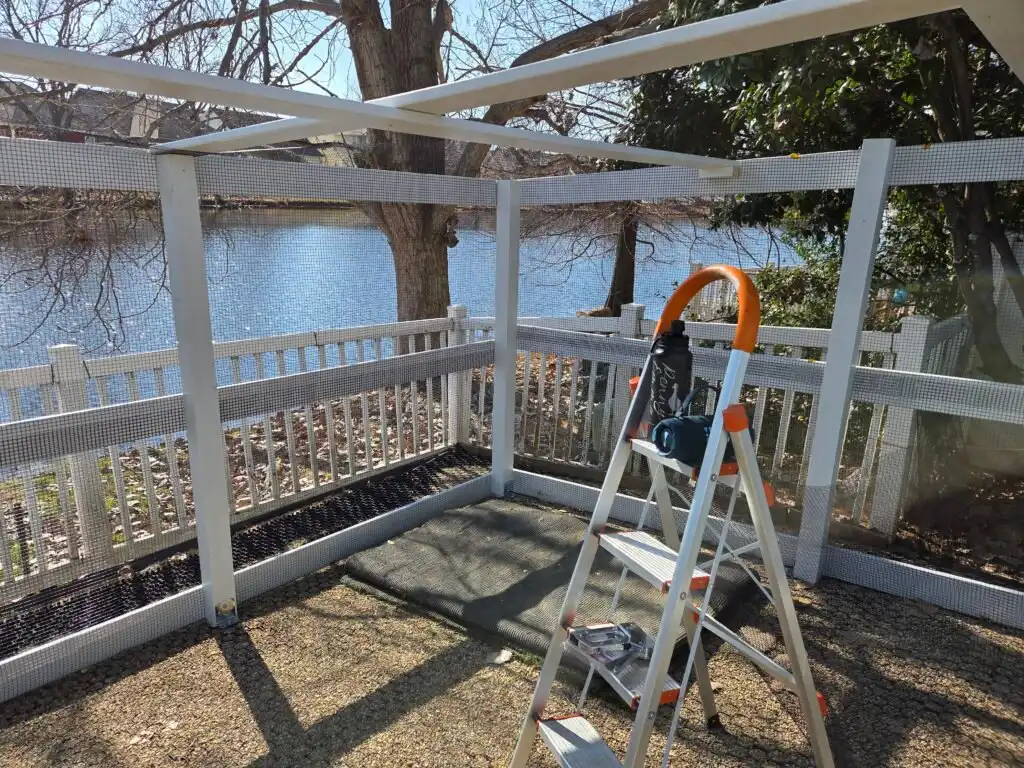
All lumber was painted white before installation, which made the build process cleaner and ensured full coverage in areas that would be hard to reach later.
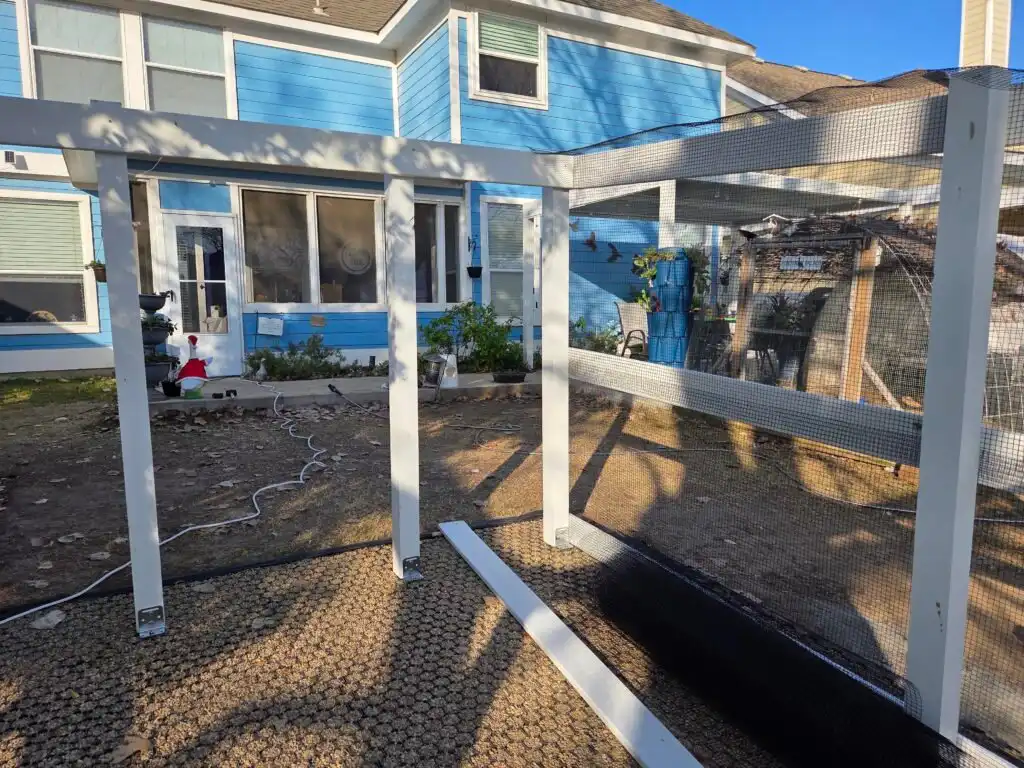
Once the main structure was complete, we built the door. The frame was constructed from 2×2 lumber, fitted with hardware cloth, and secured with sturdy hinges. We added a handle and secure locking mechanisms to make sure the door stays closed and predator-proof while still being easy for us to use.
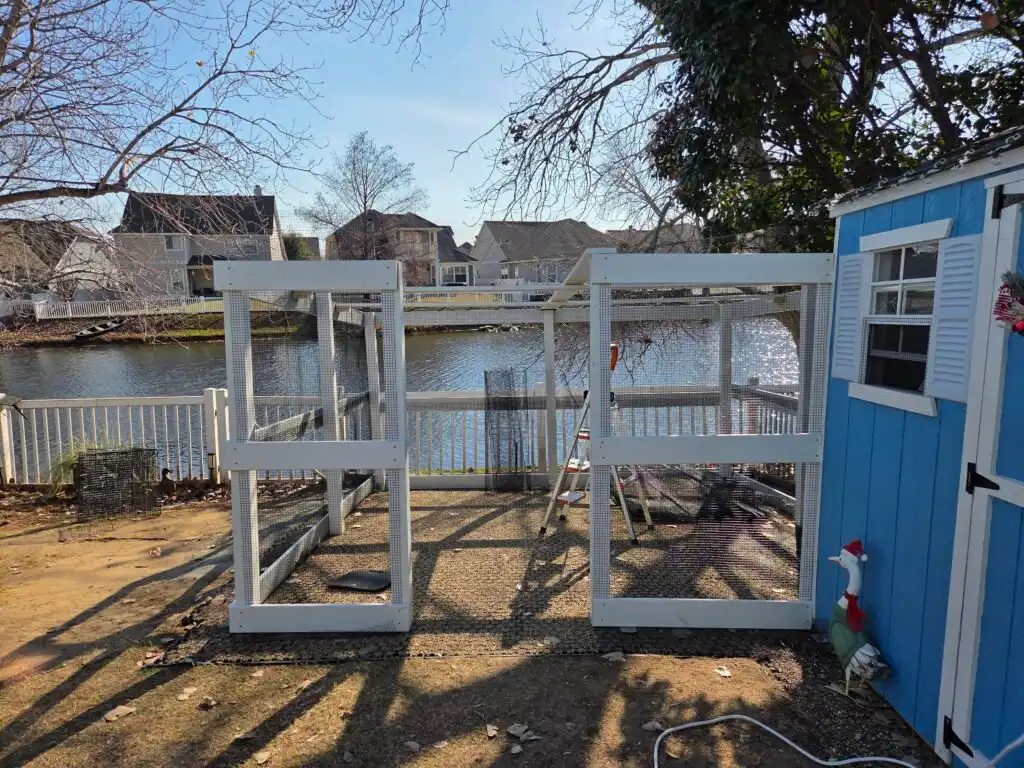
As a final step, we went back and reinforced the entire structure. We added screws with large washers along all lumber edges to firmly secure the hardware cloth. This may feel like a repeat of earlier steps, but it makes a meaningful difference over time by preventing the wire from loosening or warping.
It also provides an important layer of predator protection. Raccoons, in particular, are incredibly strong and dexterous. They can grip, tug, and even pry at weak points with surprising persistence. Staples alone are often not enough to withstand that kind of pressure, but screws with washers hold the hardware cloth tightly in place and make it much harder for predators to create an opening.
Building the duck run this way allowed us to work methodically, fix issues as they came up, and end up with a structure that feels solid, safe, and built to last.
Water, food, and enrichment stations
A duck run isn’t complete without variety. Ducks spend most of their day moving between water, food, resting spots, and little moments of curiosity. Designing the run with that natural flow in mind makes a huge difference in both behavior and overall flock harmony.
Inside the run, we intentionally created multiple stations rather than one central everything area. Ducks thrive on access and choice, and spreading resources out helps reduce crowding, competition, and pecking order tension, something we’ve learned the hard way over the years.
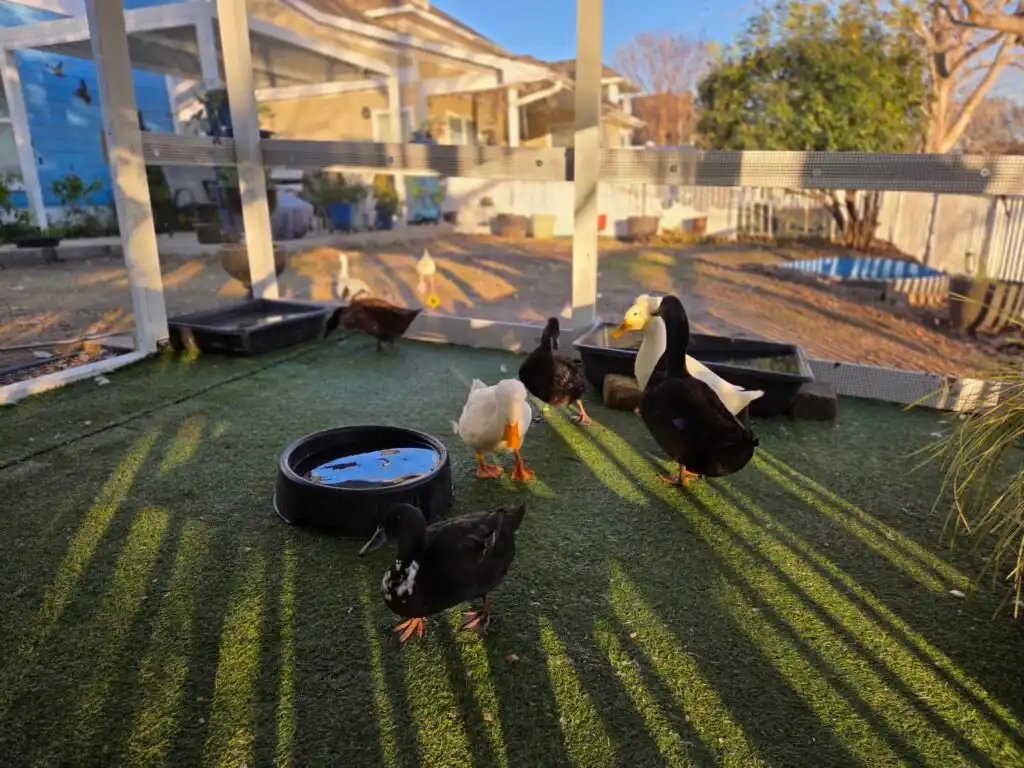
Water stations are placed at different depths and in different locations. Ducks need water not just for drinking, but for rinsing their bills and eyes, and for bathing. Having more than one water source means no one gets blocked, and it allows lower-ranking ducks to drink and splash without stress.
The food station is set up as its own dedicated area. We use separate bowls for duck feed, grit, and oyster shells, so each duck can take what she needs. Ducks are very good at self-regulating minerals when given proper access, and separating these components prevents unnecessary mess and competition.
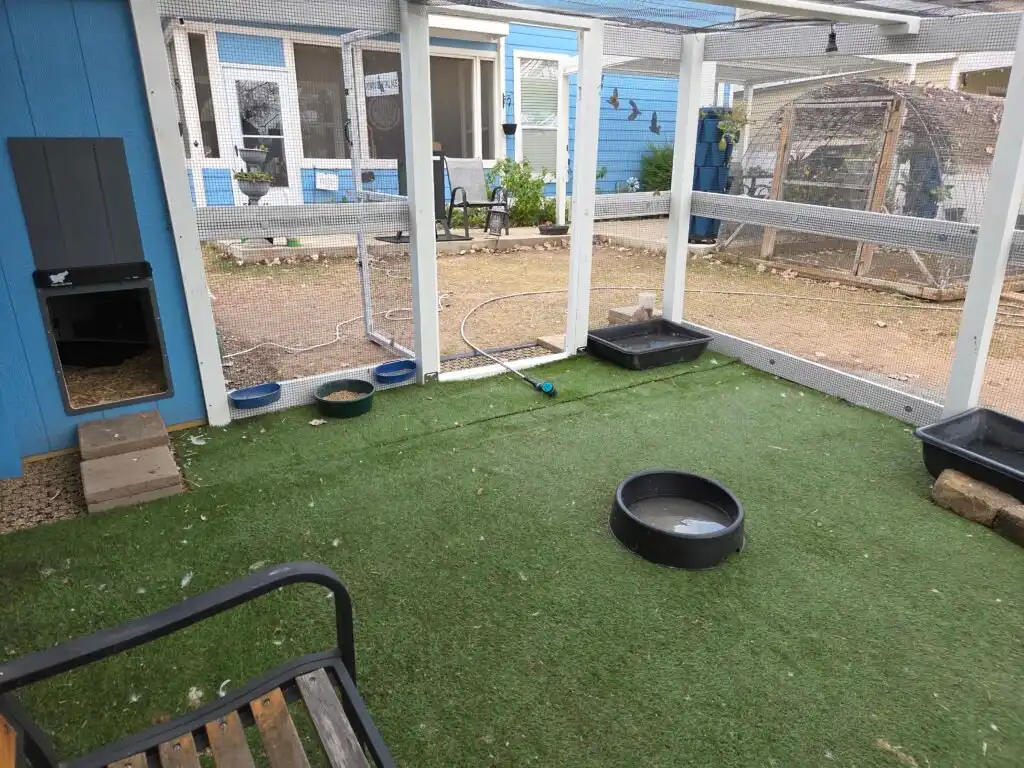
Enrichment is woven throughout the run rather than added as an afterthought. We included toys and objects to explore, especially near the water tubs where ducks naturally gather. Simple baby toys have been surprisingly popular, encouraging curiosity, gentle play, and movement throughout the day.
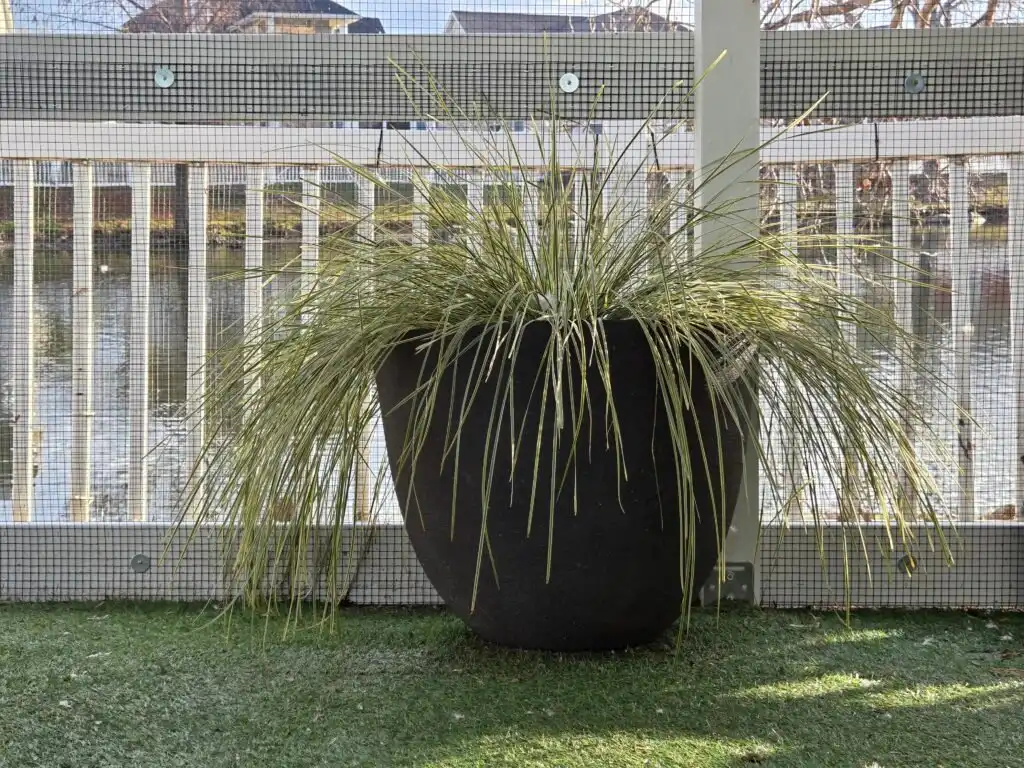
We also added a plant as a hideout, which serves both functional and behavioral purposes. Visual breaks allow ducks to step away from the group, rest without being watched, or avoid unwanted attention. These small hiding spots can significantly reduce social stress, especially in mixed personalities.
For us, the duck run also needed to work for the humans. A bench inside the run gives us a place to sit, observe, and enjoy time with the flock. It makes health checks easier, helps with bonding, and yes, it’s perfect for coffee breaks while watching duck life unfold.
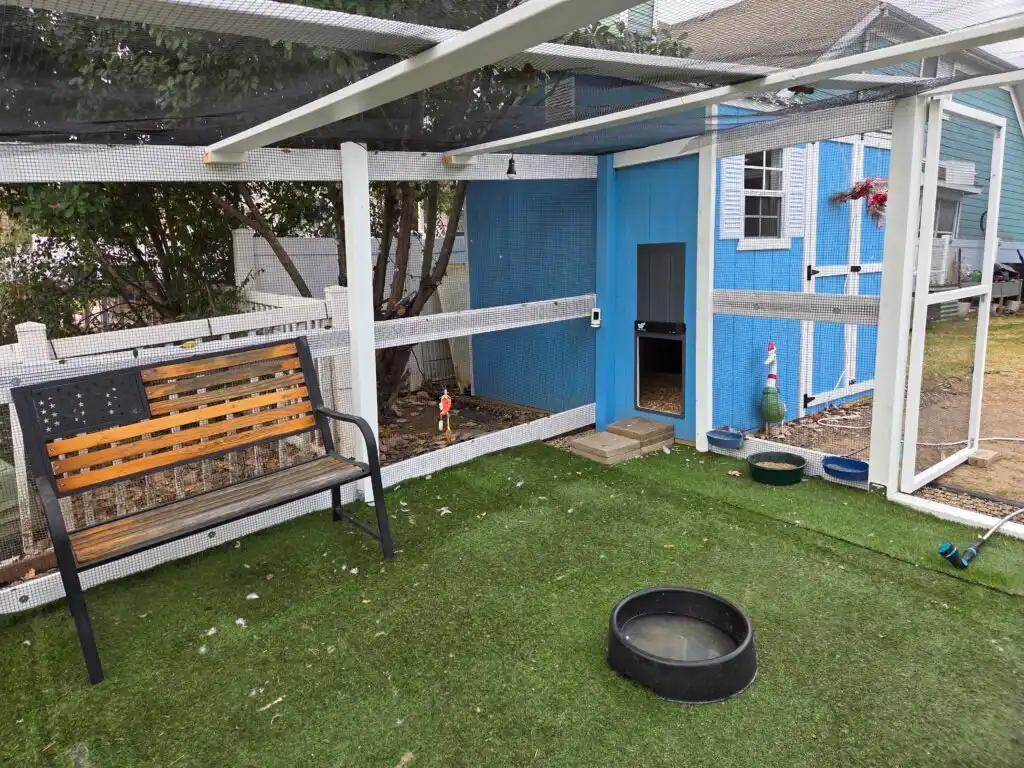
Seasonal needs were part of the plan as well. In summer, the run will include a kiddie pool for deeper swimming, along with a misting system placed near a fan. This setup helps the ducks cool down safely during extreme heat and gives them control over how close they want to be to the cooling area.
Every station in the run serves a purpose. Together, they create an environment that supports natural behavior, reduces stress, and keeps daily care manageable. When ducks have options, they settle better, interact more calmly, and simply seem more at ease in their space.
Safety features and monitoring
Safety goes far beyond fencing. A duck run can look solid and still leave you feeling uneasy if you don’t have visibility, redundancy, and a plan for both day and night. Over the years, we’ve learned that true peace of mind comes from layers of protection and the ability to monitor what’s happening even when you’re not physically outside.
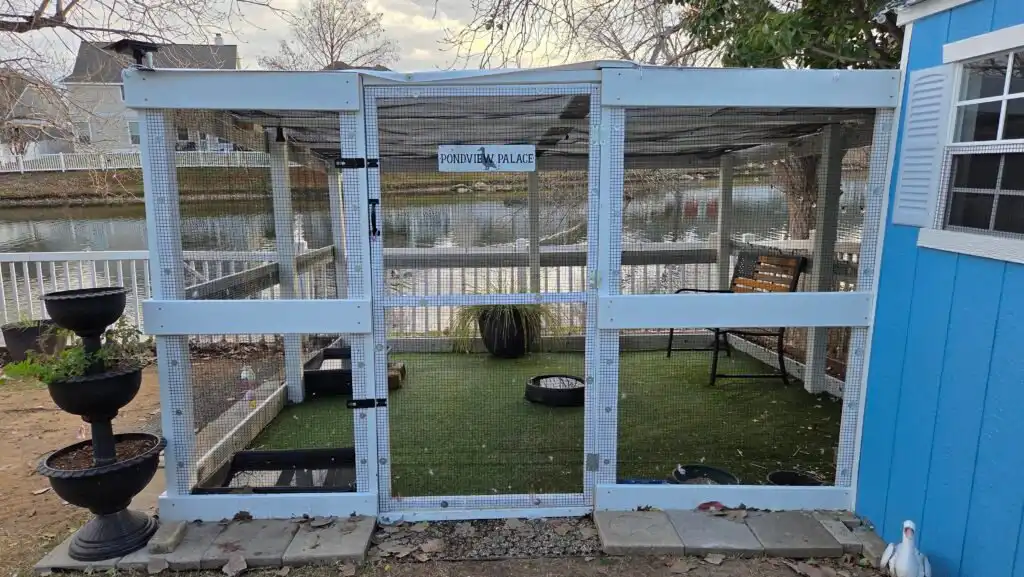
The foundation of our setup is a fully enclosed run made from 1/2-inch hardware cloth on all sides and across the top. This protects against ground predators, climbers, and aerial threats alike. On top of the hardware cloth roof, we added a tarp, which provides additional protection from sun and rain. While ducks don’t mind getting wet, we do, especially when it comes to keeping food dry and the run usable in bad weather. The tarp also blocks constant overhead movement, which helps keep the ducks calmer by reducing visual stress from potential aerial predators.
Monitoring is a huge part of our safety strategy. We installed multiple Ring cameras positioned to cover every angle of the run. Each camera is paired with a solar panel, which means they stay powered without constant battery changes. Being able to check on the ducks remotely has completely changed how relaxed we feel, especially at night or when we’re away from home. A quick glance at the cameras can confirm that everyone is settled, sleeping, and safe.
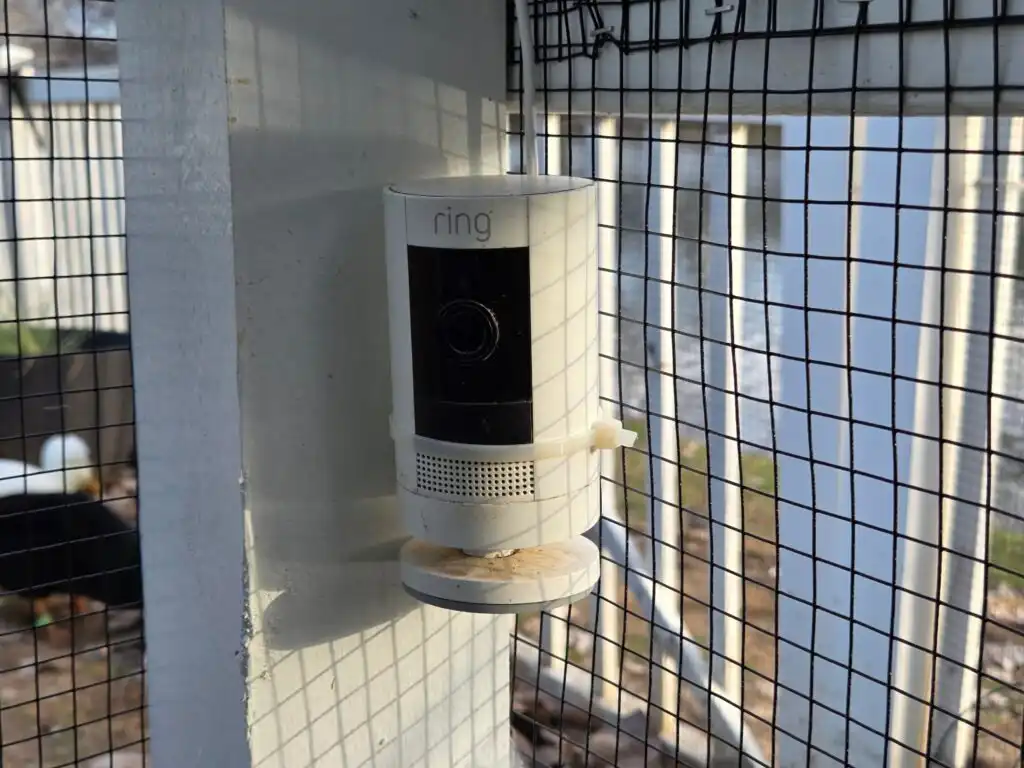
Lighting is another layer of security. We use a solar-powered string light inside the duck run, which provides enough ambient light for evening checks without flooding the space with harsh brightness. Gentle lighting helps us see what’s going on while still allowing the ducks to wind down naturally. Additional lighting is planned for specific areas to make health checks and maintenance easier when daylight is limited.
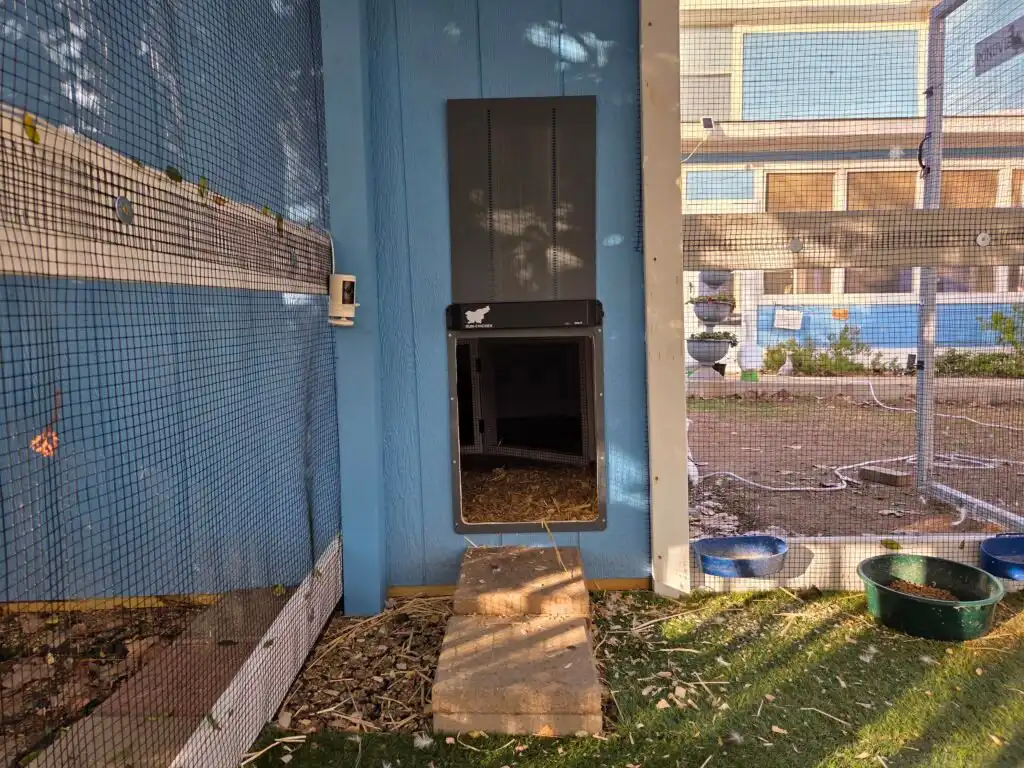
One of the most important safety upgrades is the automatic chicken coop door from Run-Chicken that we installed on the shed (Use providence15 and our link to get 15% off). We use the giant size, which comfortably fits ducks and even geese. The door opens automatically in the morning, giving the ducks access to the run, and at night, we close it manually through the app once everyone is inside. This adds a critical layer of predator protection and removes the stress of racing the sunset every evening.
Together, these features create a system that works even when we’re not actively supervising. Fencing, overhead protection, cameras, lighting, and an automatic door all play a role. Knowing we can check in at any time and respond quickly if something feels off has been one of the biggest quality-of-life improvements for us as duck parents.
What’s still left to do
Like any DIY project, this duck run is never truly finished. And honestly, that’s part of the fun. Duck setups evolve as the flock’s needs change, seasons shift, and new ideas slowly turn into weekend projects.
While we already have lighting and a tarp in place, there are still a few upgrades on our wish list.
Still on our list
- Replacing or upgrading parts of the roof with clear or opaque plastic panels for improved rain protection and more controlled shade
- Adding more duck-safe plants for extra cover, enrichment, and visual interest
- Rotating in additional toys and enrichment items to keep things fresh and engaging
The tarp has been a great starting point, but plastic roof panels will offer better durability, improved light control, and less movement in windy weather. It’s one of those upgrades that will make the space feel more permanent while still keeping the ducks comfortable.
Plants are another area where I know I’ll keep experimenting. Ducks enjoy hiding spots, texture, and new things to investigate, and greenery adds all of that. A few carefully chosen, duck-safe plants can turn a functional run into a more dynamic environment without sacrificing cleanliness or safety.
And then there are toys. What the ducks love today might be ignored in a few months, so enrichment is always a rotating element. Sometimes the simplest additions end up being the biggest hits.
We like to build in phases. Ducks don’t care if everything looks “finished” by human standards. As long as their needs are met, space, safety, water, food, and comfort, they’re perfectly happy. Everything else is just an ongoing process of refinement. And who knows what else we’ll add next.
Final thoughts: Was it worth it?
Absolutely.
This run represents years of learning, mistakes, research, and very intentional, duck-centered decision-making. Every choice, from the layout to the ground cover to the smallest safety detail, reflects lessons we’ve learned through real-life duck keeping. Not what looks good in photos, but what actually works day after day, in all kinds of weather, with real ducks and real mess.
Is it perfect? Probably not. But it is practical, safe, and designed to support both the ducks’ physical needs and their emotional well-being. It makes daily care easier, reduces stress for the flock, and gives us peace of mind, which is something you can’t put a price tag on.
If you’re planning your own duck run, start with safety. Predator-proofing, visibility, and secure access matter more than anything else. Think about cleaning before you think about aesthetics. And most importantly, design the space for the ducks first, not for how it will look on day one.
Everything else can evolve.
So now I’m curious. If you could rebuild your current duck run from scratch, what’s the one thing you would do differently today?
Further Reading & Resources
- Our New Duck Shed: How We Built an 8×8 ft Shed and Turned It Into the Perfect Duck House
- Creating the Perfect Home for Your Pet Ducks: Housing, Space, and Safety Tips
- How Artificial Turf Transformed Our Duck Run
- 17 Duck Predators – Common And Not-So-Common Ones
- How to keep your ducks safe from predators?
- A Full Day of Duck Care: What It Actually Looks Like
- Enrichment and Toys for Ducks
Is your habitat optimized for safety? Return to the Habitat Guide for more research on predator-proofing and sanctuary design.