Decoding Duck Body Language: What Your Flock is Telling You

Last updated: February 28th, 2026
To keep our research-backed guides free, this site uses ads and affiliate links (earning a small commission at no cost to you). Everything here is created by a duck mom and PhD scientist, combining academic rigor with hands-on experience to provide practical, trustworthy advice for duck keepers everywhere. 🦆 Learn more
If you spend any amount of time with ducks, you quickly realize they are quietly expressive. A tilted head, a small tail wiggle, or an enthusiastic head bob may seem like tiny gestures, but they happen constantly and often with clear intention.
Duck body language is subtle, which is part of what makes it so fascinating. Unlike dogs or cats, ducks do not rely on dramatic expressions to communicate. Instead, they use posture, movement, and small changes in behavior to share how they are feeling. Learning to recognize these signals helps you better understand whether your ducks are curious, relaxed, excited, or feeling uncertain.
In this post, we will take a closer look at why ducks tilt their heads and explore other common behaviors such as head bobbing, tail wiggling, and wing movements. Once you start paying attention, you may be surprised by how much your ducks are communicating every single day.
Part of the Community & Behavior Hub, Exploring the social complexity and psychological needs of domestic ducks.
Quick Navigation: Jump to a Section
[hide]
- Why Ducks Tilt Their Heads?
- Head Bobbing: Communication and Excitement
- Tail Wigging and Tail Wagging
- Wing Flapping and Stretching
- Body Posture Says a Lot
- When Behavior Changes Can Signal a Problem
- Frequently Asked Questions About Duck Body Language
- Reading the Whole Duck
- Further Reading & Resources
- References
Why Ducks Tilt Their Heads?
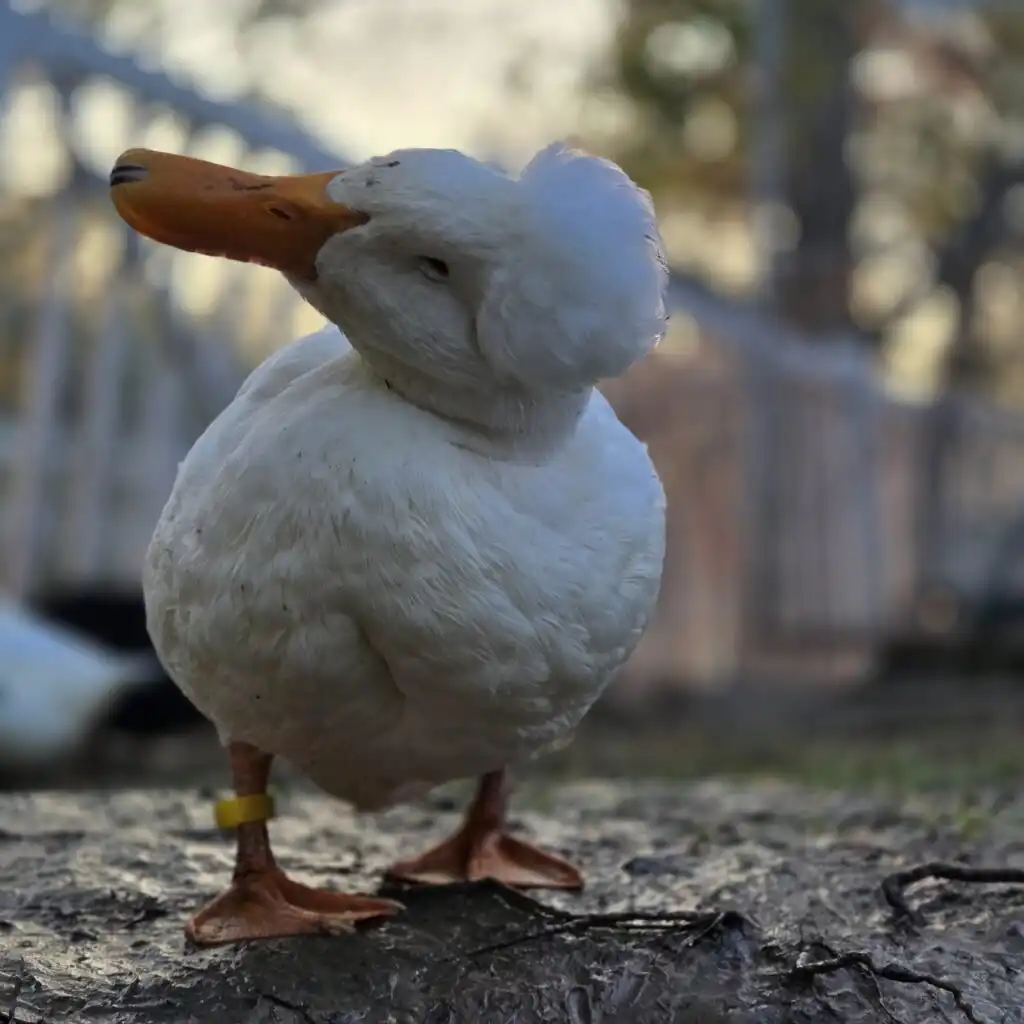
Head tilting is one of the most recognizable and endearing duck behaviors, but it serves a very practical purpose. Ducks tilt their heads primarily to see the world more clearly. Because their eyes are positioned on the sides of their heads, ducks do not focus on objects the same way humans do. Instead of looking straight ahead with both eyes, they often rely on one eye at a time for close inspection.
Duck Vision Plays a Big Role
When a duck tilts her head, she is adjusting her viewing angle to bring an object into sharper focus. This is especially common when something is close, unfamiliar, or moving. A duck may tilt her head while looking at you, watching another animal, or examining a new item in the run. What looks like a thoughtful or curious expression is often a moment of visual problem-solving.
Ducks will also tilt their heads to look upward when they have spotted something in the sky. This is most often seen when a bird notices movement above, such as a hawk, vulture, or other aerial presence. Because ducks are prey animals, they are highly alert to potential threats from above. Tilting the head helps them track motion in the sky more accurately and assess whether something poses a danger.
You may also notice head tilting during foraging. When ducks search for food in grass, mud, or shallow water, they angle their heads to better spot small edible items. This is a normal and healthy behavior that shows concentration and engagement with their environment.
Curiosity and Learning
Head tilting is also closely tied to learning and curiosity. Ducks are intelligent and observant birds that constantly gather information about their surroundings. Tilting the head allows them to better process details and decide how to respond. Young ducks and newly introduced flock members tend to do this more often as they learn routines, recognize individuals, and map their environment.
Social interaction plays a role as well. Ducks may tilt their heads while watching other ducks during mild disagreements, courtship, or bonding moments. This behavior allows them to observe without immediately engaging. When directed at humans, head tilting often reflects attention and recognition. Many pet ducks learn to associate their people with food, safety, and daily routines, and the head tilt can be a sign that they are focused on what comes next.
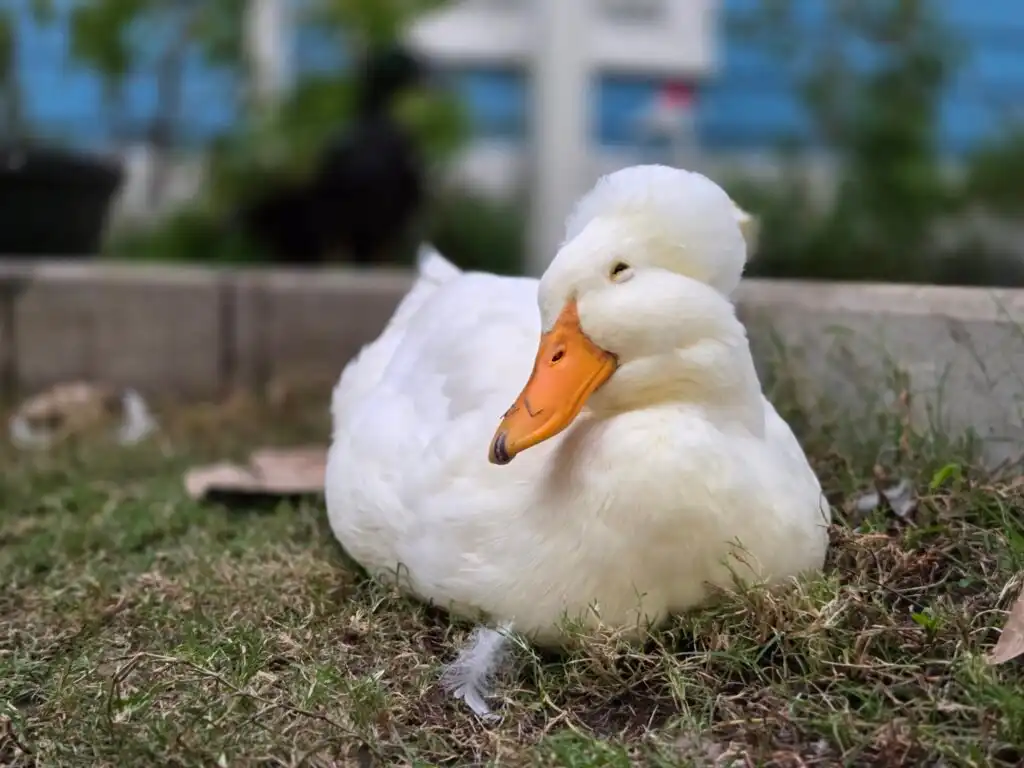
While head tilting is usually normal, it is important to consider context. Occasional tilting during curiosity or interaction is expected. Persistent or constant head tilting, especially when paired with balance issues, lethargy, or changes in appetite, may signal a health concern such as an inner ear problem or neurological issue. Knowing what is normal for each duck makes it much easier to recognize when something has changed.
Most of the time, a head tilt is simply a duck taking a closer look at the world. It is a small but meaningful reminder that ducks experience their surroundings differently from we do, and that even the cutest behaviors often have a practical purpose behind them.
Head Bobbing: Communication and Excitement
Head bobbing is one of the most expressive duck behaviors and can look very different depending on the situation. Ducks do not all bob their heads in the same way, and the direction and placement of the movement matter. Understanding these differences helps decode whether a duck is excited, communicating socially, or sending a clear message to another duck.
Head Bobbing Down the Chest
One common form of head bobbing involves an up-and-down motion directly along the front of the chest. The duck stretches her neck forward slightly and then pulls it back in a rhythmic pattern.
This type of head bobbing is strongly associated with mating behavior. Ducks use this movement to signal interest and readiness to mate. When two ducks engage in this exchange, it is often mutual and coordinated, serving as a visual form of communication before mating occurs.
Chest centered head bobbing is also seen during moments of excitement or anticipation, such as when food arrives or a familiar routine begins. In these situations, the duck’s posture is usually relaxed, and the movement appears smooth and purposeful rather than tense.
Many pet ducks also use this same motion to greet their favorite human. When directed toward a trusted person, chest-centered head bobbing is often a sign of recognition and affection. Ducks that have formed a strong bond may perform this behavior when they see you approach, when you talk to them, or when they are happy to engage. It is one of the subtle ways ducks express social connection beyond the flock.
Side Oriented Head Bobbing
Another form of head bobbing happens along the side of the body rather than straight down the chest. In this case, the duck moves her head downward beside her body, sometimes repeatedly, while angling herself toward another duck.
This behavior carries more social meaning. Side-oriented head bobbing can be part of flirting and courtship, especially when directed toward a specific duck. At the same time, it can also signal dominance or territorial behavior.
Among female ducks in particular, side head bobbing is often used to assert boundaries. It may communicate a clear message of go away or this duck is mine, especially when competition or bonding is involved. This behavior helps ducks resolve social tension without escalating into physical conflict.
Head Bobbing as a Social Boundary
Side head bobbing is frequently seen during flock interactions where relationships are being negotiated. It allows a duck to express ownership, preference, or irritation in a controlled way. The movement may be paired with body positioning, blocking, or standing between two ducks.
Because ducks rely heavily on visual communication, this subtle behavior can be very effective at maintaining social order within the flock.
Reading Head Bobbing in Context
As with all duck behaviors, head bobbing should be interpreted alongside posture, movement, and the surrounding situation. A relaxed duck bobbing her head down her chest while walking toward food is very different from a tense duck bobbing along her side while guarding another duck.
Watching who the behavior is directed at and what happens next provides valuable clues. Over time, these patterns become easy to recognize.
When to Pay Attention
Occasional head bobbing in any form is normal. However, repeated dominance-related head bobbing that leads to persistent harassment or stress may require flock management changes.
Most of the time, head bobbing is simply part of how ducks communicate clearly and efficiently with one another.
Tail Wigging and Tail Wagging
Tail movements in ducks may seem subtle, but they are an important part of duck body language. A small wiggle or wag of the tail can communicate comfort, excitement, or social intent, depending on the context and speed of the movement.
Gentle Tail Wiggling
Gentle tail wiggling is most often a sign of relaxation and contentment. Ducks frequently wiggle their tails while preening, resting, or settling into a comfortable spot. You may also see this after swimming or bathing, when ducks shake off water and realign their feathers.
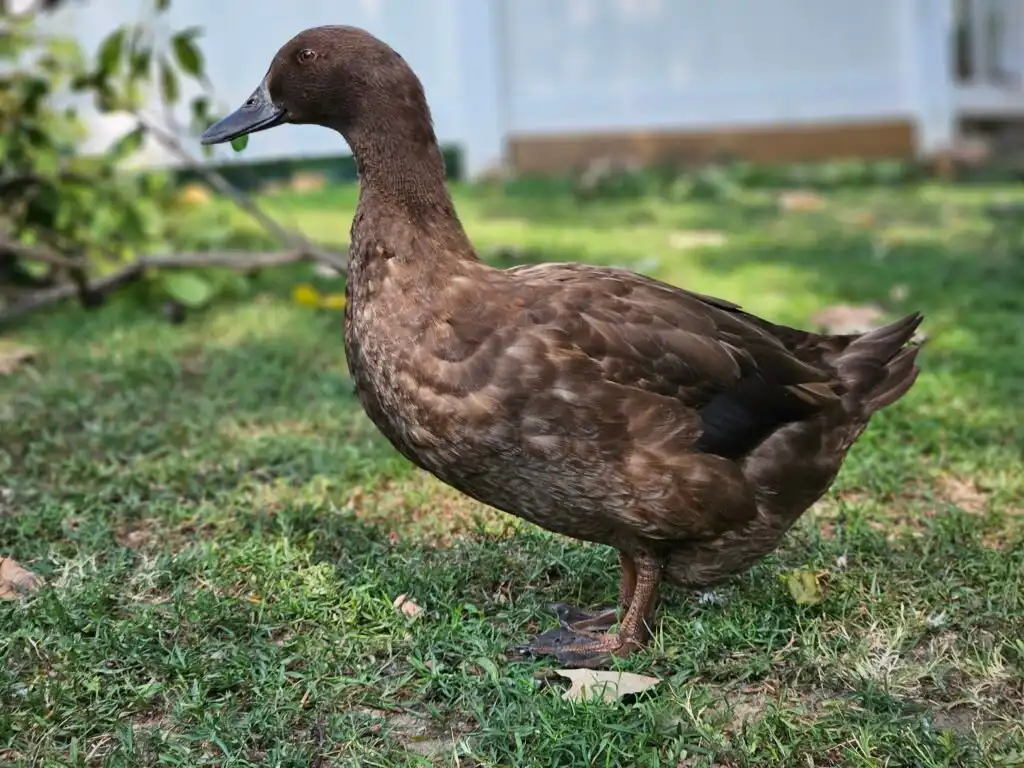
In these moments, the duck’s body posture is loose, and the movement appears light and unforced. This type of tail wiggle usually indicates that the duck feels safe and at ease in her environment.
Tail Wagging During Excitement
Faster tail wagging often appears during moments of excitement. Ducks may wag their tails when they anticipate food, see a favorite human, or engage in a stimulating activity such as pool time or foraging.
This behavior is often paired with alert eyes, upright posture, and increased movement. In bonded ducks, tail wagging can be part of a greeting ritual and may accompany head bobbing or soft vocalizations.
Tail Movements in Social Interactions
Tail movements also play a role in flock dynamics. A duck may wag or flick her tail during close interactions with other ducks, especially when navigating personal space. In these cases, tail wagging can signal awareness, mild irritation, or a request for distance without escalating into aggressive behavior.
Among bonded pairs or close companions, tail movements may be seen during affiliative behaviors and synchronized activities, reinforcing social connections within the flock.
Do Not Confuse Tail Wiggling With Tail Pumping
It is important not to confuse normal tail wiggling or wagging with tail pumping or straining. Tail pumping is a very different movement and is often a sign of discomfort or pain rather than communication.
Ducks naturally engage in some tail pumping while laying an egg, as this helps with the normal egg-laying process. However, when tail pumping becomes excessive, prolonged, or repetitive outside of normal egg laying, it can indicate that a duck is having difficulty passing an egg.
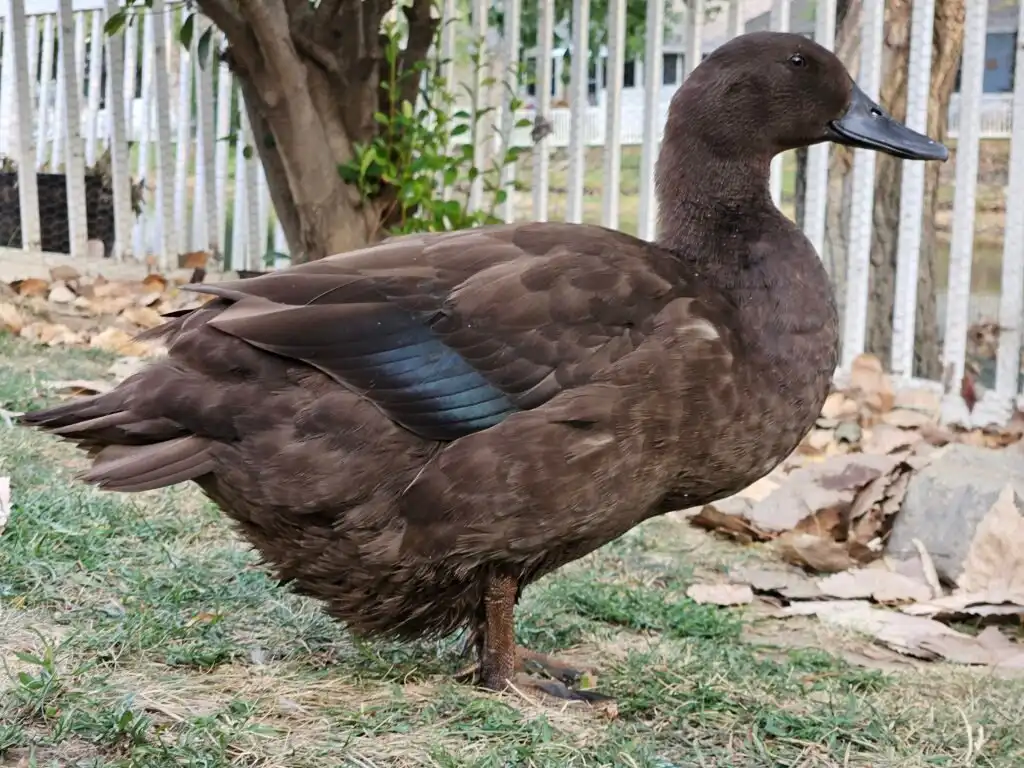
Excessive tail pumping is commonly associated with reproductive issues such as egg binding or internal laying. It is often accompanied by other warning signs, including lethargy, frequent squatting, changes in posture, or reduced appetite.
When Tail Behavior Needs Attention
Any sudden change in tail movement patterns should be taken seriously. If a duck shows persistent tail pumping, straining, or signs of distress, prompt evaluation is important.
Understanding the difference between relaxed tail wiggling (left to right) and discomfort-related tail pumping (up and down) is essential for catching reproductive problems early and supporting duck health.
Reading Tail Language as a Whole
As with all duck behaviors, tail movements should always be interpreted alongside posture, activity level, and overall behavior. A relaxed duck gently wiggling her tail communicates something very different from a duck straining in discomfort.
With careful observation, tail language becomes a valuable tool for understanding both emotional state and physical wellbeing in ducks.
Wing Flapping and Stretching
Wing flapping and stretching are normal and essential maintenance behaviors in ducks. These movements help keep muscles strong, feathers healthy, and the body functioning properly. Ducks rely on regular wing movement to maintain balance, feather condition, and overall wellbeing.
Normal Everyday Wing Flaps
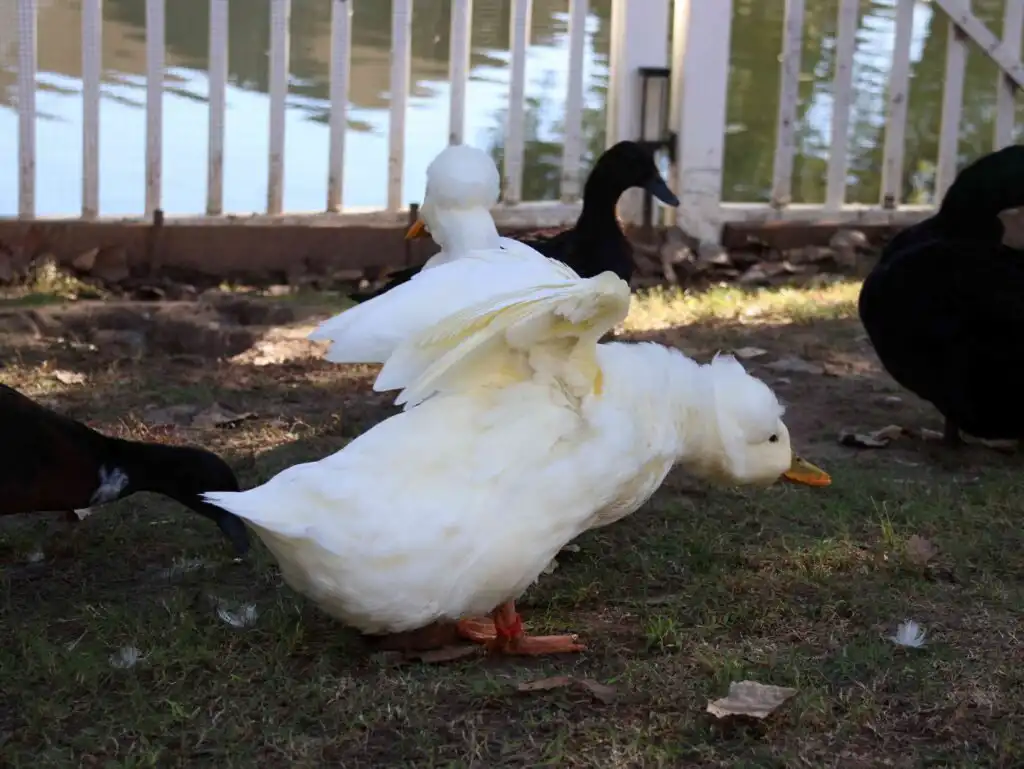
Many of the wing flaps you see each day are simply part of being a duck. Ducks commonly flap their wings after bathing or swimming to help shake off water and realign their feathers. This behavior also helps restore the natural structure of their waterproof plumage.
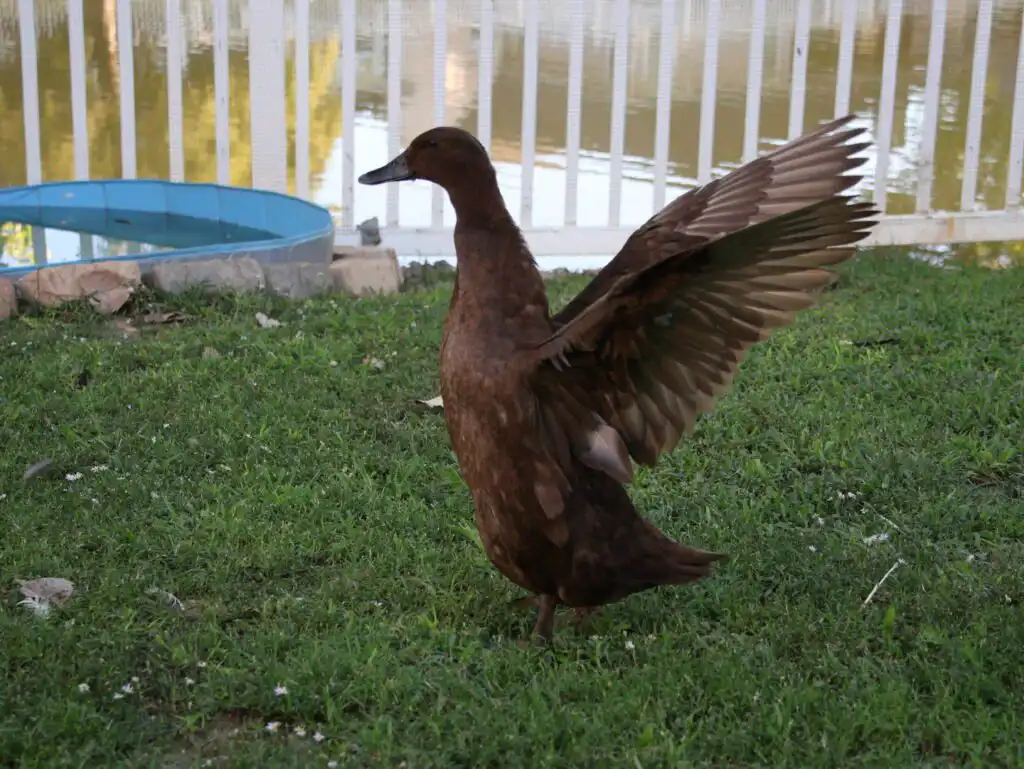
Wing flapping is also common after ducks exit the coop in the morning. After resting overnight, ducks often stretch, flap, and move their wings to wake up their muscles and get their circulation going for the day.
You will also see wing flapping when ducks are happy, energetic, or feeling particularly good. In these moments, the flapping is usually brief and controlled, followed by normal walking, preening, or foraging. It is a healthy sign of comfort and vitality.
Duck Yoga and Stretching Movements
Many ducks perform slow, deliberate stretches that involve extending one wing at a time, often paired with extending the leg on the same side. This is commonly referred to as duck yoga. These movements help maintain flexibility and muscle tone while keeping the duck balanced and relaxed.
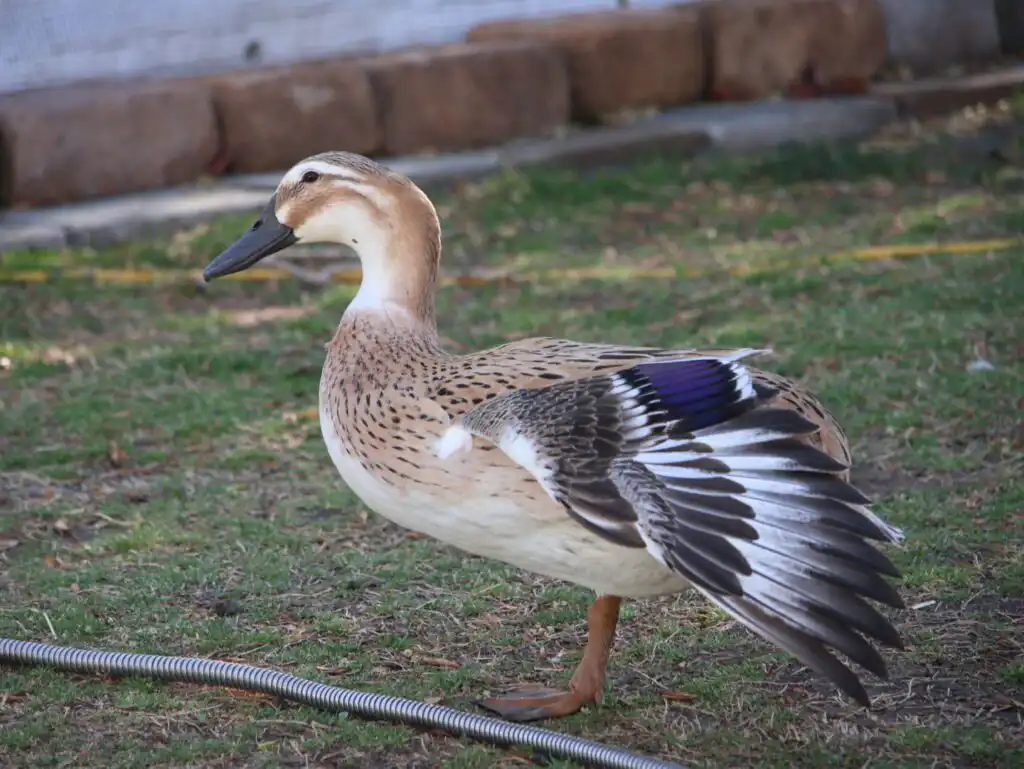
Another gentle stretch involves the duck pushing her head and neck forward while lifting both wings slightly away from the body without fully extending them. This stretch is calm and controlled and often occurs during transitions between resting and activity.
Energetic Wing Flapping
At times, ducks may engage in more energetic wing flapping that lasts longer than a simple stretch. The wings move rapidly, and the duck may look as if she is about to take off. This can resemble a hummingbird or even a small helicopter warming up.
This type of flapping is usually a way to release excess energy or excitement. It is commonly seen in younger ducks, during play, or when ducks are anticipating something enjoyable such as swimming or treats. As long as the duck remains coordinated and settles afterward, this behavior is typically normal.
Wing Twitching and Cooling Behavior
Small wing twitches or brief fluttering movements can occur when ducks are feeling alert or mildly nervous. These movements are usually subtle and short-lived.
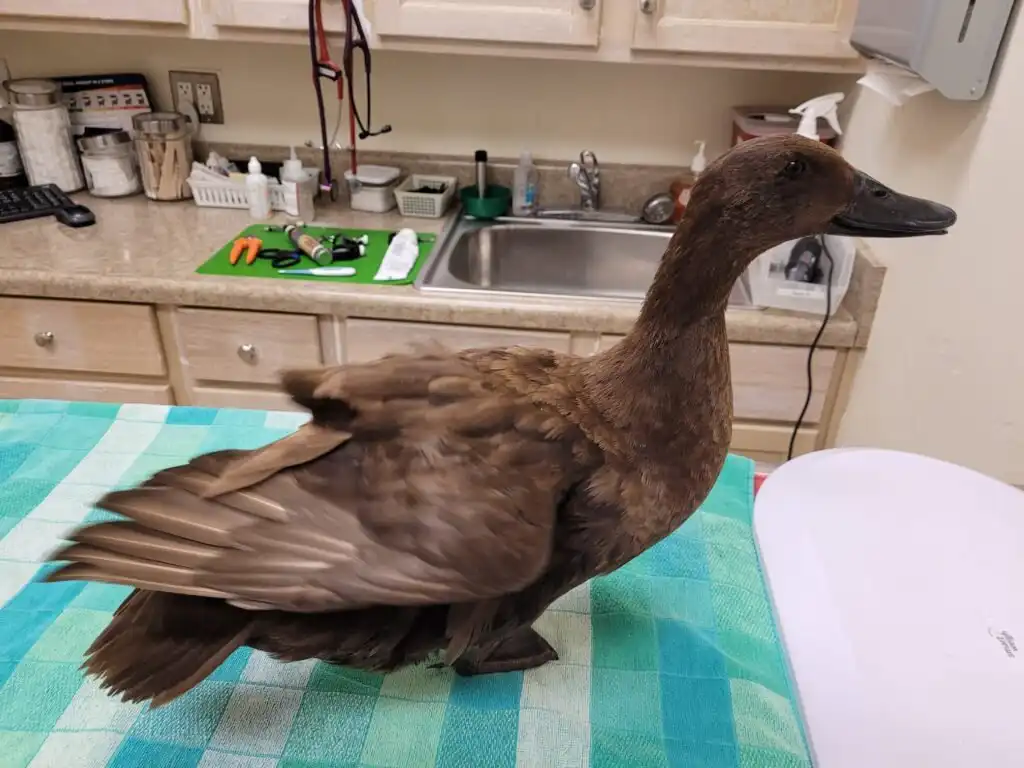
Wing twitching is also common during warm weather. Ducks may slightly lift or twitch their wings to increase airflow and help cool themselves down on hot days.
When Wing Behavior May Signal Stress
While most wing movements are normal, context matters. Frantic wing flapping paired with panic, vocal distress, repeated collisions, or inability to settle may indicate fear or stress. Prolonged wing movements combined with lethargy or other changes in behavior deserve closer observation.
Reading Wing Language as a Whole
Wing flapping and stretching look different depending on the situation. A duck flapping calmly after bathing or performing duck yoga communicates something very different from a duck flapping wildly in response to fear.
By observing when wing movements happen, how long they last, and what else is occurring at the same time, you can better understand what your ducks are experiencing in the moment.
Body Posture Says a Lot
Duck body language is not just about individual movements. It is about how the entire body is held and how different signals work together. Posture often provides the clearest insight into how a duck is feeling at any given moment.
Relaxed and Comfortable Posture
A relaxed duck typically holds her body low and well balanced. Her movements are smooth and unhurried, and she appears comfortable taking up space. Feathers sit loosely against the body, giving the duck a soft and rounded appearance.
In this state, ducks are often engaged in normal activities such as foraging, preening, resting, or quietly observing their surroundings. A relaxed posture indicates that the duck feels safe, secure, and at ease in her environment.
Alert and Watchful Posture
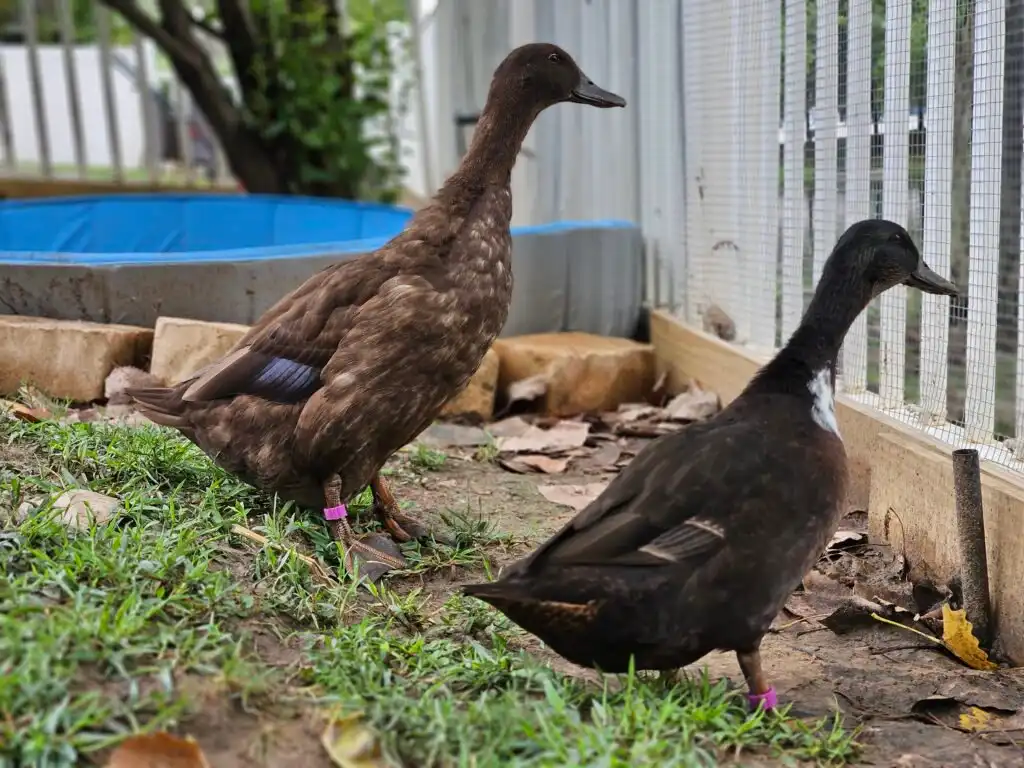
When a duck becomes alert, her posture changes quickly. She may stand more upright with her neck slightly extended. Feathers are held closer to the body, and movement may pause as she focuses on a sound or motion.
This posture is common when ducks notice something unfamiliar or potentially concerning. It allows them to assess the situation before deciding whether to move, vocalize, or alert the rest of the flock.
Stressed or Uncomfortable Posture
A stressed or uncomfortable duck often appears stiff or tense. She may freeze in place or move cautiously with limited range of motion. Feathers are usually held tightly against the body, making the duck look narrower or more rigid.
In some cases, stressed ducks may avoid eye contact, isolate themselves, or hesitate to engage in normal behaviors. Prolonged tension in posture can be an early sign that something is wrong, whether due to social stress, illness, or environmental factors.
Posture During Social Interactions
Posture also plays a key role in flock dynamics. Ducks may adjust how they stand or position their bodies when asserting space, bonding with another duck, or responding to social pressure. Subtle shifts such as turning the body sideways, blocking access, or lowering the head can communicate intent without physical confrontation.
Observing these interactions helps you understand relationships within the flock and recognize when a duck may need support or intervention.
Reading Posture in Context
Posture should always be read alongside other body language signals. A duck holding herself upright while also tilting her head toward the sky may be responding to a perceived threat. A duck standing tall while gently wagging her tail may simply be excited.
Watching posture together with head movements, tail behavior, wing position, and overall activity level gives you a much clearer and more accurate picture of how a duck is feeling.
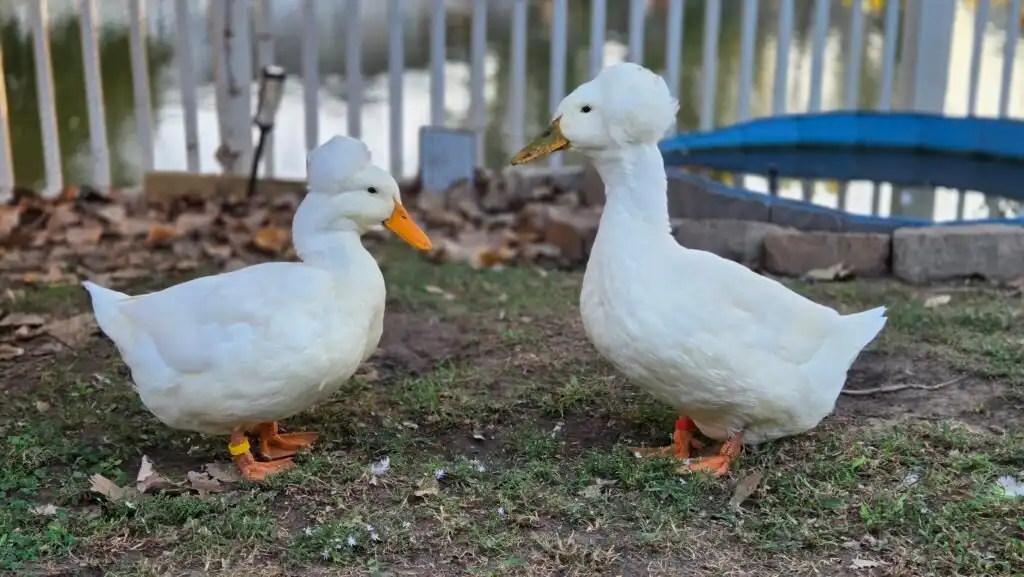
Spending time quietly observing your ducks in different situations will sharpen your ability to recognize these subtle but meaningful cues.ead and tail movements gives you a much clearer picture of how a duck is feeling.
When Behavior Changes Can Signal a Problem
Most duck behaviors fall within a wide range of normal communication and movement. Ducks are individuals, and each one has her own habits, preferences, and quirks. However, sudden or persistent changes in behavior should always be taken seriously.
Why Behavior Changes Matter
Ducks are prey animals, which means they instinctively hide signs of illness or weakness. In the wild, showing vulnerability can make them a target. Because of this, changes in behavior are often one of the earliest and most reliable signs that something is wrong.
Even subtle shifts can be meaningful, especially when they appear suddenly or continue over time.
Common Red Flags to Watch For
Certain changes in behavior deserve closer attention. These include persistent head tilting that does not seem tied to curiosity or environmental cues, loss of balance or circling, and difficulty walking or standing.
Reduced movement, reluctance to forage, or withdrawing from flock mates can indicate discomfort, pain, or illness. Changes in appetite or drinking habits are also important warning signs, as are noticeable differences in vocalization such as becoming unusually quiet or vocal.
Any combination of these signs increases the likelihood that a duck may be dealing with a health issue.
What These Signs May Indicate
Behavioral changes like these can point to a range of underlying problems. Neurological issues, inner ear infections, and toxin exposure can affect balance and coordination. Reproductive problems may alter posture, movement, or social behavior. Infections, metabolic imbalances, or injuries can also cause ducks to move less and disengage from the flock.
Because many conditions share similar outward signs, behavior alone cannot provide a diagnosis. However, it offers valuable clues that something is not right.
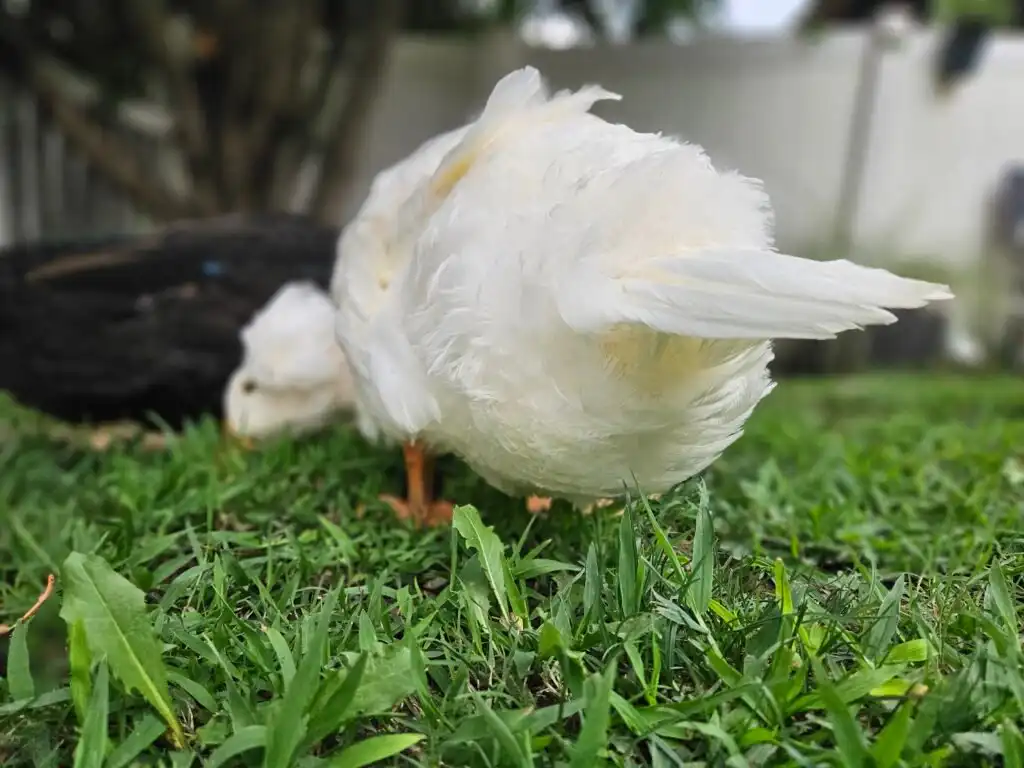
The Importance of Knowing Your Ducks
Knowing what is normal for each individual duck is one of the most powerful tools a duck keeper has. A behavior that is typical for one duck may be concerning for another. Paying attention to daily routines, movement patterns, and social interactions helps you notice changes early.
This familiarity allows you to act sooner, whether that means closer observation, supportive care, or contacting a veterinarian with experience in ducks or poultry.
Trusting Your Instincts
If something feels off, it usually is. Duck keepers often notice small changes before clear symptoms appear. Trusting your observations and instincts can make a real difference in outcomes.
Early attention and intervention can prevent minor issues from becoming serious problems and help ensure the best possible care for your ducks.wing each duck’s normal behavior makes it much easier to spot when something is off.
Frequently Asked Questions About Duck Body Language
Why does my duck tilt its head to look at the sky with one eye?
Ducks have monocular vision, which means their eyes work independently to provide a wide field of view. When they tilt their head to look up, they are using their specialized central fovea to get a high resolution image of the sky. This is a survival instinct used to scan for aerial predators like hawks.
Is it normal for my duck to wag its tail?
Tail wagging is one of the most common signs of a happy and content duck. It often happens after a bath, when they see a favorite person, or when they are about to receive a treat. It is the duck equivalent of a dog wagging its tail to show excitement and well-being.
What does it mean when a duck bobs its head up and down?
Head bobbing can mean several things depending on the context. In a social setting, it is often a friendly greeting or a sign of excitement. During the breeding season, it is a key part of the courtship ritual between drakes and hens. However, if a duck is bobbing its head toward a stranger, it can also be a rhythmic warning to stay back.
Why is my duck nibbling on my clothes or skin?
This behavior is called preening and it is a sign of deep trust and social bonding. In a flock, ducks preen each other to clean feathers and strengthen social ties. When Muffin or Krümel nibbles on you, they are essentially treating you as a member of the flock and helping you “groom” your feathers.
What is the “wing flap” after a bath?
When a duck stands up tall and flaps its wings vigorously, they are doing more than just drying off. This movement helps realign their feathers and “zips” the microscopic barbs back together. It also helps distribute natural oils from their preen gland which keeps them waterproof and buoyant.
How can I tell if my duck is feeling stressed?
A stressed duck often stands very still with its neck fully extended and its feathers sleeked down tight to its body. You might also notice rapid eye blinking or repetitive pacing behavior. Another key sign is localized muscle twitching or “shuddering” throughout the body. Unlike the purposeful tail wag of a happy duck, stress twitching is often an involuntary physiological response to an immediate threat or an uncomfortable environment. Understanding these subtle shifts in posture and movement helps you intervene before the stress impacts their health or immune system.
Reading the Whole Duck
No single behavior tells the full story. Ducks communicate through a combination of movements, posture, and subtle signals that only make sense when viewed together.
Head tilting, head bobbing, tail movements, wing behavior, posture, and overall activity level all work together to reflect a duck’s physical and emotional state. A behavior that seems insignificant on its own can take on new meaning when paired with changes in movement, social interaction, or routine.
This is why quiet observation is one of the most valuable skills a duck parent can develop. Spending time simply watching your flock without stepping in allows you to learn each duck’s normal patterns and personality. Over time, these observations build an intuitive understanding that no checklist or chart can replace.
The more familiar you are with how your ducks move, rest, and interact on an ordinary day, the easier it becomes to notice when something is different. Reading the whole duck is not about decoding every small gesture. It is about building awareness, trust, and a deeper connection with the animals in your care.
Further Reading & Resources
- Duck Quacking Explained
- Duck Personalities – What They Reveal About Our Ducks (and Us!)
- Does my Duck Like Me? 12 Signs Your Ducks Love and Trust You
- Male vs Female Ducks Explained: From Bills to Behaviors
- The Untold Truth About Mating Ducks: From Passion to Overmating
Connect deeper with your flock. Discover more about duck psychology and social dynamics in the Community & Behavior Hub.
References