Feeding Ducks During Molting: Do They Need More Protein?

To keep our research-backed guides free, this site uses ads and affiliate links (earning a small commission at no cost to you). Everything here is created by a duck mom and PhD scientist, combining academic rigor with hands-on experience to provide practical, trustworthy advice for duck keepers everywhere. 🦆 Learn more
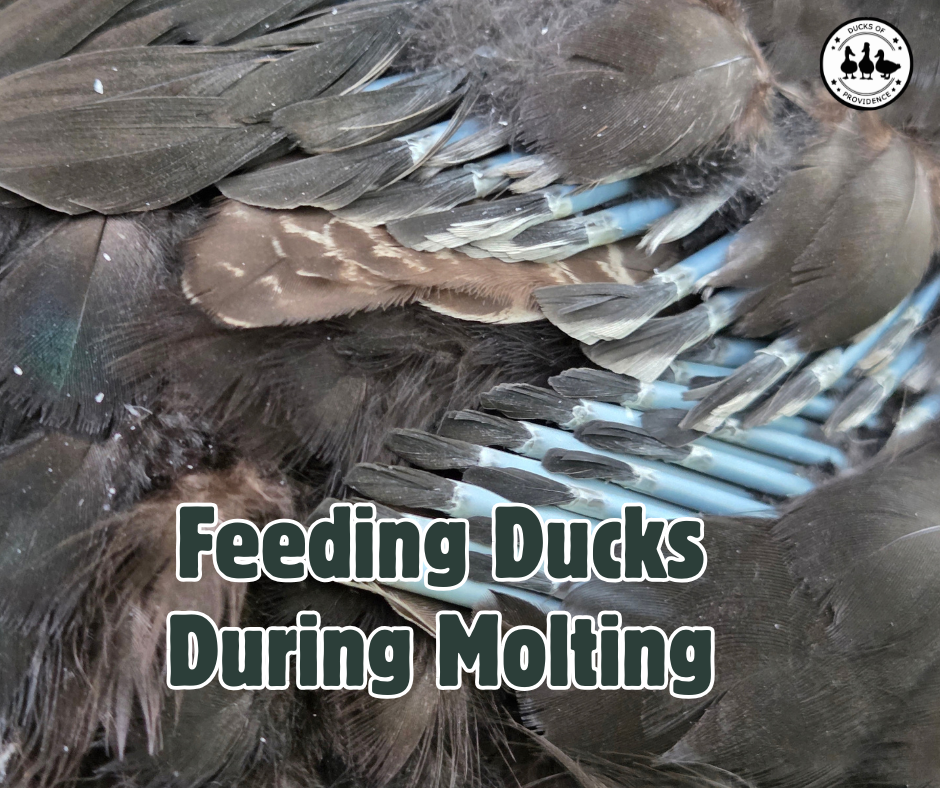
If your yard suddenly looks like a feather pillow exploded, molting season has probably arrived. Right now, several of our ducks are dropping feathers everywhere, looking a little scruffier than usual, and putting a surprising amount of energy into growing an entirely new coat.
And that brings up one of the most common questions I hear this time of year: Do ducks need more protein when molting?
The short answer is yes, protein becomes especially important during molt, but that does not necessarily mean you need to switch your entire flock to a high protein feed.
Feathers are made primarily of keratin, a structural protein, and producing thousands of new feathers requires plenty of amino acids, energy, vitamins, and minerals. A duck going through a heavy molt therefore has different nutritional demands than one simply maintaining its existing plumage.
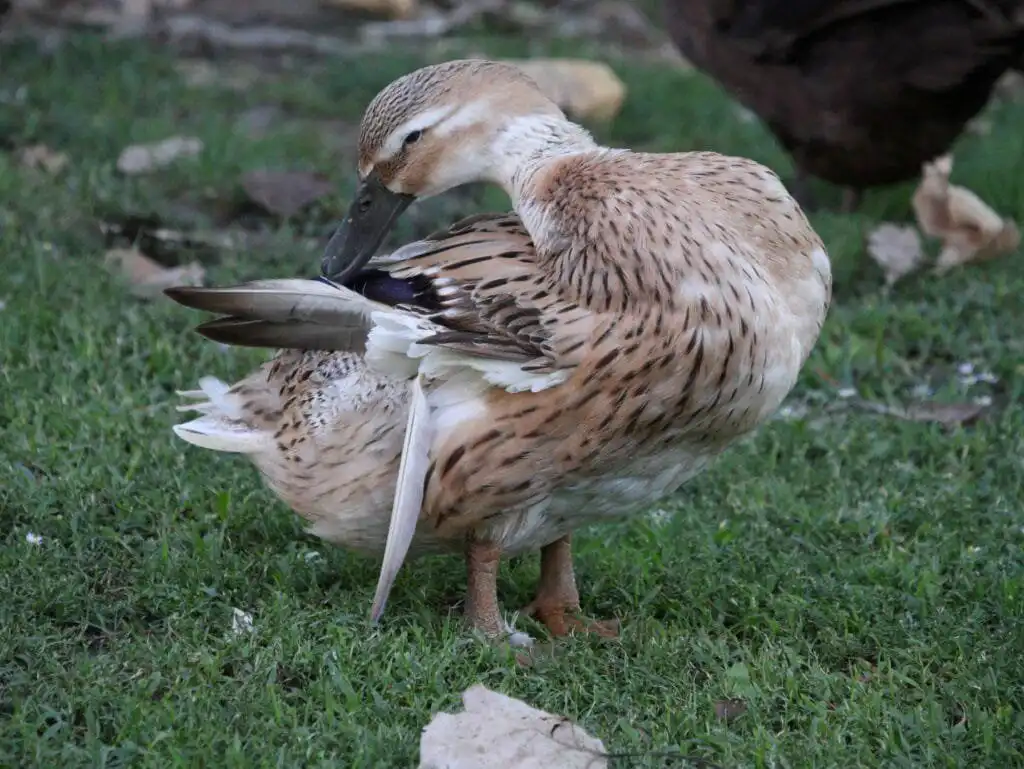
But backyard flocks make things a little more complicated. Ducks do not always molt at the same time. In our flock, I may have one duck surrounded by a small mountain of feathers while another has barely started. That is why I usually keep our regular balanced feed the same and offer extra protein-rich foods, such as mealworms, black soldier fly larvae, earthworms, and other insects, to the ducks that are actively molting.
So, how much extra protein does a molting duck actually need? Which foods are good choices? And can you accidentally give too much?
Let’s look at what happens inside your duck’s body during molt and how you can support healthy feather regrowth without unnecessarily overhauling the whole flock’s diet.
Part of the Feeding & Nutrition Hub, Data-backed analysis of duck dietary requirements and foraging behavior.
Quick Navigation: Jump to a Section
- Do Ducks Need More Protein During Molting?
- Why Molting Ducks Need Protein
- How Much Protein Does a Molting Duck Actually Need?
- What I Feed My Ducks During Molt
- Molting Ducks Need More Than Protein
- When a Bad Molt May Be More Than a Nutrition Problem
- From Our Flock: Molting Season Is a Little Dramatic
- Frequently Asked Questions About Feeding Ducks During Molting
- Supporting Your Duck Through Molting Season
- Further Reading & Resources
Do Ducks Need More Protein During Molting?
Yes, ducks can benefit from additional protein during molt because growing new feathers increases their demand for protein and specific amino acids. However, that does not mean every molting duck needs to be switched to a high-protein feed.
If your ducks already eat a complete, nutritionally balanced commercial duck or waterfowl feed, their base diet may already provide enough protein to support a normal molt. For many backyard flocks, a modest amount of additional protein from nutritious treats can be a more practical approach than changing the feed for everyone.
This is especially true when only one or two ducks are molting. I prefer to keep our flock on their regular balanced diet and offer the actively molting ducks additional protein-rich foods, such as mealworms, black soldier fly larvae, and earthworms.
The goal is not simply to feed more protein. It is to provide enough high-quality protein and essential amino acids to support healthy feather growth while keeping the overall diet balanced.
Duck Mom Tip: Molting can look dramatic. A sudden explosion of feathers, scruffy plumage, visible pin feathers, and even temporary changes in behavior can all be part of a normal molt. If you are unsure whether your duck is actually molting, read our complete guide to molting in ducks first.
And if you are wondering why I put so much emphasis on keeping the base diet balanced, our guides to commercial duck feed and balanced nutrition for ducks explain what a complete feed provides and why treats should remain supplements rather than becoming the main diet.
Why Molting Ducks Need Protein
A molt may look like your duck is simply losing old feathers, but there is a lot happening underneath that slightly disheveled exterior. Growing an entirely new set of feathers is a nutritionally demanding process.
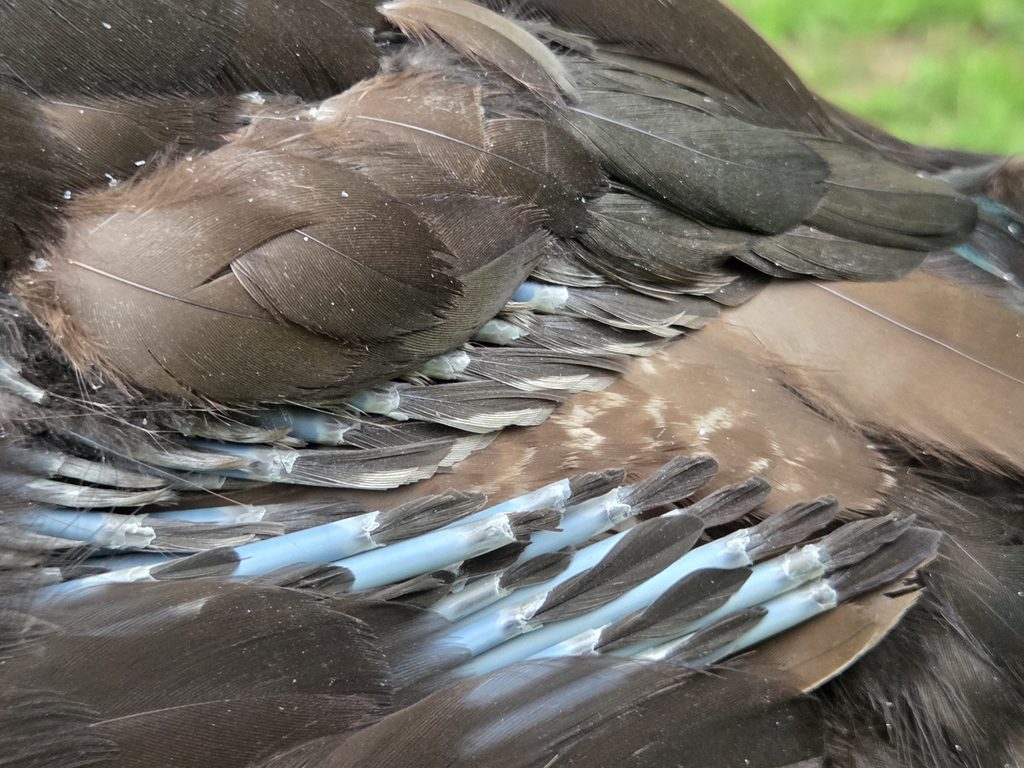
Feathers are composed largely of keratin, a tough structural protein. As old feathers are shed, new feathers begin developing inside highly vascularized feather follicles. These growing feathers, often called blood feathers or pin feathers, require a steady supply of nutrients as they develop. You can learn more about how feathers grow and function in our guide to duck feathers and feather anatomy.
It Is About Amino Acids, Not Just More Protein
When a duck eats protein, its digestive system breaks that protein down into amino acids. Those amino acids are then used as building blocks to make new proteins throughout the body, including the keratin needed for new feathers.
This is an important distinction because the crude protein percentage printed on a feed bag does not tell us everything about its nutritional value.
Different protein sources contain different amounts and combinations of amino acids. For feather development, sulfur-containing amino acids, particularly methionine and cysteine, are especially important because feather keratin is rich in sulfur-containing amino acids.
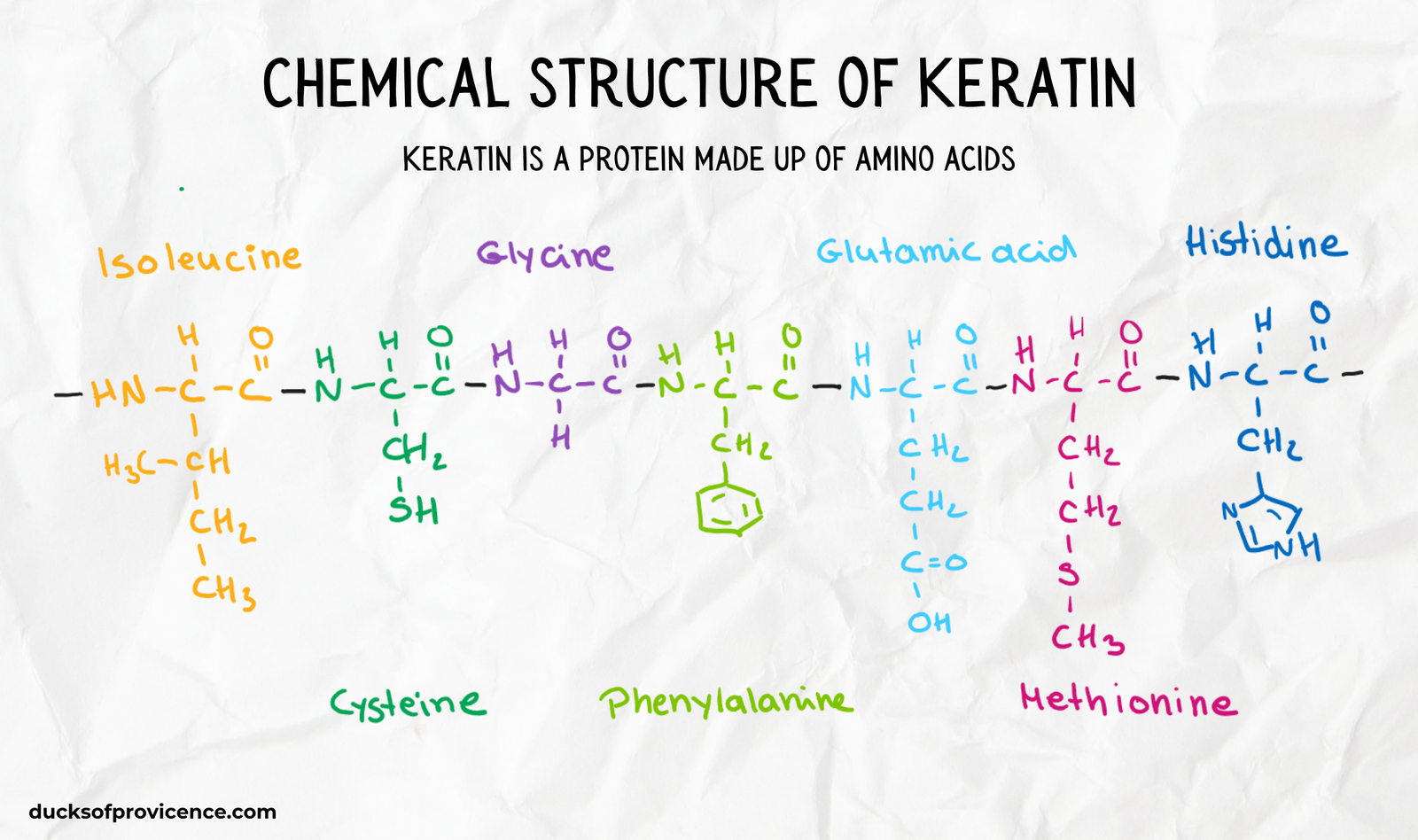
In other words, feeding a molting duck is not simply a matter of finding the food with the highest protein percentage. Protein quality and the overall balance of the diet matter too.
Molting Competes for Nutritional Resources
Your duck’s body has only so many nutrients and so much energy available at any given time. During a heavy molt, a considerable amount of those resources is directed toward producing new plumage.
This is one reason you may notice other changes at the same time. Your ducks may be quieter, spend more time preening, look temporarily scruffy, or stop laying eggs.
Egg production itself requires substantial amounts of protein, energy, calcium, and other nutrients. When laying slows or stops during molt, those nutrients can instead be used for maintenance and feather regeneration. If your duck has stopped laying and you are not sure whether molt is responsible, our guide to reasons ducks stop laying eggs walks through the other common causes.
So yes, protein matters during molt. But before reaching for the highest protein feed you can find, we need to ask a more useful question:
How much additional protein does a molting duck actually need?
How Much Protein Does a Molting Duck Actually Need?
This is where feeding advice for molting ducks can get confusing. You will often see recommendations to immediately switch to a 20 percent or even higher protein feed as soon as feathers start flying.
For most backyard ducks, it is not quite that simple.
How much additional protein a molting duck needs depends on several factors, including the protein content and quality of the regular diet, the severity of the molt, whether the duck is still laying, and what else she is eating.
A duck already eating a complete commercial feed with adequate protein and a well-balanced amino acid profile may need very little adjustment. A duck eating a lower protein maintenance ration may benefit more from additional dietary protein during a heavy molt.
Start With the Feed You Already Use
Before changing anything, check the guaranteed analysis on your feed bag. The crude protein percentage gives you a useful starting point, although, as we discussed above, it does not tell you everything about protein quality.
| Crude Protein in the Base Diet | What I Would Consider During Molt |
|---|---|
| Around 12 to 14% | A relatively low protein maintenance diet may warrant additional protein during a heavy molt |
| Around 16% | Often a reasonable base diet, with targeted protein-rich foods providing an easy way to supplement molting ducks |
| Around 18% | Above that maintenance range and may already provide substantial dietary protein. |
| 20% or higher | I would not recommend automatically moving an adult duck to this level simply because it is molting. |
These numbers are best viewed as context rather than strict molting requirements. There is no single protein percentage that is ideal for every adult duck during every stage of molt.
If you are unsure what all those numbers on a feed label actually mean, our guide to choosing commercial duck feed explains what I look for when comparing feeds.
More Protein Is Not Automatically Better
It is tempting to think that if protein helps build feathers, feeding much more protein should grow better feathers faster. Nutrition rarely works that way.
Once a duck’s nutritional needs are met, simply continuing to increase one nutrient does not necessarily provide an additional benefit. It can also throw off the balance of the overall diet, particularly if high-protein treats begin replacing significant amounts of complete feed.
That is why I focus on supporting the increased demands of molt rather than trying to maximize protein intake.
And there is another practical problem in a backyard flock: the duck standing next to your heavily molting bird may not be molting at all.
That is exactly why I usually supplement individual molting ducks rather than changing the feed for my entire flock.
What I Feed My Ducks During Molt
In our flock, I usually do not switch everyone to a higher protein feed when molting season starts. The reason is simple: my ducks rarely molt at exactly the same time.
One duck may be dropping feathers everywhere and covered in new pin feathers, while another has barely started. Increasing the protein content of the entire flock’s feed would mean changing the diet for ducks that may not need the additional protein at that time.
Instead, I keep their regular complete, balanced feed as the foundation of the diet and offer the ducks that are actively molting some additional protein-rich treats.
Our Favorite Protein-Rich Molting Treats
Mealworms are probably the easiest option, but they are certainly not the only one. We use a combination of dried insects and live treats.
| Protein Rich Treat | Why I Like It |
|---|---|
| Dried mealworms | Convenient, easy to store, and very popular with our ducks |
| Black soldier fly larvae | Another convenient insect-based treat and naturally much higher in calcium than mealworms |
| Live mealworms | Provide protein while encouraging natural foraging and hunting behavior |
| Earthworms | A natural animal protein source and excellent enrichment when our ducks find them |
| Cooked egg | Nutrient-dense source of high-quality protein that can occasionally be offered in small amounts |
| Peas | A lower protein option than insects, but a familiar duck-safe treat that can add some variety |
Live treats are especially fun because they serve two purposes. They provide additional nutrition while also giving the ducks an opportunity to forage, hunt, and engage in natural behaviors. A handful of live mealworms can turn into quite the duck competition around here.
Mealworms vs. Black Soldier Fly Larvae
Although mealworms and black soldier fly larvae are often treated as interchangeable protein treats, they are nutritionally quite different.
Mealworms tend to be particularly protein- and fat-rich, while black soldier fly larvae are notable for their naturally high calcium content. Their exact nutritional composition varies depending on how the insects were raised and processed, so the label on the product is more useful than assuming every bag contains the same amount of protein.
Neither one needs to become a major part of the diet. I use them as supplements to an already balanced ration, not as a replacement for it.
Duck Mom Tip: If several ducks share the same space but only one is going through a heavy molt, try offering that duck her extra treats separately. Otherwise, the duck who needs them least may somehow become the one who eats the most. Ducks are remarkably talented at defeating our carefully designed feeding plans.
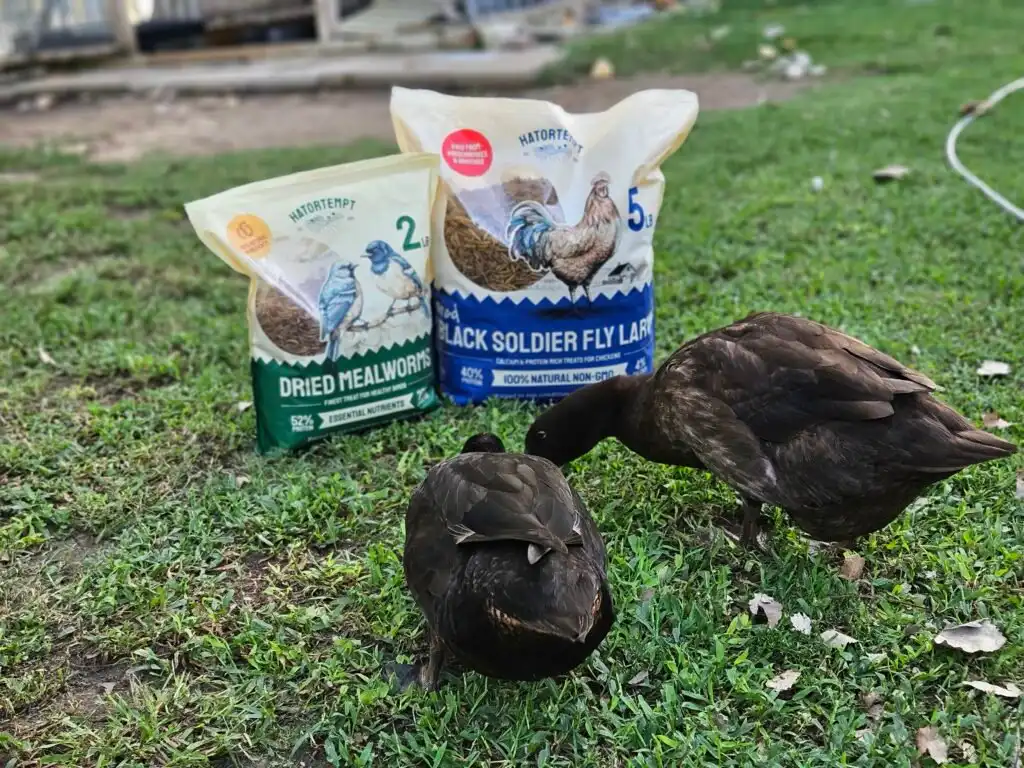
Our Favorite Molting Season Treats
One of our favorite sources for duck treats is Hatortempt. They offer dried mealworms, black soldier fly larvae, and several fun treat mixes that make it easy to add a little extra protein during molting season.
A flock favorite in our house is their Surf & Turf mix. It combines different protein-rich goodies in one bag, which works particularly well with a flock like ours because every duck seems to have a different opinion about what constitutes the best snack.
I use these as treats alongside our ducks’ regular balanced feed, especially when someone is going through a heavy molt and could use a little extra protein.
Affiliate disclosure: This section contains an affiliate link. If you purchase through our link, we may earn a small commission at no additional cost to you. Thank you for supporting Ducks of Providence and our flock!
Treats Are Still Treats
This is the part that is easy to forget. A food does not stop being a treat simply because it contains a nutrient we want.
If we add so many mealworms, larvae, eggs, or other extras that our ducks eat substantially less of their complete feed, we may actually make the overall diet less nutritionally balanced.
Their commercial feed should therefore remain the nutritional foundation. You can read more about why this matters in our guide to a balanced duck diet and guide to treats for ducks.
Think of the extra insects as a little nutritional support while your duck works on her new wardrobe, rather than an all-you-can-eat mealworm buffet.
Molting Ducks Need More Than Protein
Protein gets most of the attention during molt, but healthy feather growth depends on the entire diet. Your duck still needs adequate energy, vitamins, minerals, and trace nutrients to build new feathers and support everything else her body is doing.
This is another reason I prefer supplementing a balanced diet rather than trying to build a special molting diet around high-protein foods.
Energy Matters Too
Growing feathers takes energy. If a duck is not consuming enough calories overall, simply adding more protein will not solve the problem. Some of those amino acids may be used as an energy source rather than being available for building new tissue.
A complete commercial feed is formulated to provide protein together with carbohydrates, fats, vitamins, and minerals in appropriate proportions. Our guide to commercial duck feed goes into more detail about what to look for on the feed label.
Vitamins and Minerals Support Feather Growth
Several micronutrients contribute to normal skin and feather development. Vitamins and trace minerals such as zinc, copper, manganese, selenium, and several B vitamins all have roles in normal metabolism, tissue development, or feather formation.
That does not mean I recommend adding a collection of individual vitamin and mineral supplements during every molt. In fact, blindly supplementing individual nutrients can create nutritional imbalances of its own.
For most healthy ducks eating a complete feed, the goal is much simpler: protect the nutritional balance that is already there.
This is also why I am cautious about going overboard with treats. Even nutritious treats can dilute the vitamins and minerals supplied by a complete ration if ducks fill up on them instead of eating their regular food.
What About Calcium During Molt?
This deserves special consideration for laying hens.
Many female ducks reduce or completely stop egg production during a significant molt. If a hen is not producing eggs, her calcium demands for eggshell formation decrease substantially.
That does not mean calcium suddenly becomes unimportant. Calcium is still essential for normal muscle, nerve, and skeletal function. But more calcium is not a molting strategy, and a nonlaying duck does not need large amounts of supplemental calcium simply because she is growing feathers.
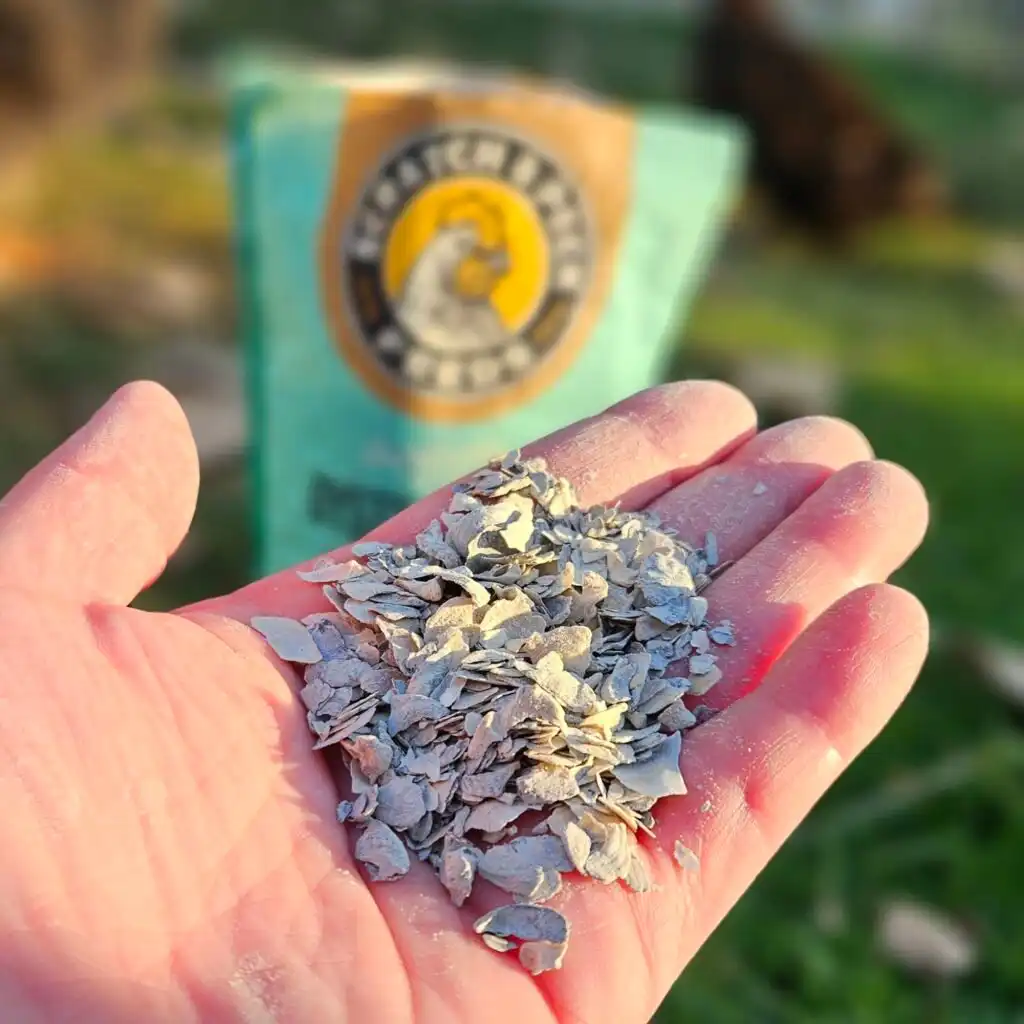
This is one reason I like offering calcium sources such as flaked oyster shell separately, allowing laying females access when they need it without intentionally increasing calcium for every member of the flock.
If your duck has stopped laying during molt, our guide to why ducks stop laying eggs explains how molt fits into the bigger picture and when a lack of eggs may warrant a closer look.
Do Not Forget Water
And finally, the least exciting nutritional recommendation may also be one of the most important: fresh water should always be available.
Ducks need water to eat and swallow properly, maintain normal physiological functions, and keep themselves and their new plumage clean. Molting does not change that basic requirement.
So while a few extra mealworms may get all the enthusiasm from your ducks, the foundation remains remarkably boring: a complete diet, appropriate treats, and plenty of fresh water.
That combination supports feather regrowth far better than chasing a single “magic” molting nutrient.
When a Bad Molt May Be More Than a Nutrition Problem
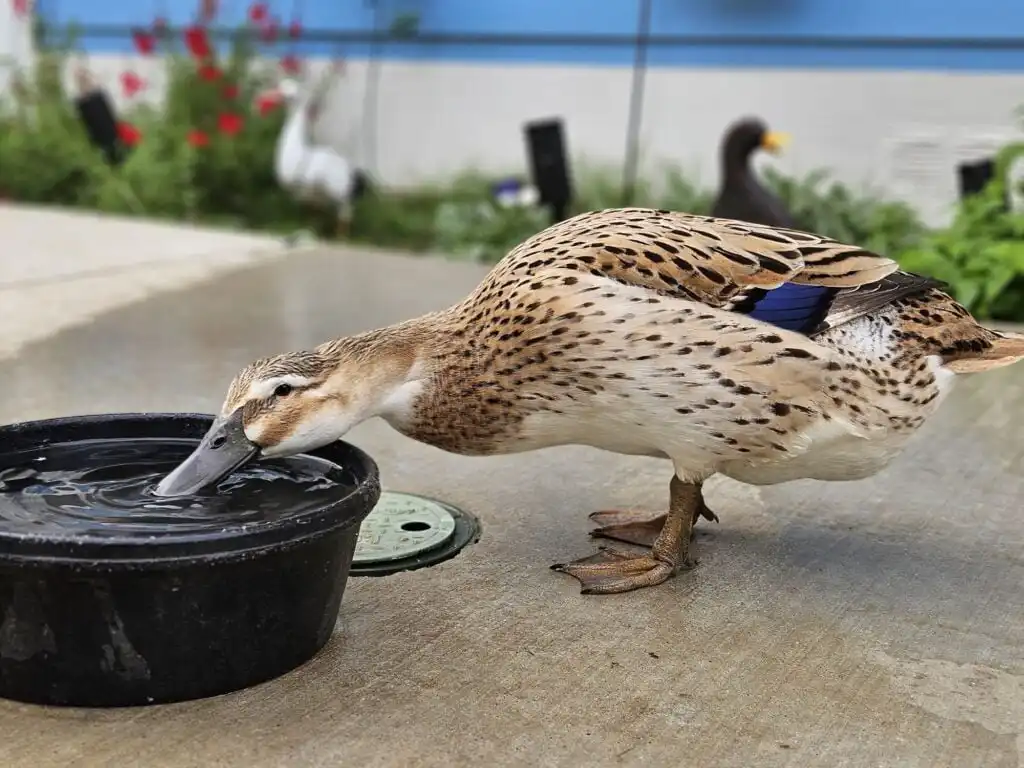
Molting ducks can look pretty rough. Missing feathers, patchy plumage, lots of pin feathers, and a generally disheveled appearance can all be perfectly normal while a new coat is growing in.
But not every feather problem is caused by molting, and not every difficult molt can be fixed by adding more protein.
Pay attention to the whole duck, not just her feathers. A duck going through a normal molt should otherwise remain reasonably bright, interested in food, and able to move around normally.
I would be more concerned if feather loss or poor regrowth occurs together with:
| What You Notice | Why It Deserves a Closer Look |
|---|---|
| Weight loss | May indicate inadequate food intake, parasites, or underlying illness |
| Reduced appetite | A normal molt should not cause a duck to stop eating |
| Lethargy or weakness | Can indicate illness rather than simply the energy demands of molt |
| Broken or damaged feathers | May result from flock mates, mating, housing, or feather picking rather than molt |
| Bald areas without new feather growth | Could point toward feather damage, parasites, or another underlying problem |
| Red, irritated, crusty, or damaged skin | Suggests that something more than normal feather replacement may be happening |
| Abnormal looking new feathers | Repeated poor feather development deserves further investigation |
| A molt that seems unusually prolonged | Nutrition, stress, health, or other factors may be interfering with normal feather replacement |
If you are unsure what normal feather replacement should look like, our guide to duck molting and guide to duck feathers can help you distinguish normal feather loss and pin feather development from other problems.
Check the Duck Before You Check the Protein Percentage
If one of my ducks is having an unusually difficult molt, I would not simply start adding larger and larger amounts of mealworms.
I would look at the whole picture. Is she maintaining her weight? Is she eating normally? What do her droppings look like? Is her skin healthy? Are flock mates pulling feathers? Could a drake be causing feather damage? Are there signs of external parasites? Has anything else changed?
This is also where regular health checks and weighing your ducks can be incredibly useful. A duck can hide gradual weight loss surprisingly well underneath all those feathers.
If feather problems are accompanied by significant weight loss, weakness, loss of appetite, skin lesions, or other signs of illness, contact an avian veterinarian rather than assuming your duck simply needs more protein.
Protein supports the production of new feathers. It cannot fix an underlying medical problem.
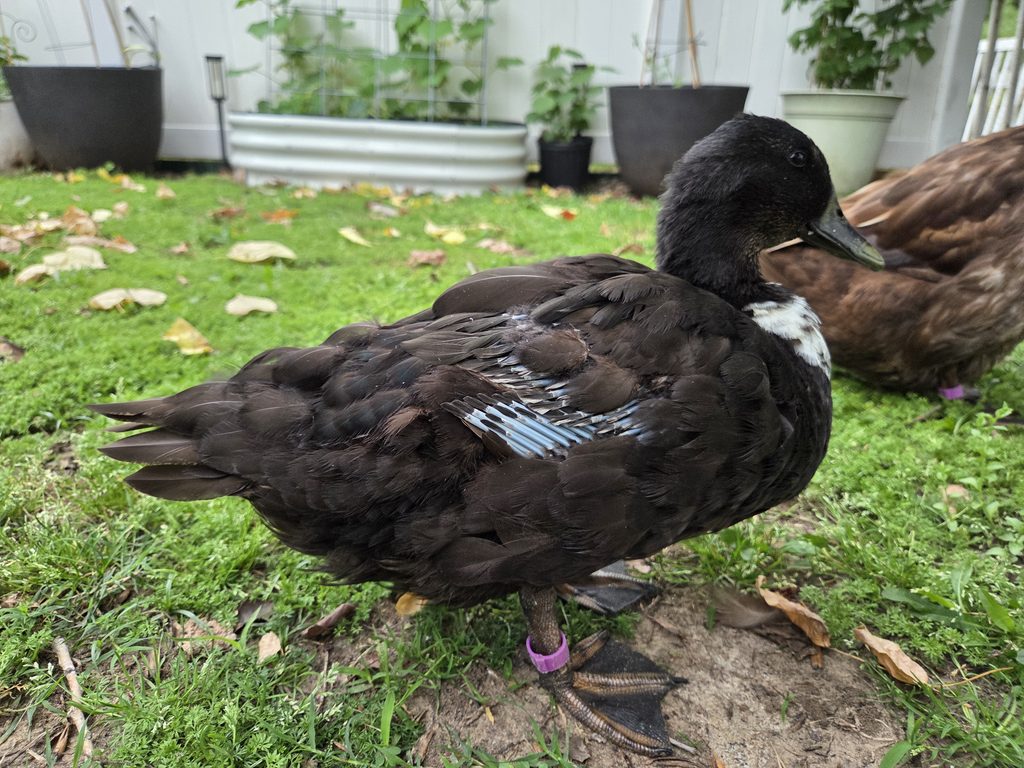
From Our Flock: Molting Season Is a Little Dramatic
Every year, our yard eventually reaches the stage where it looks like someone opened a feather-filled pillow and shook it over the duck run. And right now, we are very much in that season.
At the moment, Schnatterinchen and Simon are actively molting, while Emma and Muffin have already finished theirs. It is a perfect example of why I do not simply switch the entire flock to a higher protein feed during molting season. Even though they live together under the same conditions, they are not replacing their feathers at the same time.
Instead, I keep their normal balanced diet consistent and give the ducks that are actively molting some additional protein-rich treats. Dried mealworms and black soldier fly larvae are convenient favorites, while live mealworms and earthworms add both protein and some very enthusiastic enrichment.
And Then There Is the Molting Mood…
Our girls also tend to become very dramatic when they molt.
They are more easily irritated, more on edge, and considerably more vocal about their dissatisfaction with…well, pretty much everything. There is a lot of complaining around here during a heavy molt.
And frankly, I do not blame them.
Growing new feathers means developing lots of sensitive pin feathers. These new feathers have a blood supply while actively growing and can be uncomfortable when bumped or handled. Add the physiological demands of replacing a significant portion of your plumage, and I can understand why nobody is particularly interested in being touched or dealing with flock drama.
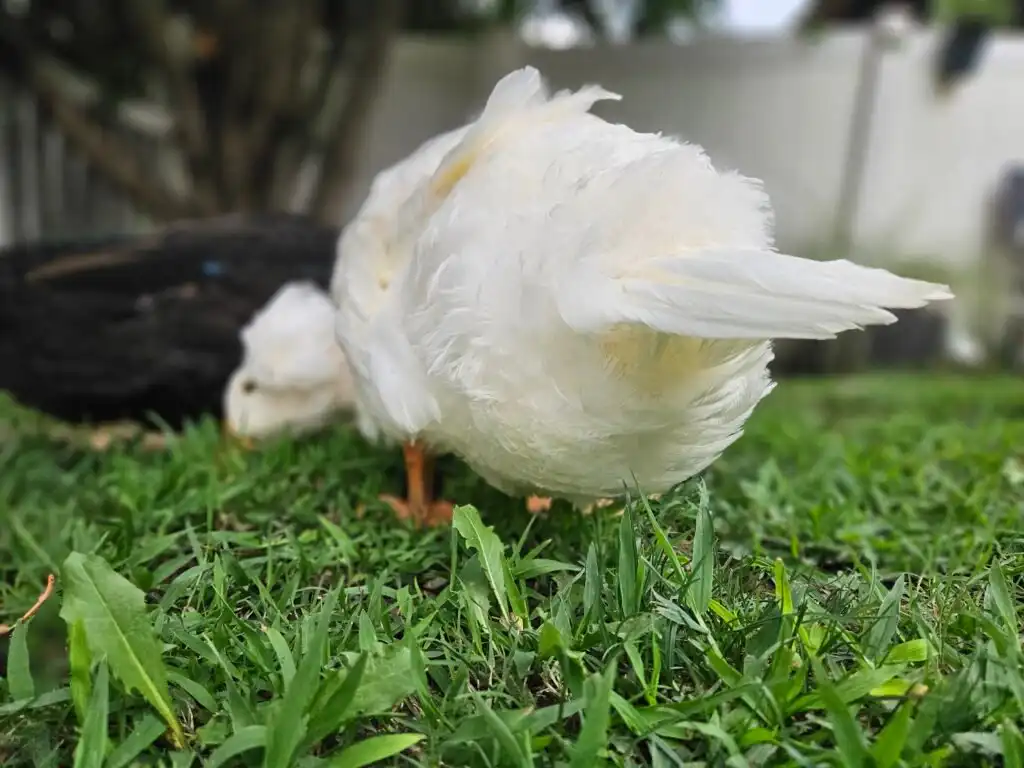
I try to give our molting ducks a little extra space and avoid unnecessary handling when they are covered in sensitive new feathers. If I do need to pick someone up, I am particularly careful around areas with lots of developing pin feathers.
So if your normally friendly hen suddenly seems personally offended by your existence while simultaneously shedding half her wardrobe across the yard, take a look at those feathers before assuming something is wrong with your relationship.
She may just be molting.
And yes, I still give her mealworms. Complaining burns calories, right?
Frequently Asked Questions About Feeding Ducks During Molting
Do ducks need more protein when they are molting?
Ducks may benefit from additional protein during molt because growing new feathers requires protein and amino acids. However, that does not necessarily mean you need to switch to a high-protein feed. If your duck already eats a complete, balanced diet, modest supplementation with protein-rich foods may be enough to support normal feather growth.
What should I feed my duck during molting?
A complete, balanced duck or waterfowl feed should remain the foundation of the diet. During a heavy molt, you can supplement with protein-rich foods such as mealworms, black soldier fly larvae, earthworms, or small amounts of cooked egg. I prefer targeted supplementation because our ducks rarely molt at exactly the same time.
What protein percentage should I feed a molting duck?
There is no single protein percentage that is appropriate for every molting duck. The right amount depends on the duck’s regular diet, age, laying status, and the severity of the molt. If your feed already contains around 16 to 18 percent crude protein and is formulated as a complete diet, a dramatic increase may not be necessary. Look at the entire diet rather than choosing a feed solely because it has the highest protein percentage.
Are mealworms good for molting ducks?
Yes. Mealworms can be a useful protein-rich treat during molt, and most ducks absolutely love them. We offer both dried and live mealworms to our flock. Live mealworms have the added benefit of encouraging natural foraging behavior. However, mealworms should supplement a balanced diet rather than replace significant amounts of complete feed.
Can you give a molting duck too much protein?
More protein is not automatically better. Once a duck’s nutritional needs are being met, continually adding high-protein foods does not necessarily improve feather growth. Large amounts of protein-rich treats can also cause ducks to eat less of their nutritionally balanced feed. The goal is adequate, high-quality protein within a balanced diet, not as much protein as possible.
Is it normal for ducks to act differently while molting?
It can be. Some ducks become more irritable, sensitive, or reluctant to be handled during a heavy molt. Growing pin feathers are sensitive while they are developing, so I give our molting ducks extra space and avoid unnecessary handling. Our girls, in particular, can become remarkably vocal about their displeasure during molt.
However, significant lethargy, loss of appetite, weakness, weight loss, or other signs of illness should not automatically be blamed on molting. If your duck seems genuinely unwell, investigate further and contact an avian veterinarian when appropriate.
Supporting Your Duck Through Molting Season
Molting asks a lot from a duck’s body. Growing thousands of new feathers requires protein, essential amino acids, energy, vitamins, and minerals. So yes, nutrition matters during molt, and a little additional protein can help support healthy feather growth.
But that does not mean every feather on the ground calls for a bag of high-protein feed.
For our flock, I prefer to keep a complete, balanced feed as the nutritional foundation and supplement the ducks that are actively molting with protein-rich treats such as mealworms, black soldier fly larvae, and earthworms. Since our ducks rarely molt at exactly the same time, this lets me support Schnatterinchen and Simon while they are currently molting without unnecessarily changing the diet for Emma and Muffin, who have already finished theirs.
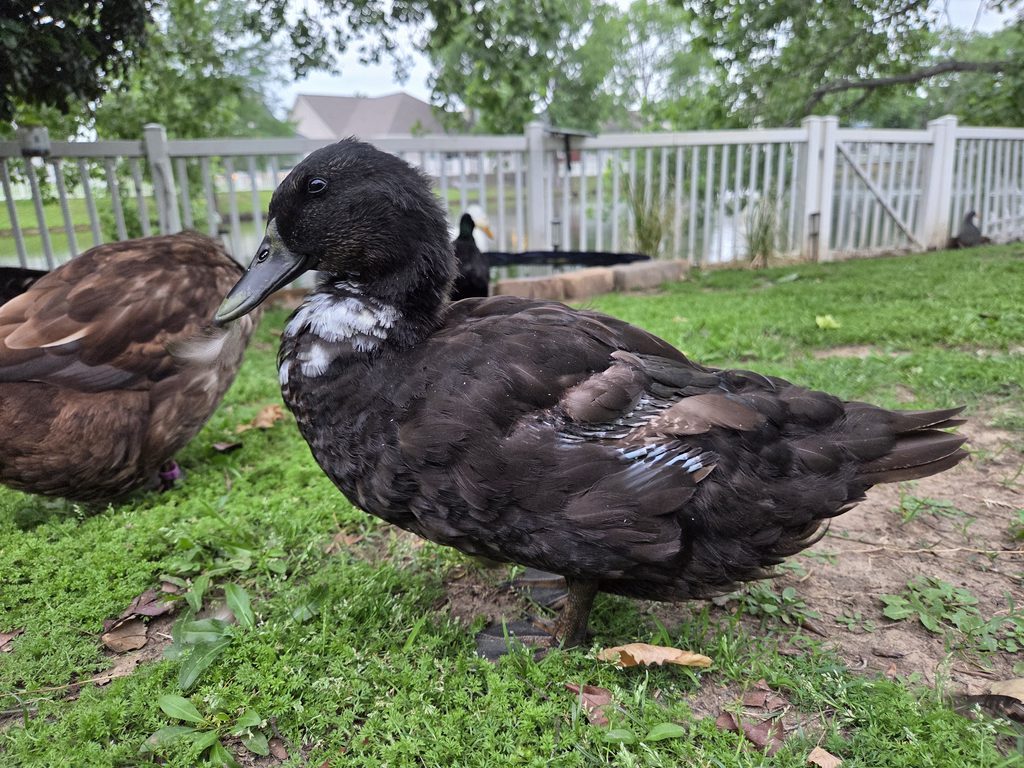
Most importantly, watch the duck in front of you. A normal molt can make a duck look scruffy and, at least in our flock, a little extra opinionated. But weight loss, loss of appetite, weakness, abnormal skin, or poor feather regrowth deserve a closer look rather than another handful of mealworms.
Further Reading & Resources
- Navigating Pet Duck Molting: A Owner’s Handbook
- The Science Behind Duck Feathers: Anatomy, Function & Care
- Essential Nutritional Needs of Ducks: A Complete Overview
- Commercial Duck Feed Comparison
- Mealworms and Grubs for Ducks: Nutrition, Benefits, and Best Brands
- Do Ducks Really Need Water All Night? Yes. Here’s Why.
- Merck Veterinary Manual: Nutrition in Waterfowl
Fuel your flock with precision. Visit the Feeding & Nutrition Directory for our latest research on bio-appropriate diets.