
Reproductive Emergencies in Ducks: Egg Yolk Peritonitis and Internal Laying

Last updated: September 30th, 2026
To keep our research-backed guides free, this site uses ads and affiliate links (earning a small commission at no cost to you). Everything here is created by a duck mom and PhD scientist, combining academic rigor with hands-on experience to provide practical, trustworthy advice for duck keepers everywhere. 🦆 Learn more
Reproductive problems are unfortunately very common in pet ducks, especially in highly productive domestic breeds that lay far more eggs than their wild ancestors ever would. One of the most serious conditions I have encountered in duck keeping is egg yolk peritonitis, often linked to internal laying.
These conditions can become life-threatening very quickly, and the early signs are often subtle. A duck may simply seem off, slightly bloated, less active, or not interested in food. Many duck parents initially assume it is temporary digestive upset or broodiness.
I have dealt with reproductive disease in my own flock, including ongoing reproductive complications in Krümel, and one thing I have learned is this:
Ducks are extremely good at hiding illness until they are critically sick.
Understanding what internal laying and egg yolk peritonitis actually are can help you recognize problems earlier and get veterinary care before things become an emergency.
Part of the Duck Health & Anatomy Hub, Evidence-based medical resources and anatomical research.
Quick Navigation: Jump to a Section
[hide]
- What Is Internal Laying?
- What Is Egg Yolk Peritonitis?
- Why These Conditions Happen: Causes and Risk Factors
- Why Repeated Internal Laying Becomes So Dangerous
- Symptoms and Warning Signs
- The Dangerous Part: It Often Looks Like Other Conditions
- How Veterinarians Diagnose Internal Laying and Egg Yolk Peritonitis
- Treatment Options
- Can Ducks Recover?
- Prevention and Long-Term Management
- FAQ About Egg Yolk Peritonitis and Internal Laying
- Final Thoughts
- Further Reading & Resources
- Scientific References
What Is Internal Laying?
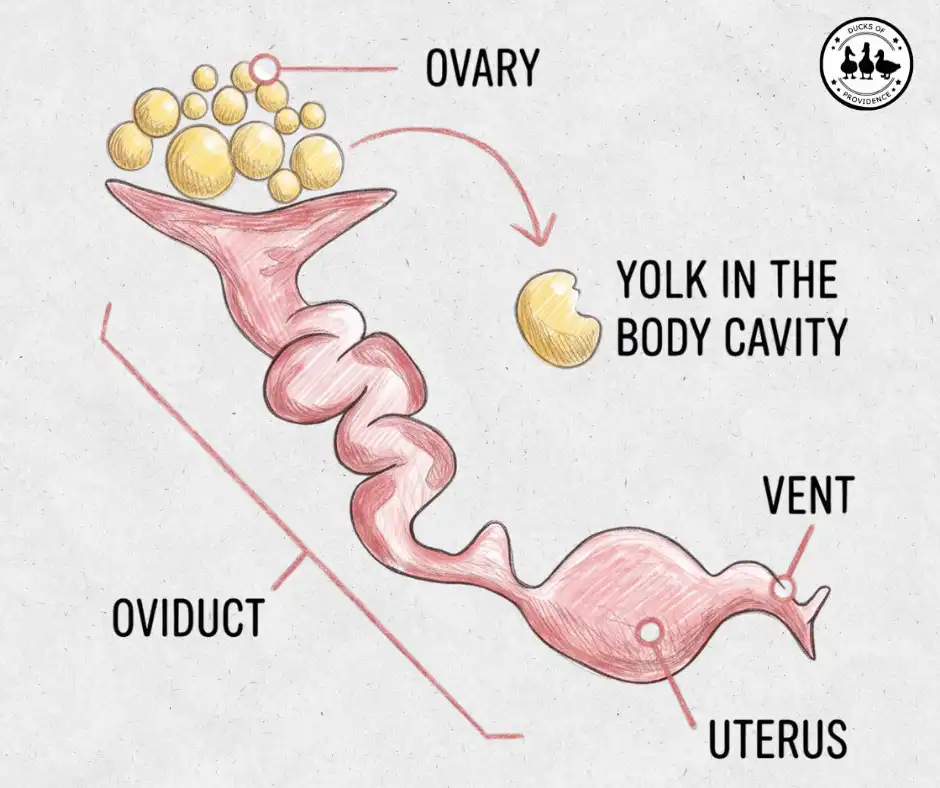
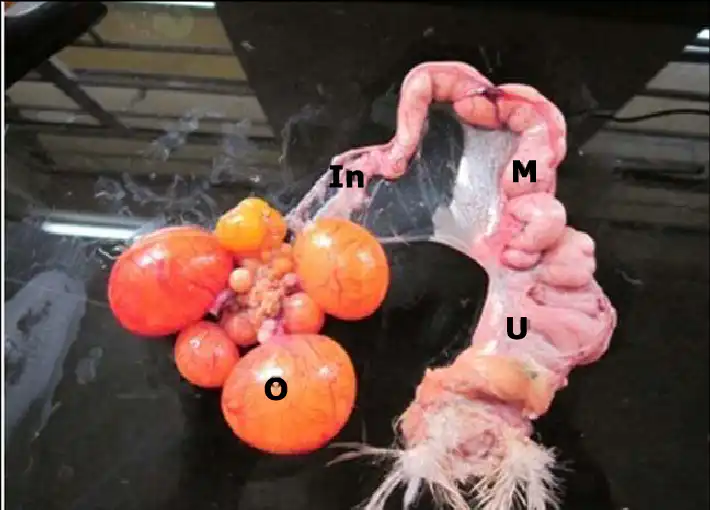
Internal laying occurs when a duck ovulates normally, but the yolk fails to properly enter the oviduct, where a normal egg would usually be formed.
Instead of traveling through the reproductive tract to receive the egg white, membranes, and shell, the yolk is released directly into the abdominal cavity.
In simple terms, the duck’s body produces the yolk, but the yolk never becomes a normal laid egg.
This is different from egg binding. With egg binding, an egg is formed but becomes stuck inside the reproductive tract. With internal laying, the egg often never fully forms in the first place because the yolk misses the oviduct entirely.
A small amount of internal laying can occasionally happen even in otherwise healthy birds. In some cases, the body is able to gradually reabsorb small amounts of yolk material without causing obvious illness.
However, the problem becomes much more serious when internal laying happens repeatedly.
And unfortunately, in domestic laying ducks, repeated ovulation is extremely common.
Modern domestic ducks, especially prolific laying breeds, produce far more eggs than wild ducks naturally would. That means the reproductive tract is under constant hormonal and physical stress.
Over time, repeated ovulation and chronic reproductive activity can increase the likelihood of:
- Misfired ovulations
- Oviduct dysfunction
- Weakening of reproductive tissues
- Inflammation
- Infection
- Scarring
- Fluid accumulation
One way I often explain it is this:
The duck’s abdomen is simply not designed to repeatedly handle egg material outside the reproductive tract.
Yolk is highly nutrient-dense and biologically active. Once loose inside the abdomen, it irritates tissues and triggers inflammation. It also creates an ideal environment for bacterial growth.
That combination is what makes internal laying potentially so dangerous.
Repeated internal laying can eventually lead to:
| Potential Complication | Why It Happens |
|---|---|
| Severe inflammation | Yolk material irritates internal tissues |
| Fluid buildup | Inflammatory processes produce abdominal fluid |
| Infection | Pressure affects the lungs and air sacs |
| Organ compression | Fluid and debris crowd internal organs |
| Breathing difficulty | Pressure affects lungs and air sacs |
| Chronic abdominal disease | Ongoing inflammation damages tissues |
| Egg yolk peritonitis | Internal yolk leakage triggers major inflammatory disease |
In more advanced cases, ducks may develop large, swollen abdomens filled with inflammatory fluid and yolk debris. This buildup can place pressure on the lungs and air sacs, making breathing increasingly difficult.
One reason these conditions can become so severe in birds is because birds do not have a diaphragm like mammals do. Their respiratory system depends heavily on the movement of air sacs and body structures. Increased abdominal pressure can therefore interfere significantly with breathing.
Some ducks with chronic internal laying also develop:
- Reduced appetite
- Weight loss
- Decreased activity
- Difficulty walking
- Penguin stance posture
- Reduced interest in swimming
- Recurring infections
In my experience, one of the hardest parts is that the signs often develop gradually. Many ducks continue acting relatively normal during the earlier stages, even while significant disease is already developing internally.
That is why monitoring subtle behavioral changes in laying ducks is so important.
A duck that suddenly seems quieter, less active, slightly bloated, or less interested in food may already be dealing with reproductive disease long before obvious emergency symptoms appear.
What Is Egg Yolk Peritonitis?
Egg yolk peritonitis (EYP) is a serious reproductive condition in which egg material leaks into the abdominal cavity, triggering inflammation and, in many cases, bacterial infection.
To understand why this becomes so dangerous, it helps to briefly understand how a normal egg is formed.
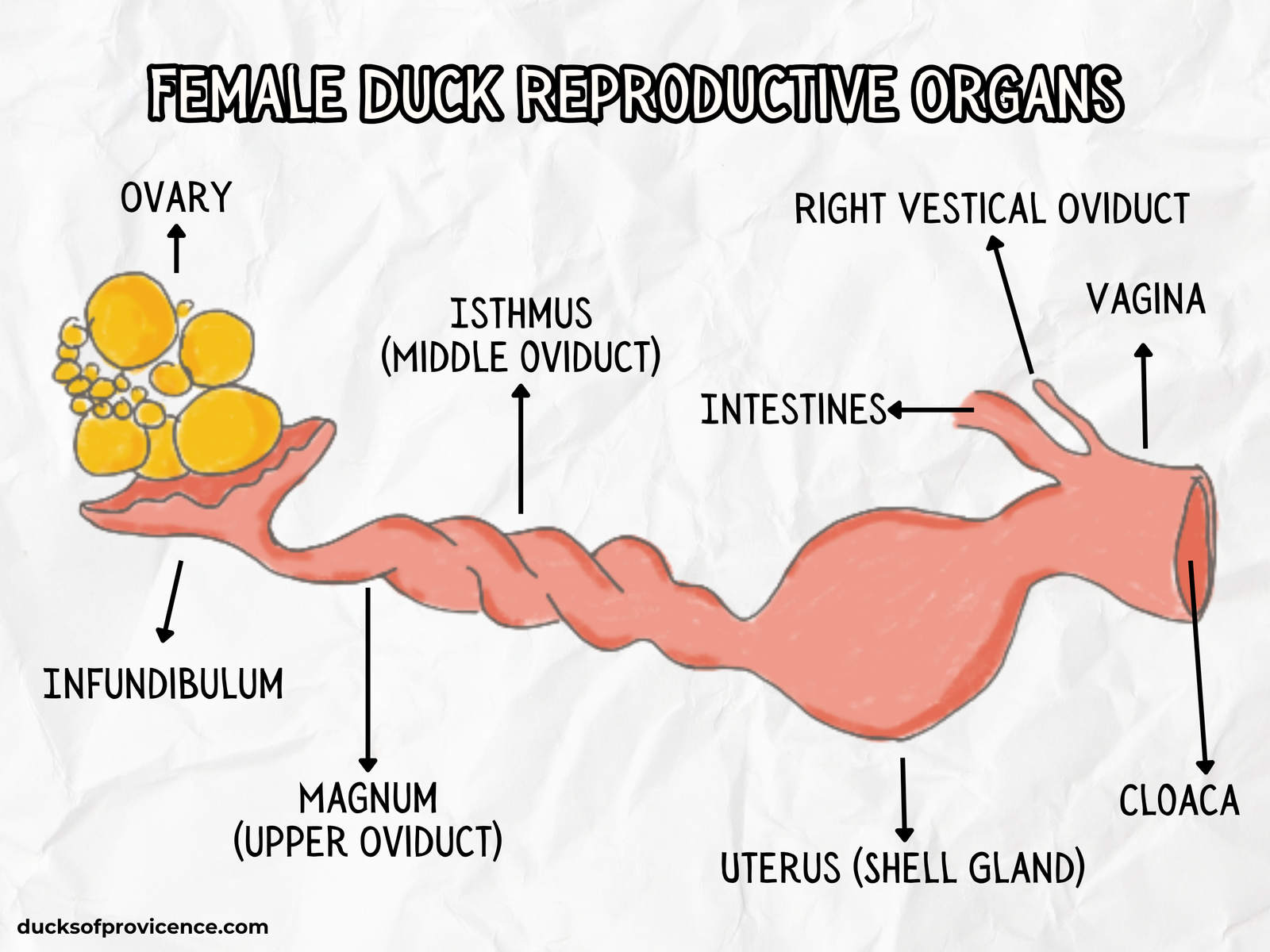
In a healthy duck, the ovary releases a yolk during ovulation. That yolk should enter the oviduct, where the egg white, membranes, and shell are added before the completed egg is laid.
With egg yolk peritonitis, something in that process goes wrong.
Instead of remaining contained within the reproductive tract, yolk material ends up loose inside the abdomen. The body recognizes this material as foreign and responds with inflammation. Over time, fluid, inflammatory debris, and infection can build up inside the abdominal cavity.
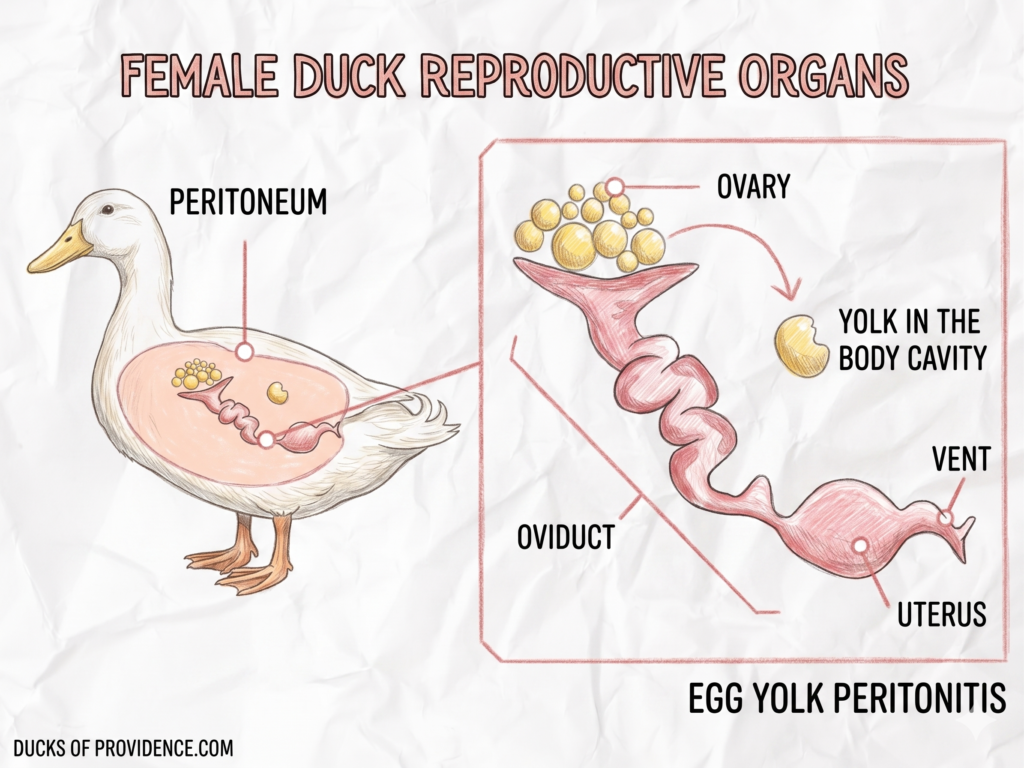
The word peritonitis refers to inflammation of the peritoneum, the thin membrane lining the abdominal cavity and surrounding internal organs.
Unfortunately, yolk is extremely irritating to tissues and also provides a nutrient-rich environment where bacteria can thrive.
In ducks, egg yolk peritonitis may develop because:
- Egg yolk leaks internally after ovulation
- A malformed or shell-less egg ruptures
- An egg becomes stuck in the reproductive tract
- The oviduct becomes damaged or dysfunctional
- Bacteria travel upward into the reproductive system
- Chronic reproductive disease weakens the tissues over time
In some ducks, this process happens suddenly and dramatically. In others, it develops slowly over weeks or even months.
I have seen cases where ducks initially appeared only mildly bloated or quieter than usual before eventually developing severe abdominal swelling and breathing difficulty.
One reason EYP is so dangerous is because the abdomen in birds contains multiple tightly packed organs with very limited extra space. As fluid and inflammatory material accumulate, pressure builds inside the body cavity.
This can compress:
- Air sacs
- Lungs
- Intestines
- Liver
- Other abdominal organs
That is why many ducks with advanced egg yolk peritonitis eventually develop breathing difficulties or a characteristic upright “penguin stance.”
The condition itself can vary significantly in severity.
| Type | Description |
|---|---|
| Sterile EYP | Inflammation caused mainly by yolk material without major bacterial infection |
| Septic EYP | Bacterial infection develops alongside inflammation, making the condition much more dangerous |
In sterile cases, the body may initially attempt to wall off or reabsorb leaked material. Some ducks remain relatively stable for a period of time.
However, once bacteria become involved, the situation can deteriorate rapidly.
Common bacteria associated with reproductive infections in birds include organisms normally present in the intestinal or reproductive tract that gain access to damaged tissue.
Septic EYP can lead to:
- Severe systemic infection
- Organ dysfunction
- Respiratory compromise
- Sepsis
- Shock
- Death if untreated
One of the most frustrating aspects of egg yolk peritonitis is that ducks often hide symptoms extremely well during the earlier stages. By the time obvious swelling or weakness develops, significant internal disease may already be present.
That is why subtle behavioral changes should never be ignored in laying ducks.
Why These Conditions Happen: Causes and Risk Factors
Internal laying and egg yolk peritonitis rarely develop because of one single problem. In most ducks, these conditions are the result of multiple overlapping factors that gradually damage or overwhelm the reproductive system over time.
The reality is that domestic ducks are biologically pushed far beyond what wild ducks naturally experience.
Wild Mallards, the ancestors of most domestic duck breeds, typically lay one seasonal clutch during the breeding season. Their reproductive system then has long recovery periods.
Domestic laying ducks are fundamentally different from their wild counterparts, and this difference plays a major role in why reproductive disease is so common.
Many pet ducks now produce eggs nearly year round, often without mating, and continue doing so for multiple consecutive years. This level of productivity is far beyond what wild birds evolved to sustain. In nature, egg laying is a seasonal process with built-in periods of rest, allowing the reproductive system time to recover.
In domestic ducks, that natural rhythm is largely absent.
Instead, the reproductive system is kept in a near constant active state. The ovaries, oviduct, muscles, and hormonal pathways are continuously engaged in egg production, often without meaningful breaks. Over time, this creates cumulative strain on the entire system.
As that strain builds, tissues may become less resilient and more prone to dysfunction. Coordination between the ovary and oviduct can begin to fail, muscle function may weaken, and the risk of abnormalities such as internal laying or egg rupture increases.
This is why the likelihood of reproductive malfunction rises so significantly over time, especially in ducks that have been laying heavily for several years.
Chronic Egg Production
Frequent ovulation is one of the biggest underlying drivers of reproductive disease in ducks. Every single egg requires a complex and tightly coordinated process that begins with hormonal stimulation and the release of a yolk from the ovary. That yolk then needs to be properly captured by the oviduct, where it moves through different sections to receive the egg white, membranes, and shell before being transported and eventually laid through coordinated muscle contractions.
In laying ducks, this entire process repeats over and over again, often for months at a time and across multiple years. Over time, this constant demand can take a toll on the reproductive system. The tissues may become inflamed, stretched, or even scarred, and their ability to function smoothly and efficiently can decline. As coordination decreases and tissue integrity weakens, the likelihood of errors increases.
This is when problems such as internal laying begin to occur. Yolks may fail to enter the oviduct properly, or eggs may rupture during formation or transport. It is also why these issues tend to become more common as ducks age, since the cumulative strain on the reproductive system builds over time.
Oviduct Trauma and Damage
Damage to the oviduct is a major risk factor for internal laying because this structure plays a critical role in capturing the yolk after ovulation and guiding it through the entire egg formation process. When everything functions normally, the yolk is immediately picked up by the oviduct and moves through a highly coordinated system where the egg white, membranes, and shell are added. If that process is disrupted, even briefly, the yolk may fail to enter the oviduct and instead fall into the abdominal cavity.
This type of dysfunction often develops when the oviduct has been previously stressed or injured. Conditions such as egg binding, prolapse, or ruptured eggs can cause direct trauma to the tissue. Chronic inflammation, difficult laying episodes, and repeated stretching from long-term egg production can further weaken the structure. Over time, this may lead to the formation of scar tissue, which reduces flexibility and interferes with normal movement and coordination within the reproductive tract.
Once the oviduct has been damaged, it rarely returns completely to its original state. Even if a duck appears to recover, the underlying tissue may remain compromised. This makes future problems, including internal laying and other reproductive complications, much more likely as the system becomes less reliable over time.
Infection
Infections of the reproductive tract can significantly disrupt normal egg formation and transport. Under healthy conditions, the oviduct provides a controlled and protected pathway for the yolk to move through the body and develop into a fully formed egg. When bacteria enter this system, that delicate balance is quickly compromised.
Bacteria may gain access through the vent or spread internally from nearby organs. Once infection takes hold, inflammation develops, and the lining of the oviduct can become swollen, irritated, and less coordinated. This makes it much harder for the reproductive tract to function properly, increasing the likelihood that yolks are not captured correctly or that eggs are damaged during formation.
As a result, several complications can occur. Yolk material may leak into the abdominal cavity, eggs may rupture before being laid, and fluid can begin to accumulate as part of the inflammatory response. These changes create a cascade effect, where one problem quickly leads to another.
What makes this especially dangerous is what happens once yolk enters the abdomen. Yolk is highly nutrient-dense, and in this environment, it essentially becomes a perfect growth medium for bacteria. A situation that may have started as sterile inflammation can rapidly progress into a full septic infection.
This transition is often the tipping point where the condition becomes much more serious, which is why early recognition and treatment of reproductive infections are so critical.
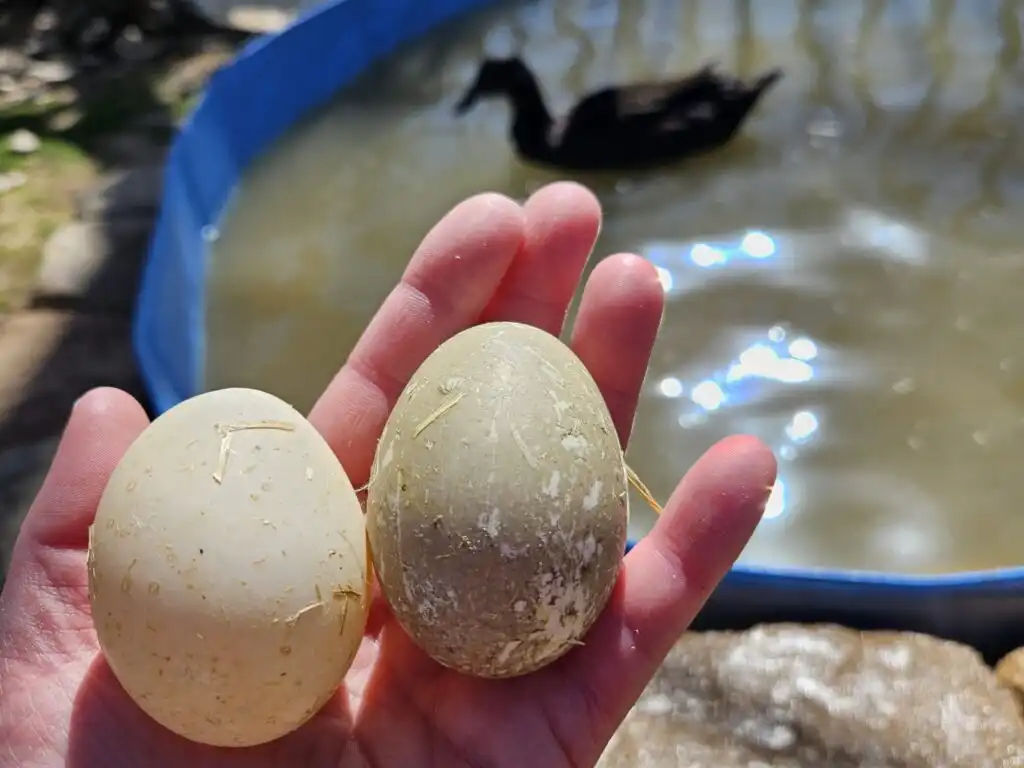
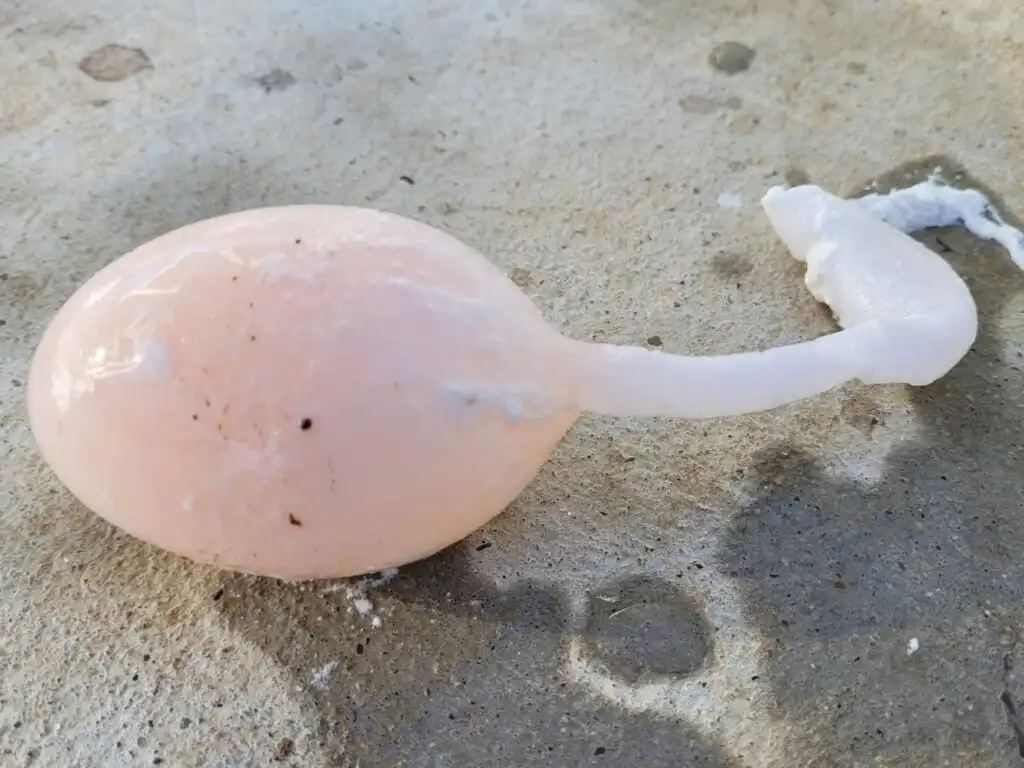
Thin-Shelled, Shell-Less, or Ruptured Eggs
Abnormal eggs are another major contributor.
Thin-shelled or shell-less eggs are much more fragile and prone to rupture either inside the reproductive tract or after leaking internally.
These abnormal eggs may develop because of:
- Calcium imbalance
- Nutritional deficiencies
- Hormonal abnormalities
- Oviduct disease
- Chronic reproductive stress
When these eggs rupture internally, they release yolk and inflammatory material directly into the abdominal cavity.
That significantly increases the risk of infection and severe inflammation.
Hormonal Imbalance and Chronic Stimulation
Hormones regulate every step of the egg laying cycle, from ovulation to the final act of laying. When that hormonal system is constantly stimulated, the reproductive tract remains in a near continuous state of activity.
Anything that mimics or prolongs breeding season conditions can contribute to this effect. Artificial lighting, extended daylight exposure indoors, and consistently warm temperatures signal to the body that conditions are ideal for reproduction. Diet also plays a role. High calorie intake and selective breeding for heavy laying further reinforce this constant reproductive drive, while the absence of a natural seasonal slowdown removes the opportunity for recovery.
In many indoor environments, ducks are essentially exposed to endless spring-like conditions. Their bodies never receive the signals to pause egg production, so ovulation continues without meaningful breaks.
Over time, this constant hormonal stimulation can exhaust the reproductive system. The ovaries and oviduct are repeatedly pushed to perform without rest, increasing the risk of dysfunction. As coordination declines and tissues become strained, the likelihood of issues such as internal laying, abnormal eggs, and egg yolk peritonitis rises.
This is one of the key reasons why managing environmental factors, especially light exposure, can make a meaningful difference in long-term reproductive health.
Obesity
Excess body weight is an important and often underestimated risk factor in reproductive disease.
Obesity affects multiple systems at once. Increased fat tissue promotes inflammation throughout the body and can disrupt normal hormone balance, both of which interfere with proper reproductive function. At the same time, extra weight reduces mobility, making it physically harder for ducks to lay eggs efficiently and recover from illness.
There is also a mechanical component. Fat accumulation within the abdominal cavity can compress internal organs, including the reproductive tract, which may further complicate egg movement and increase the likelihood of internal laying or egg retention.
From a medical standpoint, overweight ducks also tend to have a harder time recovering once disease develops. They may not tolerate stress, infection, or surgical procedures as well, and overall resilience is often lower.
In my experience, maintaining a healthy body condition is one of the most practical and impactful ways to support long-term reproductive health.
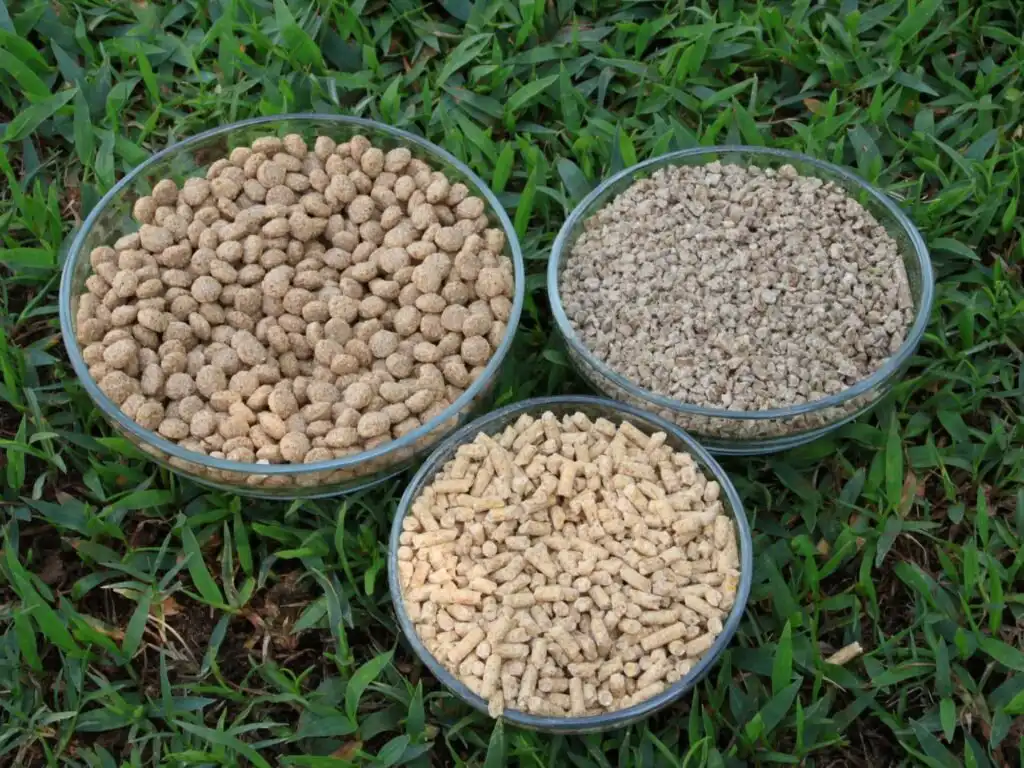
Nutritional Deficiencies and Calcium Imbalance
Egg production places enormous nutritional demands on the body, and even small imbalances can have a significant impact on reproductive health.
Ducks require adequate levels of calcium, protein, vitamins, and trace minerals to support proper egg formation and the function of the reproductive tract. When these nutrients are lacking or out of balance, the system becomes more vulnerable to dysfunction.
Calcium plays a particularly critical role. It is not only needed for strong eggshell formation, but also for proper muscle contractions within the oviduct. These contractions are essential for moving the egg smoothly through the reproductive tract. When calcium levels are insufficient or poorly regulated, this process can become inefficient or fail altogether.
As a result, ducks may begin producing shell-less or thin-shelled eggs, which are more fragile and prone to rupture. At the same time, weakened muscle function can lead to egg retention or incomplete movement through the oviduct. Together, these changes increase the risk of internal leakage, oviduct dysfunction, and ultimately more serious complications such as internal laying or egg yolk peritonitis.
Ensuring a well-balanced diet with appropriate calcium support is therefore a key part of maintaining reproductive health.
Congenital and Genetic Defects
Some ducks appear genetically predisposed to reproductive disease.
Congenital abnormalities of the reproductive tract may interfere with normal egg movement from an early age.
Additionally, many domestic laying breeds have been selectively bred for extremely high egg production rather than reproductive longevity.
In many ways, the reproductive system is being pushed beyond what evolution originally optimized for survival.
I personally think this is one reason reproductive disease is so incredibly common in domestic ducks.
Age Related Reproductive Disease
As ducks age, the reproductive tract becomes increasingly vulnerable to wear and tear from years of egg production. Tissues that once functioned smoothly may begin to degenerate, and low-grade inflammation can become more persistent. Over time, this can lead to scarring, reduced muscle tone, and a loss of coordination within the oviduct, all of which make normal egg transport more difficult.
These age-related changes also create an environment where additional complications are more likely to develop. Tumors, secondary infections, and chronic reproductive inflammation become more common in older ducks, further increasing the risk of dysfunction.
As a result, older female ducks are among the highest risk group for internal laying and egg yolk peritonitis. Even ducks that have been healthy for years can begin to show reproductive issues as these cumulative effects take hold, which is why closer monitoring becomes especially important as ducks age.
Why Repeated Internal Laying Becomes So Dangerous
A small amount of internally leaked yolk may sometimes be reabsorbed by the body. The problem develops when internal laying happens repeatedly. Over time, yolk material can accumulate inside the abdominal cavity along with:
- Inflammatory debris
- Fluid
- Scar tissue
- Bacteria
This buildup gradually increases pressure within the abdomen.
In birds, that is especially dangerous because their organs and air sacs are tightly packed into a relatively small body cavity.
As pressure increases, ducks may develop:
- Abdominal swelling
- Difficulty walking
- Penguin stance posture
- Reduced appetite
- Breathing difficulty
- Chronic infection
- Organ compression
Repeated internal laying also dramatically increases the risk of developing full egg yolk peritonitis.
And once infection becomes established, deterioration can happen very quickly.
The Bigger Picture
The longer I keep ducks, the more convinced I become that many reproductive diseases are closely tied to the intense egg production demands we have placed on domestic ducks.
Their bodies were never designed to sustain nearly continuous laying cycles for years.
Even with excellent nutrition, careful management, and attentive veterinary care, some ducks still develop serious reproductive disease simply because the biological demands placed on their reproductive systems are enormous.
Ducks at Higher Risk
Some ducks appear far more prone to reproductive problems than others. Higher risk groups include:
- Heavy laying breeds
- Older female ducks
- Overweight ducks
- Ducks with previous egg binding history
- Ducks with chronic reproductive hormone stimulation
- Indoor ducks exposed to artificial light for long periods
- Ducks genetically selected for egg production
Even excellent care cannot fully eliminate the risk. Some ducks simply seem genetically predisposed to reproductive disease.
Symptoms and Warning Signs
One of the most challenging aspects of internal laying and egg yolk peritonitis is that the early signs are often extremely subtle.
Many ducks do not suddenly appear critically ill at first. Instead, they may simply seem quieter than usual, less active, slightly uncomfortable, or just not quite themselves.
Because ducks instinctively hide illness, significant disease may already be developing internally long before obvious symptoms appear. This is what makes reproductive disease so dangerous.
I always tell fellow duck keepers this:
If your duck feels off, even slightly, it is worth paying attention.
| Stage | Symptom | What It Looks Like | Why It Happens |
|---|---|---|---|
| Early | Reduced appetite | Eats less or only picks at favorite foods | Abdominal discomfort and early inflammation reduce appetite |
| Early | Lethargy | Less active, rests more, slower movements | Energy diverted to inflammation and early illness |
| Early | Behavioral change | Quieter, less social, less curious | Ducks instinctively hide illness |
| Early | Increased nest sitting | Spends long periods in nest without laying | Discomfort mistaken for broodiness |
| Early | Decreased egg production | Fewer eggs or stops laying | Reproductive dysfunction |
| Early | Abnormal eggs | Soft-shelled, thin-shelled, misshapen eggs | Poor shell formation, oviduct issues |
| Early | Mild abdominal enlargement | Slight swelling, soft or squishy belly | Early fluid or yolk accumulation |
| Early | Tail pumping | Noticeable tail movement with breathing | Increased abdominal pressure affecting respiration |
| Progressive | Reduced mobility | Less walking, reluctance to move | Pain, pressure, and weakness |
| Progressive | Weight loss | Loss of muscle despite normal or swollen appearance | Chronic inflammation and reduced intake |
| Advanced | Distended abdomen | Large, rounded, fluid-filled belly | Accumulation of fluid, yolk, and debris |
| Advanced | Penguin stance | Standing upright instead of horizontal | Attempt to relieve abdominal pressure |
| Advanced | Difficulty breathing | Rapid breathing, open bill, neck stretching | Compression of lungs and air sacs |
| Advanced | Dirty vent | Soiled feathers around vent | Discharge, weakness, or inability to clean |
| Advanced | Straining | Repeated attempts to lay or defecate | Reproductive tract irritation or blockage |
| Severe | Weakness | Trouble standing, unsteady gait | Systemic illness and organ stress |
| Severe | Collapse | Unable to stand or move normally | Advanced disease, possible sepsis |
Early Signs
The earliest symptoms are often vague and easy to miss, and some ducks only show subtle behavioral or posture changes at first.
You may notice reduced appetite, lethargy, or a duck that sits more than usual. Some lose interest in swimming or become less social. Tail pumping can appear early and may indicate discomfort or increasing abdominal pressure.
A very important early pattern involves changes in egg laying.
Ducks with developing egg yolk peritonitis will usually lay fewer eggs or stop laying altogether. If they continue laying, the eggs are often abnormal. Common changes include consistently soft-shelled eggs, thin-shelled eggs, or visibly deformed eggs.
Another behavior I see quite often is increased time spent in the nesting area. Ducks may sit in the nest box for long periods without actually laying an egg. This is where things can get confusing.
At first glance, this can look like broodiness.
But a duck with reproductive disease is not behaving like a focused, protective broody hen. Instead, she often appears tired, uncomfortable, and disengaged.
I have seen this mistaken many times, and it can delay getting help.
Early physical signs may also include mild abdominal enlargement. At first, this can be subtle and easy to dismiss as weight gain or normal fullness. Over time, however, the abdomen may start to feel soft, squishy, or fluid-filled rather than firm.
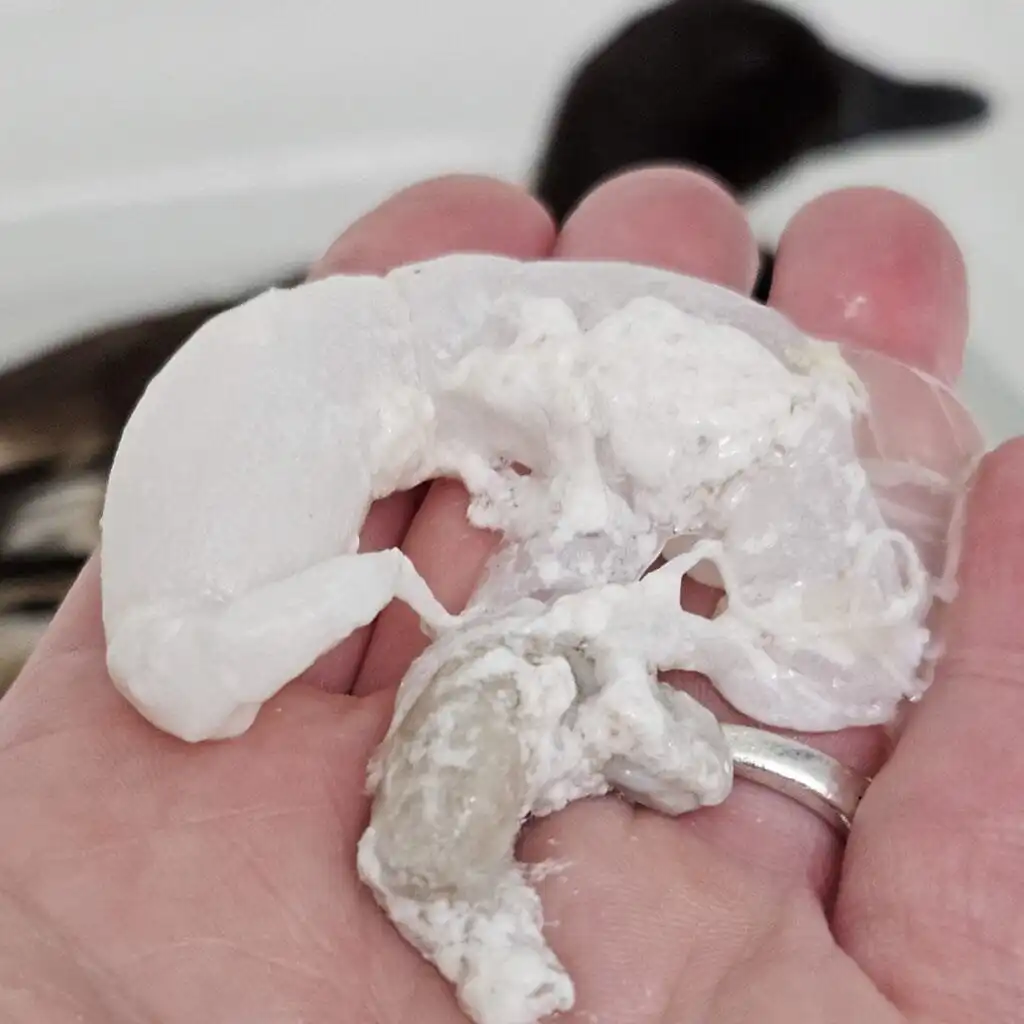
Behavioral Changes That Matter
One of the earliest and most reliable indicators is a shift in normal personality.
A duck that normally runs toward treats, follows you around, or actively engages with the flock may suddenly hang back, rest more, or show less curiosity.
That loss of engagement is something I personally take very seriously in my own flock.
More Advanced Signs
As inflammation, fluid buildup, and possible infection progress, symptoms become much more obvious.
The abdomen may become visibly distended due to fluid accumulation, sometimes referred to as ascites. This swelling can become quite pronounced and is often described as rounded, heavy, or pendulous.
At this stage, ducks frequently adopt a penguin-like stance, standing more upright to relieve pressure in the abdomen. This posture is a classic sign of advanced reproductive disease and should always raise concern.
Mobility may become affected. Ducks can develop difficulty walking, reduced willingness to move, and increasing weakness.
Breathing difficulty is another critical sign. As fluid and inflammatory material accumulate, they compress the lungs and air sacs. Ducks may begin breathing more rapidly, show tail bobbing, stretch their neck while breathing, or even breathe with an open bill.
Another important and sometimes surprising sign is weight loss despite a swollen abdomen. The duck may look bloated, but underlying muscle mass and body condition are declining due to chronic inflammation and disease.
In severe cases, weakness progresses to the point where ducks may struggle to stand or eventually collapse.
The Pattern You Should Never Ignore
There is a very specific combination of signs that should always raise red flags:
A duck that:
- stops laying or lays abnormal eggs,
- spends excessive time sitting in the nest without producing eggs,
- becomes quieter or less active,
- and develops even mild abdominal swelling
should immediately be evaluated for reproductive disease.
The Most Important Takeaway
The progression of these conditions is often gradual until suddenly it is not.
Ducks can compensate incredibly well for weeks, and then decline very quickly once the disease reaches a tipping point.
That is why small changes matter.
A duck that eats less, swims less, sits more, looks slightly puffier, or behaves differently may already be dealing with significant internal disease.
And here is the question I always ask myself when watching my flock:
Is she resting because she wants to, or because she has to?
That distinction can make all the difference.
The Dangerous Part: It Often Looks Like Other Conditions
This is one reason reproductive disease is so challenging.
Egg yolk peritonitis can resemble:
- Ascites
- Obesity
- Egg binding
- Gastrointestinal disease
- Tumors
- Liver disease
- Heart disease
- Internal masses
You cannot reliably diagnose it at home based only on appearance.
How Veterinarians Diagnose Internal Laying and Egg Yolk Peritonitis
Diagnosing internal laying and egg yolk peritonitis can be surprisingly difficult because the symptoms overlap with many other diseases. A duck with a swollen abdomen, reduced appetite, or breathing difficulty could potentially be dealing with reproductive disease, but similar signs can also occur with ascites, tumors, liver disease, obesity, gastrointestinal disorders, or even heart problems.
Because of this, veterinarians usually rely on a combination of medical history, physical examination, imaging, and laboratory testing rather than a single definitive test.
Medical History and Clinical Signs
The diagnostic process often starts with the duck’s reproductive history and recent behavioral changes. An avian veterinarian will usually ask whether the duck has stopped laying, begun producing abnormal eggs, or shown signs such as lethargy, reduced appetite, abdominal enlargement, or breathing changes.
A history of chronic laying, shell-less eggs, egg binding, previous reproductive infections, or ongoing hormonal problems can strongly increase suspicion for internal laying or egg yolk peritonitis.
In many cases, duck keepers report that their duck simply seemed off before more dramatic symptoms developed.
Physical Examination
A hands on examination provides important clues. Many affected ducks have a visibly enlarged abdomen that may feel soft or fluid filled rather than firm. Some veterinarians describe the abdomen in advanced cases as almost water balloon like because of fluid accumulation and inflammatory debris.
The duck’s posture is also important. Ducks with advanced reproductive disease often develop a more upright penguin stance as abdominal pressure increases. Breathing effort may become more obvious, especially if fluid and inflammation are compressing the air sacs and lungs.
Veterinarians also assess body condition carefully because some ducks appear bloated while simultaneously losing muscle mass and weight elsewhere on the body.
Ultrasound
Ultrasound is one of the most valuable tools for diagnosing reproductive disease in ducks because it allows visualization of soft tissues and abdominal fluid. It can help identify free fluid within the abdomen, internal egg material, inflamed reproductive tissues, and enlarged structures associated with chronic reproductive disease.
Unlike X-rays, ultrasound is especially good at detecting fluid accumulation and soft tissue abnormalities that may otherwise be difficult to see.
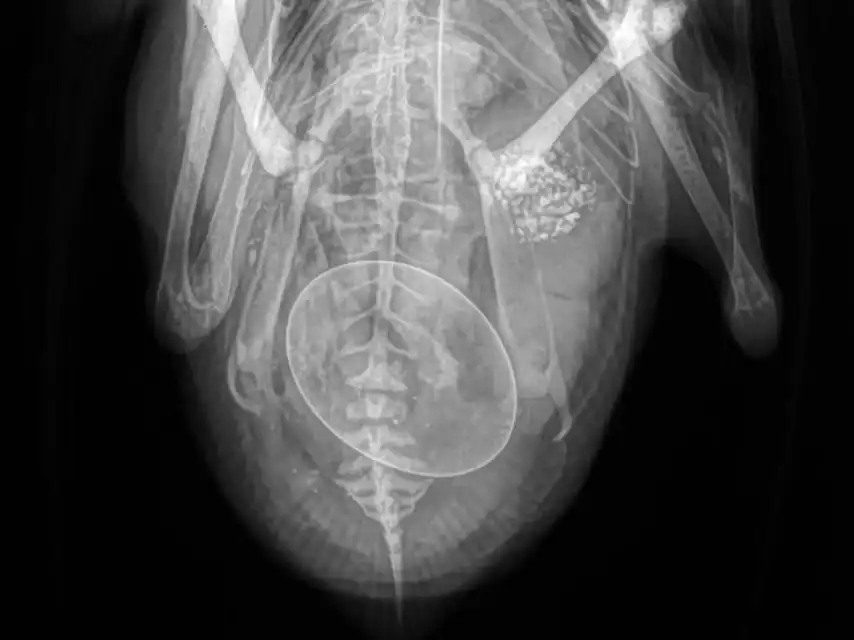
Radiographs (X Rays)
Radiographs are commonly used to evaluate the abdomen and reproductive tract. They can reveal retained eggs, shell fragments, enlarged abdominal structures, abnormal masses, or displacement of organs caused by fluid buildup.
In some ducks, partially formed or malformed eggs may still be visible within the body cavity.
However, severe fluid accumulation can sometimes make interpretation more difficult because the abdomen may appear diffusely opaque or whited out. Even so, X-rays remain extremely useful for ruling out other conditions such as egg binding or metal ingestion.
Bloodwork
Blood tests help veterinarians assess how severely the duck is affected overall. Ducks with egg yolk peritonitis may show elevated white blood cell counts, inflammatory changes, dehydration, protein abnormalities, or signs of organ dysfunction.
While bloodwork alone cannot confirm internal laying, it helps determine whether systemic infection or sepsis may already be developing and guides treatment decisions.
Abdominal Fluid Sampling
In some cases, veterinarians may collect a sample of abdominal fluid for analysis. Fluid associated with egg yolk peritonitis is often cloudy, yellow, thick, and highly inflammatory.
This testing can help determine whether bacteria are present and whether the condition is primarily sterile inflammation or a septic infection. In more severe cases, fluid analysis may also help guide antibiotic selection.
Ruling Out Other Conditions
One of the most important parts of diagnosis is excluding other diseases that can mimic reproductive problems. Conditions such as liver disease, tumors, obesity, heart failure, or generalized ascites can all cause abdominal swelling and breathing difficulty.
That is why imaging and veterinary evaluation are so important. A swollen abdomen in a duck should never automatically be assumed to be reproductive disease without proper assessment.
Why Early Diagnosis Matters
Unfortunately, many ducks are diagnosed only after the disease has already progressed significantly. Ducks instinctively hide weakness and illness, meaning subtle symptoms may be the only warning signs for quite some time.
A duck that suddenly becomes quieter, stops laying, sits more often, develops mild abdominal swelling, or loses interest in swimming may already have significant reproductive disease developing internally.
By the time severe breathing difficulty, collapse, or profound weakness develops, the condition may already be life threatening.
In many ducks, diagnosis involves combining multiple findings rather than one single definitive test.
| Diagnostic Method | What It Helps Detect |
|---|---|
| Medical history | Changes in egg laying, abnormal eggs, previous reproductive problems, behavioral changes |
| Physical examination | Abdominal enlargement, fluid buildup, pain, penguin stance, breathing difficulty, body condition changes |
| Ultrasound | Free abdominal fluid, internal yolk material, inflamed tissues, enlarged reproductive structures, organ displacement |
| Radiographs (X rays) | Retained eggs, shell fragments, abdominal enlargement, masses, organ compression, metal ingestion |
| Bloodwork | Infection, inflammation, dehydration, organ dysfunction, systemic illness severity |
| Abdominal fluid analysis | Presence of inflammatory fluid, yolk material, bacteria, septic versus sterile inflammation |
| Differential diagnosis | Helps rule out liver disease, tumors, ascites, obesity, gastrointestinal disease, and heart disease |
Treatment Options
Treatment for internal laying and egg yolk peritonitis depends heavily on how early the condition is identified and whether infection is present.
In very mild cases, especially when no bacterial infection has developed, some ducks can be managed with supportive care alone. These are the situations where catching subtle early signs truly makes a difference.
However, once inflammation progresses or infection develops, treatment becomes more complex and often requires a combination approach.
Medical Management
Most cases are treated with a combination of medications aimed at controlling inflammation, infection, and pain, while also supporting the duck’s overall condition.
Antibiotics are commonly used when bacterial infection is suspected or confirmed. Because yolk material inside the abdomen creates an ideal environment for bacterial growth, infection is a frequent complication. Veterinarians often choose broad spectrum antibiotics initially and may adjust treatment based on response or fluid analysis.
Anti-inflammatory medications play a central role in treatment. These help reduce the body’s inflammatory response to yolk material inside the abdomen, which can otherwise lead to significant tissue damage and fluid accumulation.
Pain management is equally important. Ducks in pain often become quiet, withdrawn, and stop eating. Addressing discomfort not only improves welfare but also helps support recovery by encouraging normal behavior.
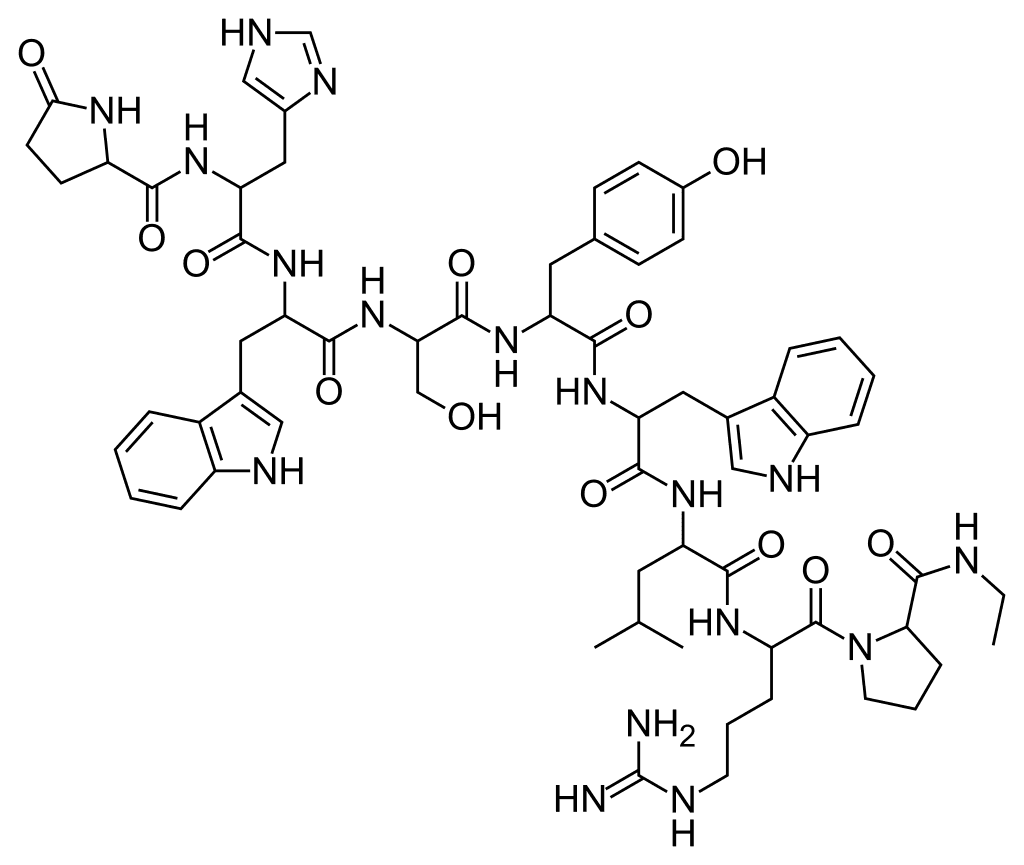
In many cases, treatment also includes efforts to reduce or stop egg production. Continued laying can worsen the condition by introducing more yolk into the abdomen. Hormonal therapies such as deslorelin implants or leuprolide injections are often used to suppress reproductive activity and give the reproductive system a chance to rest.
Supportive Care
Supportive care is a critical component of treatment and can significantly influence outcomes.
This may involve fluid therapy to address dehydration, nutritional support to maintain body condition, and careful monitoring of weight and appetite. Ducks that are not eating well may require assisted feeding or highly palatable foods to maintain energy intake.
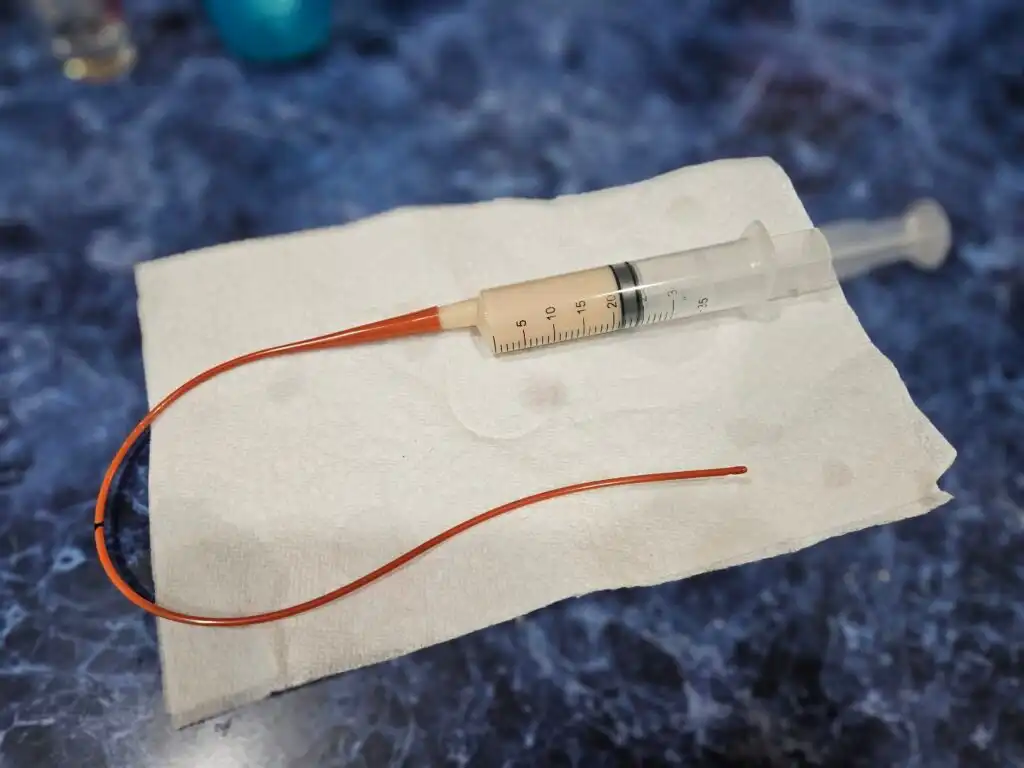
In cases with significant abdominal fluid buildup, veterinarians may perform fluid drainage to relieve pressure. This can improve comfort and, importantly, reduce pressure on the lungs and air sacs, which may help breathing.
Some ducks can be managed at home with close veterinary guidance, but others require hospitalization, especially if they are weak, dehydrated, or showing respiratory compromise.
Surgical Options
In more severe or persistent cases, surgery may be considered.
This can include removal of accumulated egg material from the abdominal cavity or more advanced procedures if the reproductive tract is severely diseased.
In chronic or recurrent cases, additional diagnostics such as laparoscopy or exploratory surgery may be needed to fully assess the extent of disease.
One of the most aggressive but sometimes necessary interventions is a salpingohysterectomy, which involves removal of the oviduct to permanently stop egg production. This is a major procedure and not without risk, but in some ducks with repeated life threatening reproductive disease, it may be the only long term solution.
Prognosis and Reality
The outcome varies widely depending on:
- Severity of the condition
- Presence of infection
- How early treatment begins
- Overall health of the duck
Mild, non infected cases can respond well to treatment, especially when addressed early.
However, severe septic egg yolk peritonitis carries a guarded prognosis, even with aggressive therapy. Once systemic infection, organ dysfunction, or significant respiratory compromise develops, recovery becomes much more difficult.
| Treatment Approach | What It Involves | When It’s Used | Goal |
|---|---|---|---|
| Supportive care | Fluids, warmth, rest, close monitoring, assisted feeding if needed | Mild or early cases without infection | Stabilize the duck and support recovery |
| Antibiotics | Broad-spectrum antibiotics, sometimes adjusted after testing | When bacterial infection is suspected or confirmed | Control or eliminate infection |
| Anti-inflammatory therapy | Medications to reduce inflammation | Most cases, especially with abdominal irritation | Reduce tissue damage and fluid buildup |
| Pain management | Analgesics prescribed by a veterinarian | Ducks showing discomfort or reduced activity | Improve comfort and encourage normal behavior |
| Hormonal suppression | Deslorelin implants or leuprolide injections | Chronic or recurrent reproductive disease | Reduce or stop egg production |
| Fluid drainage | Removal of abdominal fluid by a veterinarian | Cases with significant fluid buildup and pressure | Relieve discomfort and improve breathing |
| Nutritional support | High-quality diet, assisted feeding if needed | Ducks with reduced appetite or weight loss | Maintain body condition and energy |
| Hospitalization | Intensive care, fluids, monitoring, medications | Severe cases, weakness, or breathing issues | Stabilize critical patients |
| Surgical removal of egg material | Removal of accumulated yolk and debris | Severe or non-responsive cases | Reduce inflammatory load |
| Advanced surgery (salpingohysterectomy) | Removal of the oviduct | Chronic, recurring, or life-threatening cases | Permanently stop egg production |
| Diagnostic-guided escalation | Imaging, fluid analysis, possible laparoscopy | Persistent or unclear cases | Refine diagnosis and guide treatment |
What I Have Learned from My Own Flock
Reproductive disease is one of those areas where timing matters more than almost anything else.
A duck that is treated early, when signs are still subtle, often has far better outcomes than one that is only seen once severe swelling or breathing difficulty develops.
That is why I always encourage duck keepers to act early.
If something feels off, it is worth checking.
Can Ducks Recover?
Recovery Is Possible, Especially Early
Yes, ducks can recover from internal laying and even egg yolk peritonitis, especially when the condition is identified early and treated promptly. I have seen ducks return to a good quality of life when intervention happens before severe infection or organ compromise develops.
That said, recovery does not always mean the problem is fully resolved.
Why Recurrence Is Common
One of the realities of reproductive disease in ducks is that it often becomes a chronic condition rather than a one-time event. The underlying issue, whether it is oviduct dysfunction, chronic inflammation, or hormonal imbalance, may still be present even after the initial episode improves.
Because of this, recurrence is unfortunately common.
Many ducks go through cycles where they seem stable for a period of time and then develop symptoms again, especially if egg production continues. Each episode can place additional stress on the body, which is why long-term management becomes so important.
Long-Term Management Instead of a One-Time Fix
In practice, this often means shifting from a mindset of curing the condition to managing it over time.
Long-term care typically involves regular monitoring of behavior, appetite, body condition, and egg production patterns. Subtle changes, like a duck sitting more often, producing abnormal eggs, or becoming less active, can be early indicators that something is starting again.
Veterinary involvement often becomes part of ongoing care rather than a one-time visit. Follow-ups may be needed to adjust medications, reassess fluid accumulation, or evaluate whether additional intervention is necessary.
The Role of Hormonal and Lifestyle Management
For many ducks, hormonal management plays a key role. Treatments such as deslorelin implants or leuprolide injections can reduce or suppress egg laying, which helps take pressure off the reproductive system. In some cases, this alone can significantly improve stability.
Diet and body condition also matter more than many people realize. Maintaining a healthy weight reduces strain on the body and may help improve overall resilience. Overweight ducks tend to have a harder time recovering and are more prone to complications.
Environmental factors can also influence long-term outcomes. Reducing excessive light exposure, especially for indoor ducks, may help decrease continuous reproductive stimulation and give the body a chance to rest.
When Recovery Is No Longer Possible
There is also an important and difficult reality to acknowledge.
In some cases, when the disease is very advanced or discovered late, the damage to the body may be too severe. Ducks may be experiencing significant pain, infection, organ compression, or respiratory distress that cannot be effectively reversed.
In those situations, the most humane and compassionate decision may be to let them go under veterinary guidance. While this is incredibly hard, it can be the kindest option to prevent prolonged suffering.
I always remind myself and others that our responsibility is not just to keep our ducks alive, but to protect their quality of life.
Why Early Action Changes Everything
What I come back to, both in my own flock and when talking to other duck keepers, is how much early intervention changes the trajectory.
A duck that is evaluated when signs are still subtle often has far more options and a better chance at stabilization than one that is only treated once the condition has become advanced.
So while recovery is absolutely possible, it often comes with a new level of awareness and care.
And that is not a failure.
It is simply part of managing a condition that many of our modern laying ducks are biologically predisposed to develop.
Prevention and Long-Term Management
You cannot prevent every reproductive issue, but there is a lot you can do to reduce risk and catch problems earlier.
Over the years, I have come to think of this less as prevention and more as setting your ducks up for long-term stability. Small, consistent choices in care can make a meaningful difference.
Build a Strong Foundation
Maintaining a healthy body weight is one of the most important factors. Ducks that are overweight tend to have more difficulty with egg laying and are at higher risk for complications. I am always mindful of treats in my own flock. It is very easy to overdo them, especially when they are just so enthusiastic about snacks.
A balanced diet is equally important. High-quality feed should remain the primary food source, with treats offered in moderation. Proper calcium intake supports muscle function and eggshell formation, which helps reduce the risk of thin-shelled or ruptured eggs.
Reduce Reproductive Strain
One of the biggest drivers of reproductive disease is chronic egg production.
While we cannot fully control laying, we can reduce some of the triggers that keep ducks in a constant laying cycle. This is especially relevant for indoor ducks.
Excessive artificial lighting can extend daylight hours and signal the body to keep producing eggs. Keeping a more natural light cycle can help give the reproductive system periods of rest.
Temperature, diet, and overall environment also play a role. Ducks that experience a more natural seasonal rhythm often have built-in breaks from laying.
Monitor Changes Closely
Early detection is one of the most powerful tools we have.
I always recommend paying close attention to:
- Changes in egg production
- Egg quality
- Behavior and activity levels
- Appetite
- Body shape, especially the abdomen
Even small changes can be early warning signs. A duck that starts laying soft-shelled eggs, sits more often, or seems slightly less active may already be developing reproductive issues.
Older ducks in particular should be monitored more closely, as the risk increases with age.
Work With a Veterinarian Early
Establishing a relationship with an avian veterinarian before there is an emergency makes a huge difference.
When something does come up, you already have someone familiar with your flock and access to care without delays. In chronic cases, ongoing veterinary input can help guide decisions around hormonal management, monitoring, and treatment adjustments.
The Bigger Picture
Even with excellent care, some ducks will still develop reproductive disease.
That is not a failure.
Many of our domestic ducks have been bred to lay far more eggs than their bodies were originally designed to handle. There is only so much we can control.
What we can do is reduce unnecessary strain, recognize changes early, and respond quickly.
And in my experience, that is what truly makes the difference over time.
When This Becomes an Emergency
There is a point where supportive care at home is no longer enough.
If a duck shows clear signs of distress, especially breathing difficulty, severe lethargy, or significant abdominal swelling, immediate veterinary care is critical.
Reproductive disease can shift from manageable to life threatening very quickly, and timing matters more than anything in those moments.
FAQ About Egg Yolk Peritonitis and Internal Laying
What causes egg yolk peritonitis in ducks?
Egg yolk peritonitis is usually caused by egg material leaking internally into the abdominal cavity, leading to inflammation and often bacterial infection.
Can ducks survive egg yolk peritonitis?
Yes, especially if treated early. Prognosis depends on severity, infection, and underlying reproductive disease.
What is internal laying in ducks?
Internal laying occurs when yolk material is released into the abdomen instead of forming and passing through a normal egg.
Are some duck breeds more prone to reproductive disease?
Yes. Heavy-laying domestic breeds are generally at higher risk than seasonal wild-type ducks.
Can hormone implants stop egg laying?
Sometimes. Treatments like deslorelin implants may reduce or suppress laying, but results vary between ducks.
Is egg yolk peritonitis contagious?
No. It is a reproductive and inflammatory condition, not a contagious disease.
Can male ducks get egg yolk peritonitis?
No. This condition affects female ducks because it is related to egg production and the reproductive tract.
Final Thoughts
Egg yolk peritonitis and internal laying are among the most challenging conditions we face as duck keepers, both medically and emotionally. What makes them particularly difficult is how quietly they often begin. The earliest signs are rarely dramatic, and more often than not, it is a subtle shift in behavior that signals something is wrong. A duck that eats a little less, sits a bit more, or simply feels off can already be in the early stages of reproductive disease, which is why those small changes deserve attention.
At the same time, it is important to recognize that not everything is preventable. Many of our domestic ducks have been bred for egg production at levels their bodies were never designed to sustain long-term. Even with excellent care, balanced nutrition, and a well-managed environment, some ducks will still develop reproductive issues. That is not a reflection of failure, but rather a reality of the biology we are working with.
What truly matters is how we respond. In some cases, early intervention and thoughtful management can stabilize the condition and allow ducks to maintain a good quality of life. In others, especially when the disease is advanced or discovered late, the kindest decision may be to let them go to prevent further suffering. That is never easy, but it is an important part of responsible and compassionate care.
There is also reason for hope. Many ducks can recover or live comfortably with proper management, particularly when changes are recognized early. Staying observant, trusting your instincts, and acting on those small warning signs will always give your ducks the best chance.
Further Reading & Resources
- Reproductive Issues in Ducks: What They Are, Why They Happen, and How to Help
- Male and Female Duck Reproductive Systems
- Is My Duck Laying Eggs? Signs to Look For in Your Flock
- How Often Do Ducks Lay Eggs? Breaking Down Duck Egg Production and More
- The Science Behind Duck Egg Laying Process: From Ovulation to Oviposition
- When Do Ducks Stop Laying Eggs? Duck Henopause and Senior Duck Care
- Duck Diseases and Illnesses A to Z: A Complete Guide for Duck Owners
Deepen your understanding of avian wellness. Explore the full Duck Health & Anatomy Library for more specialized care guides.
Scientific References
- Greenacre, C. B., & Morishita, T. Y. (Eds.). (2021). Backyard poultry medicine and surgery: A guide for veterinary practitioners (2nd ed.). Wiley-Blackwell.
- VCA Animal Hospitals: Egg Yolk Peritonitis in Backyard Chickens, Gregory Rich, DVM; Laurie Hess, DVM
- Poultry DVM: Internal Laying
- Poultry DVM: Egg Yolk Peritonitis