
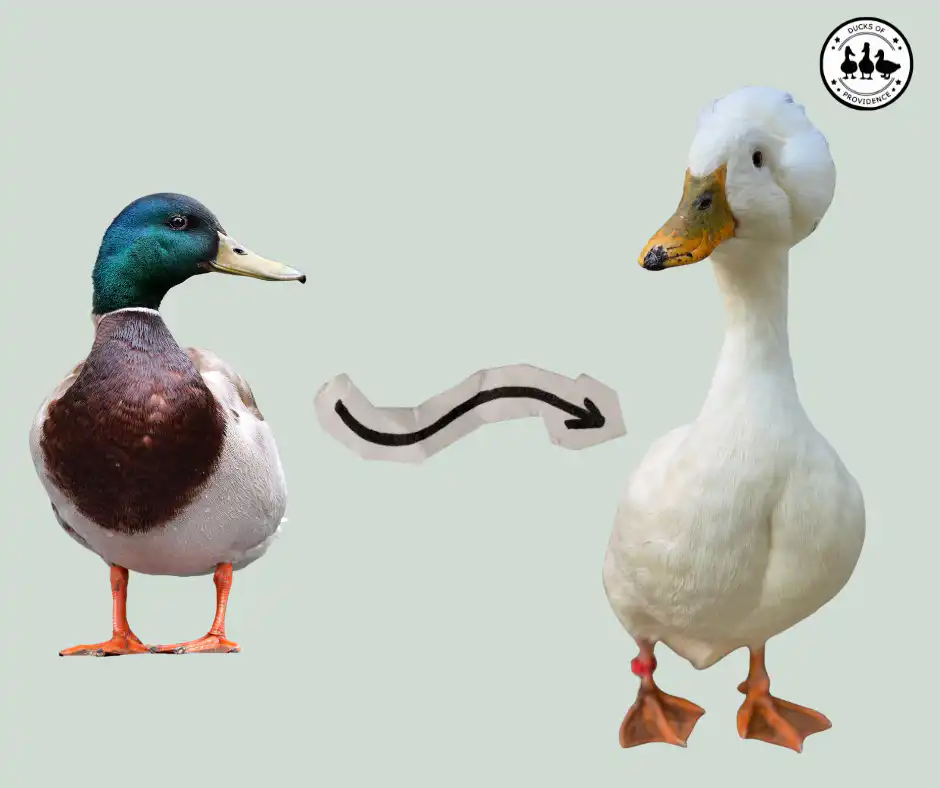
From Wild Mallards to Backyard Pets: The Evolution of Domestic Ducks

Last updated: April 3rd, 2026
To keep our research-backed guides free, this site uses ads and affiliate links (earning a small commission at no cost to you). Everything here is created by a duck mom and PhD scientist, combining academic rigor with hands-on experience to provide practical, trustworthy advice for duck keepers everywhere. 🦆 Learn more
If you look at the wide variety of duck breeds kept in backyards today, it is easy to assume they come from many different wild ancestors. Large white Pekins, sleek Runner ducks, dark Cayugas, and tiny Call ducks all look remarkably different from one another. Yet despite this incredible diversity, almost all domestic duck breeds share a common origin.
They descend from the wild Mallard.
The Mallard is one of the most widespread and adaptable duck species in the world. Found across North America, Europe, and Asia, these ducks thrive in a wide range of habitats, including wetlands, rivers, lakes, and even city parks. Their ability to adapt to different environments, combined with their relatively calm temperament around humans, made them an ideal candidate for early domestication.
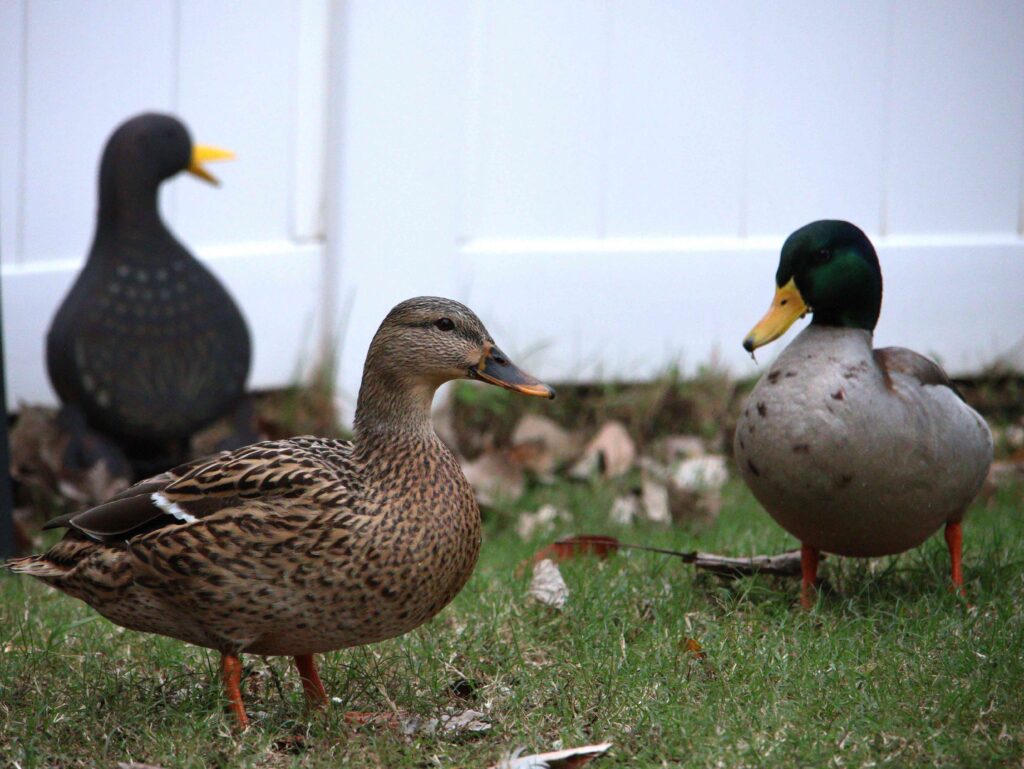
Over thousands of years, humans began selecting Mallards for specific traits. Some birds were bred for a larger body size to produce more meat. Others were chosen for increased egg production, distinctive feather colors, or calmer personalities that made them easier to manage in captivity. Through this long process of selective breeding, the many domestic duck breeds we know today gradually emerged.
Even though modern domestic ducks can look very different from their wild ancestors, the connection is still clear. Many breeds retain the classic Mallard body shape, the familiar quack of a hen, and behaviors such as dabbling, foraging, and strong social flock dynamics.
Understanding this evolutionary relationship helps us better appreciate our ducks. Beneath the feathers of every backyard duck lies a history that stretches back to wild wetlands and migratory flocks. In many ways, the ducks splashing in our backyard pools today are still carrying the legacy of their Mallard ancestors.
Part of the Beginner’s Handbook, Essential foundational data for new duck parents.
Quick Navigation: Jump to a Section
[hide]
- The Wild Ancestor: The Mallard
- Early Duck Domestication
- Selective Breeding and the Rise of Domestic Duck Breeds
- How Domestic Ducks Differ from Wild Mallards
- The One Exception: Muscovy Ducks
- Why Mallard Ancestry Still Matters Today
- FAQ Section
- Conclusion: A Wild Legacy in Every Backyard Duck
- Further Reading & Resources
- References
The Wild Ancestor: The Mallard
To understand the origin of most domestic duck breeds, we first have to look at their wild ancestor, the Mallard.
Mallards are one of the most widely distributed duck species in the world. They are native to large parts of North America, Europe, and Asia and have successfully adapted to a wide range of habitats. You can find them in wetlands, rivers, lakes, marshes, and increasingly even in urban environments such as ponds in parks and residential neighborhoods.
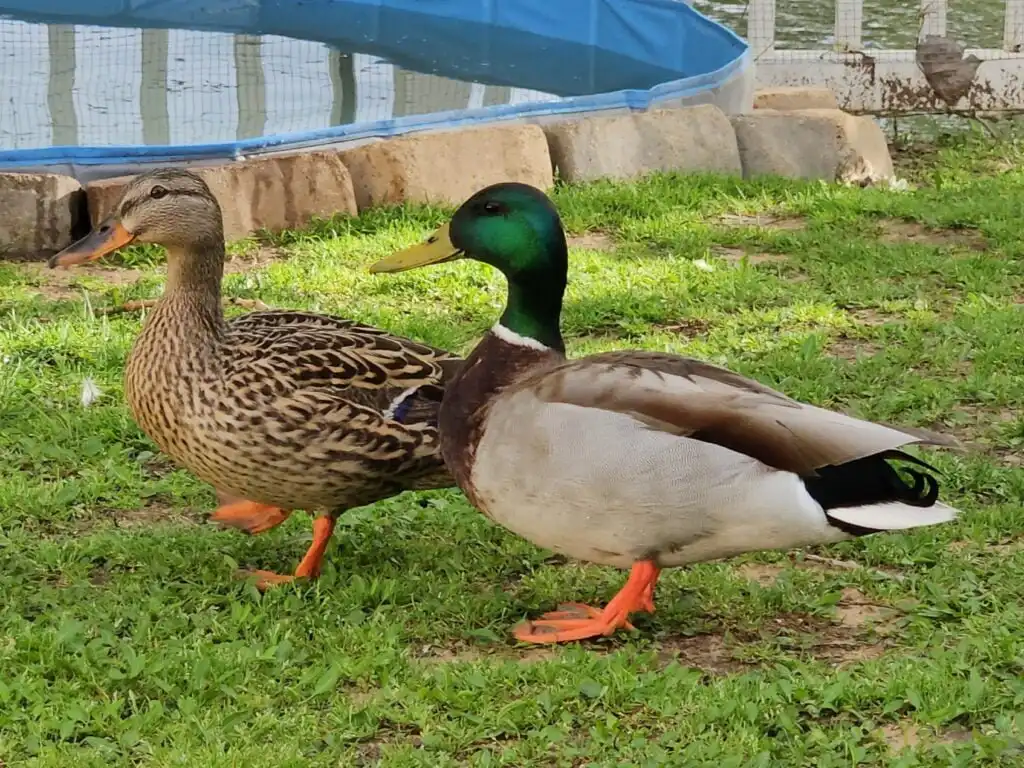
If you would like to learn more about their biology, behavior, and how they are sometimes kept as pets, you can read my full guide here: Mallard Ducks: Complete Breed Profile.
One of the key characteristics that made Mallards such successful survivors is their adaptability. They are opportunistic feeders, able to eat a wide variety of foods including aquatic plants, seeds, insects, and small aquatic animals. This flexible diet allowed them to thrive in environments shaped by human agriculture, where grain fields, irrigation systems, and artificial ponds created new food sources.
Mallards are also known for their strong reproductive potential. A single female can lay a clutch of 8 to 13 eggs, and under favorable conditions, they can produce multiple broods in a season. This relatively high reproductive rate made them attractive to early farmers who began keeping ducks for eggs and meat.
Another important factor is their temperament. Compared to many other wild waterfowl species, Mallards can tolerate human presence relatively well. Over time, individuals that were less fearful of humans were more likely to remain near settlements and eventually be selectively bred.
Physically, Mallards also provided an excellent foundation for domestication. Their medium body size, efficient foraging behavior, and good egg production made them useful birds for early agricultural societies.
When you watch a domestic duck dabbling in water, tipping forward to forage, or communicating with the familiar quack of a hen, you are often seeing behaviors that trace directly back to these wild ancestors. Even after thousands of years of selective breeding, the influence of the Mallard is still clearly visible in the ducks that share our backyards today.
Early Duck Domestication
The domestication of ducks began thousands of years ago, long before modern poultry farming existed. Historical and archaeological evidence suggests that ducks were first domesticated in East and Southeast Asia, where early agricultural societies recognized their value as a reliable source of meat and eggs.
Most researchers agree that domestication began with the wild Mallard. Mallards were already living close to human settlements, feeding in rice paddies, irrigation canals, and wetlands created by farming. This close proximity likely created the first opportunities for humans to capture and raise these birds.
Early farmers likely started by collecting eggs or raising young ducks taken from wild nests. Over time, ducks that tolerated human presence were kept and bred, gradually leading to birds that were more comfortable living near people. This process of selective breeding slowly changed the ducks’ behavior, size, and productivity.
China played a particularly important role in early duck domestication. Historical records suggest that ducks were being raised in managed systems in China over 2,000 years ago, often integrated directly into rice farming. Ducks were allowed to forage in flooded rice fields where they ate insects, weeds, and leftover grain while naturally fertilizing the fields with their manure. This system created a mutually beneficial relationship between agriculture and duck keeping that still exists in some parts of the world today.
As domesticated ducks spread through trade routes and human migration, they gradually reached Europe and other regions. Over centuries, people began selecting ducks for specific purposes. Some were bred primarily for meat production, while others were valued for egg laying or unique physical traits.
These early domestication efforts laid the foundation for the many domestic duck breeds we see today. What began as wild Mallards living near human settlements slowly evolved into the diverse backyard and farm ducks that have become such familiar companions in modern duck keeping.
Selective Breeding and the Rise of Domestic Duck Breeds
Once ducks began living alongside humans, the next major step in their evolution was selective breeding. Over generations, people began choosing which ducks were allowed to reproduce based on traits that were useful, productive, or visually appealing. This gradual process transformed the wild descendants of the Mallard into the many domestic duck breeds we recognize today.
Selective breeding does not happen overnight. Instead, it occurs slowly as farmers repeatedly choose birds with desirable characteristics. If a duck grew larger, laid more eggs, had a calmer temperament, or displayed unusual feather colors, those traits were often favored and passed on to future generations.
Over centuries, this careful selection produced ducks that looked and behaved very differently from their wild ancestors.
Traits Humans Selected For
Different regions of the world prioritized different qualities in ducks depending on local needs and farming practices.
Body Size and Meat Production
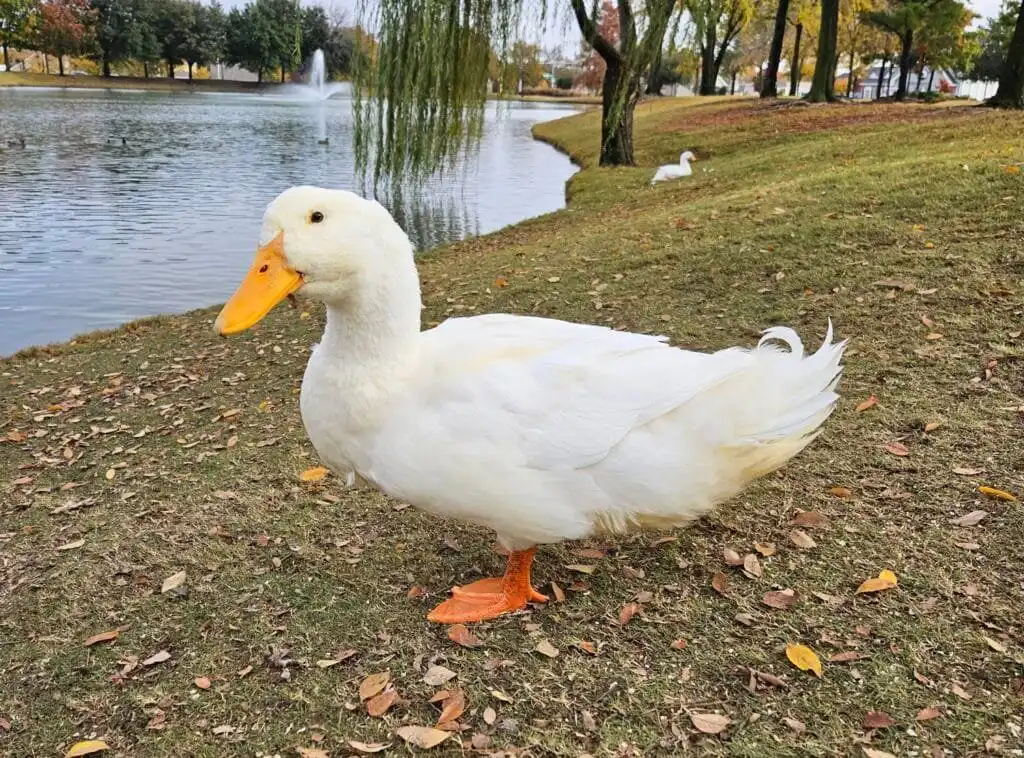
Some ducks were bred to grow larger and produce more meat. One of the most famous examples is the Pekin duck, which became the dominant meat duck breed worldwide due to its rapid growth and large body size.
Egg Production
Other ducks were selected for their ability to lay eggs consistently. Certain breeds can produce well over 200 eggs per year, making them valuable for households that relied on ducks as a steady food source.
Temperament
Wild Mallards are naturally cautious around predators and humans. Through domestication, ducks with calmer temperaments were favored because they were easier to manage in farms and backyard environments.
Feather Color and Appearance
As duck keeping spread beyond purely agricultural uses, appearance also became important. Selective breeding created the wide variety of plumage colors and patterns seen in domestic ducks today.
The Diversity of Domestic Duck Breeds
Today, domestic duck breeds range from small ornamental birds to large utility breeds. Some are excellent egg layers, others are valued for meat production, and many are kept simply as beloved pets.
Despite these differences, the connection to the Mallard is still visible. Many domestic ducks retain the classic dabbling behavior, body structure, and vocalizations that their wild ancestors displayed thousands of years ago.
This shared ancestry is also the reason why domestic ducks can still interbreed with wild Mallards if they encounter each other. In fact, hybridization between domestic ducks and wild Mallards is commonly observed in areas where domestic ducks escape or are released into the wild.
Selective breeding created remarkable diversity, but beneath that diversity lies a common origin that continues to shape the behavior and biology of the ducks we keep today.
Domestic Duck Breeds That Emerged Through Selective Breeding
As ducks spread across different regions of the world, farmers and breeders began selecting birds for very specific traits. Some ducks were developed to produce large amounts of meat, others for reliable egg production, and some were bred mainly for their unique appearance or small size. Over generations, this selective breeding led to the diverse domestic duck breeds we recognize today.
Below are several well-known breeds that illustrate how different breeding goals shaped modern ducks.
| Breed | Primary Purpose | Origin | Notable Traits |
|---|---|---|---|
| Pekin | Meat | China | Large white duck with rapid growth and calm temperament |
| Indian Runner | Eggs | Southeast Asia | Upright posture and exceptional egg production |
| Khaki Campbell | Eggs | England | One of the most productive egg laying duck breeds |
| Cayuga | Dual purpose | United States | Iridescent black plumage and dark early season eggs |
| Rouen | Meat / ornamental | France | Large duck with Mallard-like coloration |
| Call Duck | Ornamental / pets | Netherlands | Very small size and loud, high-pitched call |
| Swedish (Blue Swedish) | Dual purpose | Sweden | Hardy breed with distinctive white chest bib |
| Saxony | Dual purpose | Germany | Large calm breed with beautiful buff and gray plumage |
| Silver Appleyard | Dual purpose | England | Excellent meat bird and good egg layer |
| Welsh Harlequin | Eggs | Wales | High egg production and friendly temperament |
| Buff (Orpington Duck) | Dual purpose | England | Golden buff plumage and gentle personality |
| Magpie Duck | Eggs | Wales | Good egg layer with distinctive black and white markings |
| Ancona Duck | Eggs | United States / England | Reliable egg production and mottled plumage |
| Aylesbury | Meat | England | Traditional British meat duck with white plumage |
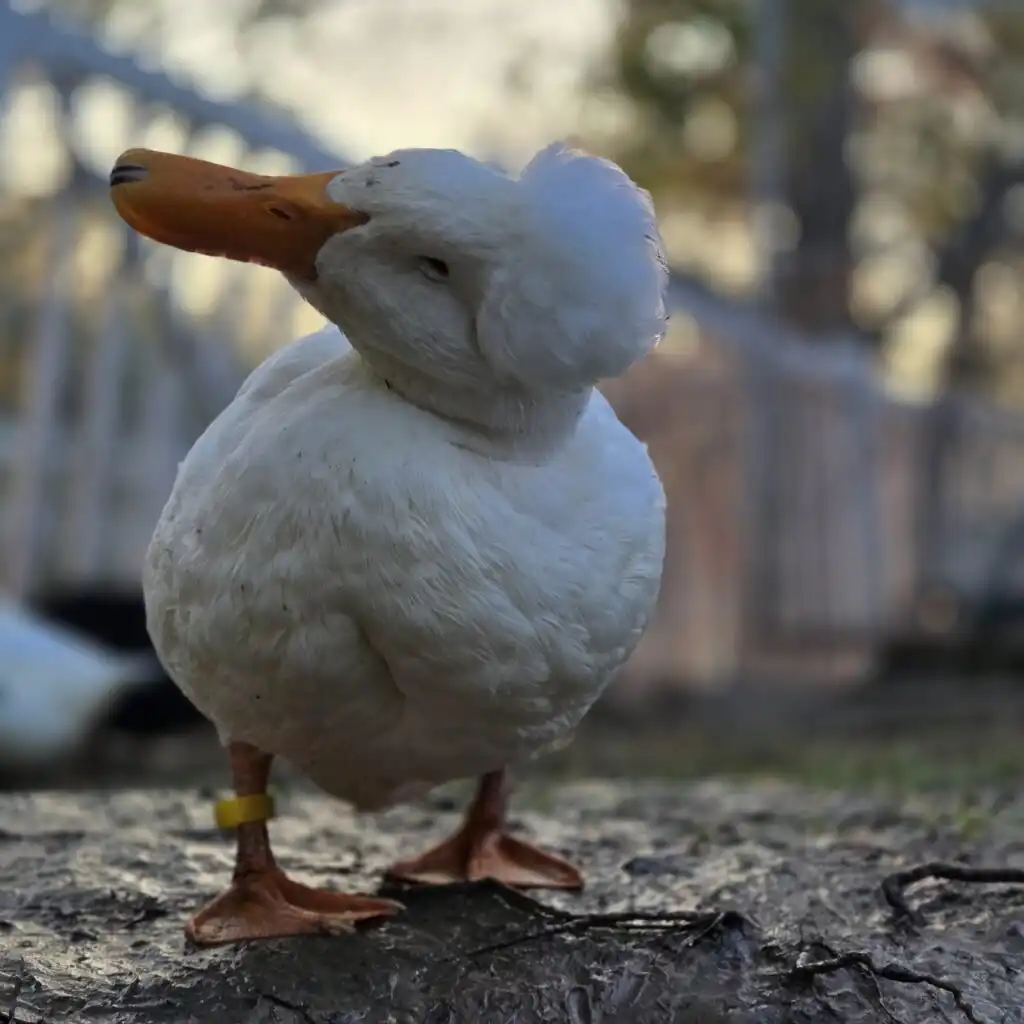
| Crested Duck | Ornamental | Europe | Characteristic feather crest on the head |
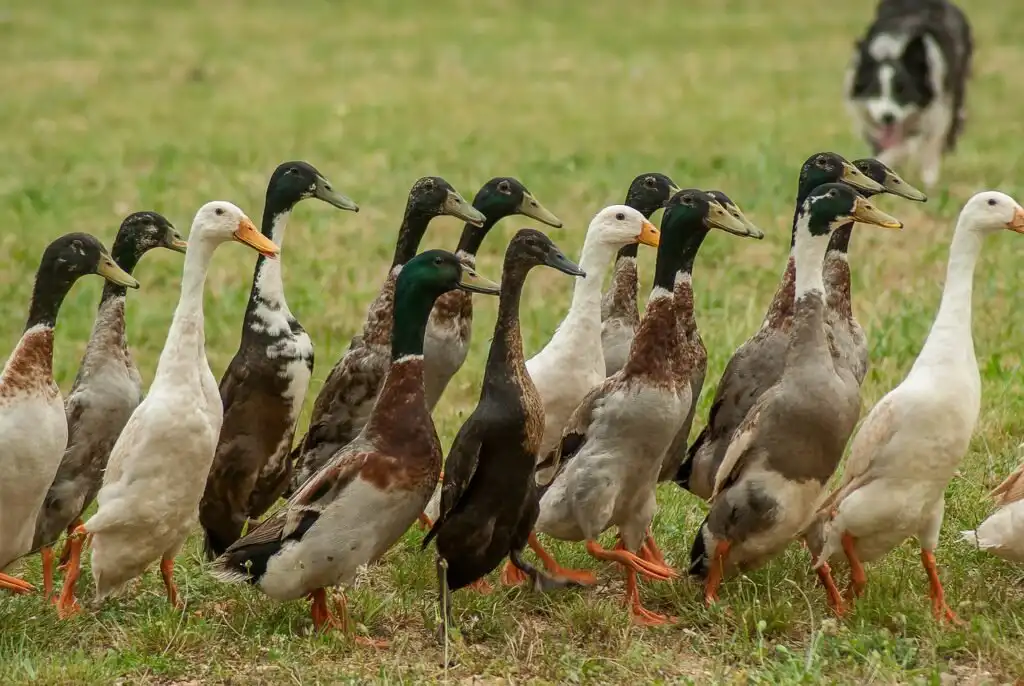
Runner Ducks
The upright and energetic Indian Runner Duck is one of the most distinctive duck breeds in the world. Originating in Southeast Asia, these ducks were bred primarily for egg production. Their tall, vertical posture and active foraging behavior allow them to move quickly across fields and gardens.
Runner ducks are exceptional layers and can produce well over 200 eggs per year. Their strong foraging instinct also made them valuable in agricultural systems where they helped control insects and weeds.
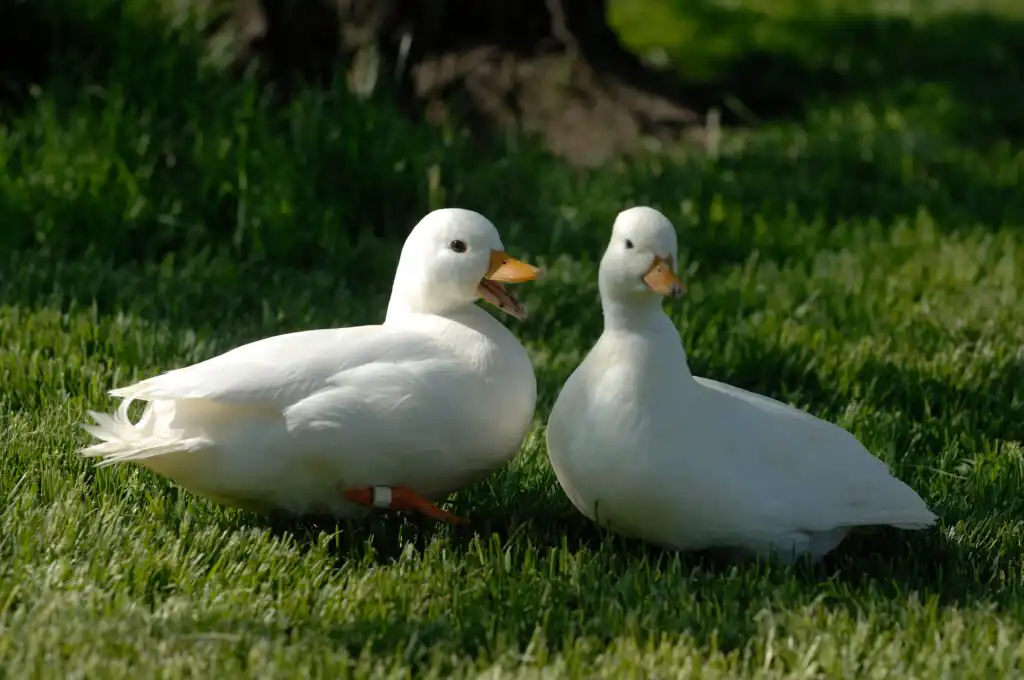
Pekin Ducks
The Pekin Duck is one of the most widely recognized domestic duck breeds and dominates commercial duck meat production worldwide. Originally developed in China, Pekins were bred for rapid growth, large body size, and efficient meat production.
Their white plumage, calm temperament, and reliable productivity made them extremely popular once they were introduced to Europe and North America in the nineteenth century.
Call Ducks
The small and charming Call Duck was originally bred in the Netherlands. Historically, they were used by hunters as “decoy ducks” to lure wild ducks within range. Their loud, high-pitched calls attracted passing birds, which is how the breed earned its name.
Today, Call ducks are primarily kept as ornamental or companion ducks due to their tiny size and appealing personalities.
Cayuga Ducks
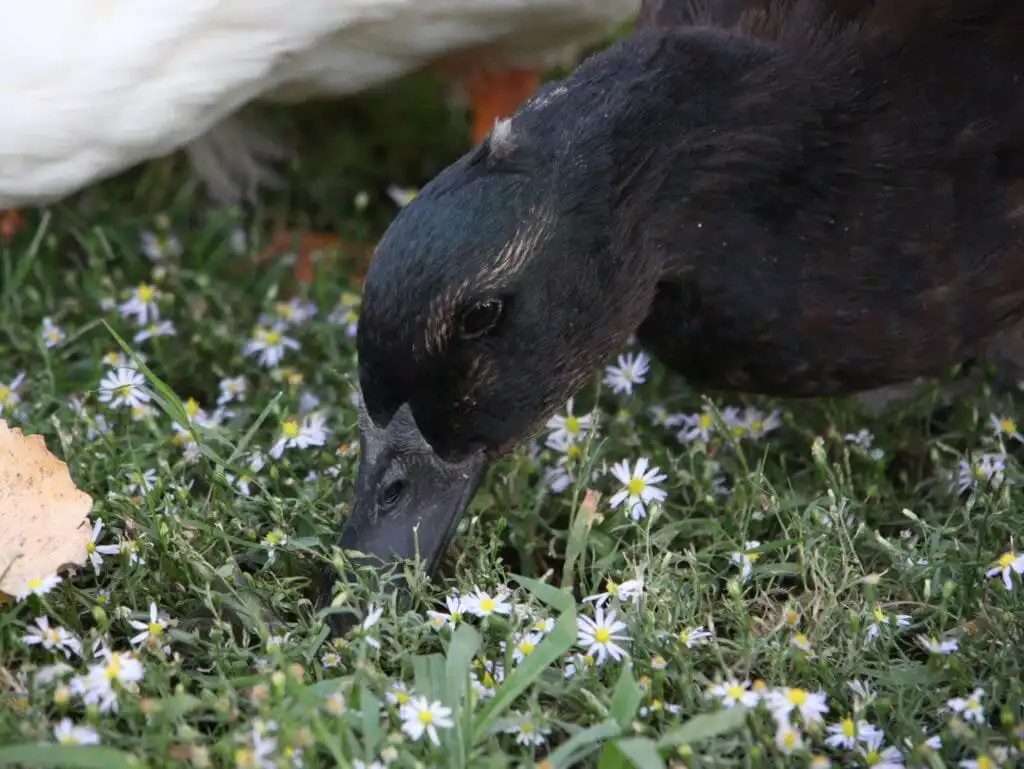
The striking Cayuga Duck was developed in the United States during the nineteenth century. This breed is known for its beautiful black plumage that often shimmers with green iridescence in sunlight.
Cayugas were historically valued as a dual-purpose breed, providing both meat and eggs. Early in the laying season, their eggs can even appear dark gray to black before gradually lightening.
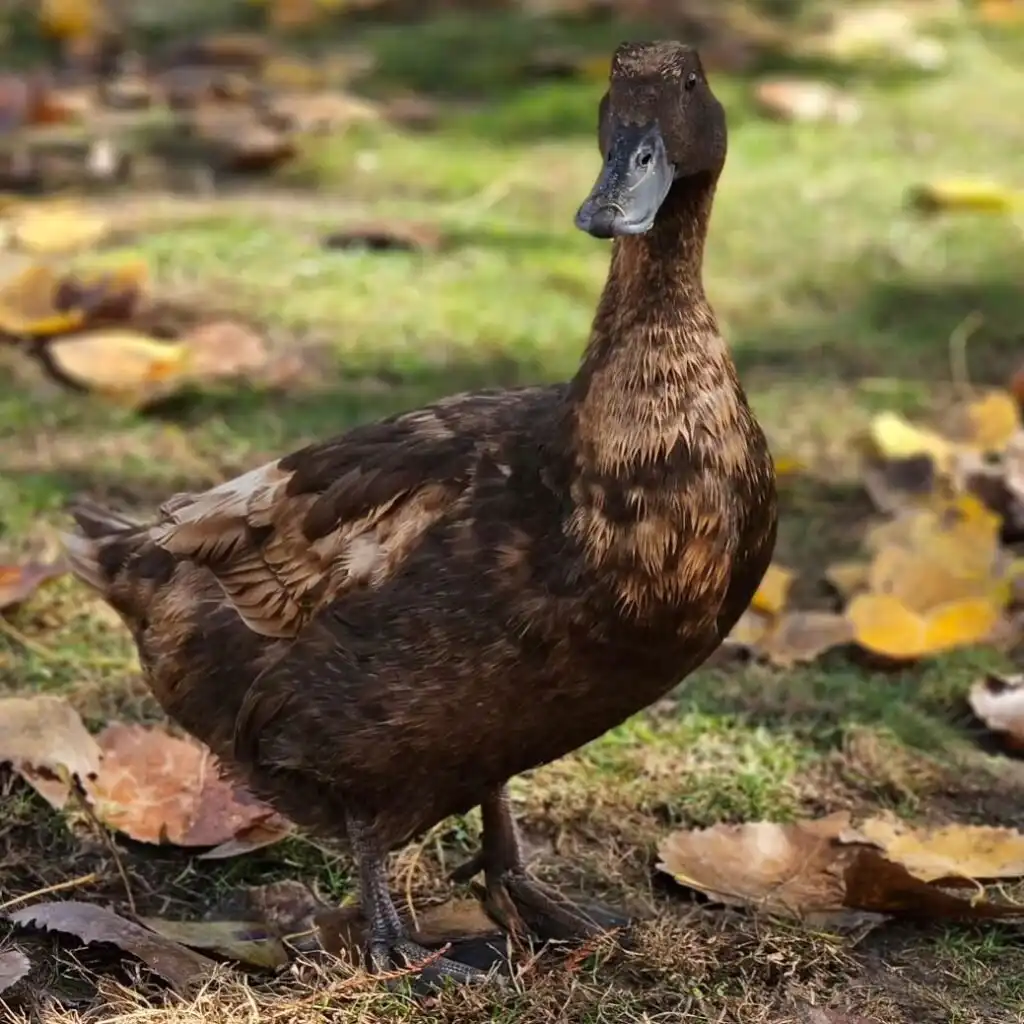
Khaki Campbell Ducks
The highly productive Khaki Campbell Duck was developed in England in the late nineteenth century. Breeder Adele Campbell aimed to create a duck with exceptional egg laying ability.
The result was one of the most prolific egg-laying duck breeds, often producing 250 to 300 eggs per year under good conditions. Their khaki colored plumage gives the breed its distinctive name.
Rouen Ducks
The large and beautifully patterned Rouen Duck closely resembles the wild Mallard in appearance, but is much larger in body size. Originating in France, Rouens were bred primarily as a meat duck.
Although they retain the classic Mallard coloration, their heavier bodies limit their ability to fly, illustrating how selective breeding changed physical traits while maintaining the visual link to their wild ancestor.
These breeds represent only a small portion of the many domestic duck varieties that have developed over time. Each breed reflects the priorities of the people who bred them, whether that was egg production, meat yield, or distinctive beauty. Yet despite their differences, nearly all of them still share a common heritage that traces back to the wild Mallard.
How Domestic Ducks Differ from Wild Mallards
Although most domestic duck breeds originated from the wild Mallard, thousands of years of selective breeding have created birds that differ significantly from their wild ancestors. These differences affect not only how domestic ducks look, but also how they behave, reproduce, and survive in the environment.
Understanding these distinctions helps explain why domestic ducks thrive in backyard settings but often struggle to survive if released into the wild.
Body Size and Flight Ability
Wild Mallards are strong flyers. Migration requires powerful wings and a relatively lightweight body. Their streamlined build allows them to travel long distances between breeding and wintering grounds.
Many domestic ducks, however, have been bred for larger body size. Breeds developed for meat production, in particular, have gained significant weight compared to their wild ancestors. This increased body mass makes sustained flight difficult or impossible for many domestic ducks.
While lighter breeds such as some heritage or ornamental ducks may still fly short distances, most domestic ducks rely entirely on human-provided housing and protection rather than escaping predators through flight.
Egg Production
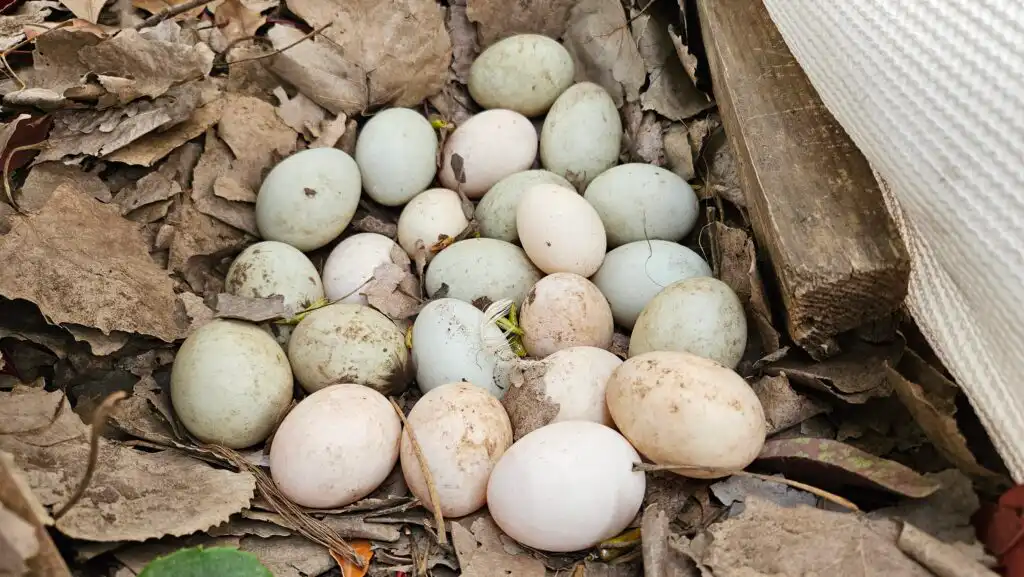
Mallards typically lay one clutch of eggs per breeding season, usually between 8 and 13 eggs. Their reproductive cycle is tied closely to natural seasonal changes.
Domestic ducks have been selectively bred for much higher productivity. Many breeds can lay 150 to 300 eggs per year, depending on genetics, nutrition, and environmental conditions. This dramatic increase in egg production is one of the most important outcomes of domestication.
Temperament and Behavior
Wild Mallards must constantly remain alert for predators. As a result, they are generally cautious and quick to flee when disturbed.
Domestic ducks tend to be far more tolerant of human presence. Generations of selective breeding have favored calmer individuals that adapt well to farm and backyard environments. Many domestic ducks also show strong social bonds with their caretakers and flock members.
However, some behaviors remain deeply rooted in their ancestry. Domestic ducks still dabble for food, forage in water and mud, and show strong flock instincts. These behaviors are inherited directly from their Mallard ancestors.
Survival in the Wild
Because of these changes, domestic ducks are generally not well equipped to survive without human care. Their larger body size, reduced flight ability, and dependence on regular food sources make them vulnerable to predators and environmental challenges.
This is one reason why releasing domestic ducks into local ponds or wetlands is both harmful and illegal in many places. Domestic ducks rarely survive long in the wild, and they can also disrupt local ecosystems or hybridize with wild Mallards.
Despite their differences, the genetic connection between domestic ducks and Mallards remains strong. The ducks we care for today are the result of thousands of years of human influence layered on top of a wild ancestor that still shapes their instincts and behaviors.
The One Exception: Muscovy Ducks
While most domestic duck breeds trace their ancestry back to the Mallard, there is one notable exception: the Muscovy Duck.
Muscovy ducks are a completely different species and were domesticated independently from Mallards. Their origins lie in Central and South America, where indigenous peoples had already domesticated them long before European explorers arrived. Spanish explorers later brought these ducks to Europe, where they gradually spread to other parts of the world.
Because Muscovy ducks evolved separately from Mallards, they differ from most other domestic ducks in several important ways.

Key Differences Between Muscovy Ducks and Mallard-Derived Ducks
Species and Genetics
Most domestic ducks belong to the species Anas platyrhynchos domesticus, which descended from the Mallard. Muscovy ducks belong to the species Cairina moschata, meaning they are genetically distinct from Mallard-based breeds.
Appearance
Muscovy ducks have a very different look compared to typical domestic ducks. They are larger, have longer bodies, and display distinctive red facial caruncles around the eyes and bill. Their posture and body shape often resemble small geese more than typical dabbling ducks.
Vocalizations
Unlike Mallard-derived ducks, Muscovy ducks do not produce the classic loud quack. Females make softer trilling sounds, while males often produce a quiet hissing sound.
Behavior
Muscovies are strong flyers and frequently perch in trees. This behavior reflects their natural history as a species that originally lived in forested wetlands rather than open marshes.
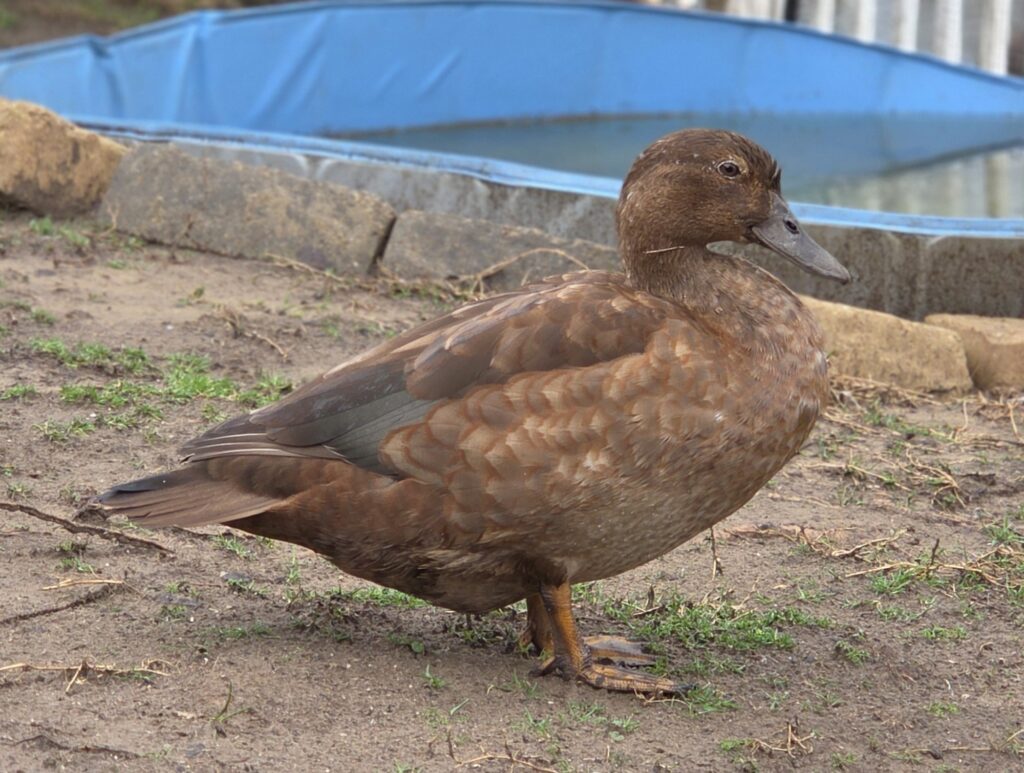
Hybridization: Mule Ducks
Although Muscovy ducks are a different species, they can still hybridize with Mallard-derived domestic ducks. When this happens, the resulting offspring are commonly known as mule ducks.
These hybrids are typically sterile, meaning they cannot reproduce. Mule ducks are sometimes used in commercial meat production because they can inherit desirable traits from both parent species.
Why This Distinction Matters
Understanding the difference between Muscovy ducks and Mallard-derived ducks helps explain many of their unique characteristics. Their quieter vocalizations, tree-perching behavior, and distinctive appearance all reflect their separate evolutionary history.
For duck keepers, this also means that Muscovy ducks often have slightly different management needs and behaviors compared to other domestic duck breeds. Despite sharing the same backyard spaces today, their evolutionary story is quite different from that of the familiar Mallard-descended ducks.
Why Mallard Ancestry Still Matters Today
Even after thousands of years of domestication, the influence of the wild Mallard is still clearly visible in the behavior of modern domestic ducks. Selective breeding may have changed their size, feather colors, and productivity, but many of their instincts remain deeply rooted in their evolutionary history.
Understanding this connection helps explain why our backyard ducks behave the way they do and why certain aspects of their care are so important.
Natural Foraging Behavior
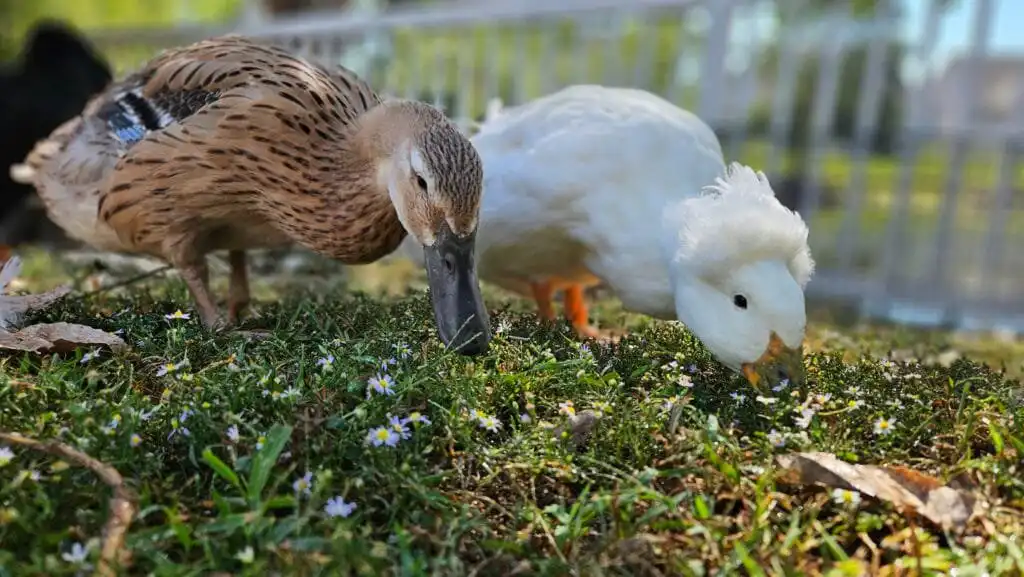
One of the most obvious inherited behaviors is foraging. In the wild, Mallards spend a large portion of their day searching for food in shallow water, mud, and vegetation. They dabble by tipping forward in the water to reach submerged plants, seeds, insects, and small aquatic animals.
Domestic ducks retain this same instinct. Even when they receive balanced commercial feed, they still enjoy exploring their environment in search of additional food. This is why ducks love rooting through grass, splashing in water, and investigating muddy areas.
Providing opportunities for natural foraging is not only enriching but also supports their mental and physical well-being.
Nesting and Egg Laying Instincts
The nesting behaviors seen in domestic ducks also reflect their Mallard ancestry. Wild Mallard hens typically build nests on the ground in sheltered areas with vegetation for cover.
Many domestic ducks show similar preferences. They often choose quiet, protected spaces for laying eggs and may gather bedding or plant material to create a simple nest. Some ducks may even hide eggs in corners or under shrubs if suitable nesting areas are not provided.
Recognizing these instincts helps duck keepers design housing that supports natural laying behavior and encourages ducks to use designated nesting areas.
Strong Social Bonds
Mallards are highly social birds that live in groups outside the breeding season. This flock-based lifestyle provides protection from predators and helps individuals locate food and safe resting areas.
Domestic ducks retain these strong social instincts. They prefer living in groups and can become stressed or lonely if kept alone. Within a flock, ducks communicate constantly through vocalizations, body language, and subtle social cues.
This is also why ducks often form strong bonds not only with other ducks but sometimes with their human caretakers as well.
Predator Awareness
Even though domestic ducks rely heavily on human protection, their ancestral survival instincts are still present. Ducks remain alert to movement in the sky or unfamiliar sounds in their environment.
You may notice your ducks suddenly freezing, stretching their necks upward, or quietly moving toward shelter when they perceive potential danger. These behaviors mirror the same predator avoidance strategies used by wild Mallards.
A Wild Heritage in the Backyard
When we watch our ducks dabble in water, forage through the grass, or gather together as a flock, we are seeing behaviors that have been shaped by thousands of years of evolution.
Despite their domestication, the ducks in our care still carry the legacy of the Mallard. Understanding this connection allows us to design better environments, provide appropriate enrichment, and ultimately support the natural behaviors that help ducks live healthy and fulfilling lives.
FAQ Section
Are all domestic ducks descended from Mallards?
Most domestic duck breeds are descendants of the wild Mallard. Over thousands of years, humans selectively bred Mallards to create the many domestic duck breeds we know today.
However, there is one important exception. The Muscovy Duck is a completely different species that was domesticated independently in Central and South America.
Why can domestic ducks breed with wild Mallards?
Domestic ducks and wild Mallards belong to the same species lineage. Because of this shared ancestry, they are still genetically compatible and can easily interbreed.
This is why hybrid ducks are sometimes seen in areas where domestic ducks escape or are released into the wild and encounter wild Mallards.
Why do most domestic ducks not fly?
Wild Mallards are strong flyers because they rely on flight to migrate and escape predators. Many domestic duck breeds, however, were selectively bred for larger body size and higher meat production.
This increase in body weight often makes sustained flight difficult or impossible. Some lighter breeds may still be able to fly short distances, but most domestic ducks rely on human protection rather than flight to stay safe.
Are Muscovy ducks related to Mallards?
Muscovy ducks are not descended from Mallards. They belong to a different species, Cairina moschata, and were domesticated separately in the Americas.
Despite this difference, Muscovy ducks can still hybridize with Mallard-derived domestic ducks. The resulting offspring are called mule ducks and are typically sterile.
Why do domestic ducks still behave like wild ducks?
Even though ducks have been domesticated for thousands of years, many natural instincts remain unchanged. Behaviors such as dabbling in water, foraging in mud, nesting on the ground, and living in social groups all originate from their wild ancestors.
These inherited behaviors explain why domestic ducks still need access to water, space to forage, and the companionship of other ducks to thrive.
Can domestic ducks survive in the wild?
Most domestic ducks are not well adapted to surviving without human care. Their heavier bodies, reduced flight ability, and reliance on regular food sources make them vulnerable to predators and environmental stress.
For this reason, releasing domestic ducks into local ponds or wetlands is harmful to the ducks and can disrupt wild ecosystems. Responsible duck keeping always includes providing a safe and permanent home for these birds.
Conclusion: A Wild Legacy in Every Backyard Duck
When we watch our ducks waddling through the yard, splashing in their pools, or enthusiastically digging through the mud for treats, it is easy to forget that these charming backyard companions share their roots with a wild waterfowl species. Yet the connection is still there. Most domestic duck breeds ultimately trace their ancestry back to the wild Mallard.
Thousands of years of domestication and selective breeding have created the remarkable diversity of duck breeds we see today. From excellent egg layers like Khaki Campbells to large meat breeds like Pekins and the tiny ornamental Call ducks, each breed reflects the priorities and needs of the people who developed them. Despite these differences, their shared Mallard heritage continues to shape their biology and behavior.
This connection explains why domestic ducks still love dabbling in water, foraging through grass, nesting in quiet corners, and staying close to their flock. These instincts are not learned. They are inherited from generations of wild ancestors that lived in wetlands and waterways around the world.
Understanding where our ducks come from helps us care for them better. When we provide water to splash in, safe nesting areas, opportunities to forage, and the companionship of other ducks, we are supporting behaviors that are deeply rooted in their evolutionary history.
So the next time you watch your ducks happily exploring the yard or paddling through their pool, remember that you are witnessing a small piece of natural history. Even in a suburban backyard, the legacy of the Mallard lives on.
Further Reading & Resources
- Ultimate Duck Breed Comparison Guide: Find the Right Duck for Your Flock
- Mallard Ducks: From Wild Ancestors to Backyard Companions
- Muscovy Ducks: The Gentle Giants of the Duck World
- Wood Ducks: North America’s Tree-Nesting, Wild Beauties
- Color Genetics in Ducks: Why Are Some Ducklings a Surprise?
Master the basics of evidence-based care. Explore the full Beginner’s Handbook to build a strong foundation for your flock.
References
- FAO. (2007). The State of the World’s Animal Genetic Resources for Food and Agriculture. Food and Agriculture Organization of the United Nations.
- Pond, W. G., & Bell, A. W. (2005). Encyclopedia of Animal Science.
CRC Press. - FAO. (2013). Poultry Development Review. Food and Agriculture Organization.
- West, B., & Zhou, B. (1988). Did chickens go north? New evidence for domestication. World’s Poultry Science Journal, 44(3), 205–218.
- Zhou, Z. et al. (2018). Genetic evidence of domestication history in ducks. BMC Genomics, 19, 541.