

Krümel’s Health Journey: A Duck Case Study on Reproductive Issues and Zinc Toxicity

Last updated: March 7th, 2026
To keep our research-backed guides free, this site uses ads and affiliate links (earning a small commission at no cost to you). Everything here is created by a duck mom and PhD scientist, combining academic rigor with hands-on experience to provide practical, trustworthy advice for duck keepers everywhere. 🦆 Learn more
Today I want to share a detailed update about one of our flock members, Krümel. Over the past months, she has been dealing with several health challenges, and the experience has been both stressful and educational for us.
I decided to document her journey because reproductive disorders and metabolic issues are surprisingly common in domestic ducks. Sharing real cases can help other duck keepers recognize early warning signs and understand when veterinary care becomes essential.
Part of the Duck Health & Anatomy Hub, Evidence-based medical resources and anatomical research.
Quick Navigation: Jump to a Section
[hide]
The First Signs of Trouble
Some of you may remember that I previously mentioned Krümel’s egg-laying problems. She had been struggling with laying soft or thin-shelled eggs, sometimes at unusual times of the day when the shell had not fully formed.

On some days, she would lay a normal egg in the morning, only to lay a soft egg later in the day.
During these episodes, Krümel was clearly uncomfortable. She strained, panted, lost her appetite, and became lethargic. We tried several supportive measures, including Epsom salt baths, calcium supplements, and occasionally pain medication.

At first, we suspected a calcium imbalance, which is a common cause of poor eggshell quality in laying birds. Eggshell formation depends on a delicate balance of calcium metabolism, vitamin D, and proper function of the shell gland within the oviduct.
However, as time went on, the pattern did not fully fit a simple nutritional deficiency.
The episodes became more frequent and more severe. Krümel also became sensitive to touch and occasionally made unusual bending motions. At times, she adopted the classic “penguin stance.”
This posture occurs when ducks stand upright and waddle stiffly while attempting to pass an egg. It is often associated with egg binding or inflammation of the reproductive tract.
At that point, it was clear that this required veterinary evaluation.
A Trip to the Vet
Our veterinarian initially considered whether Krümel might eventually need to be spayed, but recommended blood work first to evaluate her overall health.

The results were concerning. Several values were outside the normal range, suggesting that something more complex was going on internally.
Our vet discussed several possibilities, including pancreatitis, liver disease, viral infections, or in a worst case scenario even cancer.
| Test | Result |
|---|---|
| Hematocrit | 31.0 % |
| WBC Estimate | 21.0-23.0 THOUS |
| WBC | 22.0 K/μL |
| % Heterophils | 47 % |
| % Lymphocytes | 48.0 % |
| % Monocytes | 3.0 % |
| % Eosinophils | 2.0 % |
| % Basophils | 0.0 % |
| Heterophils | 10.34 K/μL |
| Lymphocytes | 10.56 K/μL |
| Monocytes | 0.66 K/μL |
| Eosinophils | 0.44 K/μL |
| Basophils | 0 K/μL |
| Thrombocytes | ADEQUATE |
| Polychromasia | SLIGHT |
| Blood Parasites | No parasites seen |
| Plasma Protein | 8.5 g/dL |
| Glucose a | <10 mg/dL |
| Uric Acid | 3.7 mg/dL |
| Phosphorus | 14.3 mg/dL |
| Calcium a | 47.0 mg/dL |
| Sodium | 141 mmol/L |
| Potassium | 6.8 mmol/L |
| Total Protein | 6.0 g/dL |
| Albumin | 2.2 g/dL |
| Globulin | 3.8 g/dL |
| Albumin:Globulin Ratio | 0.6 |
| AST | 19 U/L |
| ALP | 32 U/L |
| LDH | 320 U/L |
| Cholesterol | 162 mg/dL |
| Amylase | 6,906 U/L |
| Creatine Kinase | 162 U/L |
What These Values Can Mean
Interpreting avian blood work requires looking at patterns rather than isolated numbers.
Elevated amylase and LDH levels can sometimes indicate pancreatitis or tissue damage. Changes in total protein, albumin, globulin, AST, and ALP may reflect inflammation or liver involvement.
In birds, abnormal white blood cell counts often indicate chronic inflammation or infection. Shifts in heterophils and lymphocytes are particularly important markers of immune activity.
The unusually high calcium and phosphorus levels were interesting. In laying hens and ducks, calcium levels naturally increase during egg production. However, extreme values can also occur when metabolism is disrupted.
Because these results raised several possible diagnoses, our vet recommended consulting an avian specialist.
Seeking Specialist Care
We were referred to the Texas Avian & Exotic Hospital, where Dr. Antinoff examined Krümel.
The appointment involved a long day with about three hours at the clinic and one hour of driving each way, but having access to an experienced avian veterinarian was incredibly valuable.
Krümel underwent:
• a full physical exam
• X rays
• ultrasound imaging
• additional blood work including heavy metal screening

Avian medicine is a specialized field. Birds have very different physiology compared to mammals, and diagnostic interpretation requires experience with these differences.
The clinic staff handled Krümel gently and professionally throughout the process.
The Diagnosis
After reviewing the results, the specialists confirmed that Krümel was dealing with reproductive dysfunction combined with chronic inflammation.
Interestingly, her calcium and phosphorus levels were sufficient, and her bones appeared strong. This meant that the issue was not a lack of minerals but rather a malfunction of the reproductive tract itself.
Ultrasound imaging revealed several eggs already developing in the oviduct. One egg was present in the shell gland. On the drive home Krümel laid that egg, although it was soft and broke immediately.

This confirmed that her body was actively producing eggs but struggling to complete proper shell formation.
Fortunately, imaging also showed that her liver and intestines looked healthy, and no masses or fluid accumulation were detected.
The Treatment Plan
To give her reproductive system a break, Krümel received two deslorelin hormone implants.
Deslorelin is a GnRH agonist commonly used in avian medicine. It works by suppressing reproductive hormones and temporarily stopping egg production. For ducks experiencing chronic reproductive stress, this can allow the body to recover.
In addition, she was prescribed:
• Trimethoprim Sulfa antibiotics for three weeks to address infection
• anti inflammatory medication for several days
The goal was to reduce inflammation, suppress egg production, and allow her reproductive tract to rest.
The Aftermath
Krümel was not allowed to swim for the first 24 hours after receiving the implants. Anyone who keeps ducks knows that this is not their favorite rule.
When she was finally allowed back in the water, she ignored the large pool and instead jumped straight into the water bowl. That is very typical Krümel behavior.

She also showed some irritation around the implant site under her wing, which is common after the procedure. Fortunately, this seemed temporary, and she settled down quickly.
A Positive Sign: Krümel’s Molt
About ten days after receiving the implants, Krümel began to molt.
This was expected and is actually a good sign. Hormonal changes often trigger molting in birds, and reproductive hormone suppression from the deslorelin implants can initiate that process. When egg production slows or stops, the body often redirects energy toward feather replacement.
Molting is a natural physiological cycle in ducks. During a molt, old feathers are shed and replaced with new ones. This process is essential for maintaining proper insulation, waterproofing, and overall feather health. Because feather production is energetically demanding, birds typically molt during periods when reproductive activity decreases.

Looking back, Krümel’s lack of a major molt before this point was already somewhat unusual. Most domestic ducks experience their first significant molt within their first year or at least by their second year. The fact that she had not gone through a noticeable molt yet may have been an early indicator that something in her hormonal cycle was not functioning normally.
Chronic reproductive stress or hormonal imbalances can disrupt the natural rhythm between egg laying and molting. In Krümel’s case, her body appeared to remain in a prolonged reproductive state, continuously producing eggs without entering a normal molt cycle.
Once the hormone implants suppressed her reproductive hormones, her body was finally able to shift into that resting and renewal phase. Seeing her begin to molt was therefore reassuring, as it suggested that the treatment was successfully interrupting the cycle that had been placing such strain on her body.
New Updates: Elevated Zinc Levels
The additional blood work revealed another surprising finding.
Krümel had extremely elevated zinc levels.
Heavy metal toxicity is a well-documented issue in birds. Because birds explore their environment with their bills, they may ingest small metal particles or chew on materials containing zinc.
Galvanized metals are one of the most common sources. These materials are coated with zinc to prevent corrosion, but if the coating deteriorates the metal can leach zinc.
In birds, excessive zinc can interfere with organ function, damage the pancreas and liver, and disrupt eggshell formation.
➡️ Read more about metal poisoning in ducks.
Chelation Therapy for Zinc Toxicity
Once the elevated zinc levels were confirmed, our veterinarian recommended starting chelation therapy to remove the metal from Krümel’s body.
Krümel was prescribed succimer (DMSA), a chelating agent commonly used in both human and veterinary medicine to treat heavy metal poisoning. DMSA works by binding to metal ions such as zinc in the bloodstream. Once bound, the metal can be safely excreted from the body through the kidneys.
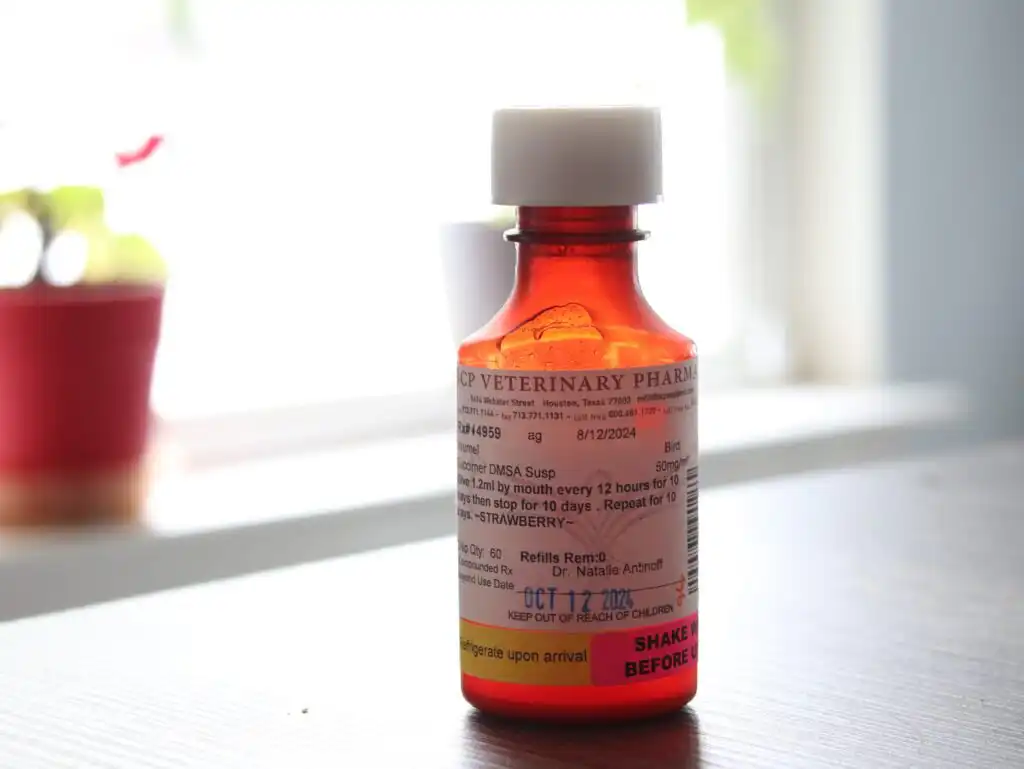
Because Krümel is a small duck and accurate dosing is critical, the medication was prepared by a specialty compounding pharmacy as a liquid suspension. This made it much easier to administer the medication directly by mouth.
Chelation therapy typically follows a cycle approach because removing metals too quickly can stress the body.
Krümel’s treatment schedule included:
• a course of DMSA suspension for several days
• followed by a break period
• and then another treatment round
This pattern allows the body to mobilize stored metals gradually while giving organs time to recover between treatment phases.
Follow-Up Blood Work
After completing two treatment cycles, we returned to the clinic for repeat blood work to see how Krümel was responding.
Fortunately, several of her values had improved.
Her white blood cell count, which had previously indicated inflammation, had returned to the high end of the normal range and looked much healthier overall.
Another encouraging result was her zinc level, which had dropped significantly. Her initial measurement had been 8.77 µg/ml, and after treatment it had decreased to 3.65 µg/ml.
For reference, typical zinc levels vary somewhat between species. In chickens, values are generally considered normal up to about 4 µg/ml, while in parrots, levels above 2 µg/ml are already considered elevated. Based on this information, her veterinarian recommended one additional course of chelation therapy to further reduce the remaining zinc.
One value that remained elevated was amylase, which had initially raised concerns about pancreatic disease. However, after consulting additional veterinary pathology references, our vet explained that amylase levels in ducks and other waterfowl can sometimes appear elevated without clear clinical significance.
Because gastrointestinal issues can occasionally influence amylase levels, we were advised to submit a fecal sample for Gram staining, which is a simple diagnostic test that helps evaluate gut bacterial balance.
Supporting Gut Health
As part of the follow-up care, Krümel also began receiving probiotics to support her gastrointestinal health.
Long courses of antibiotics can disrupt the normal microbial balance in the digestive tract. In birds, maintaining a healthy gut microbiome is important not only for digestion but also for immune function and nutrient absorption.
To ensure the probiotic strains were appropriate, we used a veterinarian-approved probiotic formulation recommended by the clinic. Supporting the intestinal microbiome was an easy step that could help stabilize her digestion while her body recovered from the infection and heavy metal exposure.
After completing the additional round of chelation therapy and continuing supportive care, Krümel’s condition gradually stabilized.
Environmental Investigation
Once the zinc result came back, the next step was identifying where the exposure may have occurred.
We carefully inspected Krümel’s environment and feeding setup. This included checking for galvanized metal components that could potentially corrode or shed small particles.
We also tested our water using water test strips to rule out contamination from the water supply.
In addition, we thoroughly inspected the duck run, fencing, and equipment for any possible sources of zinc exposure.
Even small objects such as screws, clips, or hardware can become potential sources if ducks chew on them.
Because ducks are naturally curious and often nibble on objects, environmental inspection is a critical step whenever heavy metal exposure is suspected.
We are also monitoring the rest of the flock closely and evaluating whether additional testing may be necessary.
Financial Reality of Avian Care
Specialized avian veterinary care can be expensive.
At this point Krümel’s diagnostics and treatment had already exceeded $1,600. While the cost is significant, access to experienced avian veterinarians is essential for complex cases like this.

To help offset the costs we started a fundraiser, and every contribution goes directly toward Krümel’s ongoing care.
Long Term Update: Managing Chronic Reproductive Issues
Since the initial diagnosis and treatment, Krümel has continued to deal with reproductive challenges. The situation has improved overall, but it remains something we actively monitor and manage.
Krümel is a Khaki Campbell, a breed that has been selectively bred to be an extremely productive egg layer. Under ideal conditions, these ducks can produce 250 to 340 eggs per year, which places a significant metabolic demand on their bodies. While this productivity is desirable for egg production, it can sometimes come at a cost to the bird’s long-term reproductive health.
During her first two years of life, Krümel laid eggs almost daily with very few breaks. At the time it seemed impressive, but in hindsight this level of sustained egg production may have placed considerable strain on her reproductive system. Over time, the problems with soft shells and difficult laying episodes gradually began to appear.
Since then, Krümel has received several rounds of deslorelin hormone implants to suppress egg production when her symptoms became more severe. These implants temporarily shut down the reproductive cycle, allowing the body to rest and reducing inflammation within the oviduct.
At the moment she does not have an active implant and is laying much less frequently than before. That alone has helped significantly. However, she still occasionally produces soft shelled, thin shelled, or irregularly shaped eggs.
Even now it is clear that egg laying is physically demanding for her. When an egg is forming, her behavior changes noticeably. Her posture becomes more upright, her walk looks slightly different, and she is generally less active than usual.
Once the egg is laid, she often needs time to recover. It typically takes one to two hours before she returns to her normal energetic self.
For now we are monitoring her closely. If the episodes begin to occur more frequently again, we will likely use another round of hormone implants to suppress egg production and give her body another break.
Managing reproductive disorders in laying ducks is often a long term process rather than a single treatment. Our goal is to reduce stress on her body, monitor her health closely, and intervene when necessary so she can continue to live a comfortable and active life with the flock.
Despite these ongoing challenges, Krümel remains her curious and determined self, and we are hopeful that careful management will allow her to continue doing well for many years to come.
Looking Ahead
Krümel still has a recovery process ahead of her, but we now have a clearer understanding of the underlying issues and a treatment plan in place.
Cases like this are a reminder that duck health can be complex. Even experienced keepers occasionally encounter medical challenges that require advanced diagnostics and specialized care.
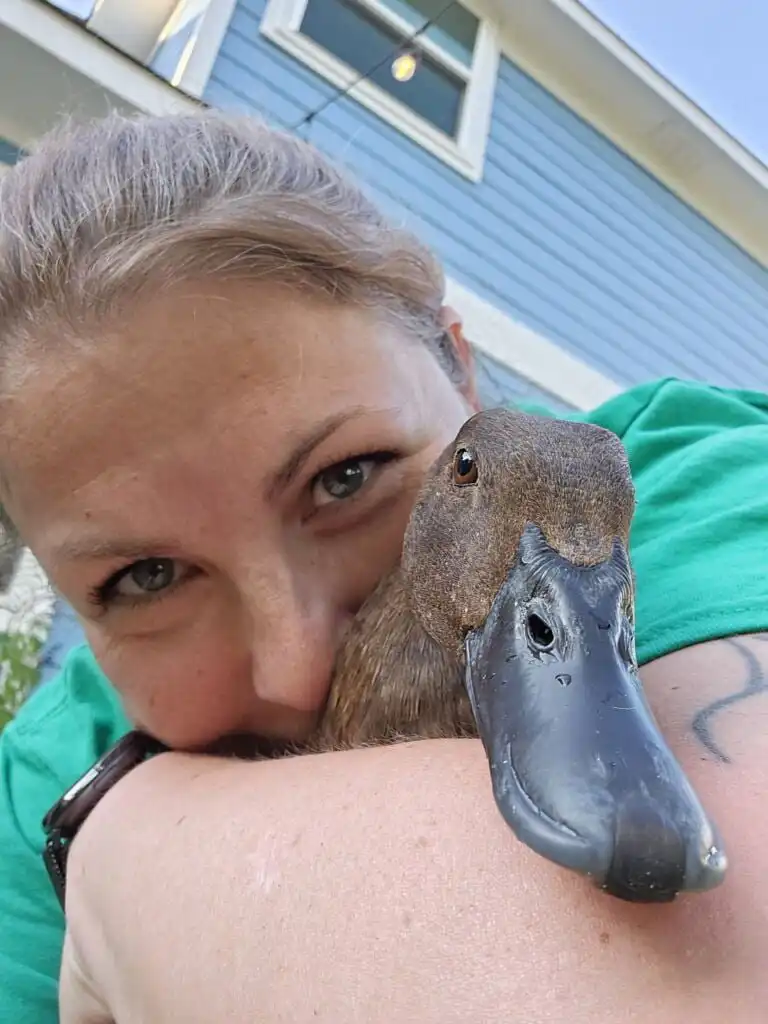
I will continue sharing updates as we learn more and as Krümel progresses through treatment.
Thank you to everyone who has sent encouragement and support during this journey. The duck keeping community is incredibly supportive, and it means a lot to know that so many people care about our little flock.
Further Reading & Resources
- Male and Female Duck Reproductive Systems
- Hormone Implants for Ducks: Leuprolide Acetate and Deslorelin Acetate
- Reproductive Issues in Ducks: What They Are, Why They Happen, and How to Help
- Soft-Shelled Eggs in Ducks – Everything You Need to Know
- Understanding Metal Poisoning in Ducks: Causes, Symptoms, and Prevention
Deepen your understanding of avian wellness. Explore the full Duck Health & Anatomy Library for more specialized care guides.