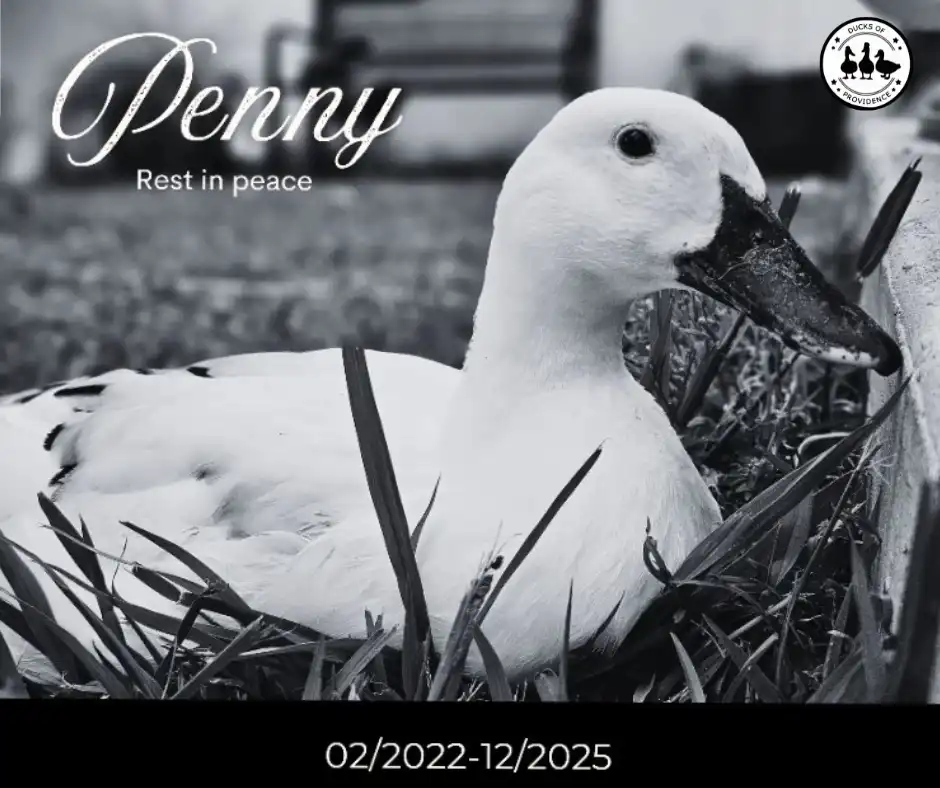
In Loving Memory of Penny

Last updated: February 28th, 2026
To keep our research-backed guides free, this site uses ads and affiliate links (earning a small commission at no cost to you). Everything here is created by a duck mom and PhD scientist, combining academic rigor with hands-on experience to provide practical, trustworthy advice for duck keepers everywhere. 🦆 Learn more
Penny’s life was shaped by resilience from the very beginning. Her story holds hardship, healing, friendship, and a quiet kind of bravery that stayed with her until the very end. She was gentle, observant, and deeply bonded to her flock, to her best friends, and to us.
Ducks of Providence is free, thanks to reader support! Ads and affiliate links help us cover costs—if you shop through our links, we may earn a small commission at no extra cost to you. Thanks for helping keep our content free and our ducks happy! 🦆 Learn more
Penny’s Name and Who She Was
Penny was named by her foster mom, long before she became part of our family. It fit her perfectly. She was small, precious, and quietly valuable in ways that only became clearer over time.
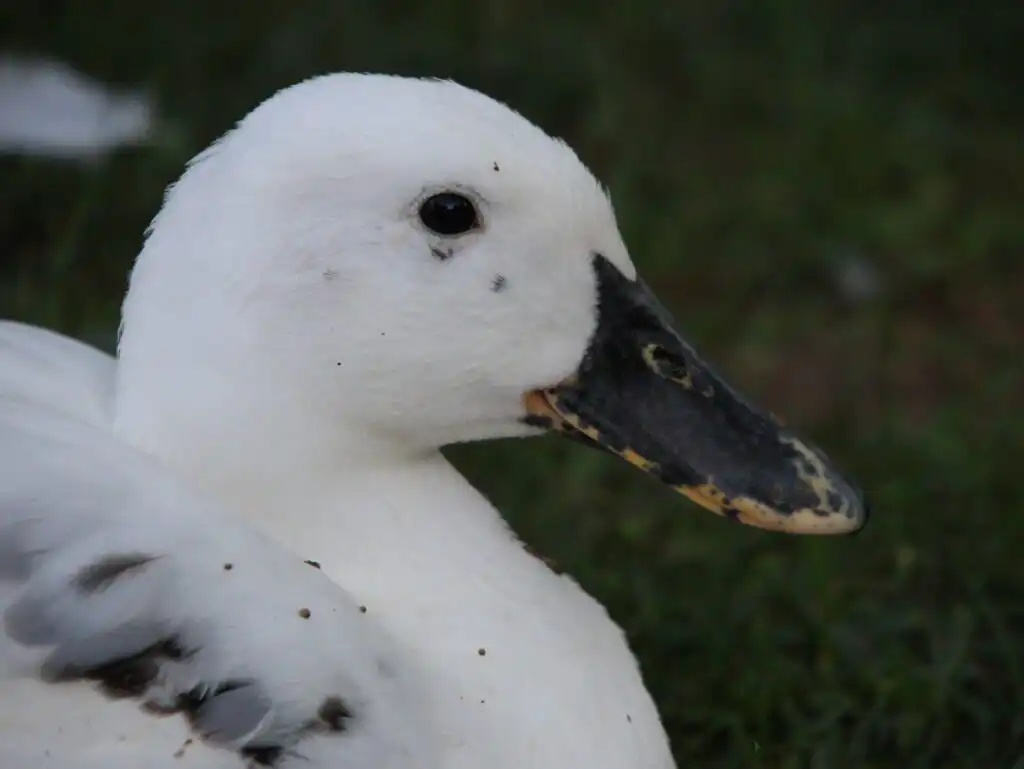
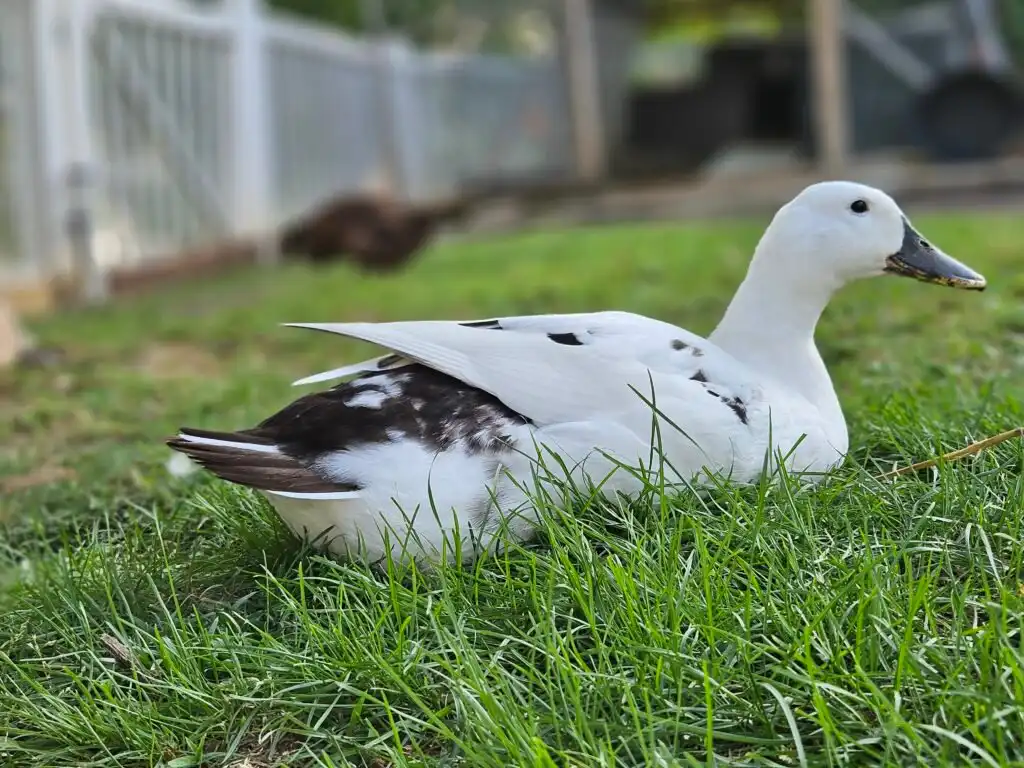
She was an Ancona duck, a rare, mid-size breed known for its striking black-and-white patterning. Penny wore her markings proudly, not just on her feathers, but also on her beak and feet, each one uniquely speckled. Anconas are often described as dual-purpose ducks, valued for eggs and meat, but Penny was never anything but a pet. A deeply loved one. No exceptions.
A Rough Beginning
Penny’s life began sometime in February of 2022, and it did not begin gently.
She and Simon were abandoned as ducklings, dumped at a park in Dallas when they were only about three weeks old. They were found scared and alone, running out of the bushes toward strangers because they had nowhere else to go. Whatever had happened before left its mark. They were traumatized and had clearly been mistreated.
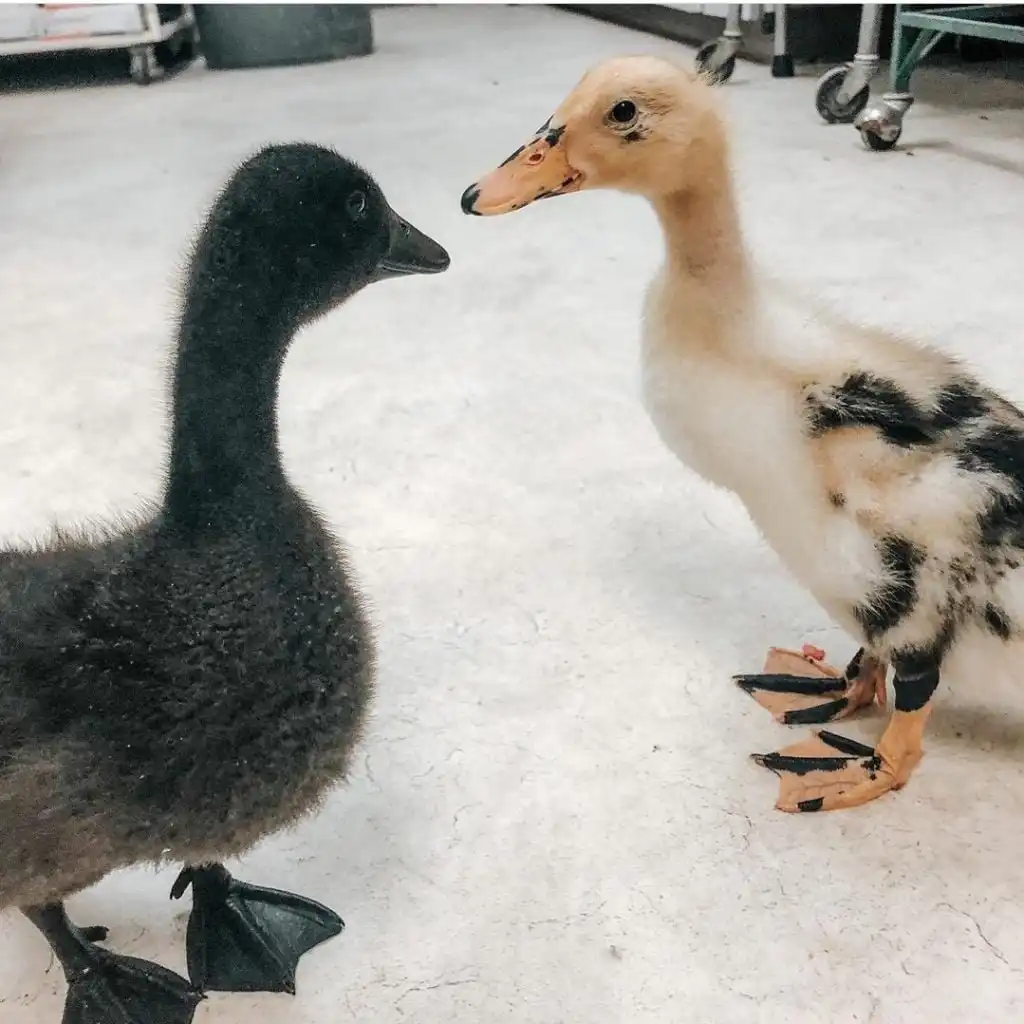
Those kind strangers brought them to the Rogers Wildlife Rehabilitation Center, a nonprofit rescue specializing in birds. There, Christin, who runs the Duckling Hotel and specializes in duckling care and trauma rehabilitation, took Penny and Simon in. For a few weeks, they were given safety, food, warmth, and patience. It gave them a second chance at life.
On April 15, 2022, Penny and Simon came home to us.
Meeting the Flock
Joining an established flock is never easy, and Penny’s first weeks were full of challenges. She and Simon met Hertha, Emma, and Schnatterinchen, and no one was particularly impressed.
Emma was a bully. Hertha kept her distance. Tensions were high, and friendships were slow to form. Only Schnatterinchen showed Penny kindness right away, quietly accepting her when others did not.
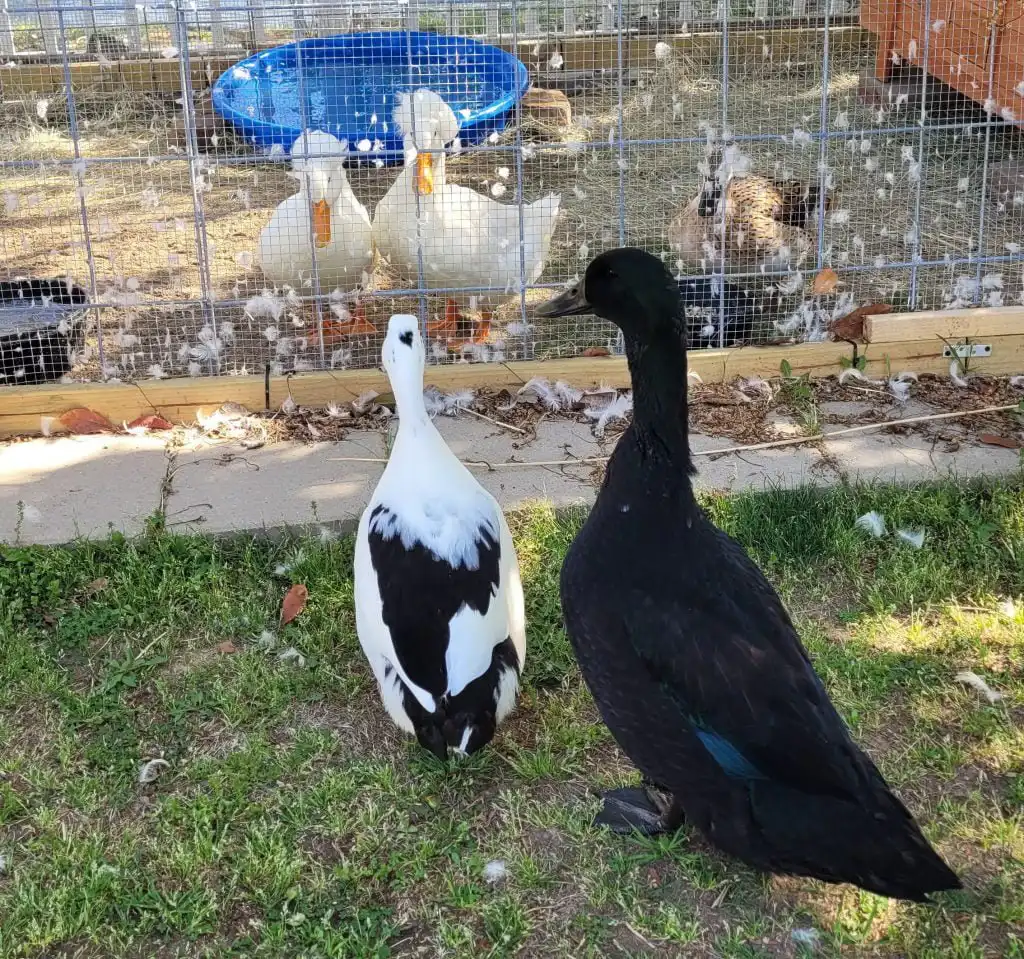
For the first few days, Penny and Simon slept inside with us and had carefully supervised playtime with the flock. Then they moved into a separate section of the coop, divided by a small fence. They could see each other, hear each other, and slowly adjust without fighting.
It took about a month, but eventually the fences came down. The flock settled. Penny had found her place.
Penny’s Personality
Penny had a quiet presence that you felt more than you heard. She was calm, observant, and gentle, bringing a sense of balance to the flock. While other ducks expressed themselves loudly or assertively, Penny moved through life with patience and thoughtfulness. She rarely initiated conflict and almost never escalated it. Instead, she seemed to understand how to coexist, adjusting herself naturally to the energy around her.
She was not a duck who demanded attention. Penny did not rush toward people or call out for interaction, but she clearly appreciated being near those she trusted. She chose companionship over closeness, often settling nearby rather than insisting on physical contact. When she did allow cuddles, it felt meaningful. She tolerated them calmly, staying still and relaxed, offering trust rather than seeking affection. That made those moments especially precious.

Despite her gentle nature, Penny had a playful and determined side. She loved chasing flying insects and would suddenly spring into action when a cicada or fly appeared. Watching her dart through the yard with surprising speed and focus was always a reminder that, even as her body began to fail her later in life, her spirit remained strong and engaged.
Simon was her anchor. They survived abandonment together as ducklings, and that shared beginning shaped their bond forever. They sought each other out instinctively, resting side by side and moving through the yard as a quiet pair. Penny was also very close to Ronja and Krümel. As one of the smaller ducks in the flock, she gravitated toward them, and there was a clear sense of belonging among them.
Later on, Penny also formed a close friendship with Muffin. Even as her mobility declined, Muffin treated her with gentleness and curiosity, staying near her and offering quiet companionship. That connection brought Penny comfort during her final chapter and showed just how deeply she was woven into the heart of the flock.
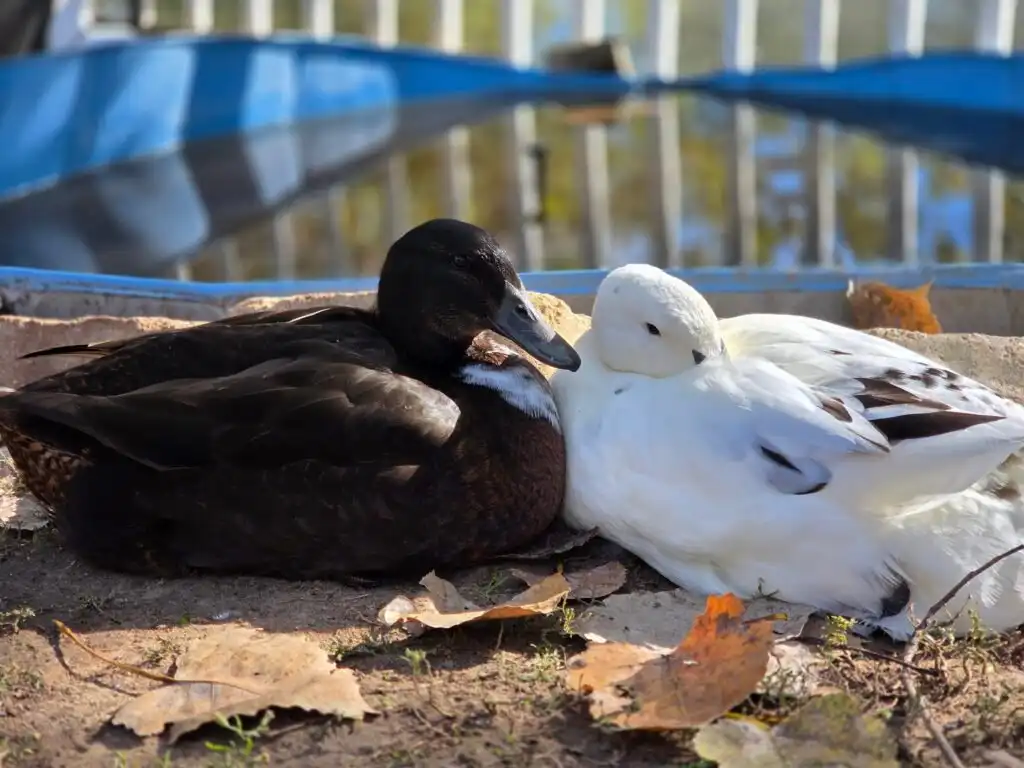
Penny may not have been the boldest duck in the yard, but she was deeply connected. Her relationships were built on trust, loyalty, and calm presence. That was Penny’s way, soft, steady, and quietly irreplaceable.
The Duck Who Never Missed a Snack
If there was food involved, Penny was always the first to know. It did not matter where she was resting or how comfortably settled she seemed. The moment snacks appeared, Penny’s attention snapped into focus. She would lift her head, lock in on the source, and waddle forward with unmistakable purpose.
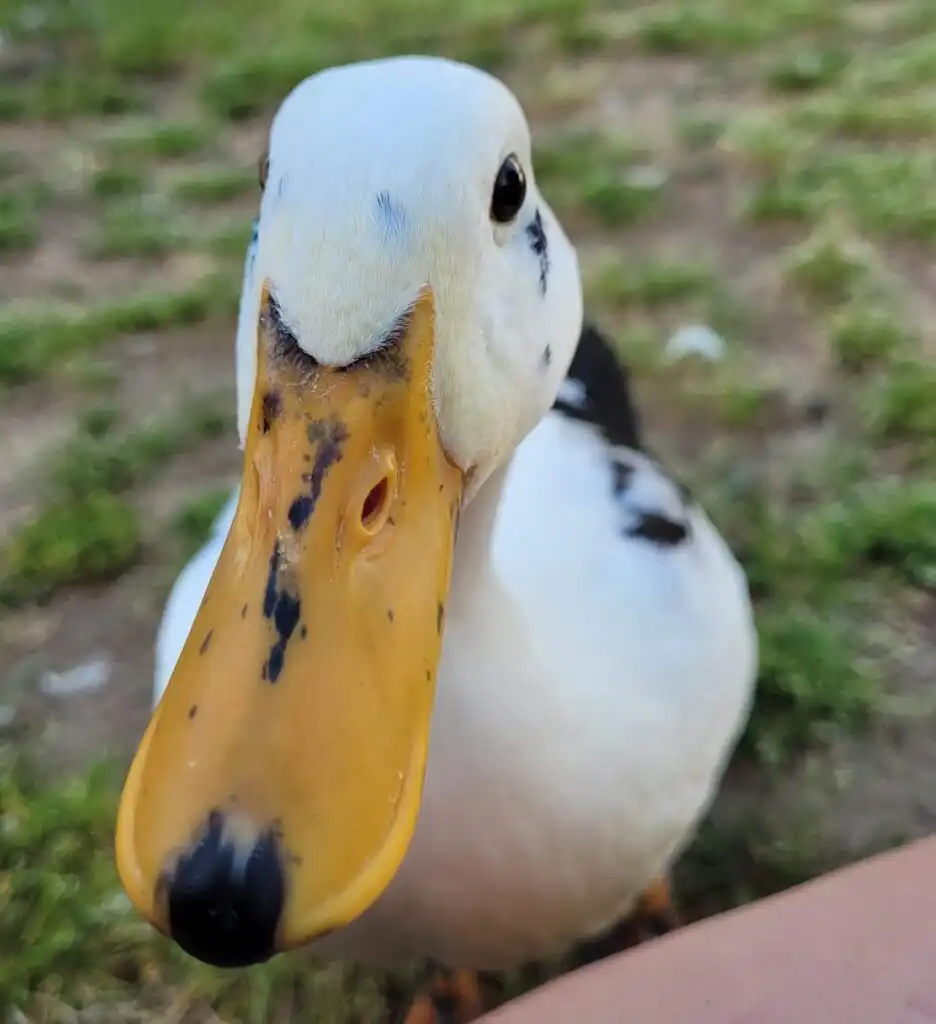
Penny loved everything. There were no picky preferences or polite hesitations. Peas, tomatoes, lettuce, cucumber, grubs, mealworms, insects straight from the yard, she welcomed it all with equal enthusiasm. Watching her eat was pure joy. She approached food with excitement, confidence, and a seriousness that made it clear this was important business.
Her love of snacks became part of who she was. Everyone in the flock had their quirks, but Penny’s was unmistakable. She was the one we instinctively looked for first when treats came out, already knowing she would be front and center. Even on harder days, when her movement was limited, food could still light her up. She found ways to be there, to participate, to enjoy that familiar happiness.
That is why her memorial stone feels so deeply right.
“You never missed a snack, and we will never stop missing you.”
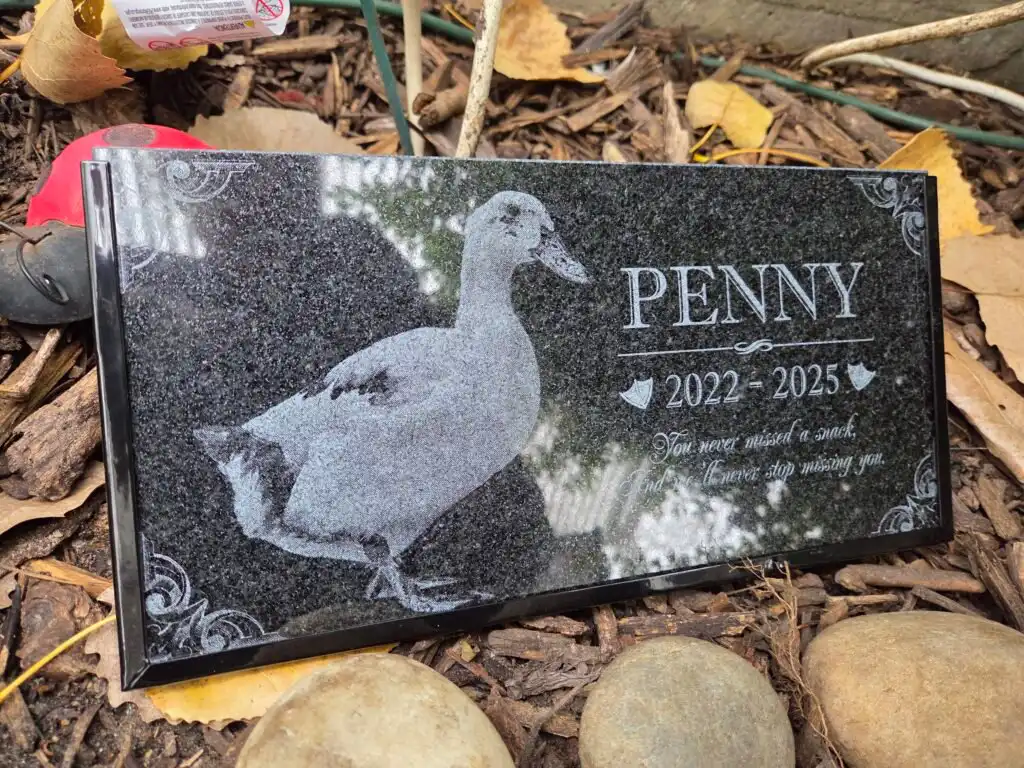
Those words capture Penny perfectly. Food was joy for her. It was routine, excitement, comfort, and connection all wrapped into one. And now, every time treats come out and one spot feels just a little too empty, we are reminded of the duck who never missed a snack and never will be forgotten.
Eggs, Freckles, and a Little Quirk
Penny was an incredible egg layer. She started laying at just five months old and, for a long time, laid almost daily. Her eggs arrived with remarkable consistency, never flashy, never dramatic, just reliably there each morning. It suited her perfectly. Penny was steady and dependable in everything she did, and her egg laying reflected that same quiet strength.
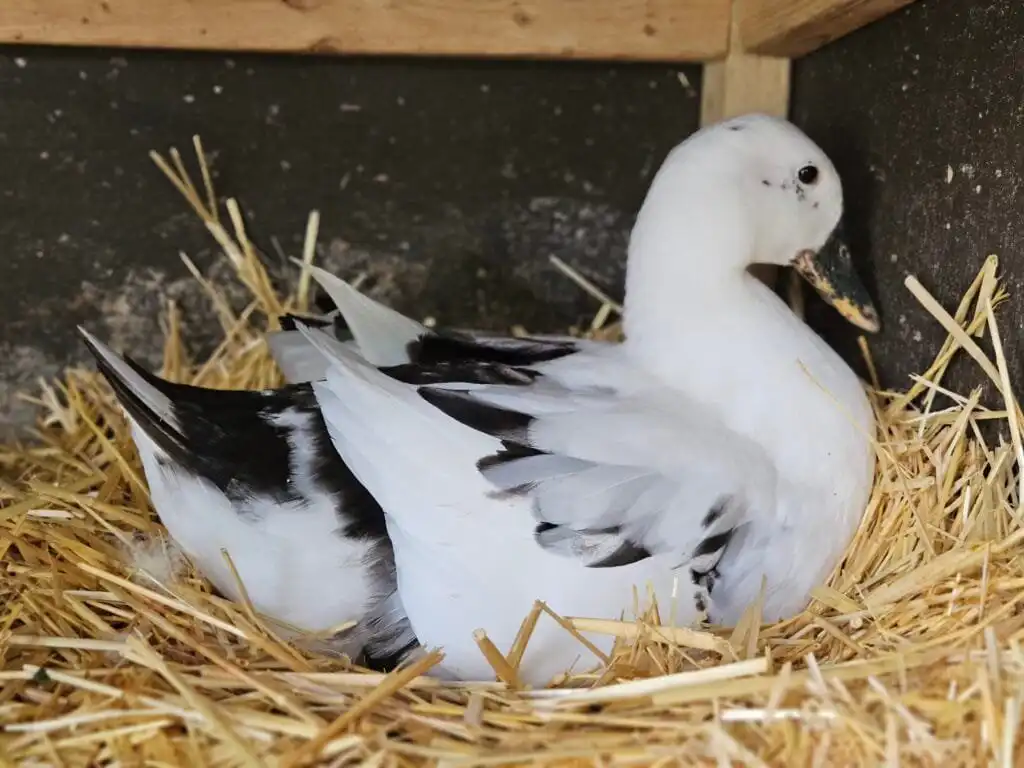
As time went on and her arthritis progressed, egg laying became harder on her body. Changes in her posture and mobility affected how her reproductive system functioned. Toward the end, she struggled more and more with laying, and soft-shelled eggs became more common. It was another reminder of how interconnected a duck’s body systems are and how chronic pain and limited movement can take a toll beyond what we can see. Even so, Penny continued to do her best, carrying that same determination she had shown her entire life.
She also had the sweetest little details that made her unmistakably Penny. One of them was her freckles. Like Schnatterinchen, she had small speckles on her beak, though they were subtler because of her darker coloring. They were easy to miss at first, but once you noticed them, you could not unsee them.
And then there was her quirk. When we reached down to pick her up, Penny never panicked or ran. Instead, she would pause for just a second, almost as if she were thinking it over. Then she would calmly back up, perfectly aligning herself, and step straight into our arms. It was her way of cooperating, of trusting us, and it never failed to make us smile.
Those small things, her eggs, her freckles, her gentle habits, are the details that linger the longest. They are the moments that turn memory into presence, long after she is gone.
Living With Chronic Pain
From the day Penny joined us, she had joint issues and walked with a noticeable limp. At first, it was easy to hope it might improve with time, good care, and a safe environment. Instead, it slowly became clear that this was something deeper. Over time, her limp developed into chronic arthritis that affected her mobility more and more as she aged. We treated her with meloxicam and adapted her environment in every way we could, softer ground, easier access to food and water, shorter walking distances, and plenty of places to rest. Even so, the relief it offered was limited.
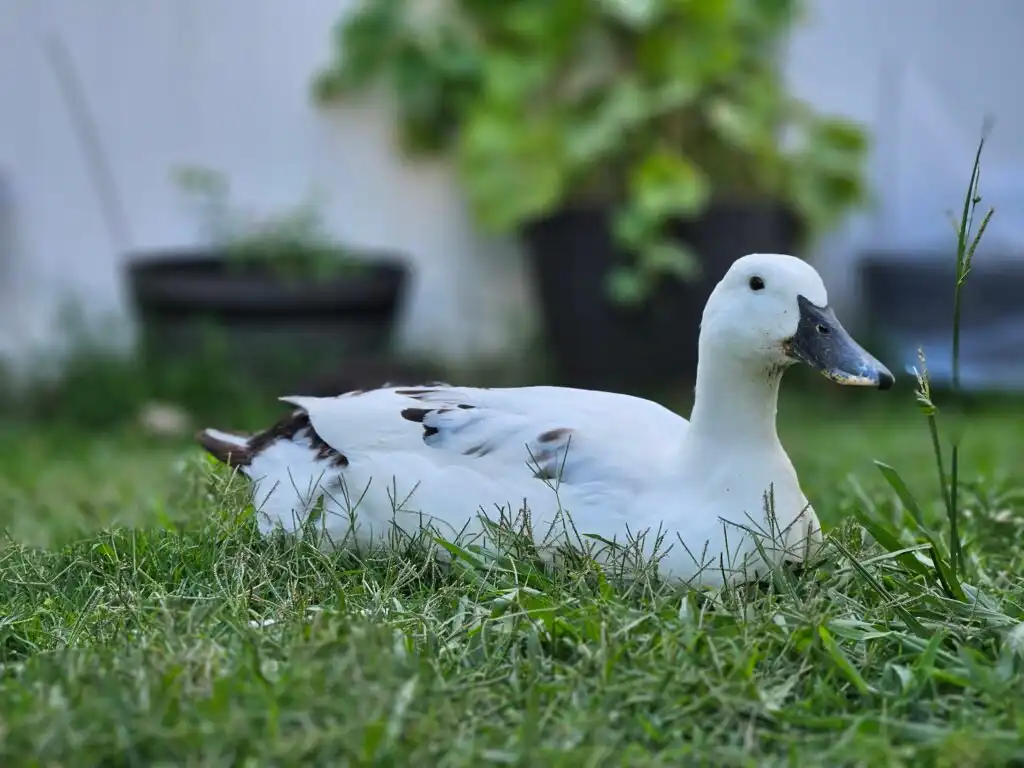
As the years passed, Penny adjusted her life around what her body could handle. She moved less and rested more, conserving her energy carefully. She learned how to forage while lying down, stretching her neck and nibbling without standing. She picked favorite spots in the yard where she could still watch the flock, participate in daily routines, and feel included without needing to move much. Penny never withdrew emotionally. She simply slowed down.
During her last year, the decline became much more noticeable. Her mobility decreased quickly, and she spent most of her day lying down. Eventually, she could no longer walk at all and began crawling on her belly to get where she needed to go. Watching that progression was devastating. Seeing her determination alongside her physical struggle was one of the hardest things we have ever witnessed.
We started bringing Penny inside more often, where she could rest on soft surfaces and stay warm. Indoors, she spent time with Muffin and Krümel, her closest companions. She seemed calmer there, more at ease, no longer needing to push her body beyond its limits. She even had a few sleepovers, quietly sharing space, resting, and simply being surrounded by familiarity and comfort.
We did not talk much about Penny’s condition publicly while it was happening. That choice was intentional. I wanted Penny to live her life with peace and dignity, not under scrutiny. I know how rough the internet and social media can be, how quickly opinions form, and how easily compassion gets lost. Penny deserved privacy, gentleness, and respect. She deserved to be seen first as a duck who was loved, not as a problem to be judged.
When It Was Time
As Penny grew weaker, the flock began to respond to her differently. Ronja and Emma started to bully her more, singling her out in ways they never had before. This kind of behavior is natural in ducks. Flocks are instinctively hardwired to react to weakness as a survival mechanism, not out of cruelty. Knowing that did not make it any easier to witness. Watching Penny, already struggling, being pushed further to the margins of the flock was heartbreaking. It felt like she was slowly being excluded for something she could not control.
Muffin and Krümel, however, never abandoned her. They stayed close, rested near her, and treated her with the same gentleness they always had. Their loyalty never wavered. Even as Penny became more vulnerable, they did not see her as weak or different. They simply saw her as Penny.
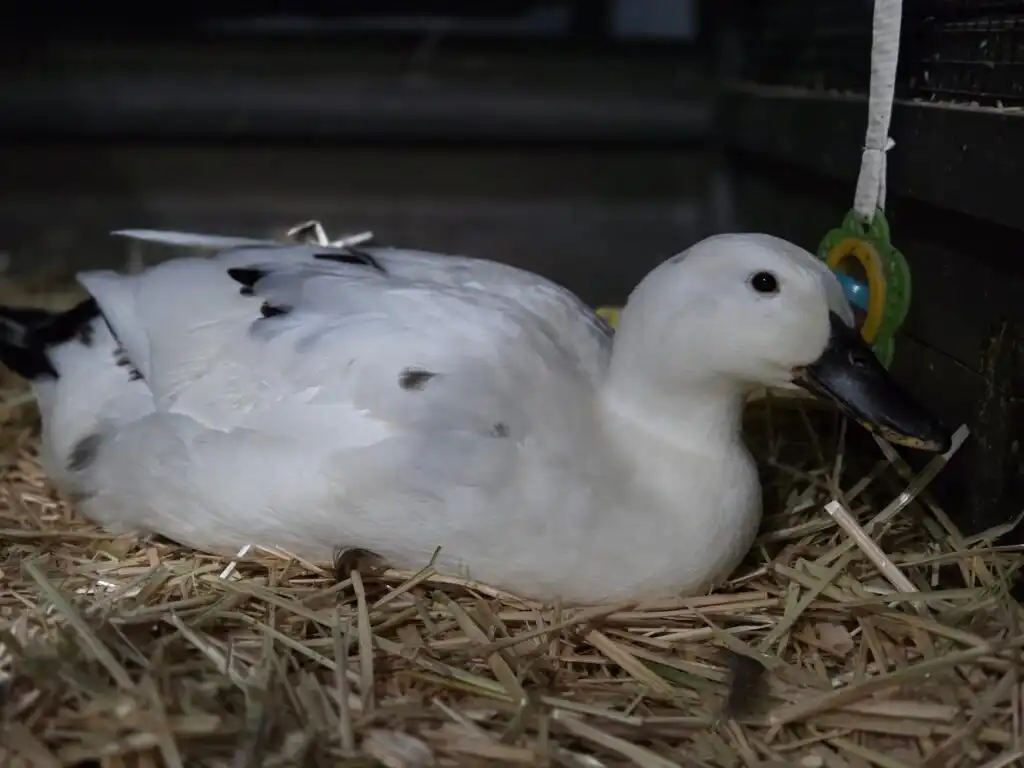
When Penny stopped eating, we knew we were running out of time. Food had always been her joy, her motivation, her spark. Losing interest in it was a quiet but unmistakable sign. We brought her inside again, hoping that being surrounded by her closest friends and the comfort of a familiar, safe space might help. It didn’t.
The night leading into December 1st was unbearable. Every hour felt heavy with worry. We watched her closely, not knowing if she would still be alive in the morning. She was. But she was clearly in pain. She would not stand. She would not eat. Her body was exhausted, and when I looked into her eyes, I could see what she could no longer express in any other way. Penny was ready.
Making the decision to let her go was the hardest thing I have ever done. The drive to the vet felt endless. I held her tightly the entire way, telling her how much I loved her, how grateful I was for her, and how sorry I was that her body had failed her. I apologized again and again, wishing I could take the pain from her myself.
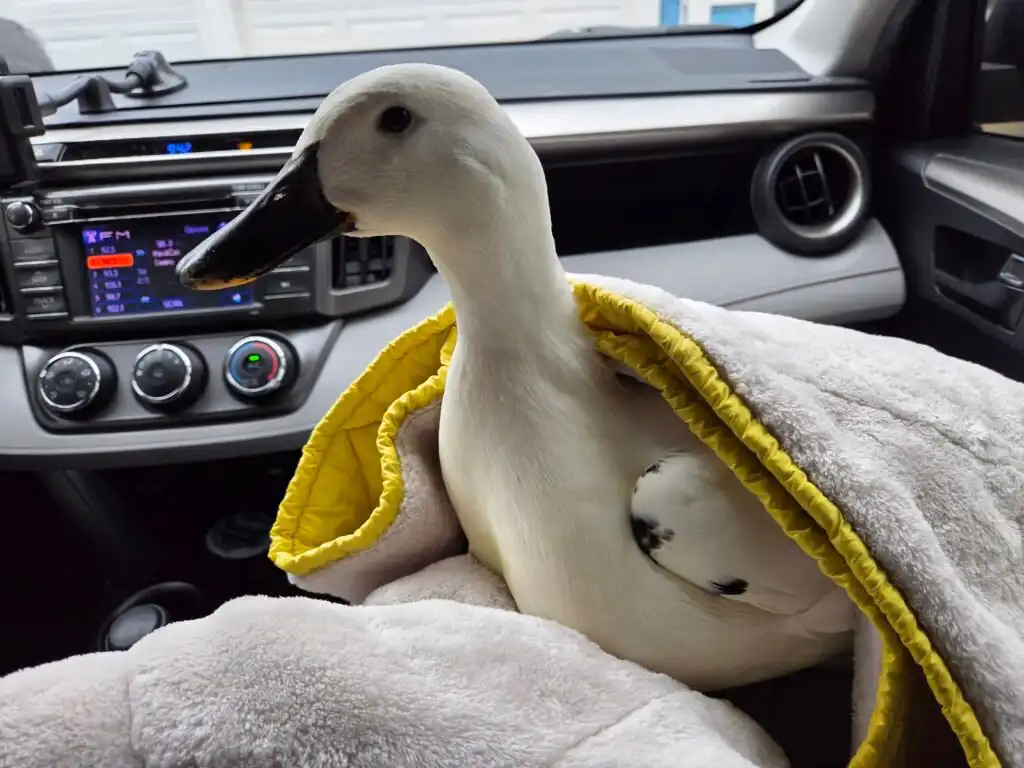
At the vet, I held Penny as she fell asleep for the last time. I cried as my heart broke, but even through the grief, I knew this was the final kindness she needed. There was no more relief to offer, no comfort left to find. Letting her go was the last and most loving gift we could give her.
Saying Goodbye Together
We brought Penny home so the flock could say goodbye. Ducks need closure. They need to see, to understand, and to process the absence of a flock member. Without that moment, they continue to search, calling and waiting for someone who will never return. Giving them the chance to say goodbye is painful for us, but it is an important part of helping them cope.
Krümel and Muffin were the first to approach her. They moved slowly and gently, touching her softly in a quiet farewell. There was no panic, no confusion, just a stillness that felt heavy and meaningful. They lingered with her for a moment, as if acknowledging what had happened in their own way.
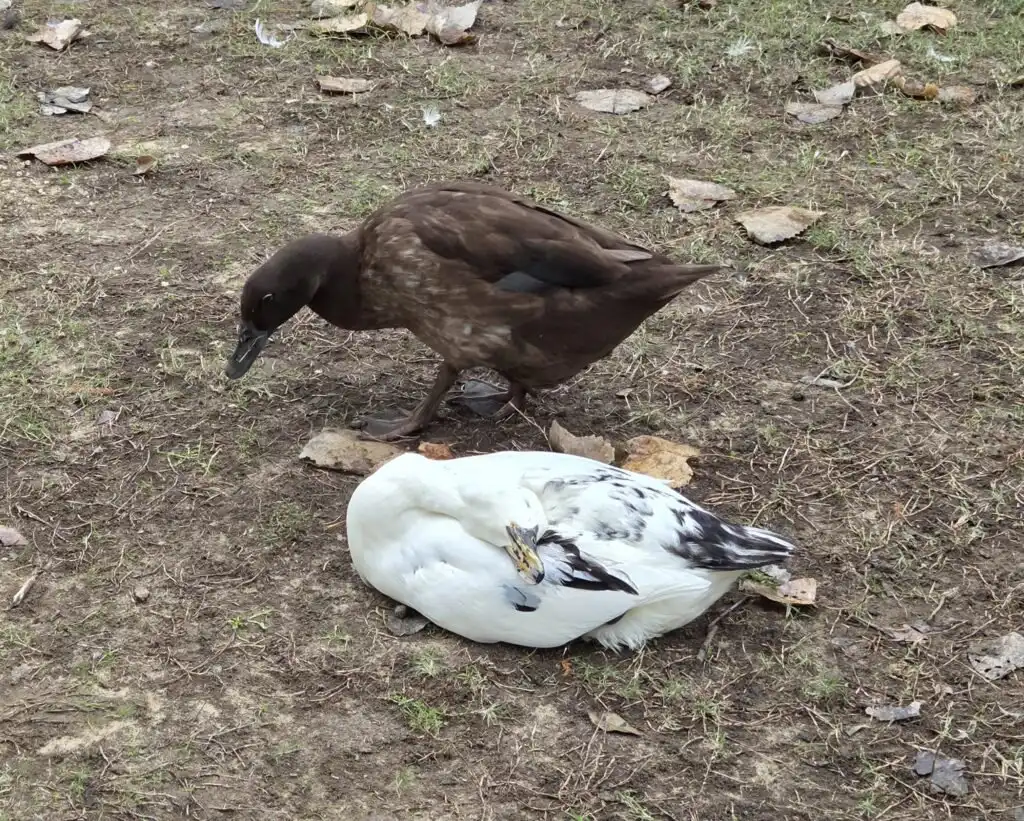
The rest of the flock kept their distance. Each duck processed the loss differently, watching from afar, staying still, taking it in. Some losses are felt quietly, and this was one of them.
Simon struggled the most. He had already lost Hertha, his love, and now Penny, his sister. They had spent their entire lives together, from their earliest days as abandoned ducklings to every stage that followed. Penny was not just part of his flock. She was part of his identity.
In the weeks that followed, Simon searched for her. He checked her favorite resting spots. He lingered where she used to lie in the yard. Even now, he still looks for his Penny. That absence has changed him in ways that are impossible to ignore, and it is a quiet reminder of how deeply ducks form bonds and how real their grief truly is.
Penny’s Resting Place
After everyone had the chance to say goodbye, we brought Penny back to the vet for cremation. Letting her go a second time, even knowing it was necessary, felt impossibly heavy. A week later, she came home.
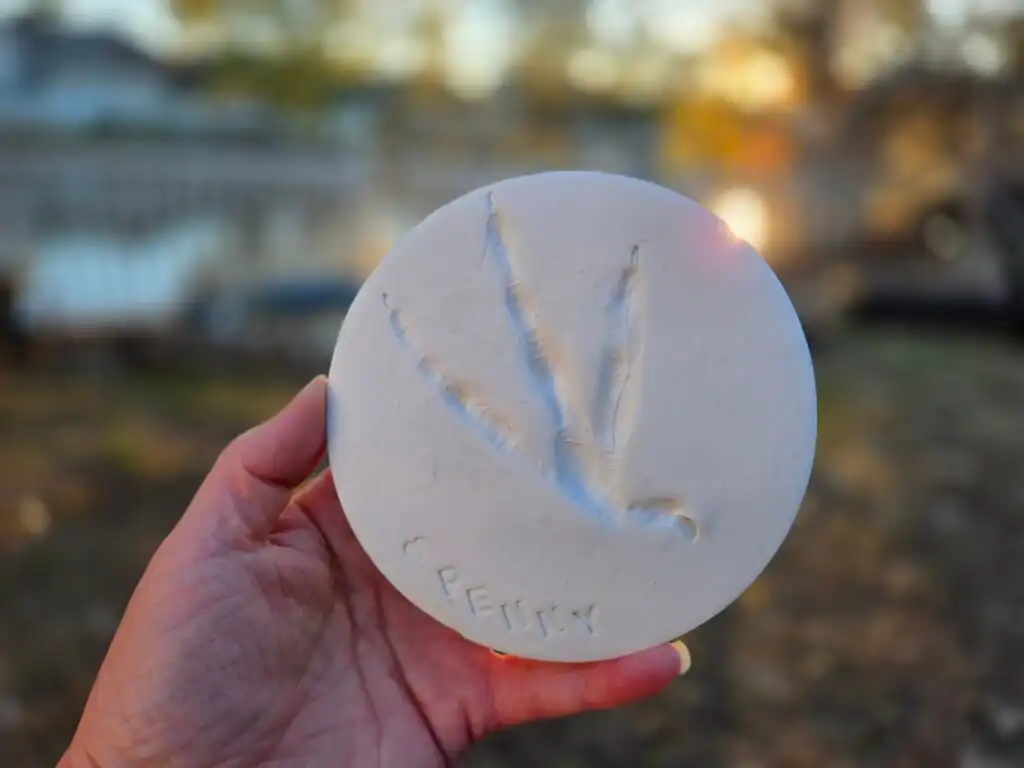
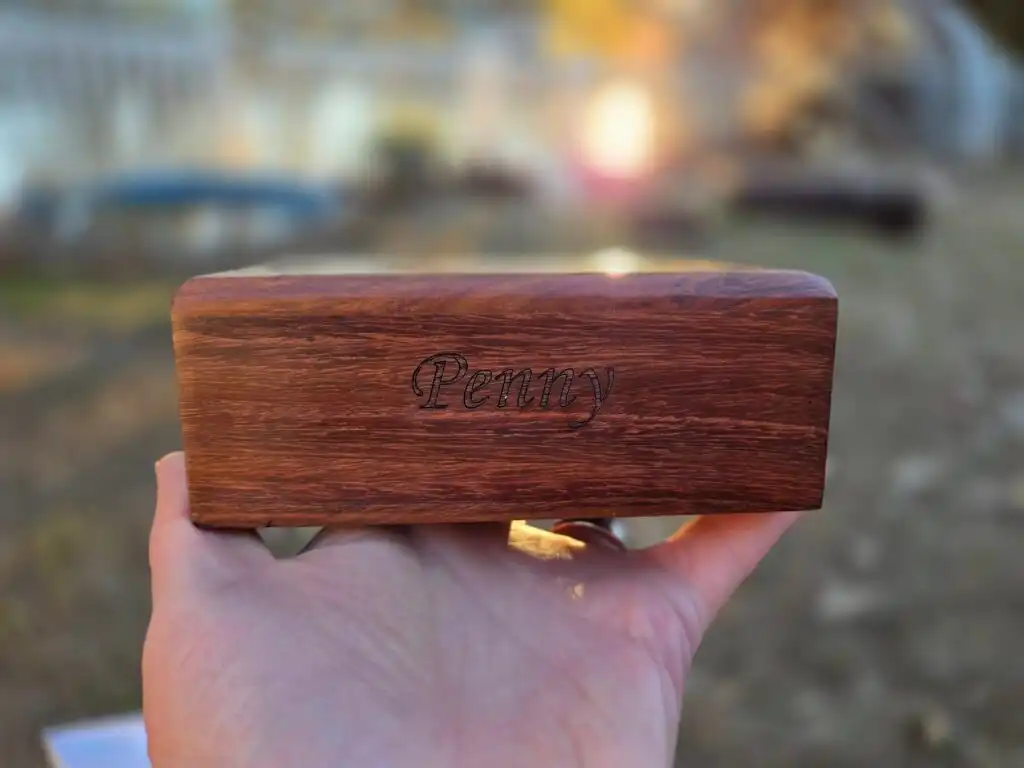
Her ashes arrived in a simple wooden box with her name on it. Along with them came a small footprint, a few of her feathers, and a heartfelt card from the veterinary team. Each piece felt both precious and devastating, tangible reminders of a life that had filled our home and our days.
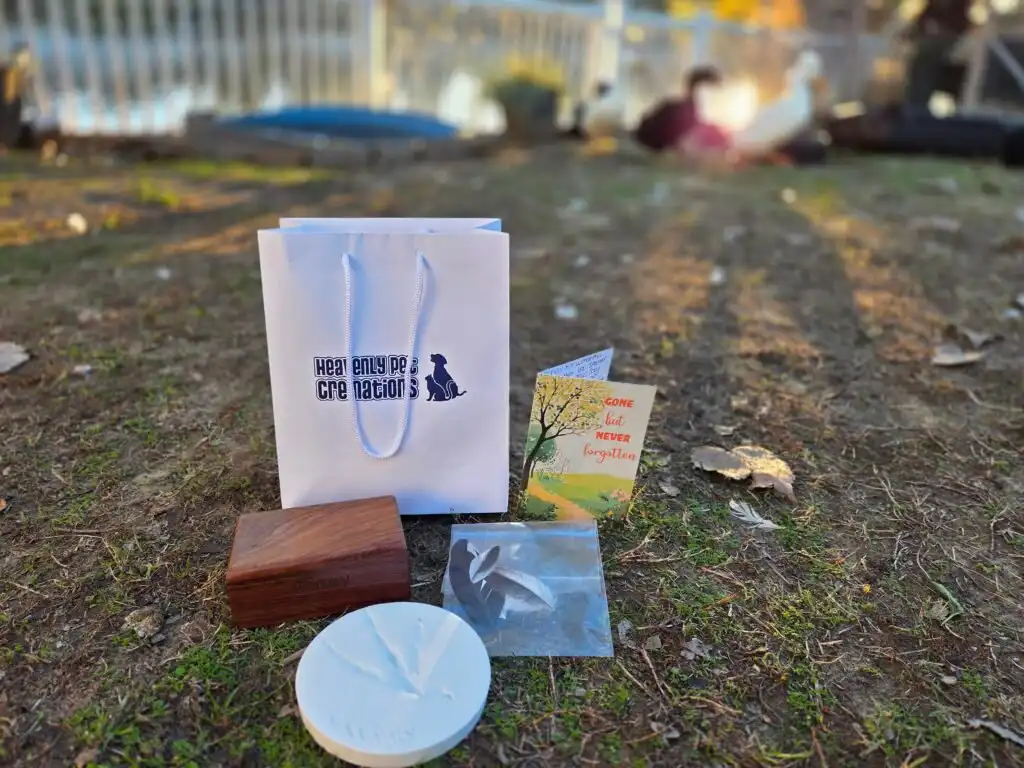
Penny’s memorial stone now rests in the yard beside Hertha’s. Seeing their stones together feels right. They were part of the same story, connected through the flock and through Simon, and now they share that space once more. Penny’s stone reads, “You never missed a snack, and we will never stop missing you,” a line that captures her spirit perfectly.
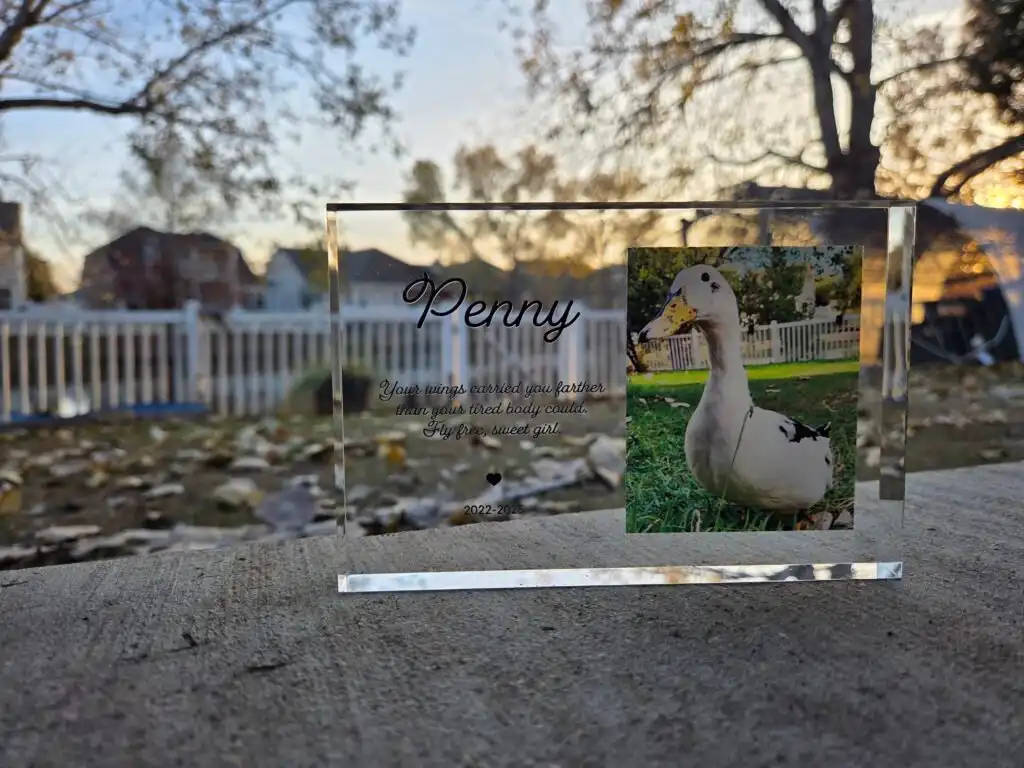
Inside the house, Penny’s ashes and her acrylic memory plaque sit next to Hertha’s. The plaque reads, “Your wings carried you farther than your tired body could. Fly free, sweet girl.” Together, these memorials keep Penny close. Outside, she rests among the flock she loved. Inside, she remains part of our daily life, just as she always was.
How I Dealt With the Loss
Losing Penny reopened wounds that had barely begun to heal. Hertha had passed only three months earlier, and the grief from that loss was still very raw. Even though Penny’s situation was different, even though we knew her time was coming, it did not make it easier. Anticipated loss still hurts deeply, and when it finally happens, the pain is real and heavy.
There was one important difference, though. With Penny, I had the chance to say goodbye. I was able to hold her, to tell her how much I loved her, and to be with her as she crossed the bridge. That was something I never had with Hertha, and I am grateful for that moment, even though it was heartbreaking. It brought a sense of closure that I had desperately wished for before.
But grief is not logical. A day or two after Penny passed, guilt started to creep in. Quiet at first, then louder. Two ducks gone in such a short amount of time. I started questioning myself as a duck mom. Was I doing enough? Was I missing something? Could I have saved her? Did I make the right decision, or was I selfish to let her go? The word “kill” echoed in my head, even though I knew, rationally, that what we did was an act of mercy.
Those thoughts were heavy and painful, and they came from a place of love, not failure. When you care deeply, you second-guess everything. You replay decisions over and over, searching for a different outcome. It took time, reflection, and gentleness toward myself to understand that choosing to end Penny’s suffering was not giving up on her. It was standing up for her when her body could no longer do so.
Grief after loss is not just sadness. It is doubt, guilt, fear, and self-blame tangled together. Working through that reminded me that loving animals means accepting responsibility not only for their lives, but also for their peaceful passing. And even though that responsibility feels unbearable at times, it does not make us bad caregivers. It makes us compassionate ones.
Penny’s Legacy
Penny passed on December 1st, 2025. Her loss left a quiet space that cannot be filled, only felt. The yard still looks the same, the routines continue, but something essential is missing.
Penny taught us patience in the truest sense. She taught us how to slow down, how to observe instead of rushing, and how to meet someone where they are rather than where we wish they could be. She showed us what quiet strength looks like, the kind that does not demand attention or sympathy, but simply keeps going day after day. Caring for Penny deepened our compassion and reminded us how much resilience can exist in even the gentlest beings.

She was never loud and never demanding, yet her absence is enormous. Penny mattered in ways that were subtle but profound, woven into the daily rhythm of the flock and into our lives.
When we finished the new coop, I made name signs for everyone. I made one for Penny and one for Hertha, too. Their names now hang with the rest of the flock, exactly where they belong. They are not gone from our story. They are still part of it.
Penny will always be one of us. Forever part of the flock. Forever part of our lives. Never forgotten.
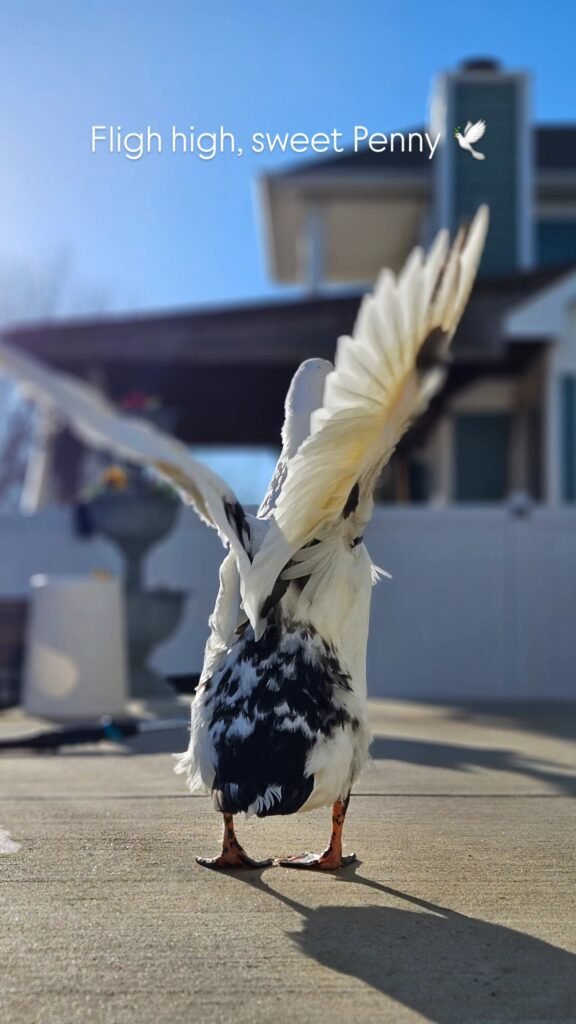
Fly free, Penny. No more pain. No more tired joints. Just open skies, endless insects, and all the snacks you could ever want. 💛
Further Reading & Resources