
How Ducks Establish Pecking Order (and How to Manage Conflicts)

Last updated: February 28th, 2026
To keep our research-backed guides free, this site uses ads and affiliate links (earning a small commission at no cost to you). Everything here is created by a duck mom and PhD scientist, combining academic rigor with hands-on experience to provide practical, trustworthy advice for duck keepers everywhere. 🦆 Learn more
If you spend enough time watching a duck flock, you will notice patterns. Who eats first? Who yields space? Who chases and who retreats? This is not random chaos, it is social structure. Ducks establish a pecking order, just like chickens, and understanding it can make the difference between a peaceful flock and one filled with tension.
Pecking order sounds dramatic, but in reality, it is a natural system designed to reduce constant conflict. When ducks know where they stand socially, they spend less time fighting and more time doing important duck things like foraging, bathing, and napping in the sun.
Part of the Community & Behavior Hub, Exploring the social complexity and psychological needs of domestic ducks.
Quick Navigation: Jump to a Section
[hide]
- What Is a Pecking Order in Ducks?
- How Ducks Establish Pecking Order
- What About Ducks That Fight Head to Head?
- Does Age, Size, or Sex Matter?
- When Pecking Order Becomes a Problem
- Common Triggers for Conflict
- How to Manage and Reduce Conflicts
- Should You Ever Fully Separate Ducks?
- Final Thoughts: Reading the Flock as a Whole
- Further Reading & Resources
What Is a Pecking Order in Ducks?
The pecking order in ducks is a social hierarchy that helps a flock function smoothly. It determines who gets first access to shared resources such as food, water, favorite resting spots, and even preferred swimming areas. Rather than being about aggression, this system is about predictability. When ducks know what to expect from one another, daily life becomes calmer and more efficient.
From a biological perspective, social hierarchies reduce constant conflict. Without a clear structure, ducks would need to negotiate access to resources over and over again, which costs energy and increases stress. A stable pecking order minimizes these repeated confrontations. Once roles are established, most interactions become brief and symbolic rather than physical.
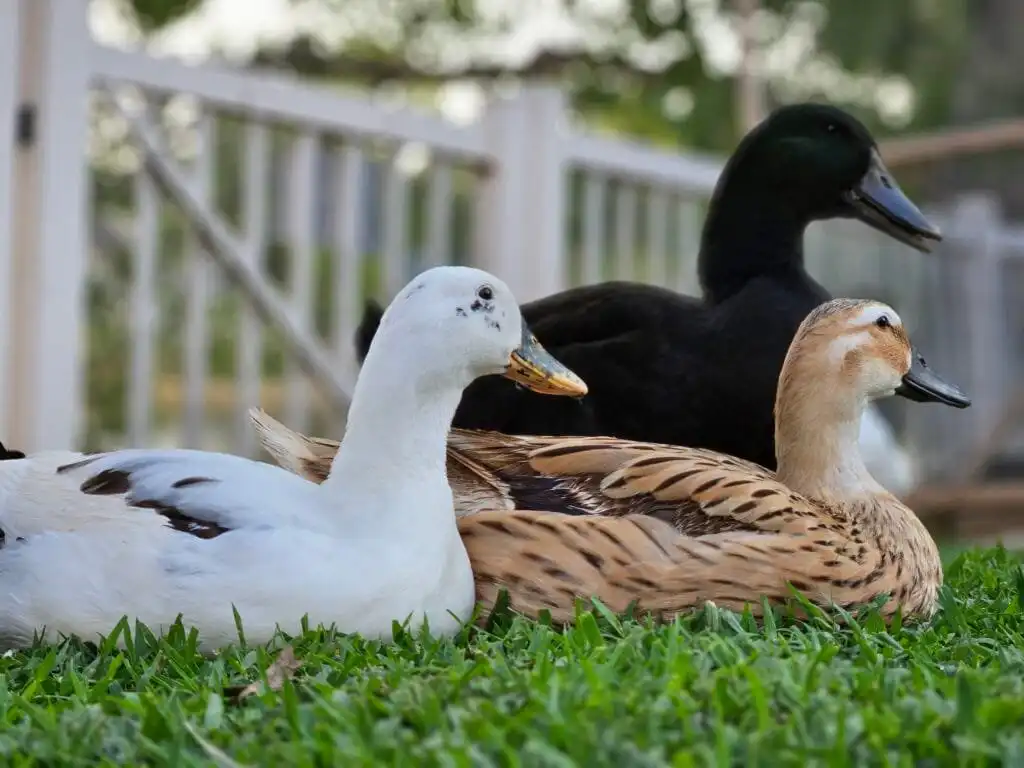
Ducks do not hold a fixed rank forever. The hierarchy is flexible and can change with age, health, hormones, or changes in the flock. A duck that is confident and healthy may move up, while a duck that is molting, injured, or ill may temporarily fall in rank. This flexibility is one reason pecking order is not inherently cruel. It adjusts to the flock’s current reality.
Communication plays a major role in maintaining this structure. Ducks rely on posture, movement, and short interactions to reinforce social boundaries. A raised neck, a quick step forward, or a short chase is often enough to send a clear message. Serious fights are uncommon in a well managed environment and usually indicate stressors like overcrowding or limited resources.
From a pet duck perspective, understanding pecking order helps us interpret behavior correctly. A brief peck or chase is often normal communication, not bullying. The key is watching patterns rather than single moments. When every duck can eat, drink, rest, and move freely, the pecking order is doing exactly what nature intended.
Watching this system unfold is one of those moments where duck keeping meets science. It is a reminder that even in a backyard flock, complex social biology is quietly at work every single day.
Pecking Order Is Not a Straight Line
Pecking order in ducks is not a simple “one boss, everyone else below” hierarchy.
It is a flexible, situational social system that changes depending on context, motivation, and environment.
- There can be more than one dominant duck in a flock
- Dominance can be resource-specific
- one duck controls the feeder
- another controls the pool or favorite resting spot
- A duck can dominate one flock mate while still yielding to another
- Relationships are often non linear
- Duck A dominates Duck B
- Duck B dominates Duck C
- Duck C may still dominate Duck A in certain situations
This is why pecking order can look inconsistent or confusing from the outside. Ducks are not maintaining a rigid rank system. They are making quick, efficient decisions about access to what matters in that moment.
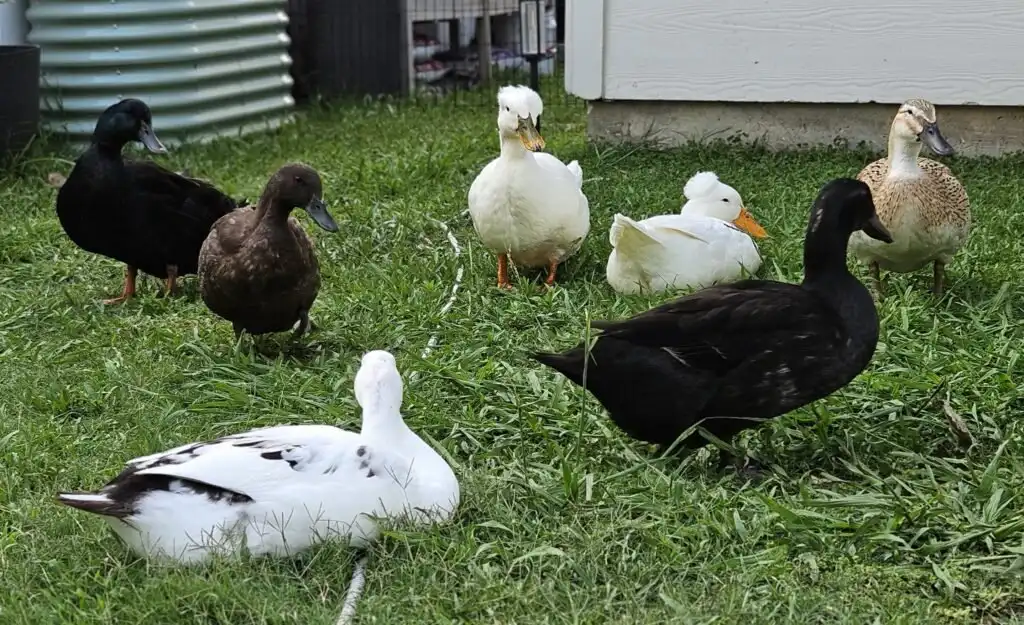
From a biological standpoint, this flexibility reduces constant fighting. Ducks do not need to prove dominance across all situations. They only assert themselves when a resource is valuable to them right then.
Understanding pecking order as a dynamic social web rather than a ladder makes flock behavior easier to interpret and far less stressful to manage.
How Ducks Establish Pecking Order
Social Order Develops Through Repeated Interactions
Ducks establish their pecking order through repeated social interactions rather than one dramatic showdown. These interactions begin as soon as ducks are housed together and continue subtly throughout their lives. Each encounter helps clarify boundaries and expectations within the flock.
Early Observation and Confidence Signals
Early on, ducks observe one another closely. They take cues from posture, movement, and confidence. A duck that approaches food calmly and holds her ground sends a very different signal than one that hesitates or backs away. Over time, these small moments add up, and a general ranking becomes clear to everyone involved.
Brief Physical Interactions as Communication
Physical interactions do occur, but they are usually brief and controlled. Pecking at the neck or back, short chases with head down, and quick pushes are common. These behaviors look intense to us, but they are often more about communication than injury. In a healthy flock, these encounters end quickly once the message has been delivered.
Body Language Does Most of the Talking
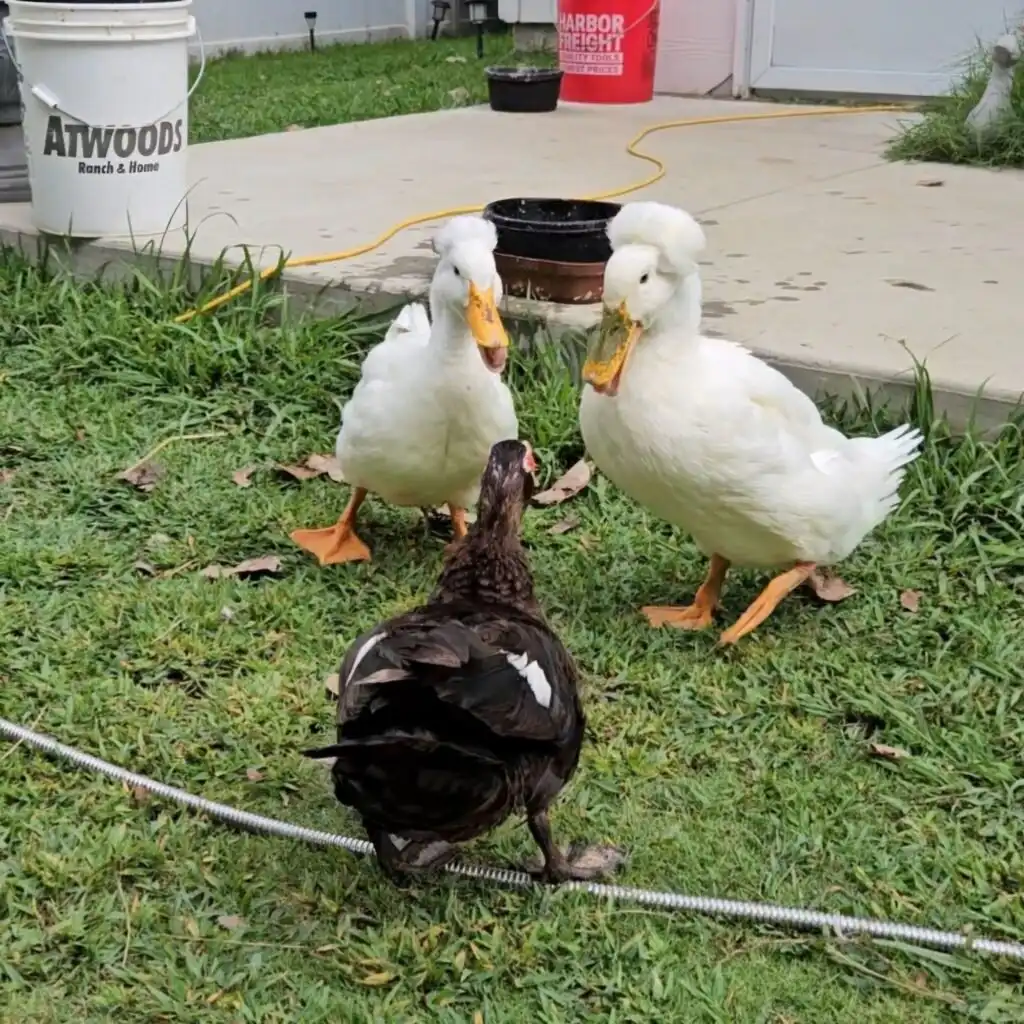
Body language is one of the most important tools ducks use. An upright stance, an extended neck, a side head bob, or deliberate forward movement often signals confidence or dominance. Subordinate ducks typically respond by turning away, lowering their body, or stepping aside. When these signals are respected, conflict stays minimal.
The Role of Vocalizations
Vocalizations also play a role. Short warning quacks or sharp sounds can stop an interaction before it escalates. Ducks are surprisingly good at reading these cues, which allows the flock to maintain order without constant physical contact.
Daily Routines Reinforce Hierarchy
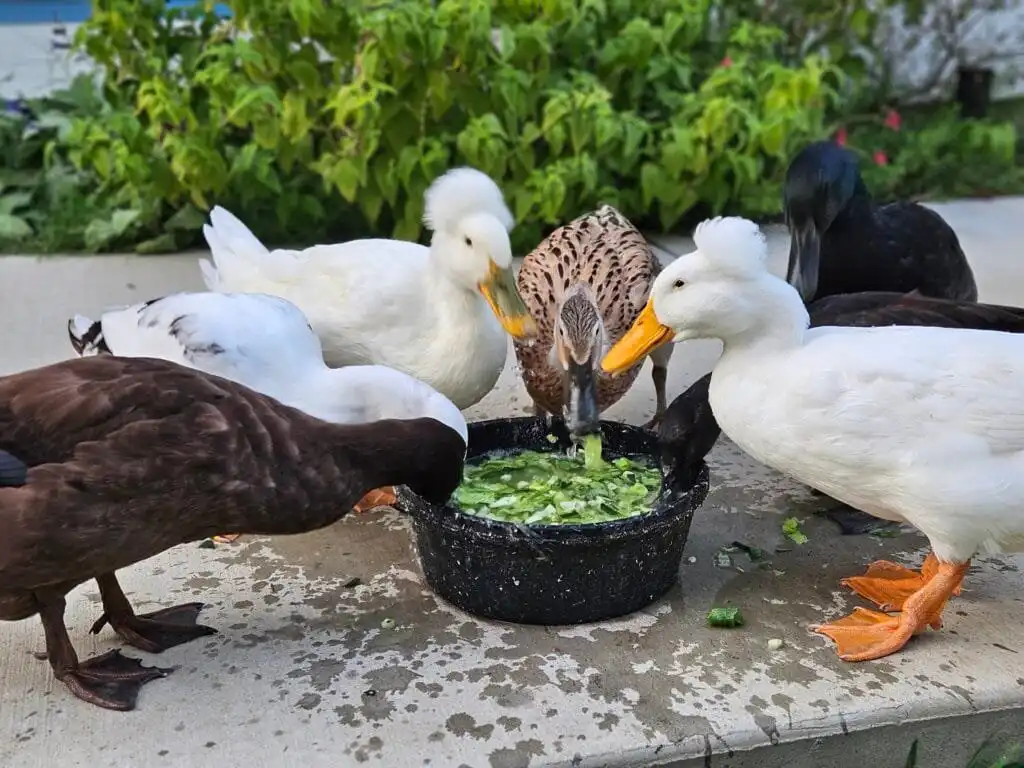
Hierarchy is reinforced during everyday routines. Feeding time, access to water, and preferred resting spots all provide opportunities for ducks to assert or yield position. Because these routines happen daily, the pecking order stays fresh in everyone’s mind and rarely needs aggressive reinforcement.
Pecking Order Is Dynamic, Not Fixed
It is important to remember that this process is dynamic. Changes in health, age, or environment can temporarily shift rankings. A duck that was once dominant may step back during a molt or illness, while another may quietly move up. This adaptability helps the flock stay stable even as individuals change.
Supporting Natural Hierarchy as a Duck Keeper
From a duck keeper’s perspective, the goal is not to stop this process but to support it. Providing enough space and resources allows ducks to establish their hierarchy with minimal stress. When the environment works with their instincts, pecking order becomes a calm and functional system rather than a source of constant conflict.
Why Watching Matters More Than Intervening
Watching ducks establish social order is a fascinating mix of instinct and strategy. It is subtle, efficient, and deeply rooted in their biology. Once you know what to look for, it becomes easier to tell when behavior is normal communication and when it is time to step in.
What About Ducks That Fight Head to Head?
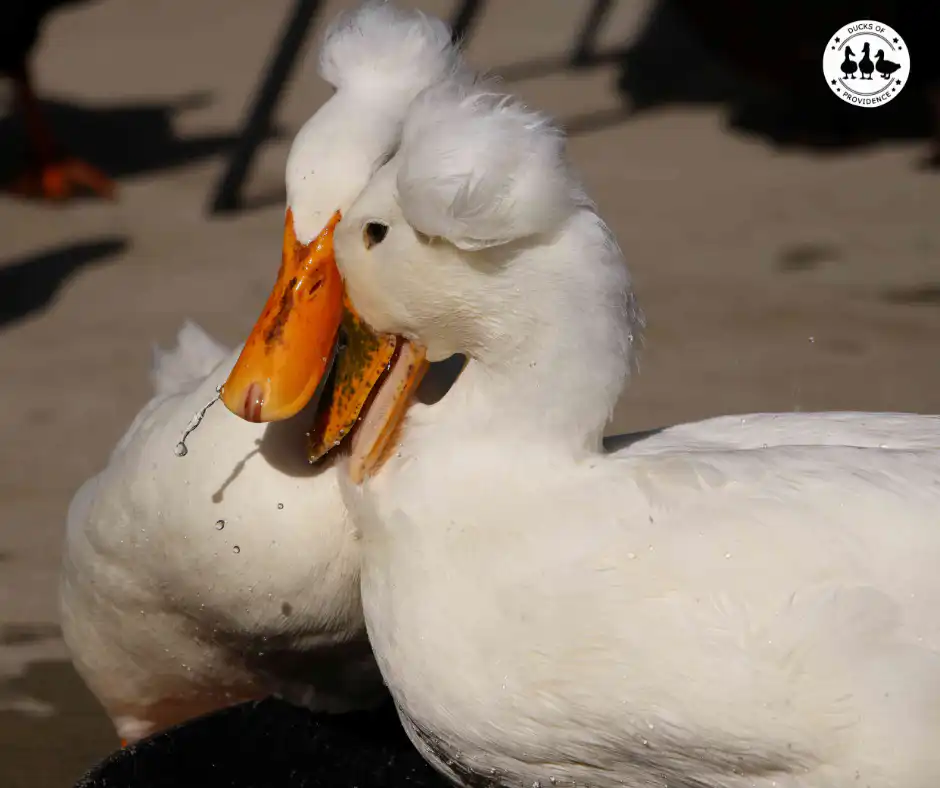
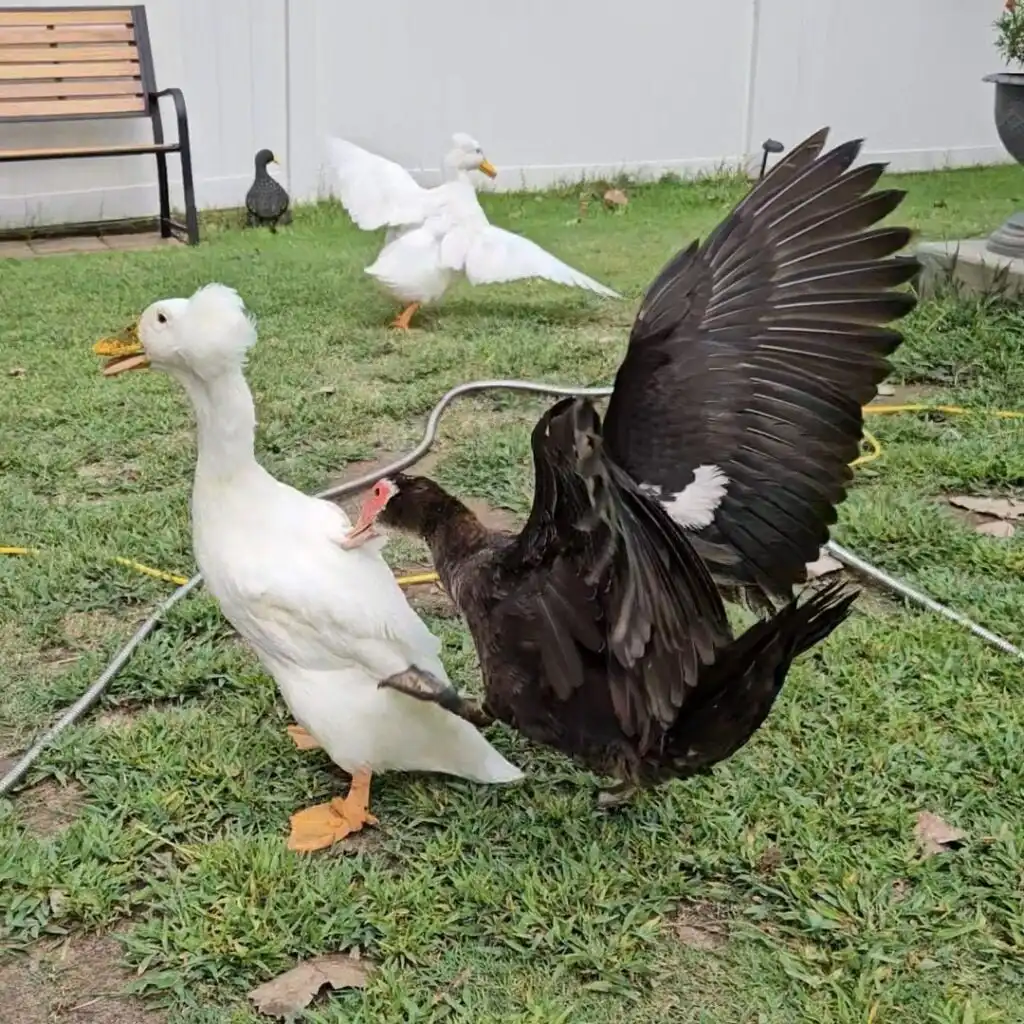
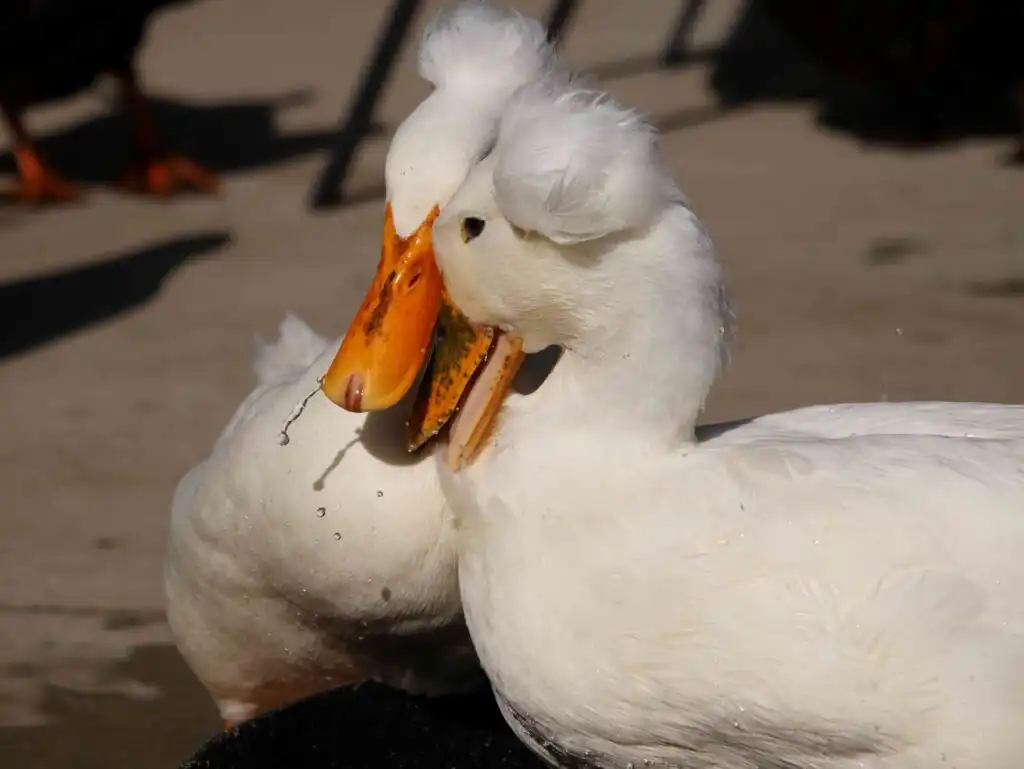
Head-to-head fighting looks very different from typical pecking order behavior, and it often raises alarm bells for good reason. When two ducks face each other directly and repeatedly peck at the head or neck, this is no longer subtle social signaling. It is a direct dominance dispute.
In normal hierarchy establishment, one duck yields fairly quickly. She turns away, lowers her posture, or walks off. Head-to-head fighting happens when neither duck is willing to back down. This is most common when two ducks believe they should hold the same rank, often near the top of the hierarchy.
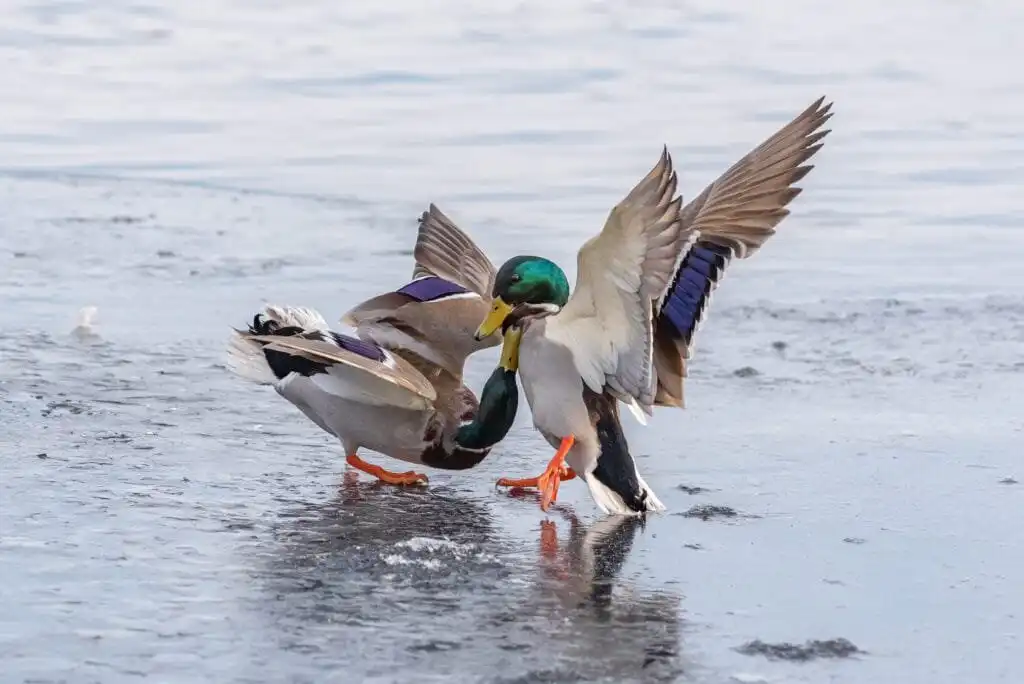
From a biological standpoint, the head and neck are highly sensitive and strategically important areas. Pecking here is an escalation. It is a way of testing strength, confidence, and resolve. While ducks have protective feathers and skin, repeated blows to the head or neck can absolutely cause injury, stress, and exhaustion.
These confrontations are more likely in certain situations. Introducing new ducks can trigger them, especially if the newcomer is confident or similar in age and size to a dominant duck. Hormonal changes during breeding season can also intensify these disputes. Drakes are more likely to engage in head-to-head fights, but dominant hens can and do participate as well.
Short, brief face-offs that end quickly can still fall within normal behavior. What matters is duration and repetition. If two ducks lock into this behavior repeatedly, or if it lasts more than a few seconds without one yielding, it is no longer healthy communication.
As duck keepers, this is one of the moments where stepping in is appropriate. Increasing space and removing the immediate trigger is the first step. Adding extra feeding and watering stations can help if competition is involved. Visual barriers can also break fixation and allow both ducks to disengage.
If the behavior continues, temporary separation is often the safest option. This is not about punishment. It gives both ducks time to reset hormonally and socially. In many cases, reintroduction after a short break leads to far less tension because the hierarchy can re-establish without constant face-to-face pressure.
Head-to-head fighting tells you something important about your flock. It signals unresolved hierarchy, environmental stress, or hormonal overload. Paying attention early prevents injuries and helps restore balance before the situation escalates further.
Have you noticed whether these confrontations happen at feeding time, during mating season, or only between specific ducks? Patterns like these often reveal the underlying cause faster than the fight itself.
Does Age, Size, or Sex Matter?
Age, size, and sex all influence pecking order, but none of them act alone. Duck hierarchy is shaped by a combination of physical traits, experience, hormones, and individual personality. This is why pecking order can look very different from one flock to another.
The Role of Age
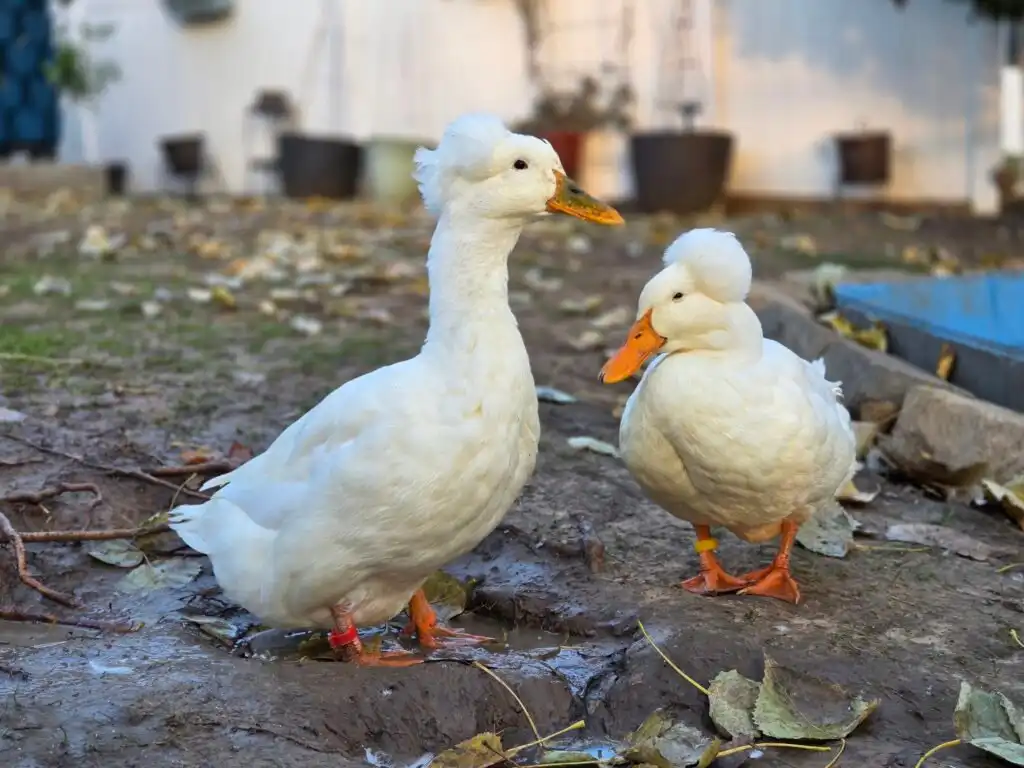
Age often plays a surprisingly strong role. Older ducks tend to rank higher because they have experience navigating social interactions. They know how to read signals, when to assert themselves, and when to conserve energy. Younger ducks are still learning these rules and are more likely to test boundaries or misread cues, which can lead to brief conflicts. Age also brings confidence, and confidence carries a lot of social weight in a duck flock.
How Size Influences Dominance
Size matters, but not in the way people often expect. Larger ducks do have a physical advantage, especially during early hierarchy formation. However, size alone does not guarantee dominance. A large but timid duck may consistently yield to a smaller but confident one. What matters most is how a duck uses her size. Calm, deliberate movement tends to command more respect than frantic or reactive behavior.
Sex and Hormonal Effects on Hierarchy
Sex introduces a hormonal layer to the hierarchy. Drakes often rank high, especially during breeding season, when testosterone increases assertiveness and competition. That said, dominant hens are extremely common and can outrank drakes without issue. In many mixed flocks, one or two strong hens quietly run the social order while drakes follow their lead.
Hormonal cycles can temporarily shift rankings. During spring, behavior may become more intense as mating instincts kick in. Ducks that normally coexist peacefully may suddenly challenge one another. These changes are usually seasonal and settle once hormone levels stabilize.
Why Personality Often Matters More Than Biology
Personality ties all of this together. Some ducks are natural leaders. They move with confidence, remain calm under pressure, and rarely need to escalate conflict. Others are more submissive or socially cautious, regardless of age, size, or sex. Over time, flocks tend to respect these personality traits more than any single physical factor.
For duck keepers, this means avoiding assumptions. The biggest or oldest duck is not always the boss. Watching interactions over time gives a much clearer picture than relying on labels. When age, size, and sex are balanced with enough space and resources, the hierarchy usually settles into a stable and peaceful rhythm.
Have you noticed which ducks in your flock lead without ever seeming aggressive? Those are often the true anchors of a well-functioning pecking order.
When Pecking Order Becomes a Problem
A healthy pecking order is quiet and efficient. Most of it happens in the background and barely registers once the hierarchy is established. Problems arise when the balance tips from communication into sustained stress or harm.
Repeated Targeting of One Duck
One of the clearest warning signs is repeated targeting of the same duck. In normal interactions, different ducks may assert themselves at different times. When one individual becomes the consistent focus of aggression, the system is no longer self-regulating. This often happens when a duck is perceived as weak due to illness, injury, molting, or exhaustion.
Physical Injuries and Feather Loss
Physical damage is another red flag. Occasional loose feathers are normal, but bald patches, broken feathers, or wounds around the neck, head, or back indicate that interactions are escalating beyond acceptable limits. The neck is especially vulnerable, and repeated pecking there should never be ignored.
Blocking Access to Food, Water, or Rest
Access to basic needs is non-negotiable. If a duck is being blocked from food, water, or resting areas, intervention is required. Pecking order should determine order, not exclusion. Any duck that cannot meet her basic needs will quickly decline in health, which further worsens her social standing and creates a dangerous feedback loop.
Behavioral Changes and Chronic Stress
Behavioral changes often appear before visible injuries. A duck that was once social may begin isolating herself, avoiding water, or staying on the edges of the run. Reduced vocalization, lowered posture, or constant alertness are signs of chronic stress. Ducks are prey animals, and prolonged stress has real physiological consequences, including immune suppression.
When Chasing Becomes Relentless
Another sign that hierarchy has broken down is relentless pursuit. Short chases are normal. Long, repeated chases with no opportunity for escape are not. If a duck cannot disengage and settle, the conflict is no longer serving a social purpose.
It is important to distinguish between brief disputes and ongoing patterns. One rough afternoon does not define a problem. Consistency does. Watching interactions over several days gives a much clearer picture than reacting to a single moment.
Why the Environment Often Drives the Problem
When pecking order becomes harmful, it is rarely the fault of the ducks alone. Environmental factors such as limited space, lack of enrichment, uneven sex ratios, or insufficient resources almost always play a role. Addressing these root causes is far more effective than trying to suppress behavior.
Stepping in at the right time protects both the targeted duck and the overall stability of the flock. Intervention is not about eliminating hierarchy. It is about restoring it to a state where every duck can function safely and confidently within the group.
Have you ever noticed how quickly tension drops once space or resources are adjusted? That response is often your best confirmation that the issue was environmental, not behavioral.
Common Triggers for Conflict
Even the most stable duck flock can experience conflict when conditions change. Ducks rely heavily on routine and predictability, and disruptions to either can quickly shake up the social balance. Understanding common triggers helps you anticipate problems before they escalate.
Introducing New Ducks
Introducing new ducks is one of the most frequent causes of tension. A new duck is an unknown variable and immediately challenges the existing hierarchy. Resident ducks often feel the need to reassert their positions, while the newcomer must find her place. Without a gradual introduction, this process can become intense and overwhelming for everyone involved.
Crowding and Limited Space
Limited space amplifies aggression. When ducks cannot move away from one another, even minor disagreements escalate quickly. Runs that feel adequate during calm periods may suddenly feel cramped during hormonal surges or when the flock grows. Space is not just about square footage. It is also about visual breaks and the ability to avoid direct confrontation.
Competition for Food and Resources
Competition for resources is another major trigger. Too few feeding stations, water sources, or favorite resting spots force ducks into repeated confrontations. Feeding time is especially revealing. If aggression spikes when food appears, resource distribution is almost always part of the problem.
Hormonal Changes During Breeding Season
Hormonal changes during breeding season can dramatically shift behavior. Rising hormone levels increase assertiveness, restlessness, and competition, particularly in drakes. Ducks that normally coexist peacefully may suddenly challenge one another. These seasonal shifts are natural but require extra management to prevent injuries.
Illness, Injury, or Molting
Illness, injury, or molting can also destabilize hierarchy. Ducks instinctively notice weakness. A duck that moves slower, looks different, or behaves unusually may lose her rank temporarily and become a target. This is not cruelty. It is a survival instinct that becomes problematic in a captive environment.
Environmental and Routine Changes
Environmental changes matter more than we often realize. Rearranging the run, moving housing, or changing routines can unsettle ducks and lead to renewed boundary testing. Even something as simple as a new feeder location can trigger short-term disputes.
Most conflicts do not arise from a single cause. They are usually the result of multiple stressors stacking on top of each other. Recognizing these triggers early allows you to adjust conditions before the flock feels the need to resolve the problem themselves.
Have you noticed that tension tends to spike after specific changes? Paying attention to timing often reveals the root cause faster than watching the behavior alone.
How to Manage and Reduce Conflicts
Managing conflict in a duck flock is not about stopping pecking order. It is about shaping the environment so that natural social behavior stays brief, low-stress, and safe for everyone involved. Most serious conflicts improve dramatically when a few key management factors are adjusted.
Increase Space and Escape Options
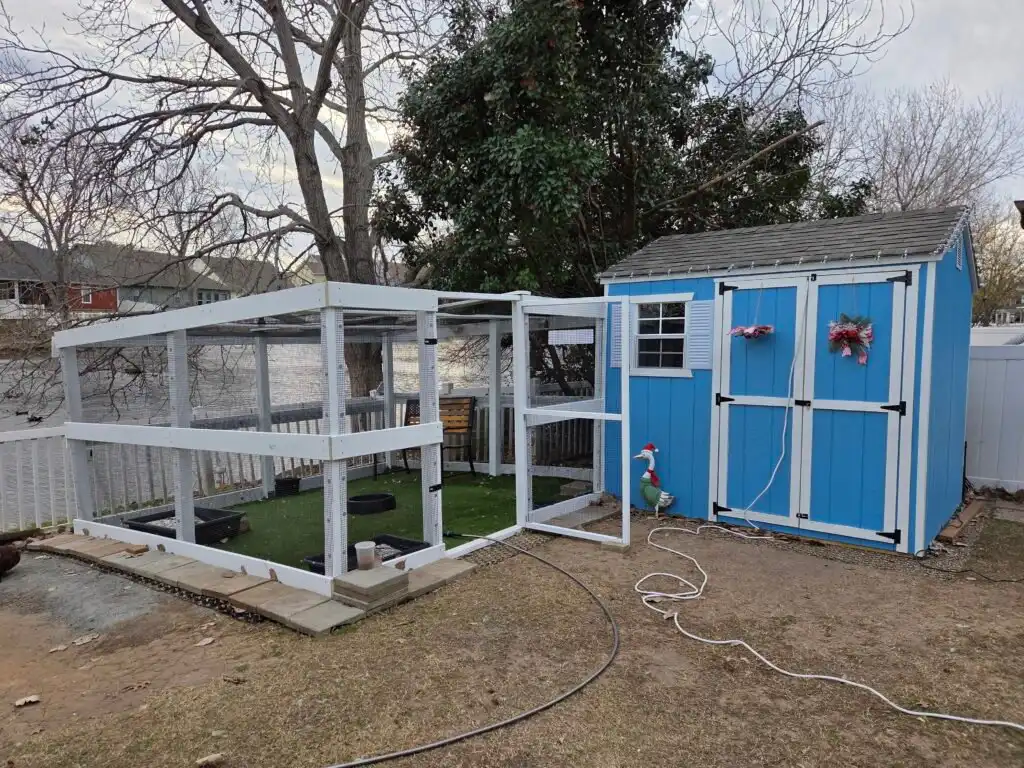
Space is one of the most powerful tools you have. Ducks need room not only to move but to disengage. A duck that can walk away rarely needs to escalate a conflict. Even in a generously sized run, adding escape routes makes a difference. Corners, narrow walkways, and dead ends can trap a duck and intensify aggression.
If expanding square footage is not possible, focus on how the space is used. Open areas paired with tucked-away resting spots allow ducks to self-separate when needed. Calm flocks are often not larger flocks, but smarter layouts.
Duplicate Food and Water Stations
Competition drops fast when resources are abundant. Multiple feeding and watering stations prevent dominant ducks from controlling access. Place them far enough apart that one duck cannot guard both at the same time.
Pay close attention during feeding. If tension spikes the moment food appears, this is a clear sign that resource pressure is driving conflict. Spreading food over several locations often resolves the issue within days.
Use Visual Barriers and Enrichment
Ducks fixate easily. Visual barriers break the line of sight and interrupt repeated targeting. Panels, planters, low walls, or enrichment items like ramps and platforms give ducks something else to focus on and reduce constant face-to-face interaction.
Enrichment also burns off nervous energy. Water play, shallow digging areas, and safe toys encourage natural behaviors and reduce boredom-driven aggression. A mentally occupied duck is far less likely to pick fights.
Support Introductions and Social Changes
Any change to the flock deserves extra management. New ducks should always be introduced gradually with a barrier that allows sight and sound without physical contact. This lets the flock adjust without immediate pressure to establish rank.
The same care applies after illness or injury. A recovering duck may need temporary protection while she regains strength. Reintroducing her slowly can prevent renewed targeting once she returns to the group.
Use Temporary Separation Strategically
Separation is not punishment. It is a reset tool. Removing a bully or protecting a vulnerable duck for a short period can calm the entire flock. In many cases, reintroduction after a few days leads to a more stable hierarchy with far less aggression.
The key is timing. Early separation prevents injuries and stops unhealthy patterns before they become entrenched. Long-term isolation should be avoided unless absolutely necessary, as ducks are highly social animals.
Monitor Patterns Rather Than Moments
One rough interaction does not mean you have a problem. What matters is repetition and intensity. Keep mental notes or even written ones if needed. Which ducks are involved? When it happens. Where it happens.
Patterns point to causes. Feeding time aggression suggests resource issues. Seasonal spikes suggest hormones. Targeting one duck suggests vulnerability. Management works best when it responds to patterns, not isolated events.
Aim for Balance, Not Perfection
A peaceful flock is not a silent one. Some chasing, pecking, and boundary setting will always exist. Your goal is not to eliminate conflict but to keep it functional.
When every duck can eat, drink, rest, and move freely without fear, the pecking order is doing its job. Good management simply helps it stay there.
Have you noticed how small changes often bring big improvements? That is usually a sign that your ducks were asking for support long before things escalated.
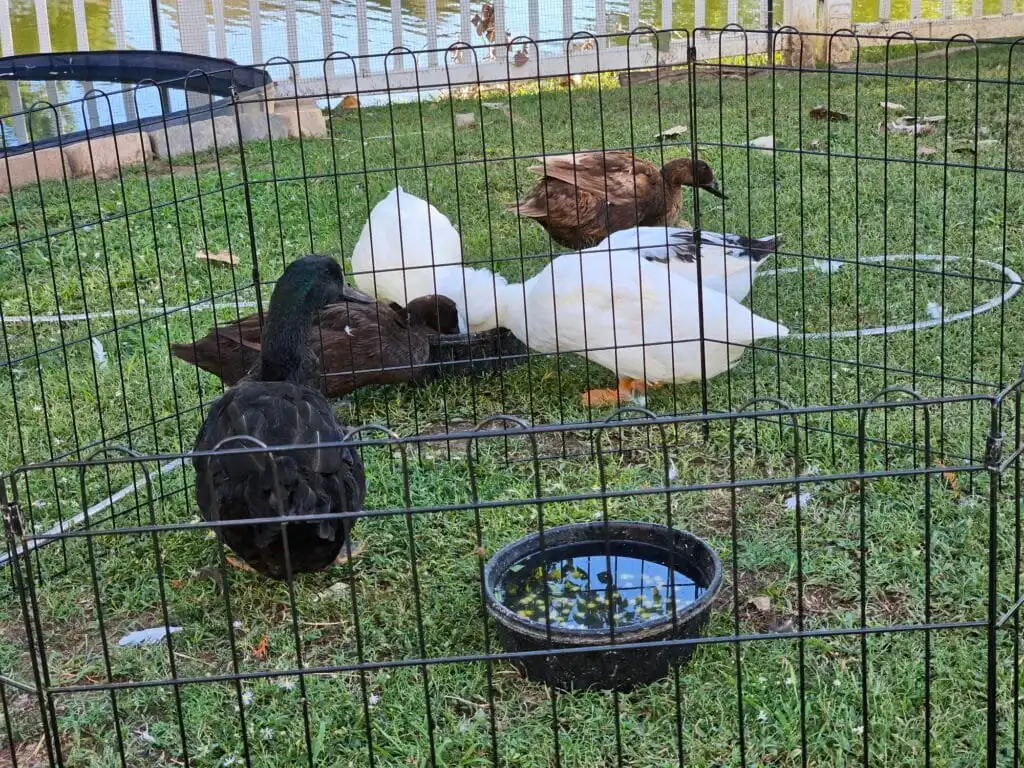
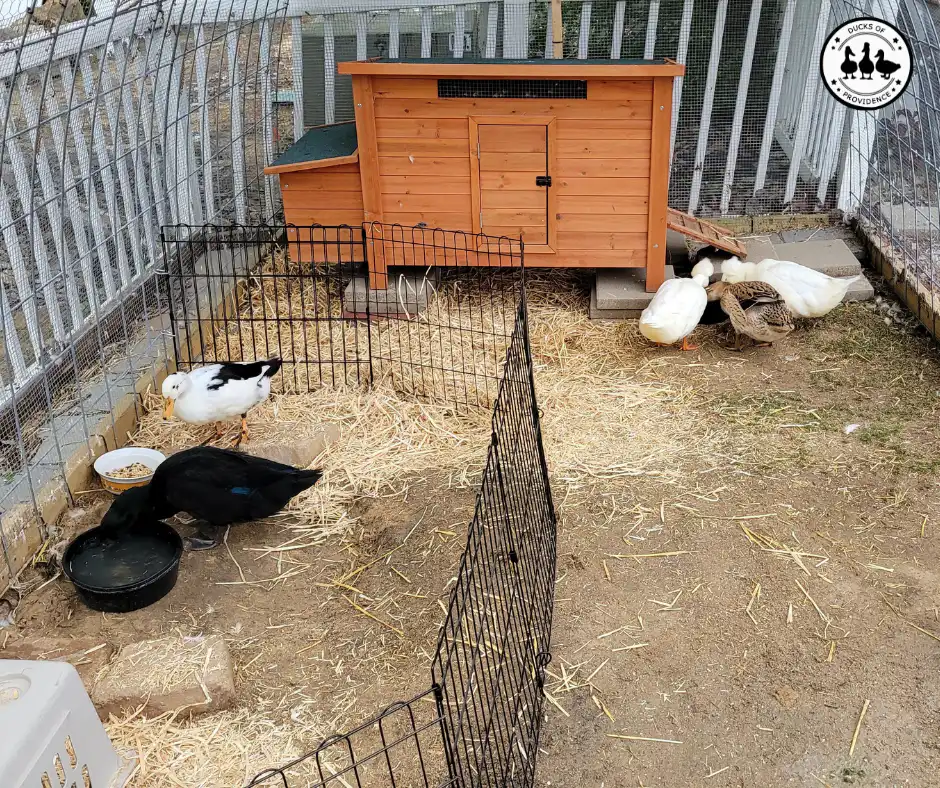
Temporary Separation Tip: Foldable playpens or metal dog exercise pens work wonderfully for short term separation in duck flocks. They are easy to set up, allow ducks to remain within sight and sound of the flock, and can be moved or folded away once tensions settle. Used thoughtfully, they provide a safe reset without causing unnecessary stress or isolation.
Should You Ever Fully Separate Ducks?
Full separation is sometimes necessary, but it should always be a thoughtful decision rather than a reflex. Ducks are social animals, and long-term isolation can cause stress of its own. That said, there are clear situations where separation is the safest and kindest option.
When Immediate Safety Is at Risk
If a duck has open wounds, visible bleeding, or signs of exhaustion, separation is non-negotiable. Continued pecking at the head, neck, or back can quickly become life-threatening. Removing the injured duck protects her from further harm and gives her body the chance to heal without constant stress.
The same applies if aggression is intense and continuous. When two ducks repeatedly engage in head-to-head fighting with no clear resolution, allowing it to continue risks serious injury to both.
Supporting Recovery After Illness or Injury
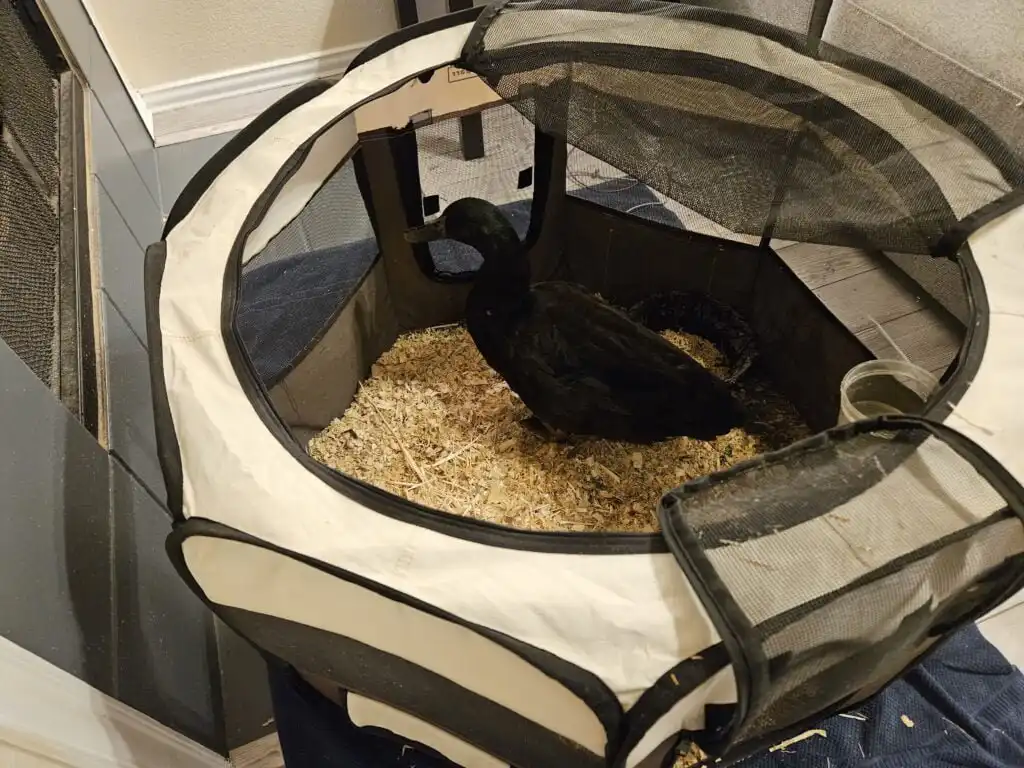
Ducks recovering from illness, surgery, or injury often need temporary separation even if aggression is not extreme. A weakened duck may struggle to defend herself or keep up with the flock, which can quietly drop her social rank and invite targeting.
A calm recovery space with easy access to food and water allows strength and confidence to return. Once she is moving normally and behaving like herself again, reintroduction is usually much smoother.
Temporary Separation as a Reset Tool
Short-term separation can be incredibly effective for breaking unhealthy social patterns. Removing a persistent aggressor for a few days often lowers overall tension in the flock. When the duck returns, the hierarchy frequently re-settles with less intensity.
This works because ducks rely on routine. A brief disruption can reset expectations without permanently destabilizing social bonds.
How to Separate Without Causing More Stress
Whenever possible, keep separated ducks within sight and sound of the flock. Physical barriers that prevent contact but allow visual access help maintain social familiarity. Complete sensory isolation should be avoided unless medically required.
The goal is protection, not loneliness. Ducks that can still see and hear their flock tend to reintegrate more easily later.
Reintroducing Ducks Safely
Reintroduction should be gradual. Start with supervised time or barrier-based access before allowing full contact. Watch body language closely. Calm movement, brief interactions, and disengagement are good signs.
If aggression resurfaces immediately, pause and reassess. Often, the environment needs adjustment before reintroduction can succeed.
When Long-Term Separation May Be Necessary
In rare cases, full-time separation or rehoming may be the most humane option. This usually involves severe personality conflicts, extreme hormonal aggression, or repeated injuries despite environmental changes.
These situations are uncommon, but acknowledging them is part of responsible duck keeping. Protecting quality of life always comes first.
Separation is not failure. It is one of many management tools available to support a healthy flock. Used thoughtfully and sparingly, it can prevent suffering and restore balance before problems spiral further.
Have you ever noticed how differently a duck behaves once she feels safe again? That change is often the clearest sign that separation was the right call.
Final Thoughts: Reading the Flock as a Whole
Pecking order makes the most sense when you stop looking at individual moments and start looking at patterns. Ducks communicate constantly, and most of that communication is quiet. A glance, a shift in posture, a small step away can tell you far more than a dramatic chase ever will.
Reading the flock as a whole means paying attention to how your ducks move through their space. Who eats comfortably. Who bathes without hesitation. Who rests with a relaxed posture and loose feathers. These everyday behaviors are strong indicators of social balance and emotional safety.
From a science perspective, stress rarely exists in isolation. Chronic tension shows up in subtle ways long before injuries appear. Reduced activity, social withdrawal, and heightened alertness are often the first clues that something is off. When you notice these changes early, small adjustments can prevent much larger problems.
Good duck keeping is not about control. It is about observation and response. Ducks are remarkably good at organizing themselves when given the right conditions. Space, resources, and stability allow their natural social systems to work as intended.
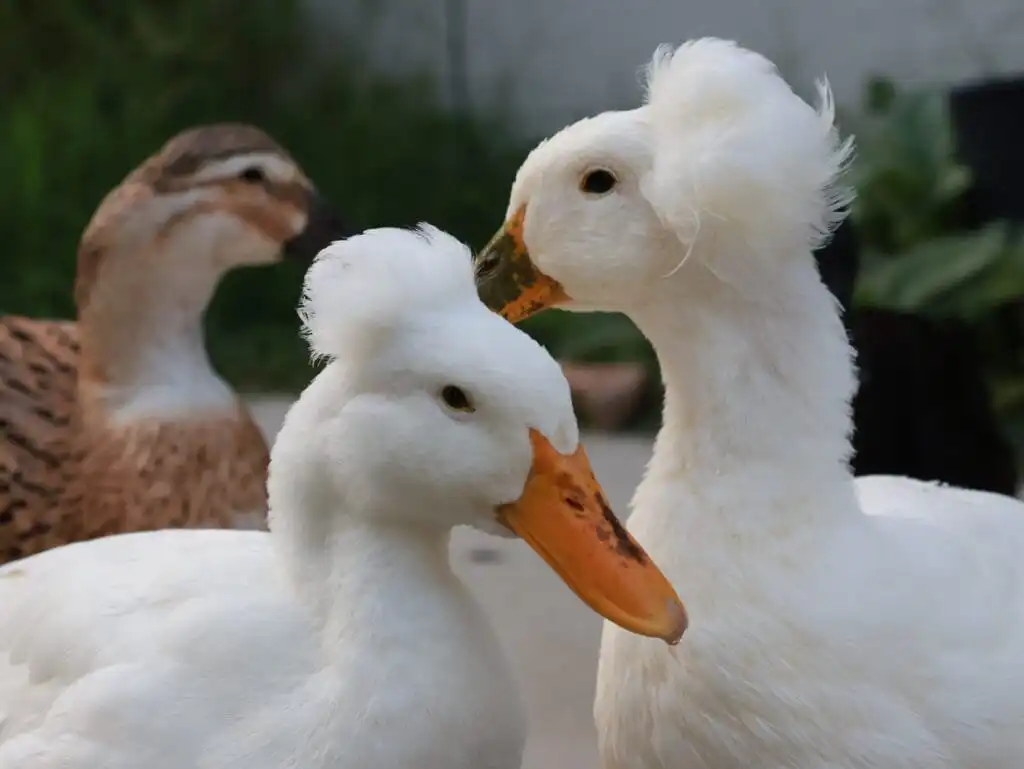
Every flock is unique. Dynamics shift with seasons, age, health, and life events. What works one year may need adjustment the next. Staying curious and flexible is part of caring well for ducks as long-lived, socially complex animals.
Some of the most valuable time you can spend as a duck keeper is simply watching. Sit quietly. Let the flock forget you are there. Patterns emerge when you slow down enough to see them.
When you learn to read the flock rather than react to individual behaviors, pecking order becomes less stressful and far more understandable. It transforms from something to fear into something to work with.
And honestly, few things are more rewarding than seeing a flock move together calmly, each duck secure in her place, because you built an environment that lets them be exactly what they are.
Further Reading & Resources
- Aggressive Ducks: How do I stop my ducks from fighting?
- How to Handle Aggressive Drakes: Expert Tips for a Peaceful Flock
- Duck Personalities – What They Reveal About Our Ducks (and Us!)
- Introducing New Ducks: How to Expand Your Flock Without Drama
- Enrichment and Toys for Ducks
Connect deeper with your flock. Discover more about duck psychology and social dynamics in the Community & Behavior Hub.