Foraging Ducks: Natural Feeding Behavior and How to Recreate It for Your Backyard Flock

To keep our research-backed guides free, this site uses ads and affiliate links (earning a small commission at no cost to you). Everything here is created by a duck mom and PhD scientist, combining academic rigor with hands-on experience to provide practical, trustworthy advice for duck keepers everywhere. 🦆 Learn more
Foraging ducks behave very differently from what most backyard setups allow, and understanding this can completely change how you care for your flock.
Many duck owners focus on choosing a high-quality feed, which is important. But what often gets overlooked is how ducks are meant to eat.
Ducks are natural foragers. In the wild, they do not eat from a bowl. They spend their day dabbling in water, probing through mud, and searching through grass for insects, plants, and other small food sources hidden in their environment. Feeding is not a quick task for them. It is a constant, active process.
When we replace that natural behavior with a simple bowl of dry feed, we meet their basic nutritional needs, but we miss a critical part of their biology.
Once I started adjusting how I feed my ducks to better support natural foraging behavior, I saw immediate changes. They became more active, more engaged, and overall more balanced.
In this guide, I will walk you through how ducks naturally forage on land and in water, why this behavior is so important, and how you can recreate it at home with simple, practical ideas.
Because when you feed ducks the way they are designed to eat, everything else starts to fall into place.
Part of the Community & Behavior Hub, Exploring the social complexity and psychological needs of domestic ducks.
Quick Navigation: Jump to a Section
What Foraging Means in Ducks
Foraging is not just looking for food. Foraging in ducks is much more than simply finding food. It is a deeply ingrained behavioral pattern that combines movement, sensory input, and feeding into one continuous activity.
Unlike animals that eat in defined meals, ducks are designed to feed gradually throughout the day. In natural settings, they are almost constantly engaged in some form of foraging, switching between water and land as they search for edible material.
A key part of this behavior is their bill. Duck bills are highly specialized tools equipped with lamellae, which are fine, comb-like structures along the edges. These allow ducks to take in water or mud and then filter out edible particles such as seeds, plant matter, and small invertebrates. If you have ever watched your ducks “chew” water, that is exactly what they are doing.
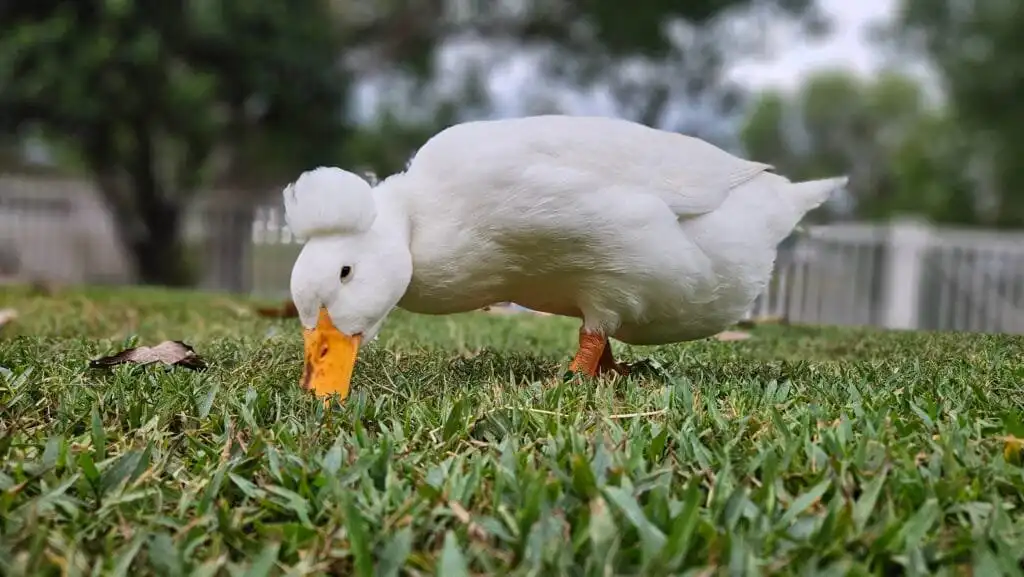
Foraging also relies heavily on tactile sensing. Ducks can detect subtle differences in texture and movement through their bills, helping them identify food even when it is hidden in mud or grass. This is why you will often see them probing blindly into soil or water with surprising accuracy.
Another important aspect is the integration of water into feeding. Ducks do not just drink alongside eating. They actively use water to:
- help move food down the esophagus
- clear their nostrils
- process and filter what they collect
This is why feeding dry food without water goes against their natural design.
Foraging is also closely tied to movement and exploration. Ducks rarely stay in one place while eating. Instead, they:
- walk
- dabble
- probe
- move on
This constant activity supports their physical health and keeps their minds engaged.
What is important to understand is that foraging is not optional enrichment. It is a core biological behavior.
When we provide food in a way that removes the need to search, filter, or explore, we are simplifying feeding, but also removing an essential part of what makes a duck a duck. a bowl, we are technically feeding them, but we are not fulfilling their natural behavior.
How Wild Ducks Eat (Water and Land)
If you spend time watching wild ducks like the Mallard, one thing becomes very clear: they do not rely on a single feeding strategy.
Instead, they move fluidly between water and land, using different techniques depending on what is available. This flexibility is what makes ducks such successful and adaptable feeders.
Water Foraging
Water is where many of their most recognizable behaviors happen.
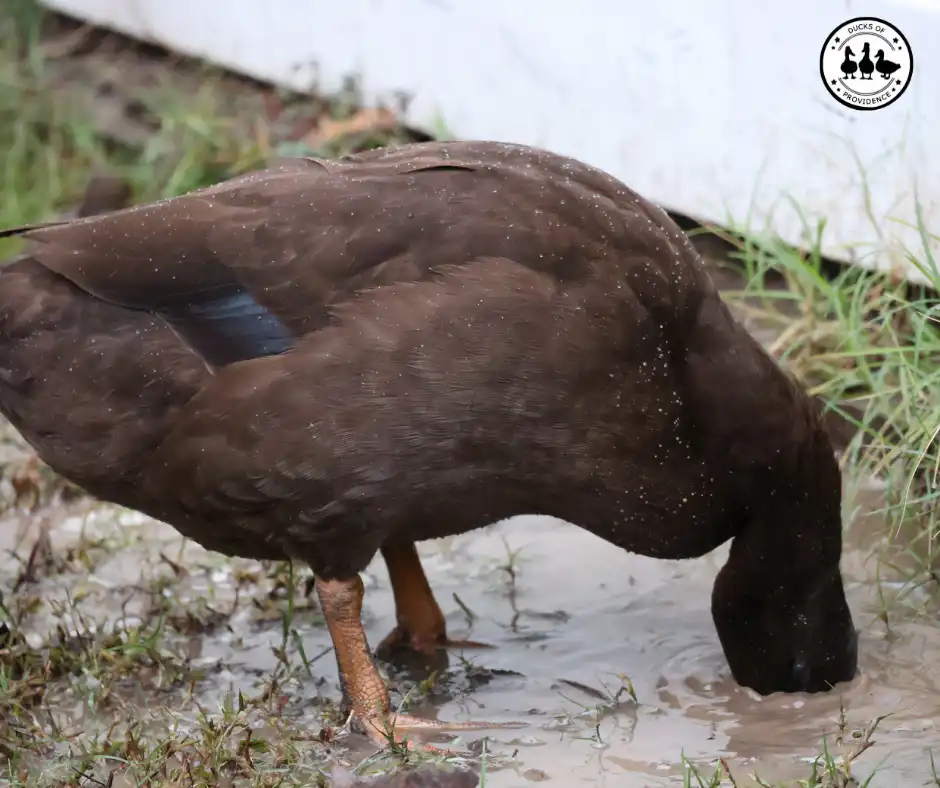
Dabbling is the most common. Ducks skim along the surface, taking in water and filtering out edible material like algae, seeds, and tiny aquatic organisms. It often looks effortless, but it is a highly coordinated process involving constant bill movement and filtering.
Tipping is another classic behavior. You will see ducks with their tails straight up in the air while their heads are submerged. This allows them to reach deeper plant material and organisms just below the surface without fully diving.
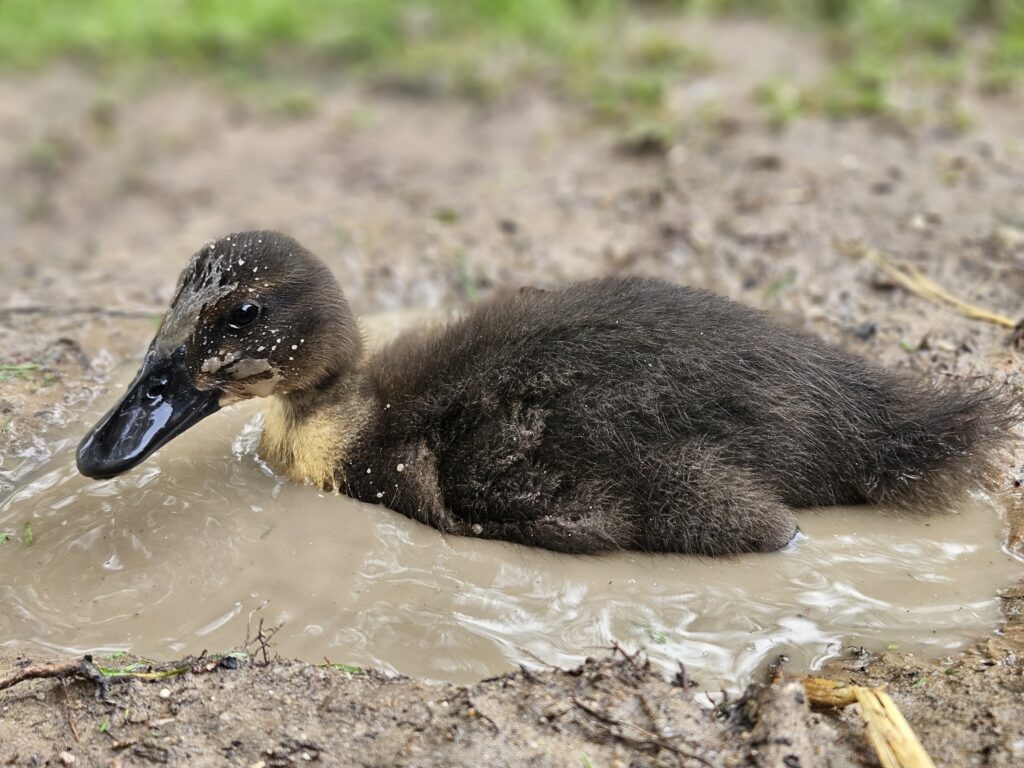
They also engage in mud foraging, especially along the edges of ponds or shallow water. Here, ducks probe into soft sediment, searching for:
- insect larvae
- worms
- decomposing organic material
This zone, where water meets land, is often one of the richest feeding areas.
Land Foraging
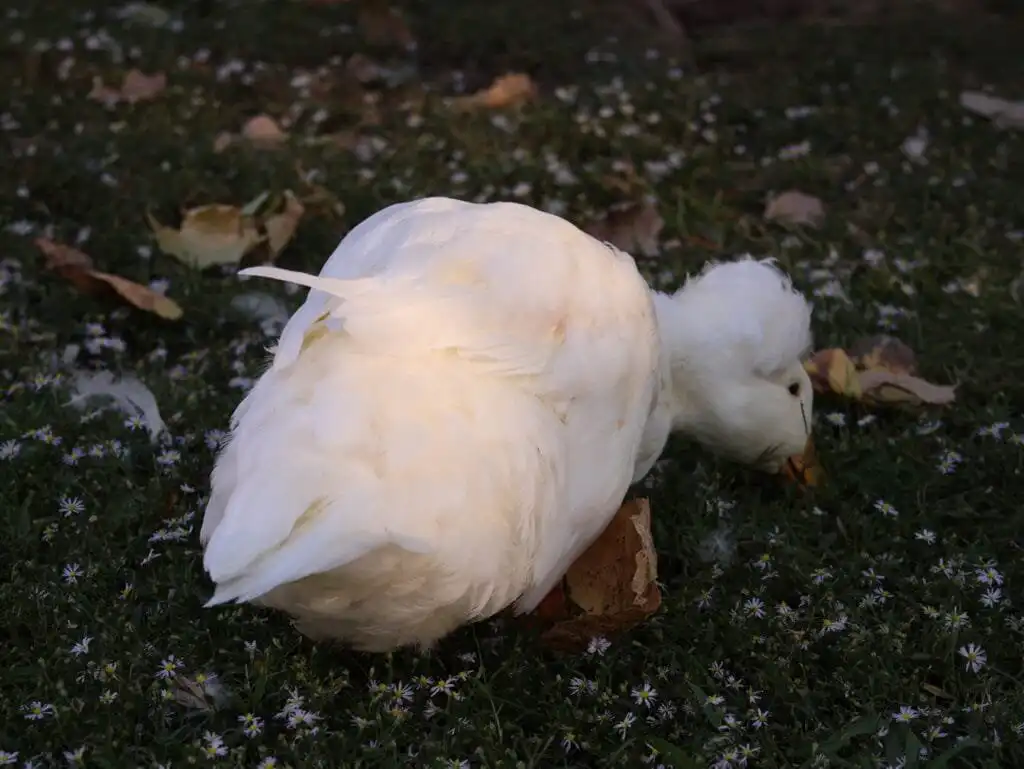
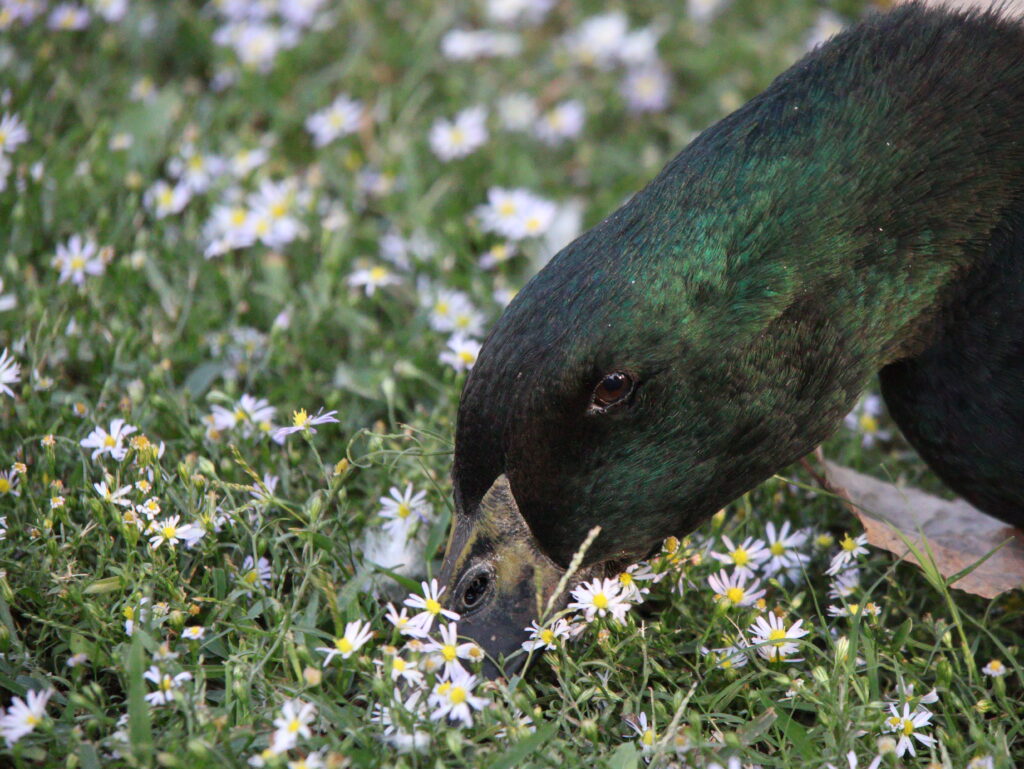
Just as important, and often underestimated, is what happens on land. In my own yard, this is usually the first thing my ducks do when they come out in the morning. They spread out and begin scanning the ground with intense focus, moving slowly and deliberately.
On land, ducks forage by:
- nibbling through grass
- probing soft soil
- flipping small debris
They are searching for:
- worms
- insect larvae
- flies and beetles
- slugs and snails
- seeds and tender plant shoots
This type of foraging is incredibly active and requires constant decision-making. You can actually see how engaged they are in the process.
Constant Movement and Variety
What stands out most is that wild ducks do not sit and eat from one spot. They are:
- moving
- switching locations
- changing feeding strategies
They might dabble in water, then walk onto land to forage through grass, then return to the water again. This back-and-forth creates a dynamic feeding pattern that supports both their nutritional needs and their behavior.
They also consume a highly varied diet, including plant material, seeds, and a wide range of invertebrates. This variety naturally balances nutrients over time.
Why Foraging Matters for Domestic Ducks
Foraging is not just enrichment. It is a core biological behavior that affects how ducks move, eat, and interact with their environment.
When this behavior is missing, the effects often show up in ways that many duck keepers do not immediately connect to feeding.
1. Boredom and Behavioral Issues
You may notice feather picking, pacing, or excessive noise. These behaviors are often signs of understimulation, not personality problems.
Ducks are naturally busy animals. In the wild, they spend most of their day actively searching for food. When that need is not met, they redirect their energy. Unfortunately, that often means focusing on flock mates or developing repetitive behaviors.
In my experience, increasing foraging opportunities is one of the most effective ways to reduce these issues. Once ducks have something meaningful to do, many of these behaviors naturally decrease.
2. Reduced Physical Activity
Foraging naturally keeps ducks moving throughout the day.
In a natural setting, ducks are constantly walking, dabbling, and shifting locations. This low-level, continuous movement supports muscle tone and joint health. When this is missing, we often start to see weight gain and added stress on joints over time.
If food is always available in one easy-to-reach spot, ducks tend to eat quickly and then remain inactive. This pattern does not match how their bodies are designed to function.
3. Unnatural Feeding Patterns
A bowl of feed encourages quick consumption rather than the slow, frequent, and exploratory eating that ducks are naturally adapted to.
Wild ducks do not eat in defined meals. Instead, they consume small amounts throughout the day while foraging. When food is concentrated in one place, ducks often eat large portions in a short period of time and then stop.
Encouraging foraging helps shift this pattern back toward something more natural, where eating is spread out and tied to movement and interaction with the environment.
4. Lack of Mental Stimulation
Foraging is cognitive work. Ducks are constantly searching, selecting, and interacting with their surroundings as they look for food. This ongoing engagement keeps their minds active and responsive.
Ducks are far more perceptive than many people realize. When they forage, they are actively processing their environment and making small decisions throughout the day. Without this stimulation, they can become idle or even frustrated.
Providing opportunities to forage gives them a way to stay mentally engaged, which is just as important as physical activity for their overall well-being.
From My Flock: How I Encourage Foraging
We have designed their entire environment to encourage natural behavior. This was always important for me, from the day we started our little flock.
In their run, they have multiple water sources, including bowls, buckets, and tubs, all of which double as feeding and foraging areas. We also added simple foraging toys and incorporated natural elements like plants and soft ground areas where they can explore and probe. The run is no longer just a space they occupy, it is a space they actively use.
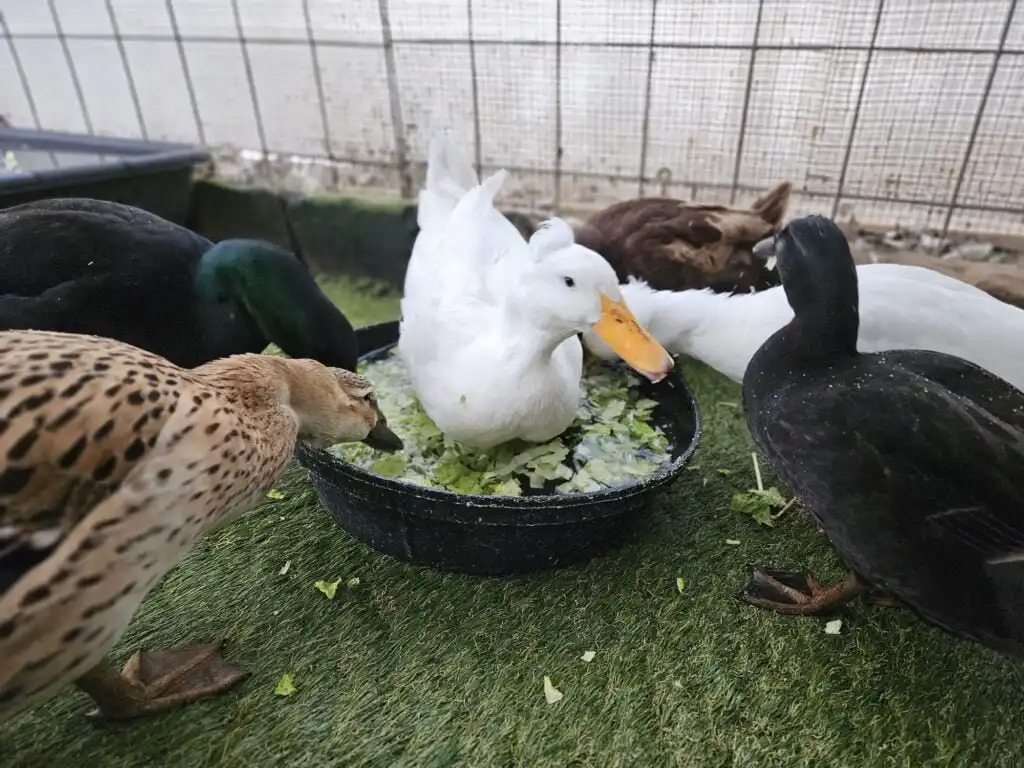
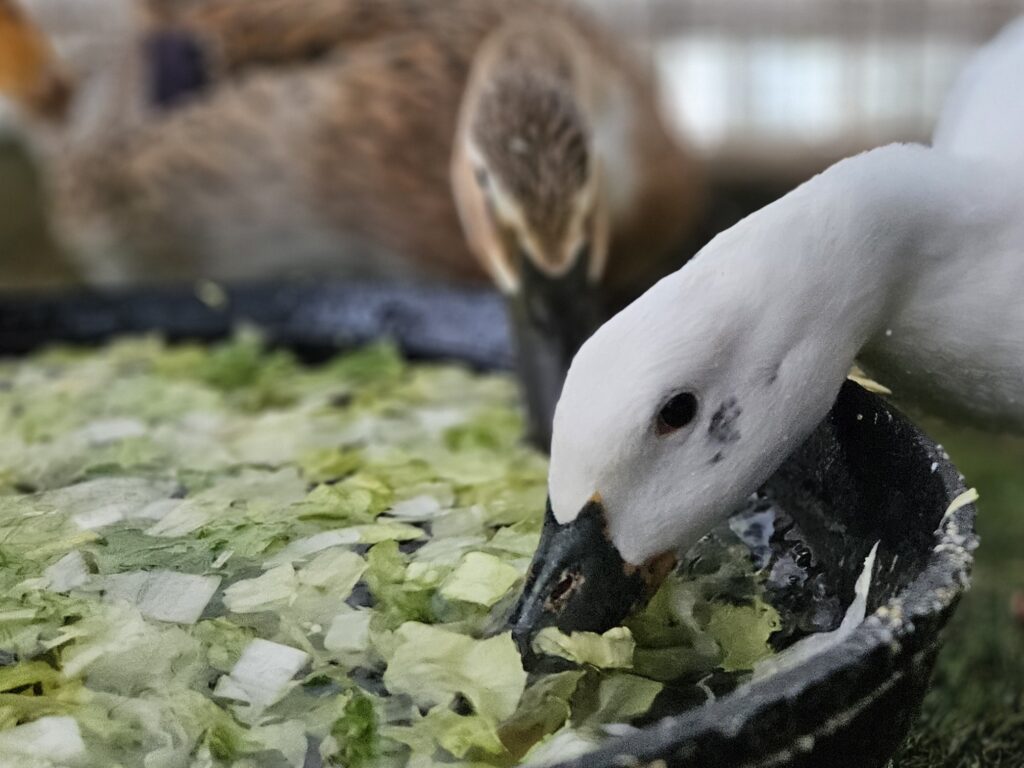
Instead of just offering dry feed, we regularly provide fresh foods directly in water. Lettuce, cucumber, corn, peas, and other vegetables turn feeding into an activity rather than a quick stop. They dabble, sift, and search, just like they would in a natural setting.
On top of that, they get supervised free-range time every day. This gives them access to grass, insects, and all the unpredictable little treasures that make foraging so engaging.
Krümel and Muffin especially turned into full-time investigators. They move from one water source to the next, sift through everything, and carefully explore every corner.
Muffin and Krümel absolutely love chasing flies. The moment something moves, they are alert, focused, and ready to hunt. It is one of those behaviors that really shows just how instinct-driven they are.
Schnatterinchen, on the other hand, has a special talent for mud. She especially loves sifting through muddy areas, working her bill through the water and soil with complete focus. Honestly, all of them enjoy it. If there is a muddy puddle anywhere in the yard, it immediately becomes the most popular spot.
They are just as curious when it comes to plants. They love investigating everything I grow, nibbling on leaves, checking pots, and searching through the soil for insects. It is impossible to garden alone. They are always right there with me, helping, mostly in the hope of finding worms.
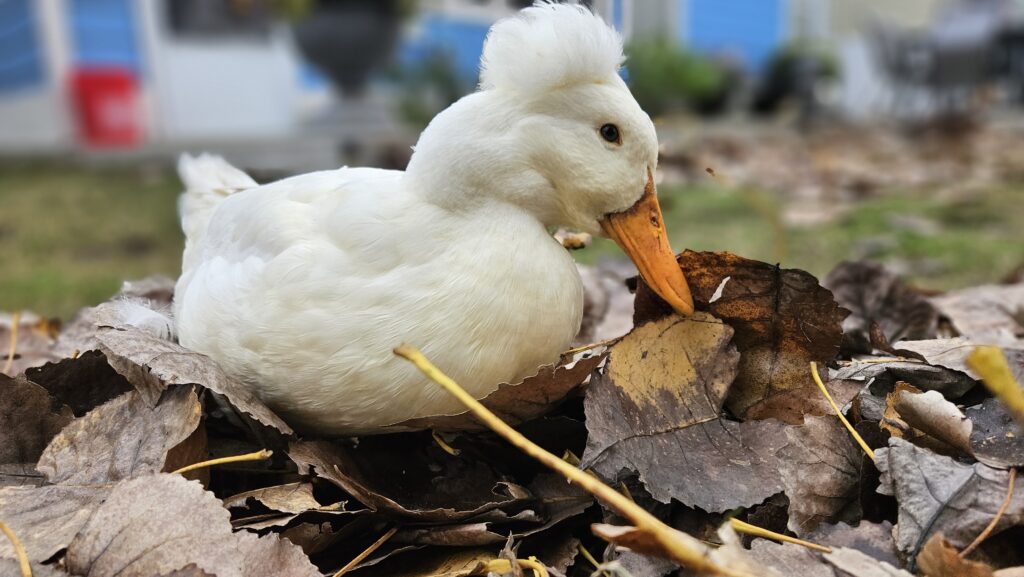
In the fall, I actually make leaf piles just for them. They will spend long stretches digging through them, clearly expecting to find bugs hidden underneath. It keeps them busy and gives them a completely natural way to forage.
Ronja also loves working through the grass, slowly scanning and picking like she is on a very focused mission. Emma prefers damp soil and will immediately seek out areas where she can probe for hidden treats.
Even Simon, who can be quite intense, becomes noticeably calmer when he has something to do. When his energy is directed into foraging, there is less chasing and fewer conflicts.
Easy Foraging Enrichment Ideas
You do not need anything complicated to support natural foraging. The goal is simple:
make food something your ducks have to interact with, not just consume.
Once you shift from feeding to creating opportunities, even small changes can make a big difference in how your ducks behave throughout the day.
1. Feed in Water (Essential)
If you only change one thing, start here.
Ducks are designed to eat with water. Their entire feeding mechanism relies on taking in water, filtering it, and moving food along. Feeding in water immediately turns a basic meal into a natural behavior.
Instead of offering dry pellets in a bowl, try placing feed directly into a shallow water dish. You can float pellets (like Mazuri Waterfowl pellets, which are specifically designed to be floating pellets), or add fresh foods like peas, chopped lettuce, or cucumber.
What you will notice is that feeding slows down. Ducks begin dabbling, scooping, and filtering rather than just swallowing. It keeps them engaged longer and mirrors how they would naturally feed in a pond or shallow water source.
A practical tip is to use wide, shallow containers rather than deep ones. This makes it easier for them to access the food safely and comfortably.
2. Scatter Feeding (Feed and Treats)
Scatter feeding is one of the easiest and most effective ways to introduce movement and natural behavior into your ducks’ routine, and it works just as well for both their regular feed and treats.
Instead of placing everything in one bowl, spread a portion of their feed across the run, directly on the ground, into grass, or into bedding like straw. This immediately changes how they eat. Rather than standing in one place, they begin to move, search, and explore.
I especially love doing this with treats. Mealworms, black soldier fly larvae, or grubs are perfect for this because they naturally trigger that hunt response. I will scatter them around the run or even hide them lightly in their bedding inside the coop. It keeps them occupied for quite some time and turns a simple treat into a full activity.
What is important here is that the food is not just handed to them. They have to look for it.
You can make this more engaging by tossing feed or treats into areas where they are slightly hidden. Not buried deeply, just enough that they need to search a bit. This adds a layer of challenge without making it frustrating.
I also like to combine this with different textures. Straw, leaves, or loose bedding create variation and make the search more interesting. Ducks will naturally dig, flip, and sift through these materials, which closely mimics how they would forage in nature.
It is a simple change, but it has a big impact. Instead of feeding being over in minutes, it becomes something that keeps them active, focused, and engaged.
3. Foraging Trays and Toys
Foraging trays are one of my favorite ways to recreate natural feeding behavior because they tap directly into what ducks are designed to do: probe, sift, and search.
The basic idea is simple. You create a designated digging space using a shallow container such as a storage bin, tray, or large plant saucer. Fill it with a soft, workable material like mud, wet soil, or damp sand, and then mix in treats such as peas, chopped greens, mealworms, or black soldier fly larvae.
What makes this so effective is the texture. Ducks love working their bills through soft material. They will push, scoop, and sift through it, filtering out the edible pieces just like they would along the edge of a pond. It is incredibly engaging and keeps them busy for long stretches.
You can adjust the setup depending on how challenging you want it to be. A lightly mixed tray makes it easy to find food, while a more blended mixture encourages deeper probing and longer interaction. I like to switch it up so they do not get bored with the same setup.
Beyond trays, you can also introduce simple foraging toys to add variety.
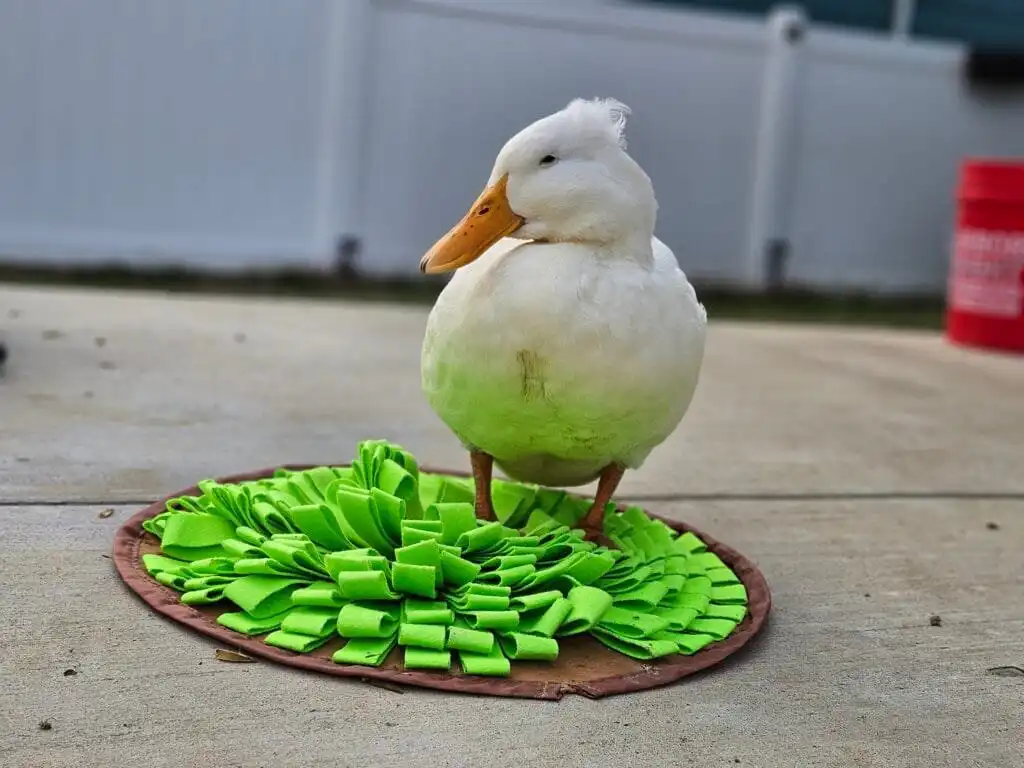
Snuffle mats, originally made for dogs, work surprisingly well for ducks when used with appropriate treats. You can tuck small pieces of greens or dried insects into the fabric, and ducks will spend time picking through the layers to find them. It mimics searching through dense vegetation.
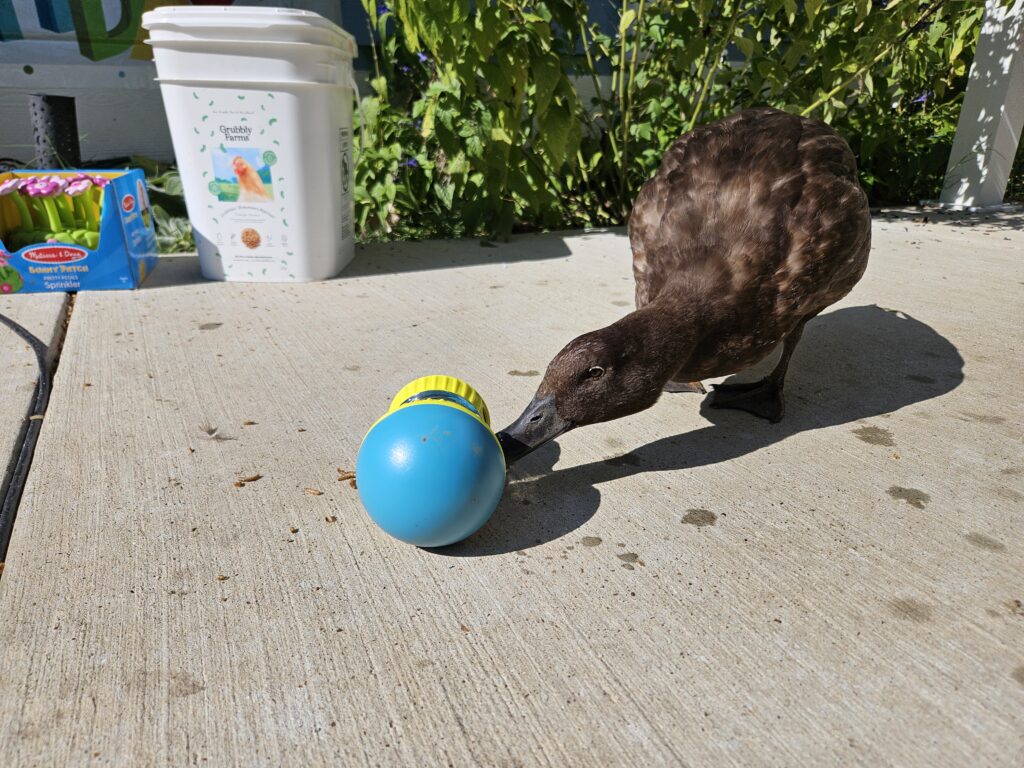
Treat dispenser balls are another fun option. These release small amounts of food as they are nudged or moved. Ducks quickly figure out how they work, and it adds a problem-solving component to feeding. It is a different type of engagement compared to trays, but just as valuable.
The key with both trays and toys is supervision and safety. Make sure materials are durable, easy to clean, and appropriate for outdoor use. Avoid anything with small parts that could break off or be swallowed.
In my experience, rotating between trays, toys, and other setups keeps things fresh. Ducks are naturally curious, and even small changes in how food is presented can make a big difference in how engaged they are.
These setups do more than just slow down feeding. They give ducks a way to interact with their environment, which is exactly what foraging is all about.
4. Support Land Foraging
Land foraging is just as important as water-based feeding, and in many backyard setups, it is the piece that gets overlooked.
In a natural environment, ducks spend a significant amount of time moving across grass, soil, and plant-covered areas, constantly searching for insects, worms, and tender plant material. This type of foraging is active, varied, and highly engaging. It is also where a lot of their natural protein intake comes from.
To support this at home, the goal is to give your ducks something to explore, not just a surface to walk on.
If you have access to grass, even in small amounts, it makes a big difference. Ducks will instinctively graze, nibble, and probe the ground. They will check the same areas repeatedly, especially if conditions are right. Slightly damp soil, for example, is incredibly attractive because it mimics where worms and insects are most likely to be found.
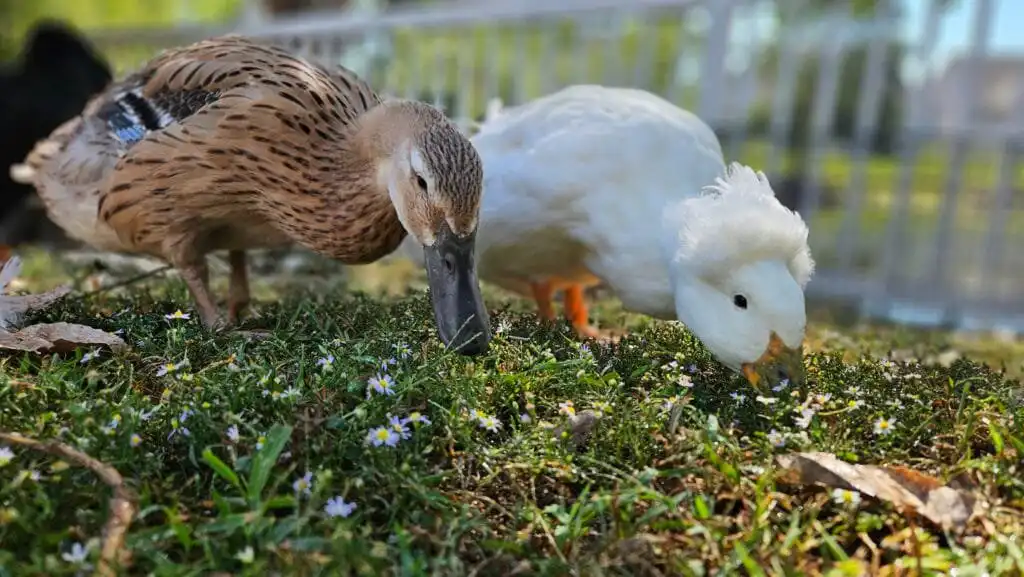
If your ducks are in a fixed run, you can still recreate this behavior by building intentional foraging zones. Adding materials like straw, leaf litter, or loose soil creates layers they can interact with. These materials hold scent, moisture, and sometimes small organisms, which makes the experience much more interesting than a flat surface.
I like to use seasonal elements as well. In the fall, leaf piles are perfect. Ducks will spend a long time working through them, flipping and digging, clearly expecting to find something hidden underneath. It is simple, natural enrichment that requires almost no effort.
Another practical approach is to lightly water certain areas of the run. Dampening the soil softens it and encourages probing behavior. You can combine this with scattering a few treats, like mealworms or grubs, to reinforce the behavior and make the area even more rewarding.
If possible, rotating access to different sections of the run or yard helps keep things fresh. Even a small change in environment can make ducks more curious and engaged. And if you allow supervised free range time, that becomes one of the most powerful forms of enrichment. Grass, plants, insects, and natural variation provide exactly the kind of stimulation ducks are wired for.
One thing you will notice quickly is how intentional ducks are when they forage on land. They are not randomly pecking. They are searching, testing, and responding to what they find.
Supporting that behavior does not require a perfect setup. It just requires giving them opportunities to interact with their environment in a way that feels natural to them.
5. Floating Treat Stations
Floating treat stations are one of the simplest ways to turn water into an active feeding space, and most ducks take to this immediately.
Instead of offering food in a fixed bowl, you place it directly into water using buckets, tubs, kiddie pools, or troughs. What seems like a small change quickly becomes a completely different experience for your ducks.
Ducks do not just eat from the water. They interact with it.
When you add floating or slow-sinking foods like lettuce, herbs, cucumber slices, or peas, they begin to dabble, chase, scoop, and filter. Pieces move, drift, and sometimes sink just enough to encourage that natural tipping behavior. Feeding becomes dynamic instead of static.
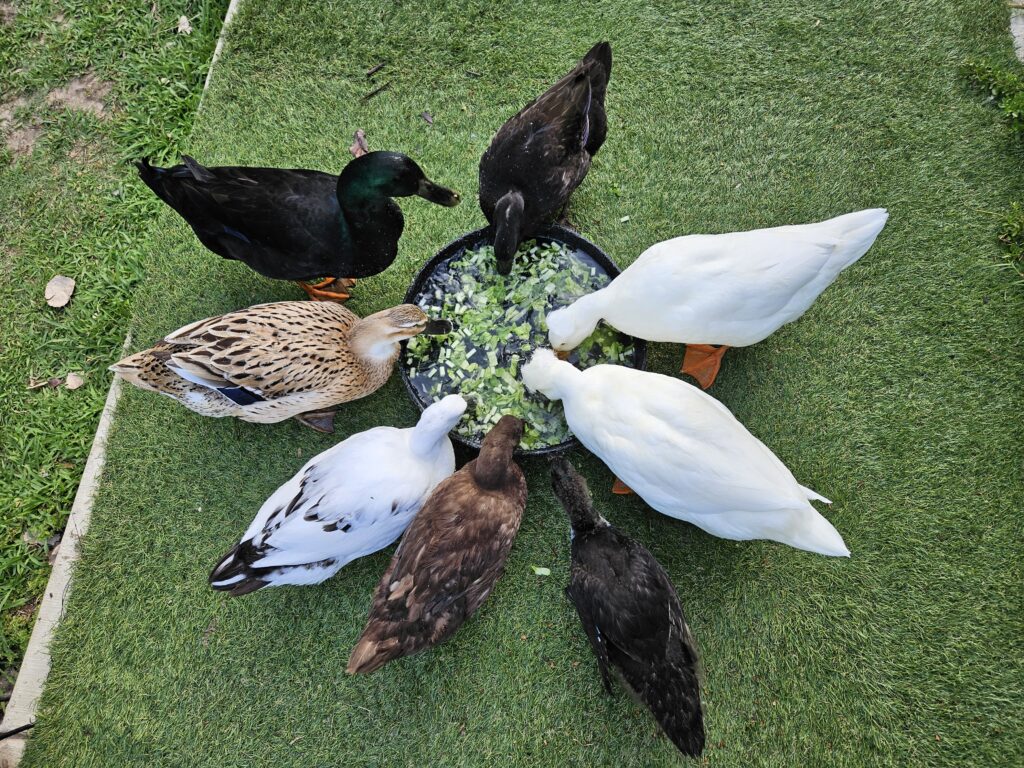
One thing I have noticed is how much this slows them down. Instead of finishing food quickly, they stay engaged, moving around the water source, returning again and again. It mimics the way they would feed in a pond, where food is spread out and constantly shifting.
You can also vary how you set this up to keep things interesting. A shallow bowl creates one type of interaction, while a larger tub or pool encourages more movement. Even changing the size or location of the container can make it feel new to them.
If you want to take this one step further, you can occasionally add small feeder fish, like minnows from a pet store, into a larger water setup. Ducks will naturally chase and catch them, which taps into their instinct to hunt live prey. It turns feeding into a highly engaging activity and provides a natural source of protein. Just make sure the water is clean, the setup is safe, and this is done occasionally as enrichment rather than a primary food source.
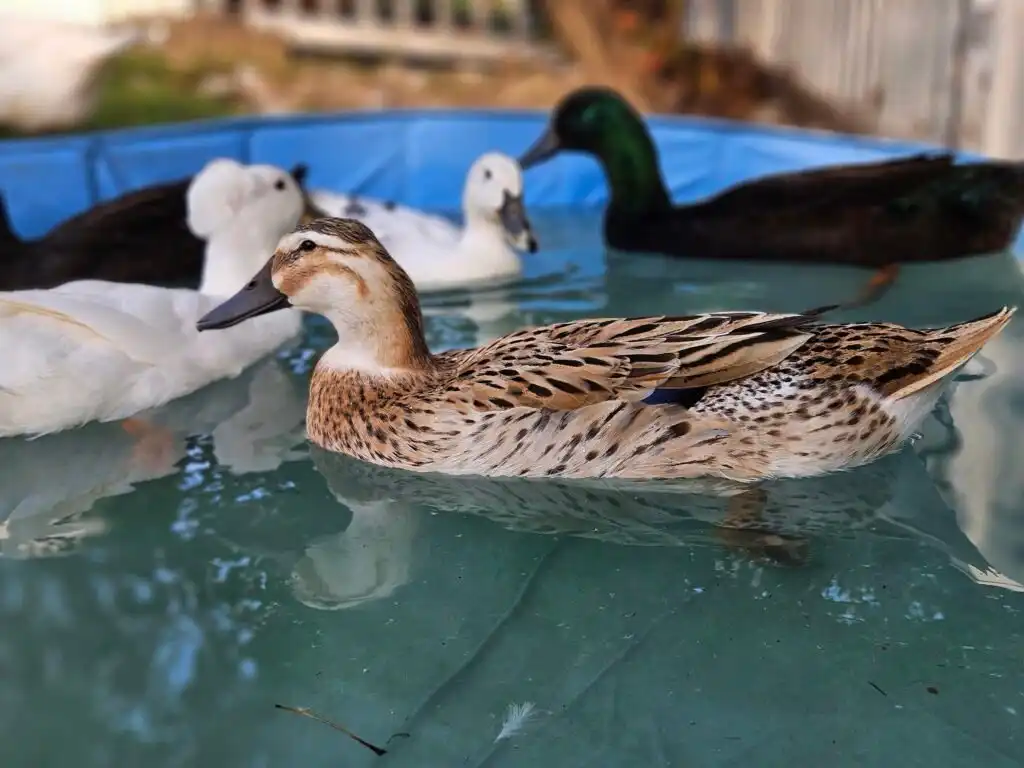
Another benefit is that this naturally encourages ducks to use their water sources more, which supports both feeding behavior and general activity, especially in warmer weather.
A practical tip is to keep the water shallow enough for safe access while still allowing natural dabbling and filtering. You also want to refresh the water regularly, since food in water can get messy quickly.
This is one of those enrichment methods that requires very little effort but has a big impact. It aligns perfectly with how ducks are designed to eat, and you can see that immediately in how they respond.
It is not just feeding. It is giving them a way to do what they are naturally built to do.
What Not to Do
When it comes to foraging enrichment, more is not always better. The goal is to support natural behavior safely and intentionally, not to create unnecessary risks.
One of the most common mistakes is offering food without proper access to water. Ducks rely on water to swallow and process food, and without it, there is a real risk of choking or impaction. Any feeding setup, especially dry feed or treats, should always be paired with accessible water.
Another issue is using containers or setups that are not appropriate for ducks. Deep buckets, slippery surfaces, or narrow openings can become hazardous very quickly. Ducks should always be able to enter and exit easily, and their footing should be stable. If something feels awkward for them to use, it usually is.
It is also important to be mindful of food quality. Wet environments combined with organic material can spoil quickly. Food that sits too long in water or soil can grow bacteria or mold, which poses a health risk. Foraging setups should be refreshed regularly, and anything that looks or smells off should be removed immediately.
Treats are another area where it is easy to overdo it. While things like mealworms, grubs, or fresh vegetables are great for enrichment, they should never replace a balanced, complete feed. Think of them as a supplement that adds variety and engagement, not the foundation of the diet.
Safety also applies to enrichment tools. Toys like snuffle mats or treat dispensers should be durable, easy to clean, and free of small parts that could break off. Always supervise when introducing something new to make sure your ducks interact with it safely.
Finally, avoid making foraging too difficult. The goal is to encourage natural behavior, not to frustrate your ducks. Food should be easy enough to find that they stay motivated, but varied enough to keep them engaged.
At the end of the day, good enrichment feels natural. If your setup allows your ducks to move, explore, and forage comfortably, you are on the right track.
FAQ
Do ducks need water while foraging or eating?
FAQ
Do ducks need water while foraging or eating?
Yes, always. Ducks rely on water to swallow food properly and to keep their nostrils clean. Any feeding setup, including foraging enrichment, should include easy access to water.
Can foraging replace regular duck feed?
No. Foraging should complement a balanced, complete duck feed, not replace it. While ducks will find insects and plants, they still need formulated feed to meet their nutritional requirements.
What are the best treats to use for foraging?
Simple, natural options work best. Peas, lettuce, cucumber, corn, mealworms, and black soldier fly larvae are all great choices. The key is to use treats that are safe, easy to handle, and encourage natural behavior.
How often should I provide foraging enrichment?
Ideally, daily. Even small changes, like feeding in water or scattering a portion of their feed, can make a big difference. Consistency helps keep ducks active and engaged.
Is foraging safe in a run, or do ducks need free range access?
Foraging can absolutely be done safely in a run with the right setup. Adding water features, trays, bedding, and natural materials can recreate many aspects of natural behavior. Supervised free range time is a great bonus, but not strictly required.
Final Thoughts
If there is one thing I want you to take away from this, it is this:
Feeding ducks is not just about nutrition. It is about behavior.
Ducks are not meant to stand at a bowl, eat quickly, and be done. They are designed to move, to search, to sift through water and soil, and to interact with their environment throughout the day.
When we start supporting that, even in simple ways, everything begins to shift.
You will see more movement, more engagement, and a calmer, more balanced flock. Small tensions often fade because your ducks are busy doing what they are naturally wired to do.
And honestly, it changes your experience too.
Watching your ducks forage, chase a fly, dig through leaves, or dabble in a bucket of floating greens is one of the most rewarding parts of keeping them. It feels right, because it is right.
You do not need a perfect setup to get started. Just begin with one small change. Add food to water, scatter a handful of treats, or create a simple foraging tray.
Then watch your ducks.
They will show you exactly how much it matters.
Further Reading & Resources
- What do Pet Ducks Eat? A Guide to a Healthy and Nutritious Pet Duck Diet
- Foods Ducks Can and Can’t Eat: The Ultimate Guide for Pet Owners
- Feeding Ducks: A Guide to Keeping Your Flock Happy and Healthy
- Toxic Plants for Ducks: What You Need to Know
- Enrichment and Toys for Ducks
- Ducks and Water: Keeping Your Flock Happy and Healthy
Connect deeper with your flock. Discover more about duck psychology and social dynamics in the Community & Behavior Hub.
References