Crested Ducks: Pets with a Genetic Defect

Last updated: March 18th, 2026
To keep our research-backed guides free, this site uses ads and affiliate links (earning a small commission at no cost to you). Everything here is created by a duck mom and PhD scientist, combining academic rigor with hands-on experience to provide practical, trustworthy advice for duck keepers everywhere. 🦆 Learn more
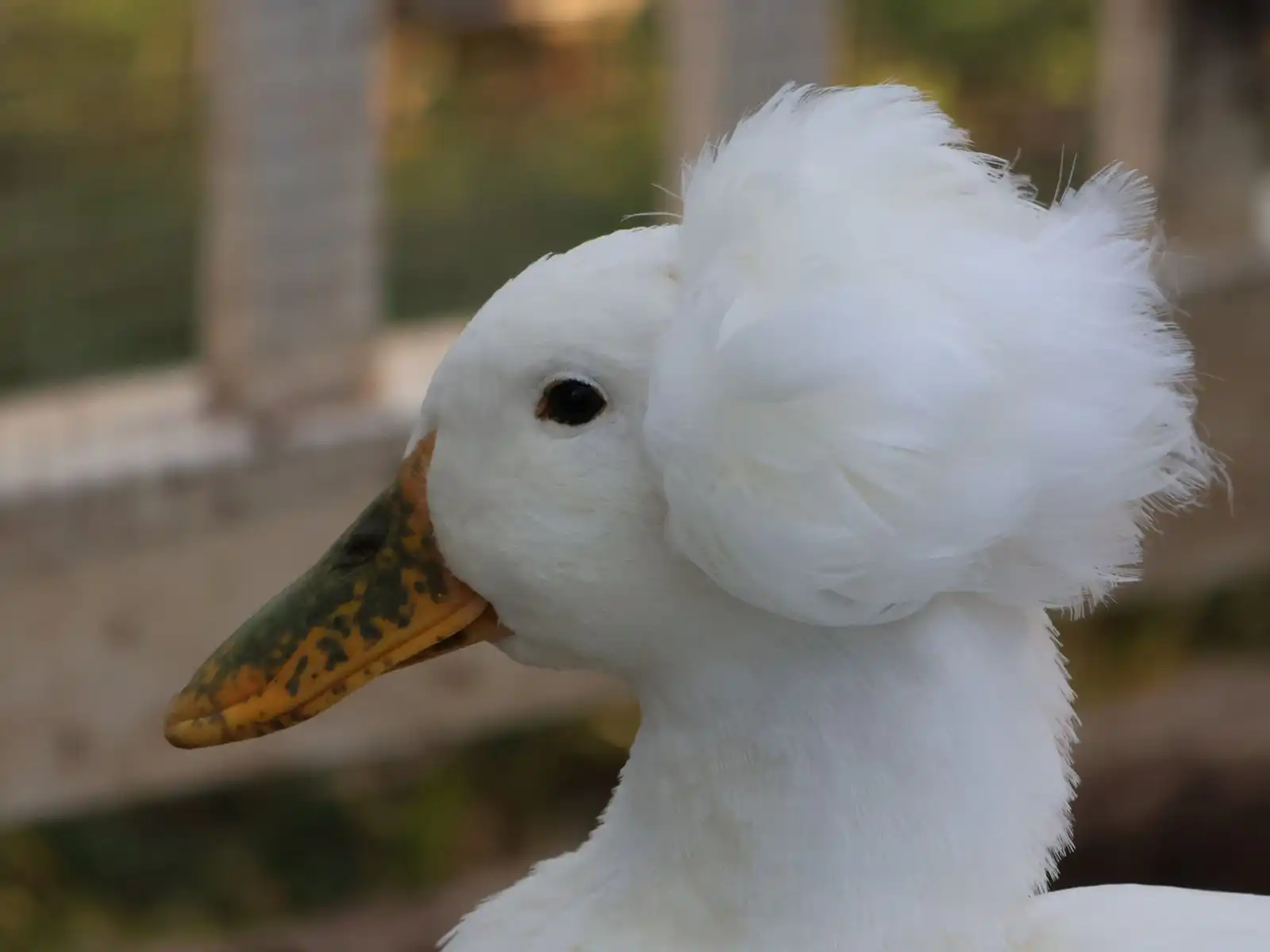
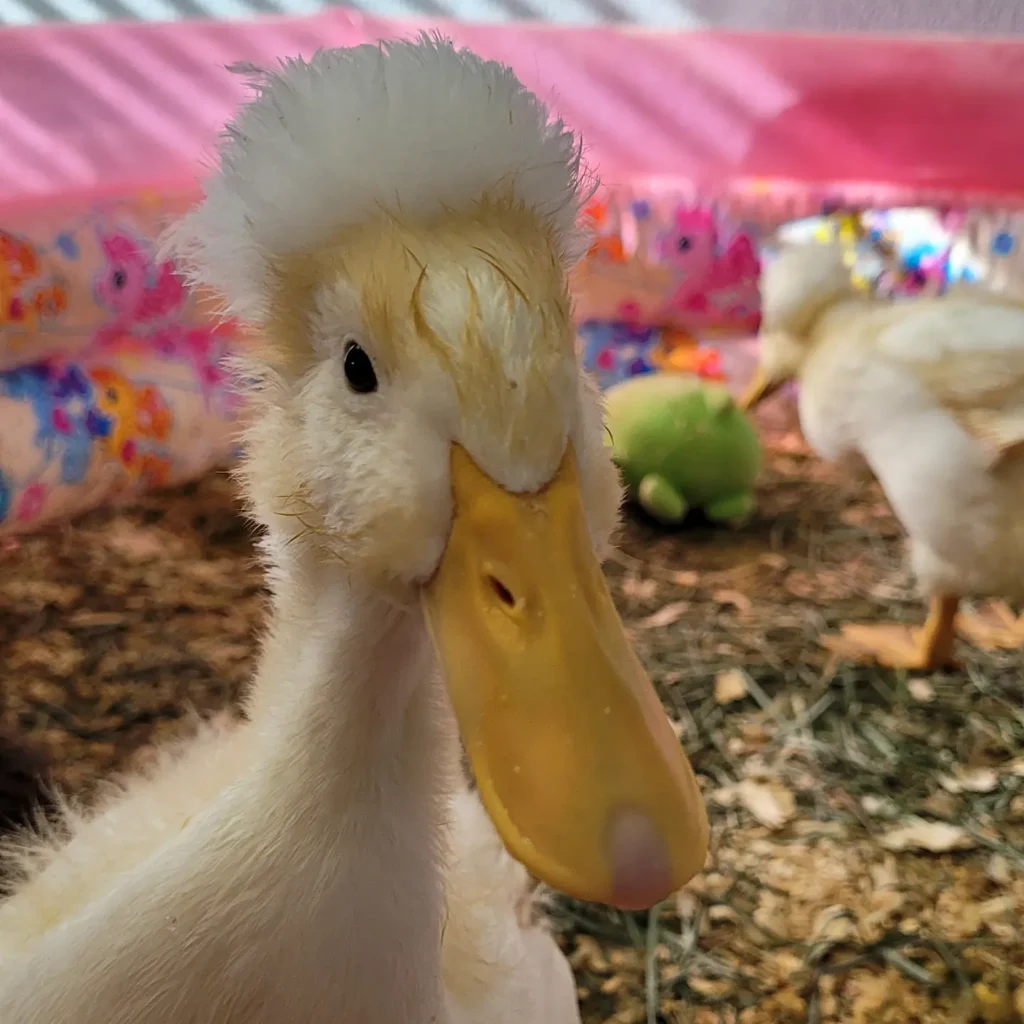
Crested ducks are undeniably eye catching, with their signature fluffy crest and often calm, friendly personalities. It is easy to see why so many people are drawn to them. However, that distinctive look is not just a cosmetic trait. It is the result of a genetic mutation that can be associated with serious health risks.
When we first started our flock, we chose crested ducks because of how adorable they are. At the time, I was not fully aware of the underlying genetic issues linked to the crest. Looking back, I wish I had done more research before making that decision.
Our experience has been mixed. Schnatterinchen has done well, but Emma developed neurological symptoms early on, including seizures as a duckling. It was a frightening experience and one that made us rethink how we approach breed selection and education for new duck keepers.
Because of this, I want to share both the science and our personal experience. Understanding the risks behind the crest is important for making informed, ethical decisions. In many cases, it is worth asking whether supporting the breeding of crested ducks is the right choice at all.
In this guide, we will look at what causes the crest, the potential health implications, and what every duck keeper should consider before bringing a crested duck into their flock.

Ducks of Providence is free, thanks to reader support! Ads and affiliate links help us cover costs—if you shop through our links, we may earn a small commission at no extra cost to you. Thanks for helping keep our content free and our ducks happy! 🦆 Learn more
Part of the Beginner’s Handbook, Essential foundational data for new duck parents.
Quick Navigation: Jump to a Section
[hide]
- What “Crested” Actually Means Anatomically
- The Genetics Behind the Crest
- Intracranial Lipomas and Brain Structure
- Neurological and Clinical Signs
- Mechanical Vulnerability: Why Head Injuries Are a Real Concern
- Mortality and Welfare Considerations
- Husbandry: What Changes for Crested Ducks
- Breeding Ethics: The Hard Conversation
- From My Flock: Emma and Schnatterinchen
- Final Thoughts
- Further Reading & Resources
- References
What “Crested” Actually Means Anatomically
When we look at a crested duck, it is so easy to fall in love with that soft, fluffy “pom-pom.” I remember thinking the same thing when we first brought Emma and Schnatterinchen home. It just looks like an extra tuft of feathers, something purely cosmetic.
But underneath that crest, something much more complex is happening.
In a typical duck, the skull develops into a fully closed, solid bony structure. That structure is incredibly important because it protects the brain from everyday bumps, movement, and interaction with other ducks. It is a carefully formed protective shell.
In crested ducks, that normal development is altered.
Instead of forming a completely closed skull:
• the parietal bones do not fully fuse
• a small opening remains at the top of the skull
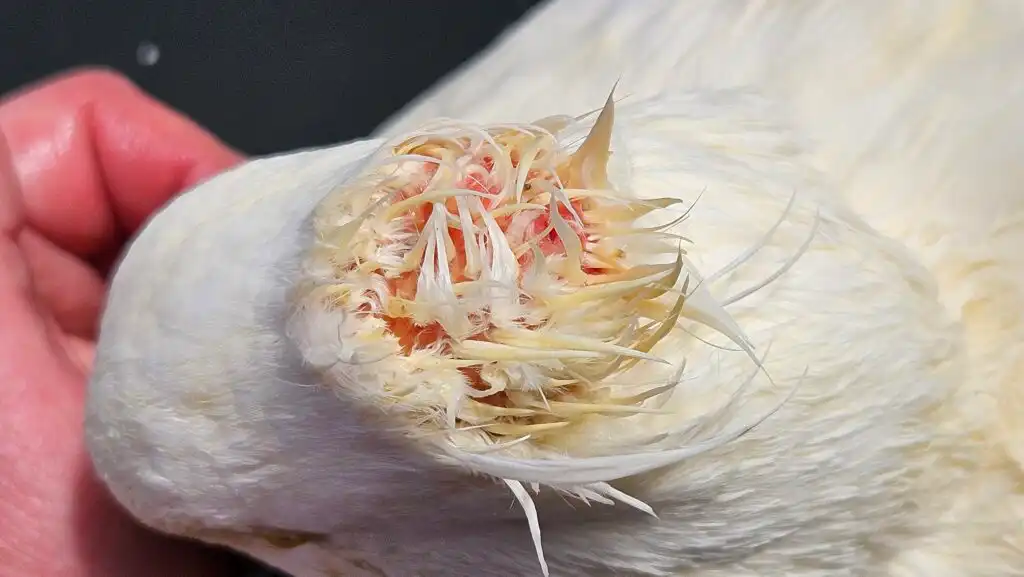
• and through that opening, a fatty or lipomatous mass develops and protrudes outward
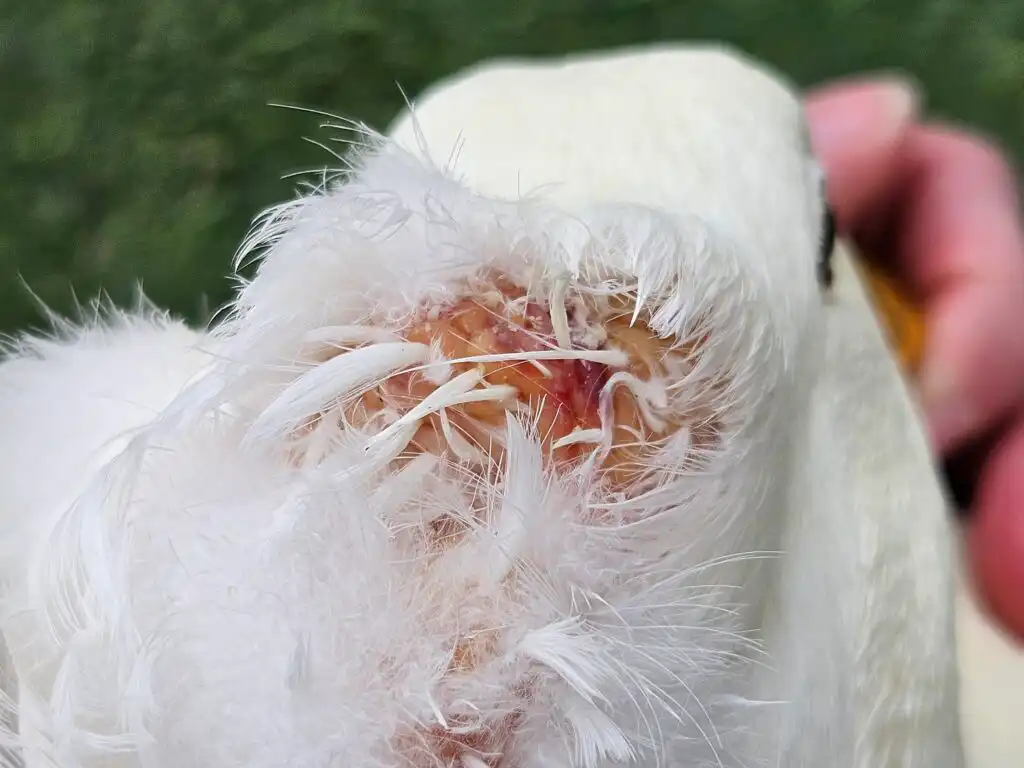
This soft tissue mass sits directly on a very thin membrane that covers the brain. It essentially replaces part of what should have been solid bone.
And this is where the crest comes in.
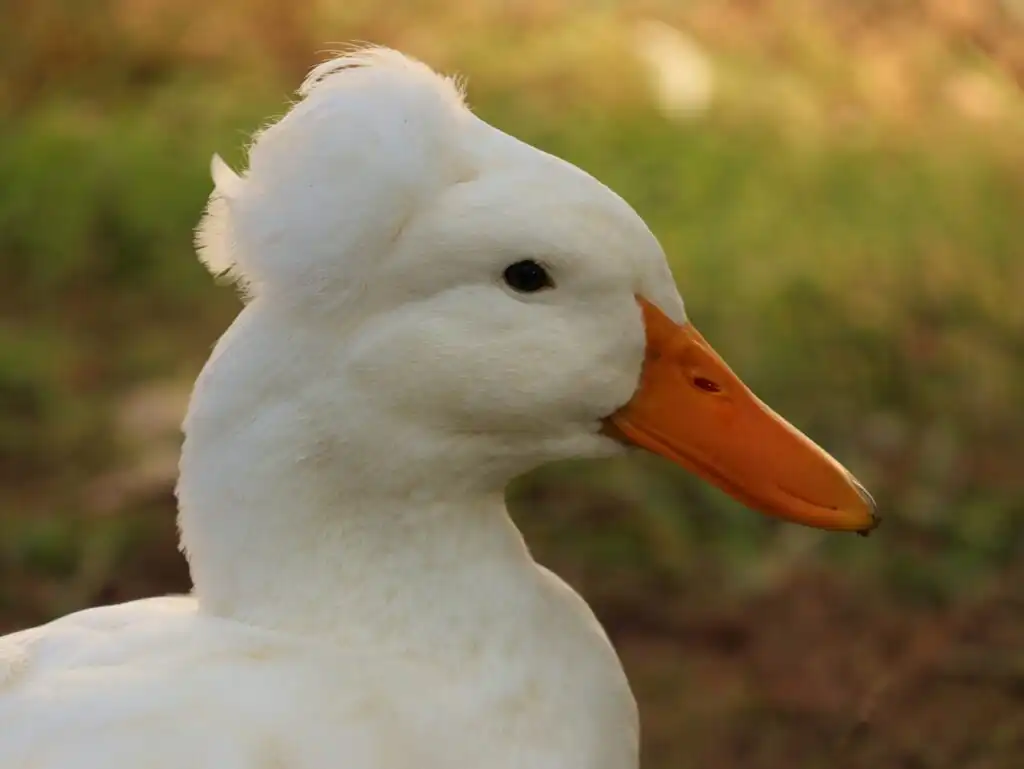
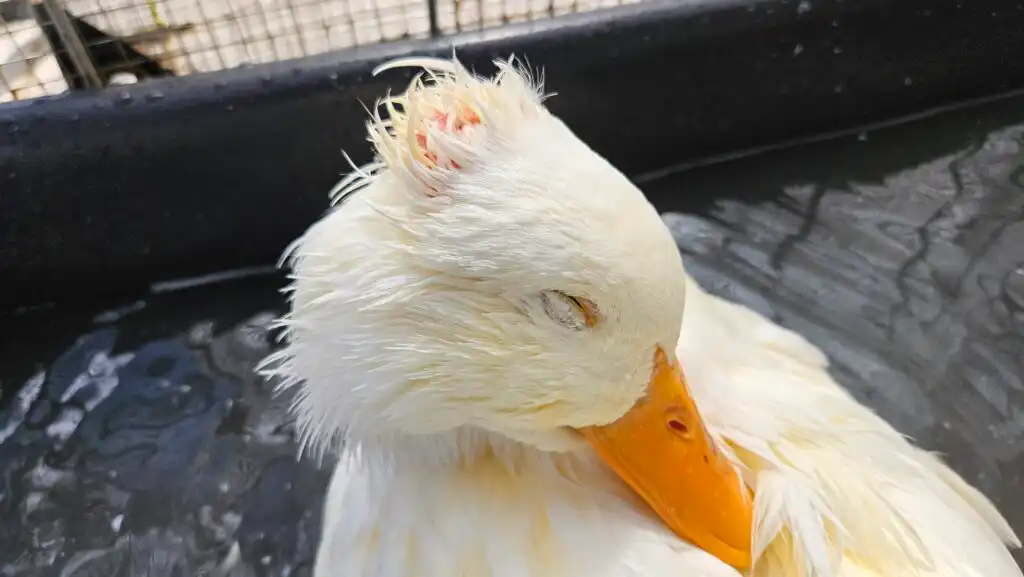
The feathers grow over that mass, creating the rounded, fluffy appearance we see. So the crest is not just sitting on top of the head in the way normal feathers would. It is actually anchored to a structural change in the skull itself.
That means the “cute fluff” we see is supported by:
a soft tissue cushion over an area where the skull is thinner or not fully closed.
When I first understood this, it completely changed how I looked at crested ducks.
From an anatomical perspective, the crest is not just a visual trait. It is the external sign of an internal cranial difference.
What makes this even more interesting, and honestly a bit sobering, is that the body sometimes tries to adapt to this abnormal structure.
Osteological studies have shown that crested ducks can develop:
• changes in overall skull shape (what we call calvarial remodeling)
• small bone outgrowths known as osteophytes
• and even an increase in cranial cavity size
These changes are thought to be the body’s way of compensating for the altered skull formation and the presence of that soft tissue mass.
But compensation does not mean everything functions normally.
These structural differences can influence:
• how the brain is positioned
• how it is supported within the skull
• and how well it is protected from mechanical stress
And that is where we start to see the connection between anatomy and the health challenges that can come with crested ducks.
So while the crest is undeniably beautiful, it is also a reminder that what we are seeing on the outside is closely tied to something much deeper on the inside.
The Genetics Behind the Crest
The crest trait in ducks is not random. It is driven by a mutation at a single genetic locus, and it behaves as what we call an incompletely dominant trait with partial lethality.
I know that sounds technical, so let’s break it down in a way that actually helps you make decisions for your flock.
At the molecular level, recent research has identified a mutation in the regulatory region of the gene TAS2R40. This gene is part of a broader family involved in cellular signaling. While it is better known for roles in taste receptors, in this context, the mutation affects how tissues develop during embryogenesis, especially in the cranial region.
Instead of normal skull formation, this altered signaling leads to:
• disrupted bone development
• formation of the fatty “cushion” under the crest
• and ultimately the visible crest we recognize
So again, the crest is not just about feathers. It starts very early, at the level of gene regulation and tissue patterning in the embryo.
Genetic Outcomes Crested x Crested (CrCr x CrCr)
Here is how this mutation plays out in a very predictable way:
| Genotype | Phenotype | Biological Outcome |
|---|---|---|
| CrCr | Homozygous crested | Lethal, embryo does not survive |
| Crcr | Heterozygous crested | Crest present, variable health risks |
| crcr | Non-crested | Normal development |
What does “partially lethal” really mean?
If a duck inherits two copies of the crest gene (CrCr), the disruption to skull development is too severe. The embryo cannot form a viable braincase, and it does not survive to hatching.
This is why the crest gene is often referred to as a “lethal gene,” even though technically it is only lethal in the homozygous state.
Why This Matters in Real Life
When two crested ducks are bred together, the outcomes follow basic Mendelian genetics:
• ~25% of embryos die before hatching
• ~50% of ducklings will be crested
• ~25% will be non-crested
And this is something I think is really important to sit with for a moment:
That 25% loss is not bad luck. It is built into the genetics.
Every time two crested ducks are paired, you are knowingly creating a situation where a portion of the embryos will not survive.
Genetic Outcome: Crested × Non-Crested (Crcr × crcr)
When you breed a crested duck (Crcr) with a non-crested duck (crcr), the results are much more predictable and importantly, avoid the lethal combination.
Expected Outcomes
| Genotype | Phenotype | Outcome |
|---|---|---|
| Crcr | Crested | Crest present, variable health risk |
| crcr | Non-crested | Normal development |
Percentages
• 50% crested ducklings (Crcr)
• 50% non-crested ducklings (crcr)
• 0% lethal (CrCr)
Why This Pairing Is Often Recommended
This pairing avoids producing embryos with two copies of the crest gene, which is the combination that leads to non-viable development. That means:
• no expected embryonic death due to the crest gene
• a lower overall risk compared to crested × crested pairings
• a more ethically responsible approach if breeding is pursued
Important Reality Check
Even though this pairing avoids the lethal genotype, the crested offspring (Crcr) still carry:
• the same underlying skull mutation
• potential for intracranial lipomas
• increased neurological risk
So while this pairing is safer from a genetic standpoint, it does not eliminate the health considerations associated with the crest.
Genetic Compensation: The Body Trying to Adapt
One of the more fascinating findings from recent studies is that crested ducks show signs of selection in immune-related and anti-tumor pathways. In simple terms, their bodies may be trying to compensate for the structural abnormalities caused by the crest mutation. This concept is often referred to as genetic compensation. It suggests that:
• certain biological pathways are upregulated
• survival mechanisms are strengthened
• and some ducks are better able to tolerate the cranial defect
This may explain why ducks like Schnatterinchen can live relatively normal lives despite having the crest.
But Here Is the Important Part
Compensation does not mean correction. The underlying issue is still there:
• the skull structure is still altered
• the brain may still be displaced or differently supported
• and the risk of neurological issues remains
So while genetics can sometimes “buffer” the effects, they do not eliminate them.
Bringing It Back to the Bigger Picture
Understanding the genetics behind the crest really changes how we see these ducks. This is not just a quirky trait that occasionally causes problems. It is a well-defined genetic mutation with predictable outcomes, including:
• embryonic loss
• structural abnormalities
• and increased health risks in surviving birds
And once you understand that, it naturally leads to a deeper question: What role do we want to play in continuing or selecting for that trait? That is a personal decision, but it should always be an informed one.
Intracranial Lipomas and Brain Structure
One of the most important pieces of the puzzle when it comes to crested ducks is something we cannot see from the outside.
Inside the skull, many crested ducks develop what are called intracranial lipomas, which are fatty masses located within the cranial cavity itself. These are not rare findings. Some reports suggest:
• up to 82% of crested ducks have intracranial lipomas
• in more severe cases, these masses can occupy up to 40% of the intracranial volume
When I first came across these numbers, I had to pause. That is not a small variation. That is a significant structural change inside the skull.
What Does That Mean for the Brain?
In a typical duck, the brain sits within a well-defined, stable space, surrounded and protected by bone. There is just enough room for normal function, but not excess space or competing tissue.
In crested ducks, that environment is altered. These lipomas can:
• physically push against and displace brain tissue
• compress important regions, especially the cerebellum, which is responsible for balance and coordination
• change how different parts of the brain are positioned relative to each other
This is not just about “less space.” It is about changing the architecture of the brain itself.
Why the Cerebellum Matters
The cerebellum plays a key role in:
• balance
• coordination
• fine motor control
When this region is compressed or displaced, it can lead to very recognizable signs:
• wobbling or instability
• difficulty standing or walking
• delayed righting reflexes
If you have ever seen a crested duck that seems a bit “off balance,” this is likely part of the underlying reason.
Effects on Neural Signaling
Beyond the physical displacement, these lipomas can also interfere with how the brain functions at a cellular level.
The brain relies on:
• precise connections between neurons
• stable pressure conditions
• uninterrupted signaling pathways
When a mass is present, it can:
• disrupt communication between brain regions
• alter normal electrical activity
• increase susceptibility to abnormal firing patterns
And this is where we start to see a connection to more severe symptoms like:
• tremors
• seizures
• sudden neurological episodes
Variation Between Ducks
Not every crested duck is affected to the same degree.
Some may have:
• smaller lipomas
• minimal displacement
• little to no outward symptoms
Others may have:
• larger masses
• significant compression
• noticeable neurological issues
This variability is why you can have one duck like Schnatterinchen doing well, while another like Emma shows clear symptoms.
Why This Matters for Duck Keepers
Understanding intracranial lipomas helps explain something many people struggle with: Why crested ducks can seem completely fine one moment and then develop issues. It also reinforces why:
• early observation matters
• subtle signs should not be ignored
• and safe environments are critical
Because when the brain is already working under altered conditions, it does not take much to tip the balance.
When you step back and look at the full picture, these intracranial changes are one of the clearest links between the genetics of the crest and the real-world health outcomes we see in these ducks.
And for me, this was one of the most eye-opening parts of understanding crested ducks on a deeper level.
Neurological and Clinical Signs
Once you understand what is happening inside the skull, the clinical signs we see in some crested ducks start to make much more sense.
Because of the altered brain structure, the presence of intracranial lipomas, and the changes in how the skull supports the brain, crested ducks are at a higher risk for central nervous system dysfunction.
And this can show up in ways that are sometimes subtle at first, and sometimes very obvious.
Commonly reported signs include:
• ataxia, meaning uncoordinated or wobbly movement
• balance problems, especially when turning or standing still
• difficulty standing or righting themselves after lying down
• tremors or small, repetitive movements
• seizures, which can range from mild episodes to more severe events
• and in more extreme cases, sudden death
Vision Impairment
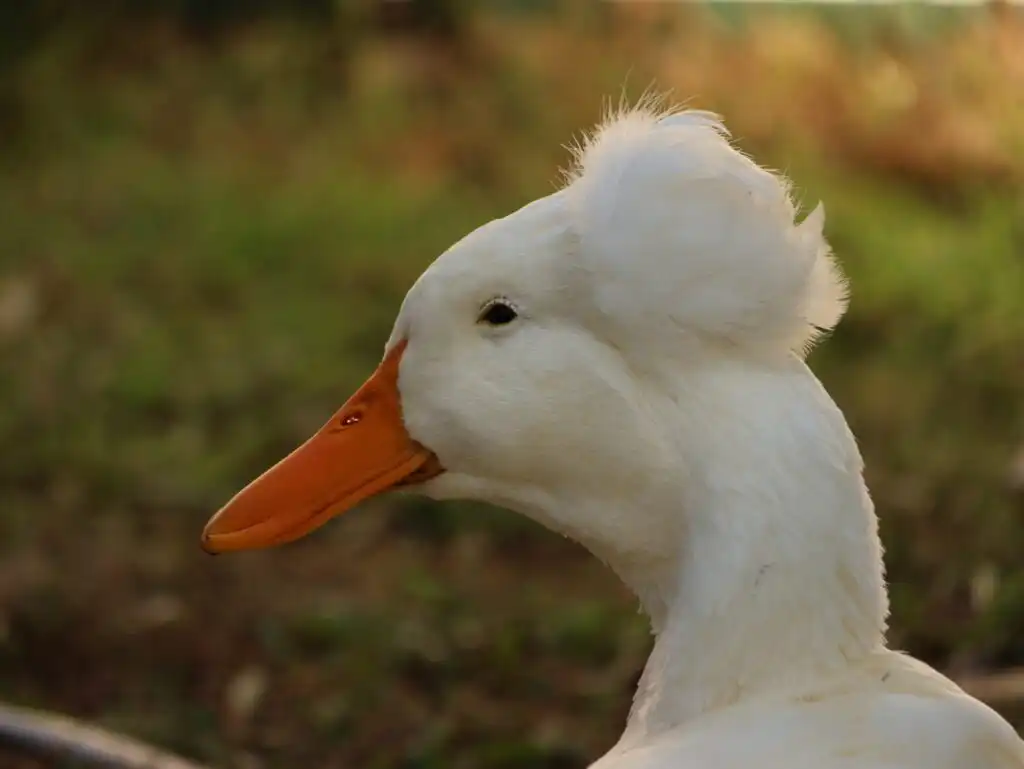
In some crested ducks, especially those with larger or denser crests, the feathers can partially obstruct the visual field.
Ducks rely heavily on vision for:
• navigation
• detecting predators
• interacting with flock members
• locating food
If the crest interferes with that, you may notice:
• hesitation when moving
• bumping into objects
• reduced awareness of surroundings
In our flock, Emma’s left eye is affected, and you can clearly see how that changes how she approaches her environment. She is more cautious and sometimes relies more on memory and routine.
Feather and Skin Health
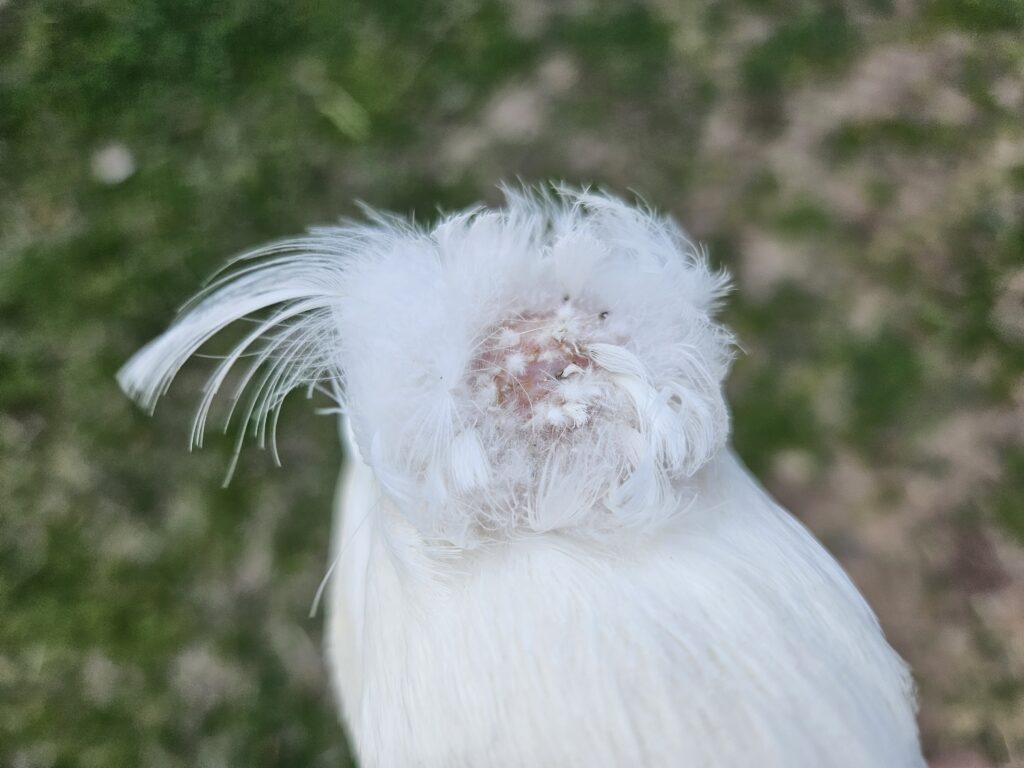
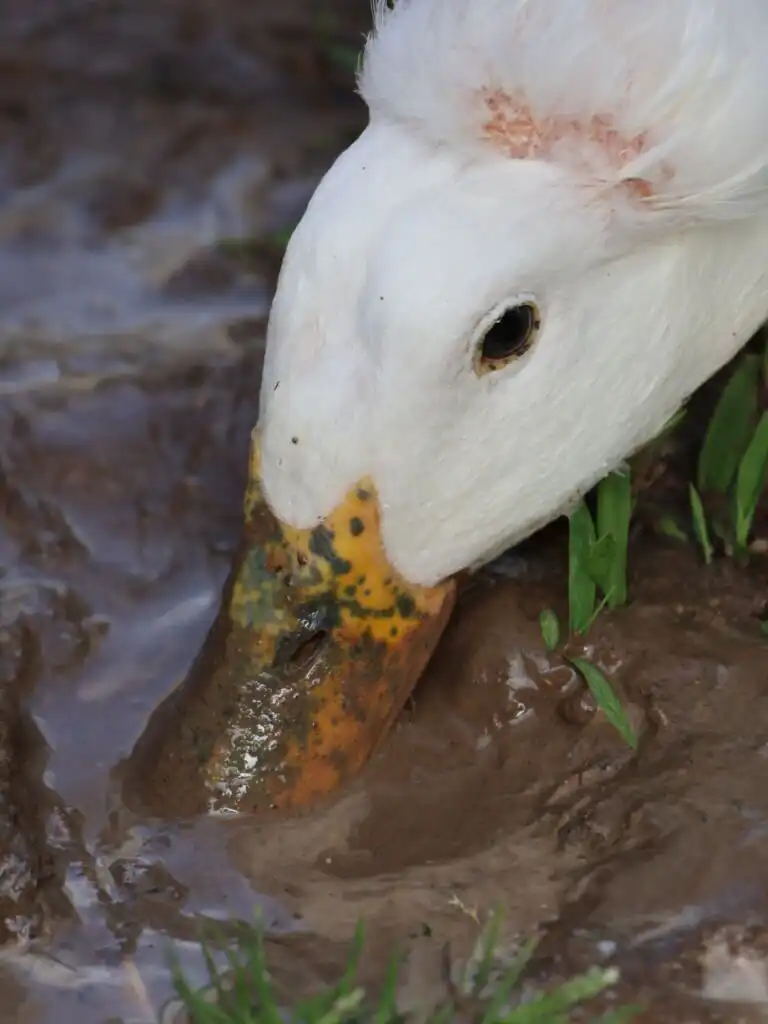
The crest also creates a unique microenvironment on top of the head. Because it is dense and sits over soft tissue, it can:
• trap moisture
• collect debris
• become matted if not maintained
If the feathers are not kept clean and dry, this can lead to:
• skin irritation
• bacterial or fungal growth
• discomfort that may go unnoticed at first
Regular observation and gentle maintenance become more important here than with non-crested ducks.

Respiratory Considerations
Respiratory issues are not as consistently reported as neurological ones, but they can occur indirectly. If the crest becomes:
• heavily matted
• contaminated with mud or debris
• or positioned close to the nares
it may interfere with:
• normal airflow
• effective preening
• keeping the nostrils clear
Ducks rely on being able to clean their nares in water. If the crest structure or condition interferes with that, it can increase the risk of irritation or infection over time.
So while the crest itself does not directly cause respiratory disease, it can contribute to conditions that make respiratory health more vulnerable.
What These Signs Actually Mean
When we see a duck that is “a bit off,” it is easy to think of it as personality or clumsiness. But neurologically, these signs often reflect very specific underlying changes:
• balance issues often point to cerebellar involvement
• tremors and seizures suggest disrupted neural signaling
• vision changes can alter behavior and confidence
• feather issues can indicate localized hygiene challenges
These are all interconnected.
Why Symptoms Can Vary So Much
One thing I have learned from both research and experience is that crested ducks exist on a spectrum. Some may show:
• no obvious signs at all
• only mild coordination differences
Others may develop:
• progressive neurological symptoms
• intermittent or recurring seizures
• more severe functional impairment
This variability depends on factors like:
• the size and location of intracranial lipomas
• the degree of skull malformation
• how much the brain has been displaced or compressed
So two crested ducks can look similar on the outside but have very different internal anatomy and outcomes.
What This Looked Like for Us
When Emma started having seizures as a duckling, it felt sudden and completely unexpected. There was no obvious warning sign at first. One moment she was a tiny, curious duckling, and the next we were dealing with something much more serious.
Looking back now, with a better understanding of the science, it is easier to connect the dots. Those seizures were not random. They are consistent with what we now know about:
• altered brain structure
• disrupted neural signaling
• and increased neurological vulnerability in crested ducks
Why This Understanding Matters
For me, this was a turning point, because it shifted how we interpret what we see. Instead of thinking: “Something just happened.” We can recognize:
There is a biological reason behind these signs.
And that matters, because it changes how we respond. It encourages us to:
• take early signs seriously
• monitor more closely
• create safer environments
• and seek veterinary care sooner rather than later
A Gentle but Important Perspective
Not every crested duck will develop severe neurological issues. But the increased risk is real, and it is grounded in anatomy and physiology. And as duck keepers, understanding that connection helps us do something very important:
It helps us care for them better, with more awareness and intention.
Mechanical Vulnerability: Why Head Injuries Are a Real Concern
Because the skull is thinner or partially open beneath the crest, crested ducks are significantly more vulnerable to trauma compared to non-crested ducks.
In a typical duck, the skull acts as a solid protective barrier. In crested ducks, that protection is reduced in exactly the area that is most exposed, the top of the head. That means even relatively minor, everyday events can carry more risk than we might expect:
• bumping into structures or fencing
• collisions during flapping or sudden movement
• interactions within the flock
What might be harmless for another duck can become more serious for a crested duck simply because the mechanical protection is not the same.
One situation where this becomes especially important is during mating. Drakes naturally grab the back of the hen’s head to stabilize themselves. In a crested duck, this often means they are gripping the crest itself, applying pressure directly over the most structurally vulnerable part of the skull. This can lead to:
• feather loss or crest damage
• skin irritation or injury
• and in more severe cases, trauma to the underlying tissue
From a biomechanical perspective, it is a combination of reduced structural protection and repeated localized force, which increases the risk over time. And this is why I consider this one of the most underappreciated risks.
It is not about rare accidents. It is about normal, everyday behaviors interacting with an altered anatomy.
Mortality and Welfare Considerations
When we step back and look at the bigger picture, crested ducks come with a very different risk profile compared to non-crested breeds. They consistently show:
• higher embryonic mortality
• higher post-hatch mortality
• greater variability in health outcomes
The increased embryonic mortality is directly tied to the genetics we talked about earlier. When two copies of the crest gene are inherited, development is not viable. That means a portion of embryos will never hatch, and that loss is built into the trait itself.
But it does not stop at hatching.
Even among surviving ducklings, there is a wider range of outcomes than what we typically see in other breeds. Some may develop normally, while others may begin to show signs of neurological or structural issues early in life.
Some ducks, like Schnatterinchen, live what appears to be a completely normal and healthy life. Others, like Emma, can develop significant issues early on, such as seizures or coordination problems. And then there are cases that fall somewhere in between:
• mild balance differences
• subtle behavioral changes
• or issues that only become noticeable over time

Why This Variability Exists
One of the most important things to understand is that this variability is not random. It reflects:
• how much the skull structure is affected
• the size and placement of intracranial lipomas
• and how the brain has adapted to these changes
In other words, two crested ducks may look nearly identical on the outside, but internally, their anatomy and neurological function can be very different.
The Welfare Perspective
From a welfare standpoint, this variability creates a challenge. Because you cannot predict in advance:
• which duck will thrive
• which may need ongoing care
• and which may experience more serious health issues
That uncertainty is something every keeper should be aware of. It also means that crested ducks may require:
• closer observation over their lifetime
• a lower threshold for veterinary care
• and a more cautious, supportive environment
A Thought Worth Sitting With
For me, this is one of the hardest but most important parts of the conversation. When we choose crested ducks, we are not just choosing a look. We are choosing a trait that comes with:
• increased mortality at the embryonic stage
• increased health risks after hatching
• and a wider range of possible outcomes
And while some ducks do beautifully, others face challenges that are directly tied to that same trait. Understanding that does not mean you cannot love or care for crested ducks. But it does mean we should approach them with awareness, honesty, and a strong commitment to their welfare.
Husbandry: What Changes for Crested Ducks
Caring for crested ducks is not completely different from standard duck care, but it does require a more intentional approach. Once you understand the anatomy and the potential risks, small adjustments in how you set up and manage your flock can make a meaningful difference in their safety and overall well-being.
Environment
The biggest shift is how you think about the environment. With crested ducks, you are not just creating a comfortable space. You are actively working to reduce the risk of head trauma and instability.
This means taking a closer look at your setup and asking yourself where accidents could happen. You want to:
• avoid low ceilings, sharp edges, and hard obstacles that could lead to head impact
• provide stable, non-slip footing so ducks with mild balance issues can move confidently
• reduce overcrowding, which can increase stress and accidental collisions
In our setup, I started paying much more attention to how ducks move through the space, where they might bump into something, and how they interact during more active moments.
It helps to think of the environment as a low-impact, low-trauma space, where even small missteps are less likely to turn into injuries.
Handling
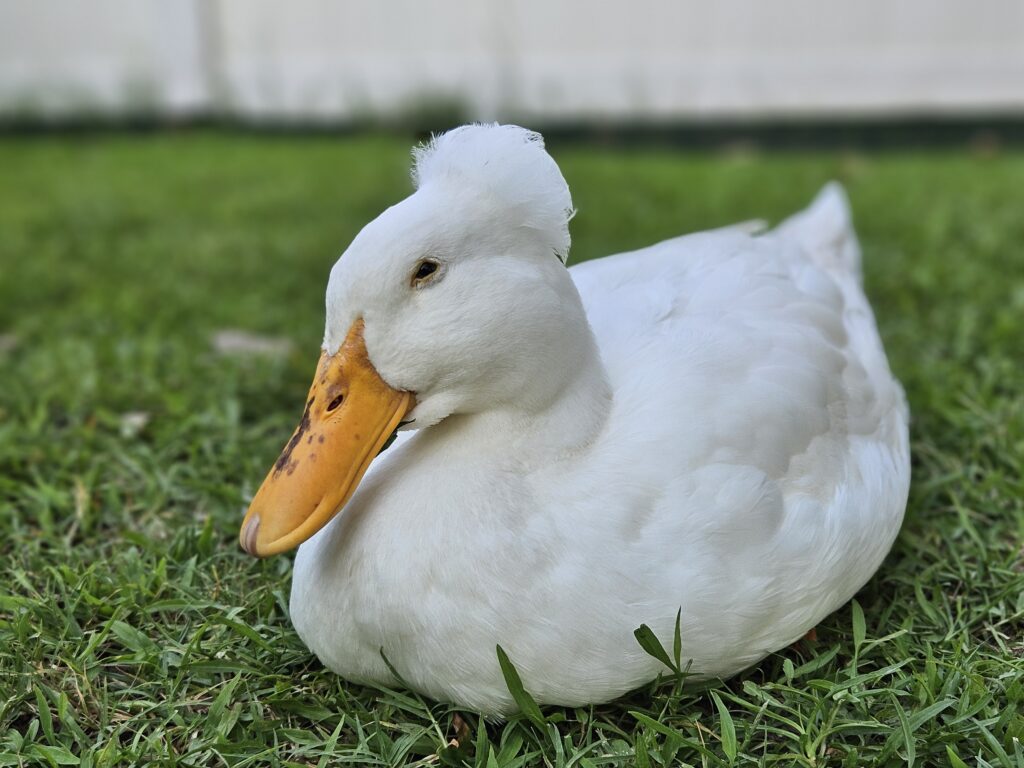
Handling is another area where a little awareness goes a long way. With non-crested ducks, people sometimes handle them more casually, but with crested ducks, you need to be more deliberate.
Never:
• grab a duck by the crest
• apply pressure to the top of the head
Even if it seems gentle, that area is structurally more vulnerable. Instead, always:
• support the body fully
• keep movements calm and controlled
• minimize unnecessary restraint
I always think of it as supporting their center of mass, not their head. Once you get used to that, it becomes second nature.
Monitoring
One of the most important parts of caring for crested ducks is simply paying attention. Neurological changes often do not appear suddenly. They tend to start subtly. Things I watch for include:
• slight wobbling or unsteady walking
• a mild head tilt
• delayed reactions to movement or sound
• reduced activity or changes in behavior
These signs can be easy to miss if you are not looking for them, especially in a busy flock. But catching them early allows you to:
• adjust the environment
• provide supportive care
• and seek veterinary input if needed
Over time, you get a feel for what is normal for each individual duck, which makes it easier to notice when something is off.
Nutrition and General Care
The good news is that the fundamentals of duck care still apply. You are not starting from scratch with crested ducks, but you are building on that foundation a bit more thoughtfully. Crested ducks still need:
• a balanced diet with appropriate protein levels for their age
• constant access to clean water deep enough to clear their nares
• regular opportunities to bathe and preen, which are essential for feather and skin health
Where things shift slightly is in how we support them nutritionally and practically, especially if there are any neurological concerns.
One important factor to consider is niacin (vitamin B3).
Ducks already have higher niacin requirements than chickens, but in crested ducks, I have found it even more important to make sure they are getting enough. Niacin plays a key role in:
• nerve function
• muscle coordination
• overall neurological health
While it will not “fix” structural issues in the brain, adequate niacin can help support proper nerve signaling and may reduce the severity of mobility or coordination problems, especially in growing ducklings.
This can be done through:
• choosing a high-quality duck feed formulated with adequate niacin
• supplementing when needed (for example with brewer’s yeast)
• paying extra attention during the duckling stage, when deficiencies show up quickly
For ducks that already show neurological signs, a few practical adjustments can also make daily life easier for them. For example:
• placing food and water in easily accessible, low locations
• making sure they do not have to compete heavily with more dominant flock members
• monitoring body condition more closely, since struggling ducks may eat less
In our flock, I have found that small changes like lowering feeders or temporarily separating during feeding time can make a noticeable difference. It reduces stress and ensures that every duck actually gets what they need.
At the end of the day, it is about removing unnecessary challenges.
Crested ducks already have more going on internally. Supporting them through thoughtful nutrition, especially adequate niacin, and simple environmental adjustments helps give them the best chance to thrive.
Breeding Ethics: The Hard Conversation
This is where science and responsibility really come together, and I will be honest, this is the part that changed my perspective the most over time.
When we talk about breeding crested ducks, we are not just talking about passing on a physical trait. We are making decisions that directly affect survival, health, and quality of life.
Breeding crested ducks means knowingly producing:
• embryos that will not survive due to lethal gene combinations
• individuals with an increased risk of neurological disease
• animals with structural skull differences that can affect lifelong health
And that is difficult to ignore once you understand the biology behind it.
Attempts to Reduce Risk
Some breeders do try to approach this more carefully.
Common strategies include:
• pairing crested ducks with non-crested ducks to avoid the lethal combination
• selecting for smaller or more “moderate” crests that may be associated with fewer complications
These approaches can help reduce the likelihood of severe outcomes. But they do not remove the underlying issue. The mutation is still there, and with it:
• altered skull formation
• potential brain displacement
• and variability in how each duck is affected
So while risk can be managed to some degree, it cannot be eliminated as long as the crest trait is being selected for.
A Question Worth Asking
This is where things become more personal. Because at the end of the day, it is not just about what is possible, but about what we choose to support. So the question becomes:
Is the aesthetic value of the crest worth the biological cost that comes with it?
There is no single answer that fits everyone. But I do believe it is a question every duck keeper should take seriously, especially if breeding is part of the plan.
My Perspective
For me, learning the science behind crested ducks shifted this from a simple preference to an ethical consideration. It made me more intentional about:
• the breeds I choose
• the traits I support
• and the kind of flock I want to build
And even if your conclusion is different, approaching this topic with awareness and honesty is what truly matters.
From My Flock: Emma and Schnatterinchen
When Emma started having seizures, I felt completely unprepared. It is one thing to read about neurological risk in an article or see it briefly mentioned in a breed description. It feels distant, almost theoretical.
It is something entirely different to sit there and watch your own duck struggle, not knowing what is happening, not knowing if it will stop, and not knowing what this means for her future.
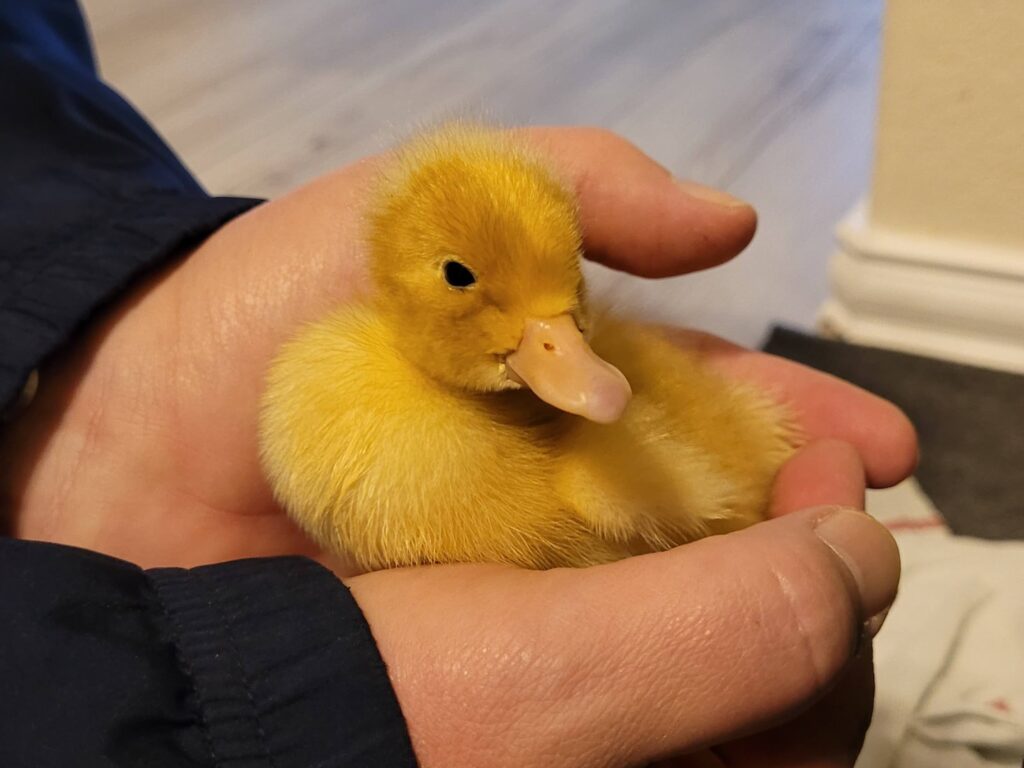
I remember how small she was at the time. Just a duckling. And suddenly, everything shifted from excitement and joy to worry and uncertainty. Moments like that stay with you.
Schnatterinchen, on the other hand, has had a very different overall path, but she also gave me a moment I will not forget. At one point, she experienced a mating-related head trauma. It likely happened during a normal interaction, but because of her crest, that pressure was applied to a much more vulnerable area.
Shortly after, she showed neurological signs:
• she seemed off balance, used her wings to support her
• her movements were not quite right
• and for a moment, it was truly alarming
It was one of those situations where your heart drops instantly, because you know what could be happening.
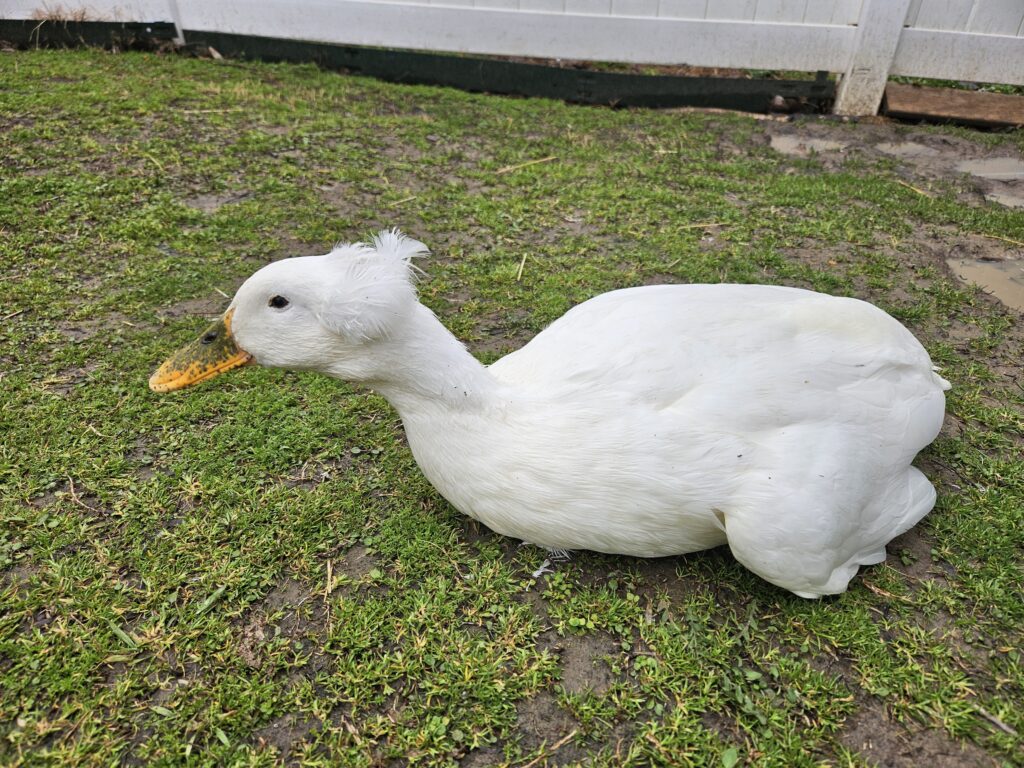
We immediately gave her rest, kept her environment calm and low-stress, and made sure she had extra niacin support. By the next day, she was doing well again, almost back to normal. But that initial shock stayed with me. Because it showed how quickly things can change.
And that contrast between Emma and Schnatterinchen is exactly why this topic matters so much. Schnatterinchen reminds me that not every case is severe, and that some ducks recover well even after a scare. Emma reminds me that there is a bigger biological risk that cannot be ignored.
With crested ducks, you are not just choosing a look. You are accepting a level of uncertainty that is rooted in biology. You may have long stretches where everything feels completely normal. And then you may have moments that remind you very clearly that these ducks are different in ways we cannot see from the outside.
For me, that is the biggest takeaway from my own flock. Not fear, not regret, but awareness. Because once you understand that uncertainty, you start to prepare differently, observe more closely, and respond faster.
And ultimately, that is what helps us show up for our ducks in the way they need us to.
Final Thoughts
Crested ducks are undeniably beautiful, and it is easy to understand why so many people are drawn to them. I felt the same way when we first started our flock.
But with time, experience, and a deeper understanding of the science behind the crest, my perspective has changed. If you ask me today, both as a scientist and as someone who has lived through this firsthand:
I would not actively seek out a crested duck again.
Not because they are not wonderful animals. They truly are. But because:
• the risks are real
• the suffering can be preventable
• and there are many other breeds that do not carry these concerns
That does not mean crested ducks cannot live good lives. Some absolutely do, and I love mine dearly. But it does mean that, as keepers, we have to think beyond appearance and consider what that trait represents biologically.
At the end of the day, our choices shape the kind of lives our ducks will live. And for me, that means prioritizing health, stability, and long-term welfare over aesthetics.
Further Reading & Resources
- Neurological Disorders in Ducks: Why They Happen and How to Prevent Them
- Cayuga Ducks: The Beautiful Black Duck Breed
- Ancona Duck – A Rare Duck Breed
- Muscovy Ducks: The Gentle Giants of the Duck World
- Khaki Campbell: The Champion Egg Layer That Can (Almost) Fly
- Welsh Harlequin Duck – Friendly, Hardy, and Stunningly Unique
- Indian Runner Ducks: The Upright, Active, and Entertaining Breed
Master the basics of evidence-based care. Explore the full Beginner’s Handbook to build a strong foundation for your flock.
References
- Julia Cnotka, Inga Tiemann, Heiko D. Frahm, Gerd Rehkämper, Unusual brain composition in Crested Ducks (Anas platyrhynchos f.d.)—Including its effect on behavior and genetic transmission, Brain Research Bulletin, Volume 76, Issue 3, 2008, Pages 324-328
- Yang Zhang, Qixin Guo, Youqing Bian, Zhaoshan Wang, Qi Xu, Guobin Chang, Guohong Chen, Whole genome re-sequencing of crested traits and expression analysis of key candidate genes in duck, Gene, Volume 729, 2020, 144282
- Chang G, Yuan X, Guo Q, et al. The First Crested Duck Genome Reveals Clues to Genetic Compensation and Crest Cushion Formation. Genomics Proteomics Bioinformatics. 2023;21(3):483-500. doi:10.1016/j.gpb.2023.08.002
- Bartels T, Brinkmeier J, Portmann S, Krautwald-Junghanns ME, Kummerfeld N, Boos A. Osteological investigations of the incidence of cranial alterations in domestic ducks (Anas platyrhynchos f. dom.) with feather crests. Ann Anat. 2001 Jan;183(1):73-80. doi: 10.1016/S0940-9602(01)80017-0. PMID: 11206986.