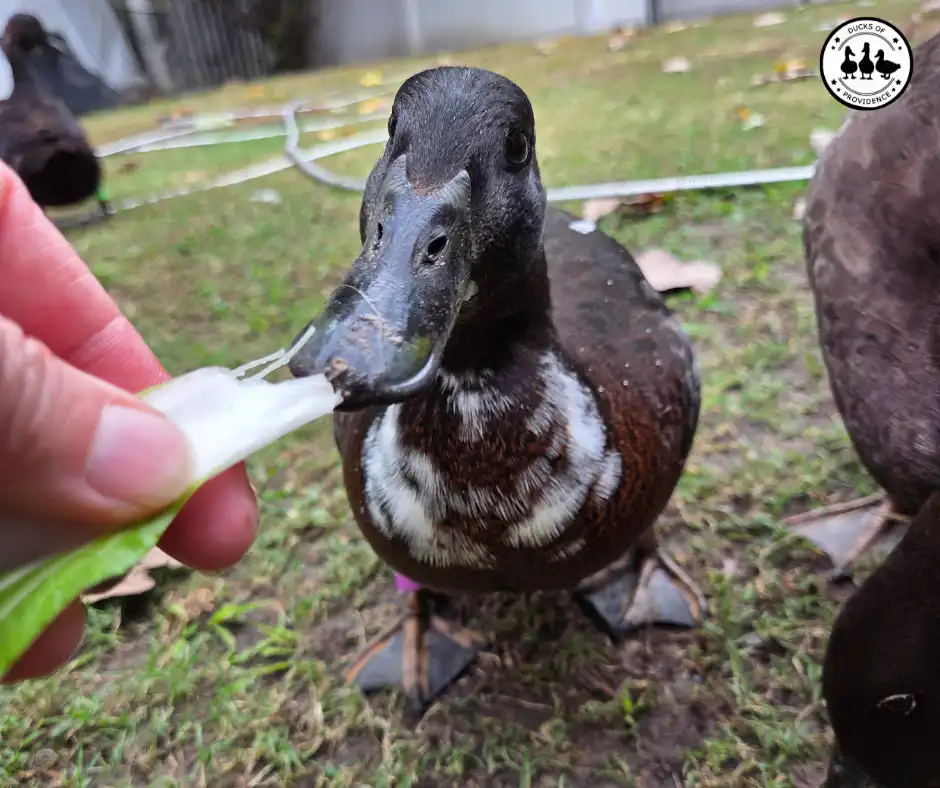
Why Is My Duck Always Hungry? 9 Reasons Ducks Act Starving

To keep our research-backed guides free, this site uses ads and affiliate links (earning a small commission at no cost to you). Everything here is created by a duck mom and PhD scientist, combining academic rigor with hands-on experience to provide practical, trustworthy advice for duck keepers everywhere. 🦆 Learn more
Why is my duck always hungry? If you have ever watched your duck finish a full meal and then immediately beg for snacks as though nobody has fed them in days, you are definitely not alone.
Some ducks seem to have an endless appetite. They rush toward the feed bowl, follow us around the yard, investigate anything that might possibly be edible, and somehow always have room for mealworms. Muffin, in particular, can hear a mealworm bag from what feels like half a mile away. According to her, every meal is overdue and every serving is too small.
In many cases, this constant hunger is completely normal. Ducks are naturally opportunistic eaters, and pet ducks quickly learn that humans are excellent sources of food. Begging, excitement around treats, and enthusiastic foraging do not automatically mean that a duck is underfed.
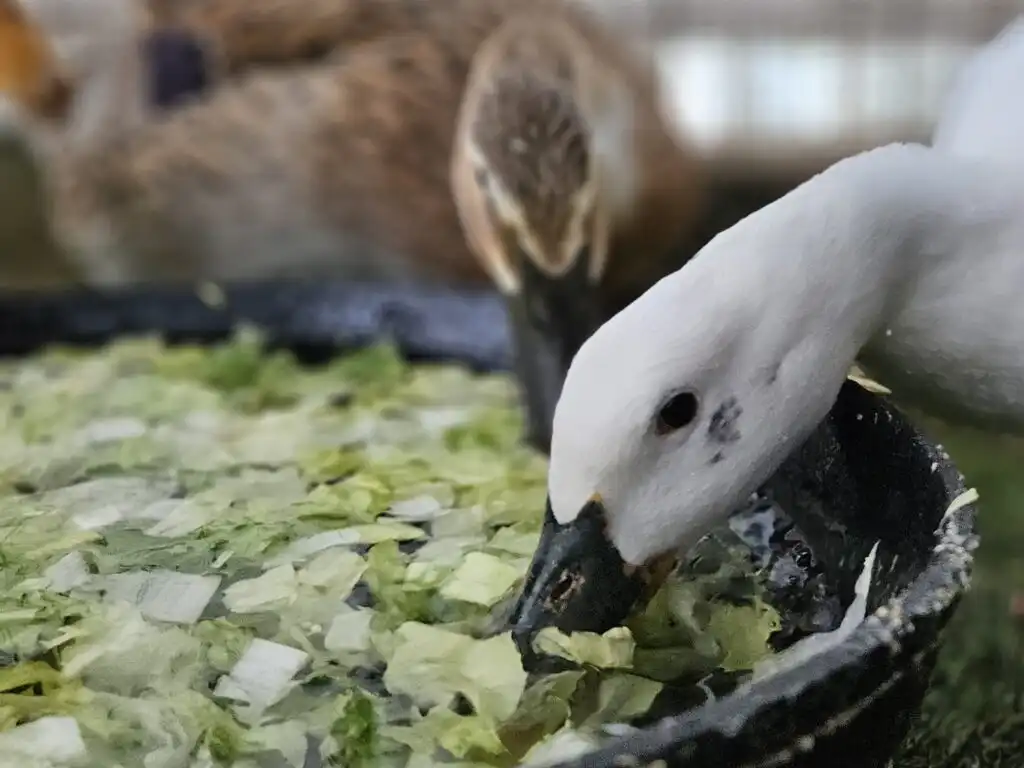
However, a duck that suddenly seems much hungrier than usual deserves a closer look. Increased appetite can sometimes be linked to seasonal changes, higher energy demands, competition within the flock, an unbalanced diet, parasites, or other health problems, especially when it occurs together with weight loss or changes in droppings.
So, how can you tell the difference between a duck who simply loves food and one who may actually need more calories or veterinary attention? In this guide, I will walk you through nine common reasons ducks act like they are starving, including the perfectly normal ones and the warning signs I would never ignore in my own flock.
Part of the Feeding & Nutrition Hub, Data-backed analysis of duck dietary requirements and foraging behavior.
Quick Navigation: Jump to a Section
[hide]
- Quick Answer: Why Is My Duck Always Hungry?
- 1. Ducks are naturally opportunistic eaters
- 2. Your duck has learned that begging works
- 3. Your duck may not be eating as much as you think
- 4. The diet may not be nutritionally balanced
- 5. Your duck’s energy needs have increased
- 6. Your duck is bored and looking for enrichment
- 7. Competition is making your duck eat frantically
- 8. Parasites or health problems are increasing appetite
- 9. Your duck is simply extremely food motivated
- Always Hungry or Actually Losing Weight?
- When to See an Avian Vet
- Frequently Asked Questions About Hungry Ducks
- The Bottom Line: Know Your Duck’s Normal
- Further Reading & Resources
Quick Answer: Why Is My Duck Always Hungry?
Most ducks act hungry because they are naturally opportunistic eaters and highly food-motivated. They quickly learn feeding routines, recognize the people who bring treats, and rarely turn down an opportunity to eat. A duck that begs constantly but maintains a healthy weight, normal droppings, and typical activity levels is usually just being a duck.
However, a sudden increase in appetite deserves closer attention. Higher energy needs during growth, egg laying, molting, cold weather, or recovery can make a duck genuinely hungrier. Competition within the flock or an unbalanced diet may also leave a duck needing more food than you realize.
The biggest warning sign is increased hunger combined with weight loss. If your duck is eating more but becoming thinner, losing muscle, producing abnormal droppings, or acting unwell, parasites, poor nutrient absorption, or another health problem could be involved.
1. Ducks are naturally opportunistic eaters
One of the simplest reasons your duck always seems hungry is that ducks are naturally opportunistic eaters. In the wild, food does not arrive in a bowl at the same time every morning. Ducks spend much of their day searching for whatever is available, including aquatic plants, seeds, insects, worms, snails, and other small food items.
When ducks find a good food source, it makes sense for them to take advantage of it. They do not know whether another equally good opportunity will appear five minutes later or several hours from now. This natural drive to investigate and eat available food is part of normal duck behavior.
Ducks also tend to eat surprisingly fast, and predator pressure likely plays an important role in this behavior. As prey animals, wild ducks cannot afford to stay completely focused on a food source for too long. Feeding can leave an animal distracted and vulnerable, so grabbing food quickly before returning attention to the surroundings can be an advantage.
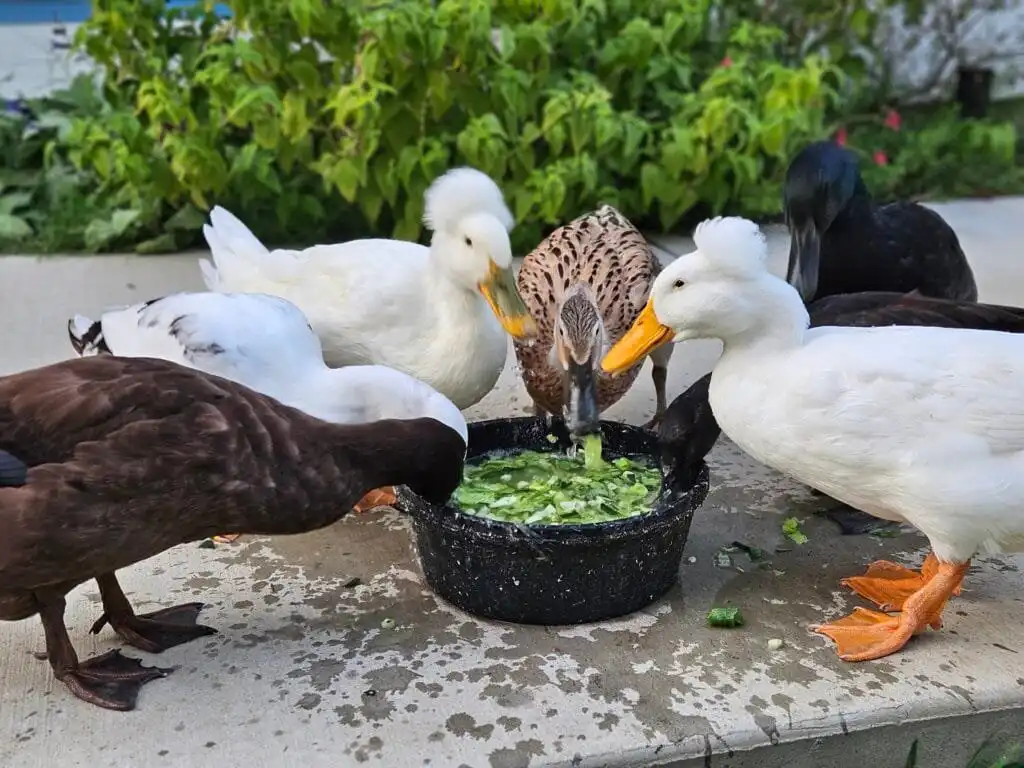
Our pet ducks still carry those instincts, even when their lives are much more predictable. They may have access to a nutritionally complete feed every day, but that does not stop them from searching the yard for bugs, nibbling plants, investigating the ground, or rushing over when they think we might have something better.
Sometimes, however, that intense focus on food seems to override everything else. I find it hilarious when one of my ducks becomes so completely zoomed in on eating that they do not even notice me touching or petting them. A duck who might normally step away from an unexpected touch suddenly seems to forget the rest of the world exists. Apparently, personal boundaries can wait when the snacks are good enough.
This is also why begging is not always a reliable sign of true hunger. A duck can have a full crop and still be extremely interested in a handful of mealworms. The opportunity to eat something tasty can trigger a much stronger response than ordinary feed sitting in a bowl.
I see this in my own flock all the time. My ducks can walk away from their regular food and then suddenly behave as though they have not eaten all day when I appear with a favorite treat. Their enthusiasm is real, but it does not necessarily mean their nutritional needs have not been met.
For most healthy ducks, frequent food seeking and enthusiastic eating are simply part of being a duck. What matters more is whether the behavior is normal for that individual duck and whether their weight, body condition, droppings, and activity level remain stable.
2. Your duck has learned that begging works
Ducks are remarkably good at learning routines, especially when food is involved. If begging has ever resulted in a snack, your duck may have learned one very important lesson: humans can be trained.
My ducks know exactly who feeds them, where the treats are stored, and what certain sounds mean. The rustle of a bag, the opening of a container, or simply seeing me walk toward a particular area can suddenly bring the entire flock running. Muffin, in particular, seems to believe that following me closely and looking sufficiently deprived should eventually result in mealworms.
And sometimes, of course, it does.
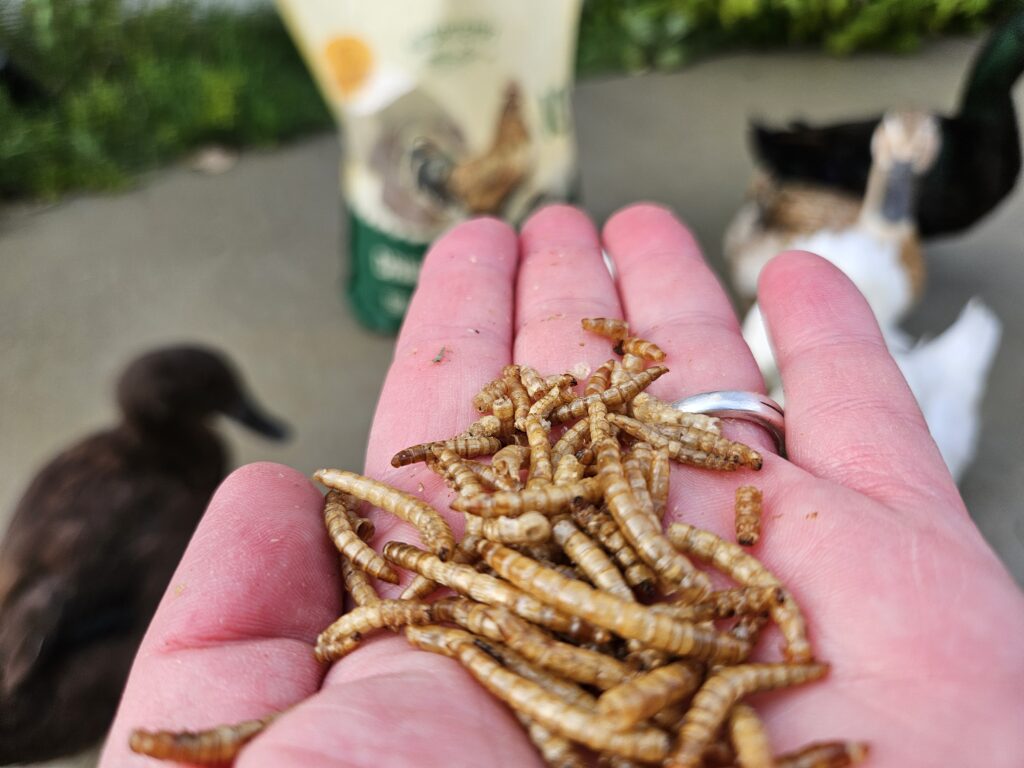
That is how begging behavior becomes reinforced. If a duck approaches us, quacks, follows us, stares at us, or acts dramatically hungry and we respond with food, the duck learns that the behavior works. The more consistently we reward it, the more likely the duck is to repeat it.
Ducks can also learn specific feeding times and daily routines. They may become especially vocal or excited shortly before breakfast, dinner, or treat time. This does not necessarily mean they are starving. They have simply learned what happens next and are making sure we do not forget.
Some ducks take this one step further and become very specific about which humans are easiest to convince. In many households, the ducks quickly figure out who is most likely to offer an extra snack. If one person says no but another person usually gives in, you can probably guess who the ducks will follow around the yard.
This learned behavior can make it surprisingly difficult to judge true hunger based on begging alone. A duck may have access to plenty of balanced feed and still ask for something better. In fact, a duck that ignores pellets but becomes wildly excited about mealworms is usually expressing a food preference, not proving that they need more calories.
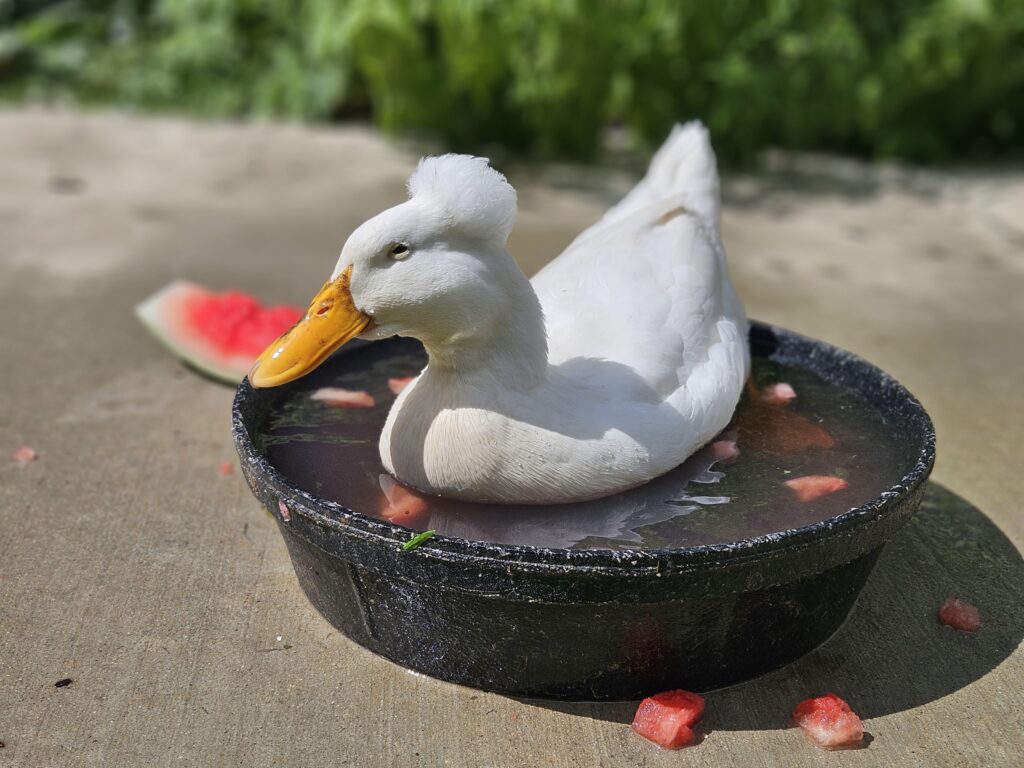
Treats Do Not Always Have to Be Mealworms
Mealworms may get an enthusiastic response, but they are not the only option. Healthy duck treats can include leafy greens, peas, cucumbers, berries, watermelon, and other safe fruits and vegetables. Rotating treats adds variety and can provide enrichment without relying on calorie-dense favorites every time your ducks ask for a snack.
Not sure what to offer? Read my complete guide to healthy treats for ducks for more ideas, including which treats I give my own flock and how to keep treats from replacing a balanced diet.
That does not mean we have to stop giving our ducks treats. Food is part of how many of us interact with our flocks, and treats can be wonderful for training, enrichment, and building trust. The important part is remembering that enthusiasm for snacks is not the same as nutritional hunger.
If your duck is maintaining a healthy body condition, eating their regular feed, producing normal droppings, and behaving normally, constant begging is often exactly what it looks like: a very clever duck who has discovered that persistence sometimes pays off.
3. Your duck may not be eating as much as you think
Sometimes, a duck that acts constantly hungry really is not getting as much food as you assume.
This is especially easy to miss in a flock. You may put out plenty of feed and watch everyone gather around the bowl, but that does not mean every duck is eating an equal share. More confident or dominant flock members may take the best feeding spots, while a timid duck hangs back or is repeatedly pushed away.
Even without obvious aggression, subtle competition can make a difference. One duck may eat quickly while another spends more time waiting for an opening. By the time the quieter duck gets comfortable enough to eat, the bowl may be nearly empty or the flock may have moved on.
This is one reason I like to provide multiple feeding stations when flock dynamics are complicated. Feeders placed far enough apart can make it harder for one duck to control access to all the food. In some cases, a duck may need to be fed separately for a short time so you can confirm that they are actually eating.
It is also important to look at how much feed is truly being consumed. Ducks are not exactly famous for their table manners. Feed can be spilled, scattered, soaked, trampled into the ground, or washed into the water. A bowl that was full in the morning may be empty later, but not all of that feed necessarily ended up inside your ducks.
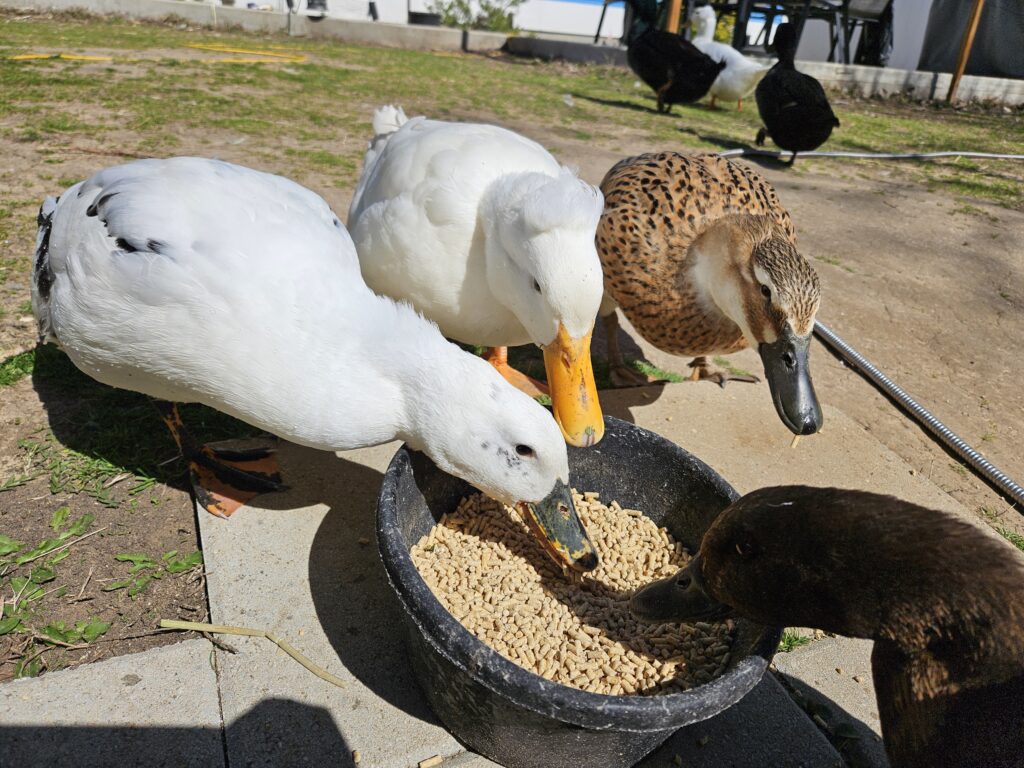
Foraging can make intake even harder to judge. Ducks with access to a yard, garden, or pond may spend much of the day eating plants, insects, worms, and other natural foods. That can contribute meaningfully to their diet, but the amount varies enormously from day to day and from one environment to another. A duck who finds plenty of bugs one day may find very little the next.
If one duck seems unusually hungry, watch that individual eat rather than judging the flock as a whole. Can they reach the feeder easily? Are they being interrupted or chased away? Do they swallow normally? Are they actually eating the balanced feed, or are they mostly waiting for treats?
This matters because a duck can appear to have constant access to food while still consuming less than you realize. Before assuming that persistent hunger is simply greediness, make sure the duck is truly getting a fair opportunity to eat.
4. The diet may not be nutritionally balanced
A duck can eat plenty of food and still not receive a nutritionally balanced diet.
This is most likely to happen when treats, scratch grains, bread, corn, kitchen scraps, or other extras begin replacing too much of a complete duck or poultry feed. These foods may provide calories and fill the digestive tract, but they do not necessarily provide the right balance of protein, amino acids, vitamins, and minerals that ducks need.
Think of it a little like eating snack food instead of a balanced meal. You may consume plenty of calories, but that does not mean your body received everything it needed.
For most pet ducks, a nutritionally complete feed should make up the majority of the diet. Treats and supplemental foods are best kept as extras rather than the main meal. This is especially important for growing ducklings, laying hens, molting ducks, and birds recovering from illness because their nutritional demands may be higher.
Protein is one nutrient that often gets a lot of attention, but simply adding more mealworms is not the answer to every feeding concern. Ducks need an appropriate balance of nutrients, not just more of one ingredient. Amino acids, vitamins, minerals, calcium, phosphorus, and other nutrients all work together to support normal growth, feather production, egg laying, tissue maintenance, and overall health.
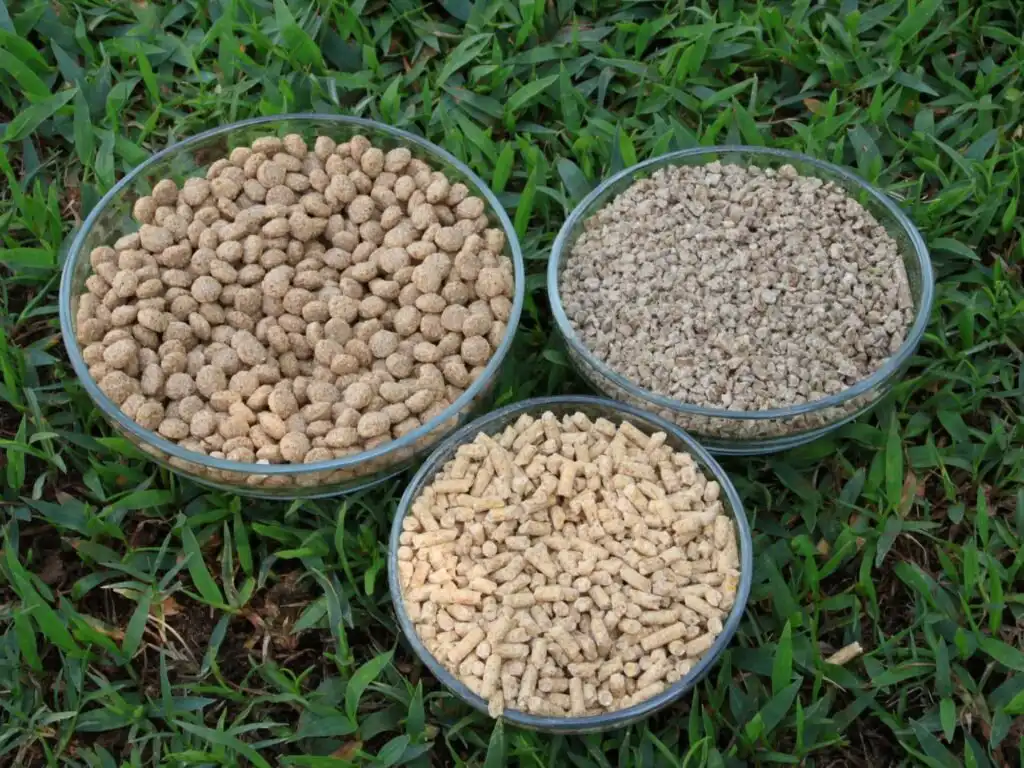
This is also why I am cautious about diets built mainly around homemade mixtures unless they have been properly formulated. A bowl can look wonderfully varied and still be nutritionally incomplete. Variety and balance are not always the same thing.
If your duck constantly ignores their regular feed but becomes frantic for treats, however, that does not automatically mean the feed is inadequate. As we discussed earlier, ducks are perfectly capable of holding out for something tastier. Muffin refusing to be impressed by pellets while campaigning for mealworms is not evidence of a nutritional emergency.
The goal is to look at the entire diet over time. Is your duck eating a complete feed appropriate for their age and life stage? Are treats staying a relatively small part of the diet? Are they maintaining a healthy body condition and producing normal droppings?
A balanced diet will not necessarily stop your duck from begging. Unfortunately, no feed manufacturer has yet developed a pellet capable of convincing a duck that they have had enough snacks. But a complete diet helps us feel confident that constant begging is much more likely to be behavior than a sign that something important is missing.
If you want to better understand what ducks actually need from their diet, I take a much deeper look at protein, fats, carbohydrates, vitamins, minerals, and other essential nutrients in my complete guide to the nutritional needs of ducks. And because choosing a bag of feed can be surprisingly confusing, I have also compared popular commercial duck feeds side by side, including their protein levels, ingredients, and nutritional differences, to help you decide which option may work best for your flock.
5. Your duck’s energy needs have increased
Sometimes, your duck seems hungrier because they genuinely need more food. Energy and nutrient requirements are not fixed. They change with age, activity, season, reproductive status, and what is happening inside the body.
A growing duckling, a hen producing eggs, and an adult duck resting through a warm summer afternoon do not have identical nutritional demands. When those demands increase, appetite may increase with them.
| Situation | Why Your Duck May Be Hungrier |
|---|---|
| Growth | Ducklings and juveniles need nutrients to build muscle, bone, feathers, and other tissues |
| Egg laying | Producing eggs requires energy, protein, calcium, and other nutrients |
| Molting | Growing an entirely new set of feathers requires substantial resources |
| Cold weather | Ducks use more energy to maintain their body temperature |
| Increased activity | More walking, swimming, foraging, and exploring can increase energy expenditure |
| Recovery | Healing and rebuilding tissue can change nutritional needs |
Growing Ducks Need Fuel
Ducklings grow at an astonishing rate. During the first weeks of life, they are building nearly everything at once, including bones, muscles, organs, and feathers. A healthy growing duck may therefore eat frequently and show a strong interest in food.
This is one reason ducklings need a feed appropriate for their stage of development. Their nutritional needs are different from those of mature pet ducks, and simply feeding them more of an inappropriate diet does not solve that problem.
Egg Production Is Nutritionally Expensive
Laying an egg requires far more than just calcium. A hen must supply energy, protein, fat, minerals, and other nutrients to produce the yolk, albumen, membranes, and shell.
During periods of frequent egg production, some hens may naturally eat more. They should have reliable access to a balanced diet appropriate for their reproductive needs, along with an appropriate calcium source.
Molting Requires New Building Material
Feathers may look lightweight, but replacing them is a major biological project. Feathers are made primarily of keratin, a protein, and producing new plumage requires amino acids and other nutrients.
Some ducks may eat more during a heavy molt. Others may temporarily eat less because molting can leave them uncomfortable or less active. What matters is providing a balanced diet that supports feather growth rather than simply adding unlimited high protein treats.
Cold Weather Can Increase Energy Needs
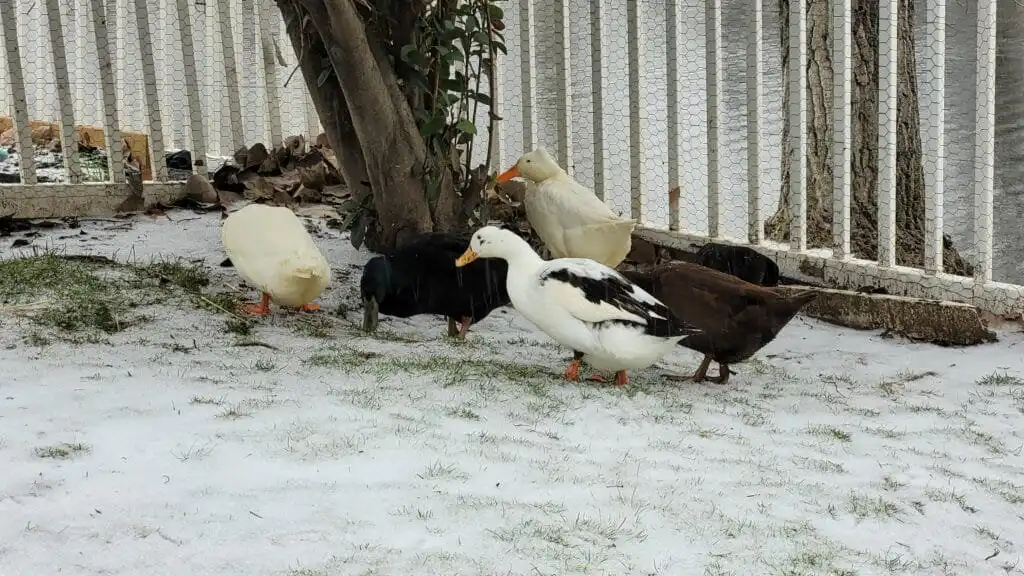
Ducks are remarkably well adapted to cold temperatures, but maintaining body temperature still requires energy. During colder weather, especially when ducks spend more time outdoors, appetite may increase as the body burns more fuel for thermoregulation.
This does not mean every duck needs to be fattened up for winter or given unlimited corn. Body condition still matters. A duck maintaining a healthy weight may simply need somewhat more of their regular balanced feed during periods of increased energy demand.
Activity Levels Matter Too
A duck spending the day swimming, foraging, exploring a large yard, or chasing flockmates uses more energy than a duck who spends much of the day resting.
Activity can also change seasonally. My own ducks are often far less active during the hottest part of a North Texas summer. During cooler weather, they may spend much more time exploring and foraging. Those changes in daily energy expenditure can influence appetite.
Recovery Can Change Appetite
Healing requires resources. Ducks recovering from an injury, illness, surgery, or a period of poor food intake may sometimes become noticeably hungrier as they regain strength and rebuild lost tissue.
A returning appetite is often encouraging, but recovery is also a time when I pay close attention to body weight and body condition. A duck who eats enthusiastically but continues to lose weight may not simply need a larger portion. That pattern deserves a closer look.
The key question is whether the increased appetite makes sense in context. A gradual increase in hunger during growth, laying, molting, cold weather, or recovery can be completely normal. A sudden and unexplained change, especially when accompanied by weight loss or other symptoms, is different and should not be ignored.
6. Your duck is bored and looking for enrichment
Sometimes, a duck asking for food is not truly hungry. They may simply be bored and looking for something interesting to do.
Foraging is a major part of normal duck behavior. Ducks naturally spend time dabbling, grazing, searching through vegetation, investigating mud, and looking for small edible treasures. In a pet setting, however, food can be much easier to obtain. A bowl of complete feed is convenient and nutritionally reliable, but it does not take very long to eat.
That can leave a lot of time in the day.
If your duck has learned that approaching you leads to treats, food can quickly become both a snack and a form of entertainment. The duck may not need more calories. They may simply have learned that you are the most interesting enrichment activity in the yard.
I see this with my own flock. Sometimes, my ducks are perfectly content doing their own thing until I walk outside. Suddenly, everyone is interested in me, following me around and checking whether I brought something edible. Their regular food is available, but apparently watching me empty the dishwasher through the back door is not nearly as exciting as convincing me to provide snacks.
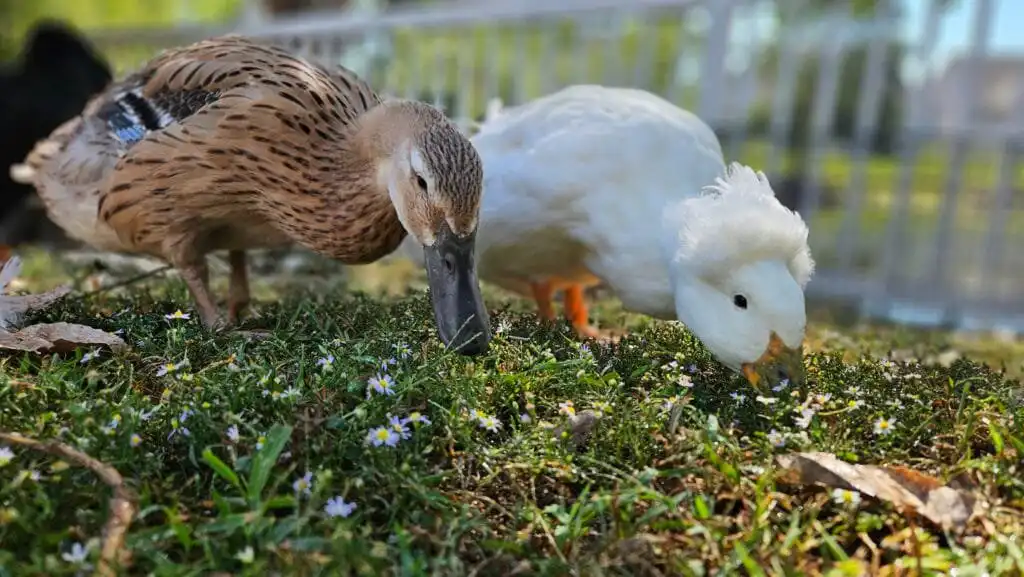
Instead of responding to every request for food with another handful of treats, I like to give my ducks opportunities to work for food and engage in natural behaviors. Scattering small amounts of appropriate foods across a safe area encourages walking and searching. Floating greens or peas in water allows ducks to dabble for them. Hanging leafy greens can make eating take longer, while access to safe grass, plants, mud, and natural foraging areas gives ducks opportunities to explore on their own.
Enrichment does not always have to involve food, either. Swimming, fresh water to investigate, changes in the environment, safe objects to explore, and simply having enough space to move around can all make a duck’s day more interesting.
This is also why I prefer to think about treats as part of an enrichment strategy, not just extra calories. A small amount of food that encourages ten minutes of searching, dabbling, or exploring can offer much more than the same food eaten from my hand in ten seconds.
If your duck seems to beg most when you appear, but then happily returns to exploring, swimming, preening, or resting when no snack arrives, boredom and learned behavior may be playing a bigger role than true hunger. Sometimes, your duck does not need another meal. They just need something interesting to do.
7. Competition is making your duck eat frantically
Some ducks do not just eat. They eat as though someone is about to steal the last meal on Earth.
In a flock, food is a shared resource, and ducks are very aware of what everyone else is doing. Even when plenty of feed is available, the presence of other ducks can create a sense of urgency. One duck starts eating faster, another joins in, and suddenly the entire flock is swallowing food as quickly as possible.
This does not always involve obvious aggression. A duck does not have to be chased away from the feeder to feel social pressure. Simply eating next to faster, more confident flockmates can encourage hurried eating and intense food seeking.
Personality matters too. Some ducks are naturally pushier around food, while others are more cautious. A confident duck may move from bowl to bowl checking what everyone else has, even when all the bowls contain exactly the same feed. Apparently, food in another duck’s bill always looks better.
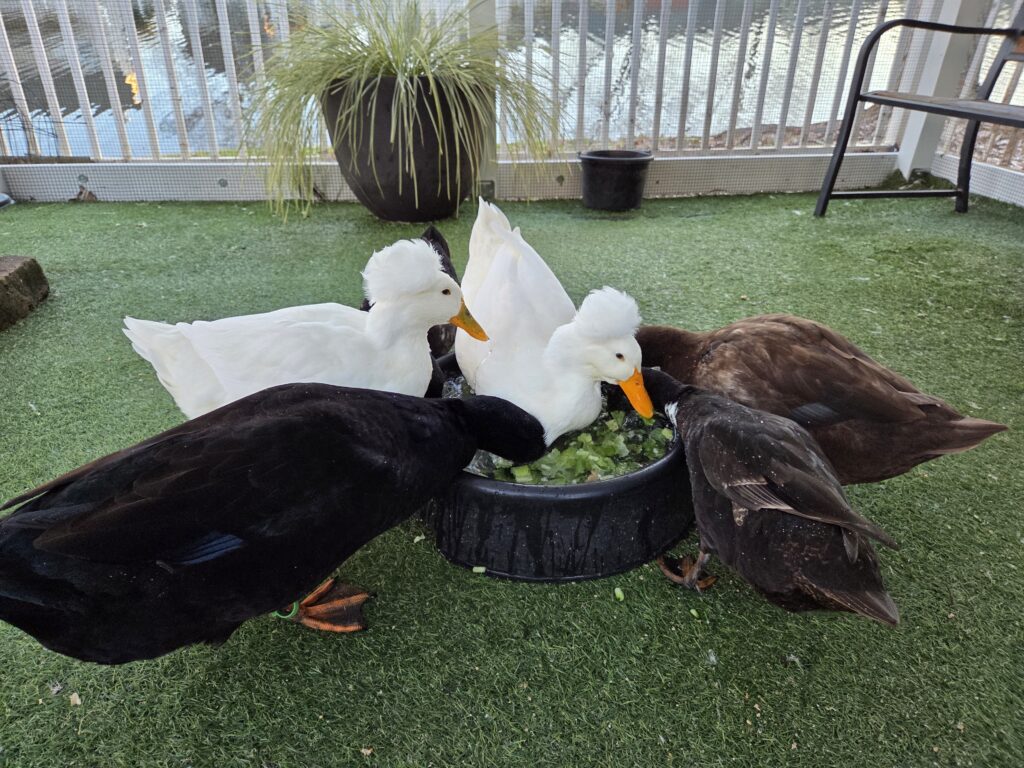
I see this in my own flock dynamics. My ducks have very different personalities and relationships, and those social dynamics can change how they behave around food. When certain ducks are separated or grouped differently, feeding behavior can change too. A duck who seems frantic in one group may eat much more calmly in another.
Past experiences can also influence behavior. Ducks that previously had inconsistent access to food or had to compete heavily for resources may continue to eat quickly even after they move into a home where food is reliably available. The behavior may persist because, from the duck’s perspective, eating while food is available has always been the safest strategy.
This is another reason I like multiple feeding stations. Feeders should be spaced far enough apart that one dominant duck cannot easily control all of them at once. In a flock with complicated relationships, visual barriers or temporary separation during meals may also help a more nervous duck eat without pressure.
Watch what happens around the feeder rather than looking only at how quickly the food disappears. Does one duck repeatedly check other bowls? Does someone eat faster when a particular flockmate approaches? Does a duck seem tense while eating but relax when fed separately?
A duck who eats frantically because of competition may not need more food. They may need more space, better feeder access, or a calmer opportunity to eat. Reducing social pressure can help us see whether the apparent constant hunger is really about appetite or simply about flock dynamics.
8. Parasites or health problems are increasing appetite
Most ducks who act hungry are simply enthusiastic about food. But occasionally, a noticeable increase in appetite can be connected to an underlying health problem.
The sign that concerns me most is not begging by itself. It is a duck who seems unusually hungry while losing weight or body condition despite eating well.
Internal parasites are one possible reason. A significant parasite burden can interfere with normal digestion, damage the intestinal tract, or reduce how efficiently a duck uses nutrients. Depending on the parasite involved, you may also notice abnormal droppings, weakness, poor feather condition, or reduced body condition.
However, I would never assume that a hungry duck automatically has worms. Ducks can carry some internal parasites without obvious illness, and not every parasite causes an increased appetite. Routine deworming just in case is not my preferred approach. If parasites are suspected, fecal testing and veterinary guidance can help identify whether treatment is actually needed and which medication is appropriate.
Problems with digestion or nutrient absorption can also create a mismatch between how much a duck eats and how well the body benefits from that food. A duck may consume plenty of calories but still lose weight because nutrients are not being digested, absorbed, or used normally.
Other illnesses can sometimes alter appetite as well. The important point is that increased hunger is a nonspecific sign. It does not tell us what is wrong on its own, and it should always be interpreted together with the rest of the duck’s condition.
I would pay closer attention if increased appetite occurs with:
- Weight loss or a more prominent keel bone
- Loss of breast muscle
- Persistent changes in droppings
- Vomiting or repeated regurgitation
- Reduced activity or weakness
- Poor feather condition
- Changes in drinking or urination
- A sudden and unexplained change from that duck’s normal behavior
This is why knowing your duck’s normal weight can be so valuable. Feathers can hide gradual weight loss remarkably well, and by the time a duck looks thin, the change may already be significant. I regularly recommend weighing pet ducks so you have a baseline for comparison when something seems different.
From My Flock: Monthly Duck Weigh-Ins
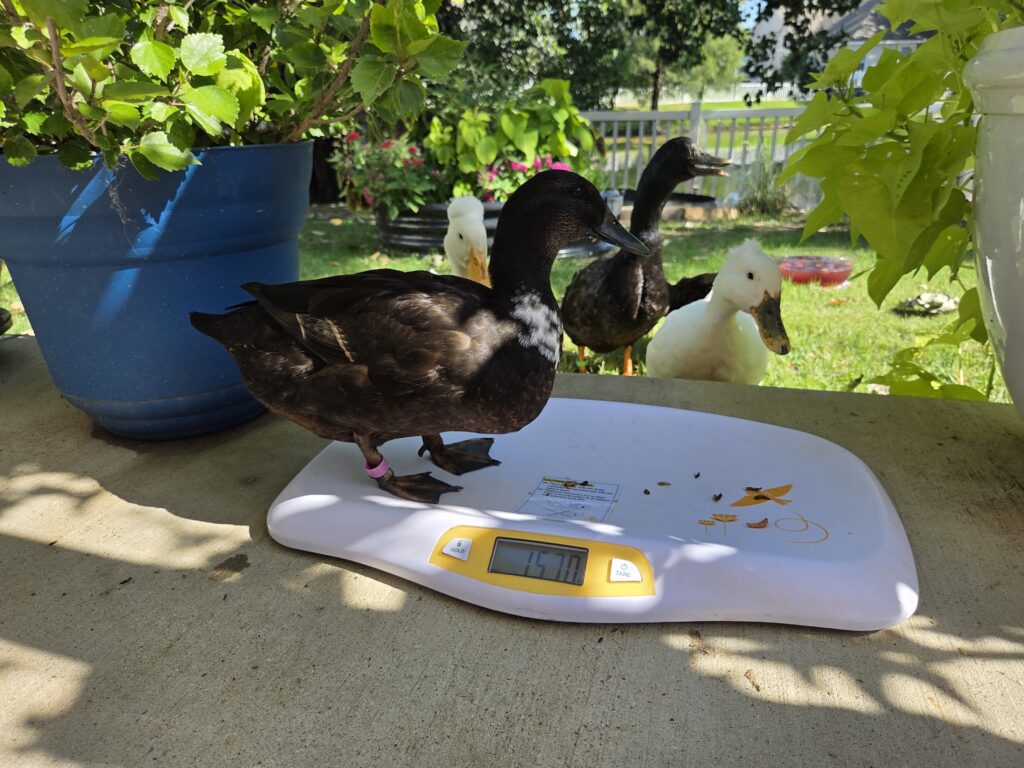
One of the simplest ways I monitor my ducks’ health is by weighing everyone once a month. We use a baby scale, which is large enough for a duck to sit or stand on comfortably and makes it easy to track small changes over time.
I record each duck’s weight so I know what is normal for that individual. Ducks vary considerably in healthy body size, so the number itself is often less important than the trend over time. A gradual or unexpected drop in weight can alert me to a problem before it becomes obvious under all those feathers.
Monthly weigh-ins also give us a valuable baseline. If one of my ducks becomes sick, stops eating, or suddenly seems unusually hungry, I can compare their current weight with their own normal history instead of guessing whether they look thinner.
What we use: We use a simple baby scale for our monthly flock weigh-ins. It gives the ducks enough room to sit or stand comfortably and is much easier to use than trying to balance a full-grown duck on a small kitchen scale. You can find the baby scale we use here.
A duck who has always been obsessed with food, maintains a stable weight, produces normal droppings, and behaves normally is very different from a duck who suddenly becomes ravenous and starts losing weight. The first may simply be a dedicated snack enthusiast. The second deserves a closer look and, if the pattern continues, a conversation with an avian veterinarian.
9. Your duck is simply extremely food motivated
Sometimes, after considering diet, energy needs, flock dynamics, and health, the explanation is much simpler: your duck just really, really loves food.
Ducks have individual personalities, and appetite-related behavior varies just as much as many other traits. Some ducks are casual eaters. They take a few bites, wander away, come back later, and somehow trust that the food will still be there.
Others behave as though every snack may be their last.
Muffin belongs firmly in the second category. She is, without question, the most food-motivated duck in our flock. She pays attention to where I am, what I am holding, and whether there is even the slightest possibility that food might be involved. A suspicious sound from a bag or container deserves immediate investigation.
Her favorite treats are mealworms, and she takes them very seriously. She may have access to her regular balanced feed, but that has absolutely no influence on whether she believes she also deserves a snack. According to Muffin, these are two completely unrelated matters.
Over time, you get to know what is normal for each duck. A duck who has always been highly food motivated, maintains a stable weight, has a healthy body condition, produces normal droppings, and remains active is very different from a duck who suddenly develops an unusually intense appetite.
That distinction is important because personality is part of the picture. We should not dismiss a genuine change simply because ducks generally love food, but we also do not need to turn every enthusiastic response to a treat bag into a medical concern.
The best comparison is often not your duck versus another duck. It is your duck today versus their own normal behavior over time.
If your lifelong snack enthusiast is still acting like the same lifelong snack enthusiast, there may be nothing wrong at all. Some ducks simply approach food with more passion than others.
And then there is Muffin, who would like me to clarify that she has never been fed even once in her entire life.
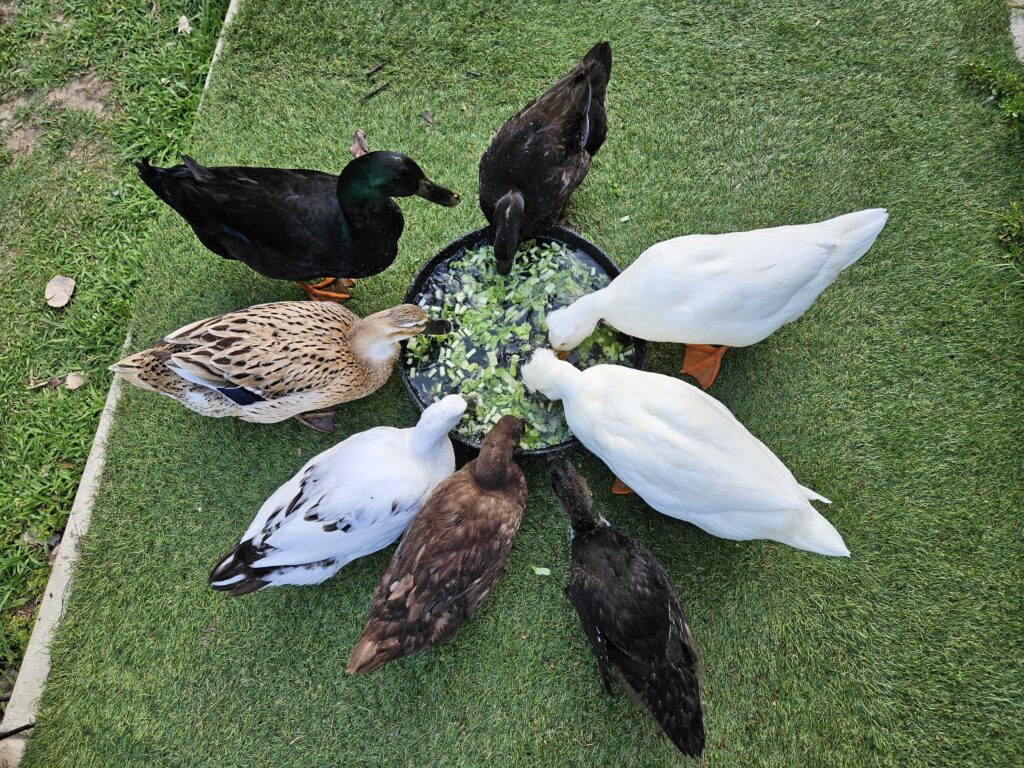
Always Hungry or Actually Losing Weight?
After working through the nine reasons above, this is the question I would ask next: Is your duck simply acting hungry, or is something changing physically?
Begging is subjective. Body weight and body condition give us much more useful information.
A duck who has always been enthusiastic about food, maintains a stable weight, has good muscle coverage, produces normal droppings, and behaves normally is usually very different from a duck who suddenly starts eating more while becoming thinner.
| Probably Normal Food Obsession | Worth a Closer Look |
|---|---|
| Has always been highly food motivated | Appetite has suddenly increased |
| Maintains a stable weight | Losing weight despite eating well |
| Has good muscle coverage | Keel bone is becoming more prominent |
| Produces normal droppings | Persistent changes in droppings |
| Remains active and behaves normally | Weakness, lethargy, or reduced activity |
| Eats regular balanced feed | Eats eagerly but continues losing condition |
| Begs mainly when humans or treats appear | Searches for food constantly throughout the day |
The most important pattern is increased appetite combined with weight loss. If a duck is eating more but becoming thinner, I would not simply increase treats and assume they need more calories. I would want to understand why the food they are eating is not translating into stable body condition.
Do Not Rely on Appearance Alone
Ducks can be surprisingly difficult to assess visually. Their feathers create a smooth outer silhouette and can hide gradual loss of muscle or body mass. A duck may look almost unchanged until you pick them up and realize that the keel bone feels much more prominent than before.
That is why I like to combine three things:
- Regular body weights
- Hands on body condition checks
- Knowledge of that individual duck’s normal behavior
Together, these tell us far more than begging alone.
When you handle your duck, gently feel the breast area on either side of the keel bone. You are not looking for one perfect shape that applies to every duck. Breed, body size, age, sex, and individual build all matter. Instead, learn what feels normal for your duck and pay attention to changes over time.
Look at the Whole Duck
Appetite should never be interpreted in isolation. If your duck seems unusually hungry, also look at their droppings, activity level, feather condition, drinking habits, reproductive status, and overall behavior.
A single enthusiastic meal usually tells us very little. A consistent pattern tells us much more.
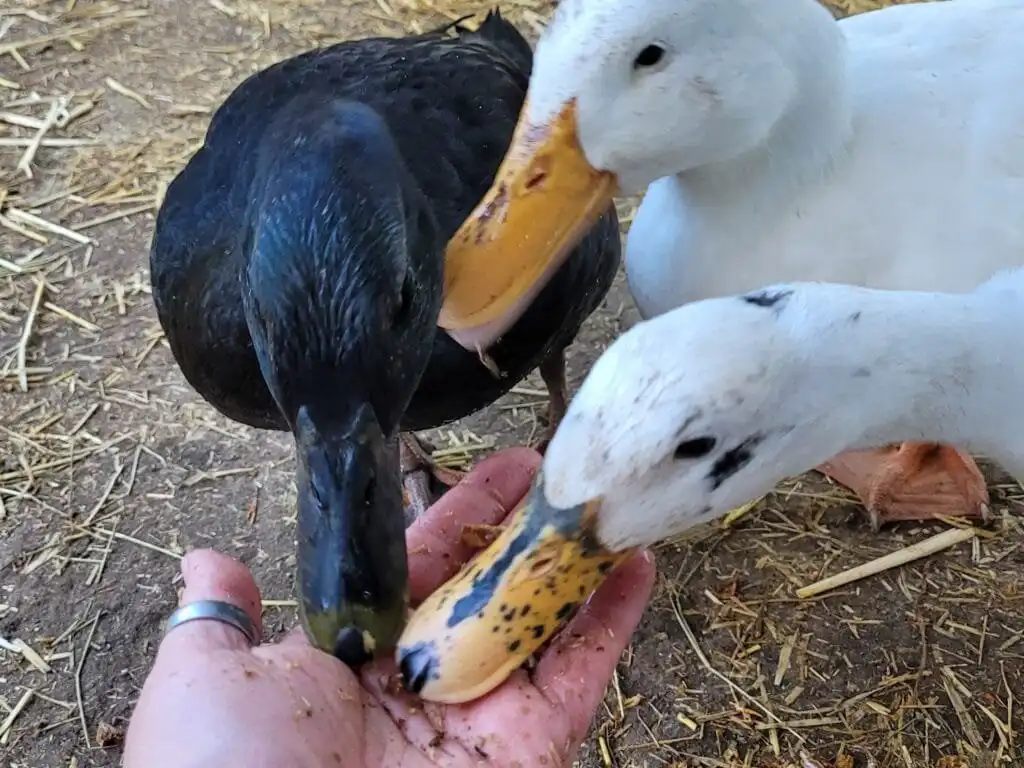
This is also why regular observations matter so much in pet ducks. When you know how Emma normally eats, how Muffin begs, or how Simon behaves around a feeder, changes stand out quickly. That familiarity with your own flock is one of the most valuable health monitoring tools you have.
If your duck is maintaining a stable weight and healthy body condition, constant begging may simply be part of their personality. But if increased hunger is accompanied by weight loss, muscle loss, abnormal droppings, weakness, or another unexplained change, it is time to look beyond the treat bag and investigate further.
When to See an Avian Vet
A duck who has always loved food and continues to maintain a stable weight, normal droppings, and typical activity levels usually does not need a veterinary visit simply because they beg for snacks.
However, I would contact an avian or exotic animal veterinarian if increased hunger is sudden, persistent, or accompanied by other changes.
Signs that deserve veterinary attention include:
- Weight loss despite a normal or increased appetite
- Progressive loss of breast muscle or a more prominent keel bone
- Persistent diarrhea or other significant changes in droppings
- Vomiting or repeated regurgitation
- Weakness, lethargy, or reduced activity
- A major change in drinking or urination
- Difficulty swallowing or keeping food down
- Any rapid decline in overall condition
If possible, bring information about your duck’s recent weights, diet, appetite changes, droppings, and when you first noticed the problem. Photos of abnormal droppings and a record of weight trends can also be helpful.
Depending on the symptoms, your veterinarian may recommend a physical examination, fecal testing for parasites, bloodwork, imaging, or other diagnostics. The goal is not to guess which condition might be causing increased hunger, but to determine whether the duck is actually losing condition despite eating and why.
I would not wait for a duck to look visibly thin before seeking help. Feathers can hide weight loss remarkably well, which is exactly why our monthly weigh-ins are such an important part of monitoring my own flock.
When it comes to appetite, a change from your duck’s normal pattern matters. You know your flock. If a duck who normally eats calmly suddenly becomes ravenous, or your lifelong food enthusiast starts losing weight despite eating well, that change is worth taking seriously.
Frequently Asked Questions About Hungry Ducks
Why does my duck act like it is starving all the time?
Most ducks are naturally food motivated and opportunistic eaters. They may beg, follow you, or become extremely excited about treats even when they have already eaten enough. If your duck maintains a stable weight, healthy body condition, normal droppings, and typical activity levels, constant food enthusiasm is usually normal.
Do ducks know when to stop eating?
Many ducks regulate their intake of a balanced diet reasonably well, especially when they have reliable access to food. However, highly palatable treats are different. A duck may continue eating mealworms, corn, or other favorite foods long after their nutritional needs have been met. This is one reason treats should remain a relatively small part of the overall diet.
Can you overfeed a duck?
Yes. Ducks can consume more calories than they use, especially when they receive frequent calorie dense treats and have limited opportunities for exercise. Over time, excessive calorie intake can contribute to obesity and other health problems. A balanced diet, appropriate portions, regular activity, and monitoring body condition are more useful than judging intake based on begging.
How much should an adult duck eat per day?
There is no single amount that is right for every duck. Intake varies with breed, body size, activity level, weather, reproductive status, access to forage, and the energy density of the feed. Feeding directions on a complete commercial feed provide a useful starting point, but your duck’s weight and body condition are the best indicators of whether their overall intake is appropriate.
Why is my duck still hungry after eating?
Your duck may not be truly hungry. Ducks quickly learn that begging can lead to treats, and many remain interested in favorite foods even after eating a balanced meal. Boredom, social competition, increased energy needs, and individual personality can also make a duck seem constantly hungry.
Should ducks have access to food all day?
Many pet duck owners provide regular access to a complete feed, especially when ducks can eat without excessive waste or spoilage. However, the best feeding routine depends on the flock, housing setup, body condition, and individual health needs. Ducks should always have access to fresh drinking water whenever food is available.
When should I worry about a duck that is always hungry?
The biggest concern is increased appetite combined with weight loss. Contact an avian or exotic animal veterinarian if your duck becomes unusually hungry while losing weight or muscle, developing abnormal droppings, becoming weak or lethargic, or showing other unexplained changes. A sudden change from your duck’s normal appetite also deserves closer attention.
The Bottom Line: Know Your Duck’s Normal
So, why is your duck always hungry? In most cases, the answer is reassuringly simple. Ducks are opportunistic eaters, they quickly learn that begging works, and some individuals are simply far more food motivated than others.
A duck who rushes toward the treat bag, follows you around the yard, or acts personally offended that breakfast happened twenty minutes ago is not necessarily underfed. If they are eating a balanced diet, maintaining a stable weight and healthy body condition, producing normal droppings, and behaving like themselves, their dramatic hunger may simply be part of who they are.
What matters most is change.
A sudden increase in appetite, especially when combined with weight loss, muscle loss, abnormal droppings, weakness, or another unexplained symptom, deserves closer attention. That is why I rely on more than appetite alone. Regular weigh-ins, hands-on body condition checks, and knowing what is normal for each individual duck help me recognize when something is truly different.
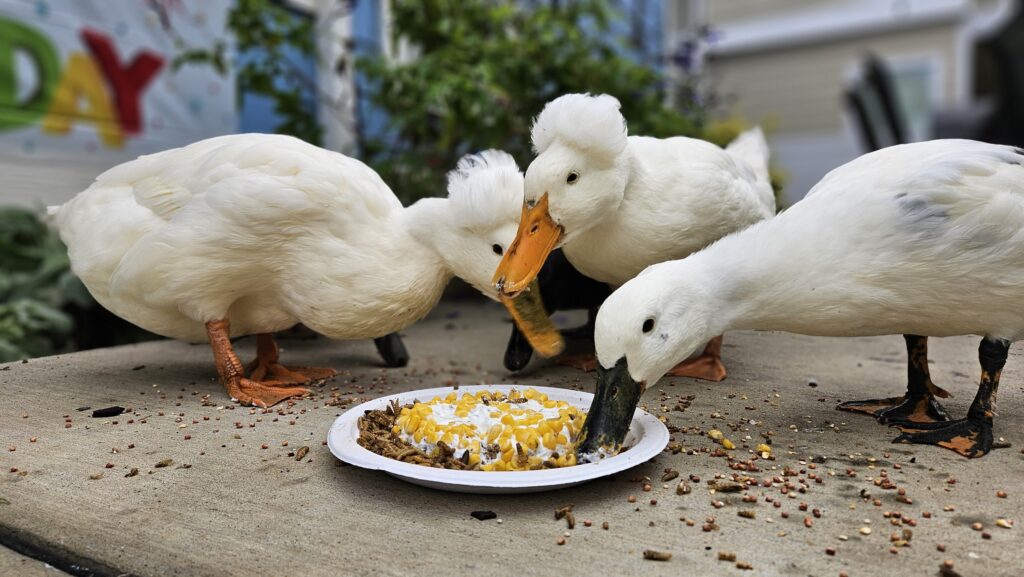
After years of living with ducks, I have learned that they are remarkably good at convincing us they have never been fed. Muffin has elevated this skill to an art form.
But I also know exactly what Muffin’s normal food obsession looks like. And that is the real advantage of knowing your flock well. When normal changes, you notice.
Your Next Step
Take a moment this month to weigh your ducks and record their baseline weights. You do not need a complicated system. A baby scale and a simple notebook or spreadsheet are enough to start tracking changes over time.
Then, take a closer look at what is actually going into the food bowl. If you are unsure whether your flock’s diet is meeting their needs, continue with my complete guide to duck nutrition or compare the commercial duck feeds I have reviewed side by side.
And the next time your duck finishes breakfast and immediately acts like they are starving?
Check their weight. Check their body condition. Check the bigger picture.
Then decide whether you are looking at true hunger or just a very convincing duck.
Further Reading & Resources
- Duck Nutrition Myths vs. Facts: What Your Flock Really Needs
- Feeding Ducks: A Guide to Keeping Your Flock Happy and Healthy
- The Ultimate Guide to Healthy Duck Snacks: Treats Your Ducks Will Love
- The Science of Duck Poop: What Healthy Droppings Should Look Like
- How to Conduct a Duck Health Check: A Comprehensive Guide
- Duck Digestive System: A Science-Backed Guide to Anatomy and Health
Fuel your flock with precision. Visit the Feeding & Nutrition Directory for our latest research on bio-appropriate diets.