
When to Take a Duck to the Vet (My Real-Life Checklist)

Last updated: June 30th, 2026
To keep our research-backed guides free, this site uses ads and affiliate links (earning a small commission at no cost to you). Everything here is created by a duck mom and PhD scientist, combining academic rigor with hands-on experience to provide practical, trustworthy advice for duck keepers everywhere. 🦆 Learn more
If you keep ducks long enough, you will face this question:
“Does my duck need to see a vet, or am I overreacting?”
It sounds simple, but in reality, this is one of the hardest decisions we make as duck parents.
Ducks are incredibly good at hiding illness. As prey animals, their survival instinct is to appear strong for as long as possible. That means by the time symptoms become obvious, the underlying issue is often already advanced. This is exactly why knowing when to take your duck to the vet can make the difference between a quick recovery and a life-threatening emergency.
I have learned this through real, sometimes scary experiences with my own flock. Krümel’s unexplained zinc poisoning did not start with dramatic symptoms. It started with subtle behavioral changes that could have easily been missed. Penny’s egg-binding scare began with a slightly different posture and less movement. Even Muffin, my tiny and usually curious little shadow, once showed me how powerful small changes can be when she suddenly became quiet and withdrawn.
Over time, I realized that relying on instinct alone was not enough. I needed a structured way to evaluate what I was seeing. Something that combined daily observation, basic physiology, and real-world experience into a clear decision-making process.
At the same time, I also learned something equally important:
not every change means an emergency.
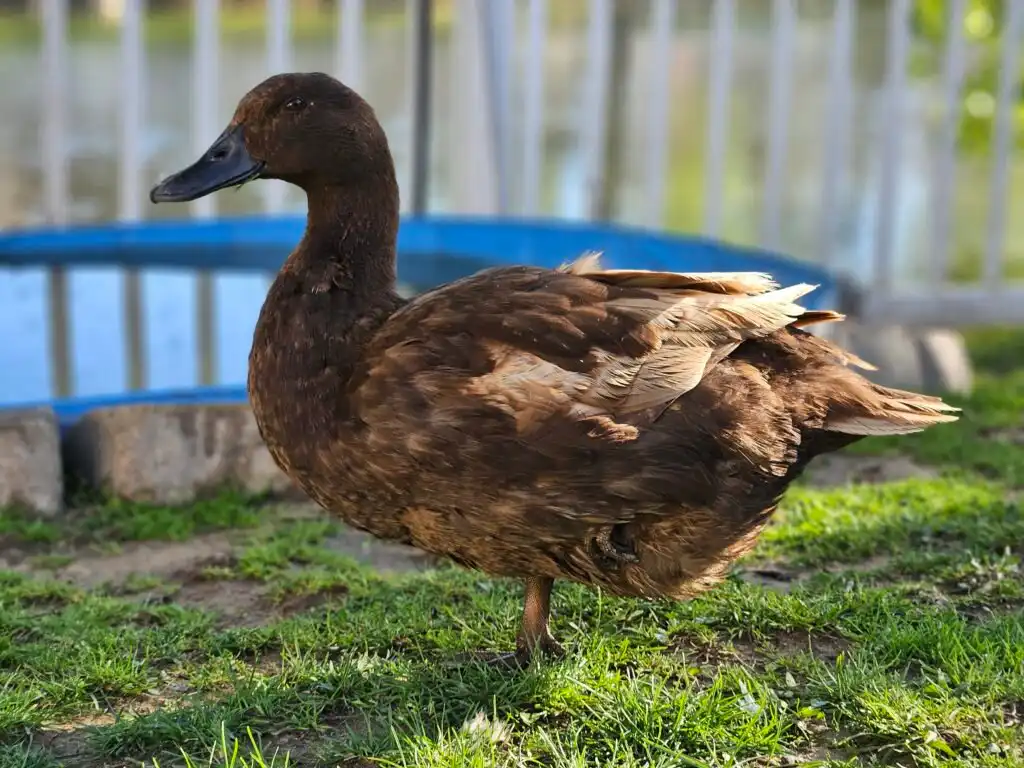
Ducks go through hormonal cycles, molting, social stress, and seasonal behavior shifts that can look alarming if you are not familiar with them. A broody duck can seem lethargic. A molting duck may appear low-energy. A bullied duck might isolate itself. Understanding these normal variations is just as important as recognizing true medical red flags.
And then there is the reality many of us face. Not everyone has immediate access to an avian vet. Appointments are not always available the same day. Emergency care can be expensive. Sometimes, you need to make decisions quickly and step in to stabilize your duck before professional care is possible.
This post is my personal, experience-based checklist. It is the exact framework I use to decide when to monitor, when to intervene at home, and when to go straight to the vet.
It is not about panic. It is about being prepared, observant, and confident in your decisions.
Because at the end of the day, one principle guides everything I do: If something feels off, I take it seriously.
Part of the Duck Health & Anatomy Hub, Evidence-based medical resources and anatomical research.
Quick Navigation: Jump to a Section
- Before Anything Else: Know Your Duck’s Baseline
- Normal Changes That Can Look Like Illness
- Step-by-Step: My Health Assessment Process
- When I Step In Myself (Reality of Duck Keeping)
- But Here Is the Critical Part: Know Your Limits
- Immediate Vet Situations (No Waiting)
- My Overall Philosophy
- The Financial Reality: Plan Ahead
- Real Examples From Our Flock (How Quickly Costs Add Up)
- A Personal Experience That Changed How I Respond to Illness
- Duck Vet Visit FAQs: When to Worry and What to Watch For
- Final Thoughts
- Further Reading & Resources
Before Anything Else: Know Your Duck’s Baseline
Before you can confidently decide when to take a duck to the vet, you need to understand what is normal for your specific duck.
This is where many well-meaning duck parents struggle, especially in the beginning. We look up symptoms, compare our ducks to others online, and try to match what we see to a general checklist. But here is the reality:
There is no universal normal duck behavior.
Every duck has its own baseline.
In my flock, the differences are obvious. Ronja is naturally quiet and observant. Simon is loud, reactive, and involved in everything happening around him. Krümel communicates constantly and seeks interaction, while Emma can shift between calm and very opinionated depending on the day. If I judged them all by the same standard, I would either miss important warning signs or worry unnecessarily.
That is why I always come back to one question: Is this normal for this duck?
Because when it comes to early illness detection, the most important signal is not a specific symptom. It is a deviation from that individual duck’s normal behavior, posture, or routine.
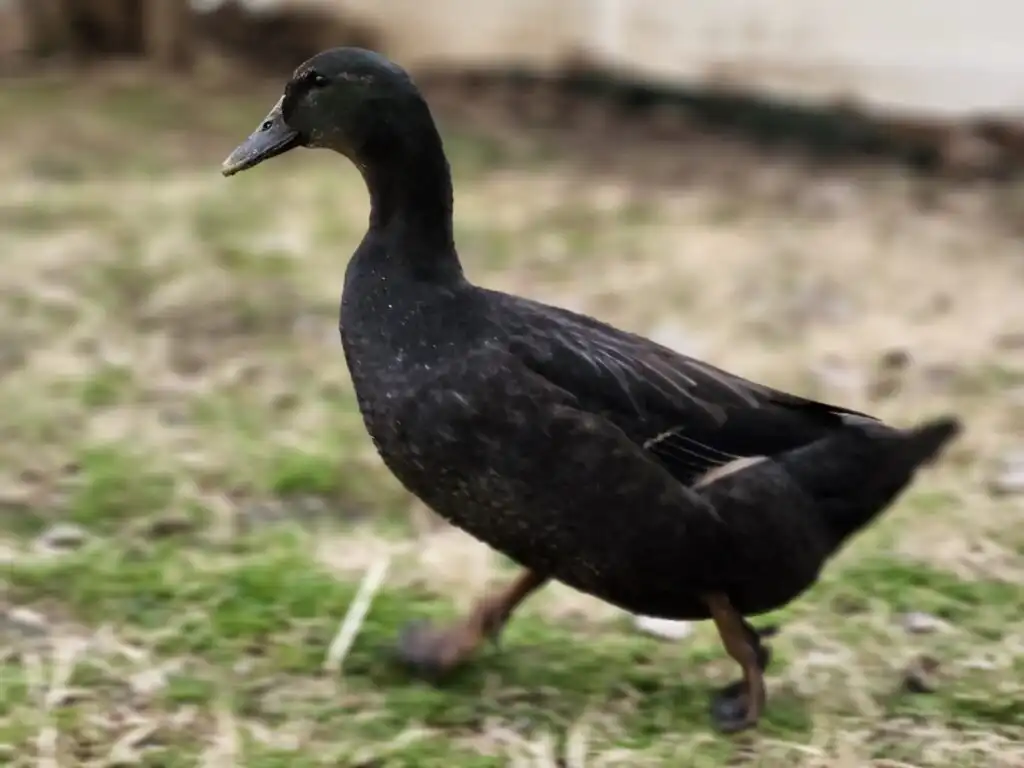
What baseline awareness actually means in practice
| Category | What Can Be Normal | What Triggers Concern |
|---|---|---|
| Activity level | Some ducks are naturally calm, others highly active | A noticeable drop in energy or engagement |
| Vocalization | Quiet vs very vocal personalities | Sudden silence or unusual sounds |
| Social behavior | Independent vs flock-oriented | Isolation or withdrawal from the group |
| Appetite | Varies by individual and time of day | Refusal of food, especially favorite treats |
| Rest patterns | Some ducks nap more than others | Excessive sitting or signs of weakness |
The key here is not perfection. You are not expected to analyze every movement.
But the more time you spend observing your ducks during healthy days, the easier it becomes to recognize when something shifts. And those shifts are often subtle at first. A duck that lingers instead of rushing to food. One that stays back while the others move forward. A small hesitation that was not there before.
Normal Changes That Can Look Like Illness
At the same time, not every change means your duck is sick. This is where many duck owners second-guess themselves.
Ducks go through natural cycles that can temporarily alter their behavior, and these can sometimes look concerning if you are not expecting them.
| Situation | What You May Notice | Why It Happens |
|---|---|---|
| Hormonal cycles | Mood changes, nesting behavior | Fluctuating reproductive hormones |
| Broodiness | Sitting more, reduced activity, defensive behavior | Instinct to incubate eggs |
| Molting | Lower energy, scruffy appearance | High metabolic demand for feather regrowth |
| Mating season | Increased noise, chasing, tension | Shifts in flock dynamics |
| Social stress | Avoidance, temporary isolation | Bullying or hierarchy changes |
I have seen ducks appear lethargic simply because they were broody. I have also seen ducks isolate themselves for a day because another duck was being particularly pushy.
This is why context matters.
Whenever I notice a change, I pause and ask myself:
“Does this make sense for the season, situation, or flock dynamics?”
Understanding your duck’s baseline is not just helpful. It is the foundation of everything that comes next. Because when something truly is wrong, it rarely starts with dramatic symptoms. It starts with a small change that only you can recognize.
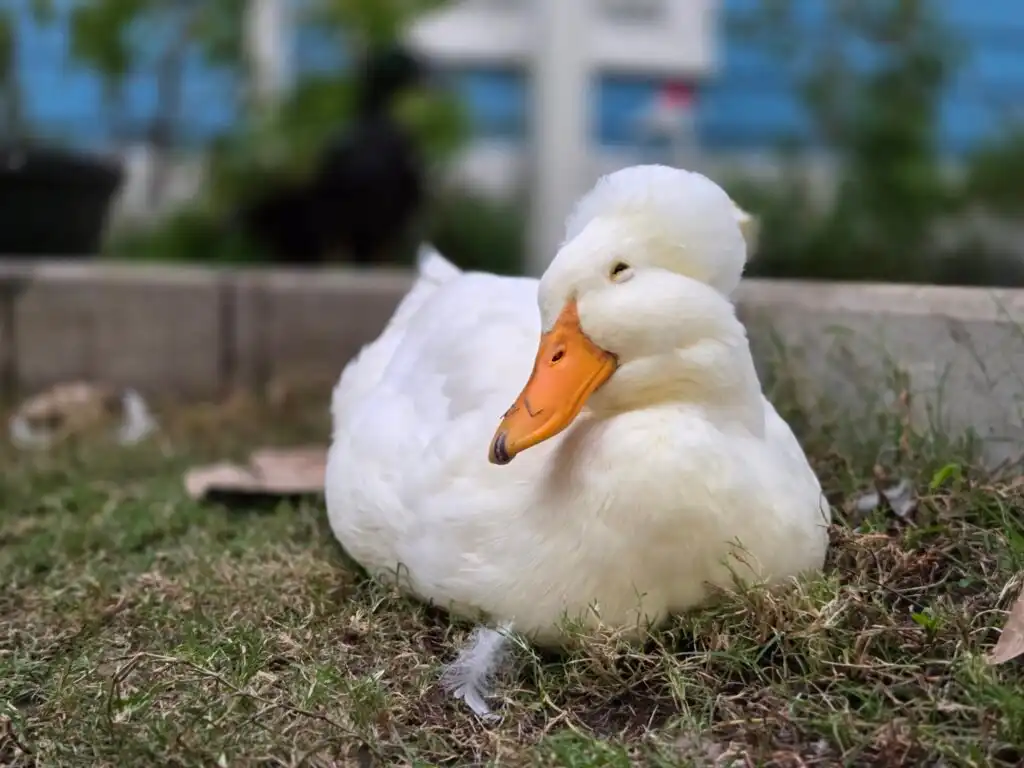
Step-by-Step: My Health Assessment Process
Once I notice that something feels “off,” I move into a more structured assessment mode.
This is important because panic rarely leads to good decisions. One of the biggest mistakes I see new duck owners make is either dismissing subtle symptoms for too long or assuming the worst immediately. Over time, I learned that having a consistent process makes these situations far less overwhelming. Instead of reacting emotionally, I work through a checklist and ask very specific questions.
The goal is to determine whether I am seeing:
- a temporary behavioral variation,
- a condition I can safely support at home,
- or something that requires veterinary care.
And because ducks hide illness so well, I pay very close attention to combinations of small symptoms rather than waiting for one dramatic sign.
1. Behavior Comes First
Behavior changes are often the earliest warning sign in ducks. In many cases, they appear long before obvious physical symptoms develop.
This is why I spend so much time simply observing my flock during normal daily routines. Healthy ducks are creatures of habit. They have predictable feeding routines, social patterns, favorite resting areas, and recognizable personalities. When one of those patterns suddenly changes, I notice.
Sometimes the changes are subtle. A duck may linger behind during feeding, seem less enthusiastic about treats, interact less with the flock, or stand quietly while the others forage. These may sound minor, but in ducks, subtle changes matter.
How I Interpret Behavioral Changes
| Observation | Possible Meaning | My Level of Concern |
|---|---|---|
| Slightly quieter than normal | Mild stress, fatigue, hormonal changes | Low, monitor |
| Reduced enthusiasm during feeding | Early illness or discomfort | Moderate |
| Staying separate from flock | Pain, weakness, stress, bullying | Moderate to high |
| Less vocalization than usual | Respiratory issue, lethargy, illness | Moderate |
| Not preening | Pain, weakness, systemic illness | High |
| Unresponsive or withdrawn | Severe illness or distress | Emergency |
One example I still remember clearly was when Muffin suddenly stopped following Krümel around. There were no dramatic symptoms. No limping. No breathing changes. She simply stopped engaging the way she normally did. That behavioral shift alone told me something was wrong.
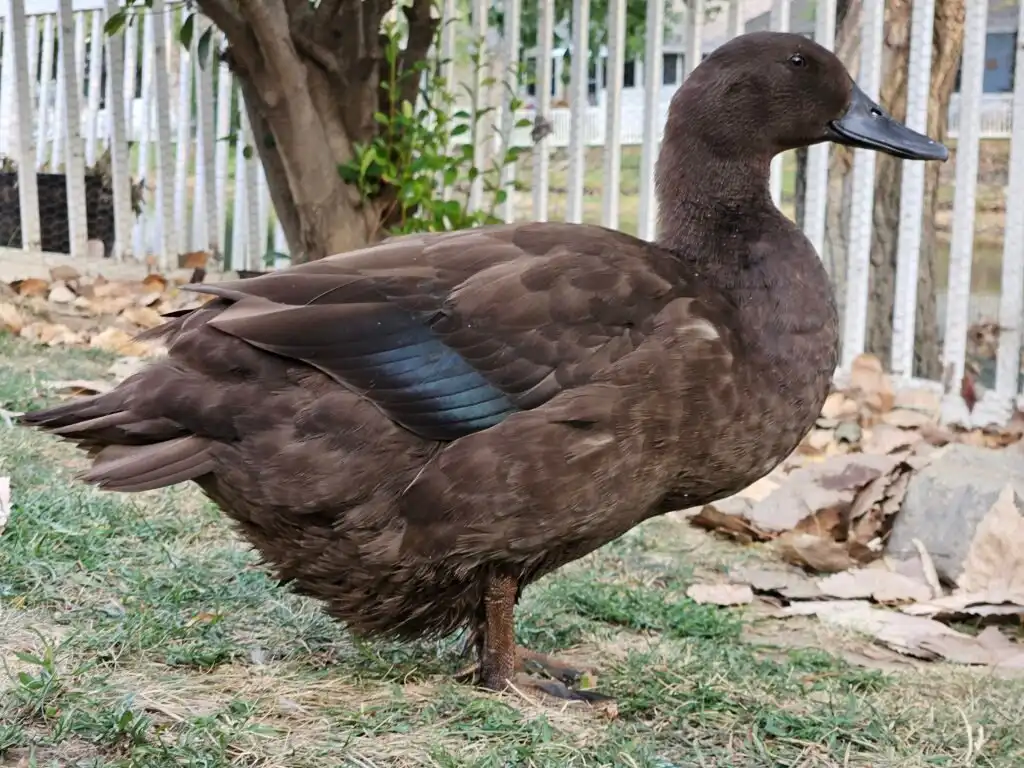
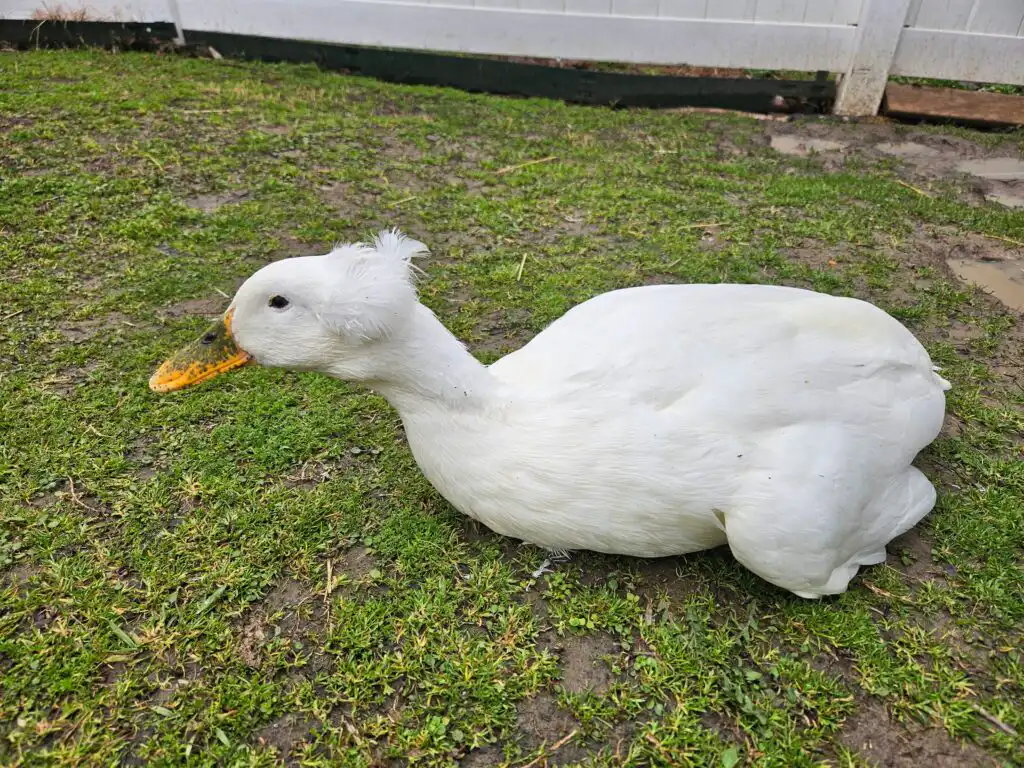
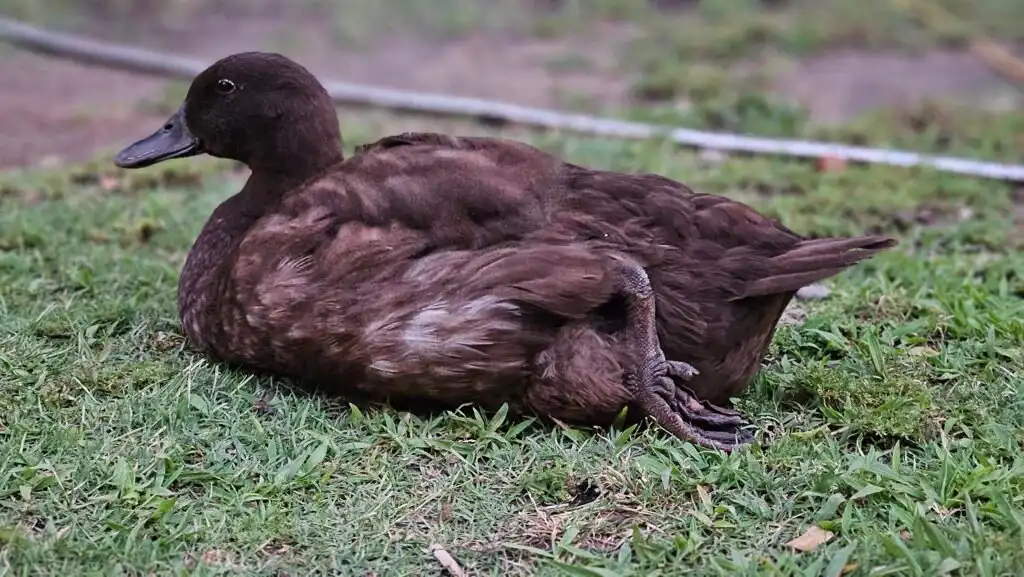
Krümel’s tail points downward instead of being carried neutrally, a sign that she is not feeling well.
2. Posture and Movement
After behavior, I assess posture and mobility. Ducks naturally compensate for pain remarkably well, which means movement changes can reveal problems that are otherwise hidden.
I pay close attention to how they stand, walk, distribute weight, and transition from sitting to standing. A healthy duck moves fluidly and confidently. Hesitation matters.
A duck with an off posture often looks subtly different before obvious illness develops. Instead of standing upright and balanced, the duck may appear uncomfortable, tense, weak, or withdrawn.
One of the most common things I notice is that the duck simply does not carry itself normally anymore. Healthy ducks usually stand alert with balanced posture and a more neutral or slightly elevated tail position. A sick duck often appears collapsed into itself.
Common Posture Changes I Watch For
| Posture Change | What It May Look Like |
|---|---|
| Hunched posture | The duck stands puffed up with the neck pulled in and the body rounded instead of relaxed |
| Wide stance | Legs are positioned farther apart than normal, often associated with abdominal or reproductive pain |
| Tail held downward | The tail points downward instead of being carried neutrally, often giving the duck a weak or uncomfortable appearance |
| Tail pumping | The tail moves noticeably up and down with breathing or straining |
| Leaning forward | The duck shifts weight forward and may appear weak or uncomfortable |
| Reluctance to stand upright | The duck stays low to the ground or sits more than usual |
| Uneven weight distribution | Limping or favoring one leg |
| Drooped wings | Wings hang lower than normal instead of resting neatly against the body |
| Neck tucked constantly | The duck keeps the head pulled back or tucked despite being awake |
Sometimes these changes are very subtle. A duck may simply look “uncomfortable” or not quite like itself before more obvious symptoms appear.
One thing I always emphasize is that posture should be evaluated relative to that duck’s normal baseline. Some ducks naturally stand differently or rest more often than others. What concerns me most is a noticeable change from their usual body language and posture.concerns me most is a noticeable change from their usual posture or body language.
Movement and Posture Assessment
| Sign | What It May Indicate | How Serious I Consider It |
|---|---|---|
| Normal upright posture | Healthy | Normal |
| Slight stiffness | Minor soreness or early arthritis | Monitor |
| Limping | Bumblefoot, sprain, injury | Moderate |
| Reluctance to walk | Pain, weakness, neurological issue | High |
| Hunched posture | Internal pain or illness | High |
| Wide stance | Reproductive distress, abdominal pain | High |
| Sitting excessively | Fatigue, illness, weakness | Moderate to high |
| Cannot stand | Severe systemic illness or injury | Emergency |
A wide stance in a laying female immediately raises concern for reproductive issues. Egg binding and egg yolk peritonitis can escalate quickly, and many ducks show only subtle posture changes early on.
3. Breathing Assessment (One of the Most Important Steps)
Respiratory symptoms are something I never take lightly.
Ducks have an extremely efficient respiratory system involving both lungs and air sacs. While this system supports their high oxygen demands, it also means that once breathing becomes compromised, decline can happen very quickly.
I always observe breathing while the duck is calm and resting because activity naturally increases respiratory effort.
Respiratory Assessment Checklist
| Symptom | Possible Cause | Urgency |
|---|---|---|
| Quiet, effortless breathing | Normal | Normal |
| Slight increase in breathing rate | Stress, heat, mild illness | Monitor |
| Tail bobbing | Respiratory distress | High |
| Audible wheezing or clicking | Infection or airway issue | High |
| Neck stretching to breathe | Airway compromise | Emergency |
| Open-mouth breathing at rest | Severe respiratory distress | Emergency |
| Cyanosis (bluish color) | Oxygen deprivation | Immediate emergency |
During Texas summers, heat stress can sometimes mimic respiratory disease, so I also consider environmental conditions carefully. Regardless of cause, breathing difficulty always pushes me toward veterinary care quickly.
4. Droppings: One of the Most Valuable Diagnostic Tools
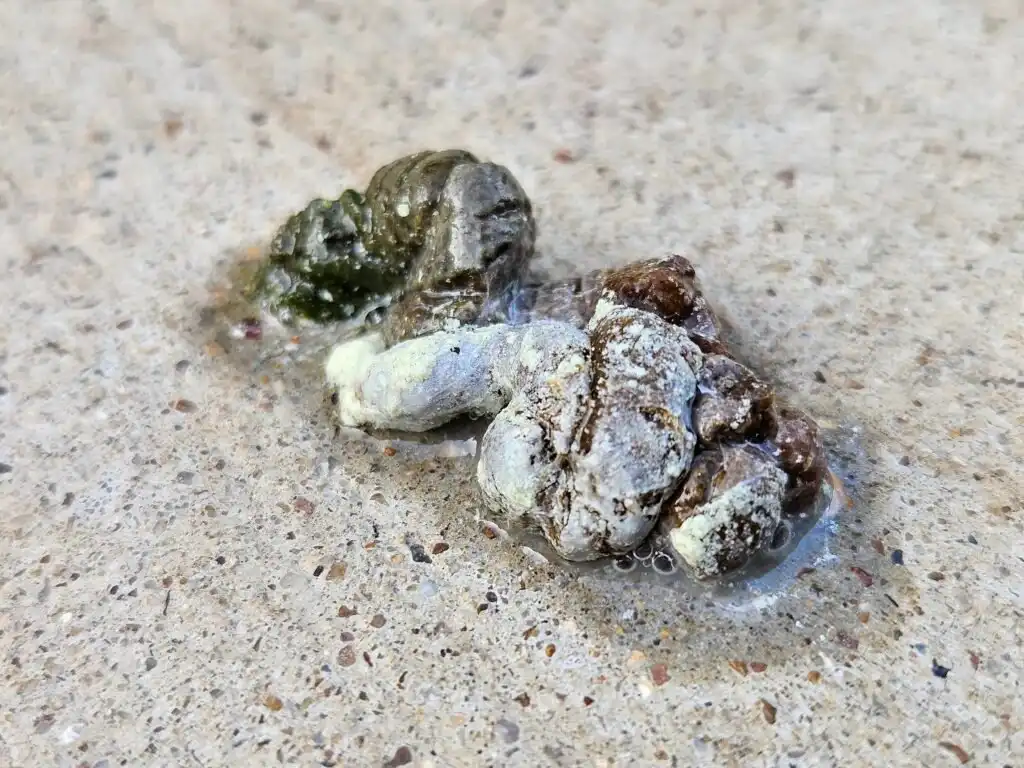
Checking droppings may not be glamorous, but it is one of the most useful ways to assess a duck’s health.
Duck droppings provide information about hydration, digestion, food intake, liver function, stress, and systemic illness. The challenge is that duck poop naturally varies depending on diet, hydration, laying status, and stress levels. Again, this is where knowing your ducks’ normal baseline becomes essential.
What I Look for in Droppings
| Observation | Possible Interpretation | Concern Level |
|---|---|---|
| Formed feces with white urates | Normal | Normal |
| Slightly loose after greens or treats | Dietary variation | Low |
| Persistent watery droppings | Stress, digestive issue, infection | Moderate |
| Bright green droppings | Reduced food intake, liver concerns | High |
| Yellow discoloration | Possible liver dysfunction | High |
| Blood present | Internal injury or severe disease | Emergency |
| No droppings | Obstruction or severe illness | Emergency |
Changes in droppings are often among the first measurable signs that something systemic is developing.
5. Appetite and Hydration
Appetite is one of my strongest indicators of overall health. Healthy ducks are usually very food motivated, so appetite changes almost always catch my attention.
What concerns me most is not necessarily eating slightly less feed. It is refusing favorite foods. If a duck that normally rushes over for mealworms suddenly shows no interest, I immediately take that seriously.
Appetite Evaluation
| Feeding Behavior | Interpretation | My Response |
|---|---|---|
| Eating normally | Stable | Continue observation |
| Eating slower than normal | Mild concern | Monitor closely |
| Reduced interest in treats | Significant warning sign | Increase monitoring |
| Skipping meals | Illness likely developing | Prepare for vet |
| Complete refusal to eat | Serious illness | Vet needed |
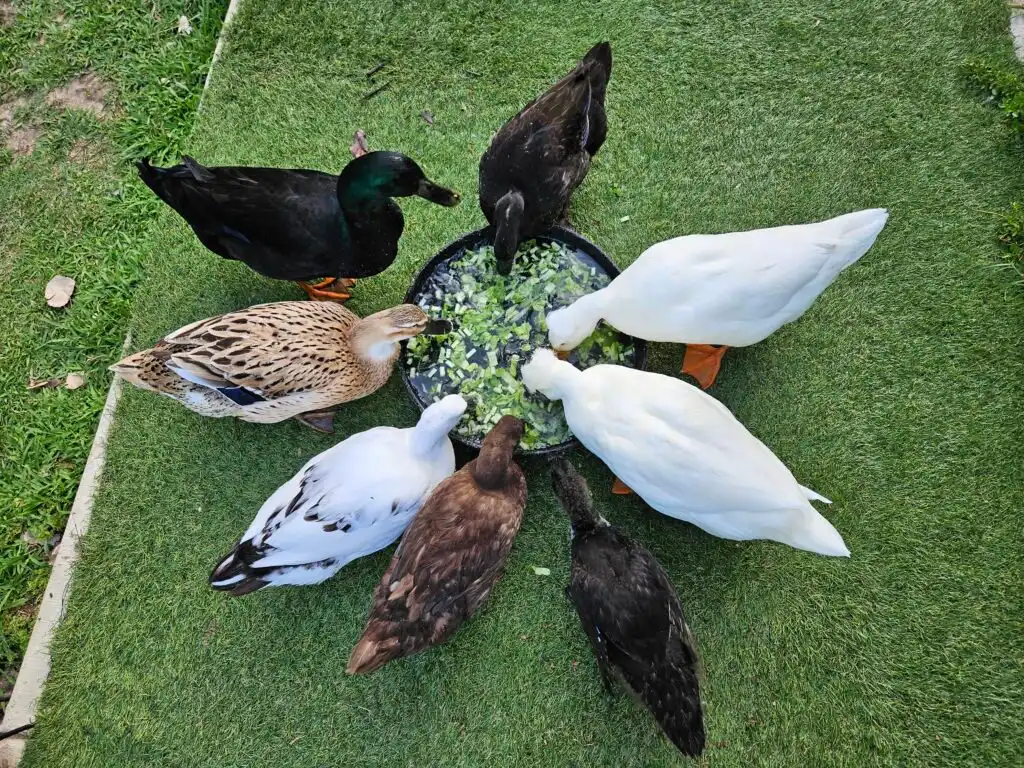
Hydration is equally important because ducks rely heavily on water for swallowing and digestion. A dehydrated duck can decline rapidly, especially during hot weather or illness.
6. Reproductive Assessment (Especially Important for Females)
Reproductive disease is one of the most common and dangerous health categories in domestic female ducks. Unfortunately, many reproductive problems progress quietly until they become severe.
Because of this, I monitor my girls very carefully during laying season and whenever I notice changes in posture or activity.
Reproductive Warning Signs
| Symptom | What It May Suggest | Urgency |
|---|---|---|
| Straining | Egg binding | High |
| Frequent nesting without laying | Reproductive dysfunction | Moderate to high |
| Tail pumping | Pain or egg distress | High |
| Wide stance | Abdominal discomfort | High |
| Swollen abdomen | Internal laying or fluid buildup | Emergency |
| Lethargy in laying female | Reproductive disease | High |
| Prolapse | Severe reproductive emergency | Immediate emergency |
Emma’s prolapse remains one of the most intense situations I have dealt with personally. It reinforced how quickly reproductive conditions can escalate and how important early intervention truly is.
7. Hands-On Physical Check
If I still feel concerned after observation, I perform a gentle physical exam. This is not about diagnosing complex disease at home. It is simply about gathering more information before deciding what comes next.
Over time, you become very familiar with what your ducks normally feel like physically. That familiarity becomes an incredibly valuable tool.
My At-Home Physical Exam
| Area Checked | What I Evaluate | Why It Matters |
|---|---|---|
| Breast muscle | Weight loss or muscle wasting | Indicates chronic illness |
| Abdomen | Soft, swollen, fluid-filled, firm | Reproductive or internal disease |
| Feet | Cuts, swelling, warmth, bumblefoot | Mobility and infection |
| Eyes | Clarity, swelling, discharge | Infection or systemic illness |
| Nares | Cleanliness and discharge | Respiratory disease |
| Feathers | Condition and cleanliness | Grooming and overall health |
Even small abnormalities can help complete the bigger picture when combined with behavioral and physical changes.
When I Step In Myself (Reality of Duck Keeping)
Let’s talk honestly about the reality of duck keeping for a moment.
Not everyone has immediate access to an avian vet. Many duck owners live hours away from experienced poultry or waterfowl veterinarians. Same-day appointments are often unavailable, emergency clinics may not treat birds, and sometimes emergencies happen at night, on weekends, or during storms when getting help immediately is simply not possible.
I think it is important to acknowledge this reality openly because many duck owners end up feeling guilty or ashamed when they cannot get instant veterinary care. The truth is that in the real world, there are situations where you may need to provide supportive care first while actively working on getting veterinary help.
Over the years, I have had moments where I absolutely had to step in immediately.
Emma’s prolapse is probably the most intense example. That was not a monitor and wait situation. She needed help right then. I had to physically assist her in passing the egg while also managing the prolapse and trying to reduce further trauma until she could receive veterinary evaluation.
Experiences like that taught me something very important:
Every duck owner should learn at least basic supportive care skills.
That does not mean trying to replace a veterinarian or attempting advanced procedures beyond your comfort level. It means being prepared to stabilize and support your duck while arranging professional care.
Supportive care can make an enormous difference in the outcome of an illness or emergency, especially during the first few hours.
Situations Where I May Start Immediate Supportive Care
| Condition or Concern | Supportive Care I May Provide |
|---|---|
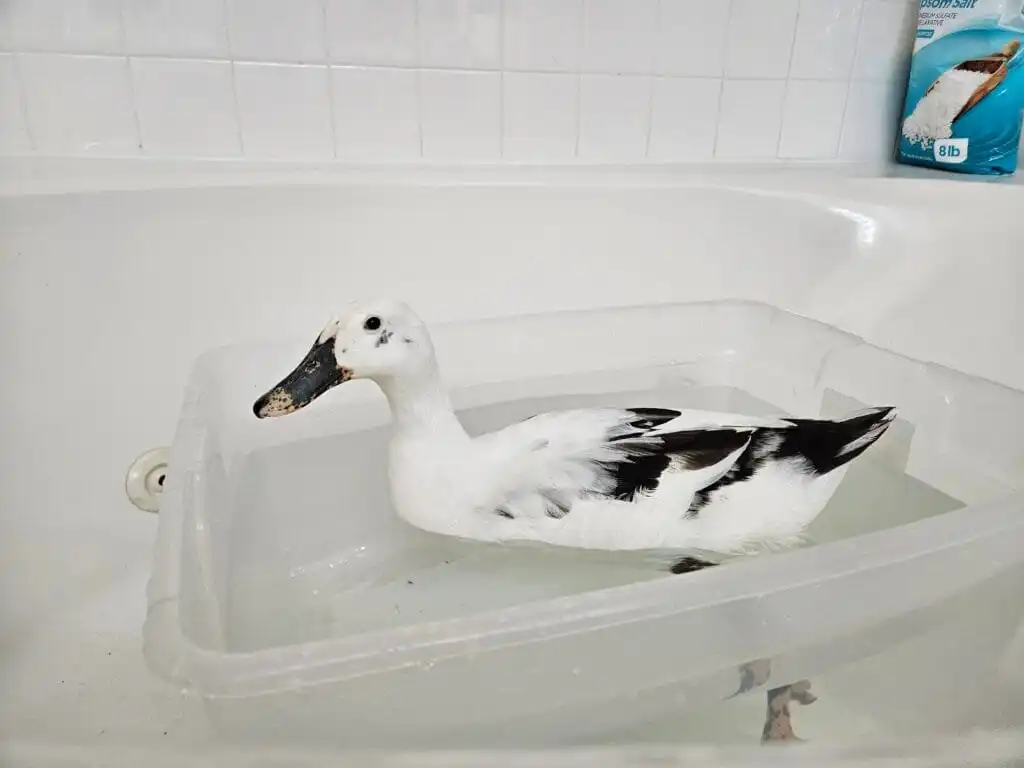
| Early egg binding signs | Warm soak, humidity, calcium support, lubrication |
| Mild dehydration | Fluids and electrolytes |
| Heat stress | Cooling measures and hydration |
| Early-stage bumblefoot | Cleaning, bandaging, reducing pressure |
| Minor wounds or cuts | Wound cleaning and monitoring |
| Weakness or reduced appetite | Warmth, hydration, supportive feeding |
In many situations, supportive care is less about treating the underlying disease and more about preventing secondary complications while arranging professional evaluation.
For example, warmth helps conserve energy in sick ducks because they often struggle to regulate body temperature properly. Hydration is critical because ducks rely heavily on water for digestion and swallowing. Reducing stress can also make a surprisingly large difference, especially in flock animals that may become overwhelmed or bullied when ill.
My General Supportive Care Priorities
| Priority | Why It Matters |
|---|---|
| Warmth | Helps conserve energy and stabilize sick ducks |
| Hydration | Prevents rapid decline and supports organ function |
| Nutrition | Maintains strength during illness |
| Reduced stress | Helps prevent additional physical strain |
| Quiet monitoring | Allows closer observation of symptoms |
When one of my ducks is unwell, I often temporarily move them indoors or into a quieter recovery setup where I can monitor breathing, droppings, food intake, and activity more closely. It also protects them from flock stress, which can become surprisingly intense when a duck is weak or vulnerable.
At the same time, supportive care has limits. It is not a substitute for diagnostics, imaging, medications, or professional treatment when those are needed. The goal is not to avoid veterinary care. The goal is to stabilize and support your duck responsibly until you can get there.
And honestly, this is one of the biggest mindset shifts in experienced duck keeping: Sometimes helping your duck starts long before you walk into the veterinary clinic.
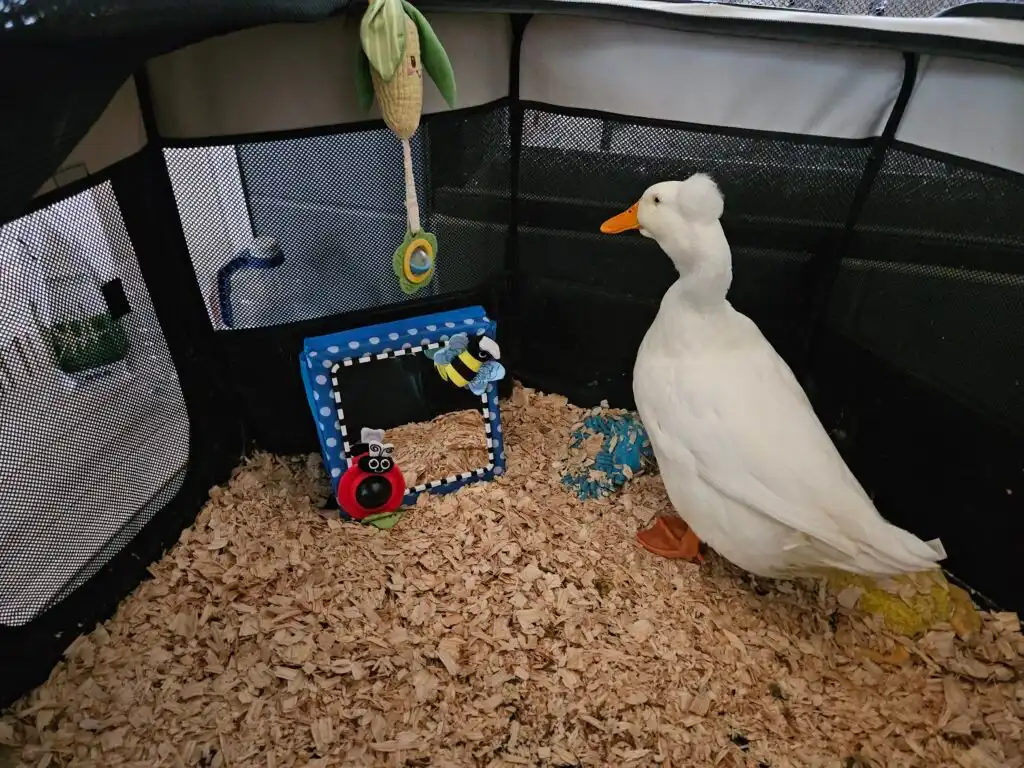
Recovery Setup Tip
Soft foldable playpens make excellent temporary recovery or duck ICU setups during illness or injury. They are easy to clean, portable, and allow you to closely monitor food intake, droppings, hydration, breathing, and behavior in a quiet, low-stress environment. I regularly use them indoors for sick or recovering ducks that need supportive care and closer observation away from the flock.
But Here Is the Critical Part: Know Your Limits
One of the hardest parts of duck keeping is knowing when supportive care is enough and when a situation has moved beyond what you can safely handle at home.
Over time, I have learned that confidence can be both helpful and dangerous. Experience teaches you how to stabilize a duck, recognize patterns, and manage certain minor conditions early. But experience should never turn into complacency.
There is a point where observation and supportive care are no longer appropriate on their own. For me, the biggest deciding factor is progression. If a duck is:
- improving,
- remaining stable,
- eating,
- drinking,
- and behaving relatively normally,
I may continue supportive care while monitoring very closely.
But if symptoms worsen, new symptoms appear, or there is no meaningful improvement within a reasonable time frame, I escalate quickly.
I always remind myself that ducks often compensate extremely well until suddenly they cannot anymore. A duck that looked mostly okay in the morning can become critically ill by evening.
How I Personally Decide Whether Home Care Is Still Appropriate
| Situation | My Interpretation | What I Usually Do |
|---|---|---|
| Mild symptoms improving with supportive care | Likely stable for continued monitoring | Continue supportive care |
| Mild symptoms but no improvement after 24 hours | Underlying issue may be progressing | Schedule vet visit |
| Appetite worsening | Systemic illness becoming more likely | Escalate quickly |
| Increased lethargy or isolation | Compensation may be failing | Vet visit |
| New respiratory symptoms | Situation becoming unstable | Immediate evaluation |
| Multiple symptoms developing together | Systemic illness likely | Veterinary care needed |
| My gut feeling says something is wrong | Experience-based concern | I take it seriously |
That last one matters more than people realize.
There have been several times when I could not initially identify one dramatic symptom, but something about the duck simply did not feel right. Krümel’s zinc poisoning was one of those situations. The early signs were subtle, but her overall demeanor had changed enough that I knew something was wrong.
And honestly, I have never regretted taking a duck in too early.
I have regretted waiting too long.

Immediate Vet Situations (No Waiting)
Some situations fall completely outside the monitor and reassess category.
These are the moments where I stop debating and move directly into emergency mode.
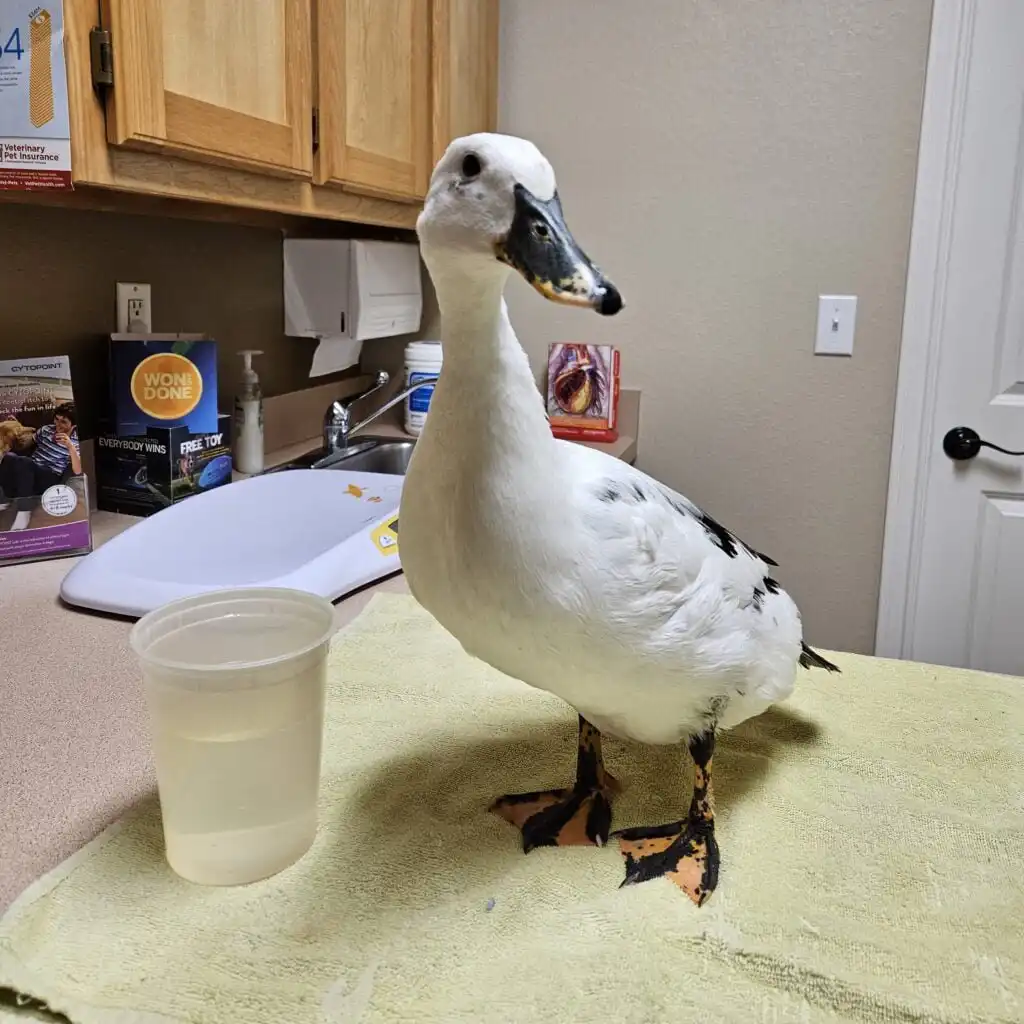
One thing I have learned with ducks is that truly severe symptoms often appear late. By the time a duck visibly struggles to breathe, collapses, or becomes profoundly lethargic, they are usually already very sick.
That is why certain symptoms immediately override everything else for me.
Symptoms That Trigger Immediate Veterinary Care
| Symptom | Why It Is Dangerous |
|---|---|
| Open-mouth breathing | Severe respiratory distress |
| Tail bobbing while breathing | Increased respiratory effort |
| Inability to stand or walk | Severe weakness, injury, or neurological issue |
| Neurological symptoms | Possible toxin exposure, infection, or trauma |
| Severe lethargy | Advanced systemic illness |
| Active bleeding | Risk of shock or major injury |
| Large wounds or predator injuries | High infection risk and internal trauma |
| Persistent straining | Egg binding or reproductive emergency |
| Prolapse | Tissue damage and rapid deterioration risk |
| Suspected toxin ingestion | Heavy metal or chemical exposure can worsen quickly |
| Complete refusal to eat or drink | Rapid decline risk in ducks |
Respiratory symptoms are especially high on my personal emergency list. Ducks have a very specialized respiratory system, and once breathing becomes compromised, they can deteriorate rapidly.
Reproductive emergencies are another category I take extremely seriously. Egg binding, internal laying, egg yolk peritonitis, and prolapses can all become life-threatening far faster than many people realize.
Emma’s prolapse reinforced that reality for me in a very intense way. That situation changed from concerning to critical incredibly quickly, and it required immediate intervention while arranging veterinary care.
Predator injuries are another example where ducks may initially appear more stable than they really are. Ducks can hide shock remarkably well. What looks like just a few missing feathers may actually involve puncture wounds, crushed tissue, or internal trauma beneath the surface.
The Wait and See Trap
One of the most dangerous phrases in duck keeping can be:
“Let’s just see how she looks tomorrow.”
Sometimes monitoring is appropriate. But when severe symptoms are involved, waiting often means losing valuable treatment time.
This is especially true because ducks instinctively mask weakness. By the time symptoms look dramatic to us, the condition may already be advanced.
That does not mean panicking over every small change. It means understanding that there is a line between cautious monitoring and dangerous delay.
And when I am uncertain where that line is, I almost always choose the safer option.
Looking for an Avian Vet?
Finding veterinary care for ducks can be challenging, especially during emergencies. The Association of Avian Veterinarians offers an online vet finder tool that can help you locate avian and exotic veterinarians in your area.
My Overall Philosophy
At the end of the day, my approach is built around one core principle:
Early action saves ducks.
That action may mean:
- supportive care,
- closer monitoring,
- adjusting the environment,
- or going straight to the vet.
But doing something early is almost always better than waiting for symptoms to become undeniable.
Because ducks rarely give us dramatic warnings at the beginning.
Most of the time, they whisper first.
The Financial Reality: Plan Ahead
This is the part of duck ownership that many people are not fully prepared for.
Most new duck owners budget for feed, bedding, pools, treats, and housing. Those are the visible, everyday expenses. What often catches people off guard is the cost of medical care, especially emergency care.
And unfortunately, ducks are very good at getting sick or injured at the worst possible times.
A simple veterinary visit can quickly become:
- an emergency exam,
- bloodwork,
- radiographs,
- medications,
- hospitalization,
- surgery,
- or repeated follow-up appointments.
By the time diagnostics and treatment are combined, costs can escalate much faster than many people expect.
I think it is important to talk about this openly because financial hesitation can delay care during situations where time truly matters. When a duck is struggling to breathe, egg bound, attacked by a predator, or dealing with toxin exposure, every hour counts.

Common Veterinary Costs Duck Owners May Encounter
| Veterinary Service | Estimated Cost Range |
|---|---|
| Basic veterinary exam | $90–200 |
| Emergency exam | Often higher than standard exam |
| Bloodwork | $80–500+ |
| Radiographs (X-rays) | $80–150 per image |
| Medications | $30–200 per medication |
| Hospitalization | $80–150 per day |
| Surgery | $500+ |
These costs vary significantly depending on your location, clinic type, emergency status, and the complexity of the case. Avian and exotic veterinarians are also more specialized, which often increases costs compared to standard dog and cat care.
And importantly, many duck emergencies involve multiple diagnostics and treatments together.
Krümel’s zinc poisoning is a good example from my own flock. What initially looked like vague reproductive issues eventually involved bloodwork, repeated veterinary visits, imaging, antibiotics, hormone therapy, and several rounds of chelation treatment. Cases like that can become emotionally and financially overwhelming very quickly.
Reproductive conditions are another category where expenses can add up over time. Ducks with chronic laying problems may require repeated hormone implants, emergency visits, medications, imaging, or long-term monitoring.
That is why I strongly encourage duck owners to prepare financially before an emergency happens.
Real Examples From Our Flock (How Quickly Costs Add Up)
Over the years, we have unfortunately had several medical emergencies in our flock. One thing became very clear very quickly: Duck veterinary costs can escalate fast, especially during emergencies.
Real Veterinary Examples From Our Flock
| Duck | Medical Issue | Included Care | Approximate Cost |
|---|---|---|---|
| Krümel | Initially suspected reproductive issue | Exam, radiographs, medications, calcium injection | $517 |
| Penny | Egg binding | Exam, X-rays, injections, hospitalization | $558 |
| Simon | Severe phallus injury | Partial phallus amputation surgery | $655 |
| Simon | Emergency nighttime prolapse visit | Emergency exam and temporary stitching | $716 |
These examples also do not include:
- follow-up visits,
- repeat medications,
- repeat bloodwork,
- hormone implants,
- or supportive care supplies at home.
This is why I always encourage duck owners to prepare financially for emergencies whenever possible. When something serious happens, having a plan in place makes decision-making much easier and faster.
What I Recommend Every Duck Owner Plan For
| Preparation | Why It Matters |
|---|---|
| Emergency veterinary fund | Prevents delays during urgent situations |
| Transportation plan | Emergencies rarely happen conveniently |
| Avian vet contact information | Saves valuable time |
| Basic first aid supplies | Allows immediate supportive care |
| Recovery setup | Helps stabilize sick or injured ducks |
Even setting aside a small amount regularly can make a huge difference over time. The goal is not to prepare perfectly for every possible emergency. The goal is to reduce panic and hesitation when something serious happens.
Because in emergencies, decision-making becomes much harder when finances are uncertain.
Pet Insurance for Ducks Does Exist
This is something many duck owners do not realize.
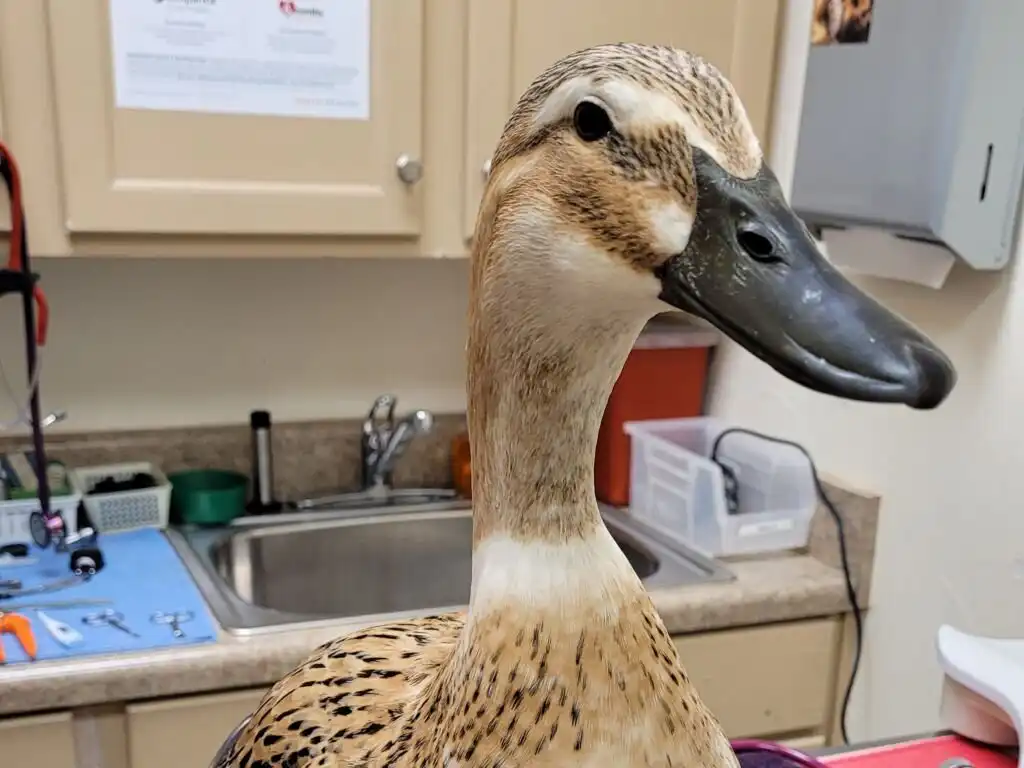
There are exotic pet insurance plans that may cover ducks and other pet birds, depending on the provider and policy details. Coverage varies significantly, and not every company accepts waterfowl, so it is important to read the fine print carefully and confirm coverage directly with the insurer.
Some plans may help cover:
- emergency visits,
- diagnostics,
- medications,
- surgery,
- or hospitalization.
However, pre-existing conditions are usually excluded, and coverage limitations for exotic species can differ substantially from dog and cat policies. Also, keep in mind that they charge per pet, so with a larger flock, it can become quite expensive.
Insurance is not the right choice for everyone, but it can provide peace of mind, especially for owners with ducks that have chronic reproductive issues or a history of medical complications.
The Emotional Side of Financial Decisions
This is also something many duck owners quietly struggle with.
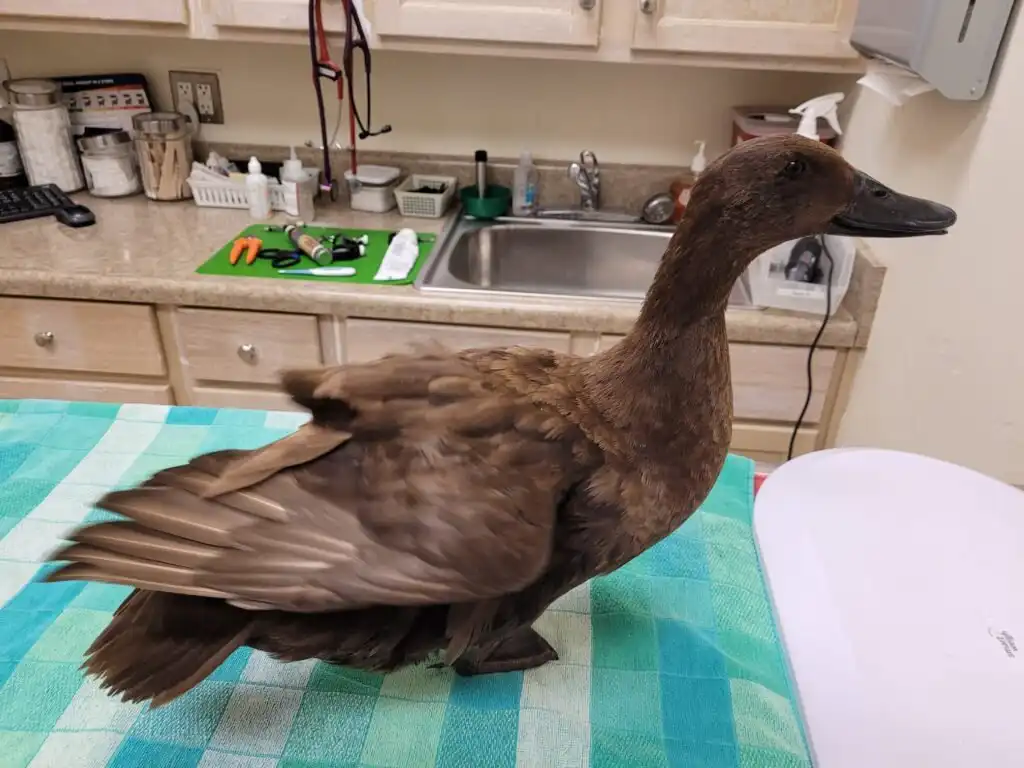
When you love your ducks deeply, medical decisions become emotional very quickly. You are not just looking at a bill. You are looking at a member of your flock, a daily companion, and a personality you know intimately.
That can create incredibly difficult situations when treatment costs become significant.
Planning financially does not remove the emotional difficulty, but it does give you more flexibility and more options when rapid decisions are needed.
Prevention Is Always Cheaper Than Emergencies
One of the biggest lessons I have learned over the years is that prevention saves far more than money.
Good nutrition, predator-proof housing, clean water, proper footing, flock observation, and early intervention dramatically reduce the likelihood of catastrophic emergencies.
Catching bumblefoot early may prevent surgery. Recognizing egg-binding symptoms quickly may prevent a life-threatening crisis. Identifying toxin exposure early may improve treatment success dramatically.
The earlier problems are identified, the more manageable they usually are, both medically and financially.
A Personal Experience That Changed How I Respond to Illness
There is one experience with our flock that fundamentally changed how I approach potential illness in ducks.
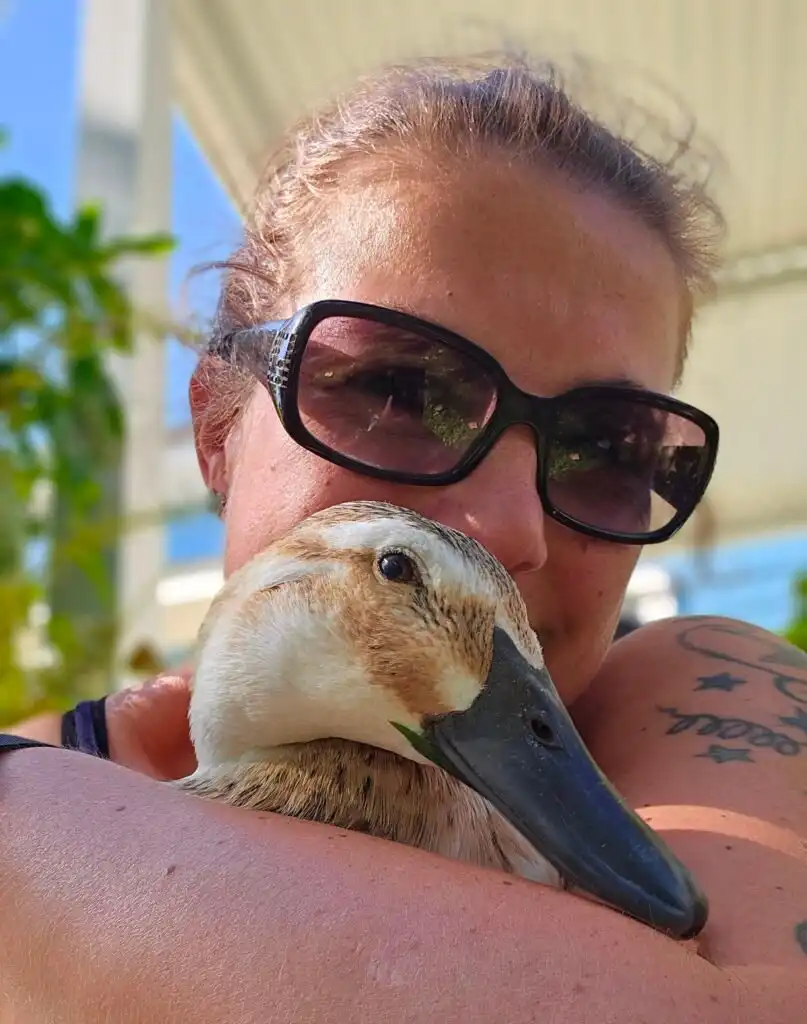
It was Hertha.
This happened during a long holiday weekend when no avian veterinarians were available. At first, the signs were subtle. She just seemed slightly off. Nothing dramatic or clearly alarming. But something about her behavior did not feel right to me.
Over the next couple of days, I noticed gradual changes:
- she became more isolated from the flock,
- increasingly lethargic,
- and less interested in food.
I monitored her constantly and provided supportive care while waiting for veterinary clinics to reopen. At the time, I kept hoping she would stabilize long enough for us to get professional help.
The moment the clinic reopened on Monday morning, we called immediately and secured a same-day appointment.
But we never made it there.
Hertha passed away before we could get to the vet.
That experience stayed with me deeply because it reinforced something difficult but incredibly important about ducks:
They often hide serious illness until they are already critically sick.
Looking back, the early warning signs were there. They were just quiet. No dramatic collapse. No obvious emergency. Just subtle behavioral changes that slowly progressed over the weekend.
And honestly, losing Hertha changed the way I respond to those subtle changes now.
I no longer dismiss:
- reduced appetite,
- unusual quietness,
- isolation,
- or just seeming off.
Because sometimes those small changes are the only warning we get before a duck declines rapidly.
That does not mean every quiet day is an emergency. Ducks have hormonal shifts, broody phases, molting periods, and social stress that can temporarily change behavior. But Hertha taught me the importance of taking persistent changes seriously, especially when multiple symptoms begin appearing together.
I have never regretted taking a duck to the vet too early.
But I have regretted waiting too long.
Duck Vet Visit FAQs: When to Worry and What to Watch For
How do I know if I am overreacting?
You are not. Ducks hide illness. Acting early is one of the best things you can do.
Can I wait a day before calling the vet?
Only if symptoms are mild and behavior is otherwise normal. If anything changes, do not wait.
What is the most important early warning sign?
A change in behavior relative to that individual duck.
Can I treat my duck at home instead of going to a vet?
Some minor conditions can be supported at home, but anything serious or unclear should always involve a vet.
How can I tell if my duck is seriously sick?
Severe lethargy, breathing difficulty, refusing food, isolation from the flock, neurological symptoms, or straining are all major red flags. In ducks, even subtle behavior changes can indicate serious illness.
How do I find an avian vet for ducks?
Search for avian or exotic veterinarians in your area and call ahead to confirm they treat ducks. Local poultry groups and wildlife rehabilitators can also be great resources for recommendations.
Are duck vet visits expensive?
They can be. Exams, diagnostics, medications, hospitalization, and surgery add up quickly, so having an emergency fund is extremely important.
Is pet insurance available for ducks?
Some exotic pet insurance plans may cover ducks, although coverage varies significantly between providers and policies.
Final Thoughts
One of the hardest parts of caring for ducks is that there is rarely a perfectly clear answer in the moment.
Sometimes a duck is simply broody, molting, stressed, or having an off day. Other times, those same subtle changes are the very beginning of a serious medical issue. Learning the difference takes time, observation, and experience.
But if there is one thing I have learned from caring for Emma, Krümel, Penny, Simon, Muffin, and the rest of my flock, it is this:
Small changes matter.
Most duck emergencies do not begin with dramatic symptoms. They begin with a duck acting slightly quieter than usual. Standing differently. Eating a little less. Separating from the flock. Tiny shifts that are easy to dismiss if you are not paying attention.
That is why knowing your ducks individually is so important. Their normal behavior, routines, personalities, and seasonal changes become your reference point. The better you know their baseline, the faster you recognize when something truly is not right.
At the same time, duck keeping also means accepting reality. Not everyone has immediate access to an avian veterinarian. Emergencies happen unexpectedly. Costs can become significant very quickly. Sometimes you need to provide supportive care first while arranging professional treatment.
And that is okay.
Being a responsible duck owner does not mean handling every situation perfectly. It means:
- staying observant,
- acting early,
- preparing ahead of time,
- and being willing to step in when your ducks need you.
Some situations will turn out to be minor. Others may become emergencies. But in my experience, I have never regretted taking a concern seriously.
I have regretted waiting too long.
So if something feels off, trust yourself enough to investigate further. Observe closely. Support your duck. Call the vet when needed.
Because at the end of the day, our ducks depend entirely on us to notice the things they instinctively try to hide.

Further Reading & Resources
- How to Conduct a Duck Health Check: A Comprehensive Guide
- 31 Must-have Items for Your Pet Duck First Aid Kit
- 16 Common Duck Health Conditions You Should Know About
- The Science of Duck Poop: What Healthy Droppings Should Look Like
- Duck Diagnostic Chart: Vital Signs, Tests, and What Your Duck’s Poop Is Telling You
- Is Your Duck in Discomfort? How to Recognize Pain in Pet Ducks
- Finding a Duck-Savvy Vet: Tips for Pet Duck Owners
- Why Is My Duck Sleeping All Day? Normal Tiredness or a Health Problem?
Deepen your understanding of avian wellness. Explore the full Duck Health & Anatomy Library for more specialized care guides.