
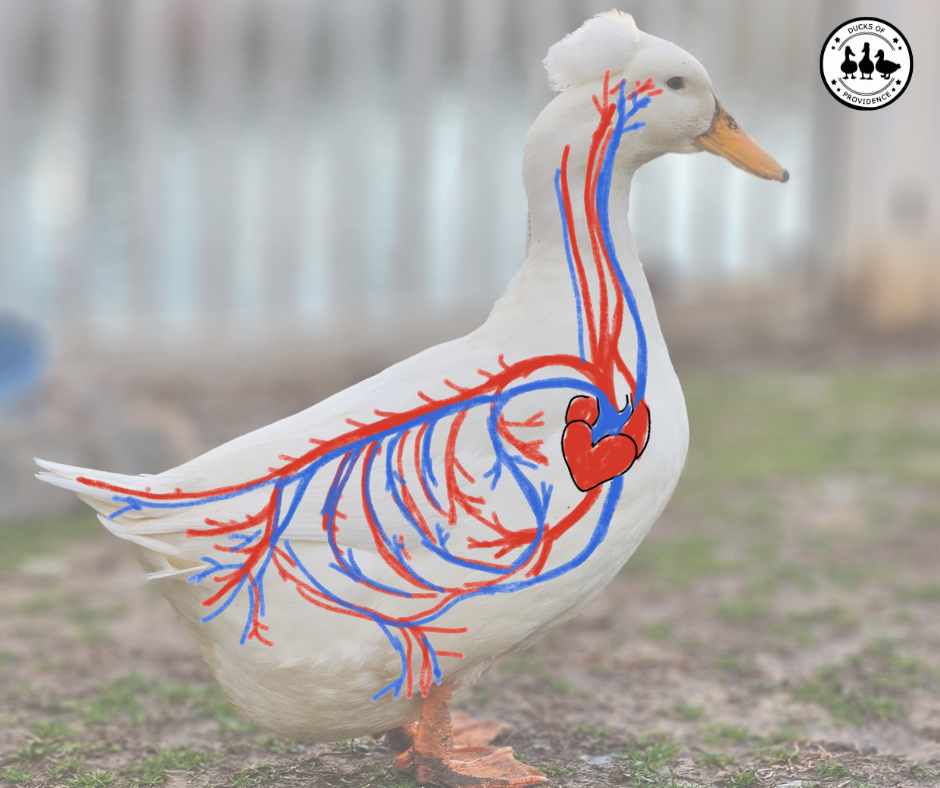
The Circulatory System and Vital Organs in Ducks

Last updated: May 5th, 2026
To keep our research-backed guides free, this site uses ads and affiliate links (earning a small commission at no cost to you). Everything here is created by a duck mom and PhD scientist, combining academic rigor with hands-on experience to provide practical, trustworthy advice for duck keepers everywhere. 🦆 Learn more
Have you ever looked at your duck and wondered what is happening beneath those feathers?
I still remember the first time I sat in the vet’s office holding Emma during one of her early health scares. In that moment, I realized something important. Understanding your duck’s internal systems is not just for veterinarians. It is essential for every duck keeper.
Because here is the truth. Ducks are incredibly good at hiding illness. By the time you notice something is wrong, whether it is labored breathing, unusual droppings, or a sudden behavior change, the underlying issue has often been developing for days or even weeks. That is where knowledge becomes your most powerful tool.
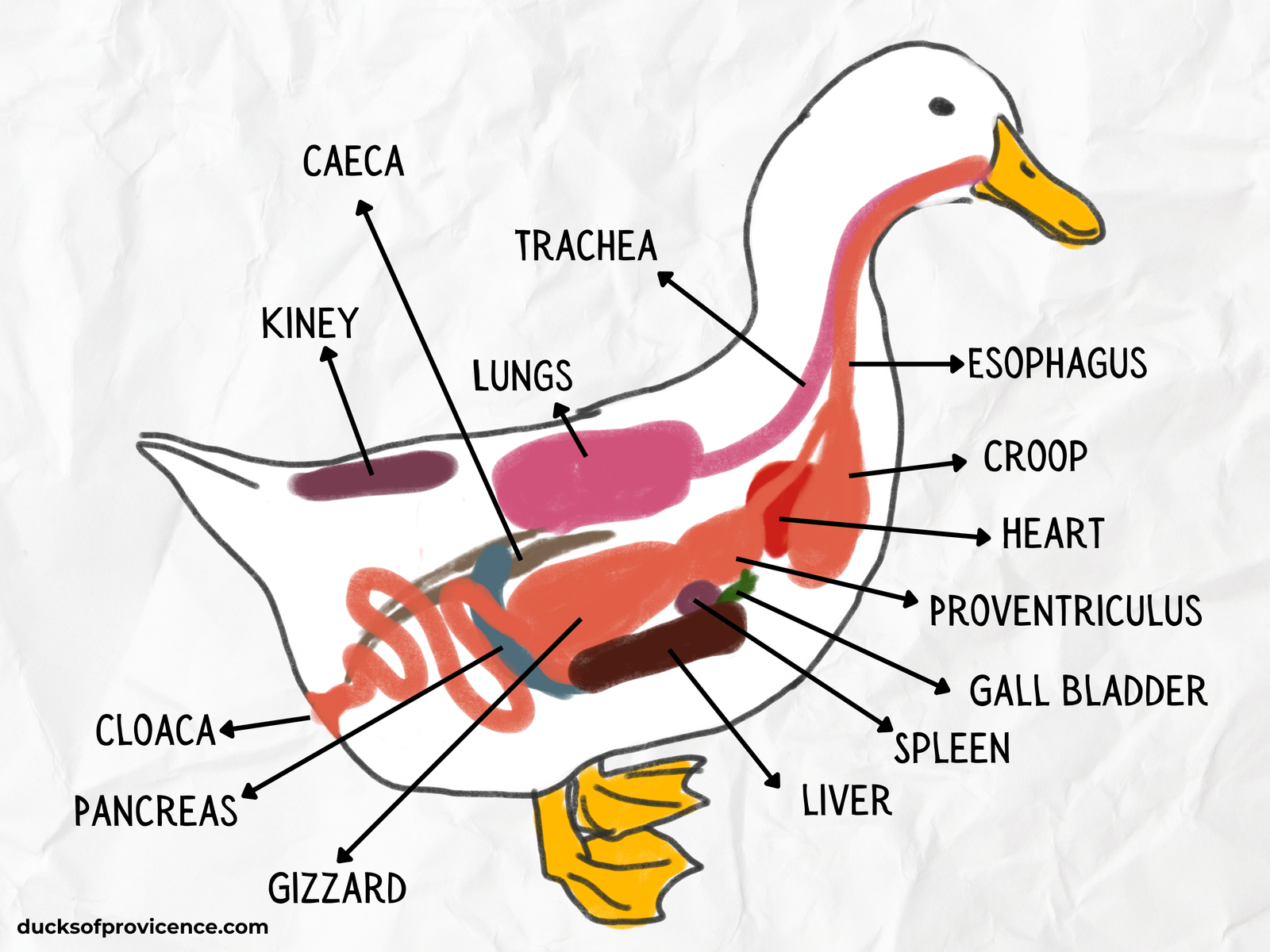
In this guide, we will take a closer look at the circulatory system, vital organs, and brain in ducks, and how they all work together to keep your flock healthy. I will walk you through what each system does, what can go wrong, and most importantly, what signs you should never ignore.
Because once you start understanding what is happening inside your duck, you will begin to see things differently.
You will notice subtle changes earlier.
You will feel more confident making care decisions.
And you will be better prepared when something does not seem right.
And as someone who has been through both the routine checkups and the emergency situations with my own flock, I can tell you this. This knowledge truly matters.
Part of the Duck Health & Anatomy Hub, Evidence-based medical resources and anatomical research.
Quick Navigation: Jump to a Section
[hide]
- The Duck Heart and Circulatory System
- Blood and Oxygen Transport
- The Respiratory System (Why It Is Closely Linked)
- The Liver: Detox and Metabolism
- The Kidneys: Waste and Water Balance
- The Digestive Organs
- The Reproductive System
- The Brain and Nervous System
- FAQ: Circulatory System, Organs, and Internal Health in Ducks
- Why Organ Systems Cannot Be Viewed in Isolation
- Scientific References
- Further Reading & Resources
The Duck Heart and Circulatory System
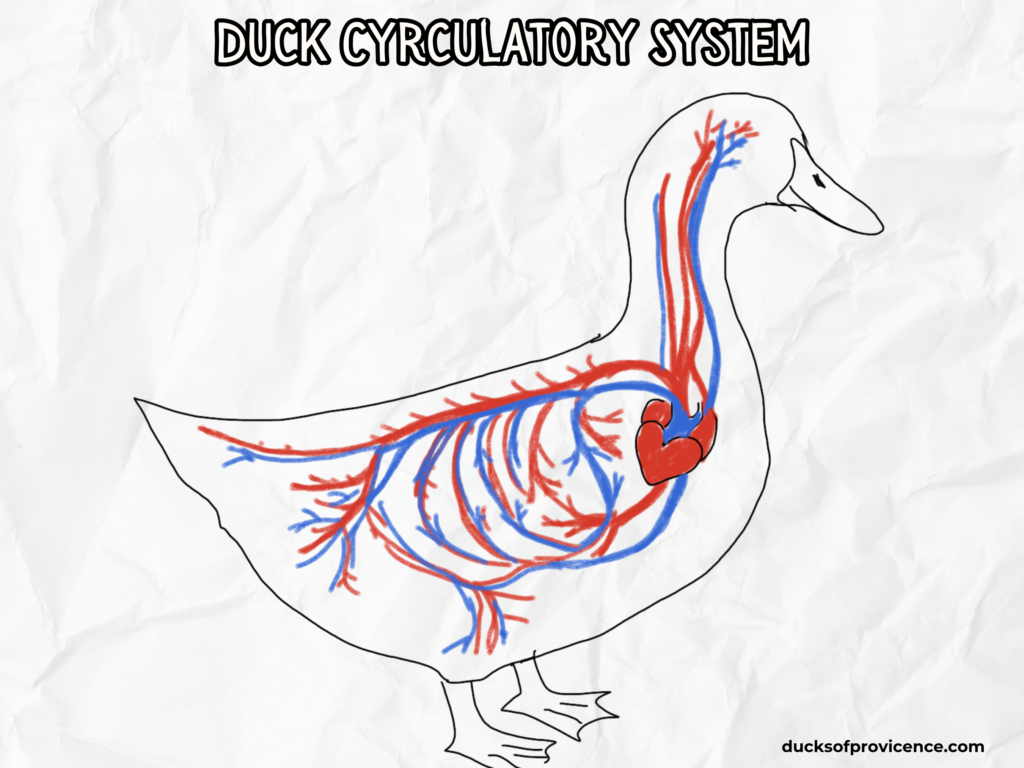
If there is one system that quietly keeps everything in your duck’s body running, it is the circulatory system. Every step, every swim, and even something as seemingly simple as maintaining body temperature depends on a constant and precisely regulated flow of blood. What I find fascinating is how elegantly this system is designed in birds. It is both highly efficient and tightly integrated with respiration, metabolism, and thermoregulation.
The Structure of the Duck Heart
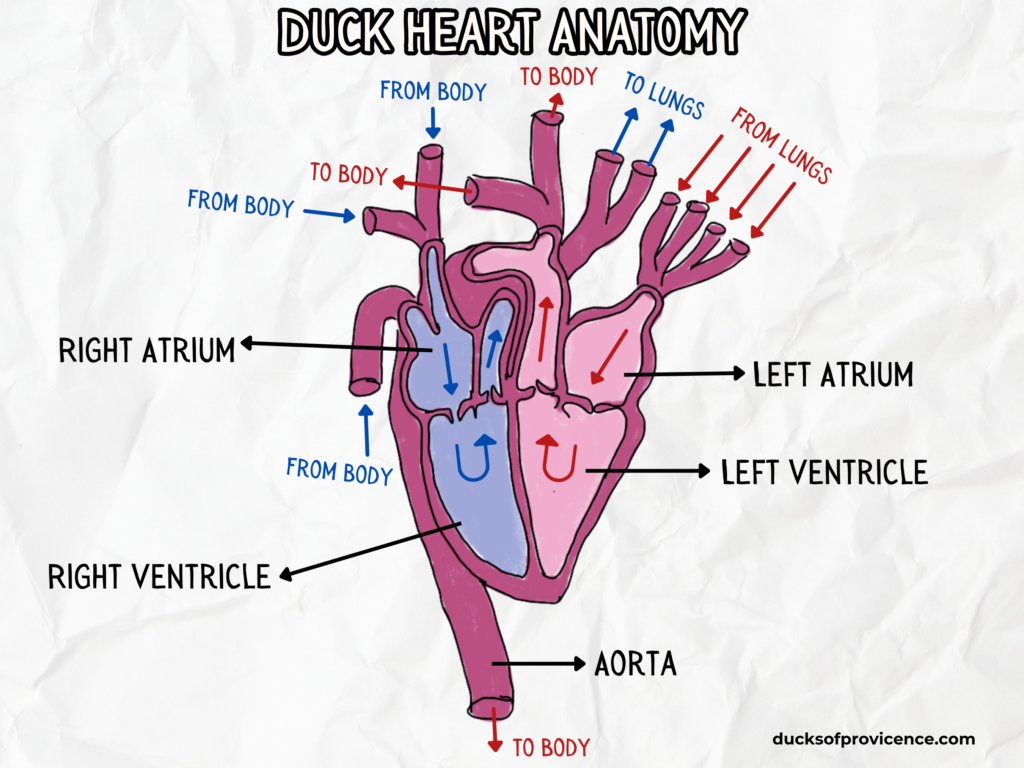
Ducks have a four-chambered heart, consisting of two atria and two ventricles, much like mammals. However, avian hearts are proportionally larger relative to body size, which supports their higher metabolic demands.
Anatomically, the separation of chambers allows for complete division of oxygenated and deoxygenated blood, preventing mixing and maximizing oxygen delivery to tissues. The left ventricle, in particular, is well developed because it is responsible for pumping oxygen rich blood throughout the body under high pressure.
A few structural features that are worth highlighting:
- The right side of the heart receives deoxygenated blood from the body and pumps it to the lungs
- The left side receives oxygenated blood from the lungs and distributes it systemically
- The ventricular walls, especially on the left, are thick and muscular to sustain pressure and flow
This design allows ducks to maintain consistent circulation even during periods of increased demand, such as swimming in cold water or escaping a perceived threat.
Blood Flow and Oxygen Delivery
Once you start looking at circulation more closely, it becomes clear that blood is not just carrying oxygen. It is essentially the body’s transport network, linking all major organ systems.
In ducks, blood is responsible for:
- delivering oxygen from the lungs to tissues
- transporting nutrients absorbed from the intestines
- carrying metabolic waste to the kidneys and liver
- distributing hormones that regulate physiological processes
An interesting anatomical detail is that avian red blood cells are nucleated, unlike those in mammals. While this slightly reduces the space available for hemoglobin, birds compensate through highly efficient respiratory and circulatory integration. The result is still an excellent oxygen delivery system.
Because of this tight integration, a disruption in circulation often has systemic consequences. A problem that begins in one organ can quickly affect others through the bloodstream.
A System Built for Activity
Even if your ducks spend most of their day in a secure run or waddling around the yard, their physiology is still that of an animal built for endurance and responsiveness. The circulatory system reflects this evolutionary background.
Ducks maintain a relatively high heart rate and strong cardiac output, ensuring that oxygen delivery can quickly adjust to changing demands. This is especially important for muscles during movement, but also for organs like the brain, which require a constant and stable oxygen supply.
What is remarkable is how quickly ducks can shift between states. One moment they are resting, the next they are fully alert and moving. The circulatory system supports this transition seamlessly.
Temperature Regulation Through Circulation
One of the most elegant aspects of avian circulation is its role in thermoregulation. Ducks rely heavily on controlled blood flow to maintain a stable internal temperature, especially since they do not sweat.
In colder conditions, ducks can reduce blood flow to peripheral tissues such as the feet and legs, minimizing heat loss. In warmer conditions, increased circulation to these same areas helps dissipate heat.
You will often see this in practice:
- Ducks standing in water during hot weather
- Wings held slightly away from the body to increase heat loss
- Increased breathing effort to support cooling
These are all coordinated responses where the circulatory and respiratory systems work together.
What Duck Keepers Should Watch For
From a practical standpoint, the circulatory system is one of the first places where subtle health changes can appear. The challenge is that these signs are often easy to miss if you are not actively looking for them.
Some early indicators include:
- a pale or unusually cool bill and feet
- reduced activity or reluctance to move
- changes in breathing pattern or effort
These signs do not point to a single diagnosis, but they often indicate that oxygen delivery or systemic function is compromised. In my experience, this is where paying attention to your individual ducks becomes incredibly valuable. You learn what is normal for them, and deviations stand out much more clearly.
From My Flock
Living in North Texas, I have become especially aware of how much the circulatory system is involved in heat management. During peak summer, when temperatures climb well above 100°F, I watch my ducks much more closely.
You start to notice patterns. Some ducks tolerate heat better than others. Some will spend more time in water, while others rely more on shade and reduced activity. These differences are all tied back to how their bodies regulate circulation and heat exchange.
Over time, I have learned that understanding the circulatory system is not just about anatomy. It is about interpretation. It allows you to look at your ducks and recognize when their bodies are working harder than they should, and when it is time to step in and support them.
Blood and Oxygen Transport
Once you understand the structure of the heart, the next layer is what it is actually moving. Blood is not just a fluid circulating through vessels. It is a highly specialized tissue that carries oxygen, nutrients, immune cells, and signaling molecules throughout the body. In ducks, this system is particularly efficient because it is tightly coordinated with their respiratory system.
What Makes Duck Blood Different
One of the most interesting anatomical differences between birds and mammals lies in their red blood cells. In ducks, red blood cells are nucleated, meaning they retain a nucleus throughout their lifespan. This contrasts with mammalian red blood cells, which lose their nucleus to maximize space for hemoglobin.
At first glance, this might seem like a disadvantage, since there is slightly less room for oxygen binding. However, birds compensate through other adaptations, particularly their highly efficient respiratory system and continuous airflow through the lungs.
From a structural standpoint, duck blood consists of:
- Red blood cells (erythrocytes), which transport oxygen
- White blood cells (leukocytes), which support immune defense
- Plasma, the fluid component that carries nutrients, hormones, and waste
Each of these components plays a distinct role, but together they create a dynamic system that supports both daily function and rapid responses to stress or illness.
How Oxygen Moves Through the Body
Oxygen transport begins in the lungs, where oxygen diffuses into the bloodstream and binds to hemoglobin within red blood cells. From there, it is carried through the circulatory system and delivered to tissues based on metabolic demand.
What makes this process particularly effective in ducks is the integration with their respiratory anatomy. Because airflow through avian lungs is unidirectional, oxygen exchange remains efficient even during exhalation. This ensures that blood leaving the lungs is consistently well oxygenated.
Once oxygen reaches tissues, it is released from hemoglobin and diffuses into cells, where it is used for energy production. At the same time, carbon dioxide, a metabolic waste product, is picked up by the blood and transported back to the lungs for removal.
This constant exchange is happening every second, even when your ducks appear completely at rest.
Beyond Oxygen: A Transport Network
While oxygen transport is central, it is only one part of the story. Blood also serves as the primary distribution system for many other essential components.
It is responsible for:
- delivering glucose, amino acids, and fats from digestion
- transporting vitamins and minerals to where they are needed
- carrying hormones that regulate reproduction, growth, and stress
- removing metabolic byproducts through the liver and kidneys
Because of this, changes in blood composition can reflect a wide range of underlying issues. This is why bloodwork is such a powerful diagnostic tool in avian medicine. It provides a snapshot of multiple organ systems at once.
Oxygen Demand and Activity
Ducks are remarkably adaptable when it comes to oxygen demand. Their bodies can adjust circulation and oxygen delivery depending on activity level, environmental conditions, and physiological state.
For example, during periods of increased activity, such as swimming or escaping a perceived threat, oxygen demand rises quickly. The circulatory system responds by increasing heart rate and redistributing blood flow to muscles.
At the same time, organs like the brain continue to receive a stable supply, highlighting how well-regulated this system is. Even short disruptions in oxygen delivery to critical tissues can have immediate consequences, which is why the body prioritizes these pathways so carefully.
What Duck Keepers Should Watch For
From a practical standpoint, issues with blood and oxygen transport often show up as subtle but meaningful changes in your duck’s appearance or behavior.
Some of the signs I pay close attention to include:
- pale or washed-out coloration of the bill and feet
- unusual lethargy or reduced responsiveness
- increased breathing effort, even at rest
These signs can indicate that oxygen delivery is not keeping up with the body’s needs. The underlying cause can vary widely, ranging from anemia and blood loss to respiratory disease or systemic illness.
From My Flock
One of the moments where this became very real for me was during Krümel’s health issues, when her bloodwork showed significant abnormalities. At that point, we were not just looking at one isolated problem. We were looking at how her entire system was functioning, including oxygen transport, immune response, and metabolic balance.
It changed how I think about blood completely. It is not just something that circulates quietly in the background. It is one of the most informative windows into your duck’s internal health.
Understanding blood and oxygen transport helps you connect the dots between what you see externally and what is happening internally. When a duck appears tired, breathes differently, or shows subtle color changes, these are not random signs. They are often reflections of how well oxygen and nutrients are being delivered at the cellular level.
The more familiar you become with these patterns, the earlier you can recognize when something is off. And in duck keeping, early recognition is often what makes the biggest difference.
The Respiratory System (Why It Is Closely Linked)
When we talk about circulation, we are really only telling half of the story. The circulatory system can only deliver oxygen if the respiratory system provides it efficiently in the first place. In ducks, these two systems are so tightly connected that it is best to think of them as a single functional unit.
If you want a full breakdown of anatomy, airflow mechanics, and common respiratory diseases, I cover that in detail in my deep dive on the duck respiratory system. Here, I want to focus on the key concepts that help you understand how respiration directly supports circulation and overall health.
How Duck Breathing Is Different
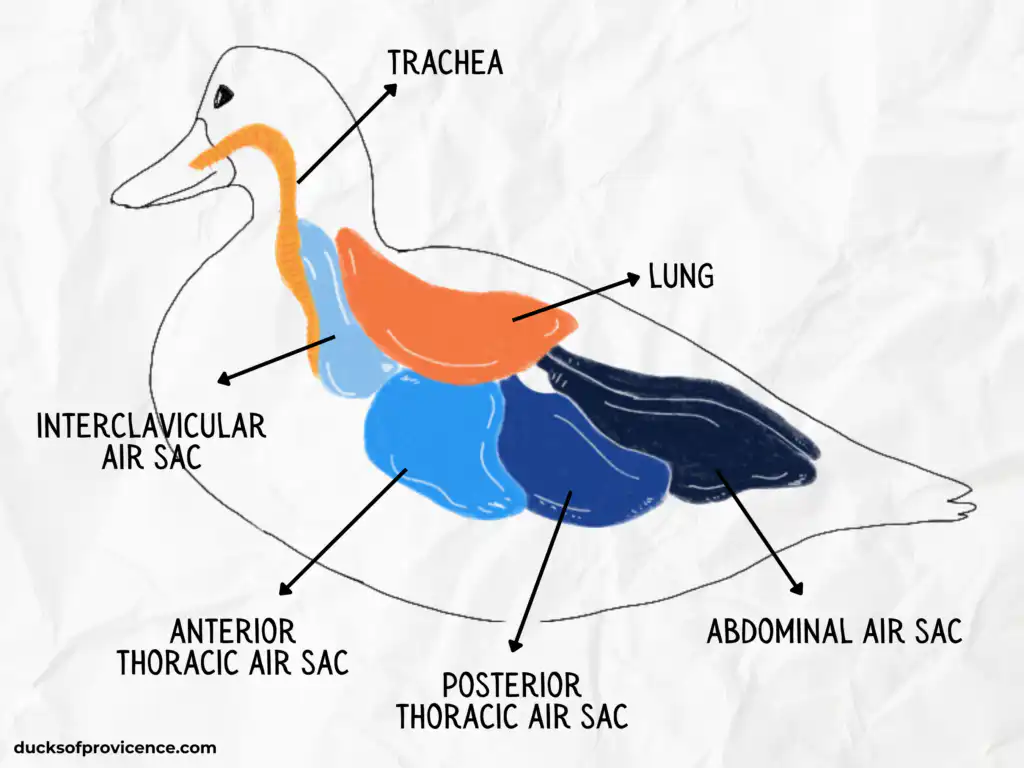
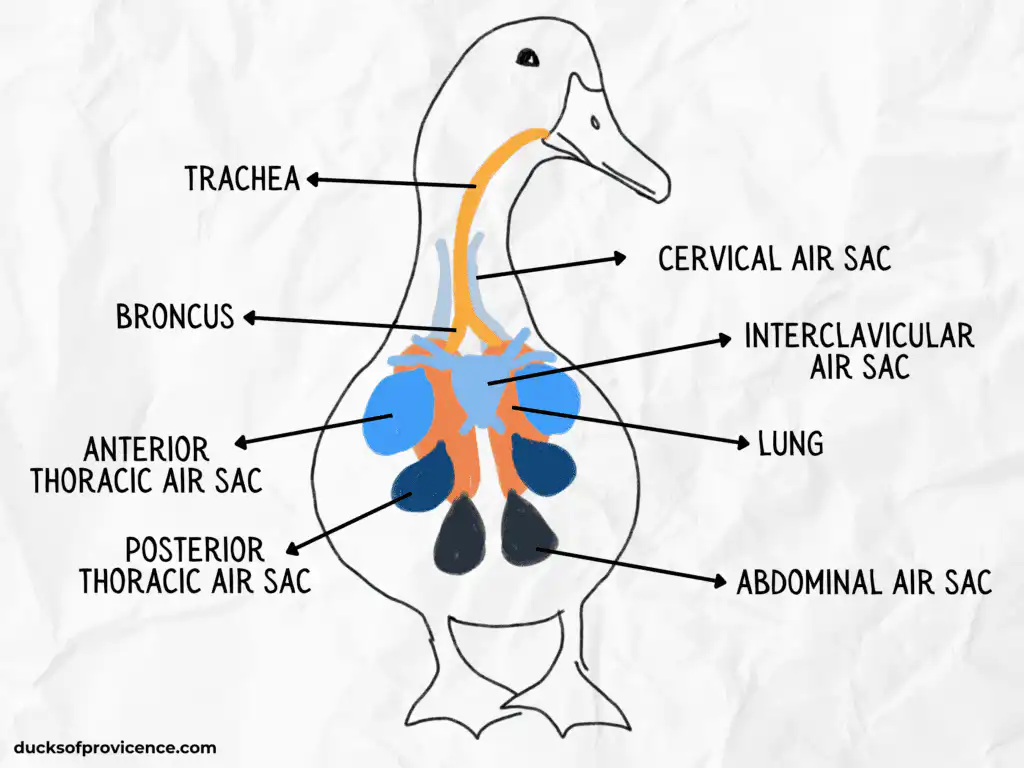
Unlike mammals, ducks do not rely on simple in and out airflow. Their respiratory system is built around unidirectional airflow, meaning that fresh air moves through the lungs in a continuous stream rather than mixing with used air.
This is made possible by two anatomical features:
- relatively small, rigid lungs
- a system of interconnected air sacs
The lungs themselves remain structurally stable, while the air sacs function like bellows, moving air through the system. This allows ducks to extract oxygen much more efficiently than mammals.
The Role of Parabronchi and Airflow
Gas exchange in ducks occurs in structures called parabronchi, rather than alveoli. These tiny, tube-like passages allow for continuous oxygen exchange as air flows through them.
Because of this design, ducks can maintain:
- consistent oxygen uptake
- high efficiency even during exhalation
- stable oxygen levels in the bloodstream
From a physiological perspective, this creates an ideal partnership with the circulatory system. Blood leaving the lungs is reliably oxygenated, allowing for effective delivery to tissues.
Why This Matters for Circulation
The connection between the respiratory and circulatory systems becomes very clear when something goes wrong. Since oxygen enters the bloodstream in the lungs, any disruption in respiration immediately affects circulation.
Even mild respiratory compromise can lead to:
- reduced oxygen availability in the blood
- increased workload on the heart
- decreased energy supply to tissues
This is why respiratory conditions in ducks can escalate quickly and often present as systemic issues rather than isolated lung problems.
Sensitivity to Air Quality
One important consequence of this highly efficient system is increased sensitivity to environmental conditions. Because air moves continuously through the respiratory tract, ducks are more vulnerable to airborne irritants and toxins.
This includes:
- ammonia buildup from droppings
- dust from bedding or feed
- chemical fumes in enclosed spaces
In practical terms, this means that ventilation is not optional. It is a critical component of maintaining both respiratory and circulatory health.
What Duck Keepers Should Watch For
Respiratory changes are often among the earliest signs that something is not right. Because of the close link to circulation, these signs should always be taken seriously.
Some of the most important indicators include:
- increased breathing effort or visible chest movement
- open bill breathing when not related to heat
- unusual respiratory sounds
These are not just signs of a local issue. They often indicate that oxygen delivery throughout the body may be compromised.
From My Flock
In my own flock, I have become especially aware of how closely respiration and circulation interact during periods of stress. In the North Texas heat, when temperatures rise significantly, ducks rely more heavily on panting and evaporative cooling.
During these times, the respiratory system is already working harder, which means any additional stressor can have a larger impact. I have learned that small adjustments, such as improving airflow or refreshing water more frequently, can make a noticeable difference in how well my ducks handle these conditions.
Understanding the respiratory system helps you see the bigger picture. Breathing is not just about air moving in and out. It is the starting point for oxygen delivery to every organ in the body.
Once you recognize how closely respiration and circulation are linked, it becomes much easier to understand why even subtle changes in breathing should never be ignored.
The Liver: Detox and Metabolism
If the circulatory system is the transport network, then the liver is the central processing unit that decides what stays, what gets transformed, and what needs to be removed.
In ducks, the liver plays a critical role in maintaining metabolic balance. It is constantly interacting with the bloodstream, filtering, modifying, and redistributing substances that are essential for survival. What makes this organ particularly important in duck keeping is that it is involved in so many different processes at once, which means problems here often affect the entire body.
Anatomical and Functional Overview
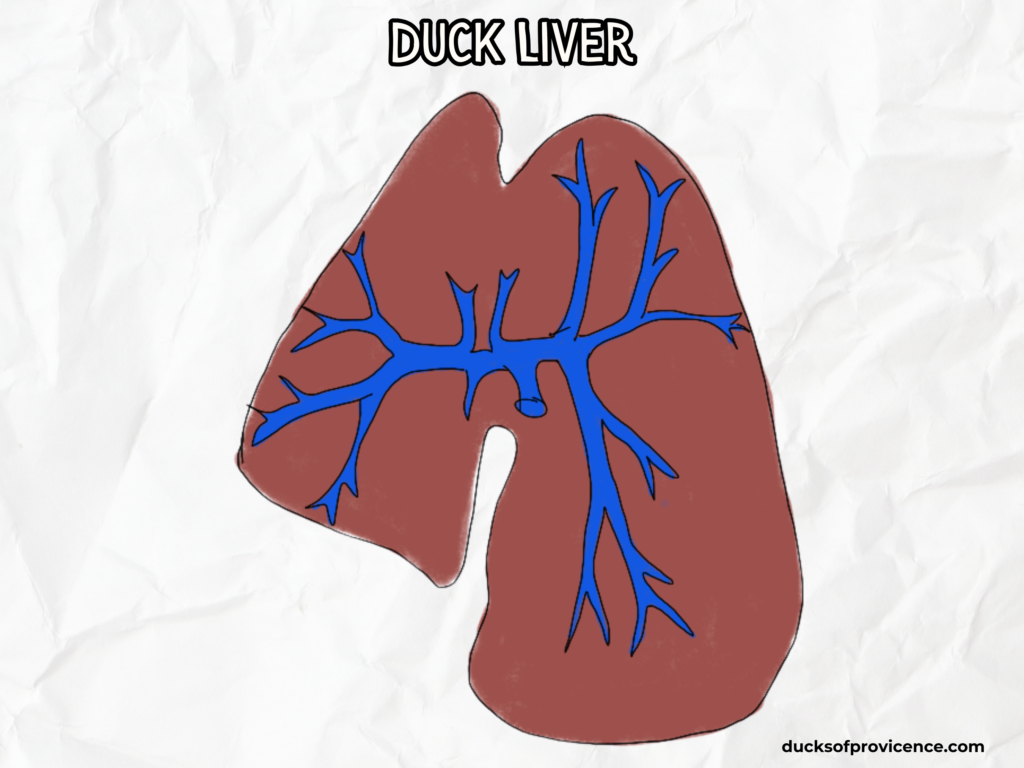
The liver in ducks is a relatively large, lobed organ located in the cranial portion of the abdominal cavity, closely associated with the heart and digestive tract. It receives blood from two main sources: oxygenated blood from the circulatory system and nutrient-rich blood from the digestive system via the portal circulation.
This dual blood supply allows the liver to act as a checkpoint between digestion and systemic circulation. Before nutrients are distributed throughout the body, they are first processed by the liver.
At a functional level, the liver is responsible for:
- metabolizing carbohydrates, fats, and proteins
- producing bile for fat digestion
- detoxifying harmful substances
- storing vitamins and glycogen
Because of this, it plays a central role in energy balance, nutrient availability, and toxin management.
The Liver and Metabolism
One of the most important roles of the liver is regulating how energy is stored and used. After a duck eats, nutrients absorbed in the intestines are transported to the liver, where they are either stored, converted, or released into circulation.
For example, excess carbohydrates can be converted into glycogen for storage or into fat if energy intake exceeds demand. Similarly, fats are processed and redistributed depending on the body’s needs.
This becomes particularly relevant in backyard ducks, where diet is controlled by us. Diets that are too high in energy, especially when combined with limited activity, can place a significant burden on the liver.
Detoxification: More Than Just “Filtering”
The liver is often described as a detox organ, but this process is more complex than simple filtration. It involves biochemical transformation of substances into forms that can be safely excreted.
In ducks, this includes:
- breaking down metabolic waste products
- processing environmental toxins
- handling excess minerals and trace elements
This is where issues like metal toxicity, including elevated zinc levels as I experienced with Krümel, become highly relevant. The liver is one of the primary organs affected when toxic substances accumulate in the body.
Bile Production and Digestion
Another key function of the liver is the production of bile, which is essential for fat digestion. Bile is released into the digestive tract, where it helps emulsify fats, making them easier to break down and absorb.
This connection between the liver and the digestive system is often overlooked, but it is critical. Poor liver function can directly impact nutrient absorption and overall digestive efficiency.
What Duck Keepers Should Watch For
Liver issues in ducks are often subtle at first and can easily go unnoticed without careful observation. Because the liver is involved in so many processes, signs of dysfunction can vary widely.
Some indicators that I pay attention to include:
- lethargy or reduced activity
- changes in weight, either gain or loss
- poor feather quality or delayed molting
In more advanced cases, you may also see changes in droppings or overall body condition. These signs are not specific to the liver alone, but they often point to metabolic imbalance where the liver plays a central role.
From My Flock
Krümel’s case is one that really changed how I think about the liver. When her bloodwork showed elevated zinc levels, it was not immediately clear where the issue originated. There was no obvious source, and imaging did not reveal a foreign object.
However, what became clear was how much strain her system was under. The liver was actively involved in processing and attempting to eliminate what should not have been there.
Going through chelation therapy with her made me much more aware of how vulnerable this system can be, even when the cause is not immediately visible.
The liver is not an organ we can observe directly, but it is constantly working in the background to maintain balance. It connects diet, environment, and metabolism in a way that few other organs do.
Understanding its role helps you make better decisions about feeding, supplementation, and environmental safety. It also helps you recognize early signs of imbalance before they progress into more serious conditions.
The Kidneys: Waste and Water Balance
If the liver is responsible for processing and transforming substances, the kidneys take over when it comes to elimination and balance. They are the final checkpoint for waste removal and play a central role in regulating fluid levels, electrolytes, and overall internal stability.
In ducks, kidney function looks quite different from what we are used to in mammals, and understanding these differences helps explain some of the most characteristic aspects of duck physiology, especially their droppings.
Anatomical Structure of Avian Kidneys
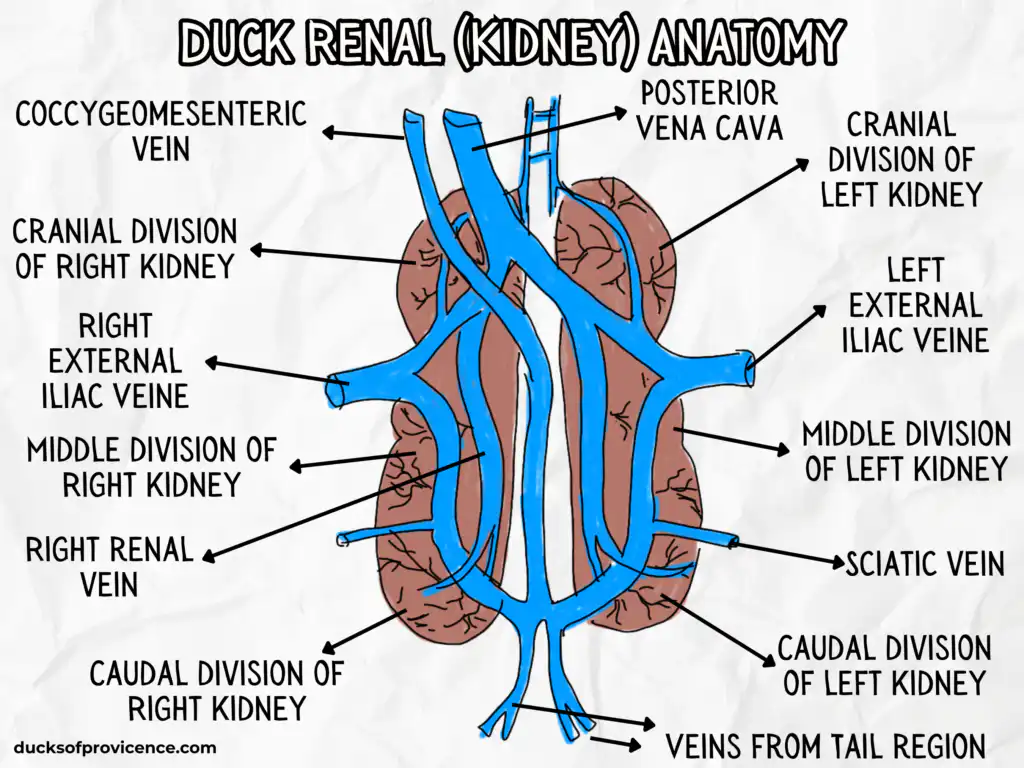
Duck kidneys are elongated, lobed organs that sit tightly against the backbone within the pelvic region. Unlike mammalian kidneys, which are more compact, avian kidneys are divided into three distinct lobes that fit into recesses of the pelvis.
One important anatomical detail is their close association with major blood vessels and nerves, including those supplying the legs. This is why kidney issues in birds can sometimes be associated with leg weakness or mobility problems, something that surprises many duck keepers the first time they encounter it.
Functionally, the kidneys receive blood from the circulatory system and filter out waste products while maintaining essential components that the body still needs.
Uric Acid vs. Urine: A Key Difference
One of the defining features of avian kidney function is that ducks do not produce liquid urine in the same way mammals do. Instead, nitrogenous waste is converted into uric acid, which is excreted as a semi-solid, white substance.
This is the white portion you see in duck droppings.
This adaptation has several advantages:
- it conserves water, which is critical for survival
- it allows efficient waste removal without large fluid losses
- it integrates waste excretion with the digestive system via the cloaca
Because of this system, droppings in ducks are a combination of fecal material and urates, providing a valuable window into both digestive and kidney function.
Water and Electrolyte Balance
Beyond waste removal, the kidneys are essential for maintaining the body’s internal balance. They regulate:
- hydration levels
- electrolyte concentrations such as sodium and potassium
- acid-base balance
In ducks, this regulation is particularly important because of their close relationship with water. While they have constant access to water for drinking and bathing, their bodies still need to carefully control how much water is retained or excreted.
This balance can be influenced by diet, environmental conditions, and overall health status.
The Renal Portal System: A Unique Feature
One anatomical feature that is unique to birds and often overlooked is the renal portal system. This system allows blood from the lower body, including the legs, to pass through the kidneys before returning to the general circulation.
From a practical standpoint, this has implications for how substances are distributed and eliminated. It is also the reason why injections in the lower body of birds are approached with caution in veterinary medicine, as they may pass through the kidneys before systemic distribution.
What Duck Keepers Should Watch For
Kidney-related issues often show up in subtle but observable ways, particularly through changes in droppings or behavior.
Some signs that I pay close attention to include:
- unusually watery droppings
- changes in the amount or appearance of the white urate portion
- reduced activity or signs of discomfort
In more advanced cases, ducks may show weakness, especially in the legs, due to the anatomical connections between the kidneys and nerves.
Because these signs can overlap with other conditions, they are best interpreted in context, but they are often early indicators that something is affecting internal balance.
A Quick Note on Renal Failure
If you notice persistent changes in droppings, increasing lethargy, or signs of weakness, it is important to take them seriously. Kidney disease in ducks can progress quietly and often becomes noticeable only once the condition is more advanced.
I go into much more detail in my dedicated post on renal failure in ducks, including causes, symptoms, and what to expect from diagnosis and treatment. It is one of those topics I wish more duck keepers were familiar with earlier.
From My Flock
After going through health challenges with Krümel, I became much more attentive to droppings as a diagnostic tool. It is one of the few things we can observe daily that directly reflects internal organ function.
You start to notice patterns. What is normal for each duck, how hydration affects consistency, and when something looks off. It becomes second nature over time, and it is one of the simplest yet most powerful ways to monitor kidney health without invasive testing.
The kidneys are essential for maintaining stability in a constantly changing environment. They quietly regulate what stays in the body and what needs to be removed, ensuring that all other systems can function properly.
The Digestive Organs
If you have ever watched your ducks enthusiastically shovel food into their bills, you have already seen the first step of a highly specialized digestive process. Ducks are incredibly efficient eaters, but what happens after that is where things get really interesting.
Their digestive system is designed to process food quickly, extract nutrients efficiently, and support a high metabolic demand. At the same time, it reflects their natural behavior as foragers, constantly picking up small amounts of food throughout the day.
If you want a full breakdown of each organ, feeding strategies, and common digestive issues, I go much deeper in my complete guide to the duck digestive system. Here, I want to focus on how the system works as a whole and why it matters for everyday duck keeping.
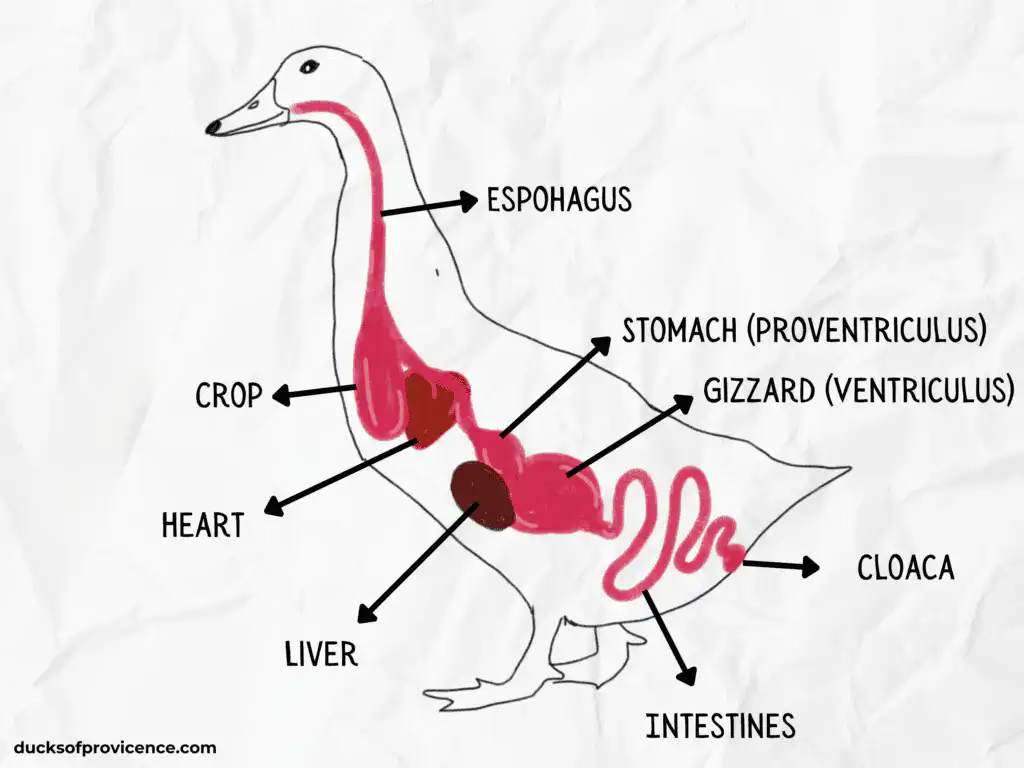
From Bill to Crop: Intake and Storage
Digestion begins the moment food is picked up by the bill. Unlike mammals, ducks do not chew. Instead, food is swallowed relatively quickly and moves down the esophagus.
This is where ducks differ from chickens in an important anatomical way. Ducks do not have a well-developed, distinct crop like chickens do. While there can be a slight dilation of the esophagus that temporarily holds food, it does not function as a true storage organ.
In practical terms, this means that food passes more continuously through the upper digestive tract rather than being held and regulated in a defined crop pouch.
Because of this:
- Ducks tend to eat more frequently throughout the day
- Food moves relatively quickly into the digestive system
- Access to water during feeding becomes especially important
This continuous flow aligns closely with their natural foraging behavior, where they consume small amounts of food repeatedly rather than storing large quantities at once.
The Proventriculus and Gizzard: Chemical and Mechanical Digestion
After leaving the crop, food enters the proventriculus, which is often referred to as the glandular stomach. Here, digestive enzymes and acids begin breaking down food chemically.
From there, it moves into the gizzard, one of the most remarkable organs in birds. The gizzard is a thick, muscular structure that mechanically grinds food, effectively replacing the function of teeth.
This is where grit becomes relevant. Small stones or coarse particles can aid in grinding, especially when ducks consume harder foods.
Together, these two organs form a highly effective system:
- The proventriculus initiates chemical breakdown
- The gizzard performs mechanical processing
This combination allows ducks to extract nutrients from a wide variety of food sources.
Intestinal Absorption and Nutrient Distribution
Once food has been processed in the gizzard, it moves into the intestines, where the majority of nutrient absorption takes place. This is where digested carbohydrates, proteins, fats, vitamins, and minerals enter the bloodstream.
At this point, the digestive system connects directly with the circulatory system. Nutrients are transported to the liver for processing and then distributed throughout the body based on metabolic needs.
This is where everything ties together. What your duck eats ultimately influences every other system we have discussed, from energy levels to organ function and overall health.
Speed and Efficiency of Digestion
One aspect that often surprises people is how quickly ducks digest their food. Compared to many mammals, the digestive transit time is relatively short.
This is why ducks:
- eat frequently throughout the day
- produce frequent droppings
- rely on consistent access to balanced nutrition
It also means that changes in diet can show up quickly, both in behavior and in droppings.
What Duck Keepers Should Watch For
Because the digestive system is so active, it often provides early clues about overall health. Changes here are usually one of the first things you will notice when something is off.
Some signs to pay attention to include:
- changes in droppings consistency or color
- undigested food in droppings
- reduced appetite or changes in feeding behavior
These signs can point to digestive issues, but they can also reflect problems in other systems, such as the liver or kidneys.
From My Flock
Over time, I have learned that feeding is not just about what I offer, but also about how my ducks respond to it. Each duck has preferences, and not all of them will eat the same feed equally well. This is why I rotate and mix feeds, making sure that everyone gets what they need.
I also pay close attention to how treats affect them. Ducks will happily fill up on snacks if given the chance, but that does not always align with what their digestive system needs for long-term health.
The digestive system is where everything begins. It determines what nutrients are available, how energy is supplied, and how well the rest of the body can function.
Understanding how it works helps you make better feeding decisions, recognize early signs of imbalance, and connect diet directly to health outcomes.
The Reproductive System
The reproductive system in ducks is one of the most fascinating and, at the same time, one of the most clinically relevant systems you will encounter as a duck keeper. It is highly specialized, tightly regulated by hormones, and incredibly energy demanding, especially in females.
If you want a full anatomical breakdown and a step by step explanation of egg formation, I cover that in detail in my deep dive on duck reproductive organs. I also have a separate, more clinical guide on common reproductive issues in ducks, which I strongly recommend reading, because this is one of the most frequent sources of health problems in backyard flocks.
Female Reproductive Anatomy: A One-Sided System
One of the most unique aspects of avian reproduction is that female ducks typically have only one functional ovary, the left one. The right ovary regresses during development and is not active.
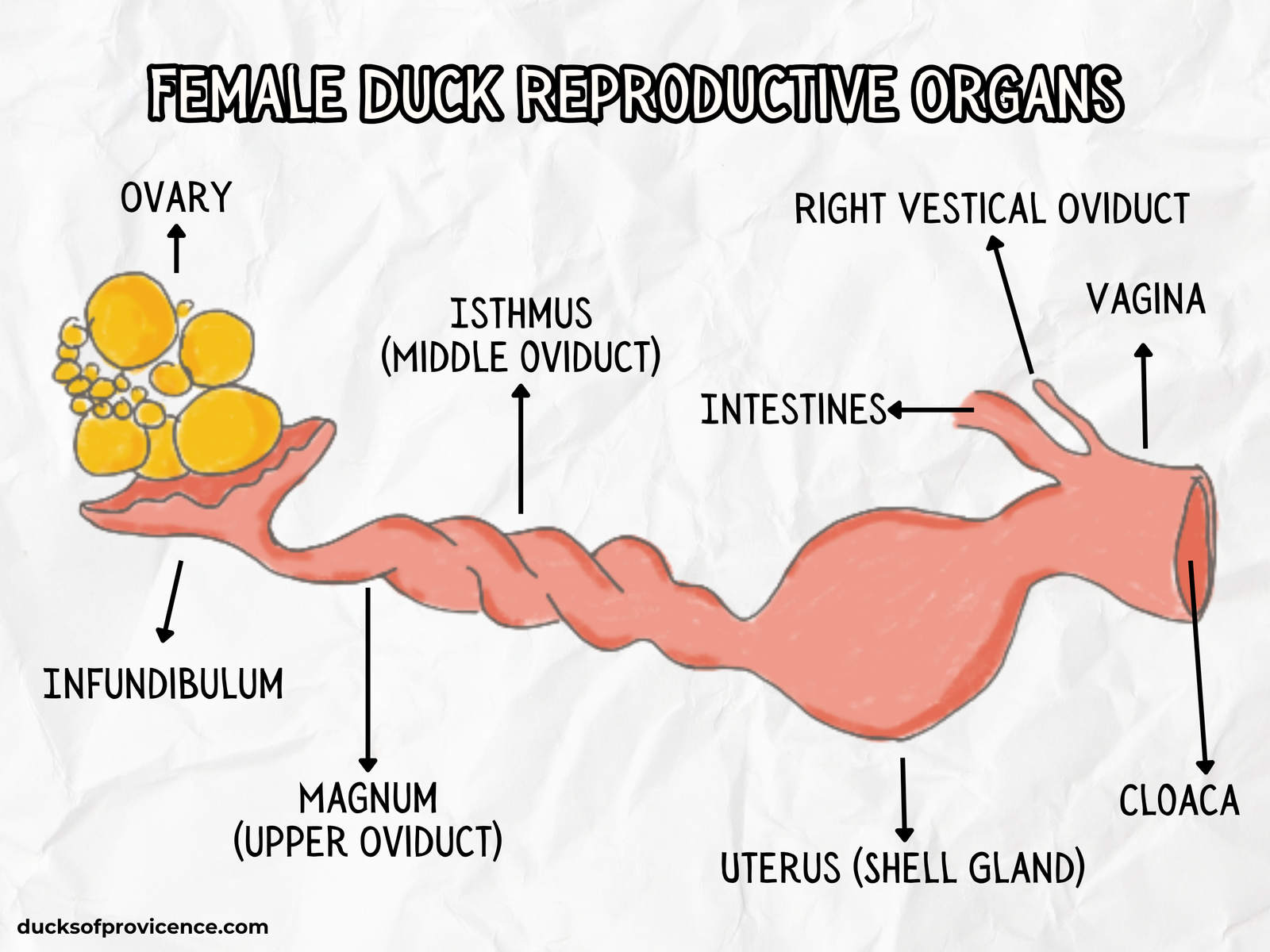
From that ovary, yolks are released into the oviduct, a long, highly specialized tube where the egg is formed in stages.
As the egg moves through the oviduct, it undergoes a series of transformations:
- yolk is ovulated from the ovary
- albumen (egg white) is added
- membranes form around the egg
- the shell is deposited in the shell gland
This entire process takes roughly 24 to 26 hours, depending on the individual duck and environmental conditions.
From a physiological standpoint, this is an extraordinary process. It requires precise timing, hormonal control, and significant metabolic resources.
Male Reproductive Anatomy
Male ducks, or drakes, have a different but equally specialized system. Their testes are internal and increase in size during the breeding season in response to hormonal changes.
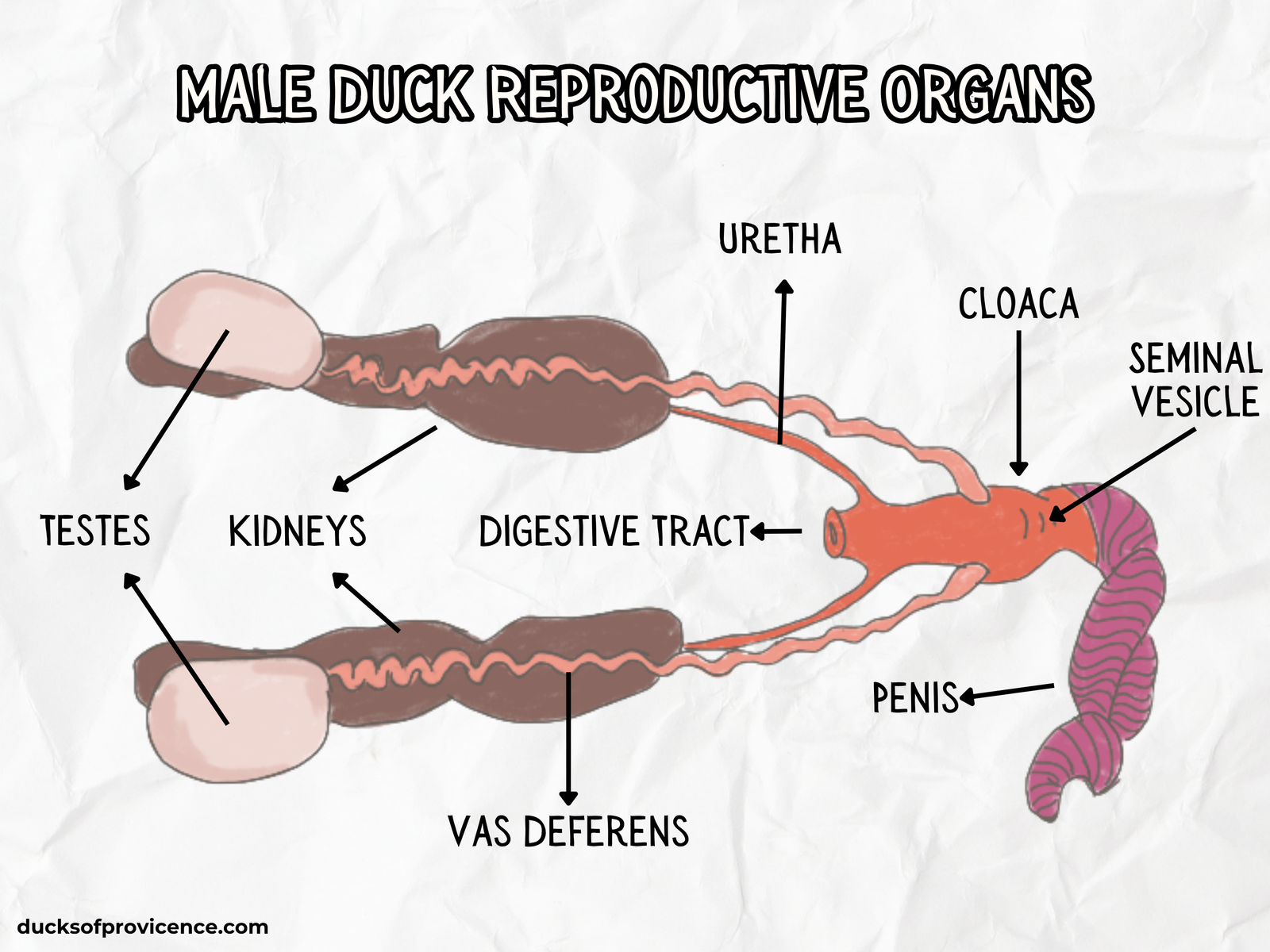
One anatomical feature that is unique to many waterfowl is the presence of a phallus, which differs from the reproductive anatomy seen in chickens and many other bird species.
While this is a natural part of reproduction, it is also relevant clinically, as injuries or prolapse can occur, especially in domesticated settings.
Hormones and Regulation
The reproductive system in ducks is strongly influenced by environmental cues, particularly day length and seasonality. Increasing daylight stimulates hormonal pathways that activate egg production in females and reproductive readiness in males.
These hormonal changes affect not only reproduction but also behavior, including:
- nesting instincts
- broodiness
- increased vocalization
- mating behavior
This is where physiology and behavior intersect very clearly.
Why This System Is So Important in Pet Ducks
In backyard duck keeping, reproductive health is one of the most common challenges. Unlike wild ducks, which have seasonal reproductive cycles, domestic ducks may lay eggs much more frequently, sometimes year-round, depending on breed and conditions.
This increased demand places significant stress on the body, particularly on:
- calcium metabolism
- energy balance
- the oviduct and associated tissues
As a result, issues such as egg binding, prolapse, and chronic laying are not uncommon.
What Duck Keepers Should Watch For
Reproductive issues often develop gradually but can become urgent quickly. Early recognition is critical.
Some signs that should always raise concern include:
- straining or difficulty laying
- swelling in the abdominal area
- changes in egg production or egg quality
- lethargy in a laying duck
These signs should never be dismissed, especially in females that are actively laying.
From My Flock
This is one of the areas where my experience as a duck keeper has shaped how I approach care the most. We have dealt with multiple reproductive issues in our flock, including prolapse (read Emma’s Story) and abnormal laying patterns.
Each case was different, but they all had one thing in common. They required quick decision-making and a clear understanding of what was happening internally.
It is one thing to know that ducks lay eggs. It is another thing to understand what that process demands from their body.
The reproductive system is not just about eggs. It is about energy, hormones, and overall physiological balance.
Understanding how it works helps you recognize when something is normal and when it is not. It also prepares you for some of the most common and potentially serious health situations in duck keeping.
The Brain and Nervous System
Up to this point, we have looked at systems that move oxygen, process nutrients, and maintain balance. The brain and nervous system sit above all of them as the control center, coordinating every function in your duck’s body.
What makes this system particularly fascinating in birds is how specialized it is. Ducks rely heavily on vision, coordination, and rapid responses to their environment, and their nervous system reflects that level of demand.
If you want a deeper, more clinical discussion of symptoms and causes, I cover that in detail in my post on neurological issues in ducks. Here, I want to focus on how the system is structured and why it matters for everyday observation.
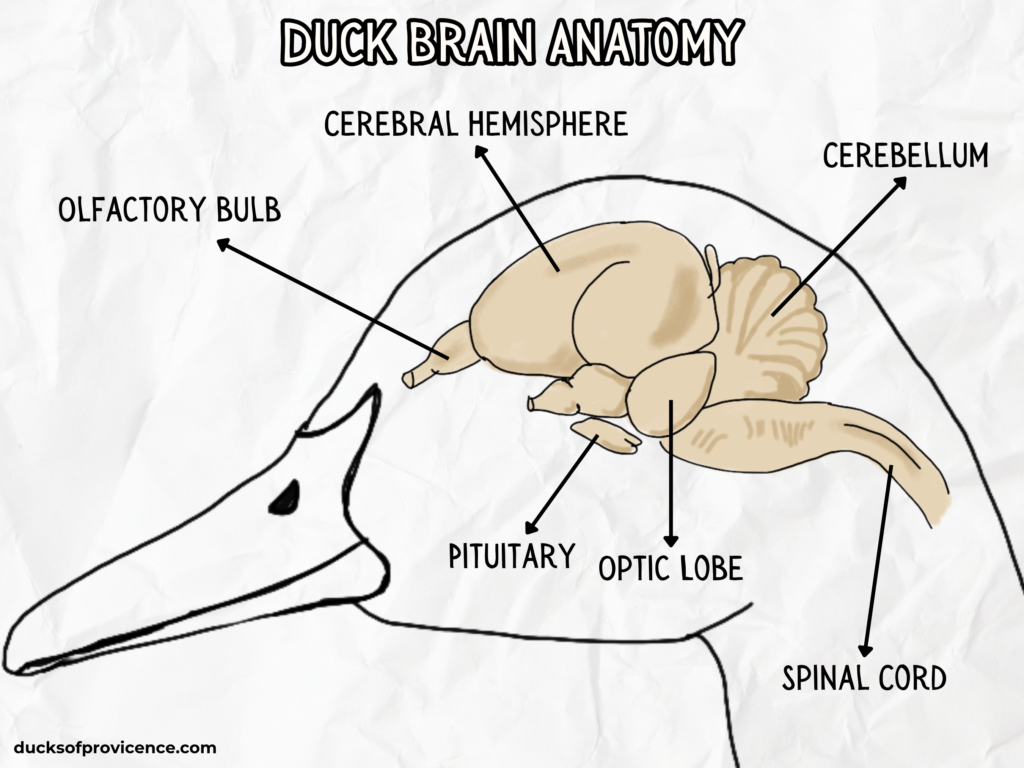
Structure of the Duck Brain
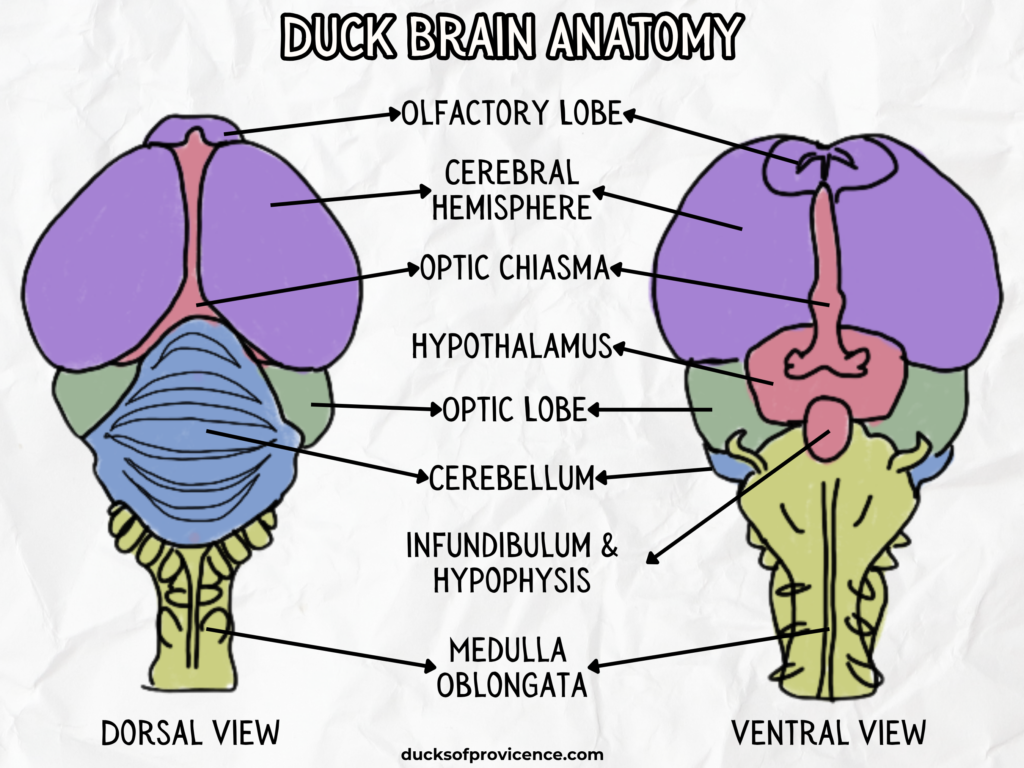
The duck brain is relatively small compared to mammals, but it is highly efficient and specialized. Several regions are particularly well developed, each supporting critical functions.
Key areas include:
- Cerebrum, which is involved in behavior, learning, and social interaction
- Cerebellum, responsible for coordination, balance, and precise movement
- Optic lobes, which are especially prominent in birds, support advanced visual processing
The size and development of these regions reflect how ducks interact with their environment. Vision and coordination are essential for everything from foraging to navigating water and responding to potential threats.
The Nervous System as a Communication Network
The brain does not work in isolation. It is connected to the rest of the body through the spinal cord and peripheral nerves, forming a complex communication network.
This system is responsible for:
- transmitting signals between the brain and muscles
- coordinating movement and posture
- regulating involuntary functions such as heart rate and digestion
- processing sensory information from the environment
From a physiological perspective, this is where all other systems converge. The brain interprets signals from the body and adjusts responses accordingly, maintaining overall stability.
Why Oxygen and Circulation Matter for the Brain
The brain is one of the most oxygen-dependent organs in the body. It requires a constant and uninterrupted supply of oxygen and nutrients to function properly.
This is where the close relationship with the circulatory and respiratory systems becomes critical. Even short disruptions in oxygen delivery can lead to noticeable neurological symptoms.
This is also why neurological signs are not always caused by primary brain issues. They can be secondary to:
- poor oxygenation
- toxin exposure
- metabolic imbalances
- infections
Understanding this connection helps you interpret symptoms more accurately.
Common Neurological Signs in Ducks
Neurological issues often present in ways that are very visible and, understandably, concerning. These signs reflect disruptions in coordination, balance, or brain function.
Some of the most common signs include:
- head tilting or twisting
- loss of balance or difficulty walking
- circling behavior
- seizures or tremors
These are not subtle changes. When they appear, they usually indicate that something significant is affecting the nervous system.
From My Flock
This is one of the areas where experience changes you as a duck keeper.
When Emma had seizures as a duckling, it was one of the most difficult situations I have faced. Watching a duck lose control of her body, even briefly, is something you do not forget.
Schnatterinchen’s head trauma was a different kind of experience. The neurological signs appeared suddenly, and for a moment, it was unclear how serious it would become. Fortunately, with rest and supportive care, she recovered quickly.
These two situations taught me something important. Neurological symptoms can look similar on the surface, but the underlying causes can be very different.
The brain and nervous system are where everything comes together. They integrate signals from all other systems and coordinate the body’s response.
Understanding how this system works helps you recognize when behavior is normal and when it reflects something deeper. It also reinforces an important point: Neurological signs are rarely something to wait on. They are often a signal that the body is under significant stress, and early intervention can make a meaningful difference.
FAQ: Circulatory System, Organs, and Internal Health in Ducks
How can I tell if my duck is not getting enough oxygen?
The earliest signs are often subtle. You may notice increased breathing effort, lethargy, or a duck that is less responsive than usual. In more advanced cases, the bill and feet may appear pale, and activity levels drop noticeably. Because oxygen delivery depends on both the respiratory and circulatory systems, these signs can point to multiple underlying issues.
Why are my duck’s droppings white and green?
Duck droppings combine digestive and kidney waste. The darker portion comes from digestion, while the white part is uric acid, produced by the kidneys. Changes in either portion can provide important clues about internal health, especially hydration and kidney function.
Do ducks have a crop like chickens?
Not in the same way. Ducks may have a slight dilation of the esophagus, but they do not have a well developed, functional crop like chickens. Food moves more continuously through their digestive system, which is why ducks tend to eat frequently throughout the day.
Why is my duck panting or breathing with an open bill?
Panting is often a normal response to heat, as ducks use their respiratory system to help regulate body temperature. However, if open bill breathing occurs in cool conditions or is accompanied by lethargy or unusual sounds, it may indicate respiratory distress and should be taken seriously.
What are early signs of liver problems in ducks?
Liver issues are often difficult to detect early, but common signs include lethargy, changes in weight, and poor feather quality. Because the liver is involved in metabolism and detoxification, problems here can affect multiple systems at once.
How do I recognize kidney problems in ducks?
Changes in droppings are often the first indicator. Look for unusually watery stool or changes in the white urate portion. In some cases, ducks may also show weakness or reduced activity. Because the kidneys are involved in fluid and electrolyte balance, symptoms can vary depending on the severity.
Why are reproductive issues so common in pet ducks?
Domestic ducks often lay more frequently than their wild counterparts, which places increased demand on their bodies. This can lead to issues such as egg binding, prolapse, and metabolic strain. Diet, lighting, and overall health all play a role in managing reproductive stress.
What are the most concerning neurological symptoms in ducks?
Signs such as head tilting, loss of balance, circling, or seizures should always be taken seriously. These symptoms can result from a range of causes, including injury, nutritional deficiencies, toxins, or infections, and often require prompt veterinary attention.
Can diet really affect internal organs that much?
Yes, very directly. Diet influences liver function, kidney balance, and even reproductive health. Too many treats, nutrient imbalances, or poor quality feed can place significant strain on internal organs over time.
Why is ventilation so important for ducks?
Ducks have a highly efficient respiratory system, which also makes them more sensitive to poor air quality. Ammonia, dust, and fumes can quickly affect their lungs and, in turn, oxygen delivery throughout the body. Good ventilation supports both respiratory and circulatory health.
What is the most important thing I should monitor daily?
If I had to pick one, it would be behavior combined with droppings. Together, they provide a surprisingly accurate snapshot of internal health. Small changes in either can be early indicators of issues affecting the circulatory system, organs, or metabolism.
Why Organ Systems Cannot Be Viewed in Isolation
When you step back and look at all of these systems together, something becomes very clear.
Your duck is not just a collection of separate organs.
It is a highly connected, dynamic system, where circulation, respiration, digestion, metabolism, and the nervous system are constantly working together.
What happens in one place rarely stays there.
A change in breathing affects oxygen delivery.
Diet influences the liver and kidneys.
Hormones impact behavior, metabolism, and even long-term health.
And often, the first signs you see on the outside are the result of multiple systems being involved at once.
This is why learning a bit of anatomy and physiology is so powerful as a duck keeper. It allows you to move beyond reacting to obvious symptoms and instead start recognizing patterns early, when intervention is still simple and effective.
From my own experience, this shift changes everything.
You start noticing the small things.
A duck that is just a little quieter than usual.
Droppings that look slightly different.
Breathing that seems just a bit off.
And those small observations are often the difference between catching a problem early and facing a much more serious situation later.
At the end of the day, good duck keeping is not about memorizing every detail.
It is about understanding how things are connected and learning to trust what you observe.
Because your ducks are always giving you information.
The question is whether you know how to read it.
Scientific References
- Kimberly Link: The Ultimate Pet Duck Guidebook: All the things you need to know before bringing home your feathered friend.
- Zeinab K. Aboghanima, et al., The White Pekin Duck’s (Anas platyrhynchos) Liver: New perspectives on its anatomical gross, casting, and histological features, Tissue and Cell, Volume 97, 2025, 103073, ISSN 0040-8166
- Greenacre, C. B., & Morishita, T. Y. (Eds.). (2015). Backyard poultry medicine and surgery: A guide for veterinary practitioners. John Wiley & Sons.
Further Reading & Resources
- Duck Anatomy: A Complete Guide for Pet Owners
- Is Anesthesia Safe for Ducks? A Duck Owner’s Guide to Veterinary Sedation
- The Science of Duck Poop: What Healthy Droppings Should Look Like
- Is Your Duck in Discomfort? How to Recognize Pain in Pet Ducks
- Finding a Duck-Savvy Vet: Tips for Pet Duck Owners
- Duck Diagnostic Chart: Vital Signs, Tests, and What Your Duck’s Poop Is Telling You
- 16 Common Duck Health Conditions You Should Know About
- How to Conduct a Duck Health Check: A Comprehensive Guide
Deepen your understanding of avian wellness. Explore the full Duck Health & Anatomy Library for more specialized care guides.